SS
SS
Key Takeaways
- China's work permit system scores applicants into tiers, so your eligibility is largely decided by degree, experience, and salary before any employer sees your resume.
- You almost always need the job offer first - the employer sponsors the permit, so job search comes before visa, not after.
- Teaching, technology, manufacturing, trade, and specialist roles inside multinationals remain the realistic entry paths for most foreign applicants.
- Hiring is city-specific rather than national, and the same role differs substantially between Shanghai, Shenzhen, Beijing, and second-tier cities.
- Applications run through domestic platforms and personal networks far more than through company career pages.
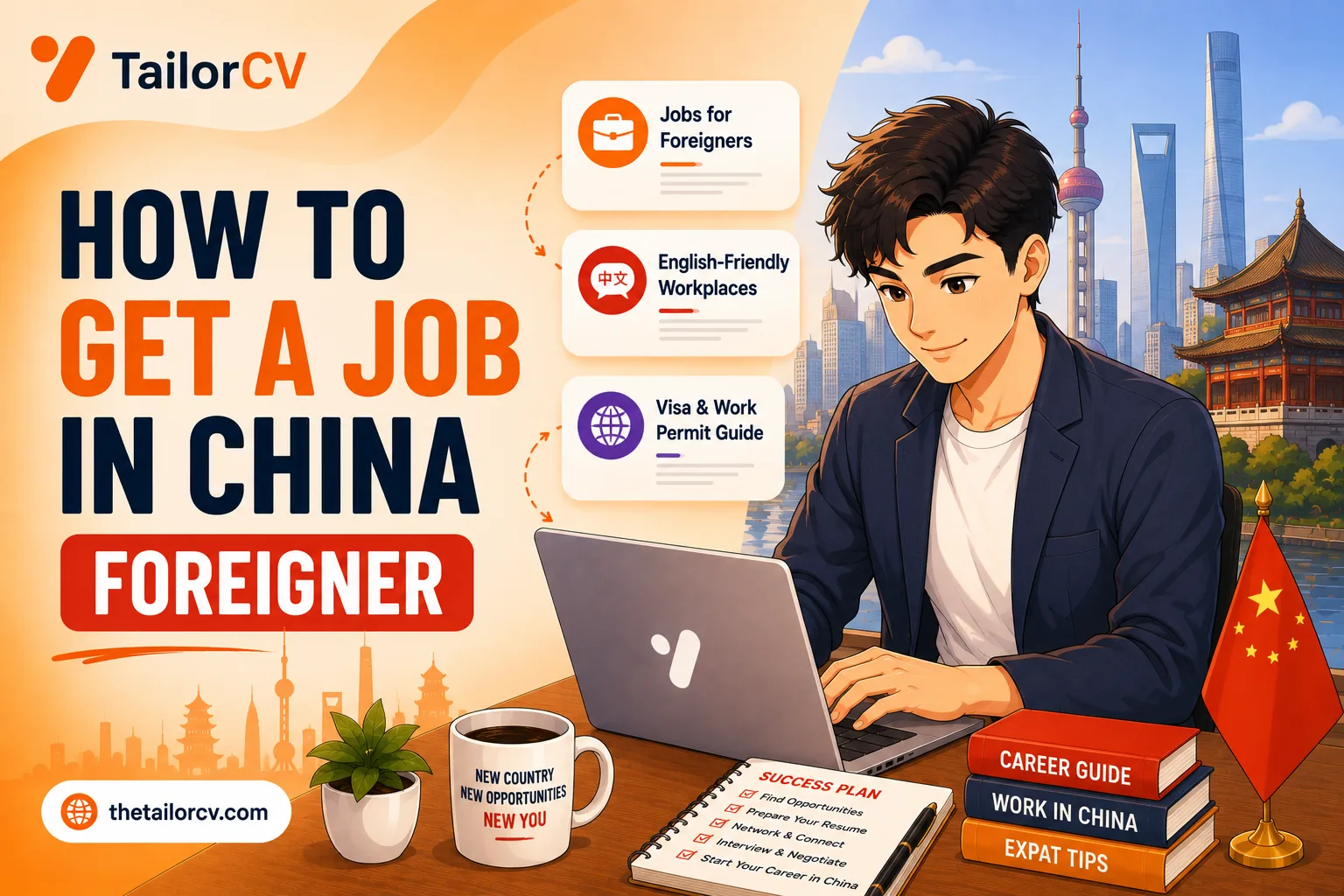
Working in China is a more structured process than working in most Western markets, and that structure is good news: the requirements are largely published, so you can tell fairly quickly whether you qualify and what would change that.
The confusion usually comes from sequencing. People try to sort out a visa, then look for work. It runs the other way - an employer hires you, then sponsors your permit. This guide covers what employers are looking for, which sectors realistically hire foreigners, and how to run the application process so it produces replies.
If you want a baseline before you start, run your current resume through the free ATS score checker.
First: Do You Qualify?
China classifies foreign workers into tiers - commonly described as A (high-level talent), B (professionals), and C (other, with quotas). Most applicants land in B.
The criteria weigh a mix of factors: education level, years of relevant experience, salary offered, age, Chinese language ability, and where you will work. Points-based scoring is applied, and the thresholds are set by the authorities rather than the employer.
In broad terms, the common baseline for a professional role is a bachelor's degree plus around two years of relevant post-graduation experience, though exceptions exist and requirements vary by city and category.
Two practical consequences:
Your degree matters procedurally, not just as a credential. It has to be documented and authenticated. A strong career without a degree is genuinely harder to place here than in many markets.
Salary is part of eligibility. A very low offer can create problems for the permit, which is one reason legitimate employers will not undercut a market rate for a sponsored foreign hire.
The full documentation process is covered in the China work visa and Z visa guide.
Which Industries Actually Hire Foreigners
Be realistic about where demand exists. The main paths:
Teaching English
Still the largest single entry route, and the most accessible. Requirements typically include a bachelor's degree, a recognised teaching certificate such as TEFL or CELTA, and in many cases native-speaker status from a specified list of countries. The sector has changed significantly since the 2021 regulatory overhaul of private tutoring, so verify current rules and any prospective employer carefully. See teaching English in China for how to build the application.
Technology
Software engineering, AI, hardware, and product roles, concentrated in the major tech hubs. Foreign hires here are usually either specialists with skills that are scarce locally or people already inside a multinational. Competition from the domestic talent pool is intense, so a general developer profile is a hard sell - specialisation is what creates an opening.
Multinationals and foreign-invested companies
Often the most straightforward path: roles where English is the working language, and where the company already has a process for sponsoring foreign staff. Regional roles covering Asia-Pacific frequently sit in Shanghai or Hong Kong.
Trade, manufacturing, and sourcing
Quality control, supply chain, procurement, and export sales. Undersold as a category, and consistently hiring people who can bridge Chinese manufacturing and a foreign market.
Specialist and senior roles
Design, architecture, law, finance, medicine, academia, and hospitality management, generally at a level where specific credentials do the work.
Where the Jobs Are Actually Posted
This is where most foreign applicants go wrong. Applying through company career pages the way you would in the US produces very little.
The main domestic platforms - including 51job, Zhaopin, Liepin for senior roles, and BOSS Zhipin, which is built around chatting directly with the hiring side - carry the bulk of listings. LinkedIn wound down its local China operation, so it is now mainly useful for multinationals rather than domestic employers.
Beyond platforms, two channels matter more than they do in the West:
Recruiters and agencies, particularly for teaching and for senior placements. Vet them - the sector has a wide quality range.
Personal networks. Referral carries real weight, and WeChat groups organised around cities and industries are an active part of how roles circulate. The general approach in networking tips for job search and how to ask for a referral transfers, with the channel changed.
A fuller breakdown is in the best job sites in China.
Choosing a City
China is not one job market. Where you apply changes the roles, the salary, the cost of living, and how much Mandarin you need.
Shanghai - the largest concentration of multinationals and finance, the most established foreign professional community, and the easiest place to work primarily in English.
Beijing - government-adjacent industry, media, education, and a large technology sector.
Shenzhen - hardware, manufacturing, and a fast-moving tech scene. Younger, more entrepreneurial. The comparison with Shanghai is worth reading before you commit: Shanghai vs Shenzhen tech jobs.
Guangzhou - trade, export, and manufacturing.
Second-tier cities such as Chengdu, Hangzhou, Xi'an, and Suzhou - lower cost of living, growing opportunities, and generally a higher Mandarin requirement.
Name your target city on your resume and in your outreach. "Open to anywhere in China" reads as no plan.
How Much Mandarin You Need
It depends entirely on the role.
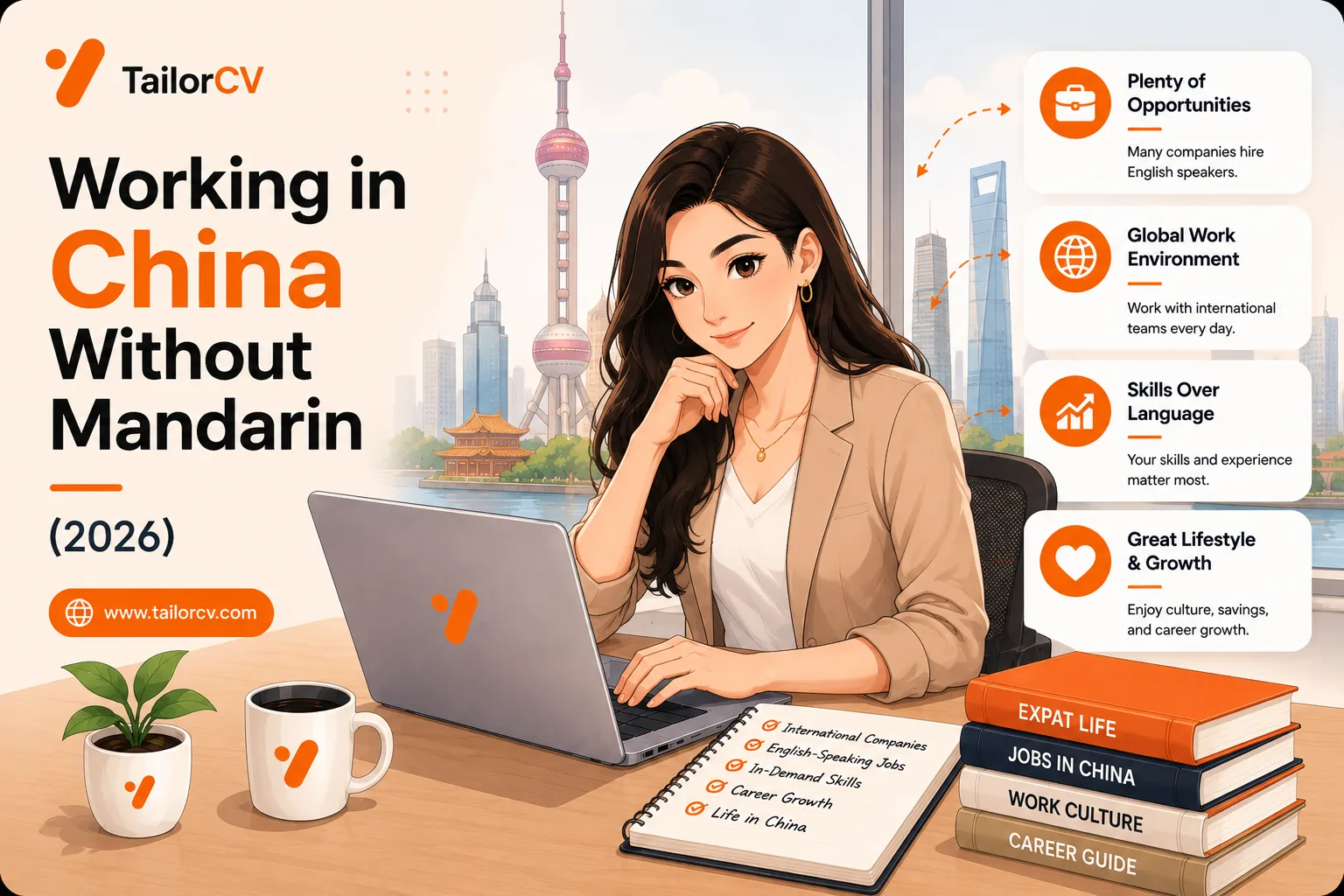
Little to none: English teaching, some multinational roles, certain trade and export positions where your value is the foreign-market side.
Working proficiency: most domestic companies, anything client-facing locally, most technical roles at Chinese firms.
Fluent: management inside domestic organisations, anything involving negotiation or regulation.
Even where the job does not require it, basic Mandarin changes daily life substantially and signals commitment to an employer weighing whether you will stay. If you have taken the HSK, put the level on your resume. The realistic options without it are covered in working in China without Mandarin.
Making Your Application Work
Adapt the resume
A Western resume sent unchanged looks incomplete to a Chinese employer - no photo, no personal details, no stated job objective. The full format is in the Chinese resume format guide, and the keyword side in the best resume keywords for China.
Address the obvious questions up front
Every employer considering a foreign hire is thinking about the same three things: can they sponsor you, will you stay, and can you function day to day. Answer all three early. State your visa status, your language level, and whether you are already in China or would relocate.
Being in China already is a genuine advantage. If you are, say so on the first line.
Write a real cover letter
Cover letters carry more weight for foreign applicants than they do for domestic ones, because there is more to explain. The conventions differ from Western ones - see the Chinese cover letter guide.
Expect a different interview
More questions about your intentions, your ties, and how long you plan to stay than a Western interview would ask. This is not idle curiosity - sponsoring and onboarding a foreign employee is a real cost. Preparation specifics are in China interview etiquette.
Common Mistakes
Looking for a visa before a job. The employer sponsors it. Find the job first.
Applying only to English-language postings on international sites. That is a small slice of the market.
Accepting an offer without checking the paperwork. Confirm the employer can and will sponsor a proper work permit, and that your role matches what the permit covers. Working on the wrong visa type is a serious problem, not a technicality.
Assuming your foreign experience speaks for itself. Add context for employers a Chinese recruiter would not recognise.
Ignoring the medical and authentication steps. Degree authentication, criminal record checks, and a medical examination all take time. Start early.
Treating salary purely as a negotiation. It is also a permit input. Unusually low offers should raise questions.
Frequently Asked Questions
Can I get a job in China without a degree?
It is substantially harder. The work permit assessment weights education heavily, and many categories effectively require a bachelor's degree. Exceptional experience can sometimes compensate in specific categories, but treat it as the exception rather than the plan.
Do I need to speak Mandarin to work in China?
Not for every role. English teaching, many multinational positions, and some trade roles operate largely in English. For most domestic employers, working proficiency is expected. Even basic Mandarin materially improves both your options and your daily life.
How long does the whole process take?
Plan for several months from accepting an offer to arriving legally, since document authentication, permit approval, and the visa itself all take time. The job search that precedes it varies widely by sector.
Is it still worth teaching English in China?
The sector changed significantly after the 2021 regulations on private tutoring, and the landscape is different from what it was. Legitimate roles continue to exist in schools, universities, and licensed institutions. Verify current requirements and any employer thoroughly before committing.
Can I find a job while already in China on a tourist visa?
You can look, and being in-country genuinely helps with interviews and networking. You cannot work on a tourist visa, and you will generally need to complete the work permit process properly, which may involve leaving and re-entering. Do not let an employer talk you into working before the paperwork is done.
Want to know whether your resume is even getting read? Check your ATS score free.
Make This Practical
Start with eligibility. Check your degree, years of experience, and target salary against the work permit tiers described in the China work visa guide, and begin document authentication early since it is the slowest step.
Then pick a city and a sector rather than searching nationally, and rebuild your resume to Chinese conventions using the Chinese resume format guide - photo, personal details, job objective, WeChat ID, stated language level.
Finally, apply where the jobs actually are. Set up on the domestic platforms listed in the best job sites in China, run your resume through the free ATS score checker so it parses cleanly, and tailor each application with how to tailor your resume for every job.
What is your resume scoring right now?
Scan it against a job description and get your ATS match score in about a minute.
Drop your resume here or choose a file
PDF only. Max 2 MB.
We never share your data or use it to train AI models.

Was this guide useful?
Be the first to rate it.