 SS
SS
Key Takeaways
- A cover letter is essential in the Canadian job market, allowing candidates to showcase their personality and qualifications beyond the resume.
- Structure your cover letter with a header, salutation, introduction, body paragraphs highlighting qualifications and cultural fit, conclusion, and closing.
- Tailor each cover letter to the specific job and company, using keywords from the job description to improve chances with Applicant Tracking Systems (ATS).
- Keep the cover letter concise, ideally one page with 300-400 words, maintaining a professional tone while expressing your personality.
- Proofread carefully to eliminate grammatical errors and typos, as a polished letter reflects attention to detail.
Writing a compelling cover letter is essential in the Canadian job market, where employers often receive numerous applications for each position. A well-structured cover letter can set you apart from the competition, especially as a newcomer or an international student navigating the unique nuances of Canadian job applications. This article will guide you through the process of crafting an effective cover letter tailored for Canadian jobs, providing practical tips and insights specific to the Canadian context.
Understanding the Importance of a Cover Letter
A cover letter serves as your introduction to potential employers, allowing you to showcase your personality, enthusiasm, and qualifications in a way that a resume cannot. Here’s why it’s crucial:
- Personalization: It allows you to tailor your message to the specific job and company.
- Connection: You can explain how your experiences and skills align with the company’s needs and culture.
- Narrative: It provides an opportunity to tell your story, including your motivations and career goals.
Structure of a Cover Letter
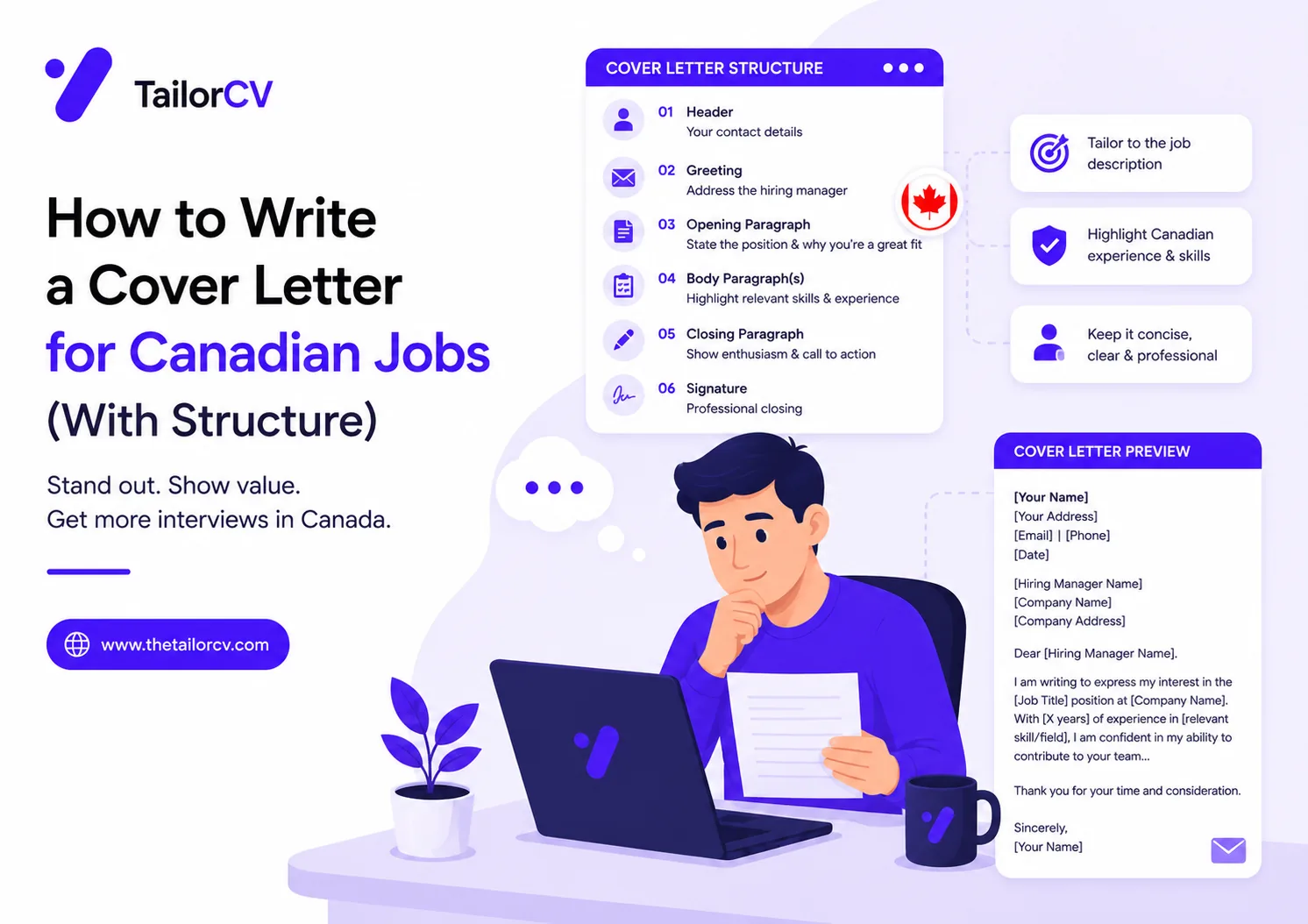
A well-structured cover letter typically includes the following sections:
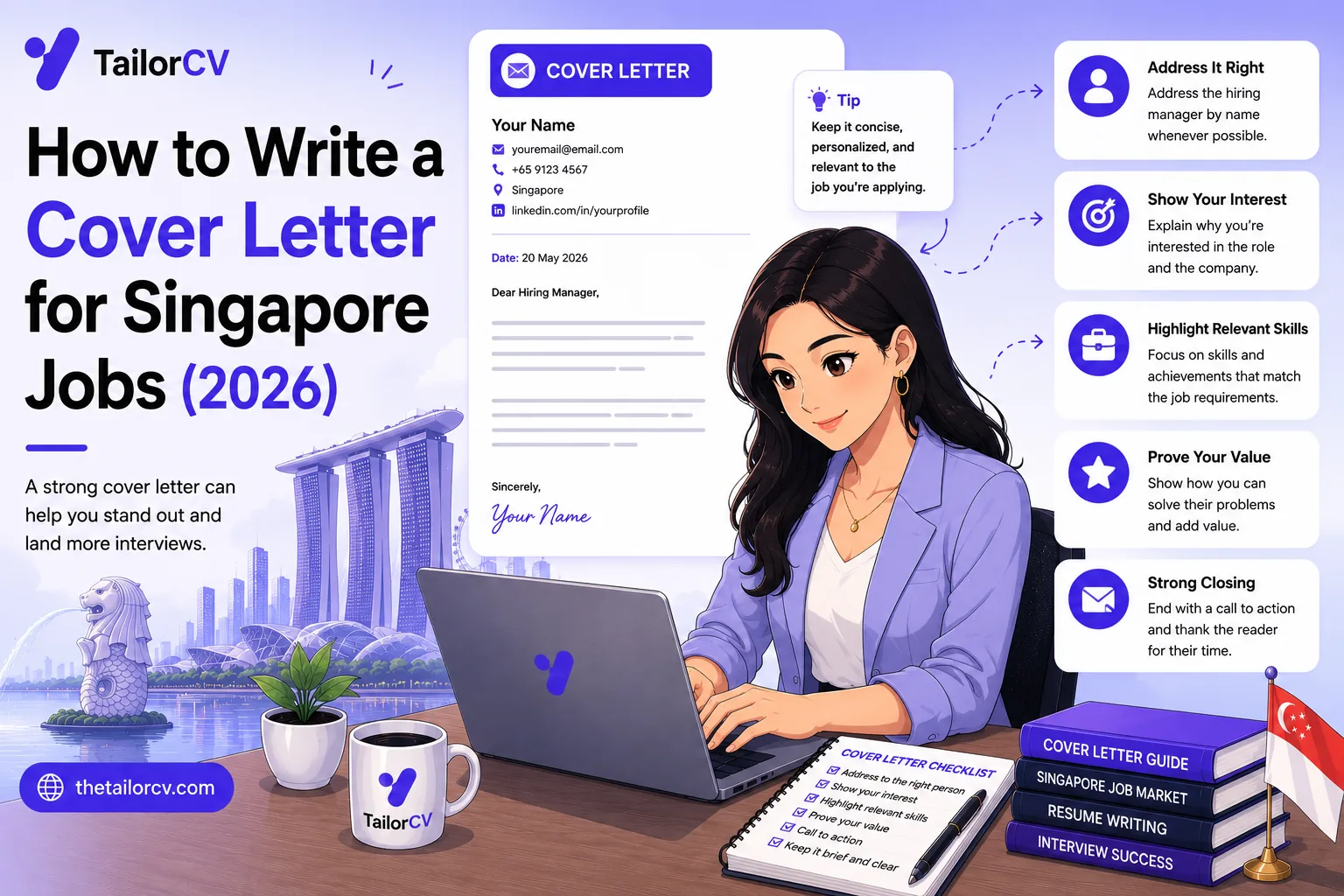
What the finished letter looks like
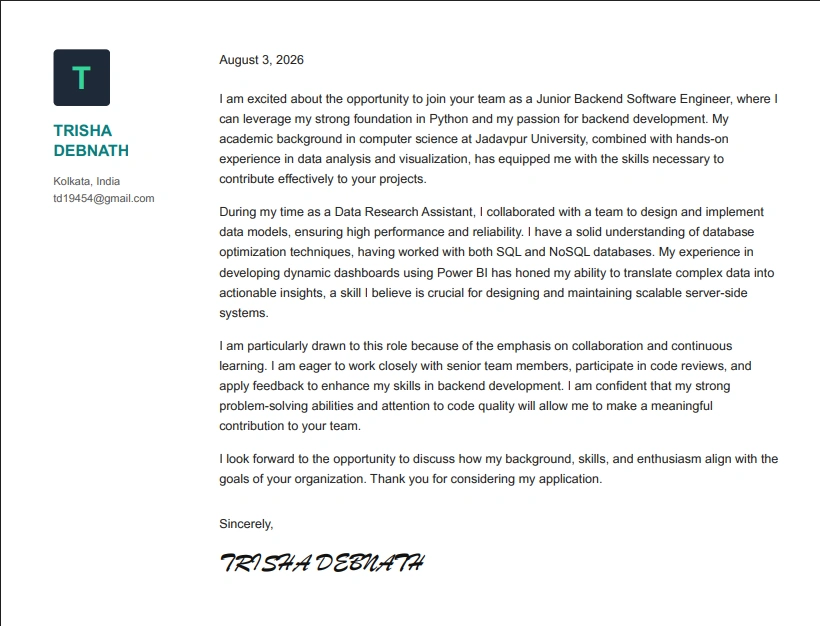
The same rules with a little more styling: the header is real text, not an image, so the layout stays readable to both a recruiter and a parser.
1. Header
Include your contact information at the top, formatted as follows:
Your Name
Your Address
City, Province, Postal Code
Your Phone Number
Your Email Address
Date
Next, add the employer's contact information:
Employer's Name
Company Name
Company Address
City, Province, Postal Code
2. Salutation
Address the hiring manager by name if possible. If you cannot find the name, use a general greeting like "Dear Hiring Manager."
3. Introduction
Start with a strong opening statement that grabs attention. Mention the position you’re applying for and how you found out about it. Here’s an example:
"I am excited to apply for the Marketing Coordinator position at ABC Company, as advertised on your careers page. With a background in digital marketing and a passion for innovative campaigns, I am eager to contribute to your team."
4. Body Paragraphs
a. First Paragraph: Highlight Your Qualifications
Discuss your relevant skills and experiences. Use specific examples to demonstrate how your background aligns with the job requirements.
- Example: "In my previous role at XYZ Corp, I successfully managed a social media campaign that increased engagement by 30% over three months, showcasing my ability to drive results and connect with audiences."
b. Second Paragraph: Cultural Fit and Company Knowledge
Research the company and mention why you are interested in working there. This shows that you have done your homework.
- Example: "I admire ABC Company’s commitment to sustainability and innovation, and I am particularly drawn to your recent initiative aimed at reducing carbon footprints. I believe my values align perfectly with your mission."
c. Third Paragraph: Address Gaps or Unique Circumstances
If applicable, briefly address any gaps in your experience or unique circumstances, such as being a newcomer to Canada.
- Example: "As an international student who recently graduated from XYZ University, I bring a fresh perspective and a diverse background that can contribute to your team's creativity and problem-solving."
5. Conclusion
Wrap up your cover letter by reiterating your enthusiasm for the position and expressing your desire for an interview.
- Example: "I am excited about the opportunity to join ABC Company and contribute to your team. I look forward to discussing how my skills and experiences align with your needs."
6. Closing
End with a professional closing such as "Sincerely" or "Best regards," followed by your name.
Tips for Writing an Effective Cover Letter
| Tip | How to apply it |
|---|---|
| Tailor Each Letter | Customize your cover letter for each job application. Use keywords from the job description to increase your chances of passing Applicant Tracking Systems (ATS) |
| Keep It Concise | Aim for one page, ideally around 300-400 words |
| Use Professional Language | Maintain a formal tone while allowing your personality to shine through |
| Proofread | Always check for grammatical errors and typos. A polished cover letter reflects attention to detail |
Leveraging Technology for Your Cover Letter
Consider using tools like the AI cover letter generator to streamline the writing process. This can help you create a well-structured cover letter that meets Canadian standards.
Common Mistakes to Avoid
Creating a standout cover letter requires careful attention to detail. Here are some common mistakes to avoid:
| Mistake | Why it costs you |
|---|---|
| Generic Content | Avoid using a one-size-fits-all approach. Personalization is key. Refer to our article on Cover Letter Mistakes to Avoid in 2026 for more insights |
| Ignoring ATS | Ensure your cover letter is ATS-friendly by including relevant keywords and phrases. Familiarize yourself with the ATS-Friendly Cover Letter Format to improve your chances of being seen by hiring managers |
| Overly Long Letters | Stick to the point; hiring managers appreciate brevity. A concise cover letter is more likely to be read in full |
| Lack of Specific Examples | Failing to provide concrete examples of your achievements can weaken your application. Use metrics and outcomes to demonstrate your impact |
Enhancing Your Cover Letter with Data Points
Incorporating relevant data points can bolster your cover letter. Here are some statistics to consider:
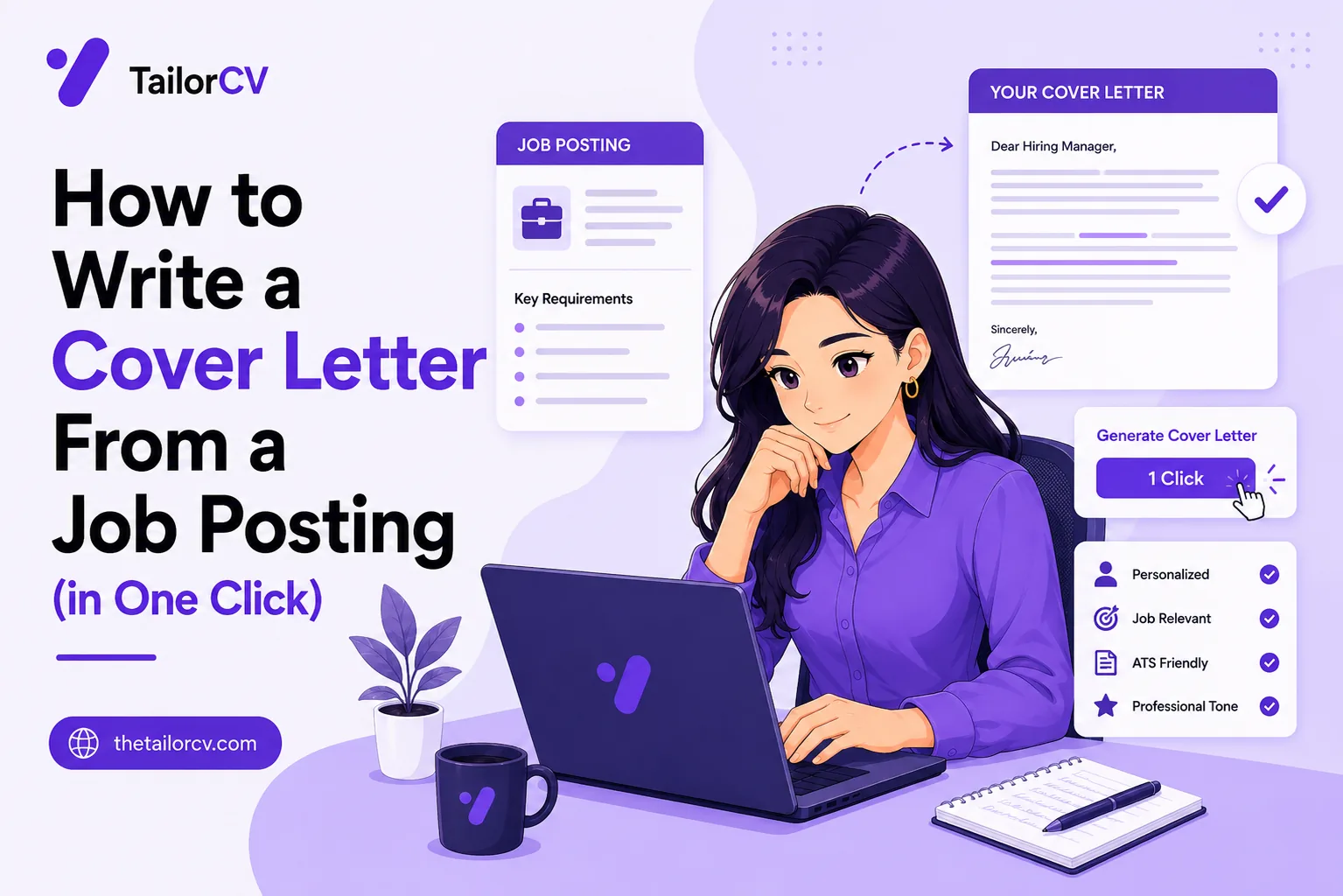
Generating the letter from a job description
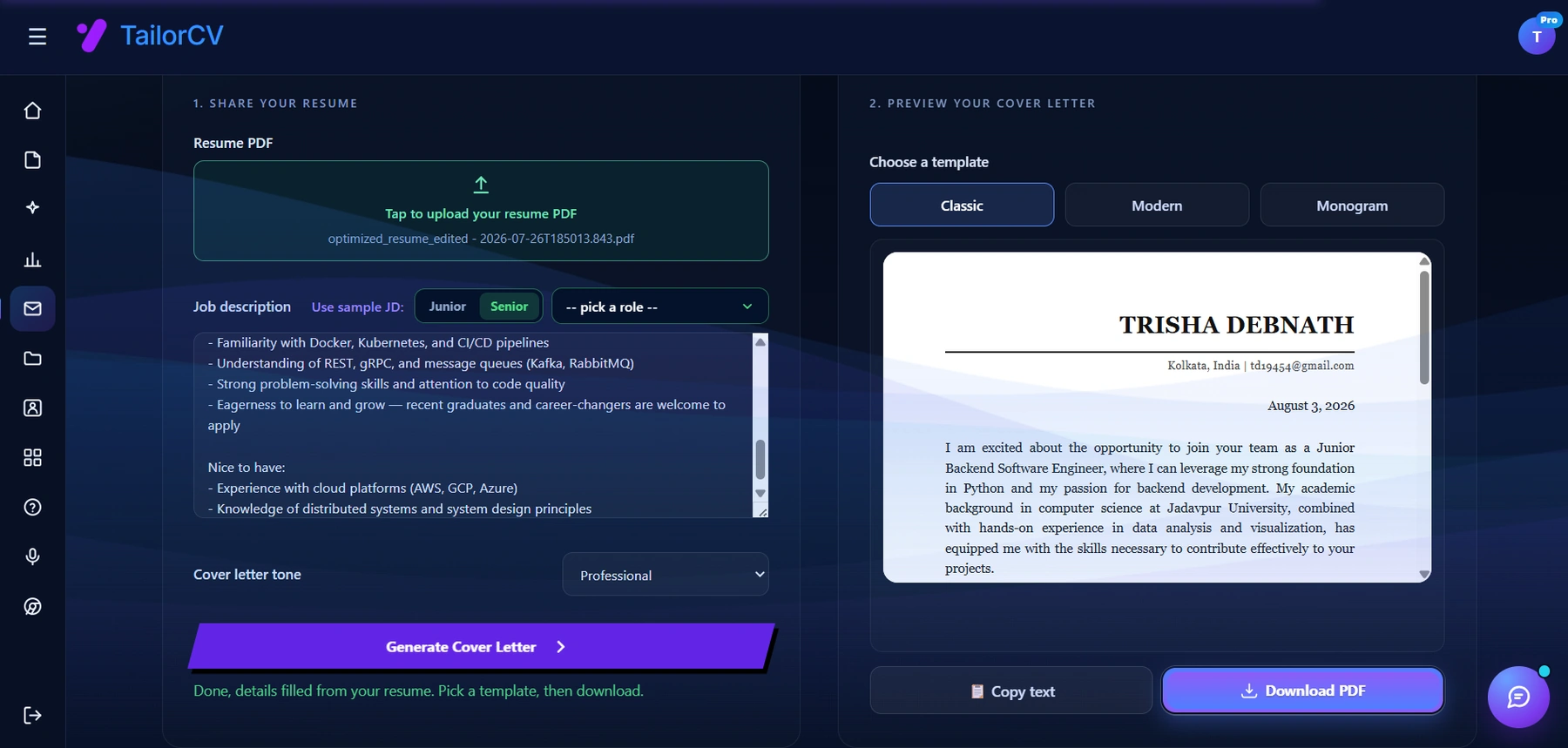
Having the preview beside the inputs is what makes this fast: change the tone or template and you see the result immediately.
- Hiring Trends: According to a recent survey, 70% of employers consider a well-crafted cover letter an essential part of the application process.
- Impact of Personalization: Research shows that personalized cover letters can increase your chances of landing an interview by 50%.
- ATS Use: Approximately 90% of companies use ATS to filter applications, making it imperative to optimize your cover letter accordingly.
Checklist for Your Cover Letter
Before sending your cover letter, use this checklist to ensure it meets all the necessary criteria:
- unchecked: Is the cover letter tailored to the specific job and company?
- unchecked: Does it include relevant keywords from the job description?
- unchecked: Is it formatted correctly with a professional header?
- unchecked: Are there specific examples of your achievements and skills?
- unchecked: Is the tone professional yet reflective of your personality?
- unchecked: Have you proofread for grammar and spelling errors?
- unchecked: Is it concise and limited to one page?
Examples of Effective Cover Letters
Here are two examples of cover letters tailored for different scenarios:
Example 1: Entry-Level Position
Introduction:
"I am thrilled to apply for the Entry-Level Marketing Assistant role at XYZ Corp, as advertised on Indeed. With a Bachelor's degree in Marketing and hands-on experience from my internship at ABC Agency, I am eager to bring my skills to your innovative team."
Body:
"In my internship, I developed social media strategies that increased our client’s engagement by 25%, demonstrating my ability to produce measurable results. I am particularly drawn to XYZ Corp’s emphasis on creativity, as evidenced by your recent campaign for Product X."
Example 2: Career Change
Introduction:
"I am writing to express my interest in the Project Manager position at DEF Inc. Although my background is in teaching, I have successfully managed multiple projects and developed strong organizational skills that I believe would be an asset to your team."
Body:
"During my time as a teacher, I coordinated various school events that required meticulous planning and collaboration with diverse stakeholders. This experience has equipped me with the skills necessary to lead projects effectively, ensuring timely completion and alignment with strategic goals."
Addressing Unique Circumstances
If you are a newcomer or transitioning to a new field, it’s essential to frame your experiences positively. Here’s how to address these unique situations:
-
Newcomers to Canada: Highlight transferable skills and experiences from your home country. For instance, "As a recent immigrant with five years of experience in software development in India, I bring a unique perspective and a commitment to adapting my skills to the Canadian market."
-
Career Changers: Focus on relevant skills gained from previous roles. For example, "While my background is in hospitality, the customer service and problem-solving skills I've developed are directly applicable to the sales position at your company."
Final Thoughts
Writing a compelling cover letter for Canadian jobs is not just about summarizing your resume; it's about creating a narrative that speaks to your qualifications and fit for the role. By following the structure outlined above, avoiding common pitfalls, and leveraging technology, you can craft a cover letter that stands out in a competitive job market.
For more guidance, consider exploring our resources on Cover Letter for a Career Change - Template and Examples That Get Interviews and Cover Letter for Remote Jobs - What Hiring Managers Actually Want to See.
Related Guides
Keep building your Canadian job search with these related TailorCV guides:
- How ATS Works in Canada: Beating Applicant Tracking Systems for Canadian Jobs
- Canadian Resume Format Guide (2026): How to Write a Resume for Canada
- How to Get a Job in Canada in 2026: A Step-by-Step Guide
- In-Demand Jobs in Canada for 2026 (and How to Match Your Resume)
- AI Cover Letter Generator for Job Descriptions
- How to Write a Cover Letter for US Jobs (With Structure and Examples)
- Cover Letter for a Career Change - Template and Examples That Get Interviews
- Cover Letter for an Internal Job Application - Template and Tips
- US Nonprofit Jobs Guide 2026 - Careers, Pay, and the Sector's Realities
You can also check your resume's ATS score for free, generate a tailored cover letter, or build a portfolio website in minutes.
Frequently Asked Questions
1. Do I need a cover letter for every job application in Canada?
Yes, it’s generally recommended to include a cover letter unless the job posting specifically states otherwise. A tailored cover letter can significantly enhance your application.
2. How long should my cover letter be?
Your cover letter should ideally be one page long, around 300-400 words. This length allows you to provide enough detail without overwhelming the reader.
3. Should I mention salary expectations in my cover letter?
Typically, salary expectations are discussed later in the hiring process. Focus your cover letter on your qualifications and interest in the position instead.
4. How can I ensure my cover letter is ATS-friendly?
To make your cover letter ATS-friendly, use standard fonts, avoid images and graphics, and incorporate keywords from the job description. For more tips, check out our guide on how to make a resume ATS-friendly.
5. Can I use the same cover letter for multiple job applications?
While you can use a base template, it’s essential to customize each cover letter for the specific role and company. Tailoring your content increases your chances of standing out.
Was this guide useful?
Be the first to rate it.