 SS
SS
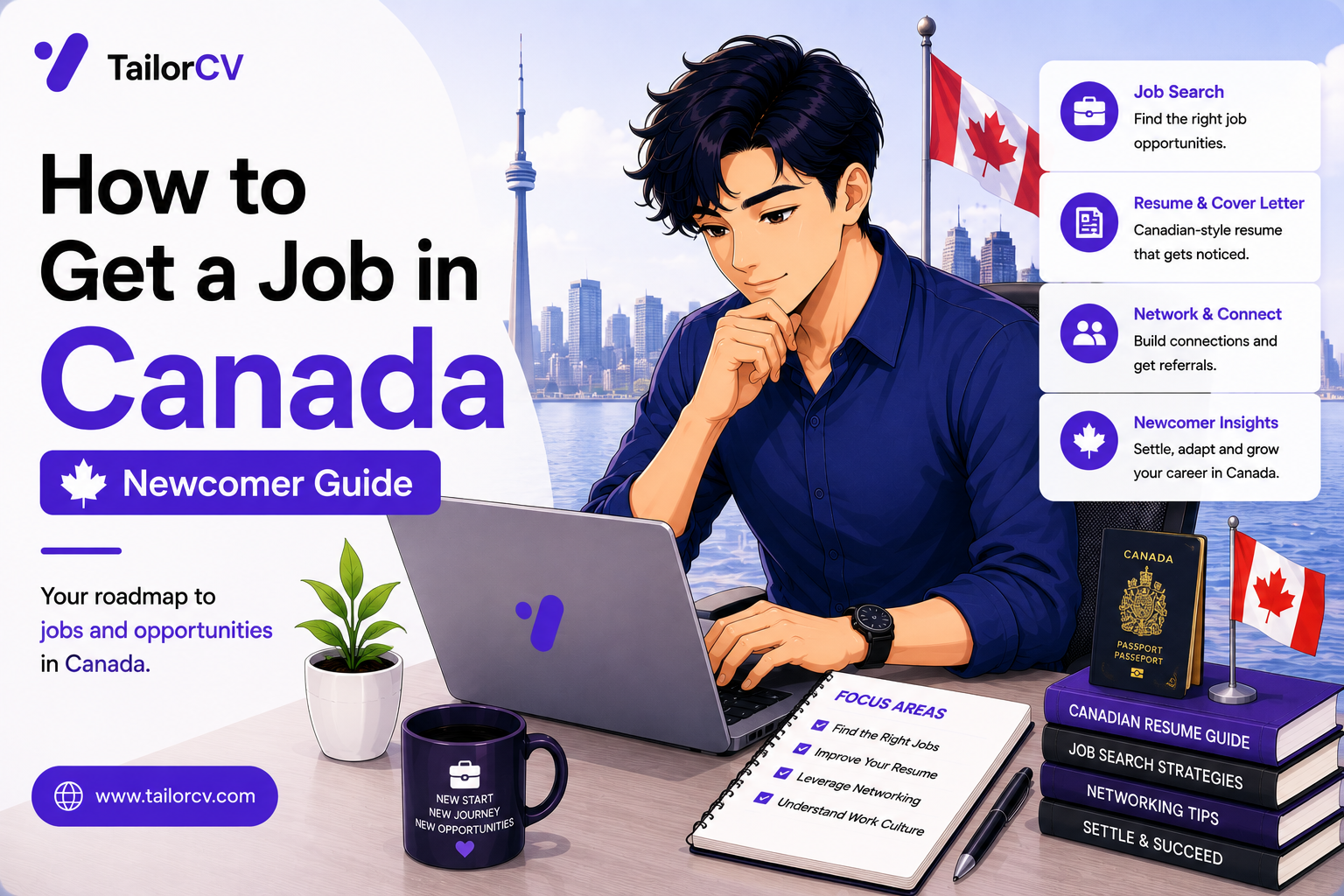
Key Takeaways
- Newcomers succeed by adapting to Canadian expectations: local resume format, credential recognition, and networking.
- A Canadian-style resume (no photo or personal details, achievement-focused, ATS-friendly) is essential.
- Networking and referrals fill a large share of Canadian jobs — often more effective than online applications alone.
- Credential assessment (e.g. WES) and, where needed, licensing help employers understand and trust your qualifications.
- Persistence and tailoring beat volume — a targeted, well-prepared search wins.
Landing your first job in Canada as a newcomer is one of the biggest milestones of settling in — and one of the most challenging. You may have years of international experience and strong qualifications, yet find employers hesitant because they don't recognise your credentials, your resume looks unfamiliar, or you lack "Canadian experience." The good news: thousands of newcomers overcome exactly these hurdles every year with the right strategy.
This guide is a practical, step-by-step roadmap for newcomers and immigrants on how to get a job in Canada in 2026 — from understanding the market and getting your credentials recognised, to building a Canadian-style application and using the networking that quietly drives Canadian hiring.
Step 1: Understand the Canadian Job Market
Canada's opportunities vary by province and city, but demand is consistently strong in:
What optimizing actually does to your resume
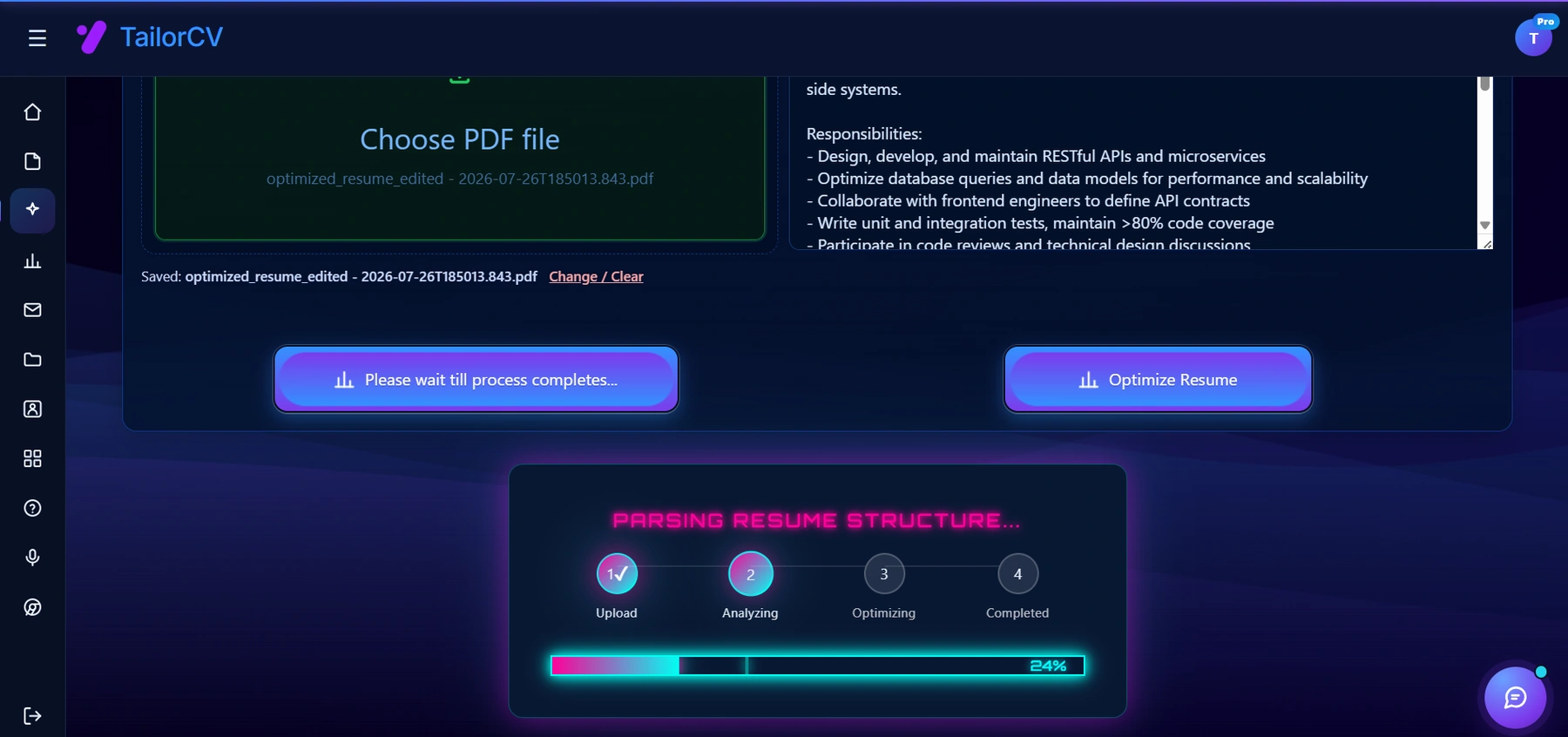
Optimising runs against the specific job description you paste in, not in the abstract.
- Technology (Toronto, Vancouver, Waterloo, Montreal): software, data, IT, product.
- Healthcare across the country: chronic shortages mean steady demand (often requiring licensing).
- Skilled trades and construction: strong demand nationally.
- Finance and professional services: concentrated in Toronto.
- Engineering, sales, and customer-facing roles: broad, ongoing need.
Research which sector and city fit your skills. Toronto is the largest market — see how to find a job in Toronto.
Step 2: Get Your Credentials Recognised
A common newcomer barrier is that employers don't understand foreign qualifications. Address this directly:
- Educational Credential Assessment (ECA): services like WES assess your foreign degree's Canadian equivalency. Note it on your resume.
- Professional licensing: regulated professions (nursing, engineering, accounting, law, teaching) require Canadian licensing or registration. Research your profession's regulatory body and the path to certification early — it can take time.
- Bridging programs: many provinces offer programs that help internationally trained professionals adapt and get certified.
Getting ahead of credential recognition removes a major source of employer hesitation.
Step 3: Build a Canadian-Style Resume
Your international resume almost certainly needs reformatting. Canadian resumes:
- Exclude photos, age, marital status, religion, nationality, and your SIN.
- Are concise (1–2 pages), achievement-focused, and tailored to each role.
- Use Canadian spelling and metric units.
- Must be ATS-friendly, since most employers screen with software.
Follow our complete Canadian resume guide, learn to beat the screener in how ATS works in Canada, and test each version with the free ATS score checker. Build a clean version with the TailorCV resume builder and tailor it per role with the resume optimizer.
Step 4: Tackle the "Canadian Experience" Hurdle
Many newcomers hear they need "Canadian experience." Break the cycle by:
- Highlighting transferable skills: frame your international experience in Canadian terms and metrics, using the target job's language. For terms, see best resume keywords for Canadian jobs.
- Volunteering: Canadian volunteer experience is genuinely valued and adds local references and network.
- Contract, survival, or bridge roles: a first Canadian role — even below your level — builds local experience and references you can leverage upward.
- Co-op, internships, or mentorship programs: many newcomer-serving organisations offer these.
Step 5: Network — It's How Canada Hires
A large share of Canadian jobs are filled through referrals, often before they're posted. For newcomers, networking is not optional:
- Informational interviews: reach out to people in your field for a short conversation about the industry (not a job request). These build relationships and insight.
- Newcomer organisations: immigrant-serving agencies, settlement services, and professional associations connect you to mentors and employers.
- Industry events and meetups: show up, learn, and connect.
- LinkedIn: essential — optimise your profile so recruiters find you and use it to build connections. See LinkedIn optimization for Canadian job seekers and our full guide to networking to find jobs in Canada.
Free Resources Every Newcomer Should Use
One of the best things about job-hunting as a newcomer in Canada is how much free, high-quality support exists — much of it funded specifically to help immigrants succeed. Make full use of:
- Immigrant-serving / settlement agencies: free resume reviews, job-search workshops, mentorship, employer connections, and language classes. These organisations exist in every major city and are one of your most valuable resources.
- Government-funded programs like LINC (language) and various employment services.
- Public libraries: free computer and internet access, resume help, workshops, and quiet space to work.
- Newcomer job fairs and hiring events, often targeting internationally trained talent.
- Professional associations in your field, which offer networking, events, and sometimes newcomer-specific support.
These services are included in what your taxes (and the system) provide — using them fully can dramatically shorten your search and connect you to opportunities you'd never find alone.
Managing the Practical Side of Your Search
A job search takes time, and settling in while searching adds pressure. A few practical points that keep your search sustainable and effective:
- Set up the basics first: a Canadian phone number, a professional email, and a local address make you look settled and reachable.
- Line up Canadian references as early as you can — a volunteer supervisor, a bridge-role manager, or a mentor all count and reassure employers.
- Budget realistically for the search period, and consider a survival or bridge role for stability while you pursue roles in your field — it's a strategy, not a step backward.
- Look after your wellbeing. Rejection and delays are normal and not a reflection of your worth; pace yourself, celebrate small wins, and lean on newcomer communities for support and encouragement.
Staying organised and resilient through the early months is what carries newcomers to that first Canadian offer — after which each subsequent step gets markedly easier.
Step 6: Search Smart
- Job Bank (Government of Canada) — official listings, often with useful market info.
- LinkedIn and Indeed — the largest professional job sources.
- Company career pages — apply directly to employers you admire.
- Newcomer job boards and agencies — some focus specifically on internationally trained talent.
Tailor every application (resume + cover letter) rather than mass-applying. Add a targeted cover letter using the Canadian cover letter guide.
Overcoming Employer Hesitation and Bias
Newcomers sometimes encounter hesitation that has less to do with their qualifications than with an employer's unfamiliarity — with foreign credentials, an unfamiliar company name on the resume, or an accent. While you can't control everything, you can reduce this friction:
- Make your qualifications legible. A credential assessment (e.g. WES) and a Canadian-style resume translate your background into terms employers instantly understand.
- Provide Canadian reference points. Volunteer experience, a bridge role, a local course, or a mentor all give employers something familiar to anchor on.
- Communicate with clarity and confidence. You don't need a "perfect" accent — clear, professional communication is what matters. Practising interviews aloud, including with the AI mock interview, builds the fluency and confidence that put employers at ease.
- Let your results speak. Quantified achievements are universal; numbers cross borders and cut through hesitation.
Thousands of newcomers overcome exactly this friction every year. Persistence, combined with making your value easy to see, is what wins employers over.
Common Newcomer Job-Search Myths
A few beliefs hold newcomers back unnecessarily — it helps to name them:
- "No one will hire me without Canadian experience." You can build it through volunteering, bridge roles, and co-op — and reframe your international experience as directly relevant.
- "My foreign degree is worthless here." An ECA translates it into Canadian equivalency, and many employers value international education and perspective.
- "I have to start completely over." A strategic first role, even below your former level, is a stepping stone — not a permanent step down.
- "Applying online is enough." Networking reaches the hidden job market that online applications miss, and it's especially important for newcomers.
- "It will happen quickly." It often takes a few months; persistence with a good strategy is what pays off.
Replacing these myths with an accurate picture — and an active, well-prepared strategy — is a big part of what separates newcomers who land good roles from those who stall.
Step 7: Prepare for Canadian Interviews
Canadian interviews often use behavioural questions ("Tell me about a time…") answered with the STAR method. Research the company, prepare structured stories, and practise. Use interview prep to generate likely questions, rehearse with the AI mock interview, and review our interview tips for Canada.
Practical Tips for Newcomers
- Get a local phone number and professional email before applying.
- Ask for references you can use in Canada — a Canadian volunteer supervisor or contract manager counts.
- Be patient but persistent: a first Canadian role often takes time; each interview and application improves your approach.
- Use free resources: settlement services, libraries, and newcomer programs offer resume help, workshops, and connections at no cost.
Understanding Credential Assessment in Detail
Credential recognition is one of the biggest and most misunderstood hurdles newcomers face, so it's worth understanding clearly. There are two distinct things:
- Educational Credential Assessment (ECA): a report (from a designated organisation such as WES, ICAS, IQAS, or others) that states the Canadian equivalency of your foreign degree or diploma. This is what most employers and immigration programs look for. It typically requires submitting your transcripts and documents, and takes some weeks to process. Once you have it, note the equivalency on your resume — for example, "Bachelor's degree (WES-assessed Canadian equivalency)."
- Professional licensing/registration: separate and more involved, required only for regulated professions — nursing, medicine, engineering, accounting, law, teaching, and others. Each has a provincial regulatory body with its own exams, experience requirements, and sometimes bridging programs. This can take considerable time, so research your profession's path early, ideally before or soon after you arrive.
If your profession is regulated, don't wait — contact the relevant regulatory body, understand the steps, and consider a bridging program (many provinces offer these for internationally trained professionals). If it's not regulated, an ECA plus a well-adapted resume is usually enough to get employers comfortable with your qualifications.
The Language Factor: English and French
Strong language skills materially improve your job prospects and are worth investing in:
- English proficiency is essential for most roles. If you're still building fluency, free and low-cost language classes (including government-funded LINC programs) are widely available to newcomers. Employers value clear communication highly, so improving here pays off across your whole search.
- French is a genuine asset — required in Quebec, valuable in federal government and bilingual roles, and a differentiator across the country. Even conversational French widens your options.
- Confidence over perfection: you don't need an unaccented, flawless command of English to succeed. Clear, professional communication is what matters. Practise interviewing out loud — including with the AI mock interview — to build fluency and confidence under pressure.
List your language abilities honestly on your resume and LinkedIn, and keep improving; it's one of the highest-return investments a newcomer can make.
Where to Settle: Matching City to Career
Canada is vast, and your job prospects can depend heavily on where you settle. While personal factors matter, it's worth aligning your location with your field:
- Toronto, ON: the largest job market — finance, tech, professional services, and more. Highly competitive but the most opportunities. See how to find a job in Toronto.
- Vancouver, BC: tech, film, trade, and tourism, with a high cost of living.
- Montreal, QC: tech, aerospace, and AI — French is important here.
- Calgary/Edmonton, AB: energy, engineering, and increasingly tech, often with no provincial sales tax and lower living costs.
- Waterloo, ON: a tech hub punching above its size.
- Ottawa, ON: government and tech.
Smaller cities and some provinces also actively recruit newcomers through Provincial Nominee streams and often offer lower living costs and less competition. Research where your skills are in demand rather than defaulting to the biggest city.
Building "Canadian Experience" Strategically
The "Canadian experience" catch-22 — needing experience to get hired, needing a job to get experience — is real but beatable. Deliberate strategies that work:
- Volunteer with an organisation in or adjacent to your field. It builds local references, network, and genuine Canadian experience you can put on your resume.
- Take a bridge or survival role if needed — a first Canadian job, even below your level, establishes a local track record and references you can leverage upward within a year or two.
- Join a mentorship or bridging program. Many immigrant-serving agencies pair newcomers with professionals in their field who provide advice, referrals, and cultural insight.
- Do contract or project work to get a Canadian employer's name and reference on your resume.
- Reframe your international experience in Canadian terms and metrics so it reads as directly relevant.
The goal is to break the cycle with any legitimate Canadian reference and experience, then climb from there. Thousands of newcomers follow exactly this path each year.
Adapting to Canadian Workplace Culture
Understanding cultural norms helps both in interviews and once you're hired:
- Communication is direct but polite. Canadians value clear, respectful communication, punctuality, and reliability.
- Workplaces tend to be relatively flat. Initiative and speaking up (respectfully) are valued; you don't always wait to be told.
- Teamwork and inclusivity matter. Canada's workplaces are highly multicultural, and the ability to collaborate across differences is prized.
- Work-life balance is respected, and professionalism is expected.
Showing that you understand and fit these norms — in your interviews and your day-to-day — reassures employers and helps you thrive once hired. For interview specifics, see interview tips for Canada.
A First-90-Days Job-Search Plan
A structured plan turns an overwhelming search into steady progress:
- Days 1–30: Get set up — local phone number and professional email, an ECA in progress, a Canadian-style resume built with the TailorCV resume builder, and an optimised LinkedIn profile (see LinkedIn optimization for Canadian job seekers). Register with settlement services and newcomer programs.
- Days 31–60: Apply consistently to tailored roles, start volunteering or a bridge role, and begin networking in earnest — informational interviews, meetups, and professional associations (see networking to find jobs in Canada).
- Days 61–90: Intensify networking and interviews, refine your materials based on responses, and follow up diligently. Rehearse with the AI mock interview.
Progress may feel slow at first, then accelerate as your network, references, and Canadian experience compound. Persistence with the right strategy is what gets newcomers hired.
Common Newcomer Mistakes to Avoid
- Using a home-country resume. Reformat to Canadian conventions — it's the fastest fix.
- Only applying online. Networking reaches the hidden job market newcomers most need.
- Ignoring credential recognition. Assessment and licensing remove employer doubt.
- Aiming only at your former level. A strategic first role builds the Canadian experience that unlocks the next.
- Giving up too soon. Persistence, with a good strategy, is what gets newcomers hired.
Putting It All Together
Getting hired as a newcomer isn't about one silver bullet — it's about stacking the right moves until they compound. Adapt to Canadian expectations with a local-format, ATS-ready resume; make your qualifications legible through credential assessment and, where needed, licensing; build Canadian experience and references deliberately through volunteering, bridge roles, and co-op; and network relentlessly, since referrals drive so much Canadian hiring. Use the extensive free support built for newcomers, prepare thoroughly for behavioural interviews, and stay persistent through the inevitable early setbacks. Each of these on its own helps a little; together they transform your odds. The newcomers who succeed aren't necessarily the most qualified — they're the ones who understood the Canadian system and worked it methodically. With that approach, your first Canadian role, and the career it opens, is genuinely within reach.
Frequently Asked Questions
How long does it take a newcomer to find a job in Canada? It varies widely — often a few months — depending on your field, credential recognition, and networking. A targeted, well-prepared search shortens it considerably.
Do I really need "Canadian experience"? It helps, but you can build it through volunteering, contract or bridge roles, and co-op programs — while framing your international experience in Canadian terms.
Should I get my degree assessed? Yes — an ECA (e.g. WES) helps employers understand your qualification's Canadian equivalency. Regulated professions also require licensing.
Is networking really that important in Canada? Very. A large share of roles are filled through referrals, so networking often outperforms online applications alone — especially for newcomers.
What's the difference between an ECA and professional licensing? An ECA (e.g. WES) states your foreign degree's Canadian equivalency and is what most employers look for. Licensing is separate and required only for regulated professions (nursing, engineering, accounting, law, teaching), each with a provincial regulatory body and its own requirements. Research licensing early if it applies to you.
Do I need to speak French to work in Canada? Not for most roles outside Quebec — strong English is essential, and French is an asset. In Quebec, federal government, and bilingual roles, French is important or required. Even conversational French widens your options.
Which Canadian city is best for newcomers to find work? It depends on your field: Toronto for finance/tech/professional services, Vancouver for tech/trade, Montreal for tech/aerospace (French matters), Calgary/Edmonton for energy and engineering. Smaller cities often have less competition and lower costs. Match your location to where your skills are in demand.
How do I get "Canadian experience" if no one will hire me without it? Break the cycle through volunteering, a bridge or survival role, contract work, and mentorship/bridging programs — while reframing your international experience in Canadian terms. Any legitimate Canadian reference and experience lets you climb from there.
Final Thoughts
Getting a job in Canada as a newcomer is absolutely achievable with the right approach: a Canadian-style, ATS-ready resume; recognised credentials; strategic networking; and genuine interview preparation. Adapt to local expectations, build Canadian experience deliberately, and stay persistent.
Start by building your Canadian resume with the TailorCV resume builder, tailoring it to each role with the ATS optimizer, and rehearsing with the AI mock interview. Your Canadian career starts with that first well-prepared application.
What is your resume scoring right now?
Scan it against a job description and get your ATS match score in about a minute.
Drop your resume here or choose a file
PDF only. Max 2 MB.
We never share your data or use it to train AI models.

Was this guide useful?
Be the first to rate it.