TD
TD

Key Takeaways
- Volume without a system produces generic applications and burnout, which is why most high-volume searches fail.
- Split your targets into tiers: a small number of jobs you genuinely want, a larger number that are good fits, and a volume tier.
- Automate the document work, batch the research, and protect the tier-one applications from both.
- The extension makes per-posting tailoring cost roughly one click, which is what makes volume compatible with quality.
- Track everything, because the follow-up you forget is a real application you wasted.
Why volume alone fails
The standard advice is "apply to more jobs". It is not wrong, and it is incomplete.
More generic applications is worse than fewer tailored ones. Automated screening filters generic documents, so doubling the number of them mostly doubles the rejections.
Volume without a system produces burnout. Applying is emotionally expensive, and doing it in an unstructured way — a few applications whenever you feel able — turns a search into a low-grade dread that lasts months.
And it destroys your record. Fifty applications made ad hoc means fifty jobs you cannot remember when a recruiter calls about one.
The fix is structure, not effort. A repeatable weekly system with clear tiers uses less energy and produces better results than the same number of applications made chaotically.
The three tiers
Sort every job you find into one of three buckets. They get different amounts of your attention on purpose.
Tier one — jobs you genuinely want. Perhaps three to five a week. These get the full treatment: read the company properly, generate the tailored resume and cover letter, then rewrite the letter in your own voice, find someone at the company on LinkedIn, and follow up personally. Forty minutes each.
Tier two — good fits you would be happy with. Perhaps fifteen a week. Generate, read, light edit, send. Five minutes each.
Tier three — volume. Roles that fit your profile where the main question is whether they respond. Generate, glance, send. One or two minutes each.
The mistake almost everyone makes is treating every application as tier one, exhausting themselves by Wednesday, and then treating every application as tier three for the rest of the month.
A workable week
Monday — sourcing. One or two hours of nothing but finding and saving jobs. Do not apply. Sourcing and applying use different kinds of attention and interleaving them is what makes the whole thing tiring.
Tuesday and Thursday — application blocks. Two hours each. Work through tier two and three with the extension: open the posting, check the skill match, tailor, read, send. This is where volume happens and it should feel mechanical.
Wednesday — tier one. One or two applications, done properly, with research and a personal follow-up.
Friday — follow-up and admin. Chase anything a week old, update your tracker, and review what got responses.
Weekend off. Genuinely. A search that runs seven days a week ends in month three regardless of how it was going.
What to automate and what to protect
The distinction is the whole point of the system.
Automate the document production. Tailoring a resume to a posting is mechanical work that a machine does faster and more consistently than you do at 9pm on a Thursday.
Automate the form filling. Your apply profile answers the same twenty fields every time; there is no reason for you to type them.
Batch the research. Company research done in one sitting for ten companies is faster than ten separate context switches.
Protect the judgement. Whether to apply, whether the role is right, what to say in a tier-one cover letter, and who to reach out to — these are yours, and they are the things that actually differentiate you.
Protect your energy. The candidate still applying in month four with a working system beats the one who did eighty applications in two weeks and stopped.
Setting the system up once
An hour of setup makes the weekly rhythm work. Skip it and every block starts with friction.
Base resume. Upload your complete, unabridged resume at thetailorcv.com/extension. Everything generated comes from it, so it should contain everything you have done, described properly.
Template. Pick one and leave it. Changing templates mid-search means your applications look inconsistent to anyone who sees two.
Apply profile. Fill in the standard fields — contact details, work authorisation, notice period, links, education. This is the piece that makes tier-three applications take ninety seconds instead of eight minutes.
Saved searches. Set up alerts on the boards you use so Monday's sourcing session has material waiting rather than starting from nothing.
A tracker file or the built-in record. Decide which you are using before week one, not in week five when you already have a gap.
One test run. Do one full application end to end before your first real block, so you find any friction on a job that does not matter.
Knowing when to change the plan
A system is only useful if you check whether it is working.
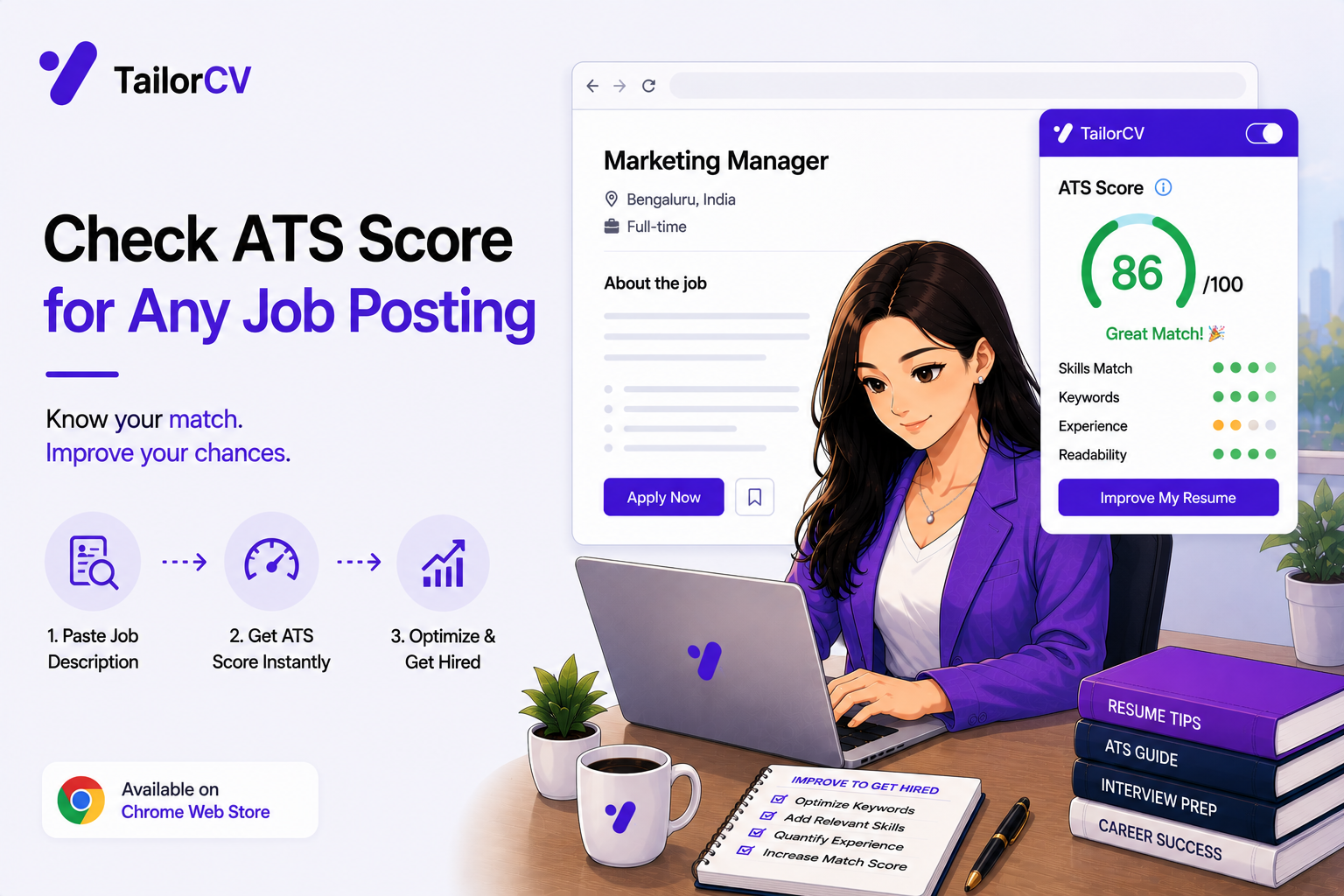
Two weeks with no responses at all — audit the resume. Run the skill match against four well-fitting jobs. A consistently low score means the document, not the volume.
Responses but no interviews — the resume is passing screening and failing the human read. Look at whether your bullets show outcomes or duties.
Interviews but no offers — the documents are working and the problem has moved. That is progress, and it needs interview preparation rather than more applications.
Interviews for jobs you do not want — your targeting is off. Narrow the tiers rather than widening them.
Nothing changing after six weeks — change one variable deliberately. A different sector, a different seniority level, a rewritten summary. Changing everything at once teaches you nothing about what worked.
Protecting your energy over months
A search is usually longer than anyone plans for, and the thing that ends most of them is not failure but exhaustion.
Separate outcome from effort. You control applications sent, quality maintained, and people contacted. You do not control responses. Track the first three and let the fourth be what it is.
Set a weekly target you can actually hit on a bad week, not on your best week. A target you miss most weeks is a demoralisation machine.
Do the hard thing first in a block. The tier-one application you are avoiding gets easier once it is done and impossible once it has been postponed for three weeks.
Have something in the week that is not the search. People whose entire week is job hunting burn out faster and interview worse.
Notice avoidance. Weeks of tier-three applications and no tier-one usually means the jobs you actually want feel intimidating. That is worth naming rather than scheduling around.
Talk to someone weekly. A friend, a former colleague, anyone. Long searches are isolating and isolation makes everything harder than it is.
And remember the arithmetic. Response rates in most graduate markets mean a lot of silence is normal rather than a verdict. Fifty applications with ten responses is a good month, and it still means forty silences.
A worked example week
What the system actually looks like in practice.
Monday, 90 minutes. Open saved searches and alerts. Save thirty roles without applying to any of them. Sort into tiers as you go — a quick judgement, not an agonised one.
Tuesday, two hours. Work the tier-three pile. Open posting, glance at the skill match, tailor, skim the PDF, submit. Fifteen to twenty applications is a realistic block.
Wednesday, 90 minutes. One or two tier-one applications. Read the company properly, generate the documents, rewrite the letter in your own voice, find someone relevant on LinkedIn and send a short note.
Thursday, two hours. Tier two. Generate, read properly, light edit, submit. Ten to fifteen.
Friday, one hour. Follow up on anything from last week. Update notes on whatever progressed. Look at the week's response pattern.
Saturday and Sunday. Nothing. This is load-bearing.
Total: roughly eight hours, thirty-plus applications, two done to a standard you would defend. That is a sustainable month, and a sustainable month beats a spectacular fortnight.
Adjusting the system to your situation
The template above assumes a full-time search. Most people are not in that position.
If you are studying full time, halve everything. One sourcing session, one application block, one tier-one application a week. The rhythm matters more than the volume, and consistency over three months beats intensity over three weeks.
If you are working full time, protect two evenings and one weekend morning. Do tier-one work at the weekend when you have attention, and volume applying on an evening when you do not.
If you are on a visa clock, front-load. The tier structure still applies, but the ratio shifts toward volume early so you have responses coming back while you are still working the good applications.
If you have been searching for months, cut volume and raise quality. Long searches usually degrade into tier three only, and reversing that — five genuinely good applications a week and nothing else — frequently breaks the pattern.
And whatever your situation, write the schedule down. A system in your head is not a system; it is an intention that competes with everything else in your week.
Mini checklist
- unchecked: Extension installed and base resume set
- unchecked: Apply profile completed
- unchecked: Jobs sorted into three tiers
- unchecked: Sourcing separated from applying
- unchecked: Two fixed application blocks in the week
- unchecked: Tier-one applications protected and done properly
- unchecked: Follow-ups scheduled for a fixed day
- unchecked: Tracker updated weekly
- unchecked: One day a week genuinely off
Scenarios
Scenario 1: You have been applying for two months with no responses
Stop and audit before adding volume. Check the skill match on four jobs you would be good at. If it is consistently low, the base resume is the problem and more applications will not fix it.
Scenario 2: You feel guilty every time you are not applying
That feeling is what a structureless search produces, and it is why people quit. Fixed blocks and a day off convert an unbounded obligation into a finite task you can actually finish each week.
Scenario 3: A recruiter calls about a job you do not remember
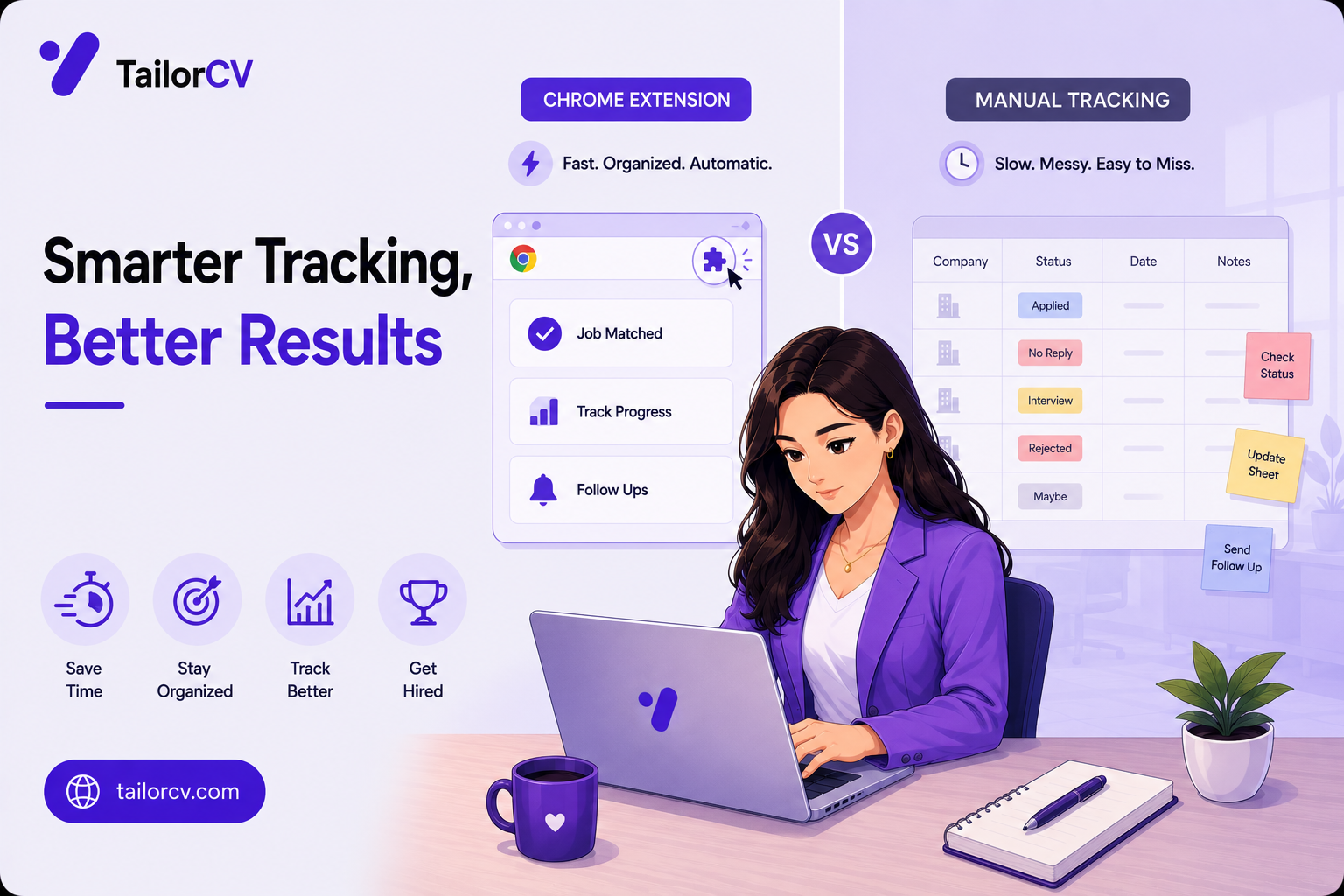
The My Resumes page records each tailored resume against its job. Check it before the call rather than improvising, and start keeping the tracker properly.
Tip: Separate sourcing from applying. Finding jobs and applying to jobs use different kinds of attention, and interleaving them is the single biggest reason a job search feels exhausting out of proportion to the hours spent.
Do's and Don'ts
Do
- Sort jobs into tiers with different effort levels
- Batch sourcing separately from applying
- Automate documents and form filling
- Protect tier-one applications
- Follow up on a fixed day
- Take a real day off each week
Don't
- Treat every application as tier one
- Interleave sourcing and applying
- Add volume before auditing quality
- Apply whenever you feel able, with no structure
- Skip the tracker
- Run seven days a week
Common Mistakes
- Volume without tailoring. More generic applications mostly means more rejections.
- No tiering. Full effort on everything exhausts you by mid-week.
- Mixing sourcing and applying. It is what makes the process disproportionately draining.
- Adding volume to fix a quality problem. Audit the resume first.
- No tracker. The recruiter call you cannot place is a wasted application.
- No days off. Searches that run continuously end early.
Related Guides
Keep building on this with the related guides in this series:
- The One-Click Apply Workflow
- Getting an ATS Score on Any Job Posting
- Extension Versus Manual Job Tracking
- Applying on Indeed Faster
- Tailoring Your Resume on LinkedIn
- The Best Chrome Extension for Students Job Hunting (2026)
You can also check your resume's ATS score for free, generate a tailored cover letter, or build a portfolio website in minutes.
Frequently Asked Questions
How many jobs should I apply to per week?
Fewer than people think at tier one and more than people manage at tier three. A workable split is three to five properly researched, fifteen good fits, and a volume tier beyond that.
Is applying to fifty jobs a good idea?
Only with a system. Fifty generic applications mostly produce fifty rejections; fifty tiered, tailored ones are a reasonable month's work.
Why separate sourcing from applying?
They use different kinds of attention. Interleaving them causes constant context switching, which is the main reason a search feels exhausting relative to the hours spent.
What should I never automate?
Whether to apply, whether the role fits, the voice of a tier-one cover letter, and who to reach out to. Those are what differentiate you.
How do I avoid burnout?
Fixed blocks, clear tiers, a real day off, and a tracker so you are not carrying the whole search in your head.
What if I am getting no responses at all?
Audit before adding volume. Check the skill match on well-fitting jobs — a consistently low score means the resume, not the market, is the problem.
What setup does the system need?
Base resume uploaded, template chosen, apply profile completed, saved searches configured, and one test application run end to end before your first real block.
What if two weeks produce no responses?
Audit before adding volume. Run the skill match against four well-fitting jobs — a consistently low score means the resume is the problem, not the number of applications.
How do I avoid burning out over a long search?
Track effort rather than outcomes, set a target you can hit on a bad week, do the hard application first, keep something in your week that is not the search, and talk to someone weekly.
What does a realistic week look like?
Roughly eight hours: 90 minutes sourcing on Monday, two-hour application blocks Tuesday and Thursday, 90 minutes on tier-one work Wednesday, an hour of follow-ups Friday, and the weekend off.
Check your match before you install anything
Same score the extension shows on a job page - run it here on any resume and job description.
Drop your resume here or choose a file
PDF only. Max 2 MB.
We never share your data or use it to train AI models.

Was this guide useful?
Be the first to rate it.