 TD
TD
Key Takeaways
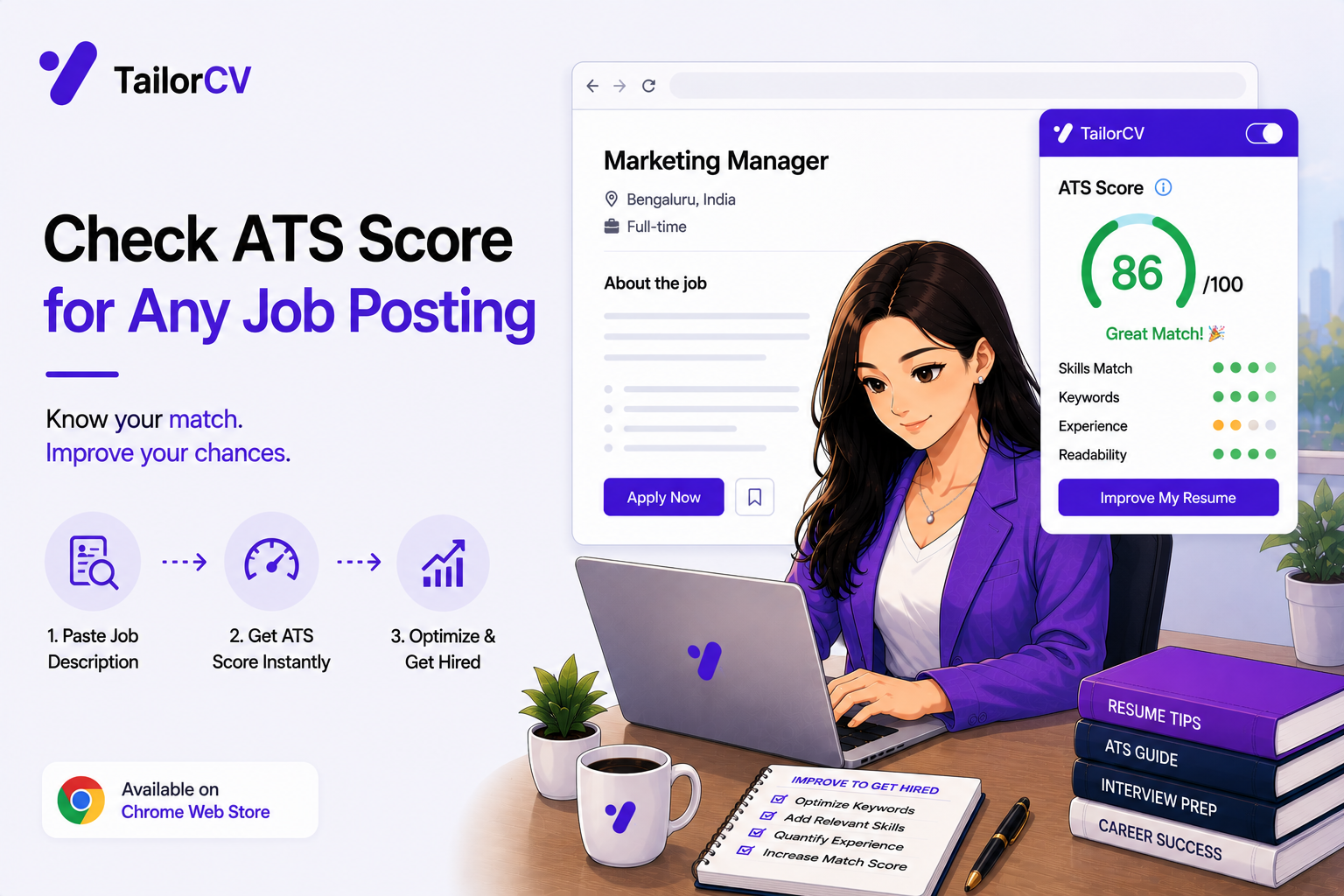
- The extension calculates a skill-match score between your base resume and the job description on screen, instantly.
- It is deterministic — no AI call — which means it is fast, free of your quota, and it can refire on every job you scroll to.
- The score's most useful function is not filtering jobs. It is showing you where your resume is understating you.
- A full ATS analysis on the site gives the deeper breakdown when you want it.
- One analysis per session. The score you see is the score used downstream, so the numbers never disagree with each other.
What the score is measuring
The skill match compares the text of your base resume against the text of the job description and reports how well they correspond.
It is text matching, not judgement. No language model is involved. It is regex and comparison work, which is exactly why it can run every time you open a new posting without cost or delay.
That is a feature, not a limitation. Automated screening at most employers is also literal text matching. A system that mimics what the real filter does is more useful for this purpose than one that forms a clever opinion the real filter would never share.
It looks at the job's own vocabulary. If the posting says "Power BI" and your resume says "business intelligence reporting", a human sees the same thing and a parser does not. The score surfaces that gap.
The insight people miss
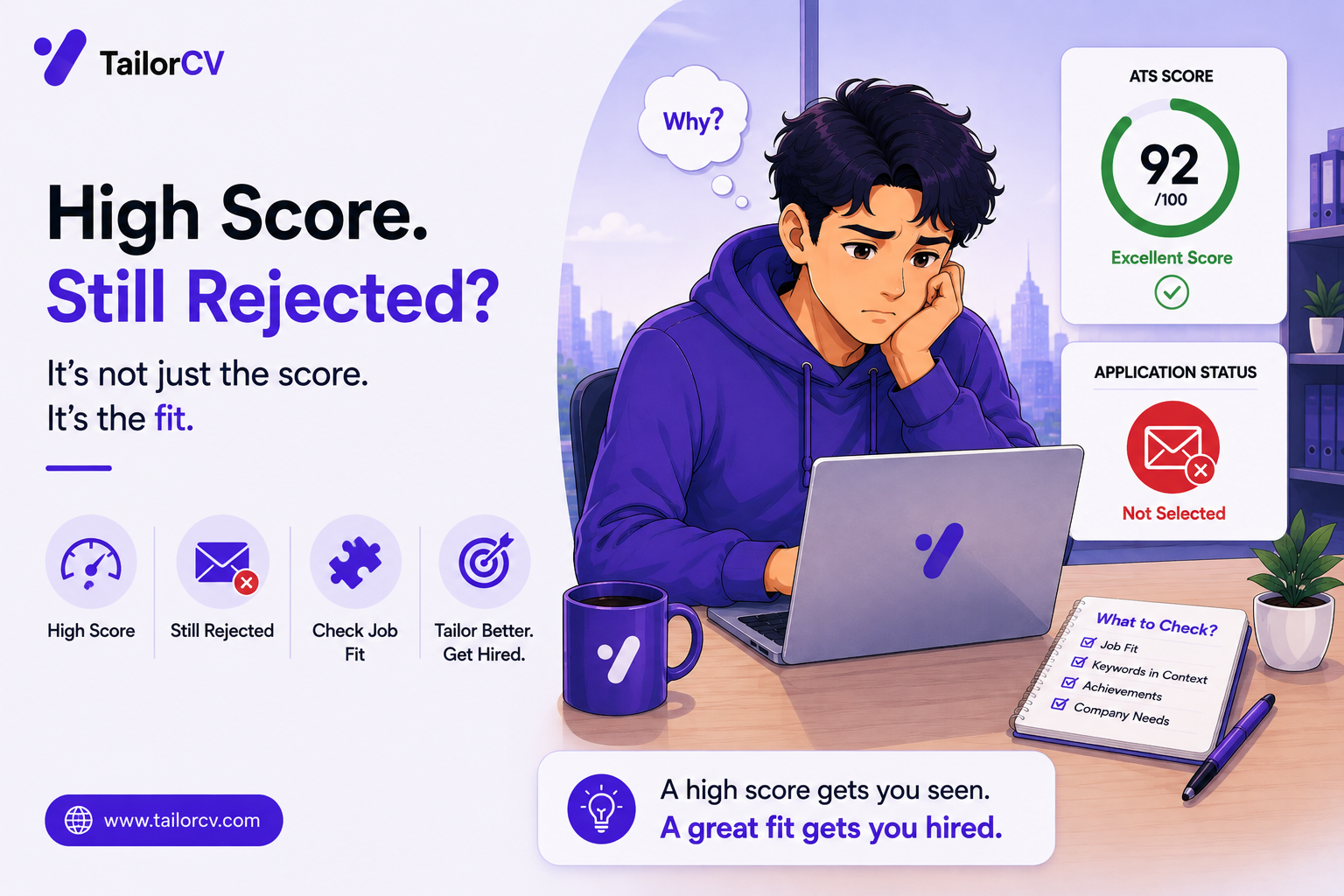
Most people read the score as a verdict on the job. It is more valuable as a verdict on the resume.
A low score can mean the job is a poor fit. Sometimes that is exactly what it means, and the right response is to move on.
More often, it means your resume does not say what you can do. Graduates in particular systematically understate themselves — the project where they used Docker is described as "containerised the deployment" without naming Docker; the year of SQL work is buried in a bullet about "reporting".
Run the score against three or four jobs you would genuinely be good at. If it comes back low consistently, the problem is not the market. It is that your base resume is not evidencing capability you actually have, and that is a completely fixable problem.
Fixing it improves every application at once, not just the one you were looking at.
How to use it in practice
As a pre-filter. Before spending an application, glance at the score. A very low match on a job you thought was ideal is worth understanding before you send anything.
As a resume diagnostic. Consistently low scores across well-matched jobs means the base resume needs work.
As a vocabulary check. Read the posting for terms you genuinely have experience with but did not name. Add them to the base resume where they are true.
Not as an absolute threshold. There is no magic number above which you get the job. It is a relative signal, most useful compared across several postings.
And not as permission to skip reading the posting. A score cannot tell you whether the role is what you want, whether the team sounds good, or whether the company is somewhere you would last a year.
The deeper analysis
When you want more than a score, the site's full ATS analysis gives the breakdown — which skills matched, which are missing, and how the document parses.
One analysis per session. When the extension has already scored a job and you continue into the full flow, that analysis is carried forward and used as-is rather than recalculated. This is deliberate: two separate AI scorings of identical input disagree with each other, and users were seeing one screen say thirteen missing skills while another said five. Reusing the single analysis means the numbers you are shown are consistent everywhere.
The full analysis is free and unlimited for logged-in users. Guests get one free scan.
Turning a low score into a better resume
A practical sequence rather than general advice.
Collect four postings for jobs you would genuinely be good at and would genuinely take.
List the terms they share. Tools, systems, methods, standards, certifications. Terms appearing in three or four of them are what your target market actually asks for.
Mark each one honestly. Have done it. Have touched it. Have never used it.
For "have done it" terms missing from your resume — add them. This is the largest and easiest gain available to most graduates, and it is entirely legitimate because it is true.
For "have touched it" — find the honest phrasing. "Used X in a university project to do Y" is accurate and it matches. Vagueness helps nobody.
For "never used it" — that is your learning list. Not a resume edit. Pick the one or two that appear most often and go and learn them.
Then re-run the score. You should see it move on all four postings at once, which is the point — you fixed the document, not one application.
The limits of any score
Worth stating plainly so the number does not become the goal.
It measures document-to-posting correspondence. Not whether you can do the job, not whether the team would like you, not whether the role is worth having.
A high score does not mean an interview. Timing, competition, whether the requisition is real, and whether your experience level fits all sit outside it.
A low score does not mean rejection. Referrals, unusual backgrounds and genuinely distinctive experience all beat keyword correspondence regularly.
And no score replaces reading the posting. The most expensive applications are the well-matched ones sent to jobs the candidate did not want and would not have enjoyed.
What automated screening actually does
Understanding the thing being modelled makes the score more useful.
It parses your document first. Before any matching, the system extracts text and tries to identify sections — contact details, experience, education, skills. A document that parses badly fails here regardless of content, which is why formatting matters so much.
Then it matches against the requisition. Usually literal terms drawn from the job description or from criteria the recruiter configured.
Then it ranks or filters. Depending on configuration, candidates are scored and ranked for a human to review, or filtered out below a threshold.
Knock-out questions exist too. Work authorisation, minimum qualification, location — answered in the form rather than the resume, and frequently decisive on their own.
What it does not do is understand you. It does not infer that "containerised deployments" means Docker, or that your degree title is equivalent to the one in the posting. That inference is your job, done by writing the terms explicitly where they are true.
Formatting for parsers
The unglamorous half of any ATS score.
Single column. Two-column layouts interleave text when extracted and produce sentences that mean nothing.
Standard section headings. Experience, Education, Skills. A creatively named section may not be recognised as a section at all.
No text inside images. It is invisible to a parser, and any contact detail rendered as a graphic is a contact detail the system does not have.
Simple bullets and standard fonts. Decorative glyphs sometimes extract as junk characters.
Dates in a consistent format, so the parser can build a chronology.
Export as PDF unless asked for Word, and check that you can select the text in the exported file. If you cannot select it, neither can the parser.
Name the file with your name in it, which matters to the human at the other end rather than the machine.
Using the score across a whole search
Beyond a single application, the number becomes data.
Record it alongside outcomes. Over thirty applications you will see whether higher-scoring applications actually correlate with responses in your market. Sometimes they strongly do; sometimes the bottleneck is elsewhere entirely, and knowing which is worth more than the individual numbers.
Watch it move after a resume rewrite. If you improve the base document, scores across all your target postings should rise together. If they do not, the rewrite did not do what you thought.
Compare across sectors. Consistently higher scores in one sector than another is a signal about where your background actually fits, and it is often not where you assumed.
Notice score without response. High match and no reply repeatedly usually means level mismatch, timing, or roles that were never really open — none of which more keywords will fix.
And stop looking at it once you are interviewing. At that point the document has done its job and the number is no longer the thing to optimise.
Mini checklist
- unchecked: Base resume uploaded and current
- unchecked: Score checked before applying to a new posting
- unchecked: Score run against three or four well-matched jobs as a diagnostic
- unchecked: Missing vocabulary added to the base resume where genuinely true
- unchecked: Full ATS analysis used when you want the breakdown
- unchecked: Base resume re-checked after updating it
- unchecked: Score treated as a relative signal, not a threshold
Scenarios
Scenario 1: Your score is low on a job you thought was perfect
Read the posting's terminology against your resume. Nine times out of ten you have done the thing and not named it, which is a resume problem rather than a fit problem.
Scenario 2: Your score is low on everything
Your base resume is understating you. Rewrite it with specific tools, systems and outcomes named explicitly, then re-check. This single fix improves every application you will ever send.
Scenario 3: Your score is high but you get no responses
The score measures document-to-posting match, not the rest of it. Look at application timing, whether the roles are real, and whether your experience level actually fits — a well-matched document to an over-levelled role still fails.
Tip: Do not use the score to pick jobs. Use it to fix your resume. Run it against four roles you would genuinely be good at, and every gap it shows is either a skill to name or a skill to learn — both more useful than a number.
Do's and Don'ts
Do
- Use it as a resume diagnostic
- Add genuinely-true missing vocabulary to your base
- Check it before spending an application
- Run the full analysis when you want the detail
- Re-check after updating your base resume
- Compare scores across postings rather than to a threshold
Don't
- Treat it as a verdict on the job alone
- Add skills you do not actually have
- Look for a magic passing number
- Skip reading the posting because the score is high
- Assume a low score always means a bad fit
- Ignore it when it is consistently low
Common Mistakes
- Reading it as a job verdict. It is more useful as a verdict on your resume.
- Adding untrue keywords. It defeats the point and you have to defend it in an interview.
- Chasing a threshold. There is no number that guarantees anything.
- Ignoring a consistent low score. That is the signal worth acting on.
- Skipping the posting. A score cannot tell you whether you want the job.
- Never re-checking. After you improve the base resume, verify it worked.
Related Guides
Keep building on this with the related guides in this series:
- Tailoring Your Resume on LinkedIn
- The One-Click Apply Workflow
- Applying on Indeed Faster
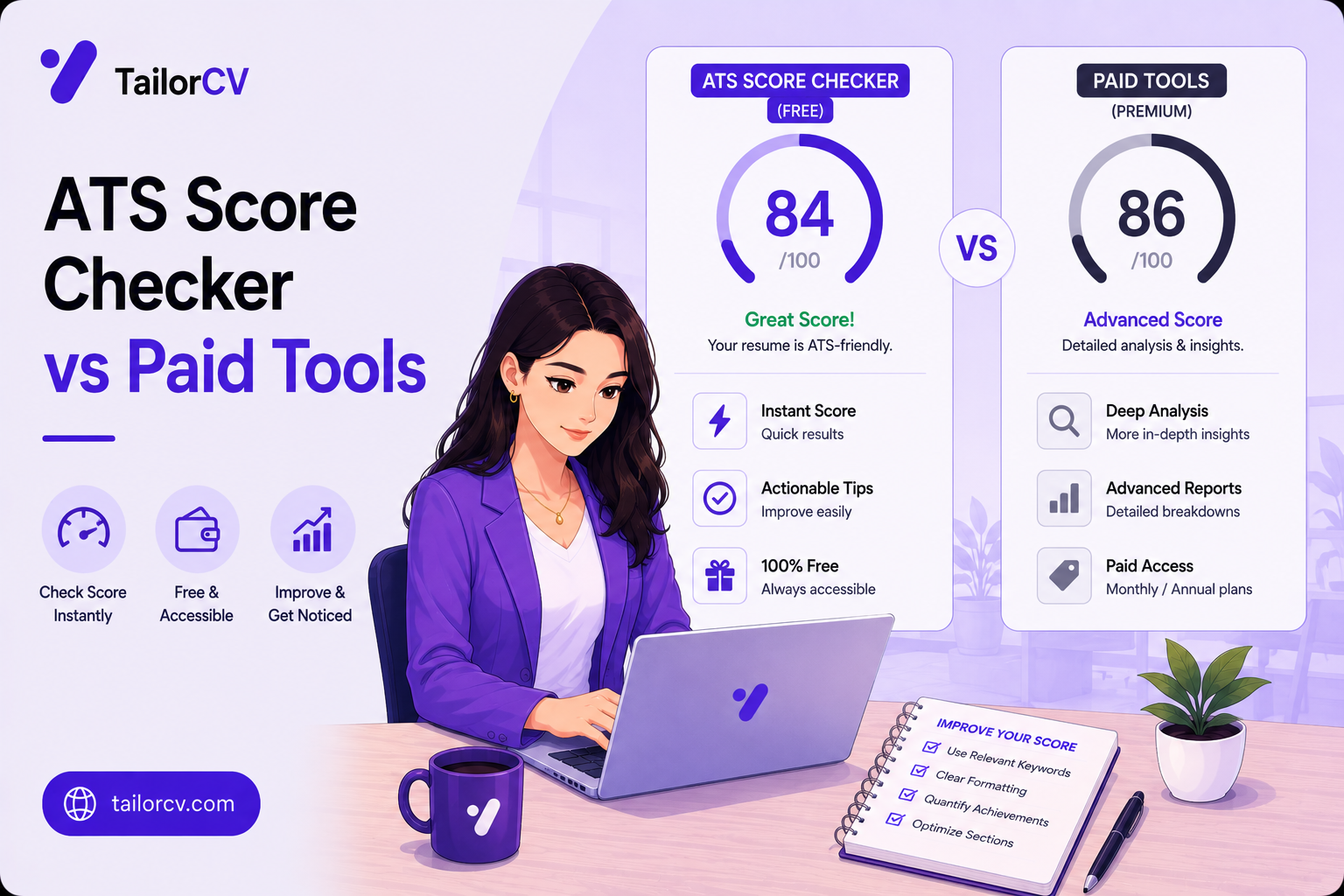
- Free ATS Checkers Versus Paid Tools
- What the Extension Can and Cannot See
- The Best Free Chrome Extension to Beat the ATS (2026)
- How to Check Your ATS Score on Any Job Posting (2026)
You can also check your resume's ATS score for free, generate a tailored cover letter, or build a portfolio website in minutes.
Frequently Asked Questions
How is the skill-match score calculated?
By deterministic text matching between your base resume and the job description — no AI call, which is why it is instant and does not consume your quota.
What is a good score?
There is no threshold that guarantees anything. It is most useful compared across several postings, and most useful of all as a diagnostic on your own resume.
Why is my score low on jobs I am qualified for?
Usually because your resume describes what you did without naming the specific tools and systems. Parsers match literally, so name them where they are true.
Should I add keywords to raise the score?
Only where they are genuinely true of you. Adding skills you do not have defeats the purpose and creates an interview you cannot survive.
Is the full ATS analysis different?
Yes — it gives a detailed breakdown of matched and missing skills and how the document parses. It is free and unlimited for logged-in users.
Why does the score not get recalculated later?
Deliberately. Two separate scorings of identical input disagree, and reusing one analysis means every screen shows you consistent numbers.
How do I turn a low score into a better resume?
Collect four postings for jobs you would genuinely take, list the terms they share, mark each honestly, add the ones you have actually done, phrase the partial ones accurately, and treat the rest as a learning list.
Does a high score mean I will get an interview?
No. It measures document-to-posting correspondence only. Timing, competition, whether the requisition is real, and level fit all sit outside it.
What does an ATS actually do with my resume?
It parses the text into sections, matches terms against the requisition, then ranks or filters. Knock-out questions on work authorisation and location are often decisive on their own.
What formatting breaks a parser?
Two-column layouts, creatively named sections, text inside images, decorative bullet glyphs and inconsistent dates. If you cannot select the text in your exported PDF, neither can the parser.
Check your match before you install anything
Same score the extension shows on a job page - run it here on any resume and job description.
Drop your resume here or choose a file
PDF only. Max 2 MB.
We never share your data or use it to train AI models.

Was this guide useful?
Be the first to rate it.