 SS
SS

Key Takeaways
- The visa question will be asked. Preparing one clear, confident sentence for it removes the single largest source of awkwardness in the whole process.
- Raise it yourself, early, if the answer is good. If you need no sponsorship, saying so unprompted is the strongest opening move available.
- If you do need sponsorship, the question the employer is really asking is about cost, delay and risk — answer that, not the immigration policy.
- Everything else in the interview matters more, and international candidates frequently over-prepare the visa answer and under-prepare the rest.
- Practise out loud. Mock interview practice exists because reading answers and saying them are different skills.
The one sentence
Write it, memorise it, and deliver it without flinching.
If you need no sponsorship, say so plainly and early: "I hold full working rights under the Graduate Route until March 2028, so there is no sponsorship required and I can start immediately."
If you hold a time-limited open permission, be specific and forward-looking: "I'm on an orientation year permit, which means no sponsorship is needed now, and when it converts I qualify for the reduced salary threshold — so the process later is simpler and cheaper than a standard hire."
If you need sponsorship from day one, do not hide it: "I would need sponsorship. My occupation is on the shortage list, which means the process is the streamlined route rather than the full one, and I've confirmed what's involved."
Three properties of a good answer: it is specific, it is short, and it ends. Do not trail off into apology or over-explanation. State the fact, then stop and let the conversation move on.
What the employer is actually asking
This reframing is what makes the answer easy.
They are not asking about immigration policy. They are asking three practical things.
"What does this cost me?" — a fee, legal support, administrative time.
"How long until this person can start?" — weeks, months, or unknown.
"What is the risk this falls through?" — after they have rejected other candidates.
Answer those three, briefly. "The permit fee is X, processing typically takes Y, and the route is deterministic — if the criteria are met it is granted, not a lottery." A candidate who can say that has removed the anxiety more effectively than one who insists it will be fine.
And know your own facts. If you cannot say what route applies to you and roughly what it involves, the employer concludes it is complicated. Ten minutes on the immigration authority's website prevents that.
When to raise it yourself
Timing is a judgement call and there is a clear rule.
If your answer is strong, raise it immediately — on the CV, in the cover letter, and in the first thirty seconds of the recruiter screen. "No sponsorship required" is the single most reassuring thing an international candidate can say and it should never be a surprise discovered late.
If your answer requires explanation, raise it in the first call. The recruiter screen is exactly the right moment: early enough that nobody has invested heavily, late enough that you have said something about yourself first.
Never let it emerge at offer stage. An employer who discovers a sponsorship requirement after choosing you feels misled even when nothing was concealed, and that is the worst possible footing for a negotiation.
And answer honestly if asked directly. Vagueness reads as concealment, and concealment about work rights ends processes.
Preparing the rest, which matters more
International candidates routinely over-index on the visa answer and under-prepare the interview.
Behavioural questions, with real stories. Four or five situations with concrete outcomes cover most of what you will be asked. Prepare them properly and practise saying them in about two minutes each.
"Why this country?" is asked of international candidates specifically, and a vague answer about culture is weak. Be specific about the industry, the company, or the market.
"Will you stay?" is the unspoken version of the same question. Employers have been burned by people who left after a year. Address it before it is asked.
Technical preparation transfers. The technical bar is not lower because you are international, and standard preparation works everywhere.
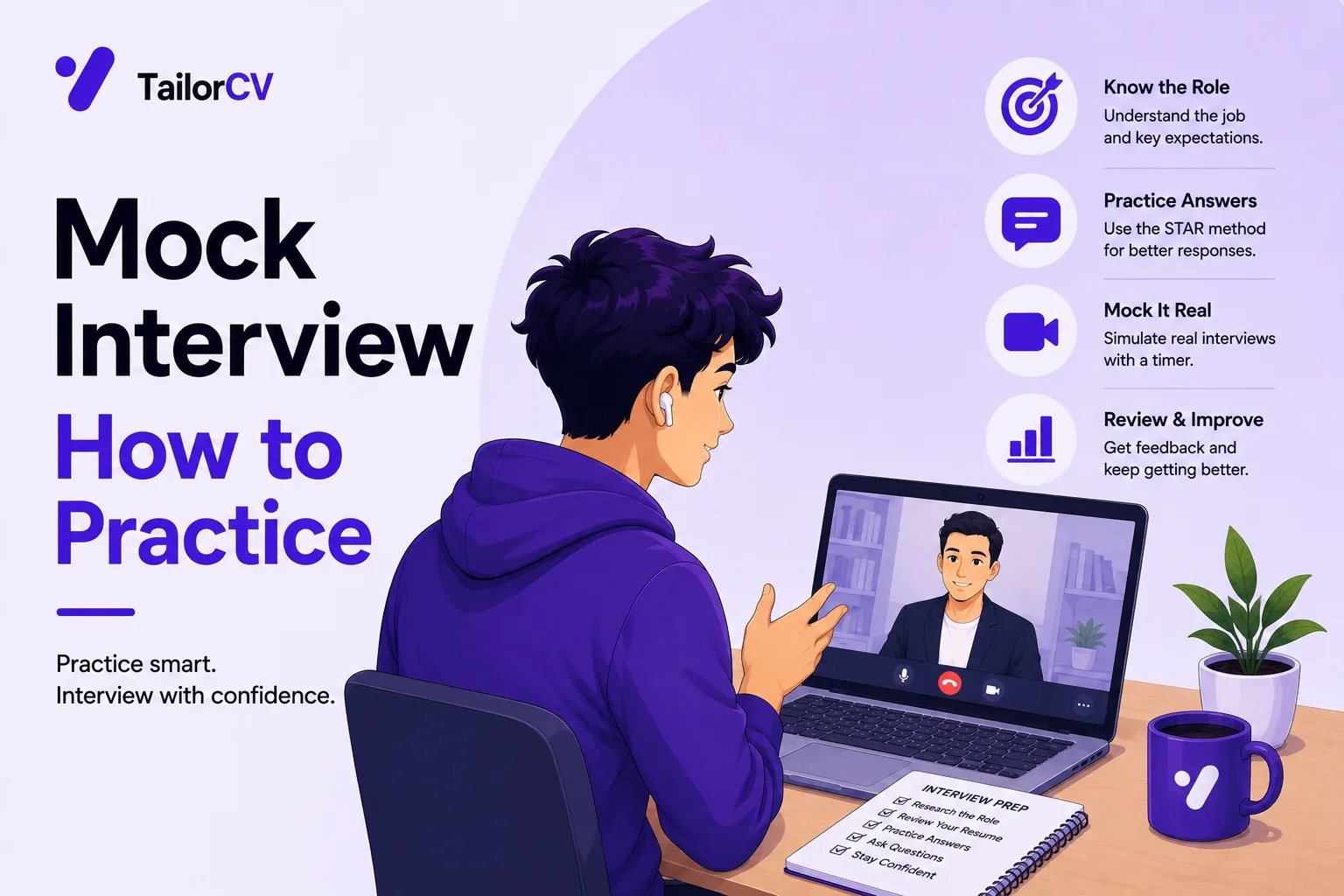
Practise out loud. Reading an answer and saying it are different skills, and the first time you say something out loud should not be in the interview. Structured mock interview practice exists precisely for that gap, and interview preparation from a job description generates the questions a specific posting is likely to produce.
The questions asked of international candidates specifically
Six that come up repeatedly, and what each is really testing.
"Why did you choose this country?" — testing whether you will stay. Answer with the industry, the company or the market, not the culture or the weather.
"What is your long-term plan?" — the same question again. A concrete answer about the next three to five years here is what they want.
"How is your [language]?" — testing honesty as much as ability. Claim the level you have, and be ready for part of the conversation to switch.
"Have you worked in a culture like ours before?" — testing adaptability. Any evidence of working across cultures, even in a diverse team at home, is relevant.
"Are you comfortable with [local working practice]?" — sometimes about hours, sometimes about directness, sometimes about hierarchy. Show you know what you are agreeing to.
"Do you have family here?" — usually about stability rather than curiosity, and in some jurisdictions it should not be asked at all. Answer as much as you are comfortable with and redirect to your commitment to the role.
None of these are hostile. They are an employer trying to reduce uncertainty about someone whose situation they cannot easily read, and confident specific answers dissolve the uncertainty faster than anything else.
A practice routine that works
Preparation fails when it stays on paper.
Write six stories. Situations with a real problem, your actual actions and a concrete outcome. Six covers almost every behavioural prompt you will meet.
Say each one out loud, timed. Two minutes each. The first attempt will be four minutes and rambling; the third will be two and clear.
Record yourself once. It is uncomfortable and it is the single fastest way to hear your own filler words and trailing sentences.
Practise the visa sentence separately until it is boring.
Run a full mock with realistic questions generated from an actual posting — interview preparation from a job description produces the questions a specific role is likely to ask, and mock interview practice puts you through them.
Then practise the questions you will ask them. Three specific ones, about the work rather than about progression.
And do it the week before, not the night before. Preparation needs a night's sleep between it and the interview to actually settle.
Handling the awkward moments
Three situations that throw people, and what to do in each.
They react badly to the sponsorship answer. Stay level and give them the facts — route, cost, timeline. If they are still uncomfortable, that is information about the employer, not a verdict on you. Some organisations simply do not sponsor, and finding out in the first call is the best possible timing.
They ask something they should not. Questions about marital status, children or religion are inappropriate and in many jurisdictions unlawful. You can answer briefly and redirect — "I'm fully available for the role and excited about the work" — without either confronting it or supplying information you did not want to give.
Your language slips under pressure. It happens to everyone in a second language. Slow down rather than speeding up, and it is entirely acceptable to say "let me rephrase that". Interviewers who penalise a rephrase in a second language are rare; candidates who accelerate into incoherence are not.
And one more: if you do not know an answer, say so and say what you would do to find out. It is a better answer than an invented one in every country in the world.
After the interview
The part that most candidates skip entirely.
Write it down within an hour. What you were asked, what you fumbled, what you would say differently. This is how interviewing actually improves, and memory degrades faster than people expect.
Send a short thank-you in markets where it is conventional — the US and UK particularly. Three lines, referencing something specific from the conversation.
Note anything you promised to send and send it the same day.
Ask about the timeline before you leave, so you know when following up is reasonable rather than guessing.
And if it goes badly, extract the lesson and move on. A search involves a lot of interviews and dwelling on one is expensive. The notes are so you learn from it; the moving on is so you can.
Mini checklist
- unchecked: Your work authorisation status established precisely
- unchecked: The one-sentence answer written and memorised
- unchecked: Cost, timeline and risk figures known
- unchecked: Status stated on CV and cover letter if it is favourable
- unchecked: "Why this country" answer prepared and specific
- unchecked: Four or five behavioural stories prepared
- unchecked: Answers practised out loud, not just read
- unchecked: Technical preparation done to the normal standard
- unchecked: Questions ready to ask them
Scenarios
Scenario 1: You need no sponsorship
Say it in the first thirty seconds and put it at the top of your CV. It removes the employer's largest unspoken objection before they have formed it, and a surprising number of candidates in this position never mention it.
Scenario 2: You need sponsorship and the employer has never done it
Come with the facts: the route, the fee, the timeline, and whether a labour market test applies. An employer's reluctance here is usually uncertainty rather than unwillingness, and specificity dissolves it.
Scenario 3: You are asked "why our country?" and freeze
Prepare it as seriously as any technical question. Name the industry, the specific company, or something concrete about the market. Generic enthusiasm about culture is the weakest available answer.
Tip: Practise the visa sentence out loud until it sounds boring to you. The problem is almost never the answer — it is the hesitation before it, which signals a difficulty that usually is not there.
Do's and Don'ts
Do
- Prepare one specific, short sentence
- Raise it early when the answer is favourable
- Know the cost, timeline and risk
- Prepare "why this country" seriously
- Practise every answer out loud
- Address the "will you stay" question unprompted
Don't
- Let it emerge at offer stage
- Apologise or over-explain
- Be vague when asked directly
- Over-prepare the visa answer and neglect the rest
- Assume the technical bar is lower
- Expect the employer to know your route better than you do
Common Mistakes
- Hesitating on the answer. The pause signals a problem that usually is not there.
- Raising it too late. Discovering it at offer stage feels like concealment.
- Explaining immigration policy. They want cost, timeline and risk, briefly.
- Not knowing your own route. If you cannot explain it, they assume it is complicated.
- Neglecting the rest of the interview. The visa answer is one minute of an hour.
- A weak "why this country" answer. It is asked of you specifically, so prepare it.
Related Guides
Keep building on this with the related guides in this series:
- Portfolio Websites for International Students
- Cover Letters That Match the Country
- Free ATS Checkers Versus Paid Tools
- Best Countries for International Graduates
- Europe versus North America for Graduate Jobs
- Interview Feedback Guide 2026 - Getting It, Reading It, and Using It
You can also check your resume's ATS score for free, generate a tailored cover letter, or build a portfolio website in minutes.
Frequently Asked Questions
Should I mention my visa status before being asked?
If the answer is favourable, absolutely and immediately. If it requires explanation, raise it in the first recruiter call — never later than that.
What is the employer actually worried about?
Cost, timeline and the risk that it falls through after they have rejected other candidates. Answer those three briefly and the anxiety mostly disappears.
How do I answer "why this country"?
Specifically. Name the industry, the company, or something concrete about the market. Generic enthusiasm about the culture is the weakest possible answer.
Is the technical bar lower for international candidates?
No. Prepare to the same standard you would anywhere, because the standard is the same.
What if the employer has never sponsored anyone?
Bring the facts — route, fee, timeline, whether a labour market test applies. Reluctance is usually uncertainty, and specificity resolves it.
How much should I practise out loud?
Enough that the answers sound boring to you. Reading and saying are different skills, and the interview should not be the first time you say something.
What questions get asked of international candidates specifically?
Why this country, what your long-term plan is, your language level, cross-cultural experience, comfort with local working practices, and sometimes family situation. Most are testing whether you will stay.
How should I practise?
Write six real stories, say each out loud timed to two minutes, record yourself once, run a full mock against questions generated from a real posting, and do it a week ahead rather than the night before.
What if an interviewer reacts badly to my needing sponsorship?
Give them the facts calmly. If they remain uncomfortable, that is information about the employer, and finding out in the first call is the best possible timing.
What should I do straight after an interview?
Write down what you were asked and what you fumbled within the hour, send a short thank-you where it is conventional, send anything you promised, and note the timeline you were given.
Was this guide useful?
Be the first to rate it.