SS
SS
Key Takeaways
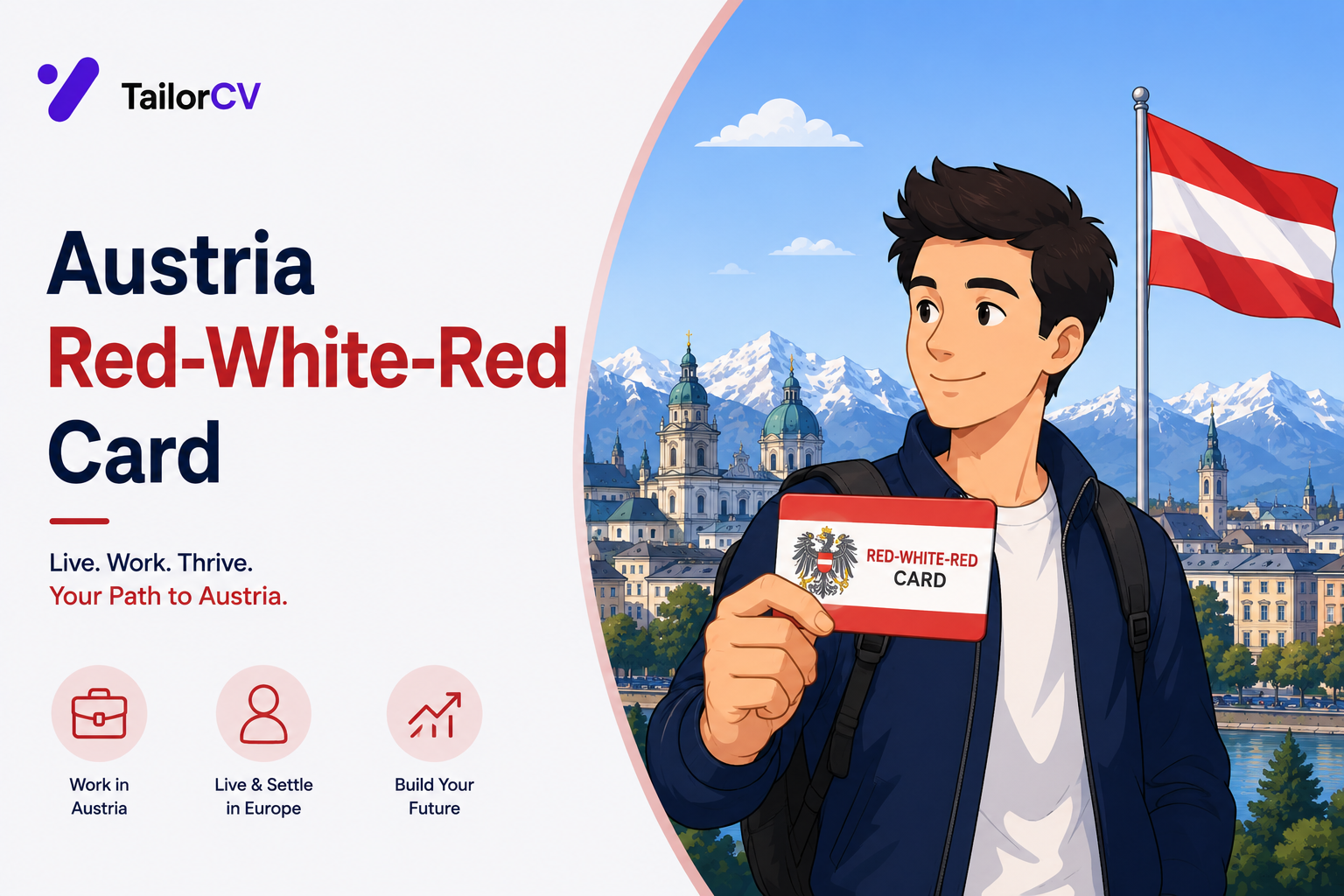
- Austria runs a points-based immigration system — the Red-White-Red Card — which is unusual in Europe and genuinely favourable to qualified graduates.
- German is required for most of the market, though technology, research and international organisations in Vienna operate in English.
- Vienna dominates, with Linz, Graz and Salzburg holding real industrial and technology employment.
- Austria hosts a large concentration of international organisations — the UN, OPEC, OSCE and IAEA are all headquartered in Vienna.
- Formal qualifications matter, and the apprenticeship tradition means a degree is read alongside vocational credentials rather than above them.
The Austrian economy
Small, wealthy, industrially serious, and more diverse than its tourism image suggests.
Industrial engineering and manufacturing is the backbone. Voestalpine in steel and processing, AVL in powertrain engineering, Andritz in industrial plant, Rosenbauer in firefighting vehicles, Palfinger in cranes. These are global companies employing large engineering workforces.
Semiconductors and electronics. Infineon has a major presence in Villach, and ams-OSRAM in sensors and photonics is headquartered in Austria. This is genuine chip design and manufacturing, not sales.
Banking and finance in Vienna, with a distinctive specialism: Austrian banks have historically been the gateway to Central and Eastern Europe, and that regional orientation persists.
International organisations. Vienna is one of the UN's four headquarters cities, alongside OPEC, the OSCE, the IAEA and dozens of others. This creates a substantial English-speaking professional labour market of a kind few cities have.
Tourism and hospitality is genuinely large, and for hospitality-trained graduates Austria is one of Europe's strongest markets.
Life sciences and research around Vienna's university and institute cluster, including the Institute of Science and Technology Austria.
The cities
| City | What concentrates there |
|---|---|
| Vienna | Head offices, finance, international organisations, technology, research, public sector |
| Linz | Heavy industry, steel, engineering, and a growing technology scene |
| Graz | Automotive and powertrain engineering (AVL, Magna Steyr), university research |
| Villach / Klagenfurt | Semiconductors — Infineon's major site |
| Salzburg | Tourism, services, some technology |
| Innsbruck | University research, tourism, sports technology |
Graz is the automotive engineering centre. AVL is one of the world's largest independent powertrain development companies, and Magna Steyr manufactures vehicles under contract for multiple global brands. For a mechanical or automotive engineer this is a serious cluster.
Villach is the semiconductor city. Infineon's Villach site does design and manufacturing, and for microelectronics engineers it is one of Central Europe's genuine destinations.
Language, honestly
German is the working language across most of the Austrian labour market. Austrian German differs from German German in vocabulary and pronunciation, but written standard German is the same and nobody expects you to master the dialect.
Where English works: the international organisations in Vienna, research institutes, some technology companies, and multinational offices.
Where it does not: public sector, healthcare, education, client-facing commercial roles, most SMEs, and most of the industrial employers outside their international divisions.
The honest assessment: Austria is less English-friendly than the Netherlands or the Nordics. If you have German, Austria is a strong option with less competition than Germany. If you do not, your market is Vienna's international sector and a slice of technology.
Learning German here is easier than learning Finnish or Hungarian, and the payoff is access to Germany, Switzerland and Austria simultaneously — three wealthy markets for one language.
How Austrian hiring runs
The process is formal and closer to Germany's than to the Nordics'.
- Application with a full dossier — cover letter, CV, and copies of certificates. See the Austrian Bewerbung guide.
- Screening, frequently by HR against formal criteria including qualifications and German level.
- First interview, structured and formal in register.
- Technical or professional assessment where relevant, and assessment centres at larger employers.
- Second interview, often with the team or a senior manager.
- References checked, and Dienstzeugnisse — employment certificates — expected.
- Offer, with the permit process following if you are a third-country national.
Titles matter in Austria more than in most of Europe. Academic titles appear on business cards, in emails and in address forms, and using someone's correctly is a genuine courtesy rather than an affectation.
Formality is higher than in Germany, which itself is higher than the Nordics. Sie rather than du until invited, surnames with titles, and business dress at most employers.
Punctuality is expected absolutely.
Money, contracts and the collective agreement
Austrian pay is structured in a way that surprises people.
Kollektivvertrag — the collective agreement — sets minimum pay for most sectors, with scales by role and years of experience. A large share of employees are covered.
Fourteen payments, not twelve. Austrian employees typically receive a 13th and 14th monthly salary — holiday pay and Christmas pay — taxed at a favourable rate. An annual figure quoted without clarifying this is ambiguous, so ask whether a salary is per month over fourteen payments or an annual total.
Salary transparency is legally required in job adverts, which must state the minimum collective agreement pay for the role. This is genuinely useful — you can see the floor before applying.
Social contributions are substantial, funding healthcare, pension and unemployment insurance, and the gross-to-net gap is larger than in the UK or US.
Statutory holiday is generous — five weeks for most employees, rising with long service — plus public holidays.
Notice periods and dismissal protection are stronger than in the Anglo-American world, and probation periods are correspondingly meaningful.
Where roles are advertised
Austria has its own channels and using the German ones is a common mistake.
karriere.at is the dominant Austrian job board and the natural first stop.
StepStone Austria and derStandard's Karriere section carry substantial volume, the latter skewing toward professional and public-sector roles.
AMS, the public employment service, runs official listings and support programmes, and is genuinely useful once you are resident.
Company career pages carry the industrial roles — Infineon, AVL, voestalpine and Andritz all recruit through their own systems.
International organisation portals. The UN, IAEA, OSCE and OPEC each run their own recruitment, entirely separately from the Austrian market, and they are the main English-language employer cluster in the country.
University career services matter if you studied in Austria, and TU Wien and TU Graz have close industrial relationships.
Initiativbewerbung — the speculative application — is normal in Austria, particularly at mid-sized industrial employers, and a well-researched one is read.
Setting up when you arrive
The administrative sequence, in order.
Meldezettel first. Registration of residence at the local Meldeamt within a few days of moving in. Almost everything else depends on it, and the deadline is short.
Residence permit or EU registration depending on nationality.
Sozialversicherungsnummer — your social insurance number, issued once you are employed, which is your key to healthcare.
E-card — the Austrian health insurance card, which follows from social insurance registration. Public health insurance is compulsory and comprehensive.
Bank account, needed for salary and rent.
Tax number and registration with Finanzamt, though for employees most of this is handled through payroll.
Housing in Vienna is expensive by Austrian standards and cheap by comparison with Munich or Zurich. Note that Austrian rentals frequently involve a deposit of several months plus, in the private market, a commission — budget for a substantial upfront sum.
Working culture
Formal, structured, and more hierarchical than the Nordics or the Netherlands.
Sie until invited otherwise. The formal address persists longer in Austria than in Germany, and switching to du is something offered rather than assumed.
Hierarchies are visible. Decisions travel up, titles carry weight, and a graduate contradicting a senior colleague publicly is riskier here than in Stockholm or Amsterdam.
Punctuality is close to absolute for meetings and appointments.
Working hours are protected. Statutory leave is five weeks for most employees, public holidays are numerous, and the gap between working time and private time is respected.
Lunch is a proper break. Eating at the desk is unusual rather than impressive.
Process and documentation matter. Decisions are recorded and procedures followed, which some people find reassuring and others find slow.
Relationships build slowly and last. Austrian professional relationships take time to warm and are durable once established — the same pattern as much of Central Europe.
And Vienna's international sector is different. The UN agencies and multinationals operate on international norms, and the formality described here largely does not apply inside them.
Mini checklist
- unchecked: Red-White-Red Card points calculated
- unchecked: German level assessed honestly in CEFR terms
- unchecked: Sector matched to city — Graz, Villach, Linz, Vienna
- unchecked: International organisations considered if your German is limited
- unchecked: Qualification recognition checked for regulated professions
- unchecked: Meldezettel and residence registration understood
- unchecked: Collective agreement for your sector researched
- unchecked: Salary compared against Vienna rent
- unchecked: Application dossier prepared, not just a CV
Scenarios
Scenario 1: You are an engineer with good German
Austria is an excellent and under-applied option. Graz for automotive, Villach for semiconductors, Linz for heavy industry — all with less competition than the equivalent German cities.
Scenario 2: Your German is weak
Target Vienna's international organisations, the research institutes, and multinational technology offices. It is a real market but a narrow one, and German study should start immediately.
Scenario 3: You are calculating whether you qualify
Work through the Red-White-Red Card points criteria properly before anything else. Austria's system is transparent, and knowing your score tells you whether the route is open before you spend months applying.
Tip: Calculate your Red-White-Red Card points before you start applying. Austria's system is unusually transparent about what it rewards — qualification, experience, language, age — and knowing your score in advance tells you whether to target Austria at all.
Do's and Don'ts
Do
- Calculate your points before applying
- Consider Graz, Villach and Linz, not just Vienna
- Target Vienna's international sector if your German is limited
- Check recognition requirements for regulated professions
- Research the collective agreement for your role
- Start German study early
Don't
- Assume Austria is as English-friendly as the Netherlands
- Restrict your search to Vienna
- Overlook the industrial engineering employers
- Ignore the points system's language component
- Expect to negotiate far outside collective agreement scales
- Confuse Austrian German dialect with written German
Common Mistakes
- Never checking the points system. It is transparent and tells you whether the route is viable.
- Vienna tunnel vision. Graz, Villach and Linz hold serious engineering employment.
- Overestimating English coverage. Austria is less English-friendly than the Nordics or Netherlands.
- Ignoring the international organisations. Vienna hosts an unusual concentration of them.
- Underrating industrial employers. AVL, Infineon, voestalpine and Andritz hire internationally.
- Skipping qualification recognition. Required for regulated professions and slow if left late.
Related Guides
Keep building on this with the related guides in this series:
- The Red-White-Red Card Explained
- The Austrian Bewerbung and CV Format
- Graduate Jobs in Germany
- Graduate Jobs in Switzerland
- The EU Blue Card for Graduates
- Birmingham Jobs Guide 2026 - The Midlands' Professional Centre
You can also check your resume's ATS score for free, generate a tailored cover letter, or build a portfolio website in minutes.
Frequently Asked Questions
Do I need German to work in Austria?
For most of the market, yes. Vienna's international organisations, research institutes and some technology companies operate in English, but that is a narrower slice than in the Netherlands or the Nordics.
What is the Red-White-Red Card?
Austria's points-based immigration route for qualified workers, scoring qualification, experience, language ability and age. It is unusual in Europe and transparent about what it rewards.
Is everything in Vienna?
Most of the corporate and international employment, but not the engineering. Graz is a major automotive cluster, Villach a semiconductor centre, and Linz a heavy industry base.
Which Austrian companies hire internationally?
Infineon, AVL, voestalpine, Andritz, ams-OSRAM, Magna Steyr and the Vienna-headquartered banks, alongside the UN and other international organisations.
How does Austria compare to Germany?
Similar language and industrial character with a smaller market and less competition. Austria's points-based route is also more transparent than Germany's equivalent pathways.
Is Austrian German a problem?
Not in writing — standard written German is the same. Spoken Austrian German differs in vocabulary and accent, and nobody expects a foreigner to master the dialect.
How is Austrian salary structured?
Typically fourteen payments a year — twelve monthly plus holiday and Christmas payments taxed favourably. Always clarify whether a quoted figure is monthly over fourteen or an annual total.
Do Austrian job adverts show salary?
Yes. Austrian law requires adverts to state the minimum collective agreement pay for the role, so you can see the floor before applying.
How formal are Austrian workplaces?
More formal than Germany and considerably more than the Nordics. Sie rather than du, surnames with titles, and academic titles used genuinely rather than decoratively.
Where should I look for jobs in Austria?
karriere.at is the dominant board, with StepStone Austria and derStandard for professional roles, AMS for public listings, and the international organisations running entirely separate recruitment.
What is a Meldezettel?
Registration of your residence at the local authority, required within a few days of moving in. Nearly every other administrative step depends on it.
What is Austrian workplace culture like?
Formal and structured — Sie until invited otherwise, visible hierarchy, absolute punctuality, protected working hours and generous statutory leave. Vienna's international organisations operate quite differently.
Find out where a fresher resume stands
Score yours against a real posting - no account, no cost.
Drop your resume here or choose a file
PDF only. Max 2 MB.
We never share your data or use it to train AI models.

Was this guide useful?
Be the first to rate it.