SS
SS
Key Takeaways
- Insurance job descriptions require precise matching of licenses, lines of business, and systems to avoid being filtered out by ATS software.
- Key resume elements include specific licensing requirements, domain knowledge for different lines of business, and familiarity with designated software tools.
- For underwriting roles, highlight relevant licenses, exact lines of business, and quantify achievements like book size or loss ratios.
- Claims adjuster resumes should specify claims management systems used, track metrics like claim volume, and mirror licensing requirements.
- Sales resumes must emphasize production numbers, match product lines, and clearly state licensing status to align with job postings.
Insurance job descriptions are dense with regulatory and licensing requirements that most other industries do not have to deal with. A job description for an underwriter, a claims adjuster, and an insurance sales agent will each specify different licenses, software systems, and lines of business, and a resume that does not reflect these specifics precisely can be filtered out before a human ever reads it.
Insurance carriers and large agencies commonly use ATS software to manage high applicant volumes, particularly for claims and underwriting roles.
This guide covers how to match your resume to an insurance job description, across underwriting, claims, and sales roles.
Paste any insurance job posting into the TailorCV resume optimizer to see your match score and close keyword gaps instantly.
Why Insurance Resumes Need Precise Matching
Three factors make insurance resume matching especially detail-sensitive:
- Licensing requirements — Property & Casualty, Life & Health, or state-specific licenses are often hard requirements, not preferences
- Line of business specificity — commercial, personal, life, health, and specialty lines each require different domain knowledge
- Systems and tools — claims management and policy administration systems vary widely by carrier and are frequently named explicitly in postings
Missing any of these three in your resume, even with strong general insurance experience, can weaken your match significantly.
Keywords That Matter in Insurance Job Descriptions
| Category | Examples |
|---|---|
| Licenses | Property & Casualty (P&C), Life & Health, Series 6/63, state-specific licenses |
| Lines of business | Commercial lines, personal lines, life insurance, health insurance, specialty/E&S |
| Systems and tools | Guidewire, Duck Creek, Applied Epic, Salesforce, claims management systems |
| Core skills | Underwriting, risk assessment, claims adjusting, policy issuance, loss control |
| Soft skills | Negotiation, attention to detail, regulatory compliance, customer retention |
Use the resume keywords guide to prioritize which of these terms belong in your summary and skills section for the specific posting.
Matching an Underwriting Resume
- Match the exact line of business named in the posting (commercial property, auto, life, specialty)
- Reflect your licensing status clearly and match it to the posting's stated requirement
- Name the underwriting or policy administration system you use, if specified in the posting
- Quantify book of business size, premium volume, or loss ratio improvements where possible
Read how to quantify resume achievements for guidance on presenting underwriting results with real numbers.
Matching a Claims Adjuster Resume
- Name the specific claims management system required (Guidewire, Duck Creek, Xactimate)
- Reflect claim volume handled, average cycle time, or settlement accuracy if you track these metrics
- Match the exact claim type language used in the posting (property, auto, workers' comp, liability)
- Mirror any licensing or certification requirements (adjuster license by state, AIC designation)
Matching an Insurance Sales Resume
- Lead with production numbers: policies sold, premium volume, retention rate
- Match the exact product lines named in the posting (auto, home, commercial, life)
- Reflect any required licenses explicitly, since sales roles often require active state licensing
- Name the CRM or agency management system you use if the posting specifies one
If you are transitioning from a related financial services role into insurance, read resume matching for career changers for guidance on translating adjacent experience.
Common Mistakes in Insurance Resume Matching
Leaving Out License Status
If a posting requires an active P&C or Life & Health license and your resume does not clearly state your licensing status, you risk being filtered out even with relevant experience. State it explicitly and keep it current.
Using Vague Line-of-Business Language
"Insurance experience" alone is too broad. Specify the exact line of business, commercial property, personal auto, group health, that matches the posting.
Omitting Named Systems
Claims and underwriting postings frequently name specific platforms as requirements. Listing "claims software" generically instead of naming Guidewire or Duck Creek directly can cost you a keyword match.
Formatting That Fails ATS Parsing
Review ATS resume formatting mistakes and use a clean, ATS-friendly template for carrier and agency applications that go through high-volume screening.
How TailorCV Helps Insurance Job Seekers
Paste any underwriting, claims, or insurance sales job posting into TailorCV's resume optimizer to identify missing licensing, systems, and line-of-business keywords instantly. TailorCV rewrites your bullets to reflect the posting's exact language while preserving your real production and performance numbers, and checks your formatting against ATS parsing rules. Build a tailored cover letter for each carrier or agency you apply to.
Step-by-Step Guide: Tailoring Your Resume for an Insurance Job
To successfully tailor your resume for an insurance job, follow this structured approach:
Your resume after optimization
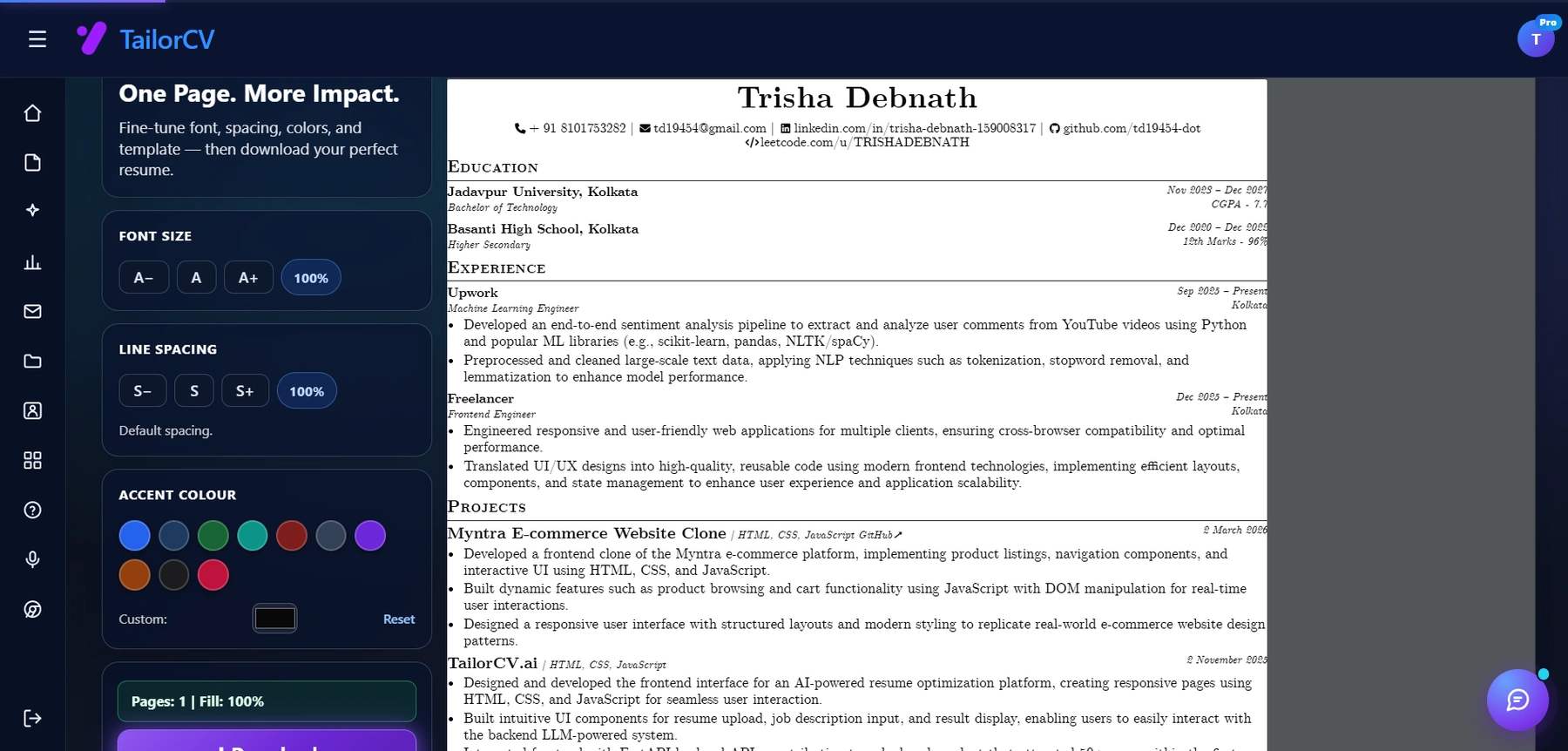
Font size, spacing, accent colour and template are all adjustable, with a live page counter.
-
Analyze the Job Description: Start by thoroughly reading the job description. Highlight key responsibilities and required skills. For a comprehensive breakdown, refer to our Job Description Analysis Checklist Before You Apply.
-
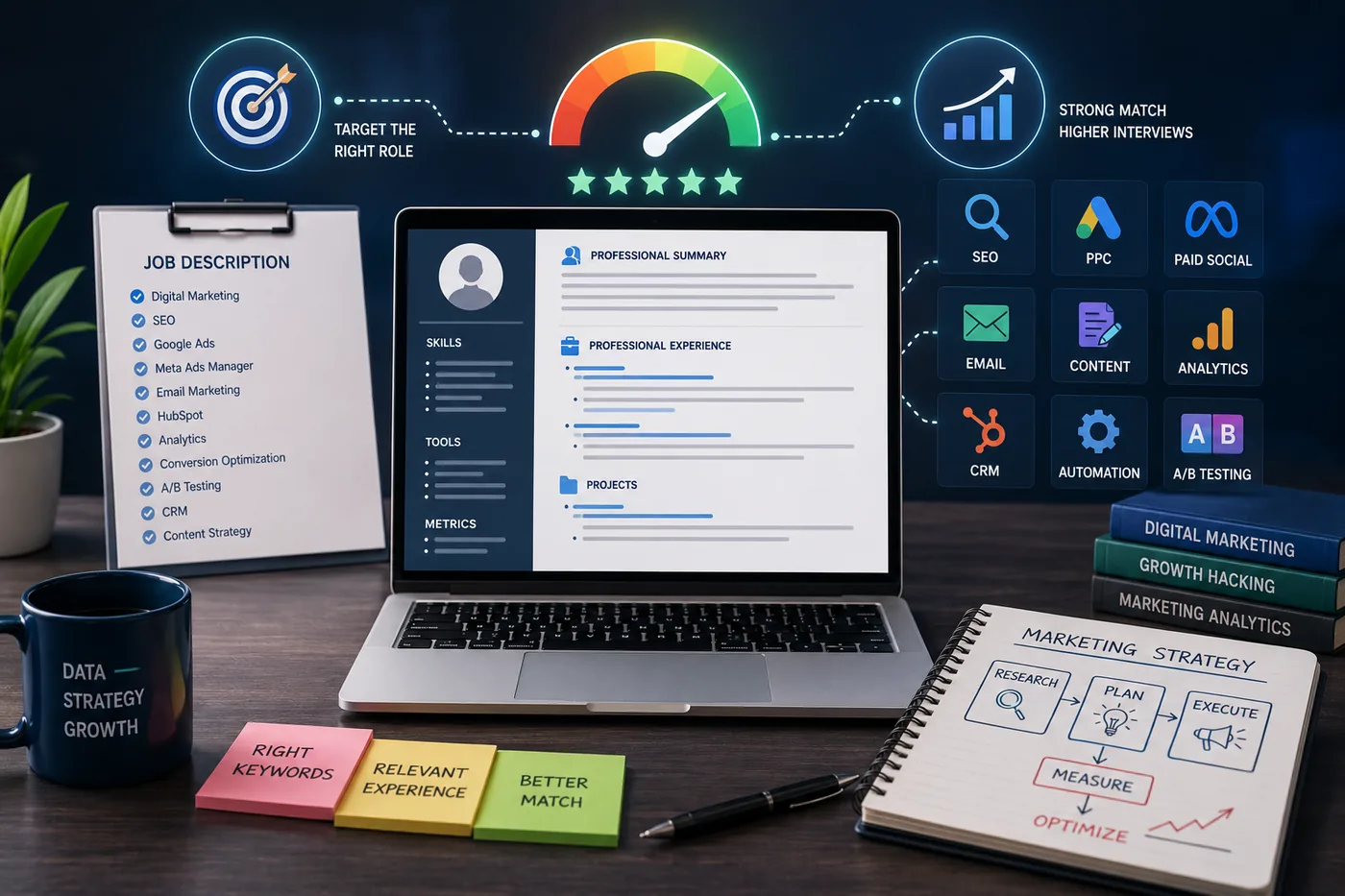
Create a Keyword Map: Identify specific keywords and phrases that appear frequently in the job description. Use our Resume Keyword Map Template - Match Your Resume to Any Job Description to organize these terms.
-
Match Your Experience: For each key responsibility or skill, find a corresponding experience or achievement in your career. Use quantifiable metrics where possible (e.g., "Managed a portfolio of 50+ insurance policies with a 98% client satisfaction rate").
-
Revise Your Summary: Tailor your resume summary or objective statement to reflect the core competencies required for the job. Use language that mirrors the job description.
-
Adjust Your Skills Section: Prioritize the skills listed in the job description. If a skill is mentioned multiple times, ensure it’s prominently featured in your skills section.
-
Format and Proofread: Finally, ensure your resume is visually appealing and free of errors. A clean layout can make a strong impression.
Common Mistakes to Avoid When Tailoring Your Resume
-
Using a Generic Resume: Avoid submitting the same resume for every job application. Tailoring your resume significantly increases your chances of being noticed.
-
Ignoring Soft Skills: While technical skills are crucial, don’t overlook soft skills like communication and teamwork, which are often emphasized in insurance roles.
-
Overloading with Keywords: While it's important to include keywords, avoid keyword stuffing. Ensure that your resume reads naturally.
-
Neglecting Job Titles: Ensure that your previous job titles accurately reflect the roles you've held. If your title was different from the job you're applying for, you can include a brief explanation in parentheses.
-
Failing to Update Your Resume Regularly: Regularly updating your resume with new experiences and skills ensures you’re always ready to apply when a suitable opportunity arises.
Do's and Don'ts of Resume Matching in the Insurance Industry
Do's
- Do Highlight Relevant Certifications: If you have certifications relevant to the insurance industry (like CPCU or AIC), make sure they are prominently displayed on your resume.
- Do Use Action Verbs: Start bullet points with strong action verbs (e.g., "Analyzed," "Developed," "Implemented") to convey your contributions effectively.
- Do Tailor Your Cover Letter: Complement your resume by tailoring your cover letter to match the job description as well. Visit our cover letter resource for tips.
Don'ts
- Don’t Include Irrelevant Work Experience: Focus on experiences and skills that directly relate to the insurance position you're applying for.
- Don’t Use a One-Size-Fits-All Approach: Every insurance job may require different qualities. Tailor your resume for each application.
- Don’t Forget to Proofread: Spelling and grammatical errors can lead to a negative impression. Always proofread before submitting your application.
Scenario: Tailoring for a Claims Adjuster Role
Imagine you’re applying for a Claims Adjuster position that emphasizes negotiation skills and attention to detail. Here’s how to tailor your resume:
-
Job Description Focus: The job description highlights the need for negotiation skills and experience with claims processing.
-
Identify Relevant Experience: In your previous role as a Customer Service Representative, you managed client disputes and negotiated settlements.
-
Highlight the Experience: On your resume, you could write: - "Successfully negotiated settlements for over 100 client disputes, achieving a 95% resolution rate."
-
Skills Section: Include "Negotiation" and "Claims Processing" in your skills section, ensuring they are aligned with the job description.
-
Final Touches: Ensure your summary mentions your expertise in claims management and your commitment to customer satisfaction.
Mini Checklist for Tailoring Your Insurance Resume
- unchecked: Analyze the job description for key responsibilities and skills.
- unchecked: Create a keyword map based on the job description.
- unchecked: Match your experience to the requirements listed.
- unchecked: Tailor your summary to reflect relevant qualifications.
- unchecked: Prioritize skills that align with the job.
- unchecked: Use quantifiable achievements to showcase your impact.
- unchecked: Review for formatting, clarity, and proofreading errors.
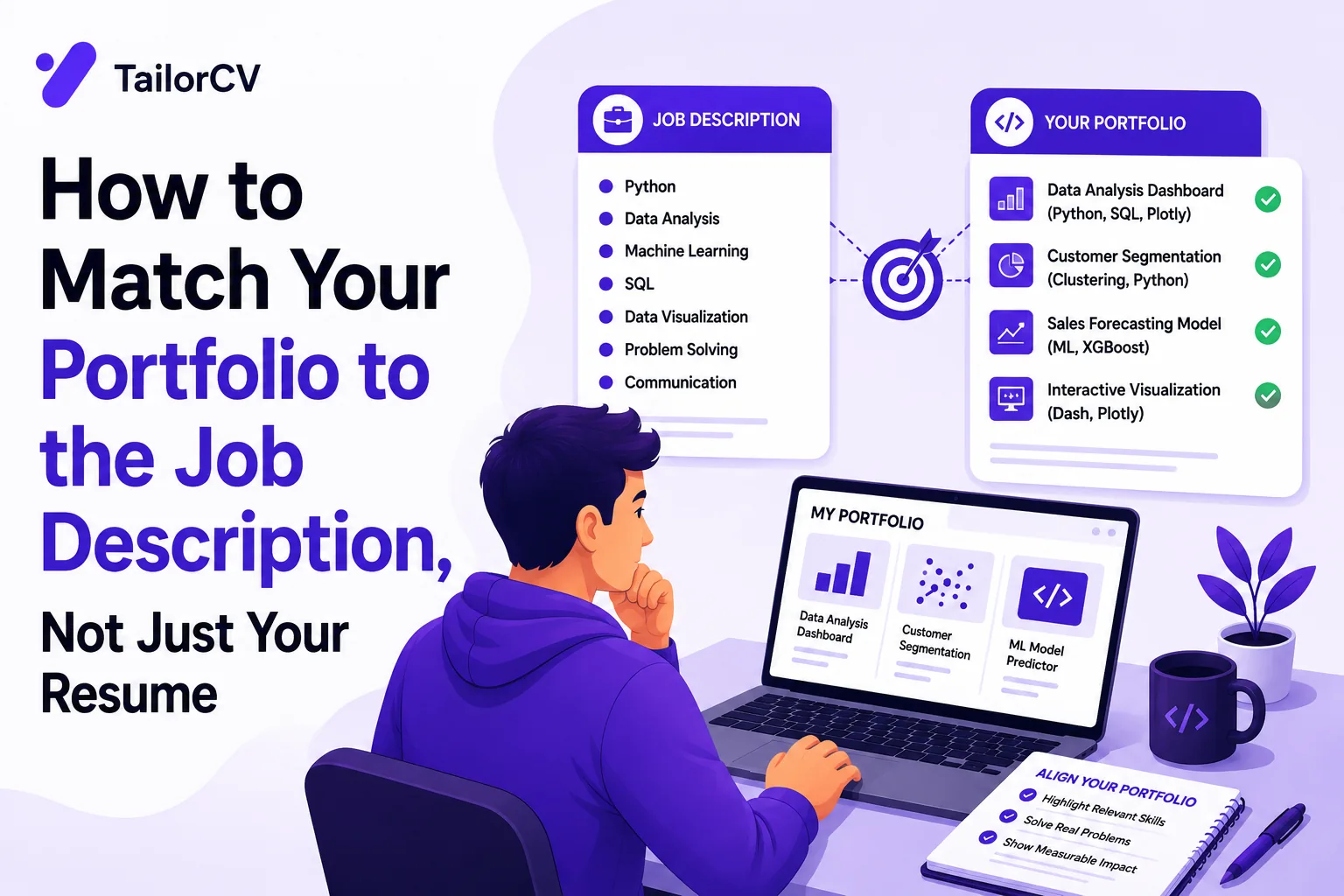
By following these detailed steps and avoiding common pitfalls, you'll be well-prepared to tailor your resume effectively for any insurance job. For additional resources, consider checking out our guide on matching your portfolio to the job description or preparing a video pitch.
Frequently Asked Questions
Do insurance carriers use ATS software to screen resumes?
Most large carriers and many agencies do, particularly for underwriting and claims roles that receive high application volumes. Matching your resume's licensing and systems language to the posting improves your odds of passing the initial screen.
How important is stating my license status explicitly?
Very important. Licensing is often a hard requirement, and an ATS or recruiter scanning quickly may skip a resume that does not clearly confirm active licensing status.
Should I list every insurance system I have ever used?
List the systems relevant to the posting, prioritizing exact matches to what is named as required. Irrelevant systems dilute your match signal.
Can I use one resume for underwriting and claims roles?
Not effectively. The two roles require different skills, systems, and metrics. Maintain separate tailored versions, following managing multiple resume versions.
How do I check my insurance resume's match score before applying?
Use the TailorCV ATS score checker to compare your resume against any insurance job posting and see your match percentage instantly. You can also create a resume keyword map template to help ensure your resume aligns with the job description. Additionally, consider reviewing the job description analysis checklist for further insights.
Related Guides
- Resume Matching with Job Description - Complete Guide
- Resume Matching for Career Changers
- How to Quantify Resume Achievements
- Resume Keywords Guide 2026
- Matching Your Resume to a Legal Job Description
- Matching Your Resume to a Real Estate Job Description
- ATS Resume Formatting Mistakes
- Managing Multiple Resume Versions
- ATS Score Guide 2026
- Cover Letter Guide 2026
Conclusion
Insurance hiring rewards precision on licenses, lines of business, and named systems. A resume that states these clearly and mirrors the posting's exact language will consistently outperform a generic "insurance professional" resume.
Check your resume's match score against any insurance job posting with TailorCV before you apply.
Match My Resume to This Job - Free
What is your resume scoring right now?
Scan it against a job description and get your ATS match score in about a minute.
Drop your resume here or choose a file
PDF only. Max 2 MB.
We never share your data or use it to train AI models.

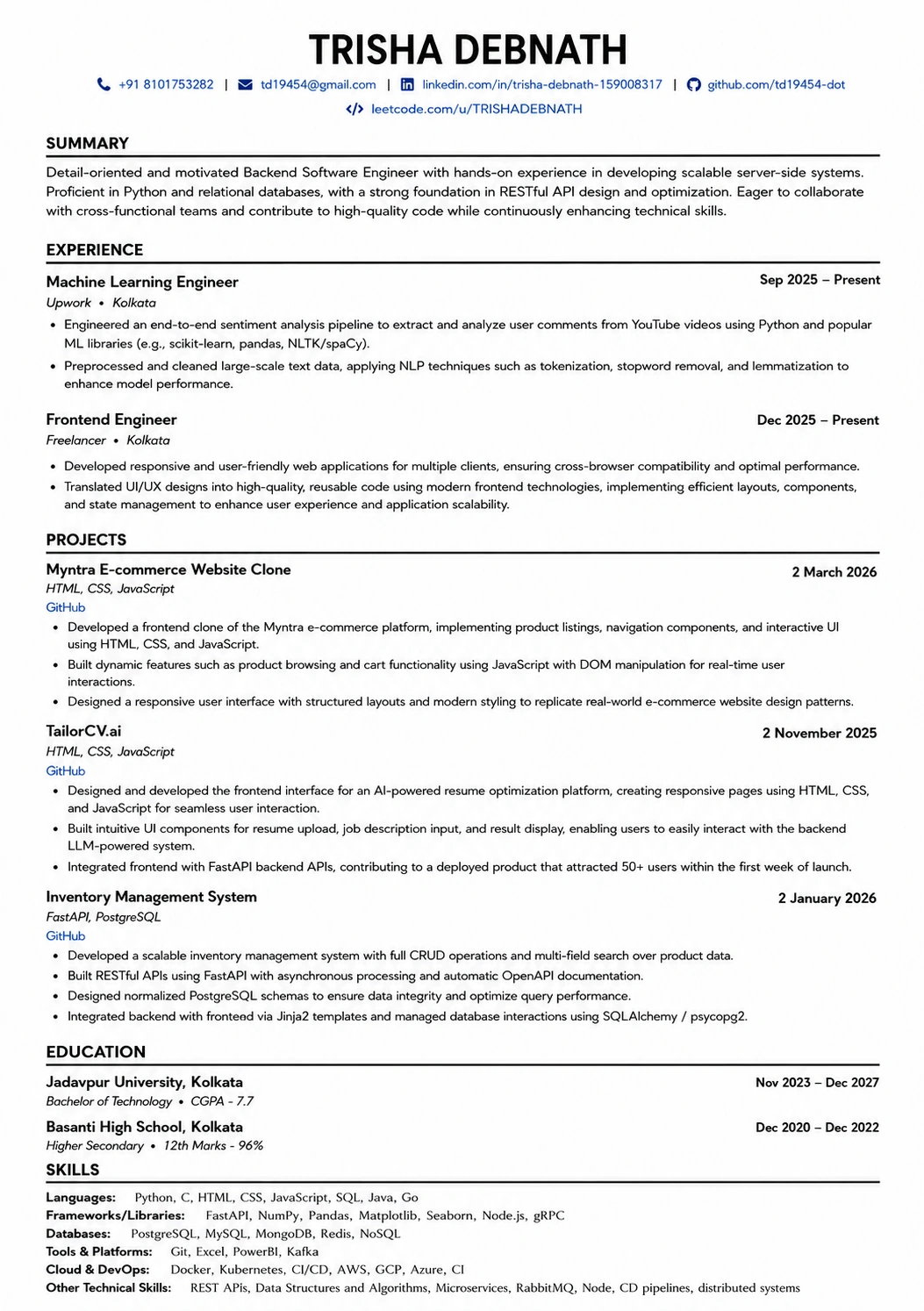
Templates that keep this structure intact
This template is ATS-tested — start from it and the formatting rules in this guide are already handled.
Was this guide useful?
Be the first to rate it.