 TD
TD
Key Takeaways
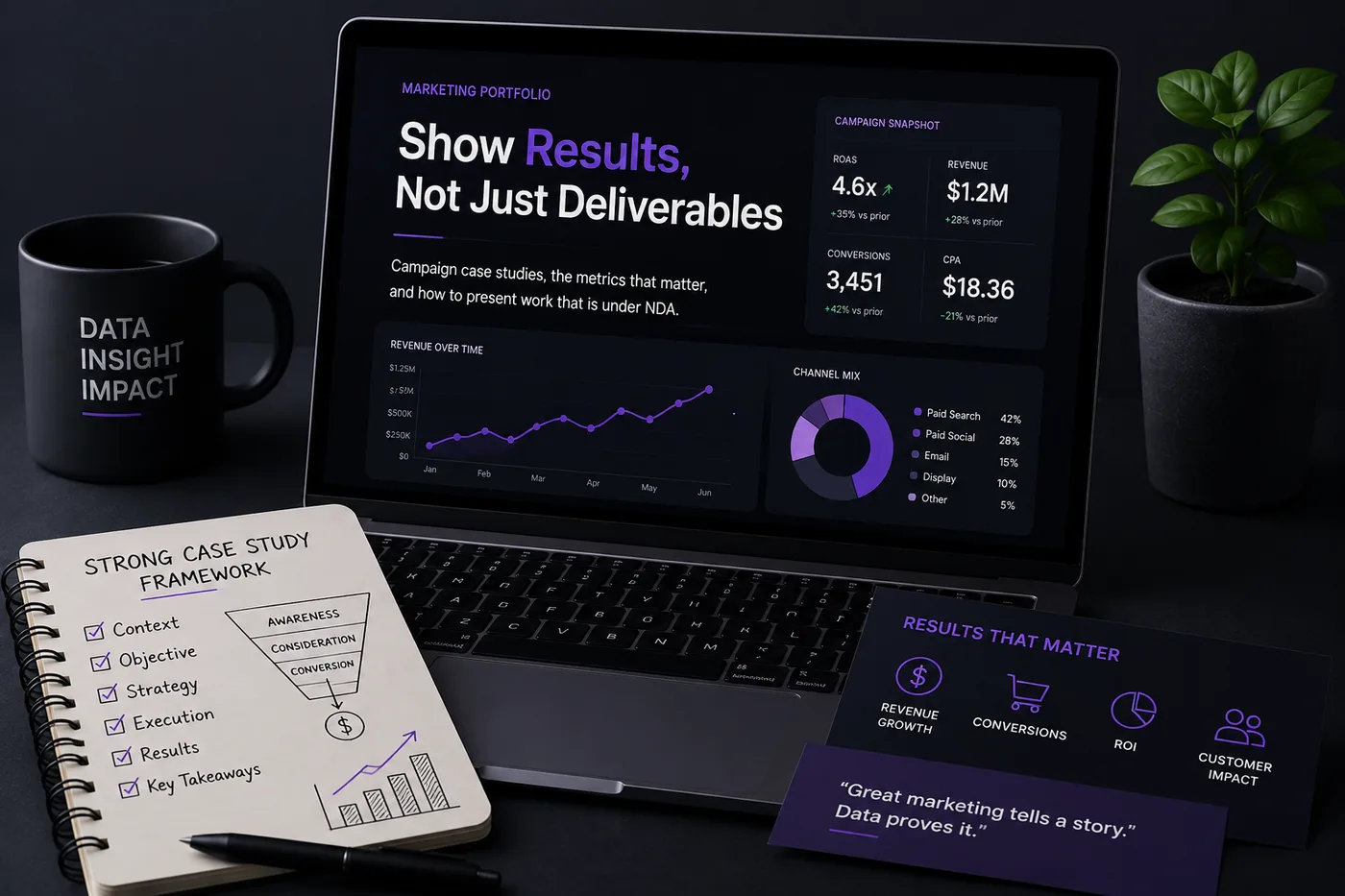
- Focus on showcasing measurable results in your marketing portfolio, such as traffic, leads, and revenue, rather than just deliverables.
- Create detailed case studies for each campaign, including objectives, strategies, creative elements, and outcomes with real metrics.
- Handle NDA work by describing the impact without naming clients, using rounded numbers to maintain clarity.
- Ensure your resume, LinkedIn, and portfolio tell a consistent story to avoid confusing recruiters.
- Avoid common mistakes like lacking metrics, having an unfocused layout, and including dead links in your portfolio.
Marketing portfolios live and die on numbers. Anyone can show a pretty ad; you show what it did - the traffic, the leads, the revenue. The fastest way to stand out is to be relentlessly outcome-focused. Pair this with How to Build a Professional Portfolio and Content Writer Portfolio Guide.
Lead With Results
For each campaign, present: the goal, the audience, the strategy and channels, the creative, and the results (traffic, leads, ROAS, revenue). A traffic graph beats a paragraph of adjectives.
Build Campaign Case Studies
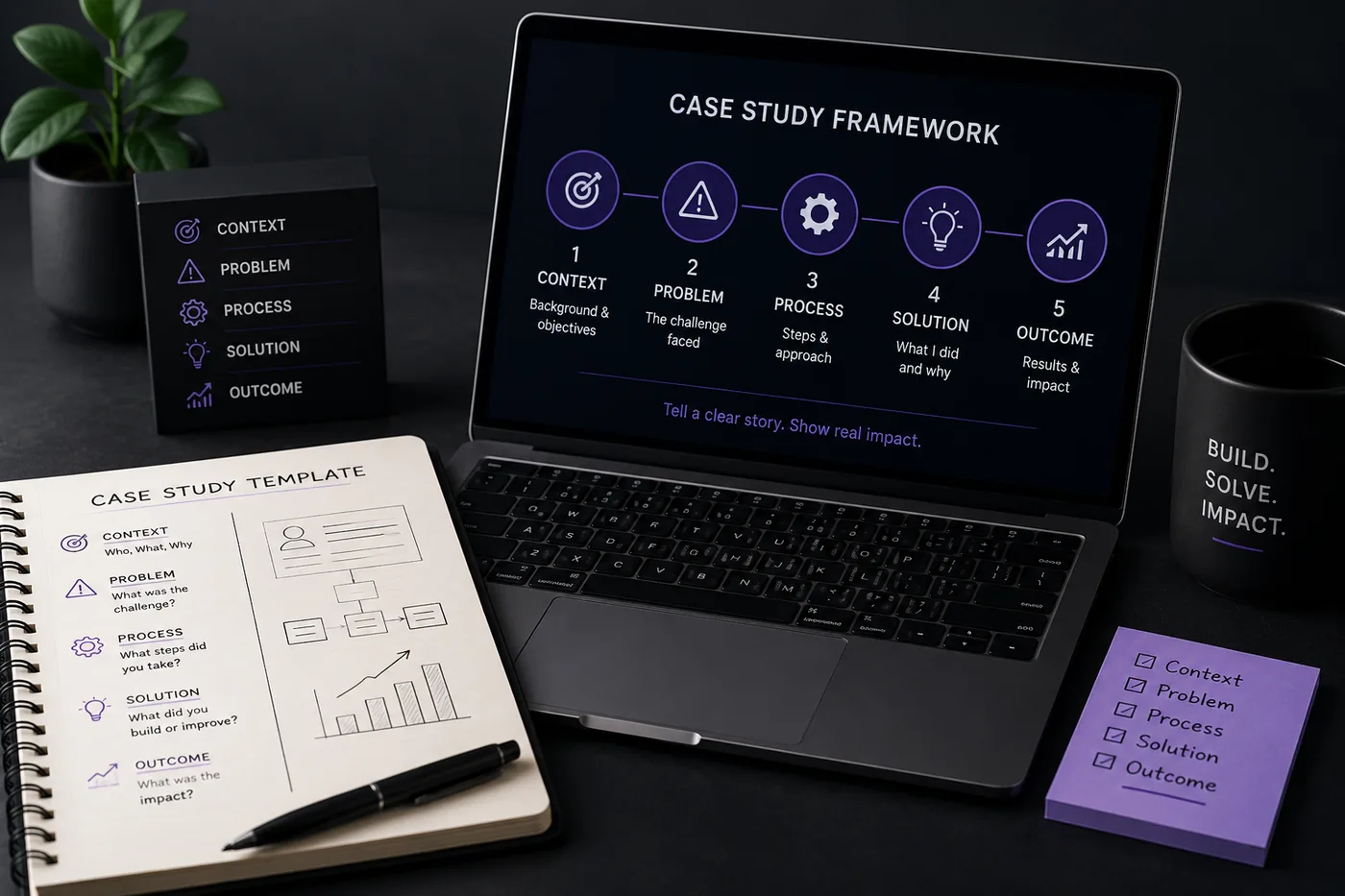
Create a simple page or deck per major campaign using the How to Write a Portfolio Case Study structure:
Turning a resume into a portfolio site
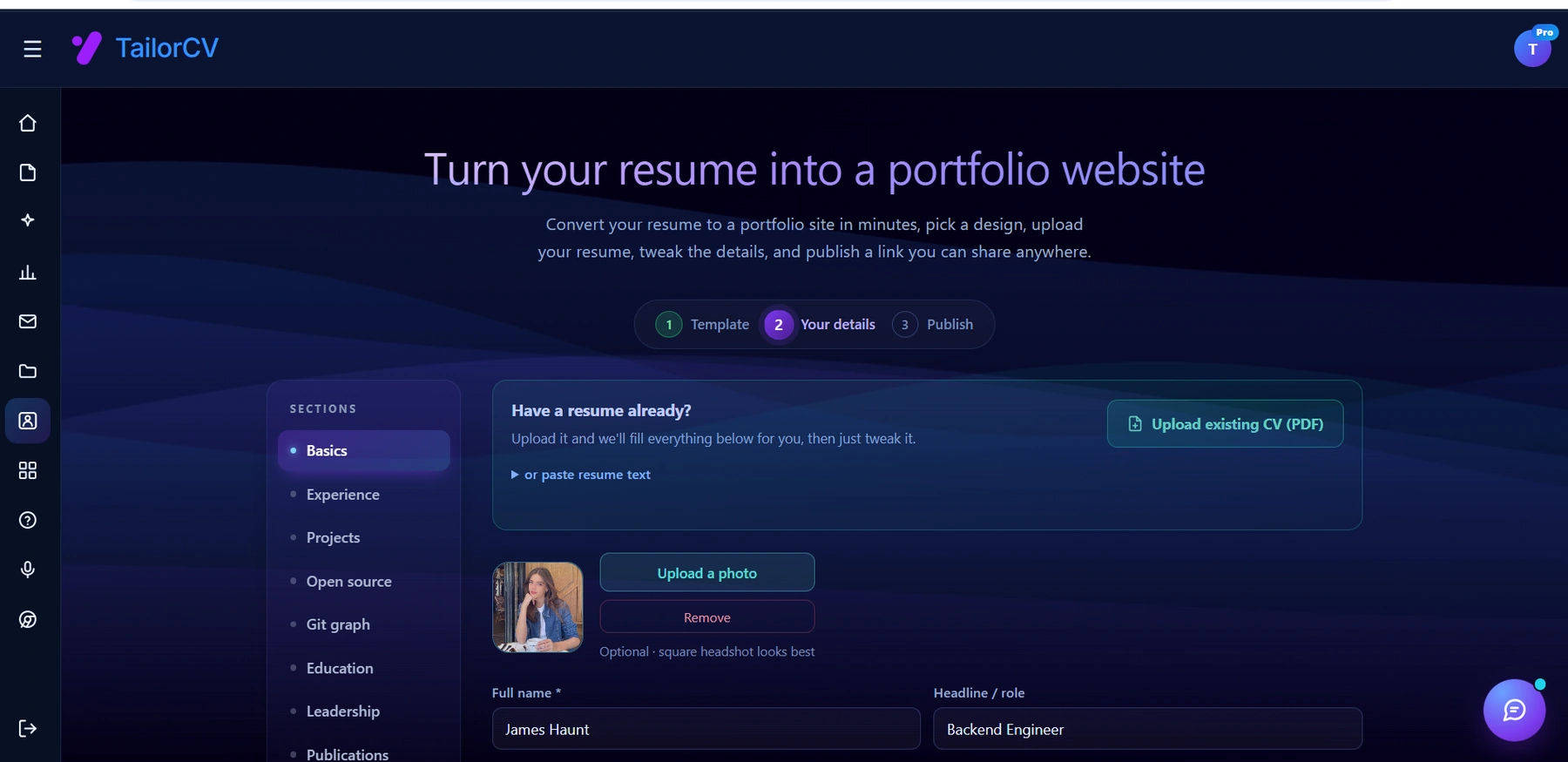
You upload the resume you already have and the sections fill themselves in - basics, experience, projects, education - so building the site is editing rather than starting from an empty page.
- Objective and target audience
- Strategy and channel mix
- Creative (screenshots of ads, emails, landing pages)
- Outcomes with real metrics and what you learned
Handling NDA Work
Describe impact without naming the client: "Grew organic traffic from 8K to 42K monthly sessions for a B2B SaaS company in HR tech." Rounded numbers are fine; vagueness is not.
What to Showcase
- SEO case studies with ranking/traffic graphs
- Paid campaign results (ROAS, CPA)
- Email performance (open/click/revenue)
- Content that ranked or went viral
- Social growth with before/after
Platforms
A personal site is most professional (Best Portfolio Website Builders 2026, How to Host Your Portfolio for Free); Notion or Google Slides work for fast starts; the LinkedIn Featured section adds reach (LinkedIn Profile Optimization Guide).
Keep Your Resume and Portfolio in Sync
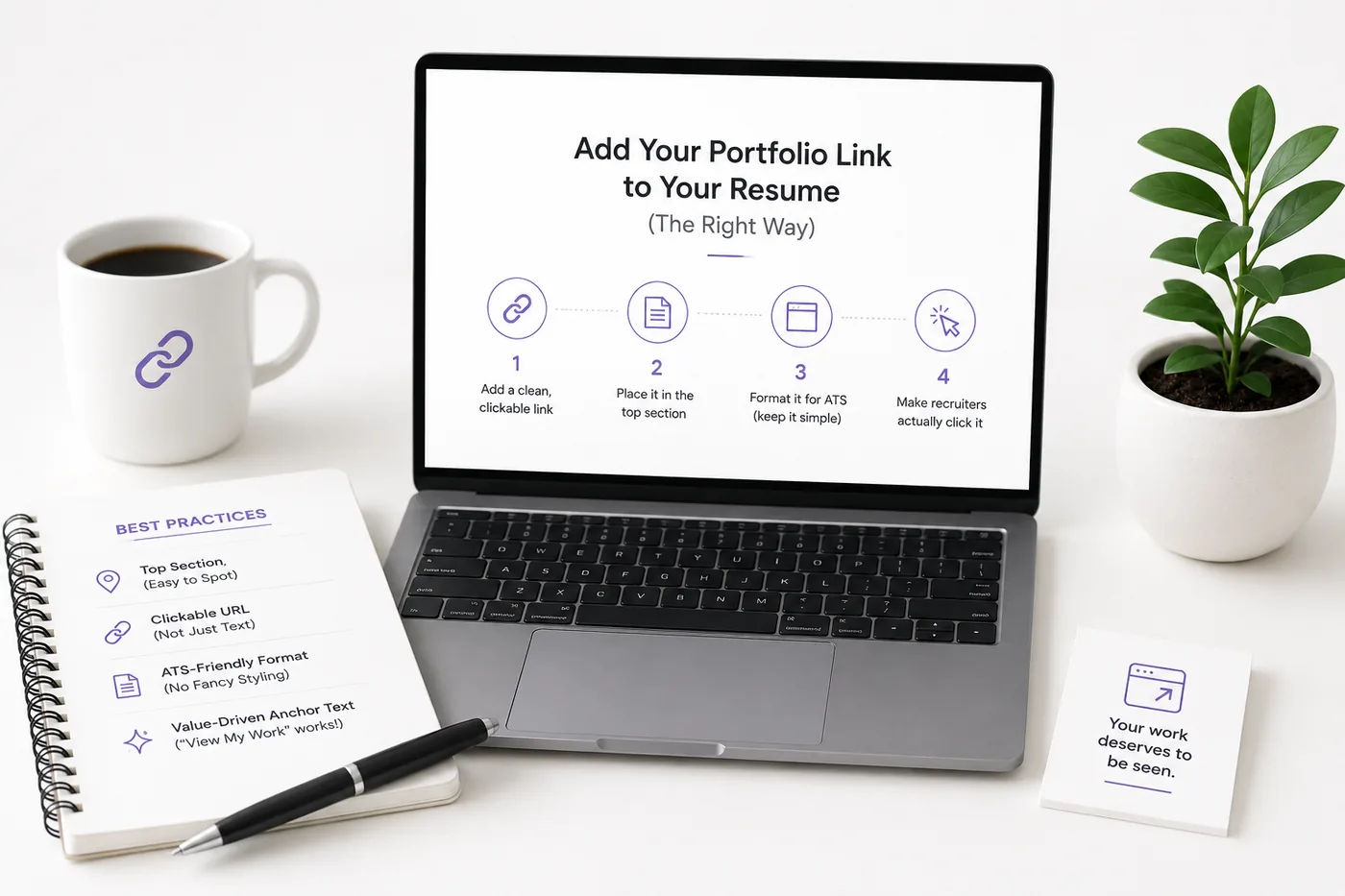
Your resume, your LinkedIn, and your portfolio should tell the same story - same name, same headline, same top projects - just at different levels of depth. A recruiter who sees a 'Full Stack Developer' resume and a portfolio headlined 'Aspiring Designer' gets confused, and confusion loses interviews. Lock the resume down first with the ATS score checker and an ATS-friendly template, then mirror that exact positioning in your portfolio. When they reinforce each other, every recruiter touchpoint pushes you forward. See How to Add Your Portfolio Link to Your Resume for placing the link correctly.
Common Mistakes
- Deliverables with no metrics
- One giant unfocused page
- No clear specialty (SEO? paid? lifecycle?)
- Dead links - use the Portfolio Checklist Before You Apply
Pro Tips
- Quantify everything (How to Quantify Resume Achievements).
- Pick a lane and lead with it; generalists are harder to place.
- Generate your portfolio from your resume with the portfolio builder.
Crafting Engaging Visuals for Your Portfolio
In marketing, visuals can often communicate complex ideas more effectively than text. Here are some practical tips for incorporating engaging visuals into your portfolio:
-
Use Infographics: Create infographics that summarize your campaign results. Tools like Canva or Piktochart can help you design them easily. A well-designed infographic can quickly convey key metrics and results at a glance.
-
Before and After Comparisons: Showcase your work with clear before-and-after visuals. This could be a website redesign, social media ad, or even a marketing funnel improvement. Use side-by-side images to highlight the impact of your efforts.
-
Video Highlights: Consider adding short video clips that summarize your projects or explain your thought process. Tools like Loom or Vimeo can help you create professional-looking videos that engage potential employers.
-
Interactive Elements: If possible, include interactive elements in your online portfolio. For example, you can use tools like Figma to create clickable prototypes of campaigns or websites you've worked on. This not only showcases your skills but also creates a memorable experience for viewers.
Step-by-Step Guide to Creating a Case Study
Creating a case study is a powerful way to demonstrate your skills and the impact of your work. Here’s a step-by-step guide to crafting an effective case study:
-
Choose Your Project: Select a project that had a significant impact on your company or client. Ideally, it should showcase a variety of skills and strategies.
-
Define the Problem: Clearly articulate the problem or challenge you faced at the start of the project. Use data or quotes to highlight the situation.
-
Outline Your Strategy: Describe the strategies you implemented to tackle the problem. Be specific about your role and the tools you used.
-
Show Results: Present the results of your efforts quantitatively and qualitatively. Use charts, graphs, and testimonials to illustrate success.
-
Reflect on the Process: Discuss what you learned during the project and how it influenced your approach in future work. This shows growth and adaptability.
-
Format for Readability: Use headings, bullet points, and visuals to make your case study easy to read and visually appealing. Consider using the How to Write a Portfolio Case Study (Template + Examples) for formatting guidance.
Common Mistakes to Avoid in Your Marketing Portfolio
Even seasoned marketers can make mistakes when compiling their portfolios. Here are some common pitfalls to steer clear of:
-
Focusing Too Much on Deliverables: While it’s important to showcase your work, avoid listing deliverables without context. Always tie them back to results and the broader strategy.
-
Neglecting Updates: A portfolio is a living document. Regularly update it with your latest work and accomplishments. An outdated portfolio can suggest you’re not keeping pace with industry trends.
-
Ignoring Target Audience: Tailor your portfolio to the specific audience you’re trying to reach. For instance, if you’re applying for a role in social media, emphasize your relevant experience in that area. Check out the Social Media Manager Portfolio Guide for more tailored insights.
-
Being Vague: Avoid using jargon or vague terms that don’t communicate the actual impact of your work. Be specific about your contributions and the results achieved.
Do's and Don'ts When Showcasing Your Work
Here’s a handy checklist of do's and don'ts to consider when building your marketing portfolio:
Do's:
- Do Include Metrics: Always provide quantifiable results where possible. Numbers speak volumes in marketing.
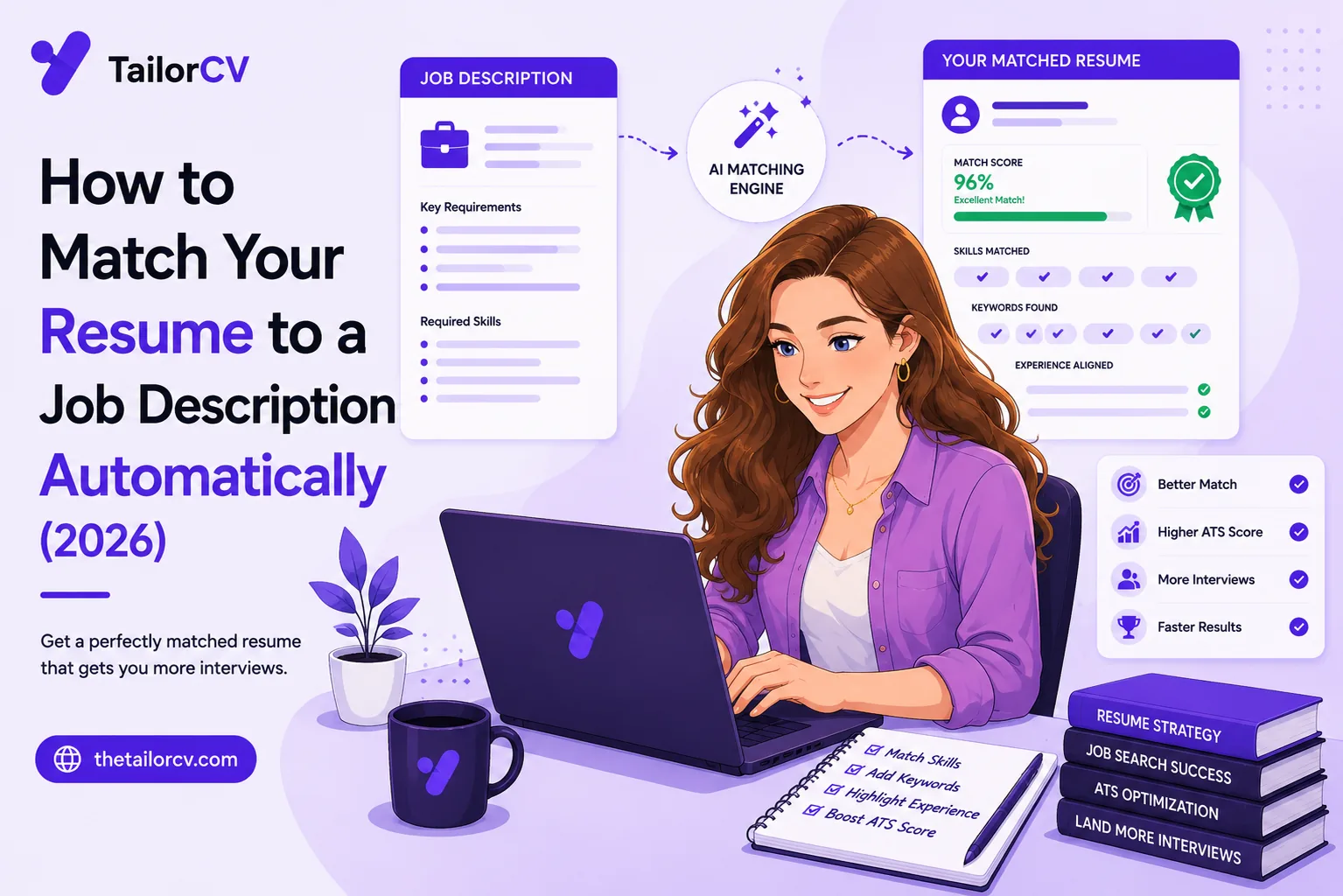
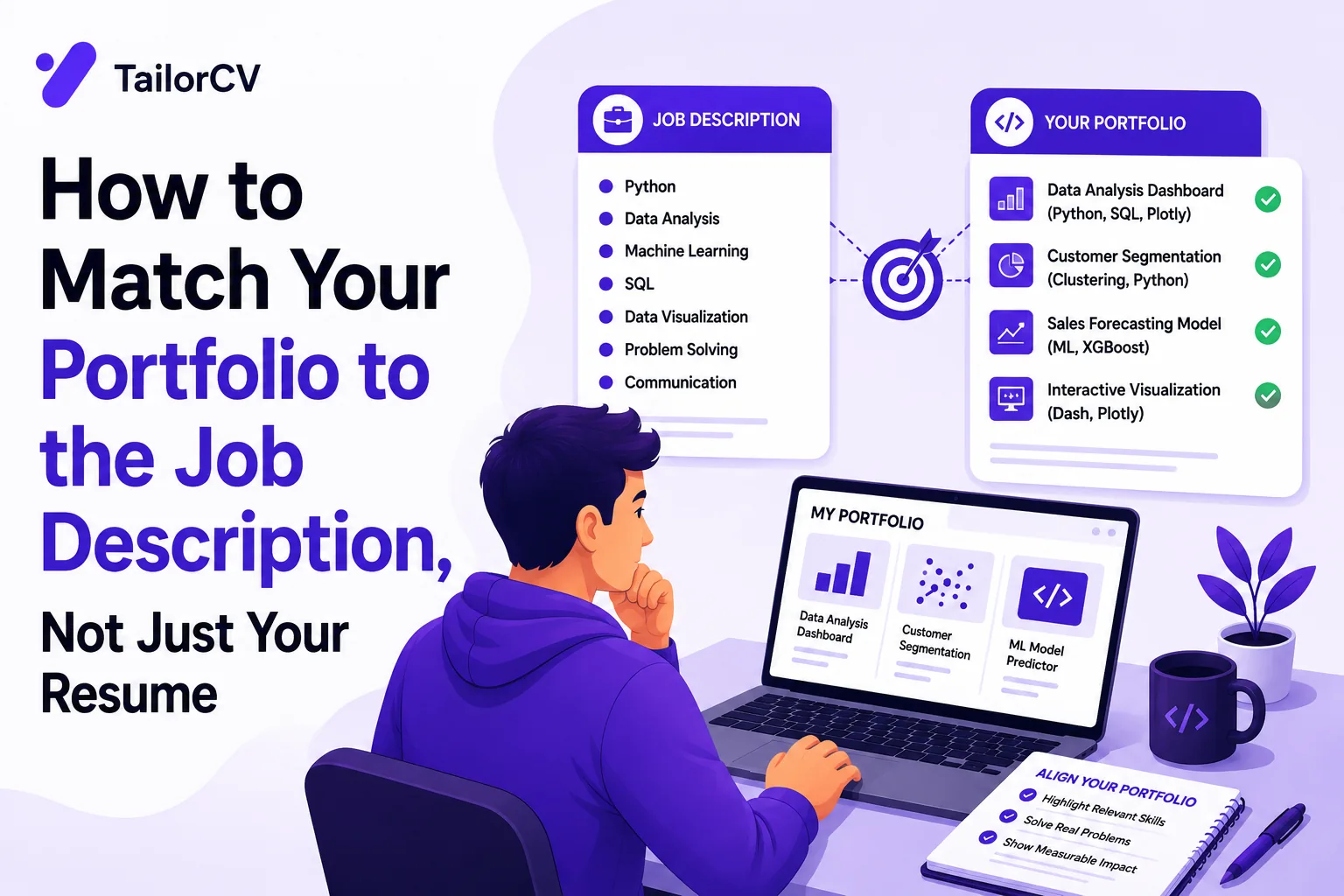
- Do Tailor Your Content: Customize your portfolio for different job applications, focusing on the skills and experiences most relevant to the position. Learn more about this in our guide on How to Match Your Portfolio to the Job Description (Not Just Your Resume).
- Do Keep It Professional: Ensure that your portfolio reflects a professional image. Use a clean design and high-quality images.
Don'ts:
- Don’t Overload with Information: Keep your portfolio concise. Too much information can overwhelm the viewer. Focus on quality over quantity.
- Don’t Use Irrelevant Work: Only include work that is relevant to the type of roles you’re applying for. Avoid cluttering your portfolio with unrelated projects.
- Don’t Forget About Accessibility: Ensure your portfolio is accessible on multiple devices, including mobile. Use responsive design principles to enhance user experience.
Quick Checklist for a Winning Marketing Portfolio
Use this checklist to ensure your marketing portfolio is polished and ready to impress potential employers:
- unchecked: Clear and concise case studies that highlight your role and results.
- unchecked: Engaging visuals, including infographics and before-and-after images.
- unchecked: Regularly updated content reflecting your latest work.
- unchecked: Tailored sections for different job applications.
- unchecked: A professional design that is easy to navigate.
By following these additional guidelines and checklists, you can create a marketing portfolio that not only showcases your skills but also effectively communicates the impact of your work. For more resources on building a standout portfolio, explore our Business Analyst Portfolio Guide.
Frequently Asked Questions
What if all my work is under NDA?
Describe outcomes with rounded numbers and no client names, or recreate a concept campaign. Hiring managers care about your thinking and results.
How many campaigns should I show?
Three to five strong case studies, ideally focused on one specialty.
How do I align my resume?
Use the Digital Marketing Resume guide and the Marketing Manager Resume guide. You can also refer to the Social Media Manager Portfolio Guide for additional insights.
Build Your Portfolio Now
You do not need to code a site from scratch or spend a weekend wrestling with a website builder. Turn your existing resume into a live, shareable portfolio website in minutes with the TailorCV portfolio builder - choose a template, upload your CV, tweak the details, and publish a link you can drop straight onto your resume and LinkedIn. Before you start applying, run your resume through the free ATS score checker and switch to an ATS-friendly template so your portfolio and resume tell one clean, consistent story to every recruiter.
Related Guides
- How to Build a Professional Portfolio
- Digital Marketing Resume 2026
- Marketing Manager Resume 2026
- Content Writer Portfolio Guide
- How to Quantify Resume Achievements
- Personal Branding for Professionals
- How to Write a Portfolio Case Study
- LinkedIn Profile Optimization Guide
- Portfolio Checklist Before You Apply
- Portfolio Mistakes to Avoid
- Portfolio SEO: Get Found
- Best Portfolio Website Builders 2026
Make This Practical
If this topic connects to your work samples, turn the advice into a live proof page with the TailorCV portfolio builder. After publishing, add the link correctly using How to Add Your Portfolio Link to Your Resume, tighten the page with the Portfolio Checklist Before Applying, and make sure recruiters can contact you through a clean Portfolio Contact Section.
Your portfolio works best when it supports the resume, not when it replaces it. Run the resume through the free ATS score checker, choose an ATS-friendly resume template, and use Portfolio SEO: Get Found so your name, role, and strongest projects are easier to discover.
Related Guides to Strengthen This Topic
Use these internal guides to connect this topic with the rest of your job-search workflow:
- How to Build a Professional Portfolio
- Portfolio Website for Job Applications
- Portfolio Checklist Before Applying
- Portfolio Mistakes to Avoid
- How to Write Portfolio Case Study
- Add Portfolio Link to Resume
- Resume Matching With Job Description
- ATS-Friendly Resume Builder
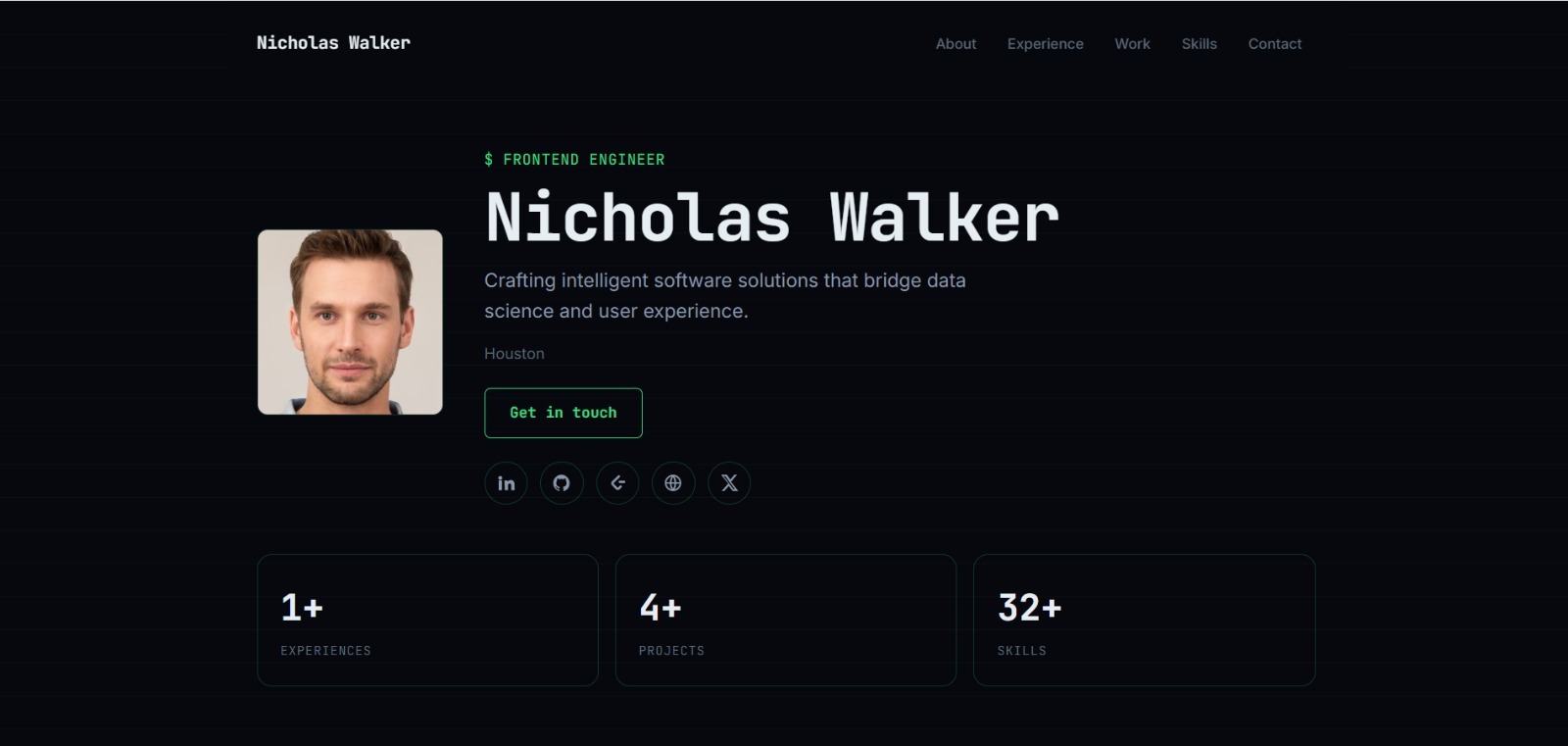
See what your portfolio could look like
This theme is built straight from your resume — pick one and your portfolio is live in minutes.
Was this guide useful?
Be the first to rate it.