 SS
SS
Key Takeaways
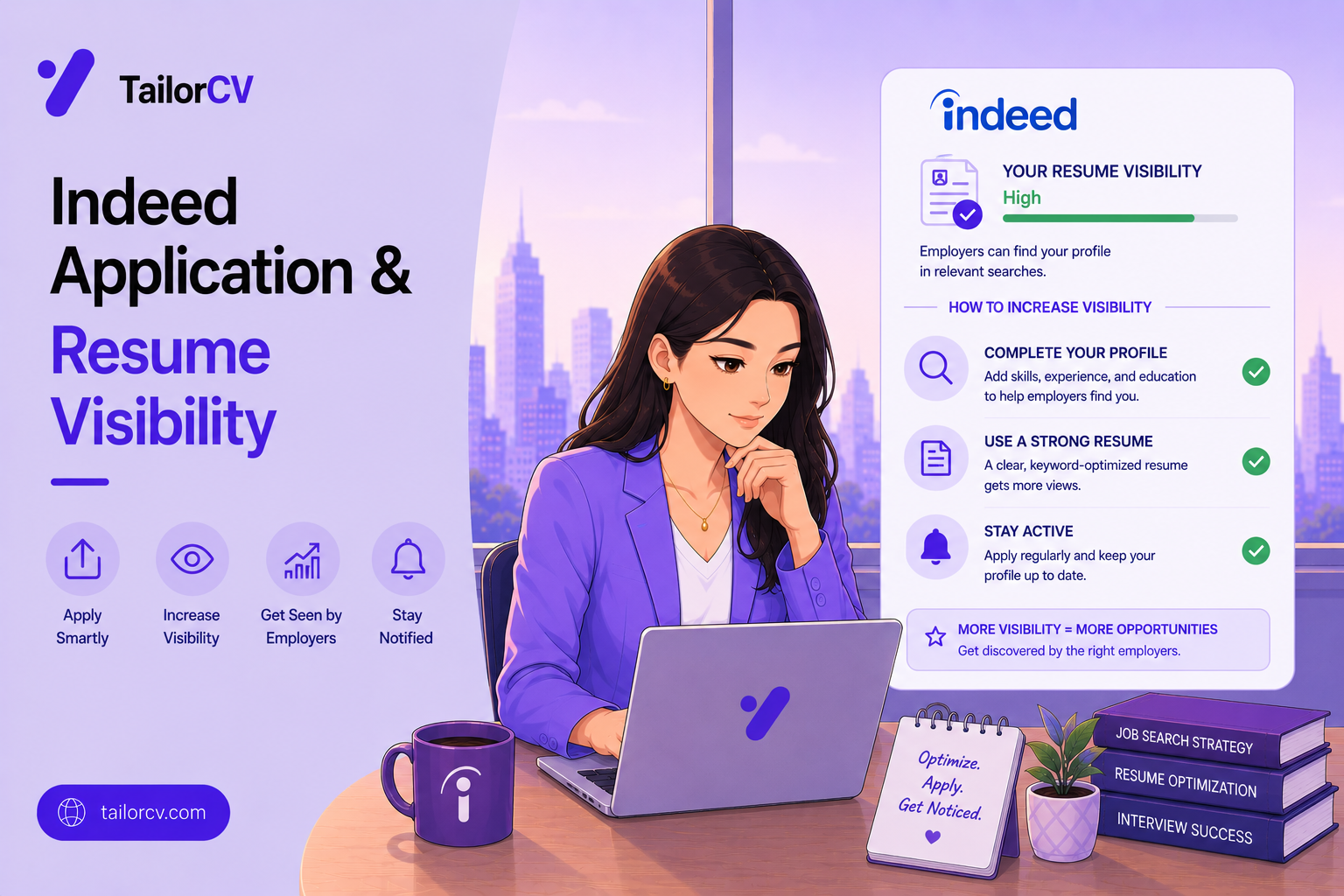
- Indeed has a separate resume database that recruiters can search directly — distinct from applying to any specific posting.
- Your resume's visibility in that database depends on a privacy setting, which many people leave on the less visible default without realising it.
- Indeed's resume search is keyword-based, similar in principle to how a job posting's ATS matches your resume, but operating independently of any application.
- Recruiters searching Indeed's database are looking for exact terms and specific job titles, not broad descriptions.
- These are genuinely two different opportunities: applying to a posting, and being found through the resume database.
Most people think of Indeed purely as a job board — search postings, click apply. It also runs a separate resume database that recruiters actively search, and most job seekers never adjust the setting that controls whether they show up in it.
Two Separate Things: Applying and Being Found
Applying to a specific posting works how you would expect — you find a listing, submit your resume, and it enters that employer's application process, generally through whatever ATS the employer uses on their end.
Being findable in Indeed's resume database is a separate, independent feature. If you have uploaded a resume to your Indeed profile, recruiters with database access can search across stored resumes directly — completely apart from any specific posting or application you have made. This is closer to a searchable candidate pool than to a job-application queue.
These are genuinely different opportunities. You can be well-positioned for one and invisible in the other, depending on your settings and resume content.
The Privacy Setting Most People Never Check
Whether your resume is discoverable in this searchable database depends on a visibility setting on your profile — and many job seekers leave it at whatever the default happens to be, without realising this determines whether you can be found this way at all.
If you are actively job hunting and want inbound opportunities, setting your resume to publicly visible (searchable) makes sense — it opens a channel for recruiters to find and reach out to you that has nothing to do with actively applying anywhere.
If you are not actively looking, or are concerned about your current employer seeing your resume, keeping it private is the more cautious choice — check your specific privacy controls, since some platforms offer more granular options like hiding your resume from your current employer specifically while remaining visible more broadly.
How Recruiters Actually Search
Recruiters using Indeed's resume search typically filter by specific hard skills, job titles, and location — a keyword-based search functioning on similar underlying logic to how an ATS matches a resume against a posting, covered generally in how to match resume keywords to a job description.
The practical implication: for your resume to surface in these searches, it needs to contain the specific, exact terms a recruiter is likely to search for — the actual tool names, the actual job titles, the actual certifications — rather than only broader, more general descriptions of your work. This is the same principle behind naming what you already did applied to a searchable database rather than a single application.
Keeping Your Resume Current Matters Here Specifically
Because this is an ongoing, searchable presence rather than a one-time submission, an outdated resume sitting in the database indefinitely is a missed opportunity in a way that does not apply the same way to a single job application. Periodically updating your resume — even minor refreshes — is worth doing if you want to maintain visibility and relevance in ongoing searches, separate from any specific application you might also be making.
This Does Not Replace Tailored Applications
Being discoverable in Indeed's resume database is a genuinely useful inbound channel, but it works differently from applying directly to a specific posting with a resume tailored to that posting's requirements. A resume optimised broadly for database discoverability — covering your general skill set with the exact terms recruiters commonly search — is not the same document as one tailored precisely to a single job description's specific requirements.
If you are relying on the database for inbound interest, keep a strong, keyword-rich general resume there. When you find and apply to a specific posting, that is a separate moment worth its own tailoring pass — see why one resume cannot serve every application for why a single document serves both purposes poorly.
A Practical Checklist
- Check your resume visibility/privacy setting — confirm it matches whether you actually want to be found through search right now.
- Ensure your uploaded resume contains specific, exact terms — real job titles, real tool names, real certifications — not just general descriptions.
- Update your resume periodically if you want to maintain visibility in ongoing searches.
- Do not treat your database resume and your per-application tailored resume as the same document — keep the database version strong and general; tailor separately when applying to something specific.
- Consider hiding your resume from your current employer specifically, if that option exists and is relevant to your situation.
Frequently Asked Questions
Do I need to upload a resume to Indeed to apply for jobs there? Application requirements vary by posting — some accept your uploaded profile resume, others allow or require a specific tailored document. Check what a given posting requests.
Is it risky to make my resume publicly searchable on Indeed? The main practical risk most people worry about is a current employer discovering it — check the platform's specific privacy controls, since options for hiding it from your current employer specifically often exist separately from full privacy.
Does having my resume searchable guarantee recruiter outreach? No — it opens a channel, but outreach still depends on your resume matching what recruiters are actually searching for.
Should my Indeed database resume be different from my tailored application resumes? It is reasonable for them to differ somewhat — the database version should be strong and broadly keyword-rich for discoverability, while application-specific versions should be tailored to individual postings.
How often should I update my Indeed resume for visibility purposes? There is no fixed rule, but periodic updates — every few weeks while actively searching — are a reasonable practice if inbound visibility matters to you.
Make Sure the Resume in the Database Is Strong
Whether you are relying on inbound discovery or applying directly, the underlying resume content is what determines whether either channel works for you.
Scan your resume against a role you are targeting to see whether it contains the specific, exact terms that both a database search and a direct application's ATS would be looking for.
Free, about a minute. See also how to match resume keywords to a job description and why one resume cannot serve every application.
What is your resume scoring right now?
Scan it against a job description and get your ATS match score in about a minute.
Drop your resume here or choose a file
PDF only. Max 2 MB.
We never share your data or use it to train AI models.

Templates that keep this structure intact
This template is ATS-tested — start from it and the formatting rules in this guide are already handled.
Was this guide useful?
Be the first to rate it.