SS
SS
Key Takeaways
- Placement season starts in the seventh semester for most engineering programmes, which means serious preparation begins in the fifth - not the seventh.
- Aptitude is the round that eliminates the largest number of students, and it is also the most learnable, so starting early has the highest return of anything on this list.
- Two solid projects you can defend for twenty minutes beat six you cloned from tutorials.
- Your CGPA is fixed by the time placements arrive, so protect it early rather than trying to repair it late.
- The single biggest cause of avoidable rejection is starting preparation the month before companies arrive.
Almost every student who misses out in campus placements says the same thing afterwards: they started too late. Not that the questions were unfair or the competition impossible - just that the four weeks before the first company arrived were not enough to build skills that take months.
The good news is that placement preparation is unusually predictable. The rounds are standardised, the question types repeat year after year, and the timeline is published in advance. That makes it plannable in a way most career transitions are not.
This guide sets out what to do in each year, what to prioritise when time is short, and what genuinely cannot be crammed.
Before the season starts, make sure your resume actually parses - run it through the free ATS score checker.
The Calendar You Are Working Against
For a standard four-year engineering programme:
Year 1 (semesters 1-2) - foundations. Nothing placement-specific, but your CGPA starts here and it is cumulative.
Year 2 (semesters 3-4) - build programming ability, start small projects, keep grades up.
Year 3 (semesters 5-6) - the critical year. Aptitude preparation begins, projects get serious, and internship applications happen. Summer between third and fourth year is the highest-value internship window.
Year 4 (semester 7) - placement season. Companies visit from roughly July onwards, with the heaviest activity in the first half of the academic year.
Year 4 (semester 8) - later-arriving companies, off-campus applications, and final project work.
Exact dates vary by institution and by the Training and Placement Office's calendar, so confirm with your TPO early in third year rather than assuming.
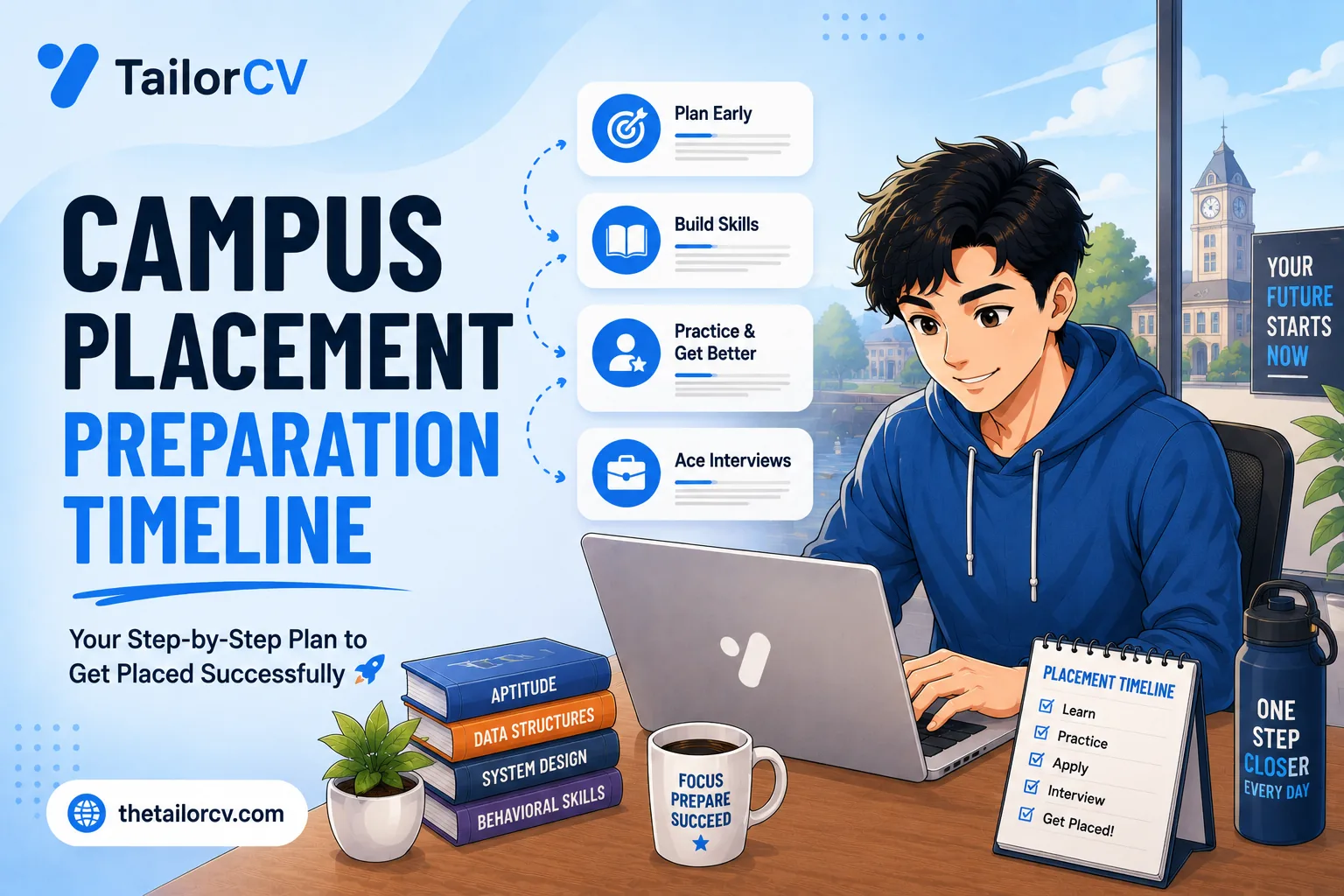
The critical insight: companies arrive in semester 7, so everything they screen on must already exist by then. Your CGPA is fixed. Your projects are built. Your aptitude ability is developed or it is not. Semester 7 is for executing, not for building.
Year 1: Foundations
You do not need to think about placements yet, but three things you do now compound.
Protect your CGPA. This matters more than students believe. Many companies screen at 6.5, 7.0, or 7.5 CGPA, and some at 60% or 70% aggregate with no backlogs. A weak first year is mathematically difficult to recover from because the average is cumulative. A student who drifts through first year at 6.0 has to sustain 8.0+ for three years to reach 7.5.
Learn one language properly. C++, Java, or Python - it matters less which than that you know one deeply. Depth in one transfers; shallow familiarity with four does not.
Clear backlogs immediately. Many companies have a strict no-current-backlogs criterion, and some exclude students with any history of backlogs at all. A pending paper can disqualify you from a company you were otherwise perfect for.
Year 2: Building Ability
This is where you convert coursework into something demonstrable.
Start data structures and algorithms properly. Arrays, strings, linked lists, stacks, queues, trees, graphs, sorting, searching, recursion. Not rushed - properly, with practice.
Solve problems consistently. Two or three problems a week beats forty in one weekend before placements. Consistency is what builds the pattern recognition that coding rounds test. The approach is covered in the campus placement coding round guide.
Build your first real project. Not a tutorial follow-along - something small that you decided the shape of. A tool that solves a problem you actually have. It will not be impressive, and that is fine; the second and third ones will be.
Start using version control. Put your work on GitHub from now on. By the time placements arrive you will have a history rather than a panic-created account with three commits. See how to optimise your GitHub profile.
Join something. A technical club, a coding chapter, an organising committee. This becomes your leadership and teamwork evidence in HR rounds, and students who skip it struggle to answer competency questions convincingly.
Year 3: The Decisive Year
If you take one thing from this guide: third year decides your placement outcome far more than fourth year does.
Semester 5
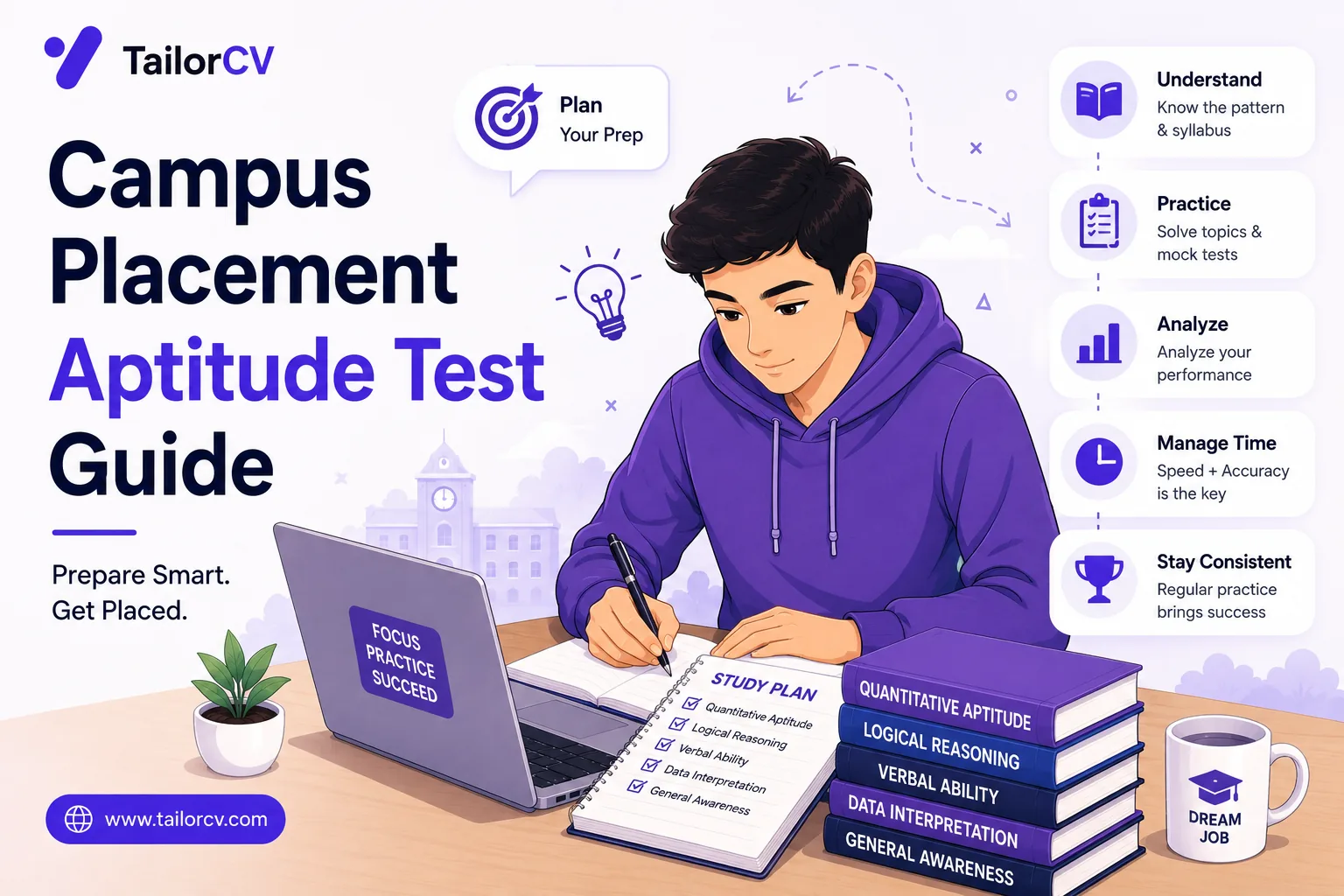
Begin aptitude preparation. This is the highest-return decision available to you, because aptitude eliminates more students than any other round and is the most improvable through practice. Quantitative aptitude, logical reasoning, and verbal ability. Thirty minutes a day from semester 5 puts you far ahead of someone starting in semester 7. Details in the campus placement aptitude test guide.
Deepen DSA. Move from basic problems to medium difficulty. Focus on patterns rather than memorising solutions.
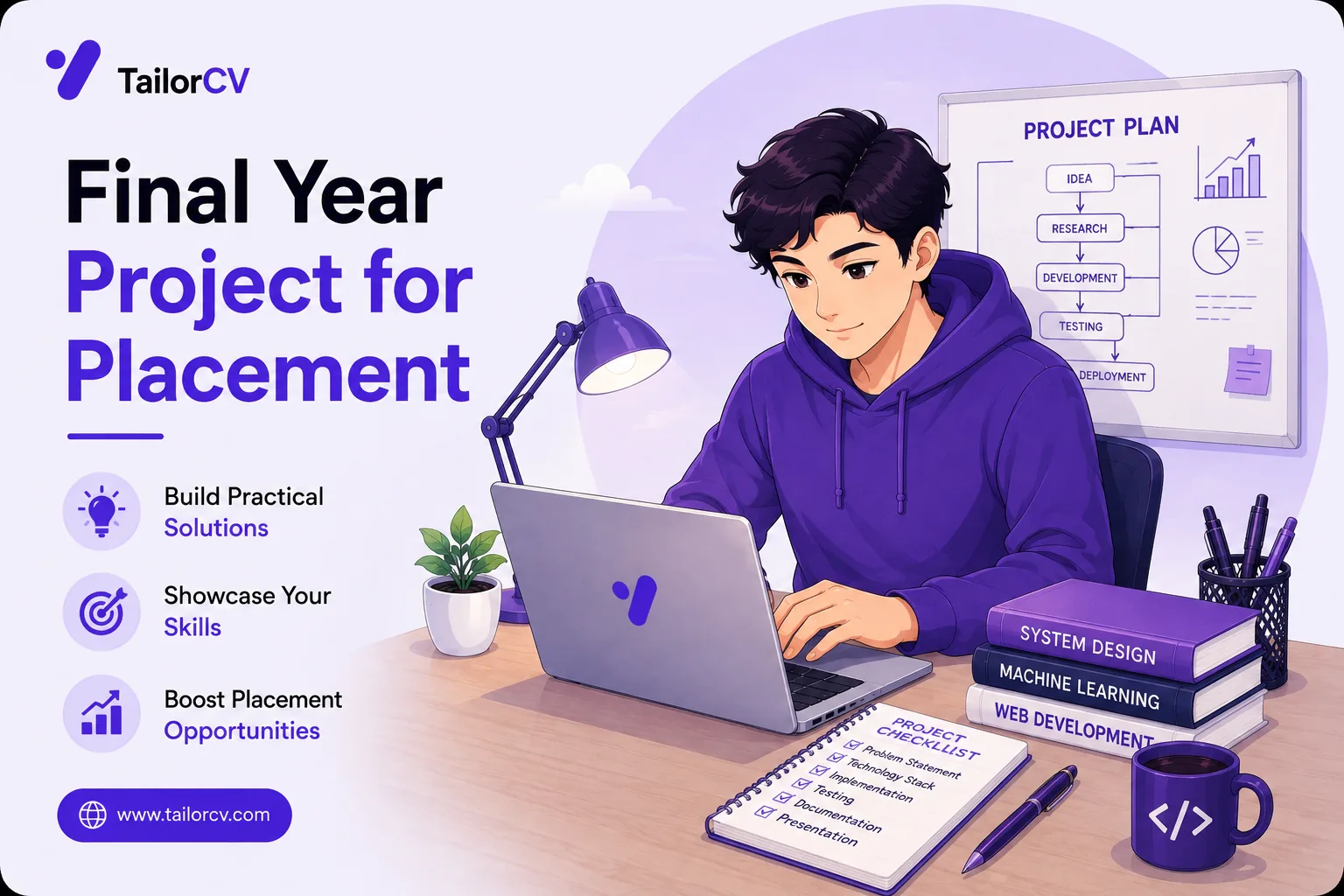
Start your major project. The one that goes on your resume and gets discussed in interviews. Choose something you can explain the decisions behind - see choosing a final year project for placements.
Apply for summer internships. The single highest-value action of the year, because a good internship frequently converts into a pre-placement offer, and a PPO means you enter placement season with an offer already in hand. See converting an internship into a PPO.
Semester 6
Do the internship. Treat it as a six-week interview, because that is what it is.
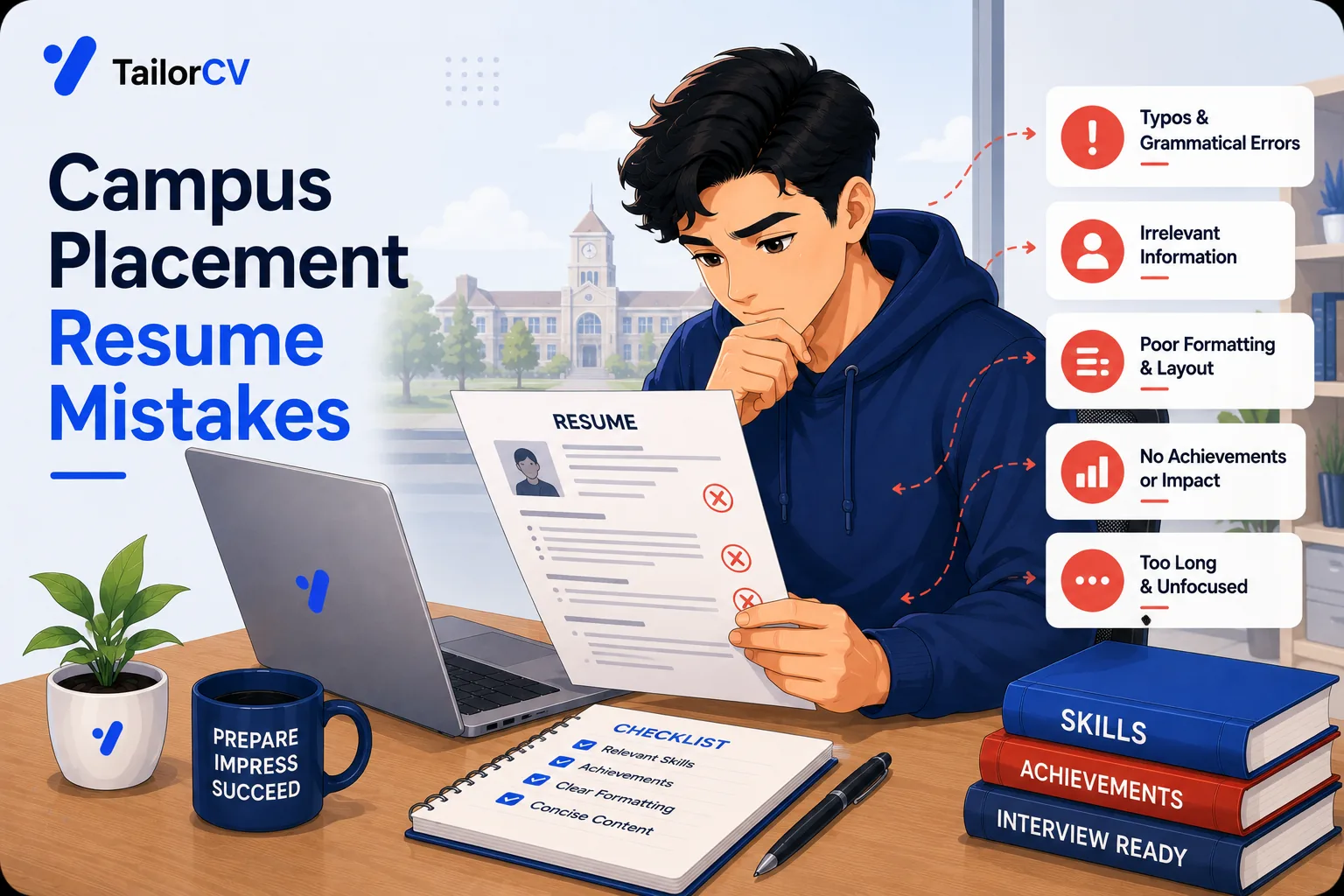
Write your resume properly. Not the night before the first company. Build it now, get it reviewed, and iterate. The common errors are catalogued in campus placement resume mistakes, and what gets you through the first filter in how to get shortlisted for campus placement.
Decide your target. Service-based companies, product-based companies, or both. They require different preparation, and trying to prepare identically for both is how students end up mediocre at each. The differences are set out in service-based vs product-based companies.
Start mock interviews. Speaking your answers out loud is a separate skill from knowing them, and almost nobody practises it until it is too late.
Year 4, Semester 7: Placement Season
The work is done. This semester is about execution and stamina.
Before the season starts
- Resume finalised and reviewed, with a version tailored per company type
- Documents ready - marksheets, ID, certificates, a formal photograph
- Formal clothes ready, because the first drive arrives faster than you expect
- A quiet space and stable internet for online rounds
- A tracking sheet for companies, dates, criteria, and outcomes
During the season
Apply broadly early. The first companies to arrive are not usually the best ones, and students often skip them hoping for better. Sitting for early drives builds interview stamina even if you do not want the offer - and having an offer in hand is a powerful thing psychologically.
Revise strategically between drives. After each round, write down what was asked. Question patterns repeat between companies and across years, and a student who logs them is preparing from real data by the third week.
Expect rejections and keep moving. Everyone gets rejected. The students who do well treat each rejection as information rather than a verdict.
Prepare the HR round properly. Students over-prepare technically and under-prepare here, then lose offers at the final stage. See campus placement HR interview questions.
Practise group discussions if your target companies use them - see campus placement group discussion tips.
If You Are Starting Late
Realistically, many students read this in semester 6 or 7. Here is the triage, in strict priority order.
If you have one semester:
- Aptitude, every day. Highest elimination rate, fastest improvement.
- One strong project you can discuss for twenty minutes. Depth beats count.
- DSA patterns, not breadth. The common patterns cover most campus coding rounds.
- A properly written resume. A weekend of work that affects every single application.
- HR answers rehearsed out loud. Cheap, fast, and consistently under-prepared.
If you have one month:
Aptitude daily, resume fixed, one project you can explain, and HR answers prepared. Accept that DSA depth will not be built in four weeks and target companies accordingly - service-based companies weight aptitude and communication more heavily than algorithmic depth.
What cannot be crammed: CGPA, backlogs, genuine project depth, and communication ability. These are the arguments for starting early, and there is no version of this guide that pretends otherwise.
Non-CSE Students
The timeline applies, but the content shifts. Core-branch students face a smaller number of visiting companies in their own discipline and a large number of IT companies who hire from all branches.
Two viable strategies, and you should choose deliberately rather than drift:
Target core companies - build domain depth, do core internships, and use branch-specific projects and software.
Target IT companies - build programming ability seriously, because you will compete against CSE students on the same coding rounds.
Many students do both badly. Pick one as primary. The specifics are in resume for campus placement for non-CSE branches.
Common Mistakes
Starting in semester 7. The single most common and most costly error.
Ignoring aptitude because it feels unrelated to engineering. It eliminates more candidates than any other round.
Chasing project count over project depth. Six tutorial clones are worse than two real ones, because interviewers ask follow-up questions.
Neglecting CGPA early. It is cumulative and cannot be repaired late.
Skipping the summer internship. It is the most direct route to an offer before the season even starts.
Only preparing technically. HR and communication rounds eliminate technically strong students every year.
Refusing to sit for early companies. Interview stamina is real, and an offer in hand changes how you perform in later rounds.
Not tracking what was asked. Question patterns repeat, and students who log them prepare from data.
Comparing yourself to peers constantly. It is a long season and it damages performance more than it motivates.
Frequently Asked Questions
When should I start preparing for campus placements?
Serious preparation from semester 5, which is the start of third year. Aptitude and DSA both need months rather than weeks, and your CGPA and internship history are being built well before that.
How much time per day is enough?
Two focused hours in third year is more effective than eight unfocused hours in the final month. Consistency is what builds the pattern recognition that aptitude and coding rounds actually test.
Is CGPA or skill more important?
CGPA gets you through the eligibility filter; skill gets you the offer. Many companies screen at 6.5 to 7.5 CGPA before looking at anything else, so a low CGPA limits which doors open regardless of ability.
What if my CGPA is below the cutoff?
Target companies with lower or no CGPA criteria, focus on off-campus routes where skill is weighted more heavily, and build a project portfolio strong enough to make the case on its own. See campus placement vs off-campus.
How many projects do I need?
Two or three you can genuinely defend. Interviewers ask follow-up questions about design decisions, and a project you cannot explain is worse than one you never listed.
Should I prepare for service-based or product-based companies?
Decide by semester 6, because the preparation differs. Service-based companies weight aptitude and communication; product-based companies weight DSA depth and system understanding. Preparing identically for both usually produces a candidate who is competitive for neither.
Does an internship really help?
Substantially. A summer internship after third year is the most direct route into a pre-placement offer, and even without conversion it gives you real experience to discuss in every interview afterwards.
Make sure the resume behind all this preparation actually gets read. Check your ATS score free.
Make This Practical
Work backwards from semester 7. Everything a company screens on - CGPA, projects, aptitude ability, internship experience - must exist before the first drive arrives, which means third year is when it gets built and fourth year is when it gets used.
Start with the two highest-return items today, whatever year you are in: thirty minutes of aptitude practice daily, and one project you chose the shape of yourself. Those two alone put you ahead of most of your batch, and both improve steadily rather than suddenly.
Then get the supporting pieces right before the season, not during it. Write and review your resume using how to get shortlisted for campus placement, avoid the errors in campus placement resume mistakes, rehearse HR answers out loud following campus placement HR interview questions, and run the file through the free ATS score checker so it survives the first automated filter.
What is your resume scoring right now?
Scan it against a job description and get your ATS match score in about a minute.
Drop your resume here or choose a file
PDF only. Max 2 MB.
We never share your data or use it to train AI models.

Was this guide useful?
Average 5.00 / 5.00 · 1 rating