 SS
SS
Key Takeaways
- A match score measures coverage of stated requirements. It cannot see seniority fit, competition, or anything a human weighs.
- Getting past the filter is the score's entire job. Everything after that is comparison against other applicants.
- The most common cause is competition, not a defect — a good match in a crowded posting still ranks below better matches.
- Knockout questions sit outside the score entirely and reject regardless of it.
- If the score is high and rejections are fast, look at the application form, not the resume.
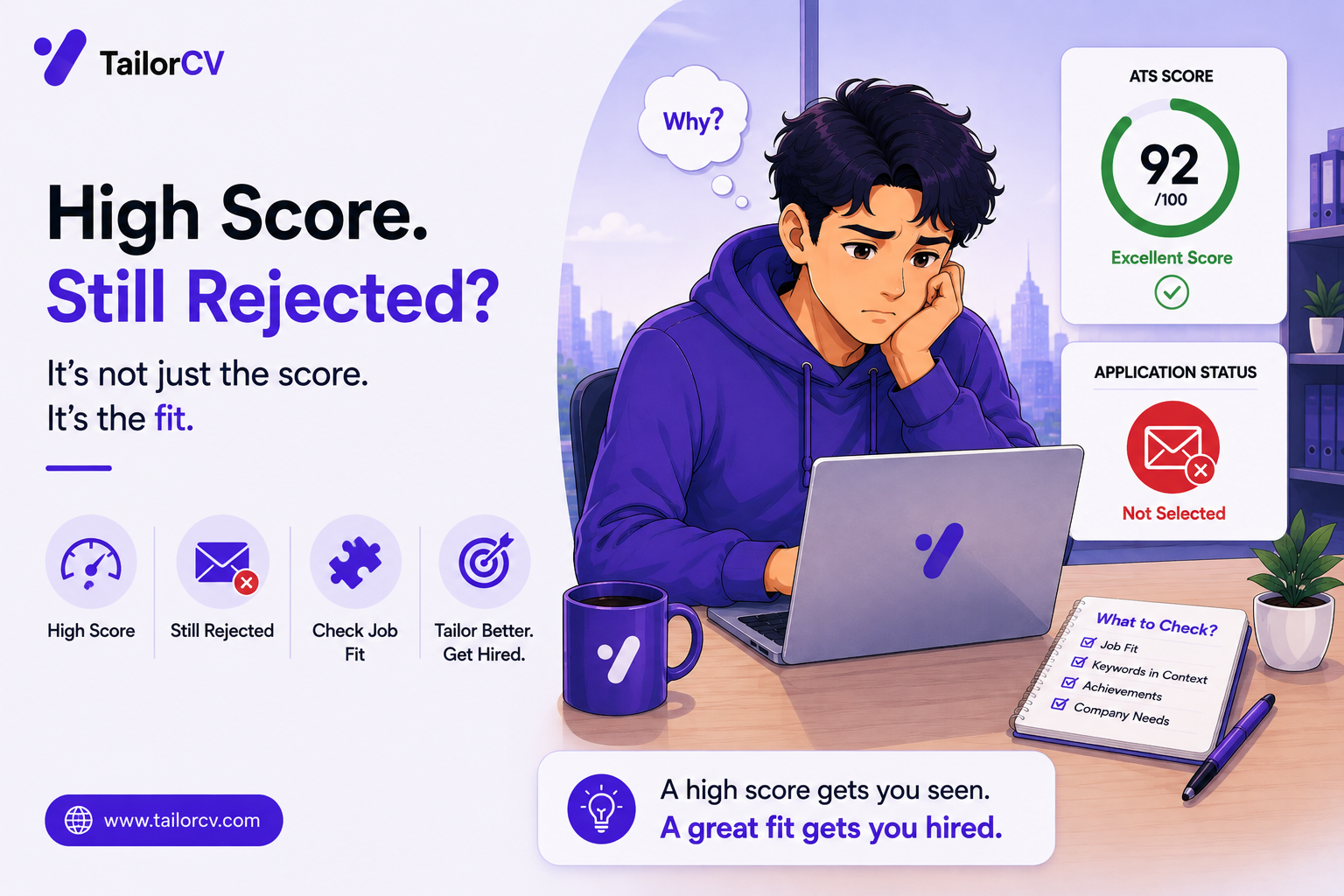
You tailored the resume, the score came back at 85%, and you were rejected anyway. That is frustrating in a specific way, because the tool said you matched.
Here is what the number does and does not tell you.
What a Match Score Is For
A match score answers one question: can this resume evidence what the posting asked for?
That question governs the first filter — whether your application is ranked high enough for a human to open it. It is a real and useful thing to optimise, because failing it means nobody reads your resume at all.
But passing it is not the same as winning. Our ATS score vs resume score explainer covers the distinction between coverage and quality; this post is about everything the score sits outside of.
Six Things the Score Cannot See
1. Competition. This is the big one. The score is absolute — it measures you against the posting. Hiring is relative — you are measured against everyone else who applied. An 85% match is excellent until four people scored 92%. In a posting with 300 applicants, being genuinely qualified is the entry price, not the differentiator. See applying to jobs with 100+ applicants.
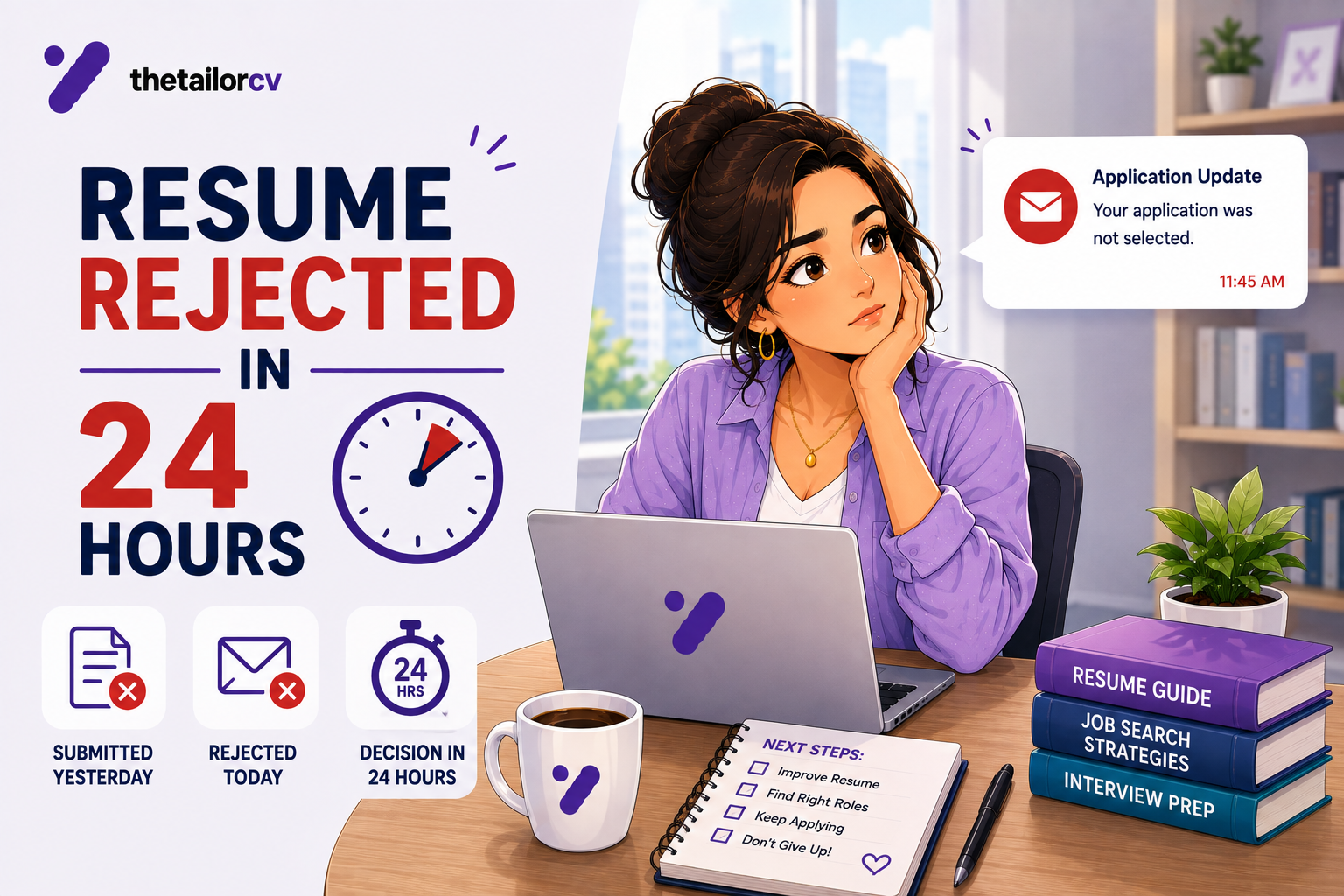
2. Knockout questions. Work authorisation, relocation, salary expectation, notice period, licence held. These are application-form filters that fire regardless of your resume score. If you are being rejected within hours, this is the most likely cause — see rejected within 24 hours.
3. Seniority fit. You can match every listed skill and still be read as too junior or too senior. Requirements lists describe capabilities; hiring managers also judge scope, autonomy and level. A resume showing the right skills at the wrong scale scores well and reads wrong.
4. Recency. The score sees that you have used a tool. It does not weight whether that was last month or in 2018. A human reading your resume notices immediately.
5. Depth versus mention. "Python" in your skills list and "Python" as the language you built three production systems in score similarly. They do not read similarly. This is why evidencing a skill in your bullets matters more than listing it.
6. Internal candidates and referrals. A large share of roles are filled by someone already known to the company. Nothing about your resume changes that, and it is not a reflection of your application.
The Diagnostic: How Fast Was the Rejection?
The timing tells you which layer rejected you, and this narrows things considerably.
Rejected within hours. Almost certainly a knockout question or an auto-disposition rule. Your resume score is irrelevant to this outcome. Go and look at the answers you submitted on the application form.
Rejected in 2-7 days. Someone probably reviewed it, or a batch review ran. This is a genuine comparative rejection — you were readable, considered and out-ranked. Frustrating, but it means the resume did its job.
Rejected after 2+ weeks, or after an interview. You were competitive. The gap is no longer about the resume at all — it is about interview performance, or a closer-fitting candidate.
Silence. Least informative, but at a high match score it usually means volume, not a defect. See applied to 100 jobs, no interviews for the systematic version of this.
When a High Score Is Actually Misleading
Two situations where the number flatters you:
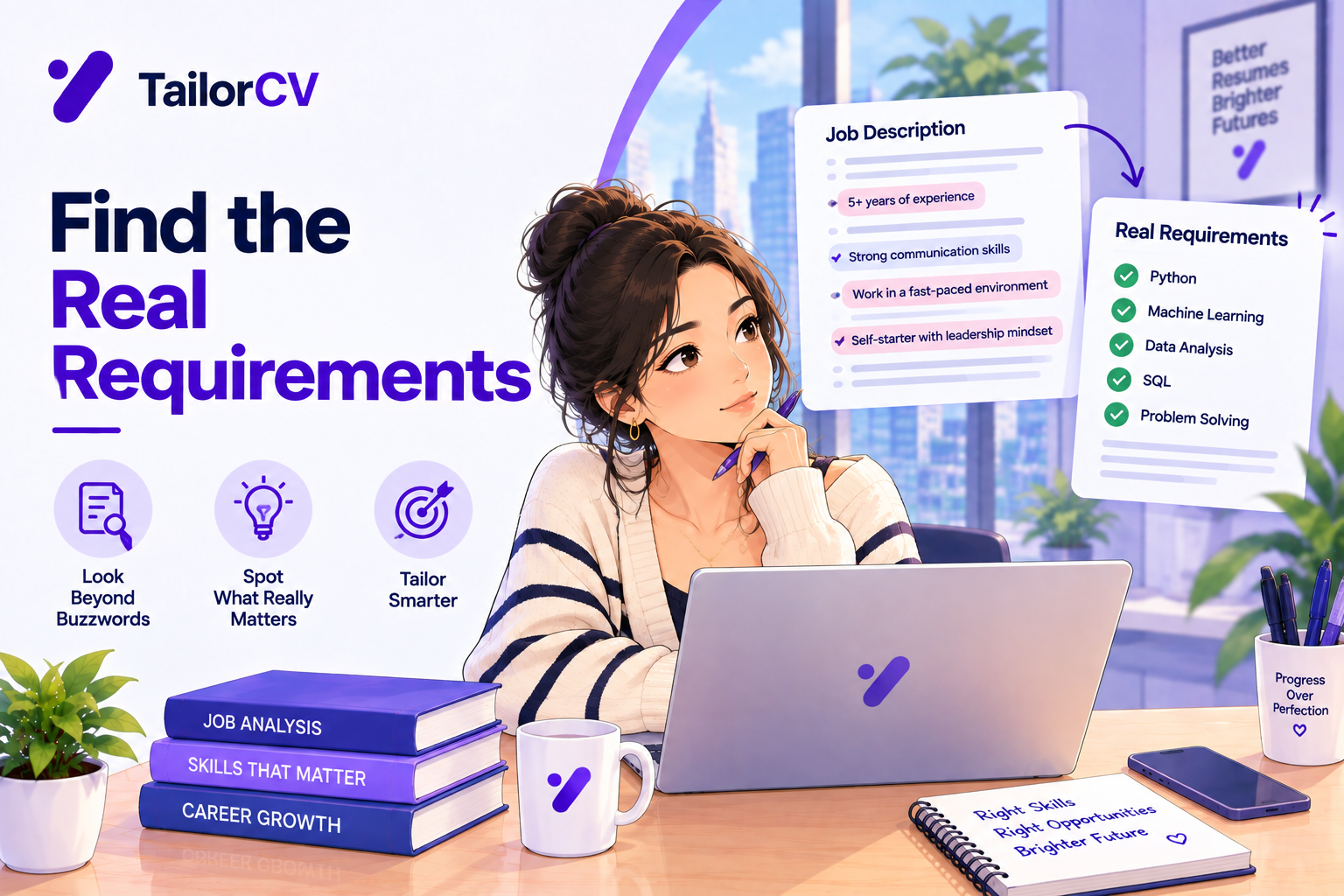
You matched on the wrong things. Scores can be driven up by soft skills, generic phrases, and preferred-not-required items while a genuine hard requirement stays unmet. A resume at 85% missing the one required certification is worse positioned than a 70% that has it. Our guide to required vs preferred qualifications covers reading which is which.
You stuffed the posting's language. If tailoring drifted into inserting terms your experience does not really support, the score rises and the human read gets worse. That is the failure mode described in keyword density — and it produces interviews you cannot survive.
What to Actually Change
If your scores are high and rejections keep coming, the resume is probably not the bottleneck. In rough order of expected return:
1. Check the knockout questions. Fastest possible win. If you are answering "no" to something a posting hard-filters on, stop applying to those postings.
2. Apply to fewer, better-fitting roles. A high score on a role two levels above your experience still loses. Filter for seniority honestly.
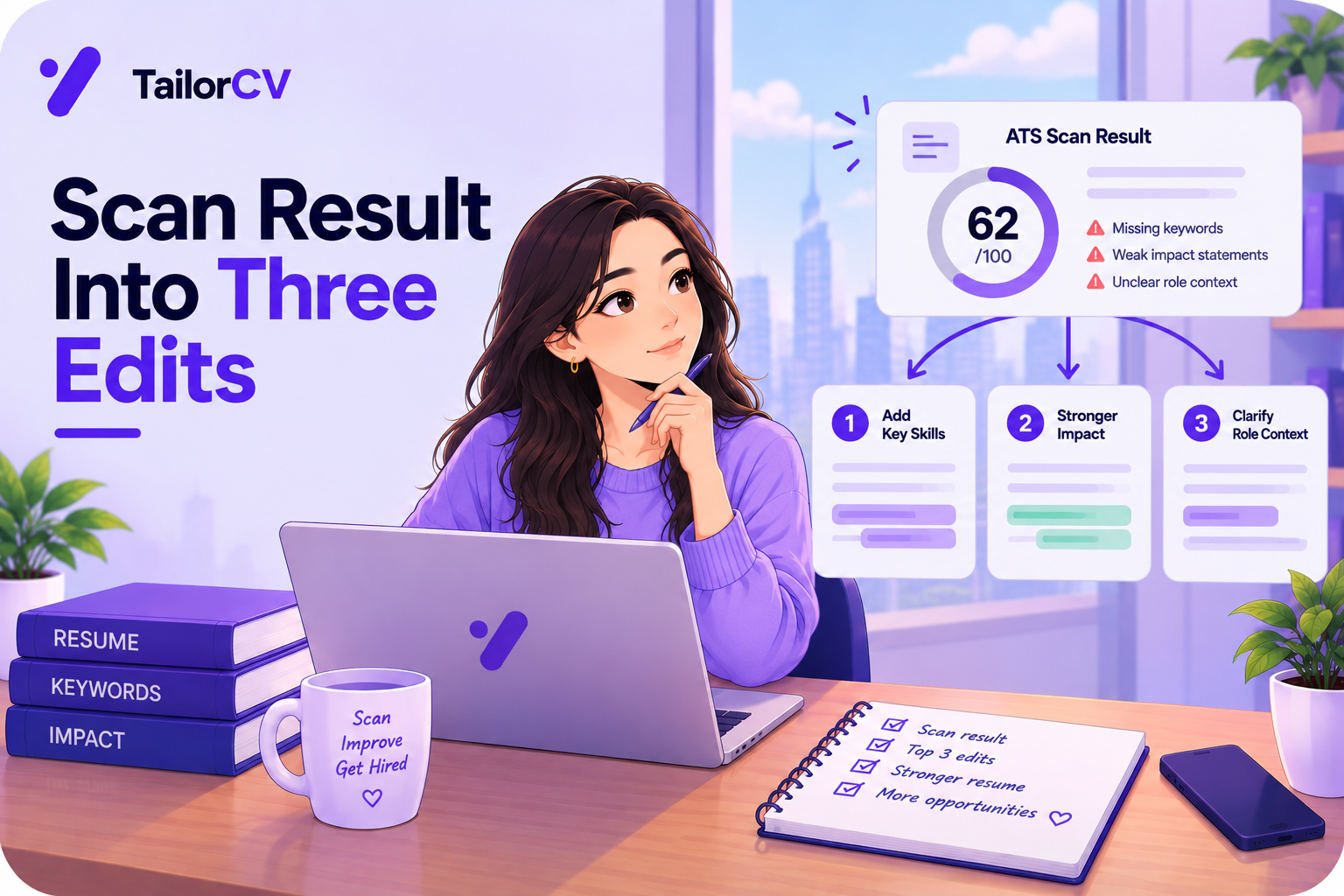
3. Make depth visible. Move key skills out of the list and into bullets with scale and outcome attached. This is what a human weighs and the score does not — see quantifying achievements.
4. Reduce time-to-apply. Early applications get read more often, particularly at high-volume employers. Applying on day one beats applying on day ten with a slightly better resume.
5. Use referrals where you can. Nothing in resume optimisation competes with a warm introduction.
The Uncomfortable Part
Sometimes a high-scoring, well-tailored, correctly-formatted application is rejected because someone else was simply a better fit. That is not a solvable problem, and treating it as one leads to endless unproductive rewriting.
The honest framing: a good match score means your application was considered. That is what it is for. Converting consideration into interviews depends on competition, timing, level fit and luck — variables your resume only partly controls.
What you can control is not wasting applications on roles where a knockout question or a seniority mismatch makes the outcome certain before anyone reads a word.
Frequently Asked Questions
Is a high score useless then? No. It is necessary but not sufficient. Without it you are frequently not read at all.
Should I keep tailoring if I am already scoring 85%? Yes, but shift the effort. Once coverage is good, spend the time on evidencing depth and on choosing better-fitting roles.
How do I know if I was auto-rejected or reviewed? Timing. Hours means automation; days means a human or a batch review.
Does applying early actually matter? At high-volume employers, yes. Many roles are effectively decided before the posting closes.
Should I follow up after rejection? It rarely reverses the decision, but a brief, polite note occasionally surfaces a different opening. Keep expectations low.
Check What Your Score Is Actually Made Of
If your number is high but outcomes are not, it is worth confirming the score is built on the right things — required items covered, real depth behind the keywords.
Run your resume against the posting and read the requirement breakdown rather than the headline number. If everything unmet is a "preferred" item, competition is your issue and the fix is role selection, not rewriting. If a required item is quietly missing, you have found something the percentage was hiding.
Free, about a minute. See also what is a good ATS match score and why your resume gets no responses.
Find out why your score is low
Scan your resume against the job description and see exactly which checks fail.
Drop your resume here or choose a file
PDF only. Max 2 MB.
We never share your data or use it to train AI models.

Templates that keep this structure intact
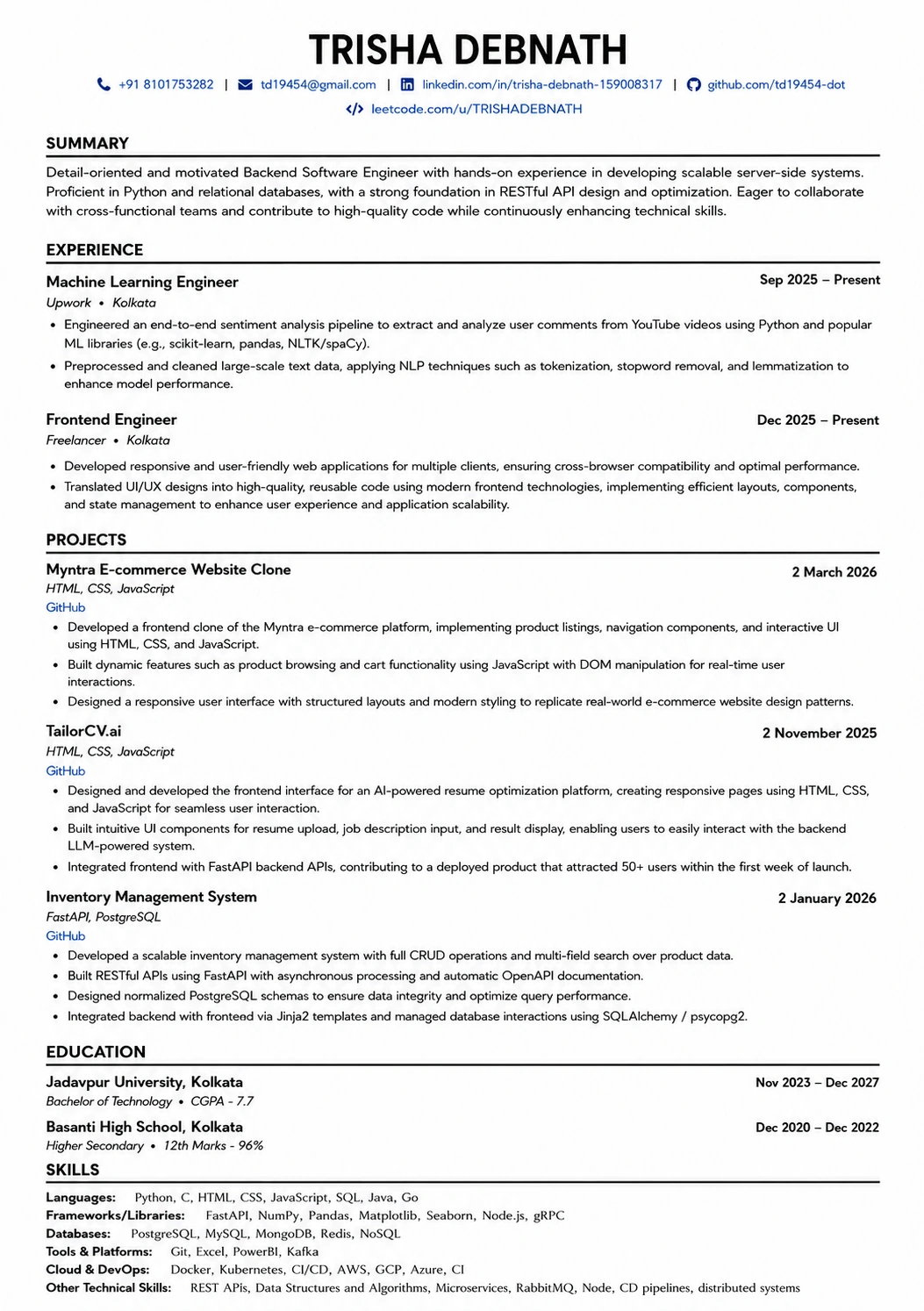
This template is ATS-tested — start from it and the formatting rules in this guide are already handled.
Was this guide useful?
Be the first to rate it.