 SS
SS
Key Takeaways
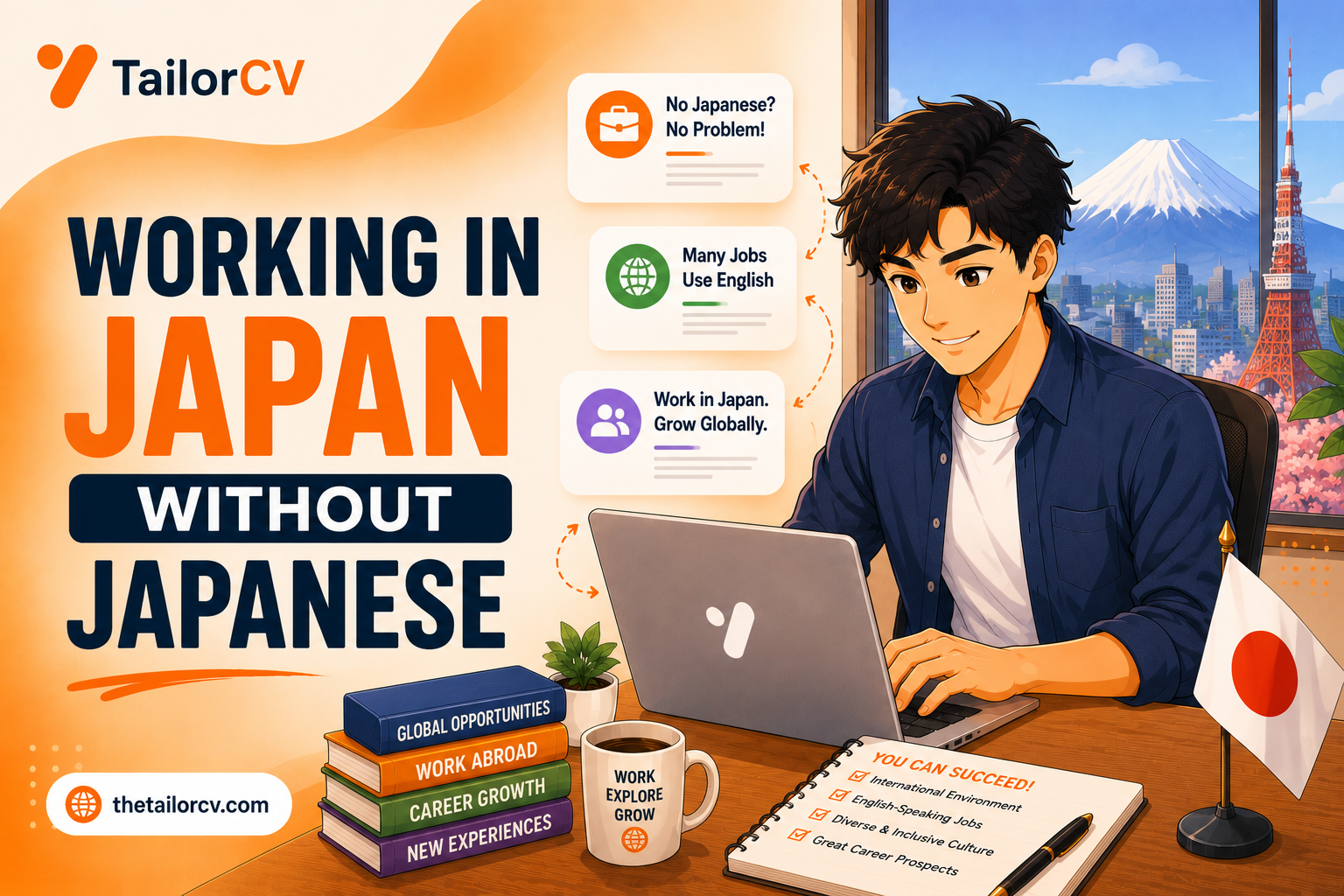
- Yes, you can work in Japan without Japanese — in the right sectors: tech, global companies, English teaching, and international roles.
- Tokyo has by far the most English-friendly opportunities.
- Japanese ability significantly widens your options, especially at traditional firms — even basic Japanese helps.
- Feature your English credentials (e.g. TOEIC) and any Japanese level (JLPT), even elementary.
- A strong, ATS-friendly English resume is your main tool for these roles.
"Can I work in Japan if I don't speak Japanese?" It's one of the most common questions foreigners ask — and the honest answer is: yes, but with important caveats. A real and growing segment of Japan's job market — global companies, tech firms, English teaching, and international roles — operates in English. Many foreigners build successful careers in Japan with little or no Japanese. At the same time, Japanese ability dramatically widens your options, and daily life is easier with some of the language. Knowing where English-only works, and where it doesn't, lets you target the right opportunities.
This guide gives you a realistic 2026 picture of working in Japan without Japanese: which jobs are open to you, how far English-only takes you, and how to build an application for English-friendly employers.
The Honest Answer
You can absolutely work in Japan without fluent Japanese — many foreigners do. But two things are true at once:
- A real segment of the market is English-friendly — global companies, tech, English teaching, and international business.
- Japanese ability opens far more doors — most traditional Japanese companies operate in Japanese, and even English-friendly employers value some Japanese for daily life and teamwork.
So the strategy is to target the English-friendly segment while treating any Japanese you can learn as a growing advantage.
Where English-Only Works
Technology / IT
Japan's tech sector — especially global companies and startups — often operates in English, with international teams. Software engineers, data specialists, and IT professionals are in demand and frequently hired in English. This is one of the best routes for English speakers.
English Teaching
A classic entry point: language schools, the JET Programme, and international schools hire native/fluent English speakers, typically requiring a degree but not Japanese. It's a reliable way to start a life in Japan.
Global Companies and International Business
Multinational firms, regional HQs, and international divisions in Japan (especially in Tokyo) run much of their work in English and hire bilingual and English-speaking professionals in finance, consulting, sales, marketing, and more.
Other Roles
Translation/localisation (into English), tourism and hospitality serving international visitors, and certain specialist and research roles can be accessible with English.
For the wider picture, see how to get a job in Japan as a foreigner and, for the best market, how to find a job in Tokyo.
Where You'll Need Japanese
- Most traditional Japanese companies operate in Japanese, and business-level Japanese (often JLPT N2–N1) is expected.
- Client-facing roles serving Japanese customers.
- Daily life — while you can manage in Tokyo with English, some Japanese makes living far smoother.
Even basic Japanese and a visible willingness to learn are viewed positively by employers — it signals commitment to living and working in Japan.
The Value of Learning Even a Little
You don't have to be fluent to benefit:
- Elementary Japanese (JLPT N5–N4) helps daily life and shows commitment.
- Intermediate (N3) broadens your options meaningfully.
- Business level (N2–N1) unlocks most of the market.
Feature whatever level you have on your resume — even "JLPT N5" or "studying Japanese" signals the right attitude. See best resume keywords for Japan for how to present credentials.
Building Your Application (in English)
For English-friendly employers:
- Build a strong, ATS-friendly English resume — many global firms in Japan use applicant tracking systems. See ATS and English resumes for Japan and use the TailorCV resume builder.
- Tailor each application with the resume optimizer.
- Feature English credentials (e.g. TOEIC) and any Japanese level (JLPT).
- Add a cover letter where expected — see the Japanese cover letter guide.
- Prepare for interviews — Japanese etiquette still matters even in English interviews. See Japan interview etiquette and rehearse with the AI mock interview.
Where to Search
- Foreigner-focused job sites for bilingual/English roles in Japan.
- LinkedIn and recruitment agencies that place foreigners.
- The JET Programme and language schools for teaching.
See the best job sites for finding work in Japan.
The Visa Reality
Regardless of language, you'll generally need an employer-sponsored work visa matched to your role and qualifications — secure the job first, then the employer sponsors. Always confirm current rules with official Japanese authorities.
Note: Visa rules change and depend on your situation — verify with the Japanese Immigration Services Agency, an embassy/consulate, or your employer.
Common Misconceptions
- "You can't work in Japan without fluent Japanese." False — a real English-friendly segment exists, especially in tech, teaching, and global firms.
- "Any job is open if you speak English." Also false — most traditional firms need Japanese. Target the right segment.
- "Basic Japanese isn't worth listing." Wrong — even elementary Japanese and a learning attitude are viewed positively.
- "Tokyo and rural Japan are the same market." Tokyo has far more English-friendly roles.
Frequently Asked Questions
Can I work in Japan without speaking Japanese? Yes — in English-friendly sectors like tech, global companies, English teaching, and international roles, especially in Tokyo. Japanese ability widens your options considerably.
Which jobs in Japan don't require Japanese? Tech/IT roles at global firms and startups, English teaching, and many international business, finance, and consulting roles at multinational companies.
Does learning some Japanese help? A lot — even elementary Japanese eases daily life and signals commitment to employers. Business-level Japanese (JLPT N2–N1) unlocks most of the market.
What resume do I need for English-friendly jobs in Japan? A strong, ATS-friendly Western-style English resume, tailored to each role — not a rirekisho. See ATS and English resumes for Japan.
Final Thoughts
You can build a real career in Japan without fluent Japanese — the key is targeting the English-friendly segment (tech, global companies, English teaching, international roles), concentrated most heavily in Tokyo. Feature your English credentials and any Japanese you have, and treat learning the language as an advantage that keeps opening doors.
Build an ATS-friendly English resume with the TailorCV resume builder, tailor it with the resume optimizer, and prepare for the interview with the AI mock interview. Target the right roles, present yourself well, and Japan is very much open to you.
What is your resume scoring right now?
Scan it against a job description and get your ATS match score in about a minute.
Drop your resume here or choose a file
PDF only. Max 2 MB.
We never share your data or use it to train AI models.

Was this guide useful?
Be the first to rate it.