 TD
TD
Key Takeaways
- Many global companies, tech firms, and startups in Japan hire in English and use ATS to screen resumes.
- For these roles, a strong Western-style, ATS-friendly resume is your main tool — not a rirekisho.
- ATS software parses and ranks resumes by keywords and formatting; a poorly formatted resume can be filtered out before a human sees it.
- Keyword matching to each job description is the single most important optimisation.
- Traditional Japanese firms still expect Japanese-format documents — know which type of employer you're applying to.
Not every job in Japan requires a handwritten rirekisho and fluent Japanese. A growing share of roles — at global companies, tech firms, startups, and international teams — hire in English and screen applications with applicant tracking systems (ATS), exactly like employers in the US, UK, or Singapore. For foreigners and bilingual professionals, these are often the most accessible roles in Japan, and the key to landing them is a strong, ATS-friendly English resume.
This guide explains how ATS and English resumes work for jobs in Japan in 2026: when an English resume is the right tool, how these employers screen, and how to build a resume that passes the filters and reaches a human.
When to Use an English Resume in Japan
Your document choice depends on the employer:
- Global companies, international teams, tech, finance, startups: frequently hire in English and accept (or prefer) a Western-style English resume. These often run on an ATS.
- Traditional Japanese companies: usually expect a Japanese-language rirekisho plus shokumu-keirekisho — see the Japanese resume (rirekisho) guide and the rirekisho vs Western resume comparison.
If you're targeting the English-friendly segment — which is where many foreigners find their first role in Japan — this guide is for you. For the bigger picture, see how to get a job in Japan as a foreigner and working in Japan without Japanese.
What Is an ATS and Why It Matters
An applicant tracking system is software employers use to collect, parse, and rank applications. When you apply online at a global company, your resume often goes into an ATS first. It:
What an ATS score report actually shows you

This is what a score actually looks like. The number matters less than the breakdown: each check tells you what failed and why it matters.
- Parses your resume into structured data (contact, experience, skills, education).
- Screens and ranks candidates, often by how well the resume matches the job's keywords.
- Lets recruiters search the database by skills and titles.
If the ATS can't read your resume, or it lacks the keywords the role calls for, you can be filtered out before any human sees it. That's why ATS-friendliness is essential for these roles.
Step 1: Use an ATS-Friendly Format
- Standard structure: clear sections — Contact, Summary, Skills, Experience, Education.
- Simple layout: avoid tables, text boxes, columns, headers/footers, and graphics that confuse parsers.
- Standard fonts and clear headings.
- No photo: unlike a rirekisho, an English ATS resume should not include a photo, age, or personal details.
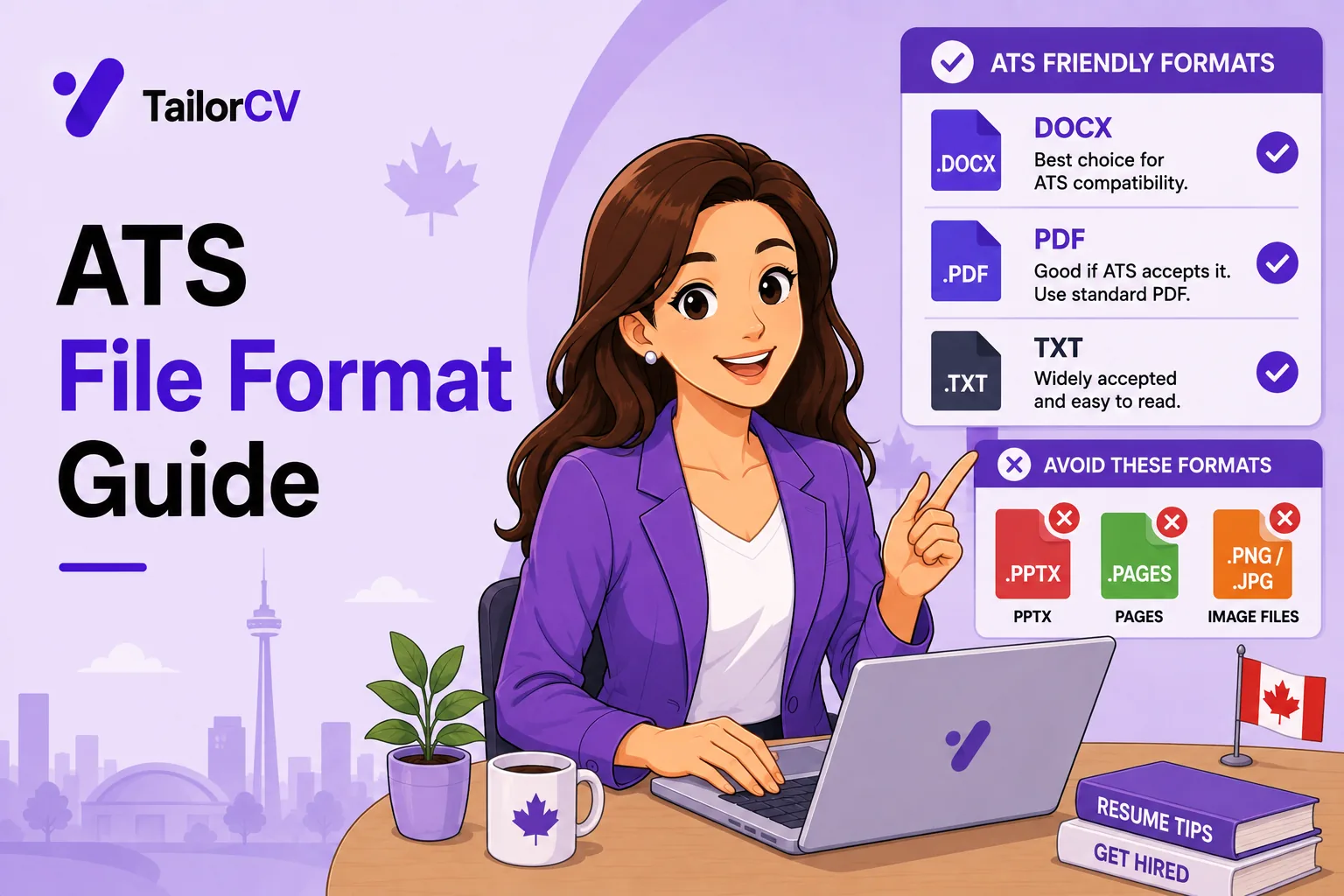
- Standard file type: submit a clean PDF or Word file as specified.
Build a clean, parser-friendly resume with the TailorCV resume builder, which is designed to be ATS-compatible.
Step 2: Match Keywords to Each Job
The ATS ranks you largely on keyword relevance. For every application:
- Read the job description and identify the skills, tools, and terms it emphasises.
- Mirror that language in your resume — job titles, hard skills, software, methodologies — where it's genuinely true of you.
- Include the exact terms (and sensible variations) the employer uses.
Tailoring keywords per job dramatically improves your ranking. Use the TailorCV resume optimizer to compare your resume against a specific job description, get a match score, and see the keywords you're missing — the same approach that beats the ATS anywhere. For a starting palette of high-value terms, see best resume keywords for jobs in Japan.
Step 3: Write Strong, Quantified Content
Passing the ATS gets you to a human — strong content gets you the interview:
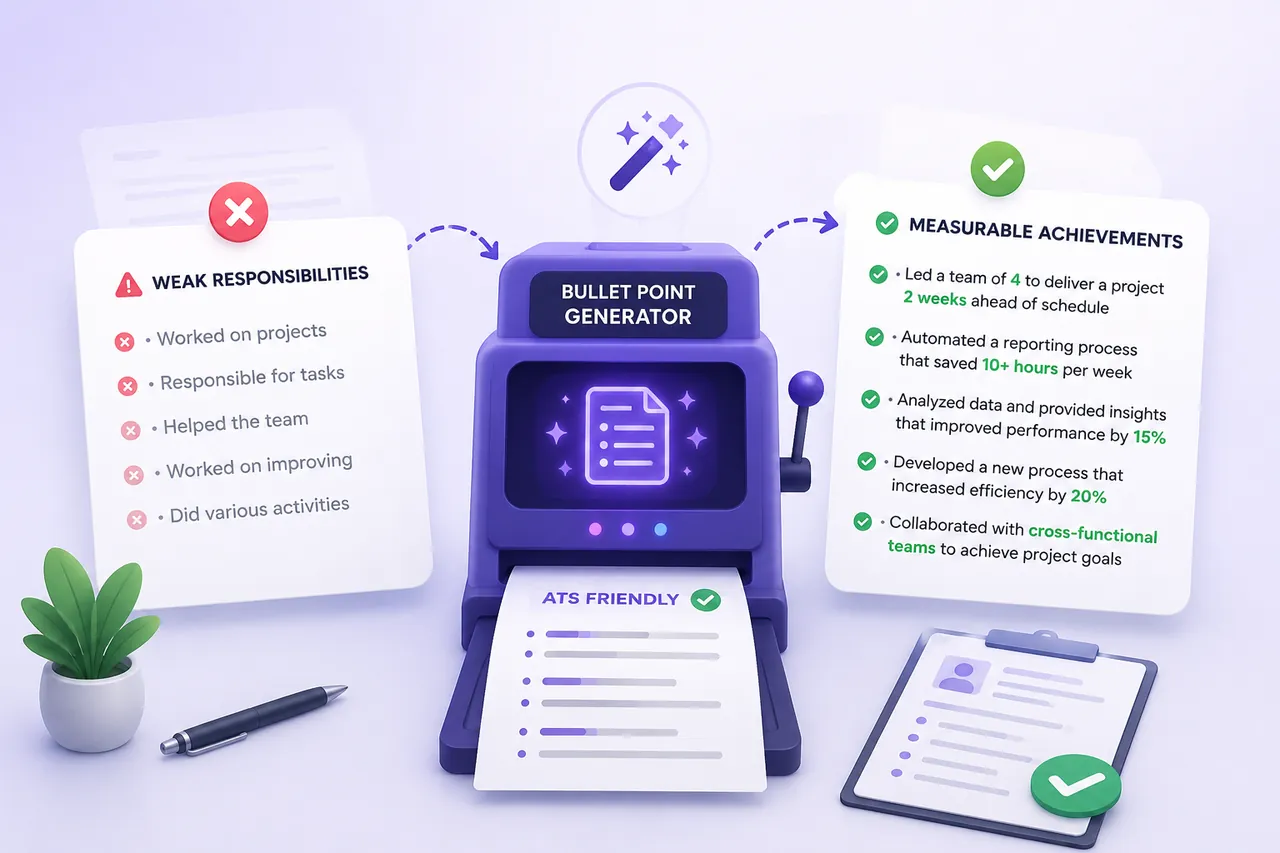
- Achievement bullets with action verbs and measurable results ("Increased X by Y%").
- A concise summary aligned to the role.
- A clear skills section listing your core competencies and tools.
Step 4: Highlight What Matters for Japan
Even on an English resume for a global employer in Japan, feature:
- Language credentials — JLPT (Japanese) and TOEIC (English) scores are trusted, concrete signals in the Japanese market.
- International experience and adaptability.
- Any Japan-relevant experience — study, work, or projects.
Step 5: Pair It With the Rest of Your Application
- Add a targeted cover letter where expected — see the Japanese cover letter guide.
- Optimise your LinkedIn, which global recruiters in Japan search directly.
- Prepare for interviews — see Japan interview etiquette and rehearse with the AI mock interview.
- For tech and creative roles, link a portfolio — build one with the TailorCV portfolio builder.
To find these English-friendly employers, see the best job sites for finding work in Japan and how to find a job in Tokyo.
Common ATS Mistakes to Avoid
- Fancy formatting. Tables, columns, and graphics break parsers — keep it clean.
- Including a photo. Standard on a rirekisho, but not on an English ATS resume.
- Ignoring keywords. A generic resume ranks poorly; tailor to each job.
- Keyword stuffing. Cramming irrelevant terms backfires with recruiters — keep it honest and readable.
- Wrong document for the employer. Sending an English resume to a traditional firm that wants a rirekisho (or vice versa).
Frequently Asked Questions
Do companies in Japan use ATS? Many global companies, tech firms, and international employers in Japan do — screening English resumes much like employers elsewhere. Traditional Japanese firms more often use rirekisho-based processes.
Can I use an English resume for jobs in Japan? Yes — at global companies, tech firms, startups, and international roles, a strong Western-style English resume is often the right (and expected) tool.
Should my English resume for Japan include a photo? No — unlike a rirekisho, a Western-style ATS resume should not include a photo, age, or personal details.
How do I make my resume ATS-friendly? Use a clean, single-column format with standard sections and fonts, avoid graphics and tables, and match keywords to each job description. Test it with the TailorCV resume optimizer.
Final Thoughts
For the many English-language and global roles in Japan, an ATS-friendly English resume — not a rirekisho — is your key. Keep the format clean and parser-friendly, match keywords to each job description, quantify your achievements, and feature your language credentials.
Build an ATS-ready resume with the TailorCV resume builder, tailor and score it against each posting with the resume optimizer, and prepare for the interview with the AI mock interview. Match the right document to the right employer, and you'll reach far more opportunities in Japan.
What is your resume scoring right now?
Scan it against a job description and get your ATS match score in about a minute.
Drop your resume here or choose a file
PDF only. Max 2 MB.
We never share your data or use it to train AI models.
Templates that keep this structure intact
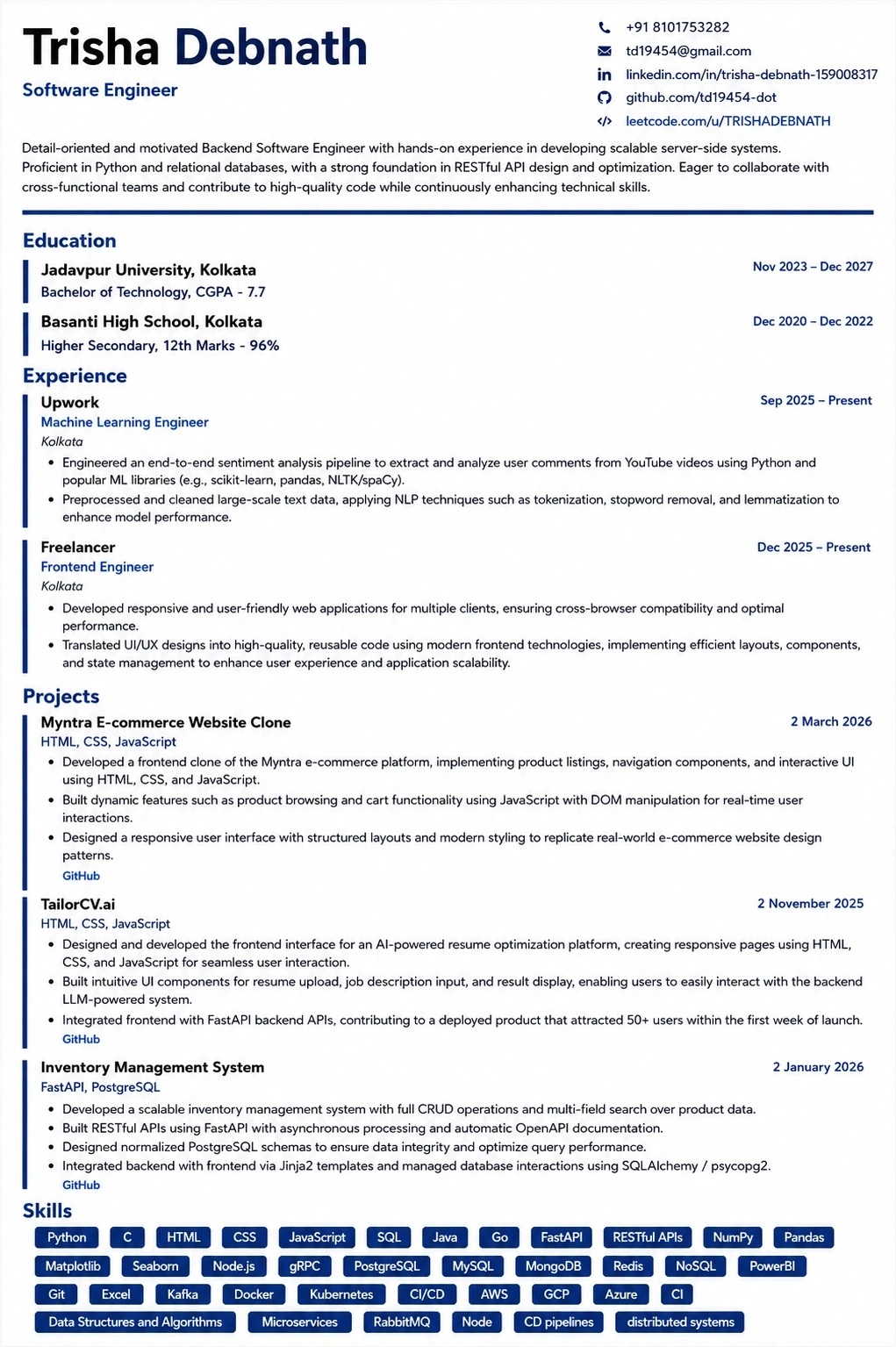
This template is ATS-tested — start from it and the formatting rules in this guide are already handled.
Was this guide useful?
Be the first to rate it.