 SS
SS

Key Takeaways
- Foreigner-focused job sites (bilingual/international roles) are the best starting point for most foreigners.
- LinkedIn is heavily used by global companies and recruiters hiring foreigners in Japan.
- Recruitment agencies that place foreigners are invaluable — they know which employers sponsor and guide you through the process.
- For English teaching, the JET Programme, language schools, and international schools are dedicated routes.
- Use multiple channels, tailor your application to each role, and prioritise Tokyo for the most opportunities.
Knowing where to look is half the battle when job-hunting in Japan. The right channels — foreigner-focused job boards, LinkedIn, and recruitment agencies that specialise in placing foreigners — connect you to the English-friendly and international employers most likely to hire and sponsor you. Search in the wrong places, and you'll drown in Japanese-only listings for roles that aren't open to you. This guide maps the best job sites and channels for finding work in Japan in 2026, with practical tips for using each as a foreign job seeker.
Category 1: Foreigner-Focused Job Sites
The most useful starting point for most foreigners is a job site that specialises in bilingual and international roles in Japan. These platforms curate positions open to non-Japanese speakers or requiring English, across tech, finance, teaching, and business — filtering out the noise of Japanese-only listings you can't apply to.
Tailoring without leaving the job board
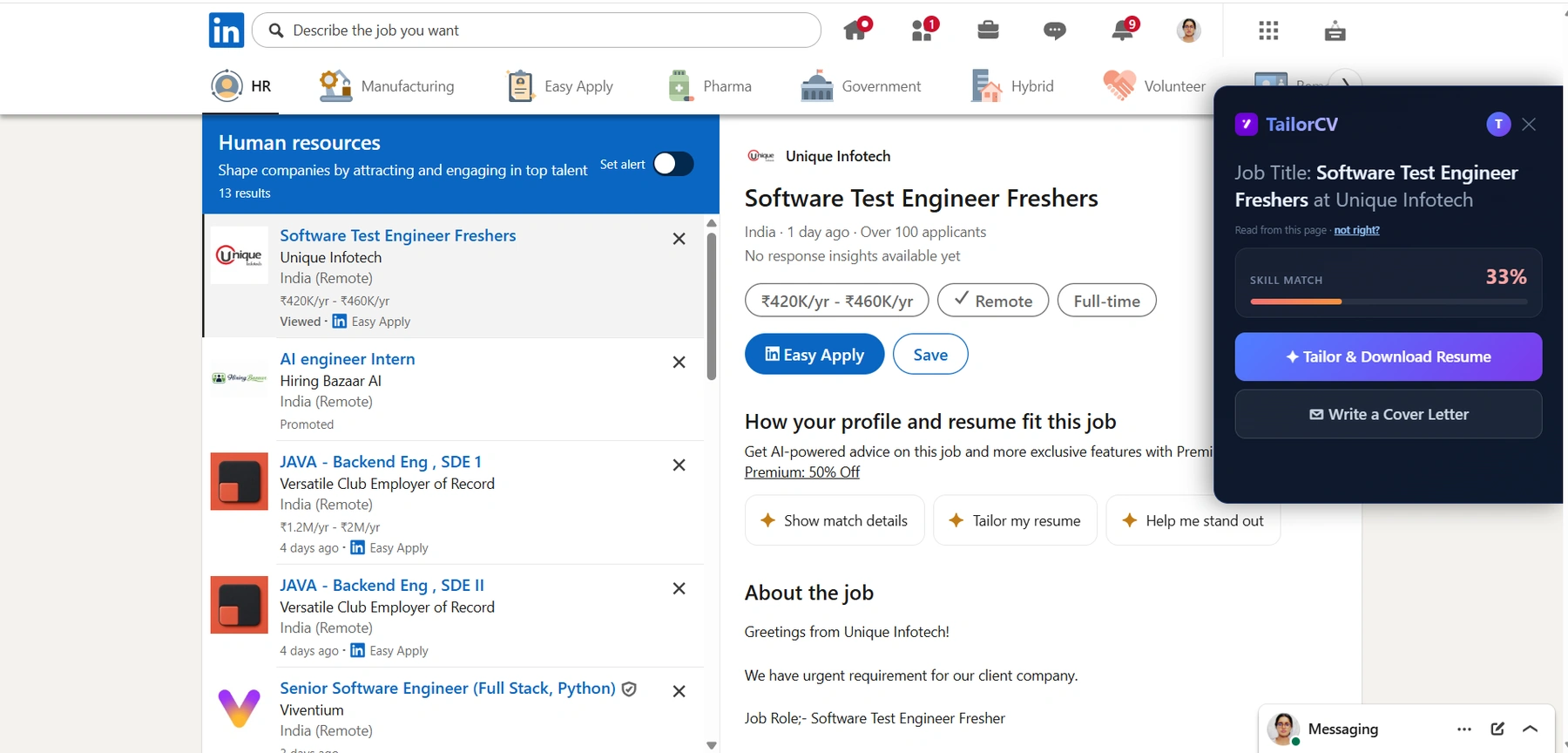
This is what tailoring per posting looks like in practice: the panel reads the job off the page you are already browsing and rewrites against it, instead of you copying the description into another tab.
How to use them well:
- Filter by language requirement (English-friendly / bilingual) and your field.
- Set up alerts for your target roles.
- Read requirements carefully — note the Japanese level and visa/sponsorship expectations.
These sites are where many foreigners find their first role in Japan. Combine them with the strategies in how to get a job in Japan as a foreigner.
Category 2: LinkedIn
LinkedIn is essential for professional and global roles in Japan:
- Global companies and their recruiters actively source candidates on LinkedIn, especially in Tokyo.
- Recruiters can approach you about roles you never see advertised.
- It's how you build a network in Japan and get referrals.
Optimise your profile with your target keywords and language credentials (JLPT/TOEIC), set your location to your target city, and turn on "Open to Work." Use the keyword approach from best resume keywords for Japan. Reach out to people at your target companies with a short, polite note.
Category 3: Recruitment Agencies
Agencies that specialise in placing foreigners in Japan are one of your most valuable resources:
- They know which employers sponsor work visas and hire foreigners.
- They match you to suitable roles and often advocate for you.
- They guide you through Japan's hiring process, documents, and expectations.
- Many handle bilingual and professional roles in tech, finance, and international business.
Register with a few reputable agencies, be clear about your skills, language level, and visa situation, and stay responsive. A good recruiter can dramatically shorten your search.
Category 4: Company Career Pages
Global firms and English-friendly employers post roles directly on their own sites:
- Target multinationals, tech companies, and startups with a presence in Japan.
- Check the careers pages of companies you admire.
- Applying directly often means facing an ATS, so make your resume ATS-friendly — see ATS and English resumes for Japan.
Category 5: English Teaching Routes
If you're targeting English teaching, there are dedicated channels:
- The JET Programme — a well-known government-affiliated route placing assistant language teachers.
- Language school (eikaiwa) chains and independent schools.
- International schools and universities for more qualified roles.
Teaching typically requires a degree and native/fluent English, but not Japanese — a reliable way to start a career in Japan.
Category 6: Networking and Communities
Not every opportunity is advertised. In Japan, connections and referrals matter:
- Professional meetups and industry events (especially in Tokyo's tech and startup scene).
- Expat and professional communities.
- Alumni networks and informational interviews.
A warm introduction can carry real weight — see the networking tips woven through how to find a job in Tokyo.
How to Use These Channels Effectively
- Prepare your application first. Match the format to the employer — a strong ATS-friendly English resume for global roles (see ATS and English resumes for Japan), or a rirekisho for traditional firms (see the Japanese resume guide). Build it with the TailorCV resume builder.
- Use multiple channels — job sites, LinkedIn, and agencies together.
- Tailor every application to the specific role with the resume optimizer.
- Add a cover letter where expected — see the Japanese cover letter guide.
- Prepare for interviews — see Japan interview etiquette and rehearse with the AI mock interview.
- Prioritise Tokyo for the widest range of foreigner-friendly roles.
The Visa Reality
Whatever channel you use, you'll generally need an employer-sponsored work visa matched to your role and qualifications. Job sites and agencies focused on foreigners will indicate which roles offer sponsorship. Always confirm current rules with official Japanese authorities.
Note: Visa rules change and depend on your situation — verify with the Japanese Immigration Services Agency, an embassy/consulate, or your employer.
Common Mistakes When Searching for Jobs in Japan
- Using only Japanese-only job boards. As a foreigner, start with foreigner-focused sites and English-friendly channels.
- Relying on a single channel. Combine job sites, LinkedIn, and agencies.
- Ignoring recruitment agencies. They know who sponsors and can advocate for you.
- Not tailoring applications. Generic applications rank poorly and get ignored.
- Overlooking Tokyo. It has by far the most foreigner-friendly roles.
Frequently Asked Questions
What are the best job sites for finding work in Japan as a foreigner? Foreigner-focused job boards for bilingual/international roles are the best starting point, alongside LinkedIn and recruitment agencies that specialise in placing foreigners.
Do recruitment agencies help foreigners find jobs in Japan? Yes — agencies that place foreigners are invaluable. They know which employers sponsor visas, match you to roles, and guide you through Japan's hiring process.
Where can I find English-teaching jobs in Japan? Through the JET Programme, language school (eikaiwa) chains, and international schools — dedicated routes that hire fluent English speakers, usually requiring a degree but not Japanese.
Is LinkedIn useful for finding jobs in Japan? Very — global companies and recruiters actively source on LinkedIn, especially in Tokyo. Optimise your profile with keywords and language credentials, and turn on "Open to Work."
Final Thoughts
Finding work in Japan starts with searching in the right places: foreigner-focused job sites, LinkedIn, recruitment agencies that place foreigners, company career pages, and — for teaching — the JET Programme and language schools. Use several channels together, prioritise Tokyo, and tailor every application.
Prepare a strong resume with the TailorCV resume builder, tailor it to each role with the resume optimizer, and get interview-ready with the AI mock interview. Search smart, apply tailored, and confirm your visa details with official sources — your job in Japan is within reach.
What is your resume scoring right now?
Scan it against a job description and get your ATS match score in about a minute.
Drop your resume here or choose a file
PDF only. Max 2 MB.
We never share your data or use it to train AI models.

Was this guide useful?
Be the first to rate it.