SS
SS
Key Takeaways
- Abu Dhabi is the capital and holds most of the UAE's oil wealth, which shapes the entire employment structure.
- Energy, sovereign wealth funds, government and defence dominate, rather than Dubai's trade, tourism and services.
- The pace is quieter and more institutional, which suits some people considerably better than Dubai.
- Emiratisation is more visible given the concentration of government and semi-government employers.
- Costs are somewhat lower than Dubai with a less frenetic property market.
How Abu Dhabi differs from Dubai
The comparison that decides where you should be.
| Abu Dhabi | Dubai | |
|---|---|---|
| Economic base | Oil and gas, sovereign wealth, government | Trade, tourism, logistics, services, finance |
| Employer types | Semi-government, national champions, government | Multinationals, SMEs, free zone companies |
| Pace | Institutional, slower, more formal | Fast, commercial, transactional |
| Cost of living | High, generally below Dubai | High, particularly housing |
| Social scene | Quieter, more family-oriented | Larger, more varied, more transient |
| Emiratisation visibility | Higher | Present, less dominant |
Abu Dhabi is where the sovereign wealth is — the major investment authorities and holding companies are headquartered here and employ substantial professional workforces.
Dubai is where the commerce is, and it hosts the regional headquarters of a great many multinationals.
The two are ninety minutes apart and some people live in one and work in the other, though the commute is genuinely long.
And the choice is temperamental as much as sectoral — people who find Dubai exhausting frequently find Abu Dhabi a relief, and vice versa.
The sectors
Where the employment concentrates.
Oil and gas, anchored by the national energy company and its operating subsidiaries, with a very large engineering and technical workforce.
Sovereign wealth and investment, including some of the largest investment institutions in the world, employing finance, legal and analytical professionals.
Government and semi-government, which is a much larger share of professional employment here than in Dubai.
Defence and aerospace, a deliberate diversification priority with genuine industrial investment.
Renewables and clean energy, where the emirate has invested substantially and built an international profile.
Healthcare and life sciences, with major hospital groups and growing research activity.
Culture, tourism and education, including the museum district and international university campuses.
Construction and infrastructure, which remains substantial.
And technology, growing from a smaller base than Dubai but with significant government-backed investment in artificial intelligence and advanced computing.
The major employers
Who actually hires here.
The national energy company and its subsidiaries employ an enormous technical and professional workforce across upstream, downstream, refining, petrochemicals and services.
Sovereign investment institutions — the emirate hosts several of the largest sovereign investors in the world — recruit finance, legal, risk and analytical professionals globally.
State holding companies and national champions span aviation, ports, logistics, utilities, telecoms and industry.
Government entities and regulators, which employ policy, economic and administrative professionals.
Defence and aerospace groups, built through deliberate industrial policy.
Healthcare systems, including major hospital networks recruiting clinicians and administrators internationally.
Universities and research institutes, including international campuses and a graduate research university focused on artificial intelligence.
Cultural institutions, including internationally branded museums with specialist professional staff.
And the international engineering, consulting and professional services firms that serve all of the above.
Living in Abu Dhabi
The practical picture.
Housing is more affordable than Dubai in general, with the island, the surrounding suburbs and outlying communities offering different price points.
The city is quieter and more spread out, with a strong corniche and waterfront culture.
Schooling is extensive with a large international school sector, and fees are a major family expense.
Car ownership is effectively necessary, with public transport more limited than Dubai's.
Social life is lower key and more family-oriented, with a smaller but genuinely warm expatriate community.
Cultural provision has grown substantially, with the museum district, performance venues and university campuses.
Weekend access to Dubai is straightforward for anyone who wants the larger city occasionally.
And the pace suits people differently — those who find Dubai relentless frequently prefer it here, while those who want intensity find it quiet.
Getting hired
The practical mechanics.
Company career portals for the large national employers, which handle most of their recruitment directly.
LinkedIn, heavily used across the Gulf.
Bayt, GulfTalent and Naukrigulf for regional volume.
Specialist recruiters in energy, finance and engineering, who handle a large share of senior roles.
Executive search for leadership positions at the sovereign and government institutions.
Referrals matter considerably, and the professional community is smaller and more connected than Dubai's.
Certifications and chartered status carry real weight, particularly in engineering and finance.
And a tailored CV with an ATS check matters because the large national employers screen at volume through formal systems.
Emiratisation and what it means for you
A policy shaping the market that expatriate candidates should understand.
Emiratisation sets targets for UAE national employment in the private sector, backed by incentives and financial penalties for non-compliance.
Abu Dhabi feels this more strongly than Dubai because government and semi-government employers make up a larger share of professional employment.
Certain functions are prioritised, particularly human resources, government relations and roles in regulated sectors.
For expatriate candidates this means competing where your specialism is genuinely scarce, and roles requiring deep technical expertise or international experience remain widely open.
It also means mentoring is part of the job at many employers, since knowledge transfer to national colleagues is an explicit expectation.
Nationalisation policies across the Gulf are moving in the same direction, with Saudi Arabia's Saudisation programme considerably more aggressive.
And the sensible reading is not that the market is closing, but that it is professionalising around genuine skill scarcity rather than general expatriate hiring.
Four honest cautions
Worth weighing before committing.
The summer is genuinely hard. Four months of extreme heat reshape daily life, and people underestimate it until they live through one.
It is quieter than Dubai, which is the attraction for some and the drawback for others — assess your own temperament honestly.
Employment is visa-linked, as everywhere in the Gulf, and losing a job starts a clock on leaving.
And the semi-government pace frustrates people from fast commercial environments. Decisions move through institutional structures, and pushing hard against that rarely accelerates anything.
None of these are reasons to avoid Abu Dhabi, which offers scale, stability and compensation that few markets match. They are simply the trade-offs.
Pay and packages
The financial structure, which differs from Western norms.
Salaries are quoted as packages with a basic component plus allowances for housing, transport and often schooling.
The basic-to-allowance split matters enormously because end-of-service gratuity is calculated on basic salary alone.
Housing allowances may be paid as cash or provided as accommodation, and the difference affects your flexibility considerably.
Schooling allowances are common at senior levels and are among the most valuable components for families given international school fees.
There is no income tax, which is the headline attraction, though the UAE has introduced corporate tax and VAT in recent years.
Annual flights home are a standard package component.
Health insurance is mandatory and employer-provided, with cover levels varying widely.
And end-of-service gratuity accrues with service and functions as the closest thing to a pension for expatriate employees — which is precisely why the basic salary figure deserves attention during negotiation.
Long-term residence
What changed, and why it matters here.
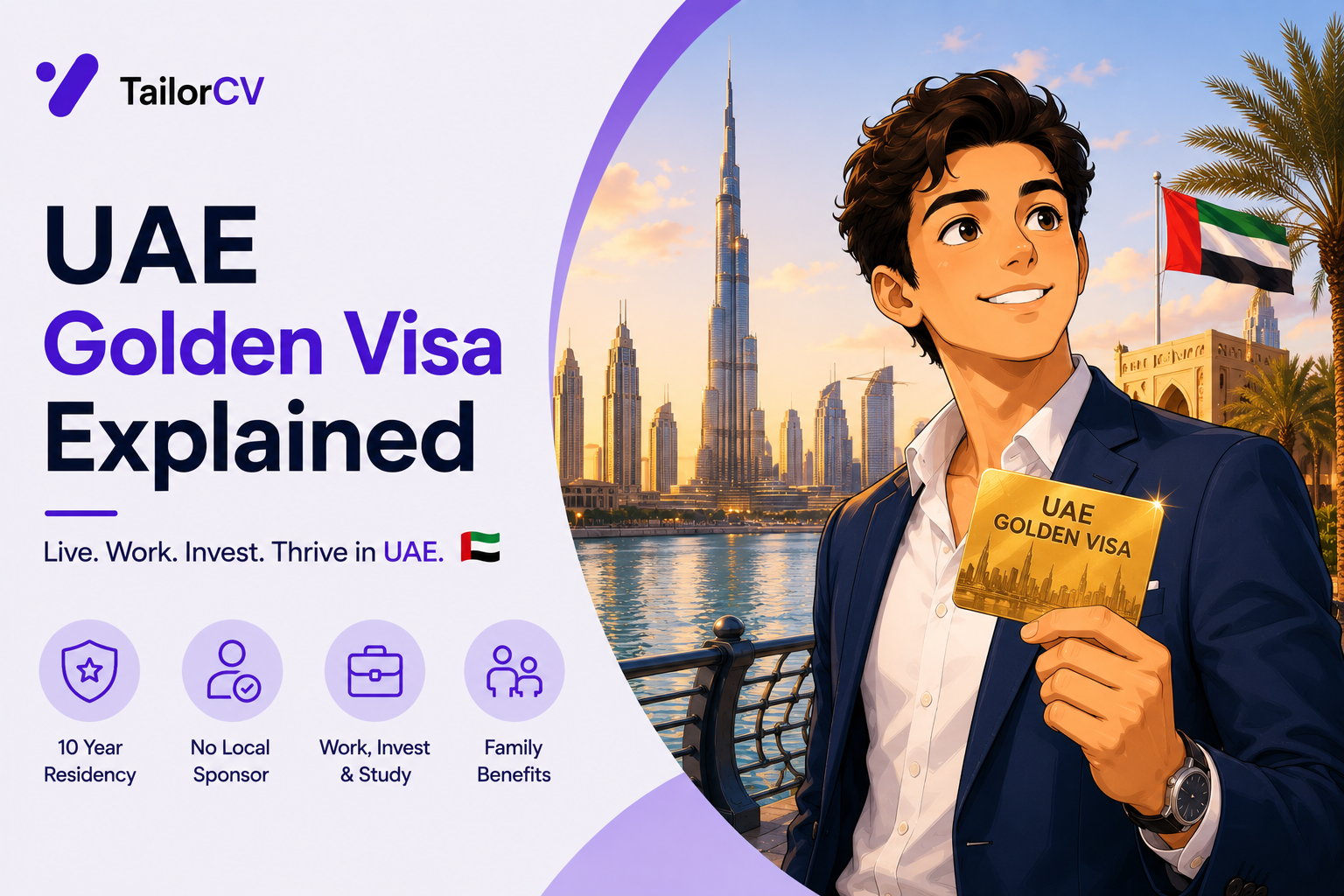
The Golden Visa provides long-term renewable residence for investors, entrepreneurs, specialised talents, researchers, outstanding students and several other categories.
It decouples residence from employment, which is the single most significant change to expatriate life in the Gulf in decades.
Categories relevant to professionals include scientists, doctors, engineers, specialists in priority fields and holders of qualifying salaries in certain classifications.
The Green Visa offers a further route for skilled employees, freelancers and self-employed people with its own conditions.
Family sponsorship is more flexible on these routes than on standard employment visas.
Which changes the calculation for people weighing whether the UAE is a chapter or a longer-term base, and for Abu Dhabi in particular, where institutions favour long tenures.
And it is worth checking eligibility even if you assume you do not qualify, since the specialised talent categories are broader than most people expect.
Mini checklist
- unchecked: Abu Dhabi versus Dubai decided on sector and temperament
- unchecked: Employer type understood — government, semi-government or private
- unchecked: Contract and gratuity terms checked
- unchecked: Housing allowance modelled against actual rents
- unchecked: Schooling researched if relocating a family
- unchecked: Emiratisation implications understood
- unchecked: Commute considered if living in one and working in the other
- unchecked: Visa sponsorship terms confirmed
- unchecked: Long-term residence options considered
Scenarios
Scenario 1: You are an engineer in oil, gas or energy
Abu Dhabi is the centre of that industry in the UAE by a wide margin, and the technical depth here exceeds Dubai substantially.
Scenario 2: You work in investment or asset management
The sovereign wealth institutions are headquartered here and are among the largest investors globally, offering scale that few private-sector roles match.
Scenario 3: You want a quieter family life
Abu Dhabi is consistently described as more relaxed, more family-oriented and less transient than Dubai, at somewhat lower cost.
Tip: If you are choosing between the two emirates, decide on sector first and temperament second. Energy, sovereign investment, defence and government point clearly to Abu Dhabi; trade, logistics, tourism, media and most multinational regional headquarters point to Dubai.
Do's and Don'ts
Do
- Match the emirate to your sector
- Understand semi-government employer culture
- Model housing against real rents
- Consider the quieter lifestyle as a genuine benefit
- Research schooling early
- Check gratuity and contract terms carefully
Don't
- Assume Dubai norms apply identically
- Underestimate the commute between emirates
- Overlook defence and renewables as growth sectors
- Ignore Emiratisation implications
- Expect Dubai's pace or nightlife
- Skip the contract detail
Common Mistakes
- Treating the UAE as one market. The two emirates differ substantially.
- Commuting between them daily. Ninety minutes each way wears thin quickly.
- Ignoring semi-government culture. It is more institutional and slower moving.
- Overlooking energy depth. Abu Dhabi is the technical centre of the sector.
- Assuming identical costs. Abu Dhabi is generally somewhat cheaper.
- Missing the growth sectors. Defence, renewables and AI are deliberate priorities.
Related Guides
Keep building on this with the related guides in this series:
- Jobs in the UAE for Graduates
- Jobs in the UAE for Graduates
- Tax-Free Salary in the UAE Explained
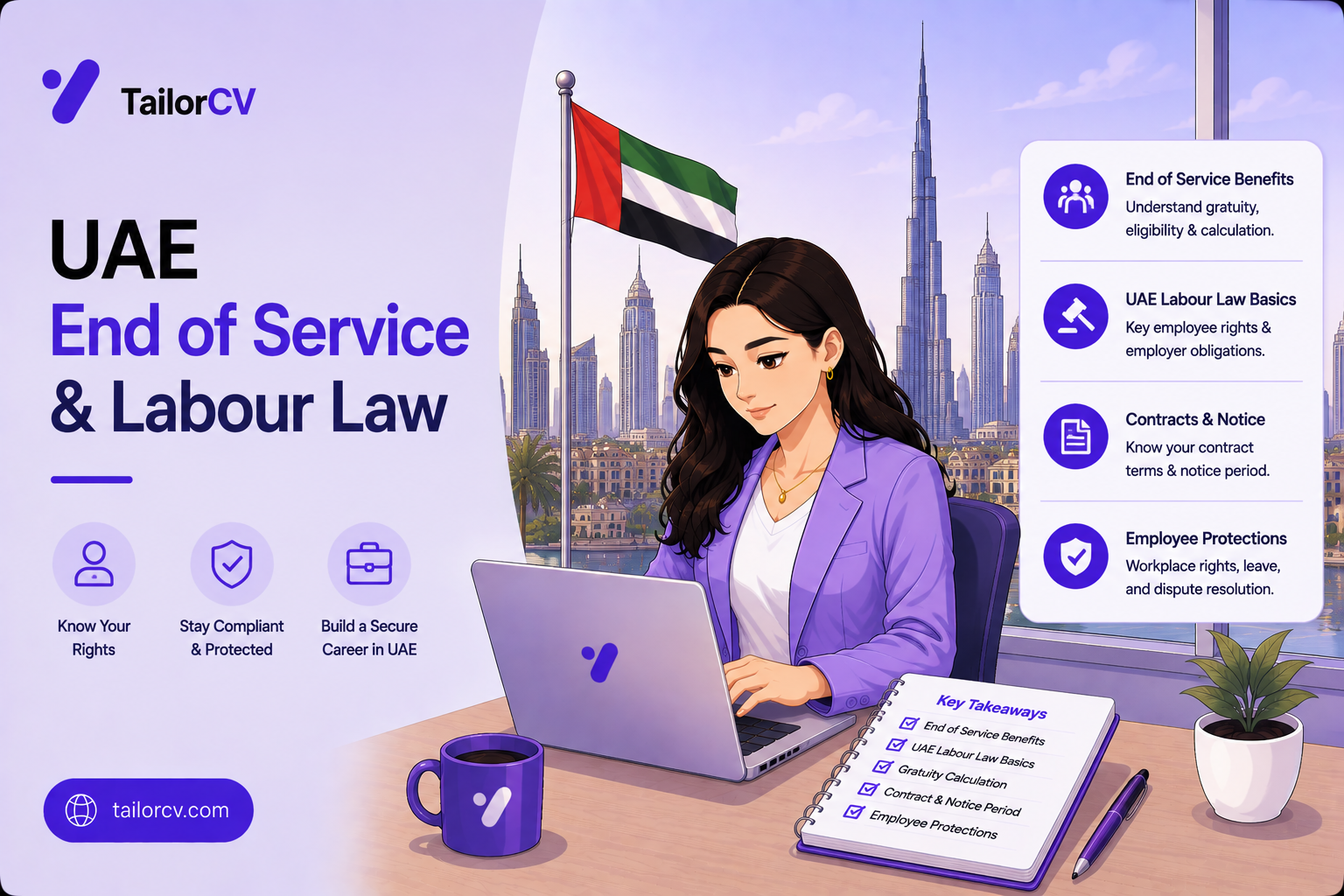
- End of Service and UAE Labour Law
- The Dubai Resume Format
You can also check your resume's ATS score for free, generate a tailored cover letter, or build a portfolio website in minutes.
Frequently Asked Questions
How is Abu Dhabi different from Dubai?
Abu Dhabi is built on oil, sovereign wealth and government, with a more institutional pace. Dubai is commercial, faster and built on trade, tourism, logistics and services.
Which sectors dominate in Abu Dhabi?
Oil and gas, sovereign wealth and investment, government and semi-government, defence and aerospace, renewables, healthcare, culture and education.
Is Abu Dhabi cheaper than Dubai?
Generally somewhat, particularly on housing, though both are expensive by international standards and schooling costs are comparable.
Can I live in Dubai and work in Abu Dhabi?
People do, and the commute is around ninety minutes each way. It is sustainable for some and genuinely wearing for most over time.
Is Emiratisation more visible here?
Yes, given the much larger share of government and semi-government employment, which shapes hiring more directly than in Dubai's private sector.
What is growing in Abu Dhabi?
Defence and aerospace, renewables and clean energy, artificial intelligence and advanced computing, and the culture and education sectors, all as deliberate diversification priorities.
Who are the major employers in Abu Dhabi?
The national energy company and its subsidiaries, sovereign investment institutions, state holding companies across aviation and logistics, government entities, defence groups, healthcare systems and universities.
What is living in Abu Dhabi like?
Quieter and more family-oriented than Dubai, more affordable on housing, car-dependent, with extensive international schooling and a substantially grown cultural sector.
How do I find work in Abu Dhabi?
Through company career portals for the large national employers, LinkedIn, regional boards like Bayt and GulfTalent, and specialist recruiters in energy, finance and engineering.
How does Emiratisation affect expatriate candidates?
It sets national employment targets backed by incentives and penalties, felt more strongly in Abu Dhabi given the government share of employment. Roles requiring scarce technical expertise or international experience remain widely open.
What are the main downsides of Abu Dhabi?
Four months of extreme summer heat, a quieter social scene than Dubai, employment tied to visa sponsorship, and an institutional pace that frustrates people from fast commercial environments.
How are Abu Dhabi salary packages structured?
As a basic salary plus allowances for housing, transport and often schooling. The basic-to-allowance split matters because end-of-service gratuity is calculated on basic salary alone.
Can I stay in the UAE long term?
Yes. The Golden Visa provides long-term renewable residence decoupled from employment for investors, specialised talents, researchers and qualifying professionals, with the Green Visa offering a further skilled route.
What is your resume scoring right now?
Scan it against a job description and get your ATS match score in about a minute.
Drop your resume here or choose a file
PDF only. Max 2 MB.
We never share your data or use it to train AI models.

Was this guide useful?
Be the first to rate it.