 TD
TD
Key Takeaways
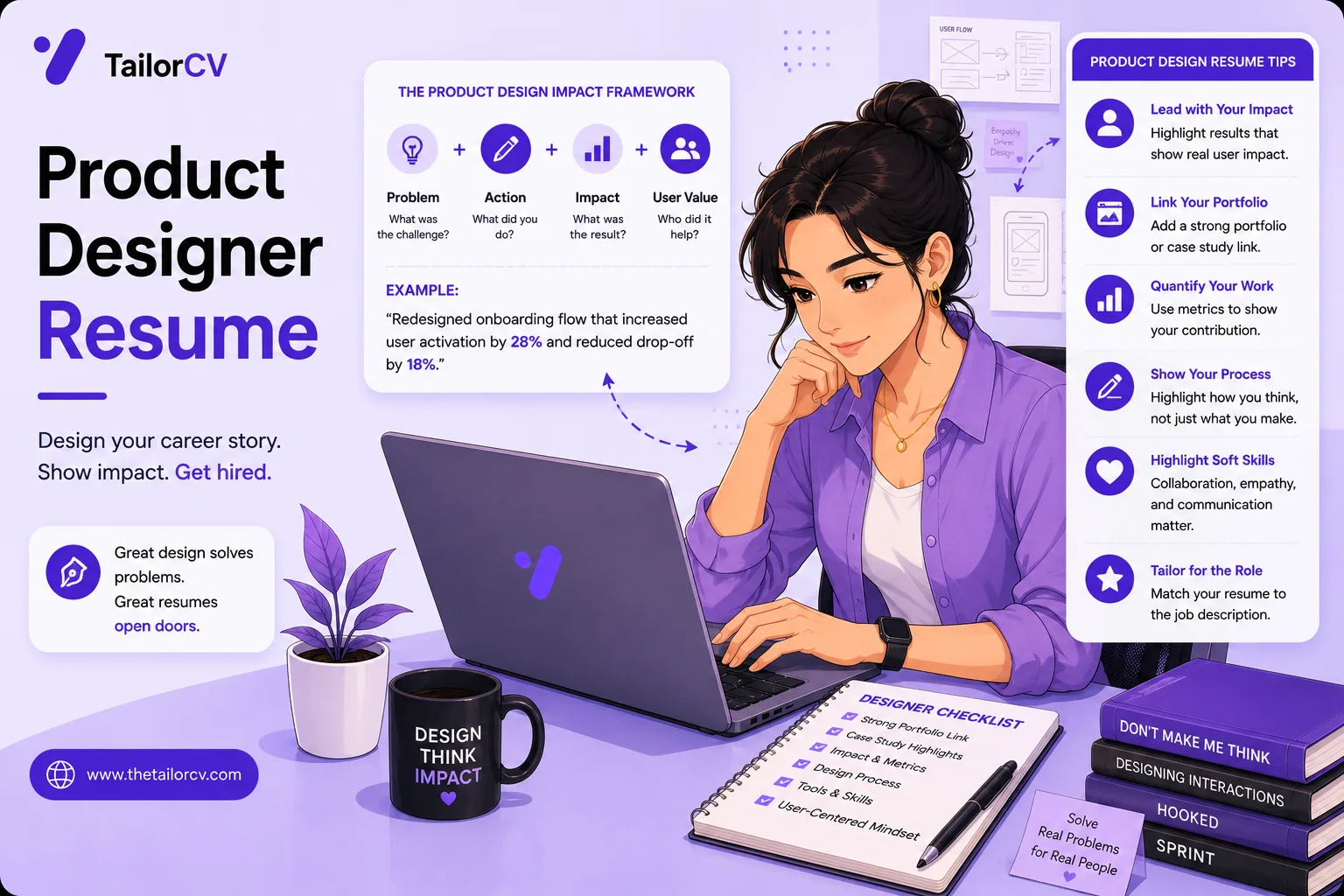
- The single biggest upgrade to a product-design resume is replacing task descriptions with outcomes.
- Signal end-to-end capability: user research, information architecture, wireframing, prototyping, design systems, usability testing.
- List your tools, but do not let a tool list stand in for impact - tools are table stakes.
- Product-design hiring lives and dies on the portfolio and case studies, so link a strong one at the top.
- Keep the resume itself one page, text-based and ATS-safe; a designed resume can break parsing.
Product design sits between UX, UI, and product strategy, so your resume has to show more than pretty screens — it has to show product thinking and business impact. Design leads read for process and outcomes, not just tools, while the ATS scans for exact keywords from the job description. Your job is to satisfy both, then let your portfolio close the deal.
Before applying, run your draft through the free ATS score checker, start from an ATS-friendly template, and read the ATS score guide. If you work in an adjacent design field, the UX designer resume guide and interior designer resume guide follow the same logic.
Lead with impact, not tasks
The single biggest upgrade to a product-design resume is replacing task descriptions with outcomes. Hiring managers want to see that your design moved a metric — activation, retention, conversion, support load. Use the bullet point formula — a strong action verb, the work, and a measurable result:
- "Redesigned onboarding, lifting activation 22% over two quarters."
- "Led design for a feature adopted by 40% of active users within a month."
- "Cut support tickets 30% by simplifying a core workflow."
- "Ran usability tests that reshaped the roadmap and reduced churn 15%."
Numbers prove product thinking — the quantify achievements guide shows how to add them honestly. Screens without outcomes are why many designers' resumes get no responses.
Write a summary that signals seniority
A short summary frames your level and focus:
Your resume after optimization
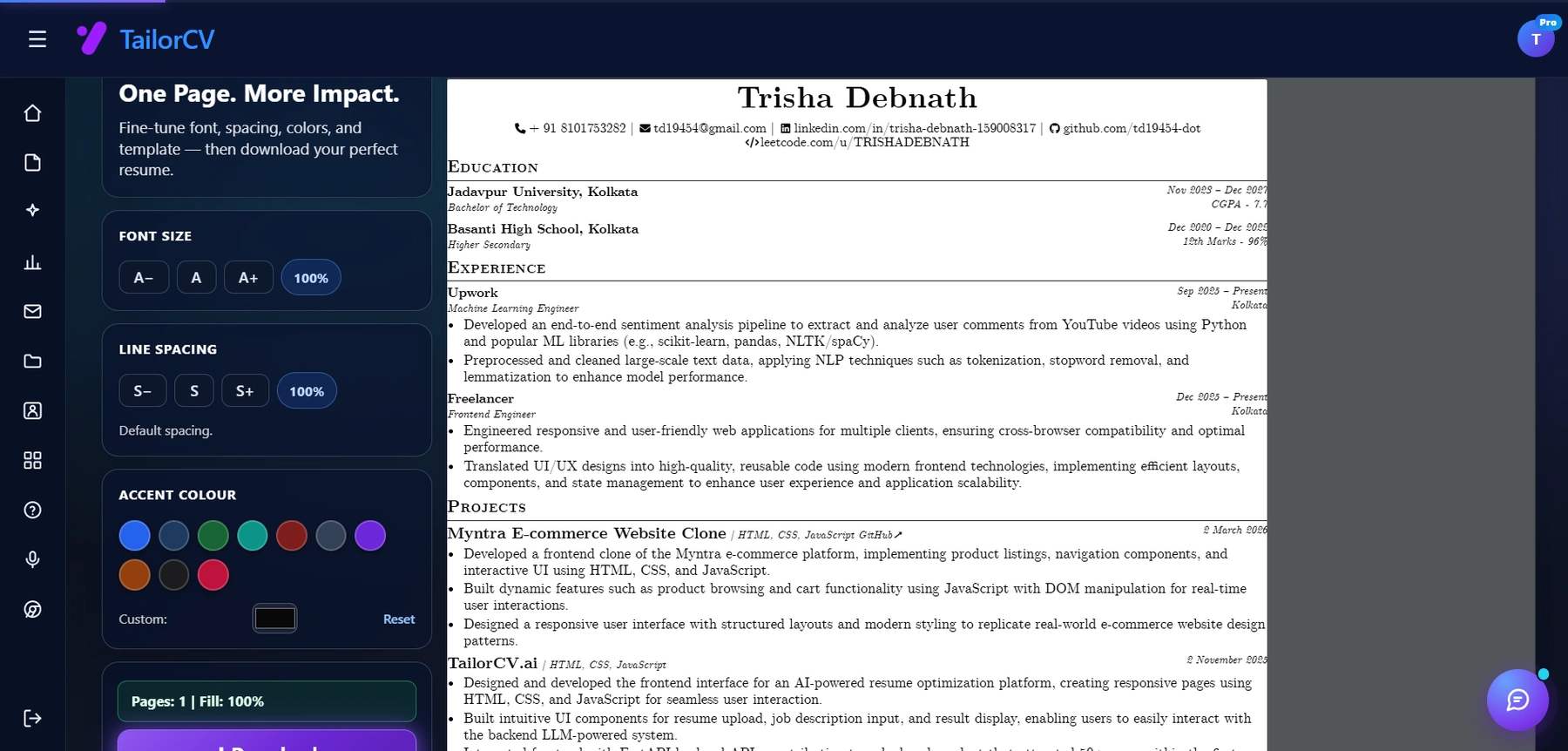
This is the resume after tailoring - the content is already matched, and these controls are how you fit it onto one page.
"Product designer with 5 years shipping B2B SaaS features end to end. Redesigned onboarding for +22% activation, owned a design system used across 3 squads, and partner closely with PM and engineering. Expert in Figma and research-driven design."
See resume objective vs summary for the opening lines.
Cover the full process
Signal end-to-end capability in your skills section: user research, information architecture, wireframing, prototyping, design systems, usability testing, and cross-functional collaboration with PMs and engineers. These are the keywords that separate a product designer from a visual designer, so mirror the job description and confirm coverage with the ATS score checker.
Name your tools — but keep them in their place
List Figma, FigJam, Framer, and any research or analytics tools, but don't let a tool list stand in for impact. Tools are table stakes; outcomes and process are what get you hired. Keep the tools tight and let your quantified bullets and portfolio carry the weight.
Portfolio is non-negotiable
Product-design hiring lives and dies on the portfolio and case studies, so link a strong portfolio website at the top of your resume. Write case studies that show your thinking — the problem, your process, the trade-offs, and the outcome — using how to write a portfolio case study and UI/UX case study portfolio. A great case study beats a wall of screens, and portfolio examples that landed interviews shows what strong work looks like. Understand portfolio vs resume so each does its job.
Structure a product designer resume
- Header — name, title, phone, email, portfolio link.
- Summary — three lines, impact- and process-forward.
- Skills — research, prototyping, design systems, Figma.
- Experience — company, role, quantified outcome bullets.
- Education — degree or design program.
This mirrors the layout in the resume builder. For ordering, see the resume section order guide.
Keep the resume tight and ATS-safe
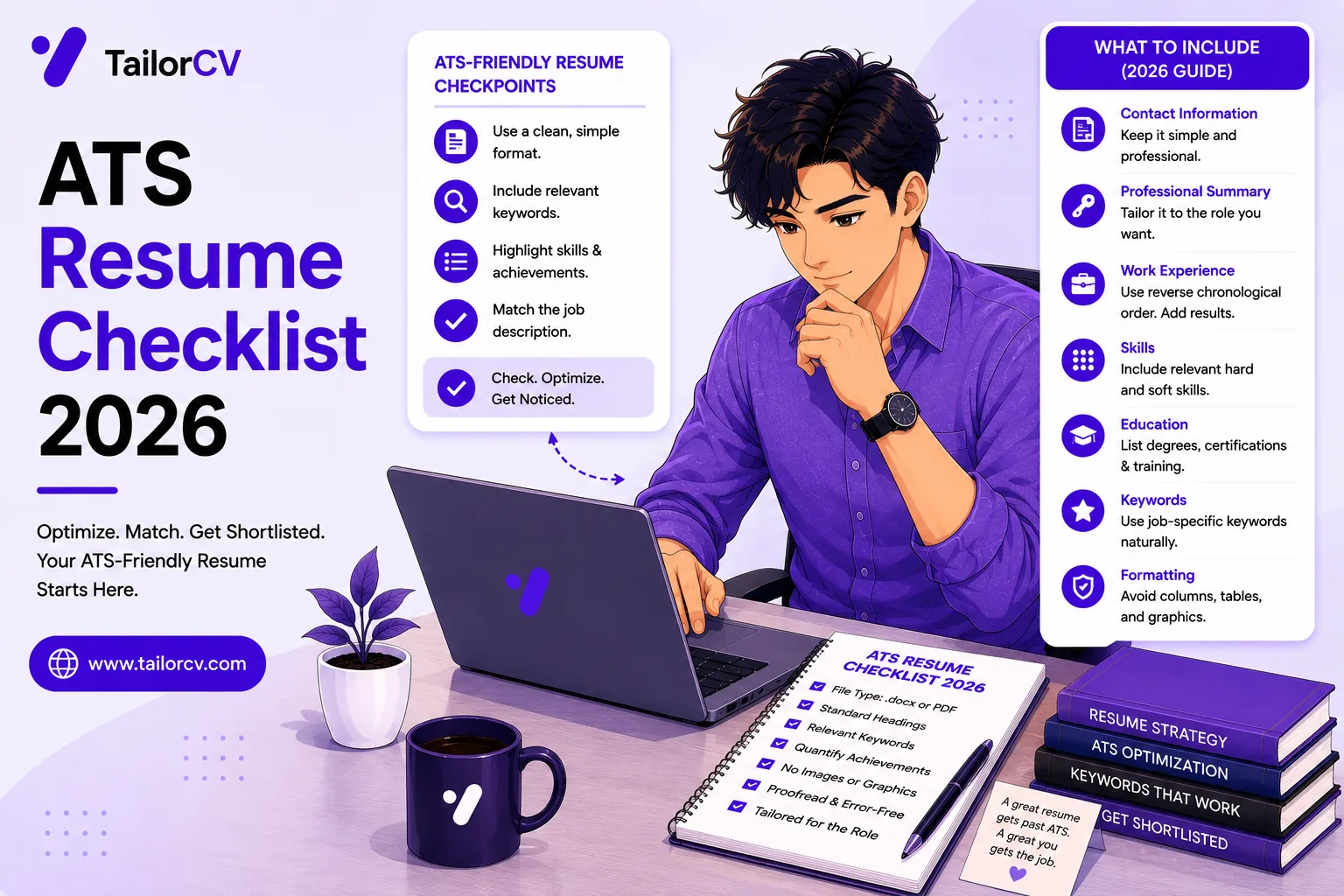
Keep it to one page, ATS-friendly, and text-based — a designed resume can break parsing. Use a readable font and standard headings, per how to make your resume ATS-friendly, then confirm parsing with the ATS score checker.
Breaking into product design?
If you're transitioning from UX, graphic design, or another field, lead with transferable skills and self-directed projects — the career change resume guide and projects in resume guide show how. A portfolio of even one strong end-to-end case study can outweigh a thin work history — see portfolio with no experience.
Where product designers find roles
Product-design roles are concentrated in tech companies, startups, agencies, and increasingly non-tech companies building digital products. Beyond job boards, designers find work through design communities, portfolio discovery, referrals, and direct outreach — a strong portfolio link in a cold email can start a conversation. Networking and a polished LinkedIn profile matter, and the best job search websites guide covers where to look. Because design hiring is portfolio-first, investing in one or two exceptional case studies often opens more doors than another round of applications.
Tailor to each company
A B2B SaaS company, a consumer app, and an agency want different emphases. Tailor each application with the resume optimizer so your keywords match, and see how much to change your resume for every job.
Prepare for the design interview
Product-design interviews include a portfolio review and often a design exercise. Prepare to walk through your thinking, practice with a free AI mock interview, and use the interview prep tool. If you get a take-home assignment, scope it well. Afterward, send a thank-you email and follow up.
Sample product designer resume bullets
Strong bullets lead with outcomes, pairing a action verb with a quantified metric:
- "Redesigned onboarding, lifting activation 22% over two quarters."
- "Led design for a feature adopted by 40% of active users within a month."
- "Cut support tickets 30% by simplifying a core workflow."
- "Built and maintained a design system used across three product squads."
Outcomes, not tasks, prove product thinking — the quantify achievements guide shows how. Run yours through the resume optimizer to confirm the keywords land.
Product designer resume summary examples
Match your summary to your level:
- Junior: "Product designer with 2 years shipping B2B SaaS features, skilled in Figma, prototyping, and usability testing."
- Mid-level: "Product designer with 5 years shipping features end to end; redesigned onboarding for +22% activation and owned a design system."
- Senior/lead: "Lead product designer with 9 years driving product strategy and mentoring designers, shipping features used by millions."
Product designer resume FAQ
How important is the portfolio? Essential — product-design hiring lives on case studies. Link a strong portfolio and read UI/UX case study portfolio.
Should I list every tool? Keep tools tight (Figma, research, analytics) and let outcomes carry the resume.
I'm moving from UX or graphic design — what do I lead with? Transferable skills and end-to-end projects, per the career change resume guide.
How do I handle the design exercise? Prepare with a free AI mock interview and scope any take-home assignment well.
Final checklist
Your product designer resume is ready when it:
- unchecked: Leads with outcomes, not tasks, and quantifies impact.
- unchecked: Signals end-to-end process and names the job description keywords.
- unchecked: Links a strong portfolio with real case studies.
- unchecked: Stays one page, ATS-safe, and passes the ATS score checker.
Build an outcome-focused resume in the resume builder, score it with the free ATS checker, and tailor it to every company.
What is your resume scoring right now?
Scan it against a job description and get your ATS match score in about a minute.
Drop your resume here or choose a file
PDF only. Max 2 MB.
We never share your data or use it to train AI models.

Templates that keep this structure intact
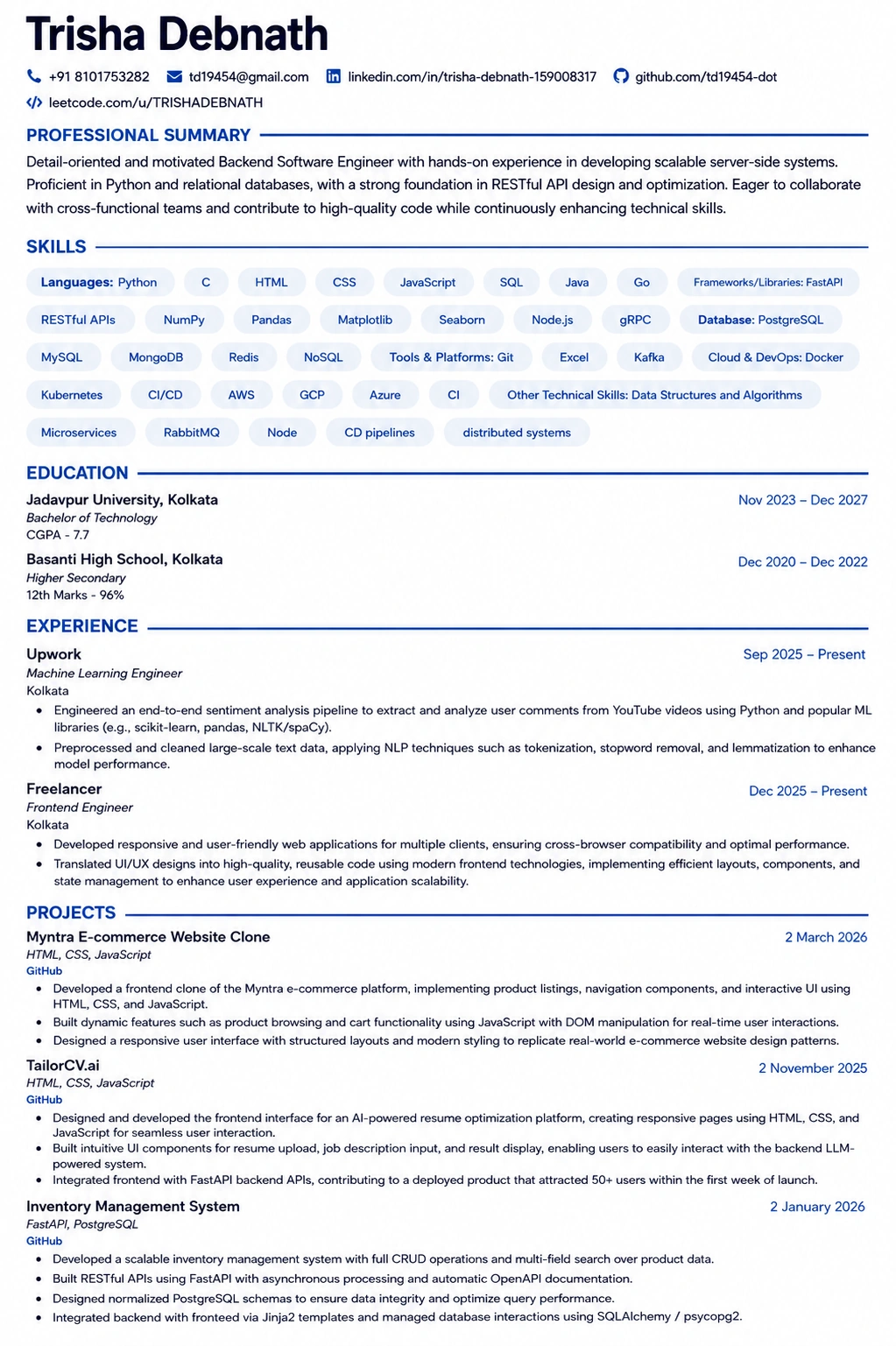
This template is ATS-tested — start from it and the formatting rules in this guide are already handled.
Was this guide useful?
Be the first to rate it.