 SS
SS
Key Takeaways
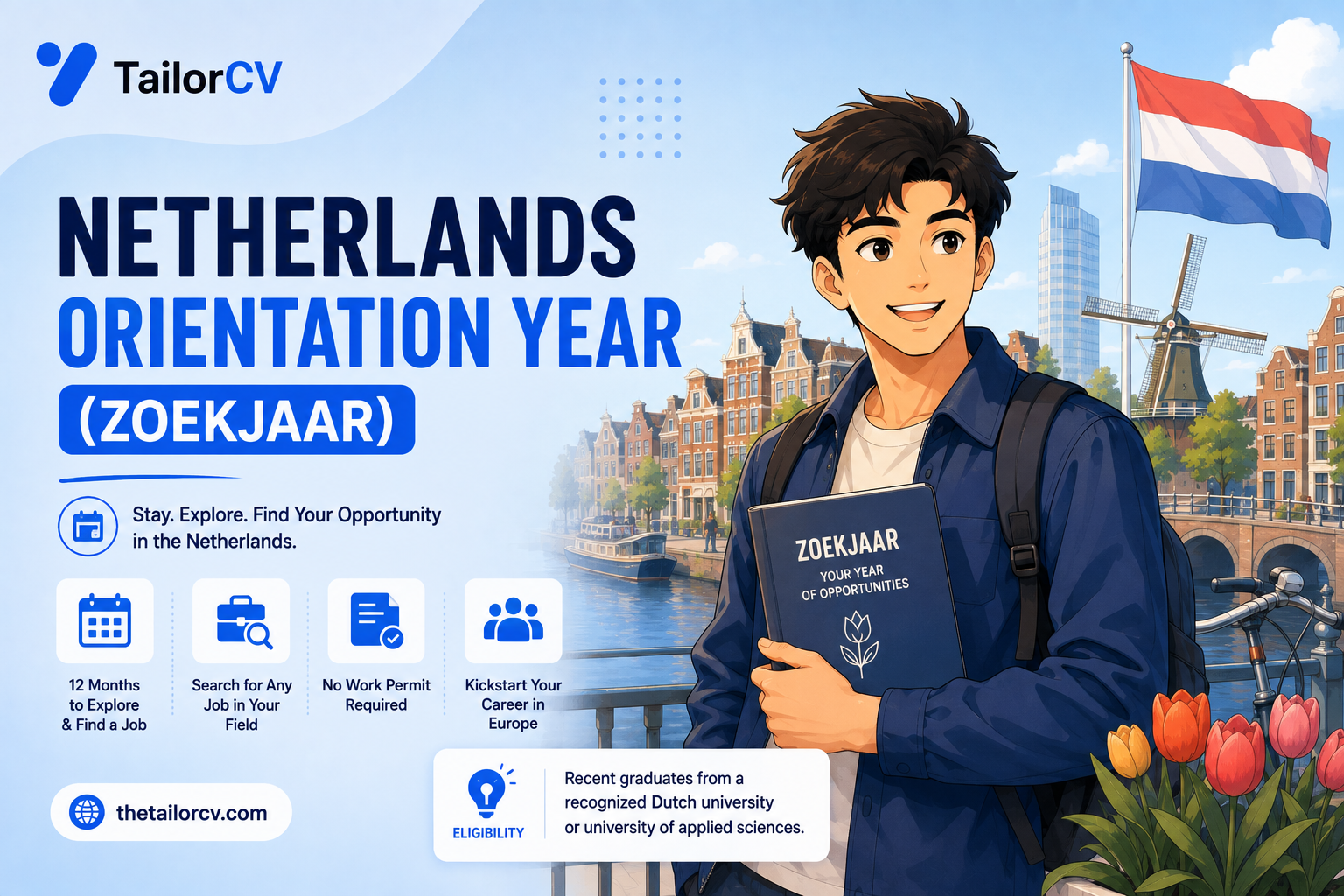
- The orientation year (zoekjaar) gives recent graduates a year in the Netherlands with unrestricted access to the labour market — no sponsorship required.
- It applies to graduates of Dutch institutions and, separately, to graduates of certain highly-ranked universities worldwide, which is the part most people do not know about.
- You do not have to use it immediately — there is a window after graduation in which you can apply.
- During the year, any employer can hire you without becoming a recognised sponsor, which is an enormous practical advantage.
- The usual next step is the highly skilled migrant permit, which has a lower salary threshold for people who came through the orientation year.
What the orientation year actually is
The orientation year for highly educated persons — the zoekjaar hoogopgeleiden — is a residence permit that lets a recent graduate live in the Netherlands for a year and work without restriction.
The crucial word is unrestricted. During this year you are treated, for employment purposes, like a local candidate. An employer does not need to be a recognised sponsor, does not need to apply for anything, and does not need to justify hiring you over an EU national. You can work full time, part time, on a temporary contract, or freelance.
That removes the single largest obstacle a graduate faces in any European market: the employer's reluctance to take on the cost, delay and uncertainty of sponsorship.
Who qualifies — including the part people miss
Two routes matter.
Graduates of Dutch institutions. If you completed a bachelor's, master's or doctorate at an accredited Dutch institution, you qualify. This is the well-known route.
Graduates of certain top-ranked universities abroad. This is the route most people have never heard of. The Netherlands maintains a list based on international university rankings, and if you graduated from a qualifying institution within the relevant recent period, you can apply for the orientation year without ever having studied in the Netherlands.
That second route is genuinely unusual. Very few countries offer a general-purpose, no-job-offer-required work permit to graduates of foreign universities, and it is worth checking the current list against your own institution before assuming you are not eligible.
Also eligible: people who completed certain research positions or specific scholarship-funded programmes in the Netherlands.
The timing window
You do not have to apply the day you graduate.
There is a defined period after completing your qualification in which the application can be made, and it is longer than a single day but not indefinite. The practical implication: if you graduated recently and went home to work for a while, you may still be inside the window.
Check the current period on the IND website — the Immigration and Naturalisation Service is the authority, and the rules around eligibility periods and qualifying institutions are updated.
What happens after the year
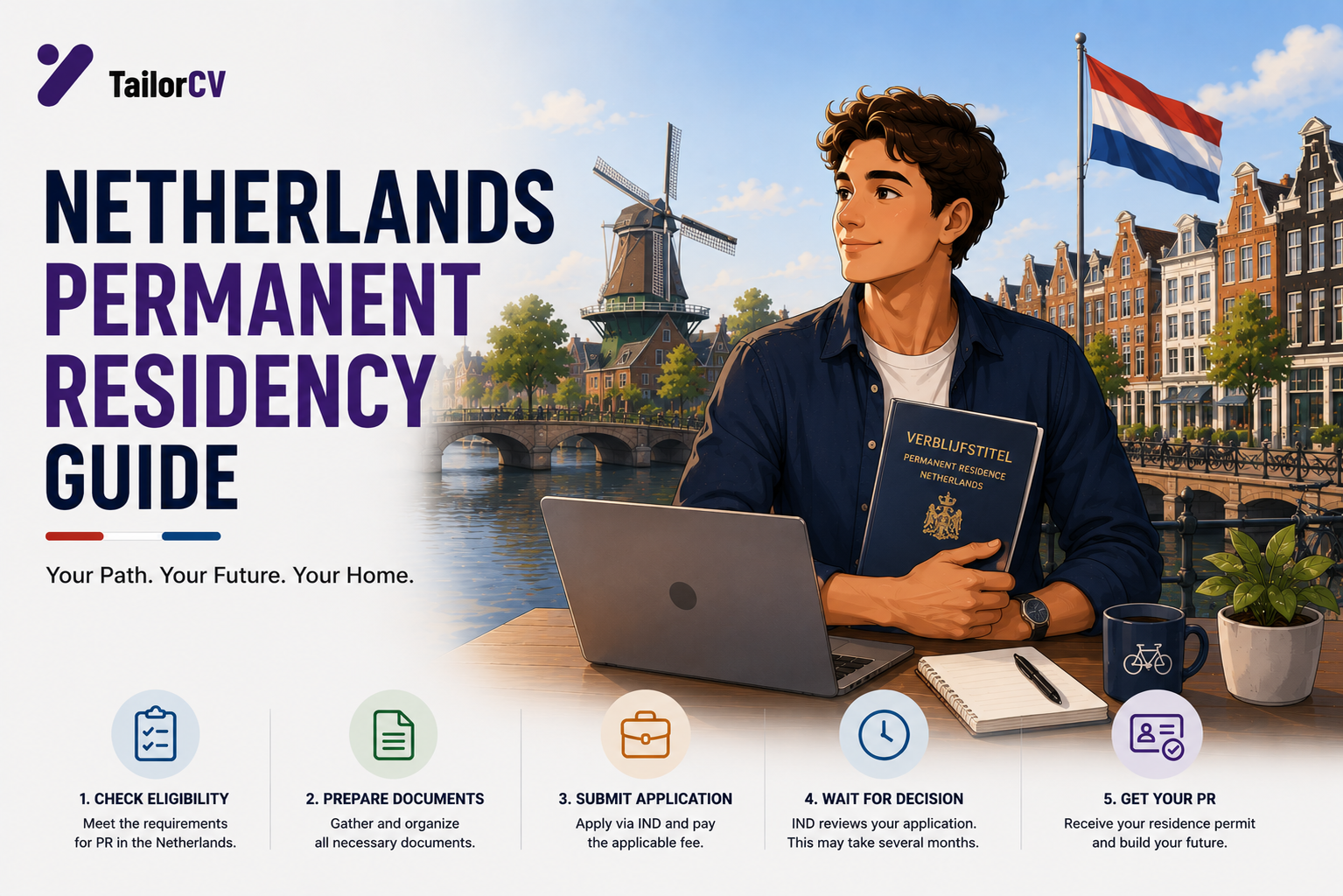
The orientation year is a bridge, and the destination is usually the highly skilled migrant (kennismigrant) permit.
How it works. A recognised sponsor employer applies on your behalf. There is a minimum salary threshold, set annually, which differs by age band.
The important detail: there is a reduced salary threshold for people who transition directly from an orientation year. This is a deliberate policy — it makes you cheaper for an employer to hire than an equivalent candidate applying from abroad, and it is worth saying out loud in an interview.
The employer must be a recognised sponsor. The IND publishes a public register of recognised sponsors, and it is one of the most useful job-search tools available to an international candidate: it is, effectively, a list of every employer in the country that has already committed to hiring internationally.
EU Blue Card is an alternative route with its own threshold and its own advantages around mobility within the EU.
The first month, in order
The permit is only half the problem. The administrative sequence on arrival has strict dependencies, and getting it out of order costs weeks.
- Register with the municipality (gemeente). You need an appointment, an address, and your documents. Appointments book out, so make one before you fly if you can.
- Receive your BSN — the citizen service number issued on registration. Almost everything downstream depends on it.
- Open a Dutch bank account. Many employers still prefer to pay into one, and a great deal of Dutch daily life runs on iDEAL, which needs a local account.
- Arrange Dutch health insurance. Basic health insurance is compulsory once you are working, and there is a deadline after which fines apply. This catches people out regularly.
- Get a DigiD, the national digital identity used for government services, your tax return and much else.
- Collect your residence document from the IND at the appointment they assign.
Do not delay the health insurance step. People assume it can wait until they have a job. It cannot, and the penalty for late enrolment is real money.
Using the year strategically
A year sounds long and disappears fast. Treat it in three phases.
Months one to three — set up and cast wide. Get registered, get a BSN, get a Dutch address on your CV, and apply broadly to build calibration on what gets responses. The local address alone changes how applications are read.
Months four to eight — target the sponsor register. By now you know which sectors respond. Narrow to recognised sponsors in those sectors, because those are the employers who can keep you after the year ends. Applying to a non-sponsor in month six is a use of time that has nowhere to go.
Months nine to twelve — convert. The highly skilled migrant application takes time on the employer's side. An offer in month eleven is uncomfortably tight; an offer in month eight is comfortable.
Take the interim work. A temporary or part-time role during the orientation year is not a compromise — it is Dutch experience, a Dutch reference and a Dutch payslip, all three of which make the next application considerably easier.
What the year does not cover
Two limits are worth knowing before you plan around it.
It is not renewable. The orientation year runs once, for its defined duration, and does not extend because the search went badly. Everything has to happen inside it.
It does not itself count toward permanent residence in the way continuous residence on a work permit does. Check the current rules with the IND if long-term settlement is your goal, because the arithmetic of which permits count is specific and it changes.
Family members have their own rules for accompanying you, with their own conditions and their own applications. Do not assume a partner automatically receives working rights on the strength of your permit — verify it directly.
Choosing between employers near the end
When two offers arrive in month ten, the decision is not only about the work.
Sponsor status is a hard filter. An employer not on the recognised sponsor register cannot convert you, however good the role is. That is not a negotiation, it is a fact about their registration.
Contract type matters. A fixed-term contract is normal in the Netherlands for a first role, and a permanent contract after one or two fixed terms is the usual path. A very short contract creates permit uncertainty; ask what happens at renewal before you sign.
Salary must clear the threshold. The highly skilled migrant route has a minimum, and an offer below the applicable threshold does not work regardless of how much you want the job. Raise this early rather than discovering it at contract stage.
Mini checklist
- unchecked: Eligibility checked — Dutch institution or the ranked-university list
- unchecked: Current application window confirmed on the IND site
- unchecked: Application submitted inside the window
- unchecked: Address registered with the municipality on arrival
- unchecked: BSN (citizen service number) obtained
- unchecked: Dutch bank account opened
- unchecked: Health insurance arranged
- unchecked: IND recognised sponsor register used as a target list
- unchecked: The reduced salary threshold mentioned to employers
- unchecked: Highly skilled migrant transition planned before month nine
Scenarios
Scenario 1: You studied in the Netherlands and just graduated
Apply now. The year is most valuable when you are already in the country, already registered, and can start immediately — which is exactly what a Dutch employer wants to hear.
Scenario 2: You graduated from a top-ranked university abroad and have never been to the Netherlands
Check the qualifying institution list. If your university is on it and you are inside the window, you can apply for the orientation year without ever having studied here — one of the most generous graduate routes in Europe.
Scenario 3: You are eight months into the year with no permanent role
Shift entirely to the recognised sponsor register and target only those employers. They are pre-committed to international hiring, and the transition from orientation year to highly skilled migrant is routine for them.
Tip: Say the quiet part in interviews. "I hold an orientation year permit, so I can start immediately with no sponsorship process, and when it converts I qualify for the reduced salary threshold" answers the employer's two real objections in one sentence.
Do's and Don'ts
Do
- Check eligibility even if you never studied in the Netherlands
- Confirm the current window on the IND site
- Use the recognised sponsor register as a target list
- Register with your municipality immediately on arrival
- Mention the reduced salary threshold in interviews
- Plan the highly skilled migrant transition early
Don't
- Assume you need a Dutch degree to qualify
- Wait until late in the year to start targeting sponsors
- Rely on salary figures quoted anywhere but the IND
- Treat the year as a holiday with a job search attached
- Ignore the freelance and part-time options the permit allows
- Forget that the year is finite and non-renewable
Common Mistakes
- Assuming you need a Dutch degree. Graduates of certain highly-ranked foreign universities qualify too.
- Missing the application window. It is defined and finite; check the current period on the IND site.
- Ignoring the sponsor register. It is a public list of employers already committed to international hiring.
- Not mentioning the reduced threshold. It makes you cheaper to hire, and employers do not always know.
- Starting the permanent search late. The transition takes time and the year does not extend.
- Quoting stale salary thresholds. They are revised annually by the IND.
Related Guides
Keep building on this with the related guides in this series:
- How to Write a Dutch CV That Gets Read
- Finding a Job in Amsterdam as an International Graduate
- Technology and Startup Jobs in the Netherlands
- The EU Blue Card for Graduates
- Comparing Graduate Work Visas Across Countries
- Campus Placement Preparation in Second Year 2026 - The Highest-Leverage Time
You can also check your resume's ATS score for free, generate a tailored cover letter, or build a portfolio website in minutes.
Frequently Asked Questions
Do I need a Dutch degree for the orientation year?
No. Graduates of accredited Dutch institutions qualify, and so do graduates of certain highly-ranked universities worldwide. Check the current list on the IND site — many people never realise they are eligible.
Can any employer hire me during the orientation year?
Yes. The permit gives unrestricted labour market access, so an employer does not need to be a recognised sponsor or apply for anything to hire you.
How long do I have to apply after graduating?
There is a defined period after completing your qualification, longer than a day but not indefinite. Confirm the current window on the IND website.
What happens when the year ends?
Most people transition to a highly skilled migrant permit through a recognised sponsor employer, or to an EU Blue Card. Neither is automatic — plan for it well before the year expires.
Is there really a lower salary threshold for me?
Yes. People transitioning directly from an orientation year qualify for a reduced highly skilled migrant salary threshold, which makes you cheaper to hire than an equivalent overseas candidate.
Can I freelance during the orientation year?
The permit gives unrestricted access to the labour market, which includes self-employment. Check your specific situation with the IND, and note the Dutch rules on freelance status separately.
What should I do first when I arrive?
Register with the municipality to get your BSN. A bank account, health insurance, DigiD and the tax system all depend on it, and appointments book out.
When do I need Dutch health insurance?
Basic insurance is compulsory once you are working, with a deadline after which fines apply. Do not leave it until you have a permanent contract.
Should I take temporary work during the year?
Yes. Dutch experience, a Dutch reference and a Dutch payslip all make the next application considerably easier, and the permit allows it.
Can the orientation year be extended?
No. It runs once for its defined duration and does not extend because the search went badly, so plan the conversion well before it ends.
Does my partner get working rights automatically?
Not automatically. Family members have their own conditions and applications — verify the position with the IND rather than assuming.
What is your resume scoring right now?
Scan it against a job description and get your ATS match score in about a minute.
Drop your resume here or choose a file
PDF only. Max 2 MB.
We never share your data or use it to train AI models.

Was this guide useful?
Be the first to rate it.