 SS
SS

Key Takeaways
- International students can usually work on and off campus while studying, within the conditions of their study permit — always verify current IRCC limits.
- Co-op placements and internships are among the best ways to gain Canadian experience and a foot in the door.
- After graduating, the Post-Graduation Work Permit (PGWP) lets eligible students work full-time in Canada.
- A Canadian-style, ATS-ready resume and active networking are essential.
- Start early — building experience and connections during your studies pays off at graduation.
As an international student in Canada, work is more than extra income — it's how you build the Canadian experience, references, and network that lead to a career here after you graduate. Canada actively encourages international students to work, and the pathway from student to post-graduation employment (and often permanent residence) is well-established. But making the most of it takes planning: understanding the work rules, finding the right roles, and presenting yourself the Canadian way.
This guide walks international students through getting a job in Canada in 2026 — from part-time and co-op work while you study, to landing a graduate role on a Post-Graduation Work Permit (PGWP).
Important: Study-permit work rules and PGWP eligibility change over time and depend on your specific situation. Always confirm current rules with Immigration, Refugees and Citizenship Canada (IRCC) and your school's international student office before relying on any of the general guidance below.
Why Working During Your Studies Matters
For international students, the value of working while studying goes far beyond the paycheque. Canada's whole student-to-professional pathway is built on the idea that graduates with Canadian experience are more employable and better positioned to stay long-term. Every part-time shift, campus role, and co-op placement builds three things employers and immigration programs care about: Canadian work experience, local references, and a professional network. It also develops something less tangible but just as important — familiarity with Canadian workplace norms, communication styles, and expectations, so you're not learning them for the first time at your first "real" job. Students who start building this early graduate in a completely different position from those who focus only on classes: they arrive at graduation with a track record, contacts, and often a job offer already in hand. Treat work as an investment in your career and your future in Canada, not a distraction from your studies.
Working While You Study
Canada generally allows eligible international students to work part-time during academic sessions and full-time during scheduled breaks, subject to the conditions on your study permit and current IRCC policy (which has changed in recent years). Confirm your exact entitlement with IRCC and your school before you start.
Types of Student Work
- On-campus jobs: libraries, labs, admin, food services, research assistant roles — convenient and student-friendly.
- Off-campus part-time: retail, hospitality, tutoring, and customer service build Canadian experience and references.
- Co-op and internships: if your program includes a co-op, you'll need a co-op work permit; these placements are the single best way to gain relevant, career-track Canadian experience.
Even a modest part-time or campus role gives you Canadian references, local workplace familiarity, and network — all of which strengthen your graduate job search.
Build a Canadian-Ready Resume Early
Your home-country resume needs adapting. Canadian resumes:
- Exclude photos, age, and personal details.
- Are concise (usually one page for students), achievement-focused, and tailored.
- Must be ATS-friendly.
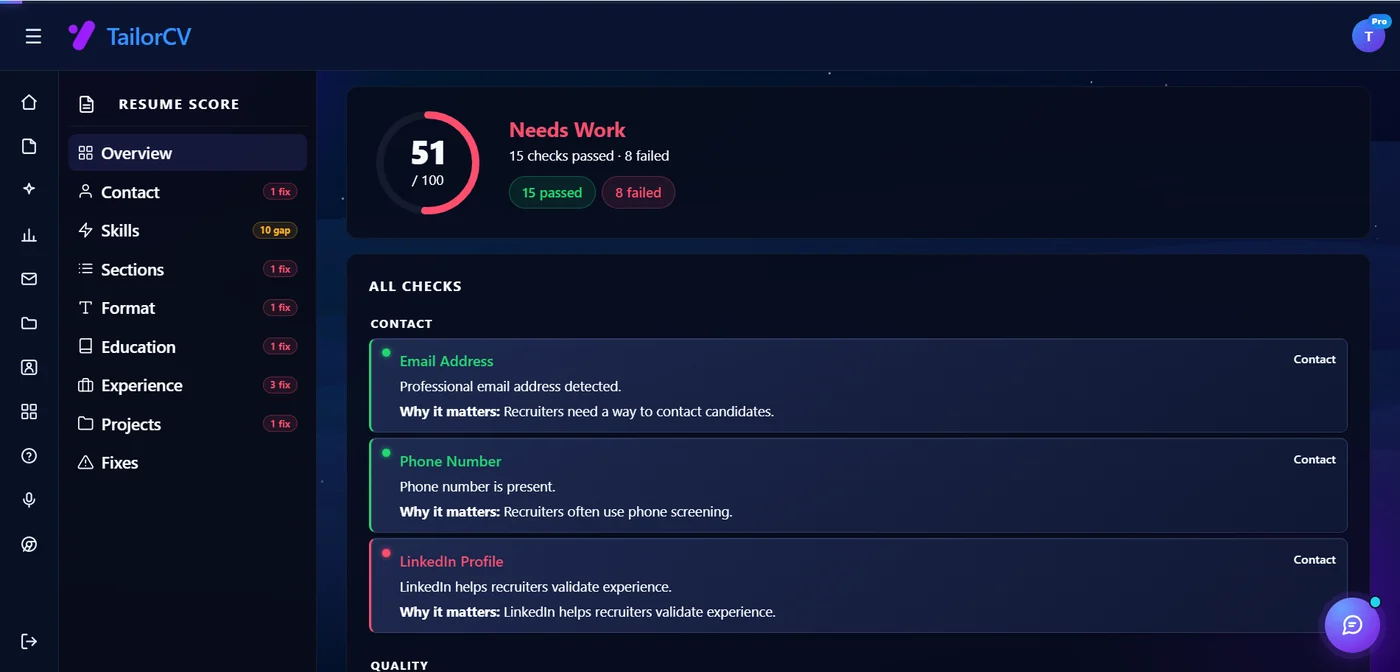
For part-time roles, emphasise reliability, customer service, teamwork, and any relevant coursework or projects. Follow our Canadian resume guide, test it with the free ATS score checker, and build a clean version with the TailorCV resume builder. For the terms employers scan for, see best resume keywords for Canadian jobs.
Types of Work Available to International Students
Understanding the different kinds of work open to you (within your permit conditions) helps you plan strategically:
- On-campus jobs: libraries, labs, administrative offices, food services, and research or teaching assistant roles. Convenient, student-friendly, and a good first Canadian reference.
- Off-campus part-time work: retail, hospitality, tutoring, and customer service. These build Canadian experience, references, and everyday workplace familiarity — all of which strengthen your later graduate search.
- Co-op and internship placements: the gold standard, offering paid, career-track experience in your field (requiring a co-op work permit).
- Freelance or project work: where permitted, can build a portfolio and demonstrable results, especially useful for tech and creative fields.
Even a modest part-time or campus role does more than pay the bills — it gives you Canadian references, local workplace experience, and a network, each of which chips away at the "Canadian experience" barrier before you graduate.
Turning Part-Time Roles Into Career Capital
It's tempting to treat a part-time "survival" job as separate from your career, but the students who progress fastest make every role count. In any position — even one outside your field — you can build transferable skills (customer service, teamwork, reliability, communication), earn Canadian references, and develop workplace fluency that shows in interviews. Describe these roles on your resume with achievement bullets, quantifying impact where you can, and draw on them for behavioural interview stories. A retail or hospitality job, framed well, demonstrates exactly the reliability and people skills Canadian employers value — and it keeps you employed and networked while you pursue roles in your field.
Where International Graduates Find Work
Opportunities vary by city and field, so align your search with where your skills are in demand:
- Toronto, ON: the largest market — finance, tech, professional services. See how to find a job in Toronto.
- Vancouver, BC: tech, film, and trade.
- Montreal, QC: tech, aerospace, and AI (French is important).
- Calgary/Edmonton, AB: energy, engineering, and increasingly tech.
- Waterloo, ON: a tech hub with strong co-op ties to local universities.
Smaller cities can also offer strong opportunities with less competition. Research where graduates from your program tend to land, and use your school's career data and alumni network to guide your targeting.
Use Your School's Resources
Your campus is one of your biggest advantages:
- Career centre: resume reviews, job boards, workshops, and employer connections.
- Co-op office: placement support and employer relationships.
- International student office: guidance on work permits and rules.
- Alumni network: graduates in your field who can offer advice and referrals.
These resources are included in your tuition — use them fully.
Network From Day One
Much of Canadian hiring happens through connections. As a student, start building your network early:
- Attend campus career fairs and industry events.
- Join student clubs and professional associations in your field.
- Do informational interviews with professionals and alumni.
- Build and use LinkedIn — see LinkedIn optimization for Canadian job seekers and our guide to networking to find jobs in Canada.
By graduation, a strong network can be the difference between a long search and a quick offer.
Presenting Yourself the Canadian Way
As an international student, adapting your application to Canadian norms is essential from your very first part-time job:
- Use a Canadian-style resume — no photo or personal details, concise, achievement-focused, and ATS-friendly. See the Canadian resume guide and build one with the TailorCV resume builder.
- Translate coursework and projects into experience. With limited work history, your final-year projects, group work, and academic achievements become resume material — described with achievement bullets.
- Emphasise transferable skills for part-time roles: reliability, customer service, teamwork, and communication all count.
- Tailor every application with the resume optimizer, and add a targeted cover letter using the Canadian cover letter guide.
- Prepare for behavioural interviews — Canadian employers love "Tell me about a time…" questions. Rehearse with the AI mock interview.
Getting these fundamentals right early means that by the time you're chasing a graduate role, presenting yourself the Canadian way is second nature.
After Graduation: The Post-Graduation Work Permit (PGWP)
Eligible graduates of qualifying Canadian programs can apply for a Post-Graduation Work Permit, which allows full-time work in Canada. The PGWP is a key bridge from student to professional — and, for many, a step toward permanent residence through programs that value Canadian work experience.
Because PGWP eligibility and duration rules have changed and depend on your program and institution, confirm the current requirements with IRCC and your school well before you graduate, and plan your applications accordingly.
Landing a Graduate Role
With (or while applying for) your PGWP, treat the graduate job search like the newcomer search — because in the labour market, you largely are one:
- Target your field, using the Canadian experience and references you built during studies.
- Tailor every application — resume and cover letter — to each posting. See the Canadian cover letter guide.
- Leverage co-op employers — many hire their co-op students into full-time roles.
- Prepare for behavioural interviews — see interview tips for Canada, and rehearse with the AI mock interview.
Our broader newcomer job guide and how to find a job in Toronto are useful companions.
Co-op and Internships: Your Strongest Card
Of all the ways international students build a Canadian career, co-op placements and internships are the most powerful. They give you paid, relevant, career-track experience while you study, a Canadian employer's name on your resume, references, and — crucially — a direct pipeline to full-time work, since many employers hire their co-op students and interns into permanent roles after graduation.
A few points to make the most of them:
- Choose a co-op program where possible. If your program offers a co-op stream, it's often worth it — you'll need a co-op work permit alongside your study permit, which your school helps arrange.
- Treat every placement as an extended interview. Deliver real value, build relationships, and make it easy for the employer to want to keep you.
- Use your co-op office. They have employer relationships, placement support, and know which companies hire international students.
- Convert relationships into references and referrals, which power your graduate search even if the co-op employer can't hire you directly.
By graduation, a student with one or two strong co-op placements is in a completely different position from one who waited — with Canadian experience, references, and often an offer already in hand.
From Study Permit to PGWP to Permanent Residence
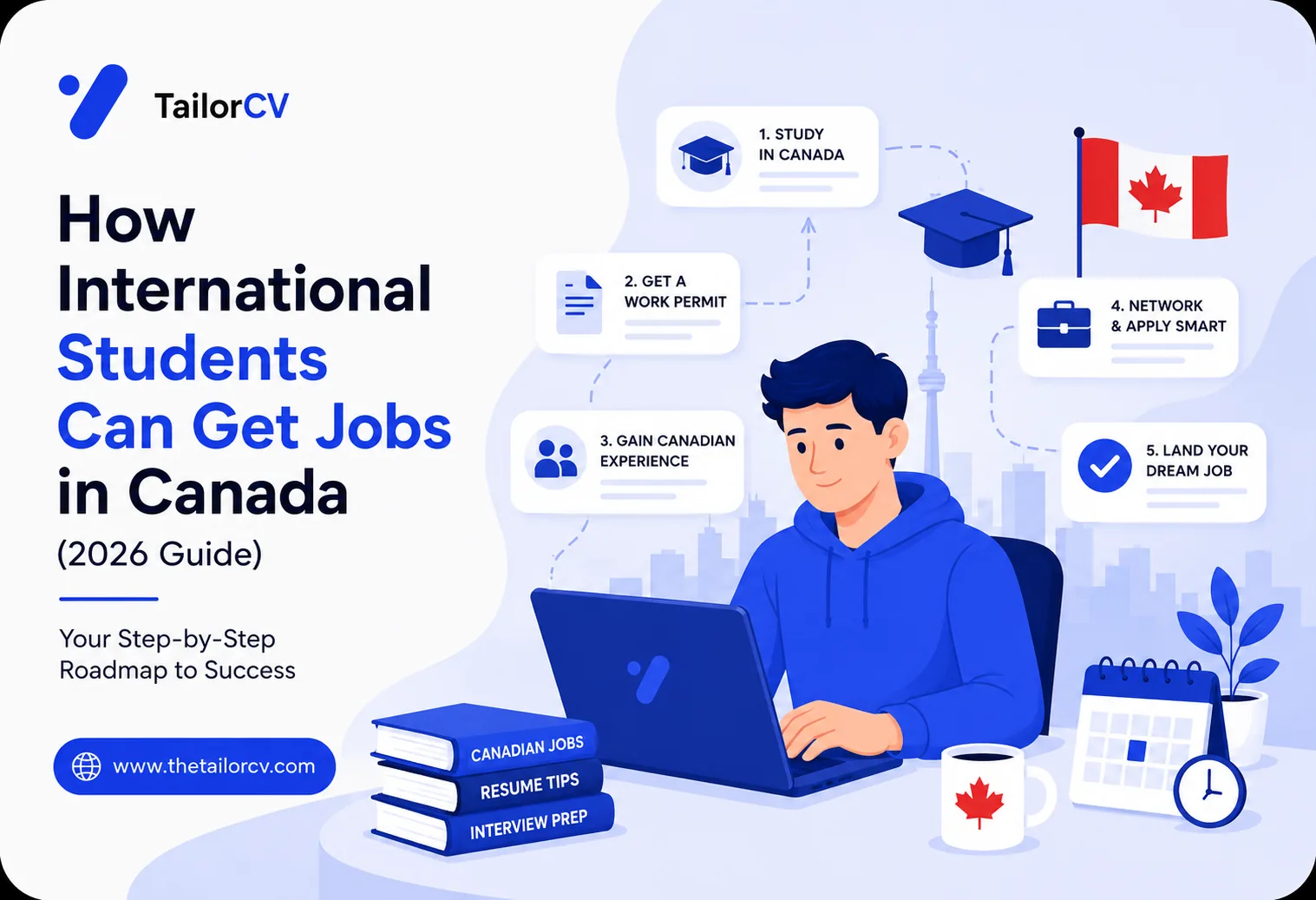
For many international students, the real prize is not just a job but a pathway to staying in Canada long-term. The typical arc:
- Study on a study permit (working part-time and doing co-op along the way).
- Graduate from an eligible program and apply for a Post-Graduation Work Permit (PGWP), which allows full-time work.
- Gain skilled Canadian work experience on the PGWP.
- Apply for permanent residence, often through programs (such as the Canadian Experience Class within Express Entry, or Provincial Nominee streams) that specifically value Canadian education and work experience.
This is why the Canadian experience you build as a student matters so much beyond the paycheque — it feeds directly into your eligibility to stay. Because eligibility rules, PGWP duration, and immigration criteria change frequently and depend on your program, institution, and situation, always confirm the current requirements with Immigration, Refugees and Citizenship Canada (IRCC) and your school's international student office, and plan your applications well ahead of graduation.
Important: The pathway above is a general overview, not immigration advice. Rules change often — verify everything with IRCC and your institution before acting.
Balancing Work, Study, and Finances
Working while studying is valuable, but balance is essential:
- Respect your study permit's work limits. Working beyond what your permit allows can jeopardise your status and future applications — always confirm the current limit with IRCC and your school.
- Prioritise your studies. Your academic standing underpins your PGWP eligibility, so don't let part-time work undermine it.
- Budget realistically. On-campus and part-time roles help with living costs and build experience, but plan your finances so you're not over-reliant on work hours.
- Look after your wellbeing. Juggling study, work, and a new country is demanding; use your school's support services and pace yourself.
The goal is steady, sustainable progress — building experience and references without compromising the studies that make the whole pathway possible.
Networking and Canadian Experience as a Student
Students have a natural networking advantage: a campus full of resources and events. Use them fully:
- Attend career fairs and employer events on campus — many target students specifically, with less competition than public postings.
- Join student clubs and professional associations in your field to build relationships and demonstrate engagement.
- Do informational interviews with alumni and professionals — a low-pressure way to learn and build your network.
- Build and optimise LinkedIn early — see LinkedIn optimization for Canadian job seekers — and connect with your university's alumni working in your target field.
For the full relationship-building playbook, see networking to find jobs in Canada. By graduation, a strong network can turn a long search into a quick offer.
Staying Onside With Your Study Permit
Because your future in Canada often depends on it, protecting your study-permit status is non-negotiable. Working beyond the hours your permit allows, or in ways it doesn't permit, can have serious consequences — jeopardising your status, your PGWP eligibility, and future immigration applications. The rules around student work have changed in recent years and depend on your specific situation, so always confirm the current limits and conditions with IRCC and your school's international student office, and never rely on secondhand advice from other students. Keep your enrolment full-time and your academic standing strong (both underpin your PGWP eligibility), track your work hours carefully, and if you're ever unsure whether a particular job or arrangement is allowed, ask your international student advisor before taking it. A little diligence here protects everything the rest of your pathway is built on.
Important: Study-permit work rules and PGWP eligibility change and depend on your circumstances. Always verify current rules with IRCC and your institution before acting.
Common Mistakes International Students Make
- Waiting until graduation to start. Build experience, references, and network during your studies.
- Using a home-country resume. Adapt to Canadian conventions early.
- Ignoring campus resources. The career and co-op offices are powerful and free.
- Not networking. So much Canadian hiring is relationship-driven.
- Misunderstanding work rules. Always confirm current permit conditions with IRCC and your school.
Frequently Asked Questions
Can international students work in Canada while studying? Generally yes — on and off campus, within your study permit's conditions and current IRCC policy. Always verify your exact entitlement with IRCC and your school.
What is a PGWP? The Post-Graduation Work Permit lets eligible graduates of qualifying Canadian programs work full-time in Canada. Rules and duration change, so confirm current eligibility with IRCC.
How do international students find jobs in Canada? Through campus career and co-op offices, part-time and co-op roles, networking, and tailored online applications — supported by a Canadian-style, ATS-ready resume.
Do co-op jobs help me get hired after graduation? Yes — co-op placements build directly relevant Canadian experience and references, and many employers hire their co-op students into full-time roles.
Can the PGWP lead to permanent residence? For many students, yes — skilled Canadian work experience gained on a PGWP feeds into programs (like the Canadian Experience Class within Express Entry, or Provincial Nominee streams) that value Canadian education and experience. Rules change often, so confirm current eligibility with IRCC.
How many hours can international students work in Canada? It depends on your study permit conditions and current IRCC policy, which has changed in recent years. Always verify your exact entitlement with IRCC and your school, and never work beyond what your permit allows, as it can jeopardise your status.
Should I do a co-op program? If your program offers one, it's often worth it. Co-op placements give paid, relevant, career-track Canadian experience while you study, plus references and a direct pipeline to full-time roles — putting you well ahead at graduation.
How do I balance work and study as an international student? Respect your permit's work limits, prioritise your studies (they underpin PGWP eligibility), budget realistically, and use your school's support services. Aim for steady progress that builds experience without compromising your academics.
The Long Game: From Student to Settled Professional
It helps to keep the bigger picture in view. For many international students, the goal isn't just a part-time job or even a first graduate role — it's building a life and career in Canada. Every step in this guide feeds that larger arc: part-time and co-op work builds the Canadian experience and references that make you employable; a strong graduate role on your PGWP builds the skilled work experience that many permanent-residence programs value; and the network you build throughout opens doors at each stage. Students who understand this play the long game deliberately — starting early, choosing experiences that build toward their field, keeping their academic standing and permit status solid, and treating every role and relationship as an investment in their future. The pathway rewards patience and strategy. Because immigration rules and criteria change frequently, keep confirming the details with IRCC and your school's international office as you go — but with a deliberate approach, the journey from international student to settled Canadian professional is one that thousands complete successfully every year.
Final Thoughts
For international students, Canada offers a genuine pathway from studying to a professional career — but the students who thrive start early. Build Canadian experience through campus and part-time work, use co-op placements, network from day one, and prepare a Canadian-ready application.
Build your resume with the TailorCV resume builder, tailor it to each role with the ATS optimizer, and rehearse with the AI mock interview. And always confirm your work-permit and PGWP details with IRCC and your school's international office before you act.
Find out where a fresher resume stands
Score yours against a real posting - no account, no cost.
Drop your resume here or choose a file
PDF only. Max 2 MB.
We never share your data or use it to train AI models.
Was this guide useful?
Be the first to rate it.