 TD
TD

Key Takeaways
- Toronto concentrates Canada's opportunities in finance, technology, professional services, healthcare, and media.
- The market is competitive, so tailoring every application and networking matter more here than almost anywhere in Canada.
- A Canadian-style, ATS-ready resume plus a strong LinkedIn presence is essential.
- Salaries are among Canada's highest, but so is the cost of living — weigh the full picture.
- Preparation for behavioural interviews turns Toronto shortlists into offers.
Toronto is Canada's economic engine and largest job market. As the country's financial capital and a booming tech hub, the Greater Toronto Area (GTA) offers the widest range of opportunities in Canada — and attracts the most competition for them. For newcomers, students, and professionals alike, Toronto can be the place your Canadian career takes off, if you approach the search strategically.
This guide shows you how to find a job in Toronto in 2026: which industries are hiring, where to look, what to expect on salary and cost of living, and how to stand out in a crowded, fast-moving market.
Understanding the Toronto Market
Before diving into your search, it helps to understand what makes Toronto distinct. The Greater Toronto Area is home to millions of people and the headquarters of a huge share of Canada's largest companies, and it draws talent from across the country and around the world. That combination — enormous opportunity and enormous competition — defines the experience of job-hunting here. On any given popular posting, you may be one of hundreds of applicants, which means the people who get hired aren't necessarily the most qualified on paper; they're the ones who apply strategically, present themselves clearly in the Canadian format, and tap the networks and referrals that quietly fill so many roles. Toronto rewards preparation and persistence over luck.
It's also worth knowing that Toronto is one of the most multicultural cities on earth. Employers are broadly experienced working with international talent, and there's an extensive infrastructure — settlement agencies, professional networks, mentorship programs — built to help newcomers integrate into the workforce. If you're new to Canada, this is a genuine advantage you should use fully.
Toronto for Students and Recent Graduates
Toronto is home to major universities and colleges and a deep pool of graduate opportunities, making it a natural launchpad for early-career talent. If you're a student or recent grad, lean on your school's career centre, co-op office, and on-campus recruitment — many Toronto employers build direct pipelines with local institutions, and roles posted through career centres often have far less competition than public boards. Apply early to graduate and management-trainee programs at banks and large firms, convert internships and co-op placements into full-time offers, and use your alumni network. International students should also review getting a job in Canada as an international student for the work-permit and PGWP details that shape a Toronto job search.
Why Toronto? The Opportunity Landscape
Toronto's economy is diverse and deep, which benefits job seekers across fields.
Industries Hiring in the GTA
- Finance & banking: Canada's major banks and financial institutions are headquartered here (Bay Street), with continuous demand in finance, analysis, risk, and operations.
- Technology: a fast-growing tech scene — software, data, AI, product, and fintech — spread across downtown and the wider GTA.
- Professional services: consulting, law, accounting, and advisory firms recruit heavily.
- Healthcare & life sciences: major hospitals and research institutions drive steady demand.
- Media, marketing & creative: Toronto is Canada's media and advertising centre.
Key Areas
- Downtown core / Financial District: banks, corporate HQs, and professional services.
- King West / tech corridors: startups and tech companies.
- North York, Mississauga, and the broader GTA: large employers, corporate offices, and services.
Step 1: Prepare an Application That Competes
Toronto is competitive, so sharpen your application before sending it:
- Build a Canadian-style, ATS-ready resume — see the Canadian resume guide.
- Make sure it passes the screener — most Toronto employers use an ATS; learn the mechanics in how ATS works in Canada and test each version with the free ATS score checker.
- Match each posting's keywords using best resume keywords for Canadian jobs.
Build a clean version with the TailorCV resume builder and tailor it per role with the resume optimizer.
Toronto's Job Search Channels in Depth
Because Toronto is so competitive, using every channel well matters. Here's how to get the most from each:
- LinkedIn is indispensable — Toronto recruiters source here constantly, and much hiring starts with a search or a referral. Optimise your profile with keywords and turn on "Open to Work" (see LinkedIn optimization for Canadian job seekers).
- Job Bank and Indeed carry the widest volume of listings; set alerts for your target roles so you can apply early, which matters in a fast-moving market.
- Company career pages are worth checking directly for employers you admire — banks, tech firms, and large corporations often post first (and sometimes only) on their own sites.
- Specialist recruitment agencies place a large share of Toronto's professional and contract roles, especially in finance, tech, and professional services.
- Professional associations and industry job boards carry niche roles with less competition.
- Newcomer and settlement organisations maintain job boards and employer connections specifically for internationally trained talent.
The candidates who do best combine several of these with genuine networking, rather than relying on any single source — especially the job boards, where competition is fiercest.
Step 2: Search Across the Right Channels
- LinkedIn — essential; Toronto recruiters source here constantly.
- Indeed and Job Bank — the largest listing sources.
- Company career pages — apply directly to banks, tech firms, and employers you admire.
- Specialist recruiters — agencies place candidates in finance, tech, and professional services.
Step 3: Network — Toronto Runs on Connections
A large share of Toronto roles are filled through referrals, often before they're advertised. To tap the hidden job market:
- Attend industry meetups and events (Toronto has an especially busy calendar in tech, finance, and marketing).
- Use informational interviews to build relationships and insight.
- Engage your alumni network and professional associations.
- Build and use LinkedIn actively — see LinkedIn optimization for Canadian job seekers and our full guide to networking to find jobs in Canada.
Newcomers, in particular, should lean on networking and newcomer organisations — see how to get a job in Canada as a newcomer.
Step 4: Tailor and Apply Strategically
Quality beats quantity in Toronto. For each role:
Tailoring without leaving Indeed
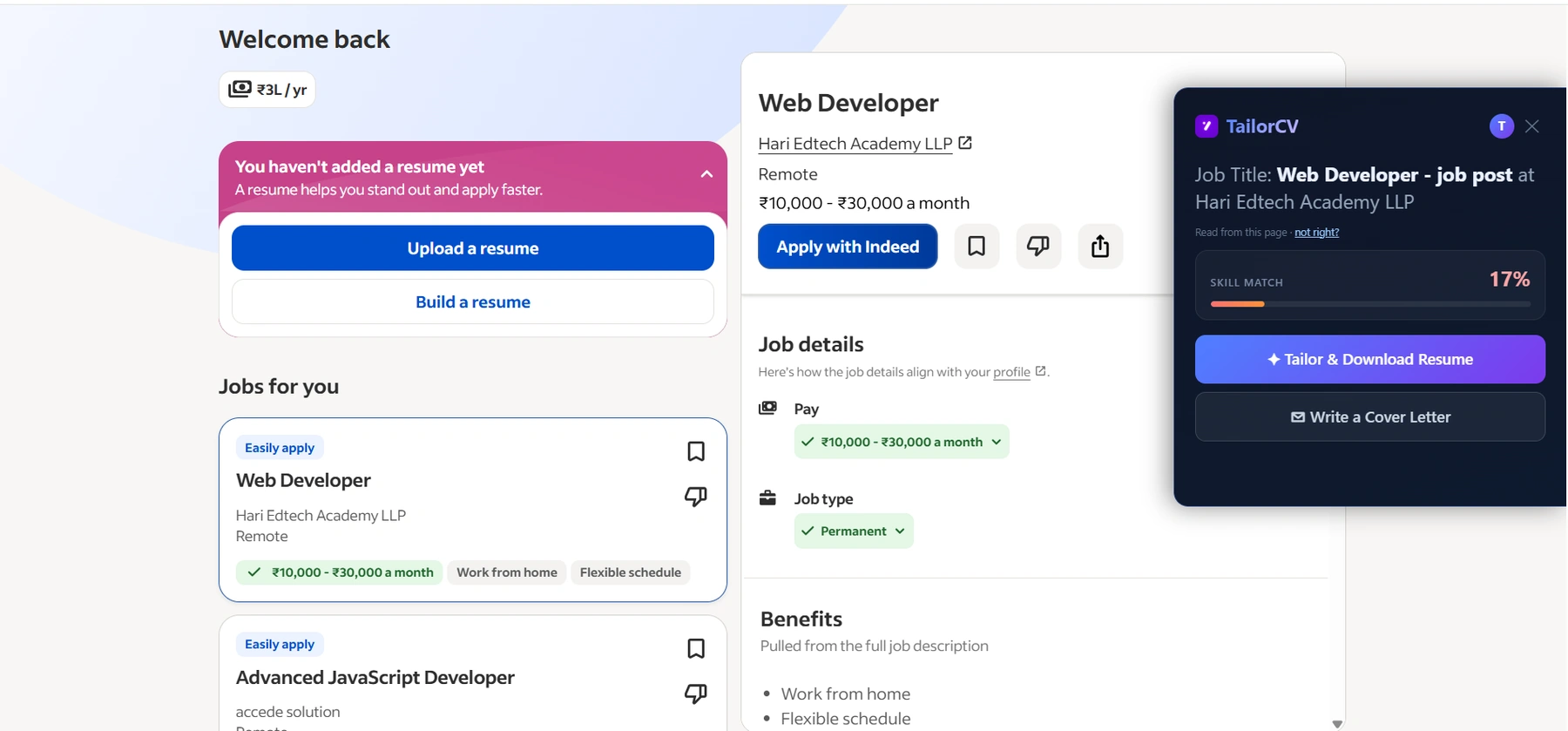
On Indeed the panel reads the posting off the page and shows the match before you hit Apply - the kind of gap worth closing first rather than discovering through silence.
- Tailor your resume and add a targeted cover letter — see the Canadian cover letter guide.
- Apply early — popular roles and graduate programs fill fast.
- Track every application and follow up politely.
Using Recruitment Agencies in Toronto
Recruitment agencies and staffing firms place a significant share of Toronto's professional and contract roles, and they're worth adding to your search — especially in finance, tech, and professional services, where specialist agencies have deep employer relationships. Register with a few reputable ones in your field, be clear about your skills and what you want, keep your resume current (agencies forward it directly to employers), and stay responsive. Contract roles through agencies are common in Toronto and can be a valuable route in — building GTA experience and references, and frequently converting to permanent positions. Don't rely on agencies alone, but treat them as one strong channel among several.
Job Scams: Staying Safe in a Big Market
As Toronto's job search has moved online, scams have grown alongside it. Protect yourself so your search stays productive: never pay to get a job (legitimate employers and recruiters don't charge application, processing, or "training" fees), be cautious with unsolicited offers — especially high-paying remote roles that arrive out of nowhere — verify companies through their official websites and LinkedIn before sharing personal details, and never hand over your SIN, bank details, or document copies until you've confirmed a genuine offer through official channels. If something feels off, step back and verify. A little caution keeps your search focused on the many genuine opportunities the GTA offers.
Standing Out in a Competitive Market
With so many applicants for Toronto roles, small advantages compound. Beyond a tailored, ATS-ready resume and active networking, the candidates who stand out tend to:
- Apply early. Popular Toronto roles and graduate programs can attract enough applicants to close quickly, so speed matters.
- Secure referrals. A warm introduction moves you past the online pile straight to serious consideration — the single highest-leverage move in a crowded market.
- Build proof of skills. A certification, a portfolio, or a strong LinkedIn presence differentiates you from equally qualified peers.
- Follow up thoughtfully. A polite follow-up and a post-interview thank-you are small habits many candidates skip.
- Tailor relentlessly. In a market this competitive, a generic application is filtered fast; a tailored one gets read.
None of these are complicated, but done consistently they're what separate the candidates who land Toronto offers from those who send applications into the void.
Step 5: Nail the Interview
Toronto employers rely heavily on behavioural interviews. Prepare STAR stories, research each company, and rehearse. Use interview prep to generate likely questions, practise with the AI mock interview, and review our interview tips for Canada.
What optimizing actually does to your resume
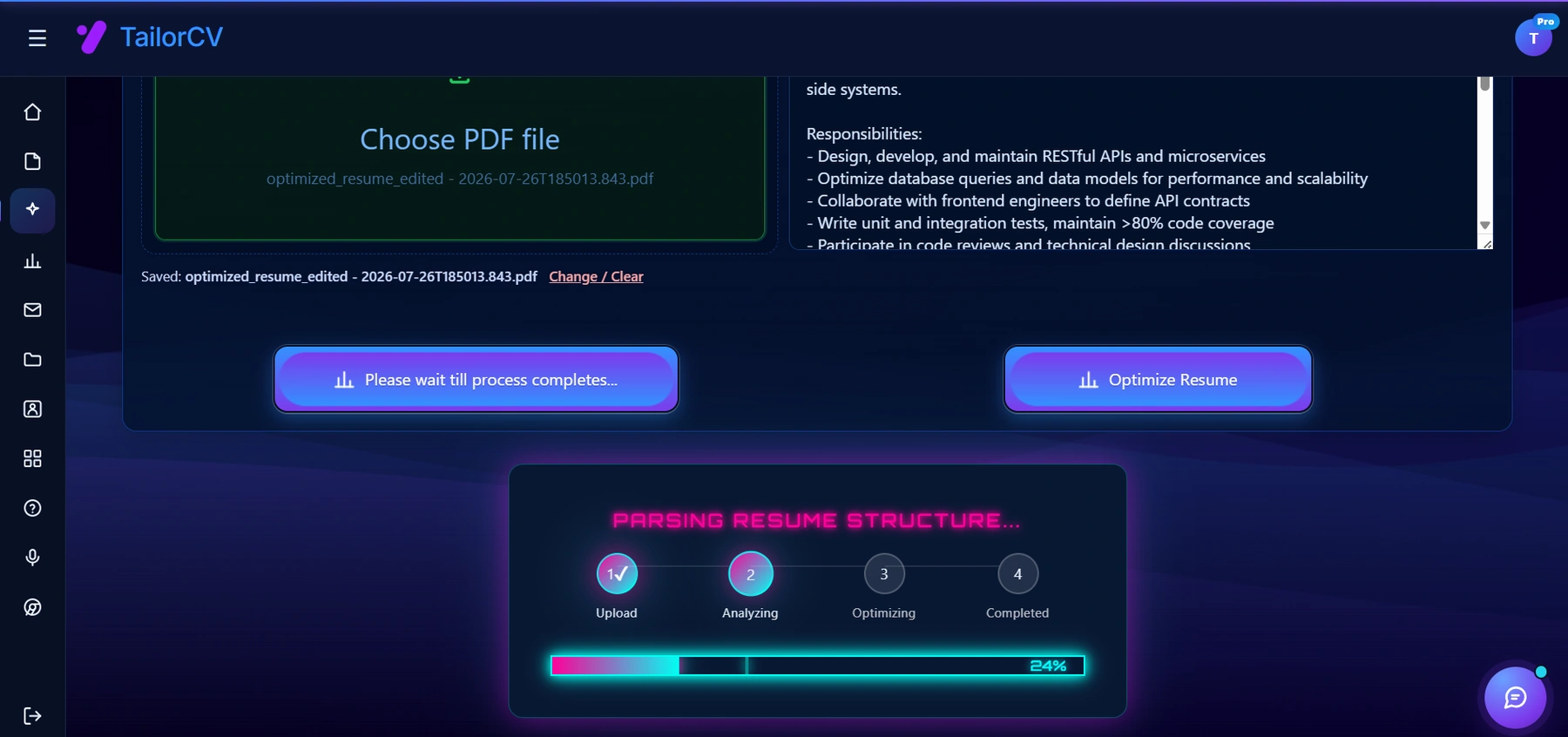
The tool parses your resume the way an ATS would before it changes anything, so the edits it suggests are grounded in the posting itself.
Salary and Cost of Living in Toronto (2026)
Toronto salaries are among the highest in Canada, reflecting the concentration of finance and tech employers. But it's also one of Canada's most expensive cities — housing costs in particular are high. When weighing an offer:
- Research the specific salary range for your role and industry.
- Factor in rent, transit (the TTC and GO networks are extensive — living near transit saves time and money), and overall cost of living.
- Consider the full package — benefits, growth, and learning — not just base salary.
The GTA is large, so commute times and where you live relative to work materially affect quality of life.
Finding a Job in Toronto by Field
Toronto's diversity means your approach should flex by sector:
- Finance and banking: Bay Street is Canada's financial heart. Target the major banks, insurers, asset managers, and fintechs; professional designations (CPA, CFA) and strong analytical skills open doors, and structured graduate programs are common.
- Technology: a booming scene spanning downtown, King West, and the wider GTA — software, data, AI, product, and fintech. A portfolio or GitHub carries real weight (build one with the TailorCV portfolio builder), and tech roles are the most likely to be hybrid or remote.
- Professional services: consulting, law, accounting, and advisory firms recruit heavily, with demanding but clear progression.
- Healthcare and life sciences: major hospitals and research institutions drive steady demand, often with licensing requirements.
- Media, marketing, and creative: Toronto is Canada's media and advertising centre; a portfolio and demonstrable results matter most.
Match your channels and materials to your field, and you'll compete far more effectively than with a one-size-fits-all approach.
Newcomers and International Talent in Toronto
Toronto is one of the most diverse cities in the world, and a huge share of its workforce are newcomers — which means employers are broadly experienced with international talent, and there's an extensive support system to help you land. If you're new to Canada:
- Lean on settlement and newcomer-serving agencies in the GTA — free resume help, mentorship, job-search workshops, and employer connections.
- Address "Canadian experience" through volunteering, bridge roles, and mentorship, while framing your international background as an asset. See how to get a job in Canada as a newcomer.
- Get your credentials assessed (e.g. WES) and research licensing early if your profession is regulated.
- Network deliberately — in Toronto, referrals drive a large share of hiring, and newcomer communities are active and welcoming.
Toronto's diversity is a genuine advantage for international job seekers who use the city's resources well.
Remote, Hybrid, and Commuting in the GTA
Since the shift to flexible work, many Toronto employers — especially in tech, finance, and professional services — offer hybrid or remote arrangements. This widens your options: you can target downtown employers while living in the more affordable outer GTA, or work for Toronto-based companies from elsewhere. When evaluating roles, clarify expected in-office days, since "hybrid" ranges widely. If a role is on-site or hybrid, factor in the commute seriously: the GTA is large and traffic is heavy, but the TTC, GO Transit, and regional networks are extensive, so living near transit close to your workplace can save hours each week. A role fifteen minutes away can beat a higher-paying one with a punishing daily commute.
Where to Live and Budget in the GTA
Toronto offers among the highest salaries in Canada, but it's also one of the country's most expensive cities — so evaluate offers on real take-home value, not just the headline number. Housing is the biggest variable: rents in the downtown core run well above those in the outer GTA (Mississauga, Brampton, Scarborough, and beyond), and many people trade a longer commute for lower rent. Transit is the next lever — the TTC within the city and GO Transit across the region are extensive, so living near a line close to your workplace saves both money and time. Factor in transit passes, groceries, and lifestyle, and remember that a role paying slightly less but near home and transit can leave you better off, in money and quality of life, than a higher-paying one with a long, costly commute. When you weigh a Toronto offer, look at the whole picture: salary, benefits, growth, commute, and cost of living together.
A Realistic Toronto Job-Search Timeline
Toronto is competitive, so keep a steady rhythm and realistic expectations:
- Weeks 1–2: Build your Canadian-style, ATS-ready resume with the TailorCV resume builder, optimise your LinkedIn, and draft a base cover letter. Research and list 20–30 target employers.
- Weeks 2–6: Apply consistently — quality over quantity — tailoring each application with the resume optimizer. Network actively: attend events, do informational interviews, and reach out to people at target companies. Track everything.
- Weeks 4–10: Attend screens, assessments, and behavioural interviews. Prepare intensively with interview prep and the AI mock interview, and follow up politely.
Depending on your field and experience, expect a focused search to take a few months. The candidates who succeed treat it as a disciplined routine, combining tailored applications with genuine networking rather than relying on either alone.
Common Mistakes Toronto Job Seekers Make
- Applying generically. In a competitive market, untailored applications get filtered fast.
- Only applying online. Skipping networking leaves Toronto's hidden roles untapped.
- Weak LinkedIn. Recruiters check it; an incomplete profile costs opportunities.
- Underpreparing for behavioural interviews. Practise your STAR stories.
- Ignoring cost of living. A great salary can feel small without budgeting for Toronto prices.
Frequently Asked Questions
What industries are hiring most in Toronto? Finance and banking, technology, professional services, healthcare, and media consistently hire across the GTA.
Is it hard to find a job in Toronto? It's competitive because Toronto attracts the most candidates, but it also has the most opportunities. A tailored, ATS-ready application plus networking significantly improves your odds.
How much can I earn in Toronto? Among the highest in Canada, though it varies by industry and experience — and the cost of living is high. Research your role's range and weigh the full package.
How important is networking in Toronto? Very. A large share of roles are filled through referrals, so networking often outperforms online applications alone.
Is Toronto good for newcomers to Canada? Yes — it's one of the world's most diverse cities, so employers are experienced with international talent and there's an extensive newcomer support system. Use settlement agencies, address "Canadian experience" through volunteering and bridge roles, and network deliberately.
Is remote or hybrid work common in Toronto? Yes, especially in tech, finance, and professional services. Arrangements range from one office day a week to fully remote. Clarify expected in-office days, and if on-site, factor in the GTA commute.
How long does it take to find a job in Toronto? It varies by field and experience, but a focused search typically takes a few months. Treat it as a disciplined routine combining tailored applications with genuine networking.
Which parts of the GTA have the most jobs? The downtown core and Financial District (finance, corporate, professional services), King West and tech corridors (startups and tech), and North York, Mississauga, and the broader GTA (large employers and services).
Staying Motivated in a Competitive Market
Job-hunting in Toronto can test your resilience — the competition is real, and it's normal to send many applications and face silence or rejection before things click. Almost everyone who lands a good Toronto role collected setbacks first; they're part of the process, not a verdict on your worth. What separates the candidates who eventually succeed is that they keep refining rather than giving up. If applications aren't converting to interviews, the issue is usually the resume or targeting — revisit your keywords and retest with the ATS score checker. If interviews aren't converting to offers, focus on interview preparation and practise with the AI mock interview. Keep a steady, sustainable pace rather than frantic bursts followed by burnout, lean on your network and (for newcomers) settlement supports for encouragement, and celebrate progress — a first interview, a recruiter reply, a stronger resume — not just final offers. Persistence with a good strategy is what ultimately wins in Toronto's market.
Final Thoughts
Toronto offers the widest range of opportunities in Canada — and the stiffest competition. Winning here means a sharp, tailored, ATS-ready application; an active mix of online applications and networking; and genuine interview preparation.
Build your resume with the TailorCV resume builder, tailor it to each Toronto role with the ATS optimizer, sharpen your LinkedIn, and rehearse with the AI mock interview. Canada's biggest market has a place for well-prepared candidates.
What is your resume scoring right now?
Scan it against a job description and get your ATS match score in about a minute.
Drop your resume here or choose a file
PDF only. Max 2 MB.
We never share your data or use it to train AI models.

Was this guide useful?
Be the first to rate it.