 TD
TD
Key Takeaways
- The decisive recruiting activity happens in the first ten weeks of the first year, before most students feel settled.
- Consulting and banking run earliest and most rigidly; technology, industry and general management run later and more loosely.
- Company presentations, coffee chats and treks are a tracked and assessed part of the process at many firms, not optional socialising.
- Internship conversion is the primary route into full-time roles, so the summer internship is effectively the graduate hiring decision.
- Career switchers need to start earlier than continuers, because the story and the evidence both take longer to build.
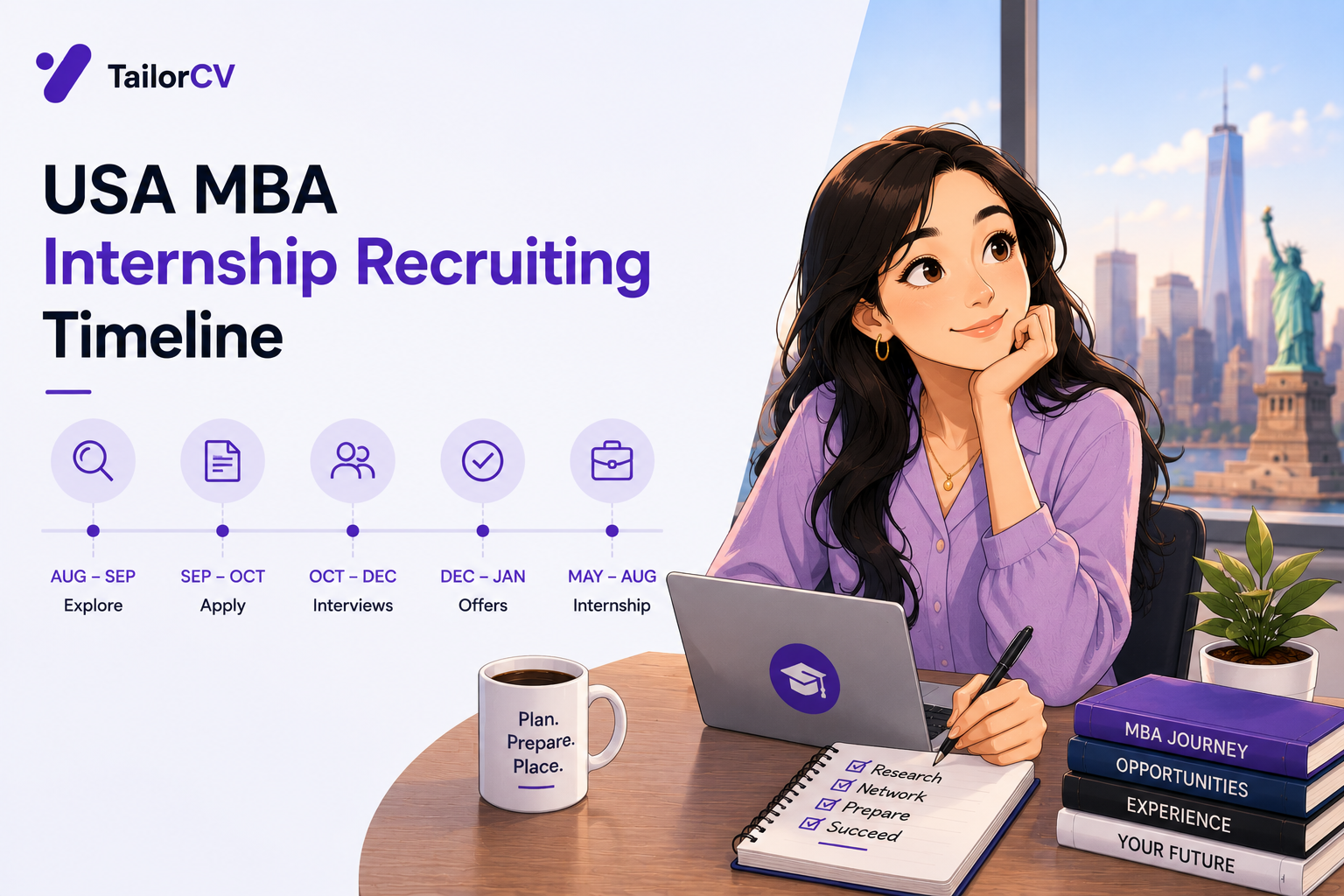
The shape of the year
Pre-term, before classes begin. Some clubs run preparation programmes over the summer, and career services frequently open before term. Students who arrive having already picked a target industry are meaningfully ahead, because the first weeks are consumed by everything else.
Weeks one to four. Company presentations begin almost immediately. Professional club recruiting starts. Resume books close early — sometimes within the first fortnight — and a resume submitted to a book is the document firms screen from.
Weeks four to eight. Coffee chats, networking events and treks to company offices. For consulting and banking this period is genuinely part of the assessment: firms track who attended, who followed up, and who asked sensible questions.
Weeks eight to twelve. Applications for the earliest industries. Case practice and technical preparation intensify. Interview slots are allocated.
January to February. Interview season for consulting and banking, compressed into a few weeks and largely decisive.
February to April. Technology, industry, consumer goods, healthcare and general management recruit here, with more variation and more rolling processes.
Through the spring. Off-cycle and smaller-employer hiring, which is real and less contested.
The summer. The internship, which for most industries is the actual hiring decision.
Second year, autumn. Full-time recruiting for those without a return offer, and a smaller pool.
Why the front-loading catches people
The uncomfortable structural fact: the most consequential period of a two-year programme is the first ten weeks, when you are also moving cities, meeting a new cohort, adjusting to the workload and possibly relocating a family.
Three consequences follow.
Deciding your target industry early is worth more than deciding it well. A student still weighing three industries in week eight has missed the networking for all three. It is better to commit provisionally, do the work, and adjust than to keep options open until the doors close.
Preparation belongs to the summer before. Case practice, technical refreshers and a working resume should exist before you arrive. Students who plan to start in October are competing with people who started in July.
Career switchers need longer. If you are moving industry and function simultaneously, the story takes longer to build and the evidence takes longer to assemble. Start earliest of anyone.
Networking, which is assessed
The part that most surprises people arriving from industries where recruiting is transactional.
Company presentations are attended and noted. At consulting and banking firms particularly, attendance and engagement are recorded and referenced later.
Coffee chats are the mechanism. Short conversations with alumni and firm representatives, repeated across a season. Firms expect them, and candidates who have not had them are visible.
Treks are worth the effort. Club-organised visits to offices, frequently in another city. Access you cannot obtain individually.
What to actually do. Ask about the work rather than the firm's reputation. Follow up within a day, referencing something specific. Keep a record of who you met and what you discussed — by January you will have met dozens of people and you will not remember. The outreach mechanics apply, at higher volume and with warmer contacts.
And be genuine about it. Firms notice candidates working a checklist. The conversations that help are the ones where you were actually curious.
Preparing for the assessments
Consulting. Case interviews, and the preparation is substantial — twenty to thirty live cases with a partner is a normal figure. Start in the summer before term, not in December. The case approach applies directly, with a higher bar for structure and commercial judgement at MBA level.
Banking. Technical questions on accounting and valuation, plus a heavy fit component and a demanding networking expectation. The superday format is the same at MBA level.
Technology and product. Product sense, analytics, and behavioural interviews. Less networking-dependent and more assessment-driven, and the product interview structure transfers.
General management and rotational programmes. Behavioural interviews against competency frameworks, sometimes assessment centres. The rotational trade-offs are worth understanding before you commit.
Across all of them. Your resume is screened first, at volume — confirm it survives extraction with an ATS check and that it speaks to each posting.
For international students
Ask about sponsorship in the first conversation. Firm policies vary widely and some are explicit that they do not sponsor for particular offices or functions. Finding out in week three saves the season.
Consulting and banking sponsor more readily than most industries at MBA level, particularly at the larger firms.
Timing matters for your authorisation. Understand how your training period interacts with a summer internship and a full-time start date, and confirm it with your international office rather than assuming.
Consider the cap-exempt route for post-MBA roles in healthcare systems, universities and research organisations, which removes the lottery entirely and is almost never mentioned in MBA career services.
A month-by-month plan
The summer before. Decide a provisional target industry. Build the resume. Start case or technical practice. Reach out to five alumni in that industry and ask what they wish they had known. This month alone puts you ahead of most of your cohort.
August, pre-term. Attend anything career services runs before classes. Join the professional club for your target industry and read what it sends.
September, weeks one to four. Company presentations. Submit to the resume book before it closes. Begin coffee chats — aim for three a week and record every one.
October, weeks five to eight. Treks. Continue coffee chats. Case practice moves to live sessions with a partner, twice weekly. Draft the applications.
November, weeks nine to twelve. Applications close for the earliest industries. Case volume peaks. Behavioural stories written and rehearsed.
December. Interview preparation intensifies over the break. Do not stop — the January round is compressed and unforgiving.
January to February. Consulting and banking interviews. Simultaneously, applications for technology and industry roles, which recruit later.
March to April. Technology, industry and general management interviews. Off-cycle and smaller employers, which are real and less contested.
May to August. The internship, which is the actual hiring decision. Treat the midpoint conversation as fixed — the return-offer mechanics apply at MBA level too.
Second-year autumn. Full-time recruiting if needed, against a smaller pool.
Industry by industry
Because the calendars differ so much, treating "MBA recruiting" as one process is the root of most timing errors.
Consulting. Earliest and most structured. Presentations from week one, heavy networking expectation, applications in the autumn, interviews in a compressed January window. Case preparation is the single largest time commitment of the first year.
Investment banking. Similarly early, with an even heavier networking expectation and technical preparation on accounting and valuation. Fit and polish matter more than in most industries.
Technology. Later — often spring — more assessment-driven and less relationship-driven. Product roles test product sense; strategy and operations roles test analytics and structure.
Consumer goods and general management. Rotational programmes recruiting in the winter and spring, competency-based interviews, sometimes assessment centres.
Healthcare and pharmaceuticals. Winter and spring, with administrative fellowships at health systems running their own earlier and highly structured process.
Private equity and venture capital. Small, network-driven, largely outside any formal calendar, and generally requiring prior relevant experience.
Energy, industrials and retail. Spring, less contested, and frequently overlooked.
Non-profit and social impact. Latest of all, frequently hiring only weeks before the start date.
The practical instruction: find out your primary industry's calendar in the summer before term, and plan backwards from its application deadline rather than from the academic year.
What the summer internship is for
Framing it correctly changes how you behave during it, and most students treat it as a ten-week assessment when it is really three things at once.
It is the hiring decision. At most firms in the main recruiting industries, conversion is the primary route to a full-time offer and the second-year pool is small. Behave accordingly from week one.
It is your test of the industry. Ten weeks inside consulting or banking tells you whether you can stand the hours and the work. A meaningful number of interns discover they cannot, and finding that out before signing two years is worth the whole summer.
It is a network. The people in your intern class are in the industry for the next decade, and the team you work with are references and contacts regardless of whether you return.
What to do during it: ask about conversion at the midpoint rather than the end, say explicitly that you want the return offer, make your work visible to more than your immediate supervisor, and secure references with personal email addresses before you leave. The conversion mechanics apply directly at MBA level.
And take the offer seriously when it arrives. Return offers frequently carry early deadlines that expire before the autumn round has begun, which is a decision worth thinking about in June rather than in September.
Managing the workload
The genuine difficulty of the first year is that recruiting is a full-time job running alongside a full-time degree, and most students underestimate the collision.
Recruiting will consume more hours than your classes. This is normal for the main recruiting industries and it is not a sign you are doing it wrong.
Choose lighter first-term electives if you can. Students who load a demanding term one alongside consulting recruiting have a bad autumn.
Grades matter less than you think in most industries, and there are exceptions — some firms screen on academic performance, and a genuinely poor first term closes doors. Aim for solid rather than exceptional and put the marginal hour into recruiting.
Block the calendar. Case practice twice a week at fixed times, coffee chats in fixed slots, applications on a fixed evening. Recruiting expands to fill all available anxiety otherwise.
Do not skip the cohort. The people in your class are the most durable asset of the programme, and students who disappear into recruiting for a year emerge with a job and no network.
Sleep, and take one day off a week. The compressed January interview period requires you to be sharp, and candidates running on empty by December perform visibly worse in the round that matters most.
Picking the target industry
Since deciding early is worth more than deciding perfectly, here is how to do it in the summer before term rather than in November.
Start from constraints, not preferences. Hours you can sustain, cities you would live in, whether you need sponsorship, and how much financial risk you can carry. These eliminate more options faster than interest does.
Then look at what you actually did before. The industries where your background is an asset rather than a story to overcome are the ones with the highest conversion. A career switch is entirely possible and it costs more effort, so choose it deliberately rather than by drift.
Talk to six people, two in each of three industries. Ask what a Tuesday looks like and what they would warn someone about. Twelve conversations over a summer settles most people's direction.
Test the daily reality, not the outcome. Everyone wants the seniority the industry leads to; the question is whether you can stand the work that gets you there for four years.
Commit provisionally by week one and revisit at week six. That is enough time to attend the presentations and start the networking without locking yourself in, and it beats the common alternative of keeping three options open until all three have closed.
And pick a genuine second choice with a later calendar. Consulting plus technology, or banking plus industry, works because the timelines barely overlap. Two early-calendar industries do not.
Career switchers, specifically
The group for whom the calendar is hardest, and the group most likely to succeed at it with enough lead time.
Your story has to be one sentence. Why you did what you did, why you are moving, and why this industry — compressed. If it takes three minutes to explain, it is not ready. Interviewers hear a lot of switchers and the ones who convert have a clean line.
Build the evidence deliberately. A club leadership role in the target function, a project with a real company, a pre-term course, or independent work you can point at. Switchers who rely on the degree alone are asking the employer to take the whole risk.
Network earlier and more. You do not have a track record in the industry, so people vouching for you substitutes for it. This is the mechanism, and it takes months.
Target functions that hire switchers. Consulting and general management programmes are structurally friendly to career changes. Specialist finance roles and senior technical positions are much less so.
Be realistic about a double switch. Changing industry and function simultaneously is the hardest version and it is done, usually by people who started in the summer before term and never eased off.
And use the internship as the bridge. For a switcher, the internship is worth more than for anyone else — it converts an argument into a track record, and it is why the front-loaded calendar matters so much to you specifically.
If the main round produces nothing
Common enough to plan for, and much more recoverable than it feels in February.
Off-cycle hiring is real. Firms lose candidates to other offers, headcount gets approved late, and roles open in March and April that did not exist in November.
Smaller employers recruit later and less formally. Mid-market consulting, regional firms, growth-stage companies and family businesses hire on need rather than on a calendar, and they attract a fraction of the applications.
Consider a self-arranged internship. Approaching a company directly with a defined project is unusual, it works more often than people expect, and it produces exactly the experience the summer was meant to give you.
Use the alumni network properly. This is what it is for, and a second-year student asking specifically for help is a normal and well-received request.
Do not spend the summer doing nothing. Any relevant work — a project, a part-time engagement, a start-up, meaningful volunteer work with a defined output — is far better than a gap you have to explain in the second-year round.
And revisit the target. Sometimes the message of a failed round is that the industry was a poor fit for your background rather than that you executed badly. Being honest about which one it was, in February, is worth more than another twenty applications into the same wall — the funnel diagnosis applies here as much as at undergraduate level.
Using career services well
Business school career services are better resourced than most and are used unevenly by students.
Go in the first fortnight, before the queue forms. Advisers are frequently industry specialists, and the one covering your target sector is the person to know.
Ask for the employment report by industry and function. Which firms hired from your programme last year, into what roles, and how many. This turns a vague target list into a specific one and it is data the school already has.
Ask which firms sponsor, if that applies to you. Career services track this and it saves an entire cycle.
Book mock interviews early. Slots disappear in January and the practice is worth more in November.
Use the alumni database properly. Filter by employer and by graduation year, and prioritise people three to eight years out — senior enough to be useful, junior enough to reply.
Ask about off-cycle and smaller employers. Advisers know about roles that never appear in the on-campus process, and almost nobody asks.
And treat their resume review as one input. They will fix the format and the conventions; they cannot tailor it to each posting, which is where the interview rate actually moves.
Tip: Start company research before term one begins. MBA recruiting moves faster than almost anyone expects, and the students who do well arrived with a target list already built.
Common Mistakes
- Treating term one as settling in. It is the recruiting season for the industries with the earliest calendars.
- Keeping options open too long. Undecided by week eight means having networked for nothing.
- Starting case practice in December. Starting case practice in December the people you are competing with started in July.
- Skipping presentations and treks. At several firms attendance is tracked and referenced.
- Not asking about sponsorship early. Policies vary and the answer is available in one question.
- Treating the full-time round as backup. Assuming the second-year full-time round is a safety net. It is a much smaller pool, because most seats are filled by converted interns.
Related Guides
Keep building on this with the related guides in this series:
- Employment-Based Green Cards - The Timeline New Graduates Should Understand
- HBCU Recruiting Pipelines in the US - What Actually Exists
- Quant and Trading Campus Recruiting in the US - How the Process Runs
- Spring Recruiting in the US - The Season Most Students Ignore
- Summer Analyst or Full-Time - Which US Recruiting Round Actually Matters
- 401(k) and Benefits Explained for New Graduates
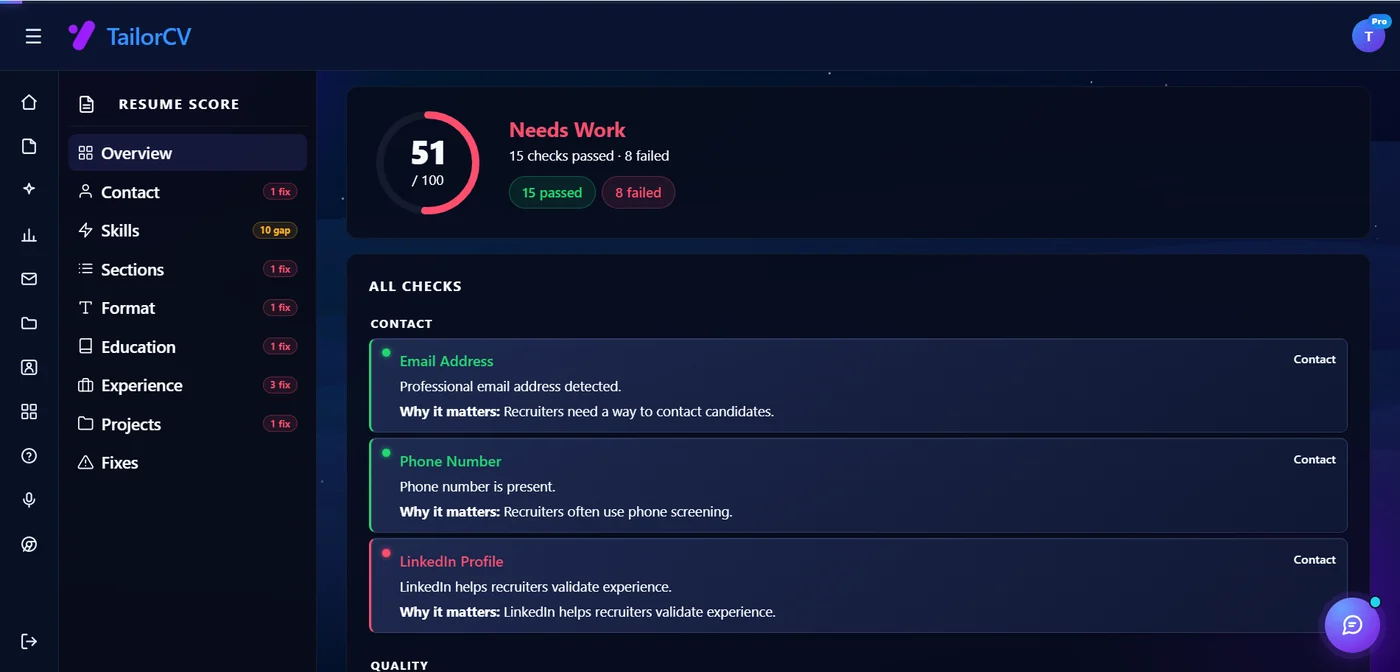
You can also check your resume's ATS score for free, generate a tailored cover letter, or build a portfolio website in minutes.
Frequently Asked Questions
How much does the pre-MBA background matter?
For consulting and general management, much less than candidates fear — those processes are designed to assess trained capability rather than prior industry. For specialist finance and senior technical roles, considerably more.
Should I do a pre-term internship or course?
A short course in a target skill is useful; the more valuable use of that summer is a working resume, a provisional target and the start of case or technical practice.
Is on-campus recruiting the only route?
No, and treating it that way is the common error. Off-cycle roles, smaller employers and self-arranged internships together account for a meaningful share of summer placements, and they run on their own timetable through the spring.
How many applications is normal?
For consulting and banking, fifteen to twenty-five firms is typical, and the preparation is shared across them. For technology and industry, a similar number with more variation in the process. Volume matters less here than at undergraduate level because networking and fit carry more weight.
Do I need to attend every company presentation?
For consulting and banking, attend the ones for firms you are seriously targeting — attendance is frequently tracked. For technology and most of industry, they are informative rather than assessed.
What if my target industry does not recruit on campus?
Then you run it as an off-cycle search: direct applications, alumni outreach and a longer timeline. Private equity, venture capital, smaller firms and most non-profits work this way, and career services can usually point you at alumni in them.
When should I really start preparing?
The summer before you arrive. A working resume, a provisional target industry, and the beginning of case or technical practice put you ahead of most of your cohort in week one.
How many industries can I recruit for?
Realistically one primary and one secondary. The calendars overlap and the preparation does not transfer between consulting cases and banking technicals, so three targets usually produces three under-prepared campaigns.
Does the internship really decide the full-time job?
At most firms in the main recruiting industries, yes. Conversion rates are high and the second-year full-time pool is correspondingly small.
What if I am switching career completely?
Start earlier, network harder, and be ready to explain the switch in one clear sentence. Career switchers succeed routinely and they front-load more work than continuers do.
Are treks and coffee chats really necessary?
For consulting and banking, effectively yes. For technology and much of industry, far less so — those processes are more assessment-driven and less relationship-driven.
What about smaller employers and off-cycle roles?
Real, less contested, and largely ignored by students focused on the on-campus calendar. Worth running as a parallel track from the spring onward.
Find out where a fresher resume stands
Score yours against a real posting - no account, no cost.
Drop your resume here or choose a file
PDF only. Max 2 MB.
We never share your data or use it to train AI models.
Was this guide useful?
Be the first to rate it.