TD
TD
Key Takeaways
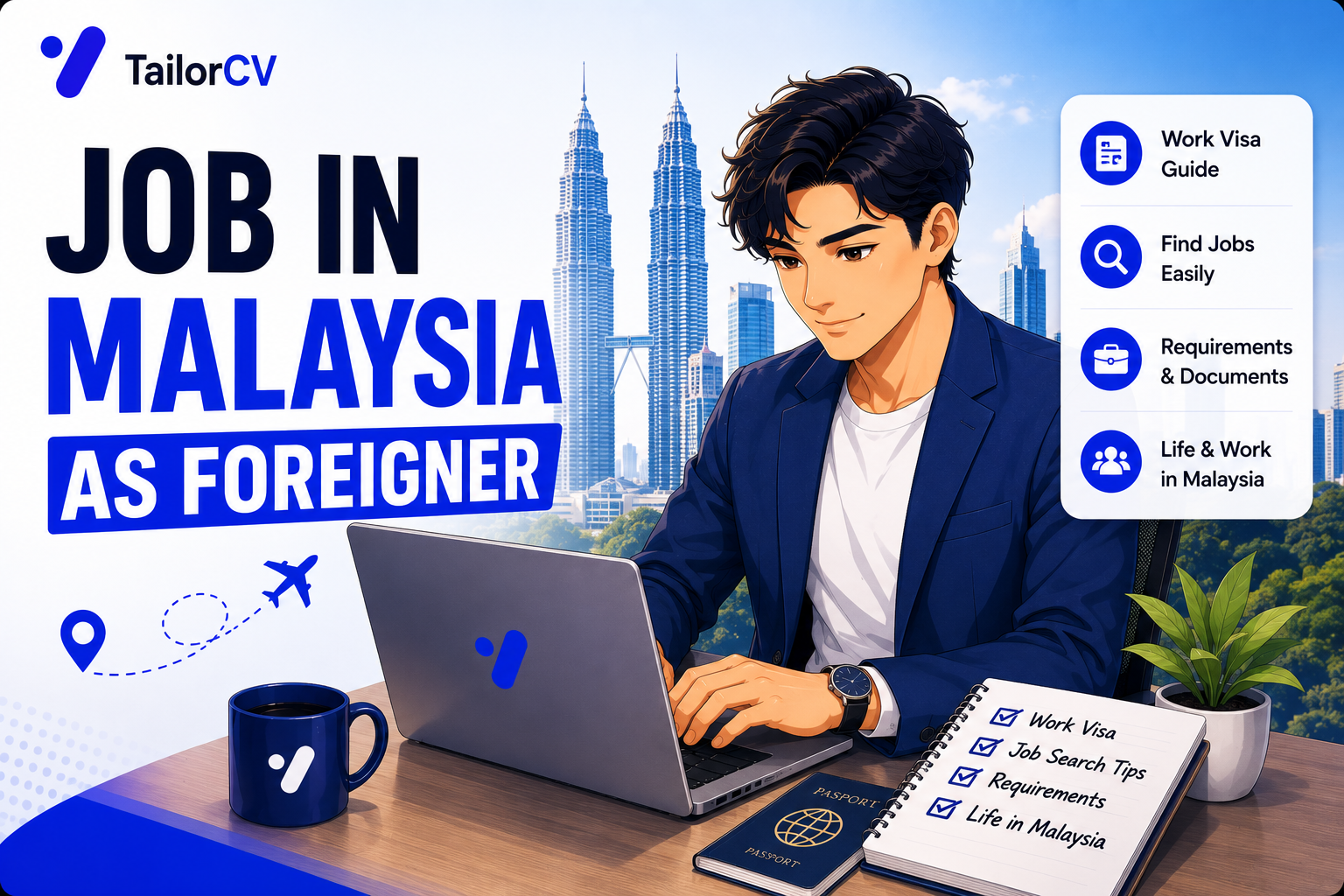
- Foreigners generally need an employer-sponsored Employment Pass to work in Malaysia; you usually secure the job first, then the employer sponsors the pass.
- Expat hiring is strongest in tech, engineering, finance, oil & gas, education, and senior/specialist roles where local talent is scarce.
- Your resume should follow Malaysian conventions, not your home country's format.
- A clear value proposition — skills the local market needs — is what convinces an employer to sponsor you.
- English is widely used in Malaysian business, which lowers the barrier for many international professionals.
Malaysia is one of Southeast Asia's most attractive destinations for foreign professionals: a lower cost of living than Singapore, widespread use of English, a diverse culture, and a growing base of multinationals and regional headquarters. Getting hired as a foreigner takes more planning than for locals — there are work-authorisation rules and employers must justify hiring from abroad — but for the right skills, it's very achievable.
This guide walks you through getting a job in Malaysia as a foreigner in 2026: which sectors hire expats, how work permits and Employment Passes work, where to search, and how to present yourself so Malaysian employers choose you.
Note: Immigration rules and pass categories change. Treat the permit information here as a practical overview and always confirm current requirements with the Malaysian Immigration Department, the Expatriate Services Division (ESD), or your prospective employer before acting.
Can Foreigners Work in Malaysia?
Yes. Foreign nationals can work in Malaysia with the appropriate work authorisation, which is almost always tied to a specific employer. In practice, the sequence is:
- You find and secure a job offer from a Malaysian employer.
- The employer applies to sponsor your work pass (commonly an Employment Pass) through the relevant authorities.
- Once approved, you can legally begin work.
You generally cannot arrive on a tourist visa and simply start working. The offer comes first; the pass follows.
Work Passes: A Practical Overview
Malaysia has several categories of work authorisation. The most relevant for professionals is the Employment Pass (EP), typically split into tiers based on salary and role seniority, and sponsored by the hiring company. There are also passes for skilled temporary work and dependent/spouse arrangements.
Key practical points:
- The employer sponsors and applies for your pass — you can't self-apply as a professional.
- Approval considers your salary level, qualifications, and the role's need for foreign expertise.
- Processing takes time, so factor it into your start date.
- Requirements and salary thresholds change — always verify the current rules.
Because of this, employers weigh the effort of sponsorship against the value you bring. Your job is to make that value obvious.
Which Sectors Hire Foreigners in Malaysia?
Expat hiring concentrates where local supply is tight or specialist expertise is needed:
- Technology: software engineering, data, cybersecurity, product, and specialised digital roles.
- Engineering: oil & gas, semiconductor, manufacturing, and infrastructure projects (Penang, Johor, and offshore).
- Finance & shared services: senior finance, risk, and regional roles in MNCs and GBS centres.
- Education: international schools and universities hiring foreign teachers and academics.
- Executive & specialist roles: regional leadership and niche expertise that companies bring in from abroad.
If your skills fall into these areas, sponsorship is far more likely.
Step 1: Build a Malaysia-Ready Resume
A common expat mistake is submitting a resume in the home-country format. Malaysian employers expect local conventions:
What optimizing actually does to your resume
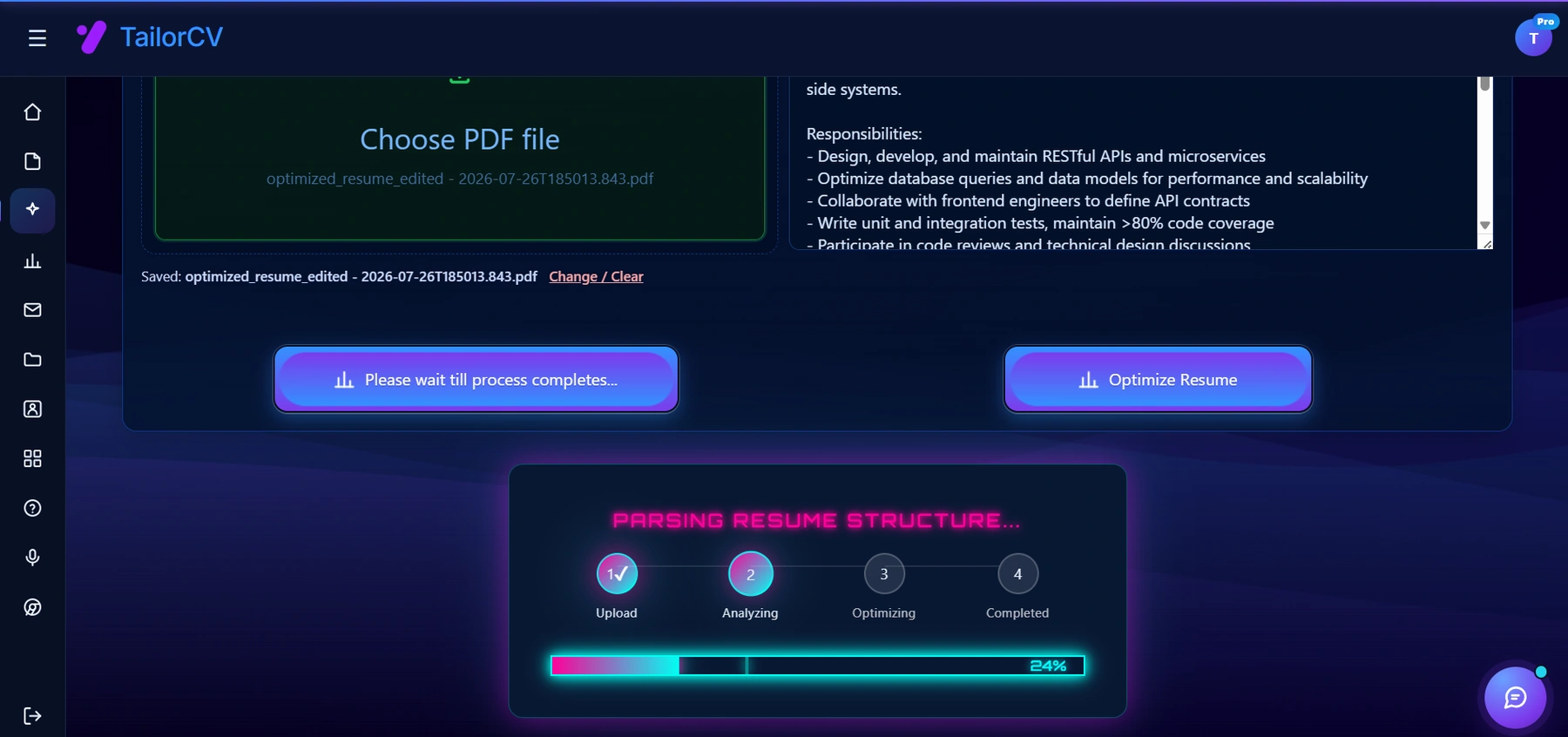
The tool parses your resume the way an ATS would before it changes anything, so the edits it suggests are grounded in the posting itself.
- A concise 1–2 page document (not the long CV common in some countries).
- Personal details more openly listed than in Western resumes, including nationality and work-authorisation status.
- Clear evidence of the specific skills the role needs.
Follow our guide to writing a resume for Malaysia jobs, and note that in Malaysia "CV" usually just means a resume — see CV vs resume in Malaysia. Because most employers screen with an ATS, make it machine-readable and test it with the free ATS score checker; the mechanics are in how ATS works in Malaysia.
Build a clean, ATS-safe version with the TailorCV resume builder and tailor it to each role with the resume optimizer.
Step 2: Target Employers Likely to Sponsor
Not every company hires foreigners. Focus your energy on:
- Multinationals and regional HQs with established expat-hiring processes.
- Companies in shortage sectors (tech, engineering, oil & gas) where foreign expertise is expected.
- International schools and universities for education roles.
- Firms explicitly open to foreign candidates in their postings.
Applying to small local SMEs that rarely sponsor is usually a poor use of effort.
Step 3: Search in the Right Places
| Step | What to do |
|---|---|
| the most important channel for professional expat roles; recruiters for MNCs source here directly | |
| JobStreet | Malaysia's largest portal; filter for roles open to foreigners where possible |
| Company career pages | MNCs and GLCs list roles and their sponsorship policies |
| Specialist recruiters | agencies that place international professionals in tech, finance, and engineering |
| Your network | referrals matter everywhere; connect with expats and professionals already in Malaysia |
Optimise your LinkedIn so recruiters find you — see LinkedIn optimization for Malaysian job seekers.
Step 4: Make Your Value Obvious
An employer sponsoring a foreigner needs a clear reason. In your resume, cover letter, and interviews:
- Lead with the specific, in-demand skills you bring.
- Quantify your impact so your value is concrete.
- Address relocation practically — show you're serious and prepared.
Add a targeted cover letter (see the Malaysia cover letter guide) that briefly explains why you're moving to Malaysia and what you offer.
Step 5: Prepare for Interviews
Expect video interviews first (you may still be abroad), followed by further rounds. Research the company, prepare structured achievement stories, and be ready to discuss relocation and timelines. Use interview prep to generate likely questions, rehearse with the AI mock interview, and review local etiquette in our Malaysia interview tips.
Practical Considerations for Moving to Malaysia
- Cost of living: lower than Singapore and many Western cities, though KL is pricier than smaller states.
- Language: English is widely used in business, which eases the transition; learning some Bahasa Malaysia helps socially.
- Location: most expat professional roles are in KL, the Klang Valley, Penang, and Johor. See how to find a job in Kuala Lumpur.
- Timeline: account for pass processing when planning your move and start date.
Salary Expectations and Cost of Living for Expats
One of Malaysia's biggest draws for foreign professionals is the favourable balance between pay and living costs. While salaries are generally lower than in Singapore, Australia, or Western markets in absolute terms, the cost of living is also substantially lower — often leaving expats with comparable or better disposable income and quality of life.
When evaluating an offer, consider the full picture:
- Housing is affordable relative to major Western and regional cities, though Kuala Lumpur commands a premium over smaller states. Modern condominiums with facilities are widely available.
- Food ranges from very cheap (hawker and local fare) to international dining at Western prices — you control much of this.
- Transport, healthcare, and everyday goods are generally inexpensive; private healthcare is good value and often employer-covered.
- International schooling, if you have children, is a significant cost to budget for.
For higher-tier Employment Pass roles, the salary thresholds themselves ensure a comfortable standard of living. Always research the specific market rate for your role and sector, and weigh the total package — allowances, housing support, medical coverage, and relocation assistance — not just base pay.
Taxes and Practical Finances
Understanding the basics of the Malaysian tax system helps you evaluate offers and avoid surprises (though you should confirm details with an accountant or the tax authority, LHDN):
- Tax residency generally depends on the number of days you spend in Malaysia in a calendar year, and it affects the rate you pay. Non-residents are typically taxed at a flat rate, while residents are taxed on a progressive scale and can access reliefs.
- Employers usually handle monthly tax deductions (PCB) from your salary.
- EPF (retirement fund) contributions may differ for foreign employees — clarify how this applies to you.
- Opening a local bank account is usually straightforward once you have your pass, and your employer can often guide you.
Ask prospective employers whether the offer is quoted gross or net, and what support they provide with tax and relocation logistics. Getting clarity early prevents misunderstandings later.
Building a Network as a Newcomer
Even as a foreigner, networking accelerates your search and eases your landing. Malaysia has active professional and expat communities, especially in Kuala Lumpur and Penang:
- Connect with expats and professionals already in Malaysia via LinkedIn and professional groups — they offer realistic advice and sometimes referrals.
- Engage industry communities in your field (tech, engineering, finance), which often welcome international members.
- Use recruiters who specialise in expatriate placements — they know which employers sponsor and can advocate for you.
- Attend virtual events even before you relocate, to start building relationships early.
A warm introduction can move you past the "why hire from abroad" hesitation faster than a cold application. Make sure your LinkedIn presence is strong first — see LinkedIn optimization for Malaysian job seekers.
Running Your Job Search From Abroad
Most foreign candidates begin searching before they've moved, which is entirely workable with the right approach:
- Expect video interviews first. Employers will screen and often interview you remotely, so prepare your setup — quiet space, good lighting, stable connection — and rehearse with the AI mock interview.
- Be clear about logistics. Address your work-authorisation situation, availability, and relocation timeline proactively so employers aren't left guessing.
- Factor in processing time. Between offer, pass sponsorship, and relocation, allow a realistic runway — often a couple of months or more.
- Target sponsor-friendly employers (MNCs, shortage sectors, international schools) to avoid wasting effort on companies that don't hire from abroad.
- Show genuine commitment to Malaysia. A clear reason for choosing the country reassures employers you'll stay and settle.
Treat the distance as a solvable logistics problem, not a barrier — thousands of professionals relocate to Malaysia each year through exactly this process.
Understanding the Employment Pass Tiers
While you should always confirm current rules with official sources, it helps to understand the broad shape of Malaysia's Employment Pass (EP) system, because it affects which roles you can realistically target:
- Higher-tier EPs are for senior and higher-salaried professional and managerial roles, generally carry longer validity, and often allow you to bring dependants. These are the most straightforward category for experienced expatriates.
- Mid-tier EPs cover skilled professional roles above a defined salary threshold, typically with a shorter validity.
- Lower-tier and other passes apply to more junior or time-limited skilled roles, usually with tighter conditions.
The practical takeaways: your salary and seniority largely determine which pass applies, higher-paid roles are simpler to sponsor, and the employer drives the entire application through the relevant authorities (often the Expatriate Services Division for many sectors). Because thresholds and categories are periodically revised, verify the current figures before you rely on them — and let the employer's HR or a licensed immigration agent guide the specifics.
The Expatriate Services Division and Processing
Many companies process professional expatriate passes through the Expatriate Services Division (ESD) or the relevant regulatory body for their sector. What this means for you as a candidate:
- The company must be registered with the relevant authority to hire expatriates — established MNCs usually are; smaller local firms may not be, which is another reason to target larger employers.
- Documentation matters: you'll typically need certified copies of your degree, professional certificates, a detailed CV, and a valid passport. Have these ready and, where required, verified, so you don't slow the process.
- Processing takes weeks, sometimes longer, so agree a realistic start date and stay in close contact with the employer's HR team.
Being organised and responsive during this stage signals professionalism and helps your new employer complete the sponsorship smoothly.
Bringing Your Family and Settling In
If you're relocating with a partner or children, factor in the practicalities early:
- Dependant passes allow eligible family members to accompany you; a spouse's ability to work may require separate authorisation, so check the current rules.
- International and private schooling is widely available in KL, Penang, and Johor, but places and fees vary — plan ahead.
- Healthcare is generally good and affordable; many employers include medical coverage.
- Housing ranges from city-centre condominiums to suburban homes; short-term serviced apartments are a practical first step while you settle.
Malaysia's diversity, widespread English, and lower cost of living relative to Singapore make it a comparatively easy country for expatriates to adjust to — but a smooth move still rewards planning.
Adjusting to Malaysian Work Culture
Landing the job is one thing; thriving is another. Malaysian workplaces have their own rhythms, and adapting well helps you settle and succeed:
- Relationships and courtesy matter. Malaysian business culture values politeness, respect for hierarchy, and warm working relationships. Take time to build rapport with colleagues.
- Multiculturalism is the norm. Malaysia's Malay, Chinese, Indian, and other communities work side by side, and sensitivity to different customs, festivals, and dietary practices is appreciated.
- Communication can be indirect. Colleagues may avoid blunt disagreement to preserve harmony; learn to read context and respond graciously.
- English is widely used in business, easing the transition, though learning some Bahasa Malaysia is genuinely appreciated socially.
- Work-life balance and pace vary by sector — MNCs may feel familiar to Western professionals, while some local firms are more hierarchical.
Approaching your new workplace with humility, curiosity, and respect goes a long way, and Malaysians are generally welcoming to newcomers who make the effort.
Renewing Your Pass and Changing Employers
Your work authorisation is tied to your sponsoring employer, which has practical implications worth understanding early:
- Employment Passes are time-bound and renewable, with the employer typically handling renewal ahead of expiry. Keep track of your pass validity and start renewal conversations well in advance.
- Changing employers usually means a new pass application by the new employer — you generally can't simply transfer, so plan job moves with the timeline in mind.
- Leaving a job can affect your right to remain, so understand the implications and any grace periods before resigning.
- Keep your documents current — passport validity, certificates, and personal details — to avoid delays at renewal.
Because these rules change and depend on your category and sector, always confirm the current process with your employer's HR, a licensed immigration agent, or the relevant authority before acting.
Comparing Malaysia to Other Regional Hubs
Foreign professionals often weigh Malaysia against Singapore, Thailand, or Vietnam. Malaysia's distinct advantages are a lower cost of living than Singapore, widespread business English, a diverse, welcoming culture, and a strong base of MNCs and regional headquarters — particularly in tech, engineering, oil and gas, and shared services. Salaries may be lower than Singapore's in absolute terms, but the cost-of-living difference often makes the real quality of life competitive. If your skills fit Malaysia's shortage sectors, it can be one of the most comfortable and rewarding bases in Southeast Asia.
Common Mistakes Foreign Job Seekers Make
- Using a home-country resume format. Adapt to Malaysian conventions.
- Applying to companies that don't sponsor. Target MNCs and shortage sectors.
- Being vague about value. Sponsorship requires a clear, in-demand skill set.
- Ignoring work-authorisation reality. Understand the pass process and timelines.
- Skipping local research. Know the market, salary ranges, and culture before interviews.
A Realistic Path: Putting It All Together
For most foreign professionals, the journey follows a clear arc: identify the in-demand skills you bring, target MNCs and shortage-sector employers who sponsor, present yourself in the local format, and make your value unmistakable through a tailored resume, cover letter, and confident interviews. Expect the process — from search to offer to pass approval to relocation — to take a couple of months or more, and stay organised and responsive throughout. Show genuine commitment to Malaysia, keep your documents ready, and lean on recruiters and expat networks who know the terrain. Thousands of professionals make this move successfully each year, and with the right preparation, you can be one of them.
Frequently Asked Questions
Can I work in Malaysia as a foreigner? Yes, with employer-sponsored work authorisation (commonly an Employment Pass). You secure the job first, then the employer sponsors the pass. Always confirm current rules with official sources.
Which jobs are easiest for foreigners in Malaysia? Roles in tech, engineering, oil & gas, senior finance, and international education — sectors where specialist or scarce skills justify hiring from abroad.
Do I need to speak Bahasa Malaysia? Not for most professional roles — English is widely used in Malaysian business. Some Bahasa Malaysia helps socially and for certain local-facing roles.
Should I use my home-country resume format? No. Adapt to Malaysian conventions — a concise 1–2 page document with local details and clear, in-demand skills.
What is the Employment Pass and who applies for it? The Employment Pass (EP) is the main work authorisation for foreign professionals, typically tiered by salary and seniority. Your employer — not you — applies for and sponsors it, often through the Expatriate Services Division or the relevant sector regulator. Always confirm current thresholds with official sources.
How long does it take to get a work pass in Malaysia? It varies but usually takes several weeks, sometimes longer. Agree a realistic start date with your employer, have your documents (degree, certificates, passport) ready, and stay responsive to keep the process moving.
Can I bring my family to Malaysia? Eligible family members can usually accompany you on dependant passes. A spouse's right to work may need separate authorisation. International schooling and good healthcare are widely available in the main cities — plan schooling and housing early.
Is Malaysia a good place for expats compared to Singapore? Malaysia offers a lower cost of living than Singapore, widespread business English, a diverse culture, and many MNCs and regional HQs. Salaries may be lower in absolute terms, but the cost-of-living difference often makes quality of life competitive.
Final Thoughts
Getting a job in Malaysia as a foreigner comes down to matching in-demand skills with employers who sponsor, presenting yourself in the local format, and making your value unmistakable. Target the right companies, optimise your resume and LinkedIn, and prepare thoroughly for interviews.
Start by building a Malaysia-ready resume with the TailorCV resume builder, tailoring it to each role with the ATS optimizer, and rehearsing with the AI mock interview. With the right approach, Malaysia can be a rewarding next chapter in your career. Always verify current immigration and work-pass requirements with official Malaysian authorities before you commit.
What is your resume scoring right now?
Scan it against a job description and get your ATS match score in about a minute.
Drop your resume here or choose a file
PDF only. Max 2 MB.
We never share your data or use it to train AI models.

Was this guide useful?
Be the first to rate it.