 SS
SS
Key Takeaways
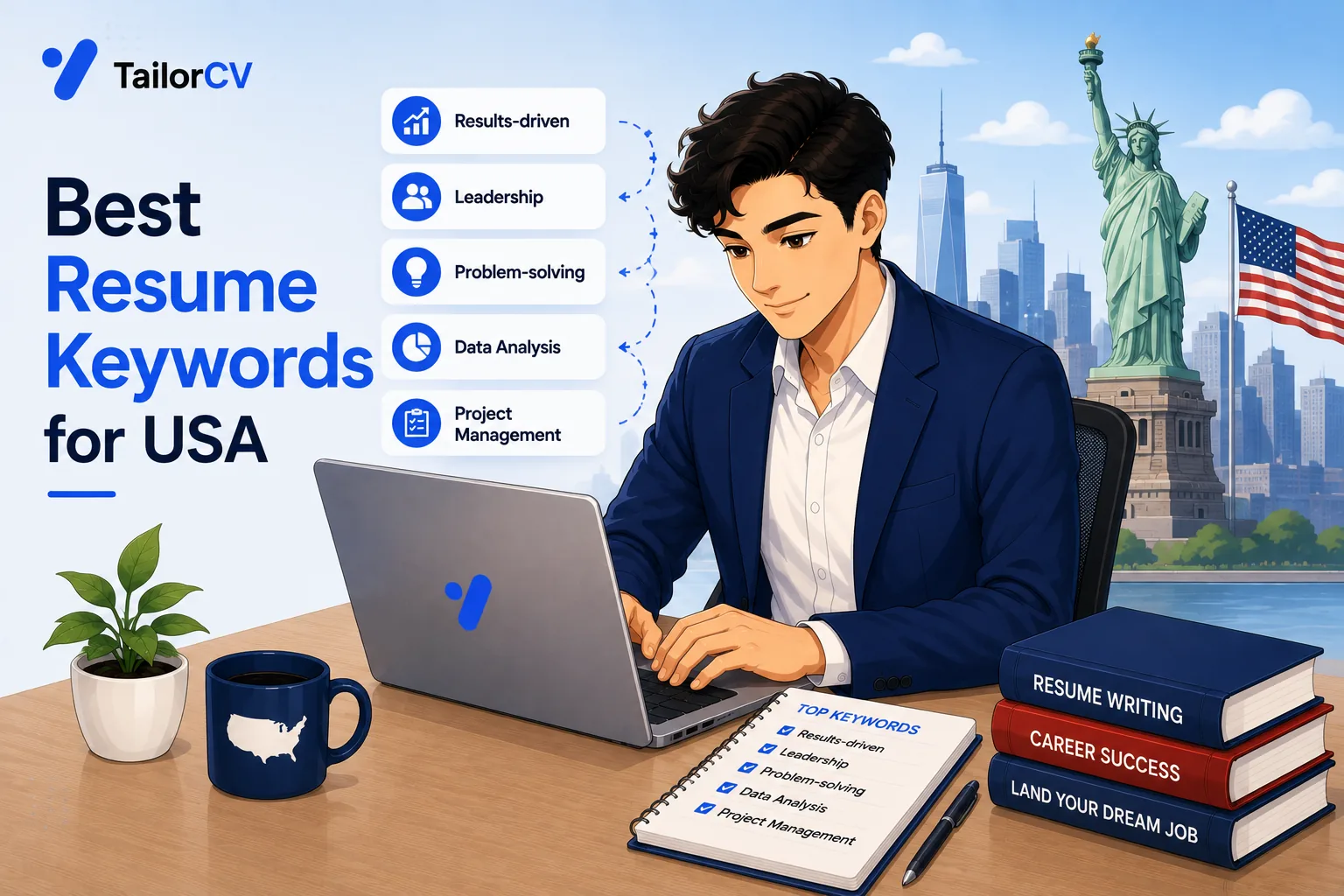
- US applicant tracking systems match on exact terms, so "cloud platforms" fails where "AWS" succeeds.
- Standard job titles are the highest-value keyword on the page, and creative internal titles make you invisible to search.
- American terminology differs from British and Indian usage in ways that break matching - resume not CV, PTO not annual leave, revenue not turnover.
- Keywords earn credibility in experience bullets, not in a skills list nothing supports.
- Work authorization is a screening field, so state it plainly rather than leaving a recruiter to assume.
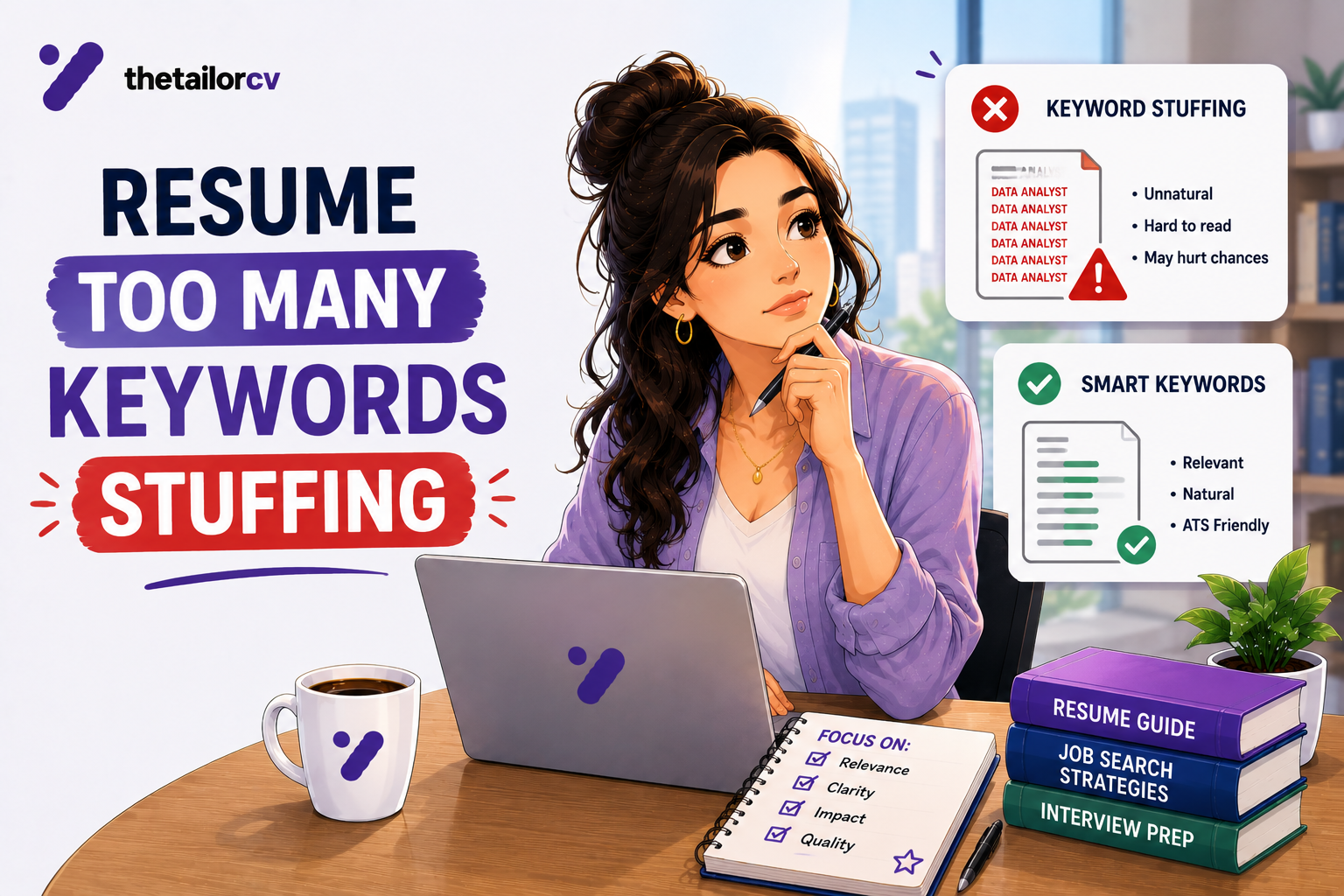
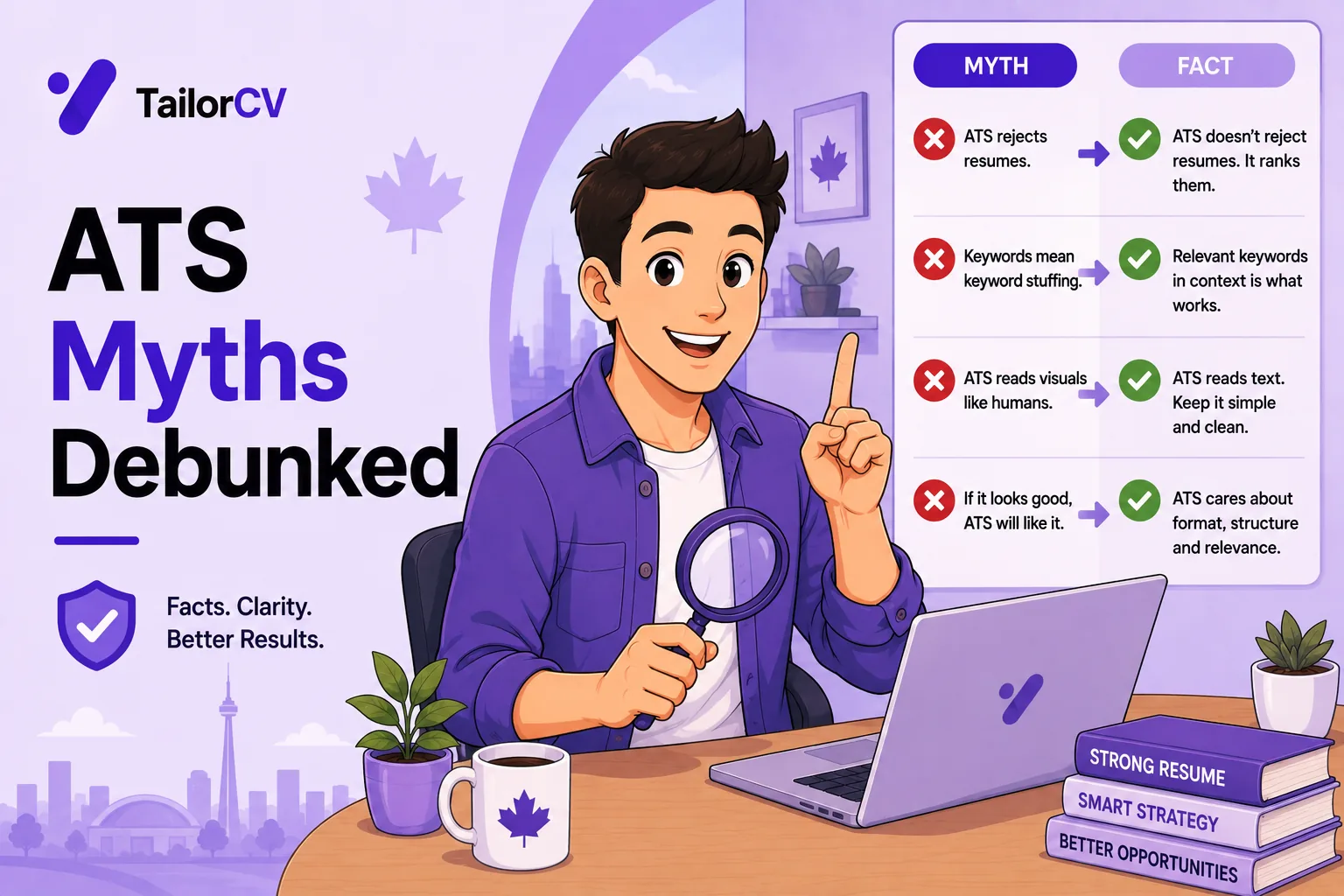
The US is the market where applicant tracking systems are most entrenched, and where the "beat the ATS" advice industry is loudest. Much of that advice is wrong - there is no invisible white text trick worth using, and stuffing a resume with terms produces interviews you fail rather than offers you accept.
What is true is narrower and more useful: recruiters and systems search for specific terms, matching is closer to exact than semantic, and a resume that says "various programming languages" returns nothing when someone searches "Python".
This guide covers which terms matter, the American vocabulary that differs from other markets, and where to put them.
Start by seeing what a parser currently extracts from your file - the free ATS score checker shows you.
Job Titles Come First
The single highest-value keyword on your resume.
Recruiters search by title. If your role was internally "Customer Happiness Hero" and the market calls it "Customer Success Manager", database search will not return you - and at large employers, that search is how candidates get surfaced.
Use the standard market title. Put the internal one in parentheses if it carries meaning:
Customer Success Manager (internal title: Customer Happiness Hero)
Common US title conventions worth matching:
- Software Engineer rather than Programmer or Developer at most US employers
- Data Scientist, Data Analyst, Data Engineer - these are genuinely different roles and searched separately
- Product Manager rather than Product Owner, unless you specifically worked in a Scrum context
- Account Executive for closing sales roles; Sales Development Representative for prospecting
- Staff, Senior, Principal - US technology levelling terms that recruiters filter on directly
If your background is British or Indian, translate: Managing Director in the UK often means CEO in the US, Chartered Accountant maps to CPA territory, and Fresher has no US equivalent - use Entry-Level or New Grad.
American Terminology That Differs
Small vocabulary differences that affect both matching and how the document reads.
| Use in the US | Not |
|---|---|
| Resume | CV (CV means an academic document in the US) |
| PTO / vacation | Annual leave / holiday |
| Revenue | Turnover |
| Program | Programme |
| Organized, analyzed, optimized | Organised, analysed, optimised |
| Manager / supervisor | Line manager |
| Two weeks' notice | Notice period |
| Layoff | Redundancy |
| Contract role | Fixed-term contract |
| Math | Maths |
| GPA | Percentage / class |
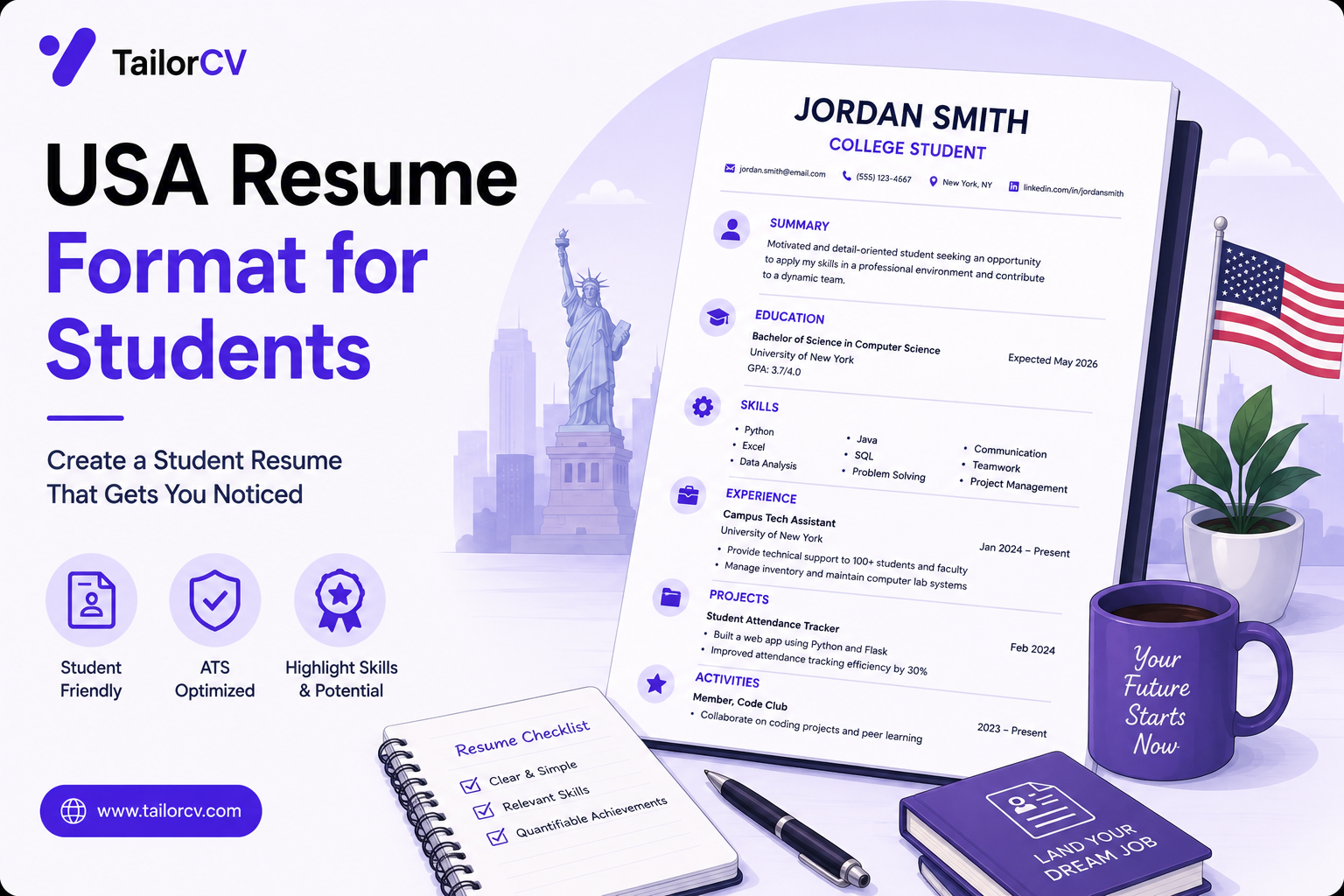
Consistent American spelling throughout matters more than any single word. Mixed spelling reads as a resume recycled from another market. The full formatting picture is in the US resume format guide.
Keywords by Function
Software engineering
Name the specific technology, never the family. "Cloud platforms" is not searchable; AWS, Azure, and GCP are.
Languages: Python, Java, JavaScript, TypeScript, Go, C++, C#, Rust, Swift, Kotlin, SQL. Frameworks: React, Node.js, Django, Spring Boot, .NET, Rails. Infrastructure: AWS, Azure, GCP, Kubernetes, Docker, Terraform, CI/CD, Jenkins, GitHub Actions. Practice: Agile, Scrum, microservices, REST, GraphQL, distributed systems, system design.
The interview those keywords lead to is covered in the US tech interview process guide.
Data and analytics
SQL, Python, R, Spark, dbt, Airflow, Snowflake, Redshift, BigQuery, Databricks, Tableau, Power BI, Looker, ETL, data modeling, A/B testing, statistical analysis, machine learning, TensorFlow, PyTorch.
Note the American spelling of "modeling" with one L - a small thing that matters for exact matching.
Product and program management
Roadmap, product strategy, user research, A/B testing, KPIs, OKRs, stakeholder management, cross-functional, go-to-market, P&L, backlog, sprint planning, Jira.
Marketing
SEO, SEM, PPC, Google Analytics 4, HubSpot, Salesforce, Marketo, CRM, demand generation, marketing automation, conversion rate optimization, content strategy, paid social, attribution.
Finance and accounting
GAAP, SOX compliance, CPA, FP&A, financial modeling, variance analysis, month-end close, reconciliation, forecasting, budgeting, QuickBooks, NetSuite, SAP, Excel modeling.
Healthcare
State licensure and its status, board certification, EMR and EHR systems by name (Epic, Cerner), HIPAA, patient care, clinical documentation, specialty names spelled out.
Cross-functional terms
Stakeholder management, budget ownership with a dollar figure, direct reports with a headcount, project delivery, process improvement, vendor management.
The general method for extracting terms from a posting rather than guessing is in best resume keywords to beat ATS.
Screening Fields International Candidates Forget
If you are not a US citizen or permanent resident, several terms function as filters.
Work authorization. State it plainly. "Authorized to work in the US without sponsorship", "F-1 with STEM OPT through May 2029", or "Will require H-1B sponsorship". Recruiters filter on this before assessing anything else, and silence is read unfavorably - see how to get a job in the USA as an international candidate.
Location. US search is heavily location-filtered. Give a city and state. If you would relocate, say so explicitly rather than leaving it implied.
Security clearance, if you hold one. Active TS, TS/SCI, Secret - highly searchable for defense and government contracting.
State licensure for regulated professions - nursing, engineering, accounting, law. Name the state and status.
Degree equivalency if your qualification is foreign. A credential evaluation helps in regulated fields.
Where to Put Them
Job titles carry the most weight. Fix these before anything else.
The skills section is where explicit terms belong, grouped so they scan rather than run into a paragraph - see the resume skills section guide.
Experience bullets are where keywords earn credibility, because the term appears attached to a result: "Migrated 40 microservices to Kubernetes, cutting deployment time from 45 minutes to 6."
The summary should carry your target title verbatim.
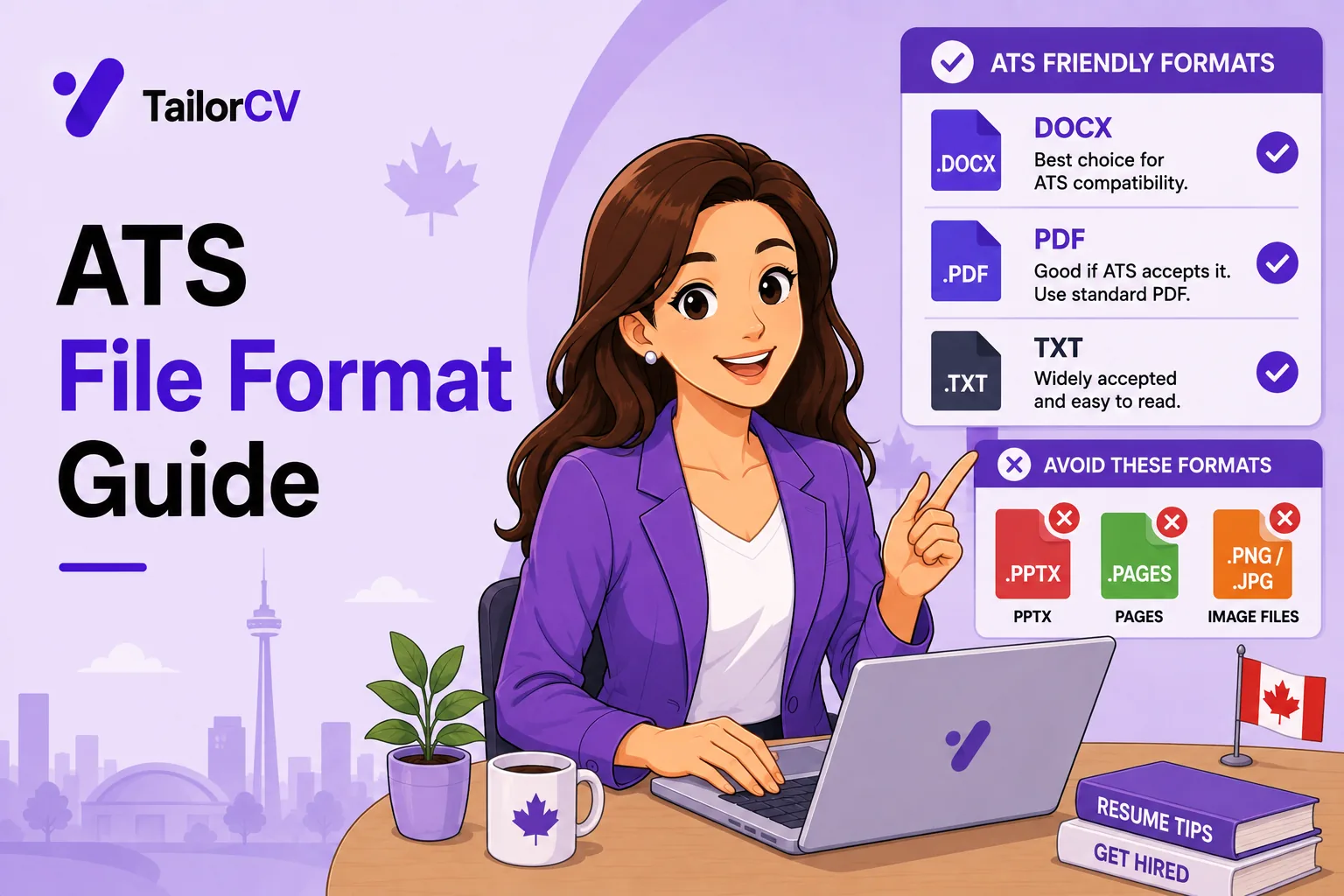
Not in headers, footers, images, or text boxes. Content there is routinely lost in extraction, taking the keyword with it. The failure modes are in ATS resume formatting mistakes.
Spell out acronyms once. "Search Engine Optimization (SEO)" matches both searches. Systems do not always expand abbreviations, and recruiters search both forms.
What Does Not Work
White text keyword stuffing. Modern systems extract all text regardless of color, and a recruiter who spots it discards the application. It is a decade-old trick that now only signals dishonesty.
Keyword lists with no supporting experience. Visible to any human reader and a recognizable pattern - see how recruiters spot generic resumes.
Copying the entire job description. Produces incoherent prose that fails human review immediately after passing machine review.
Claiming skills you cannot defend. US interviews are long and behavioral - "tell me about a time you used Terraform" arrives quickly, and a term you cannot support costs more than its absence would have.
Common Mistakes
Creative job titles. These make you invisible to the database search that surfaces candidates at large employers, and no amount of strong content compensates for never appearing in results.
British or Indian spelling and vocabulary. Mixed spelling marks the resume as recycled from another market, and terms like turnover or annual leave simply do not match what a US recruiter searches for.
Skill categories instead of named skills. Matching is close to exact, so "cloud technologies" returns nothing while "AWS" returns you - the category tells a system nothing it can act on.
Never spelling out acronyms. Systems do not reliably expand abbreviations and recruiters search both forms, so writing the full term once alongside the acronym covers both queries for the cost of three words.
Burying keywords in dense paragraphs. Recruiters scan rather than read, and a term lost mid-paragraph is functionally invisible even when a parser technically extracted it.
Omitting work authorization. Recruiters filter on this before assessing anything else, and an unanswered question is resolved against you rather than in your favor.
Text inside images, headers, or text boxes. Extraction routinely drops this content entirely, which means your contact details or your entire skills section can vanish without you ever knowing.
Stuffing terms you cannot support in interview. It may increase search hits while reducing offers, because US interviews are long enough and behavioral enough to find every claim you cannot back.
Frequently Asked Questions
Do all US companies use ATS software?
Most mid-size and large employers do, and many smaller ones use lighter systems. Even where a human reviews everything, recruiters search their database by keyword, so the same requirements apply.
How many keywords should I include?
There is no target number. Get your job titles standard, name specific tools rather than categories, and make sure each significant skill also appears in an experience bullet with a result attached.
Does keyword stuffing actually work?
It may increase how often you appear in searches while decreasing your offer rate. A skills list unsupported by your experience section is visible to human reviewers and tested in interviews.
Should I use American spelling?
Yes, consistently, for US applications. Mixed British and American spelling is noticed and reads as a resume written for another market.
Where do I find the right keywords for a specific job?
The posting itself - the requirements section names the terms the recruiter will search. Match them where they are genuinely true of you. The method is in how to tailor your resume for every job.
Should I include keywords I only have light experience with?
Include the term if you have genuinely used the thing, and qualify the depth in the bullet rather than inflating it. Interviews will find the gap otherwise.
Do acronyms and full terms both need to appear?
Ideally yes, at least once - "Search Engine Optimization (SEO)". Systems do not reliably expand abbreviations, and recruiters search both.
See exactly which keywords your resume is missing against a real posting. Check your ATS score free.
Make This Practical
Fix your job titles first, replacing any creative or internal title with the standard US market term and translating from British or Indian conventions if that is your background. This one edit determines whether database search returns you at all.
Then rebuild the skills section around specific named tools rather than categories, spell out each significant acronym once alongside its short form, and switch spelling and vocabulary consistently to American usage throughout.
Finally, make every keyword defensible and every screening field explicit. Move significant skills into experience bullets with a result attached using how to write resume bullet points, state your work authorization and location plainly, and run the file against a real posting with the free ATS score checker.
See which keywords you are missing
Scan your resume against the posting and get the exact terms it did not find.
Drop your resume here or choose a file
PDF only. Max 2 MB.
We never share your data or use it to train AI models.
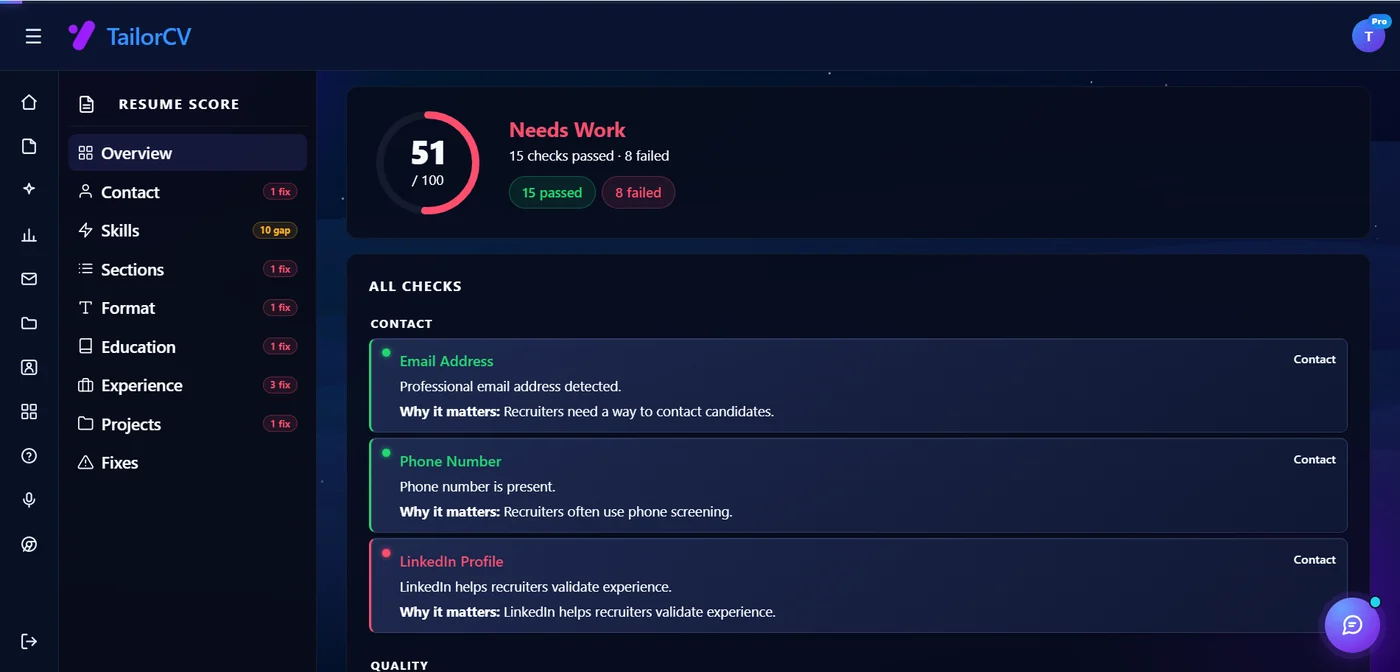
Where those keywords actually go
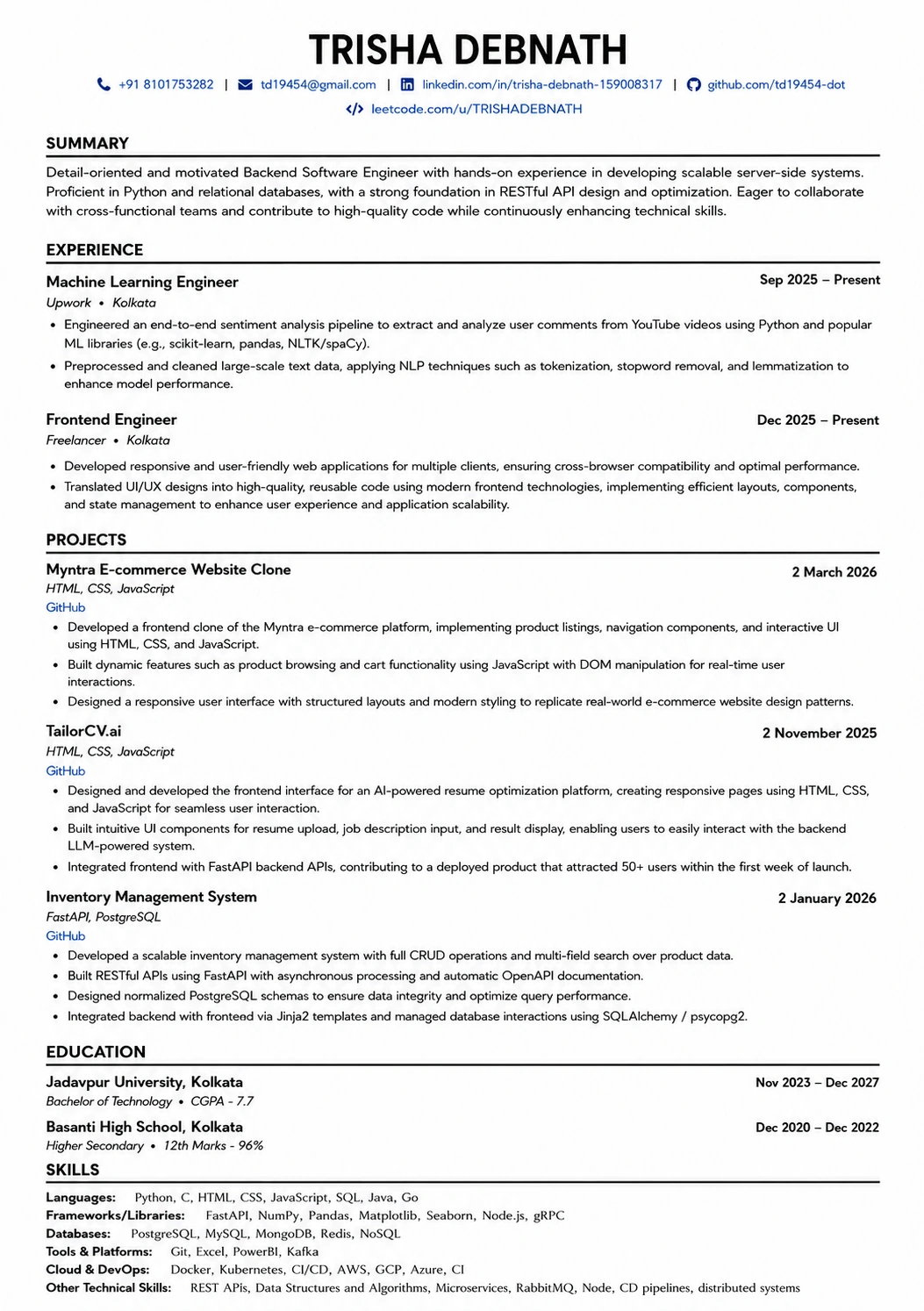
A layout with a real skills section gives the parser somewhere clean to find every term you just added.
Was this guide useful?
Be the first to rate it.