 TD
TD
Key Takeaways
- The H-1B lottery means visa sponsorship is not merit-based at the final step, so building a strategy that depends entirely on it is fragile.
- Employers who sponsor routinely are a small subset of the market, and identifying them early saves months of wasted applications.
- If you studied in the US, OPT gives you a working period without sponsorship - the strongest position an international candidate can be in.
- A US resume has specific conventions: one page early career, no photo, no personal details, and heavy quantification.
- Applying from abroad without work authorisation is the hardest version of this, and it requires a genuinely differentiated profile.
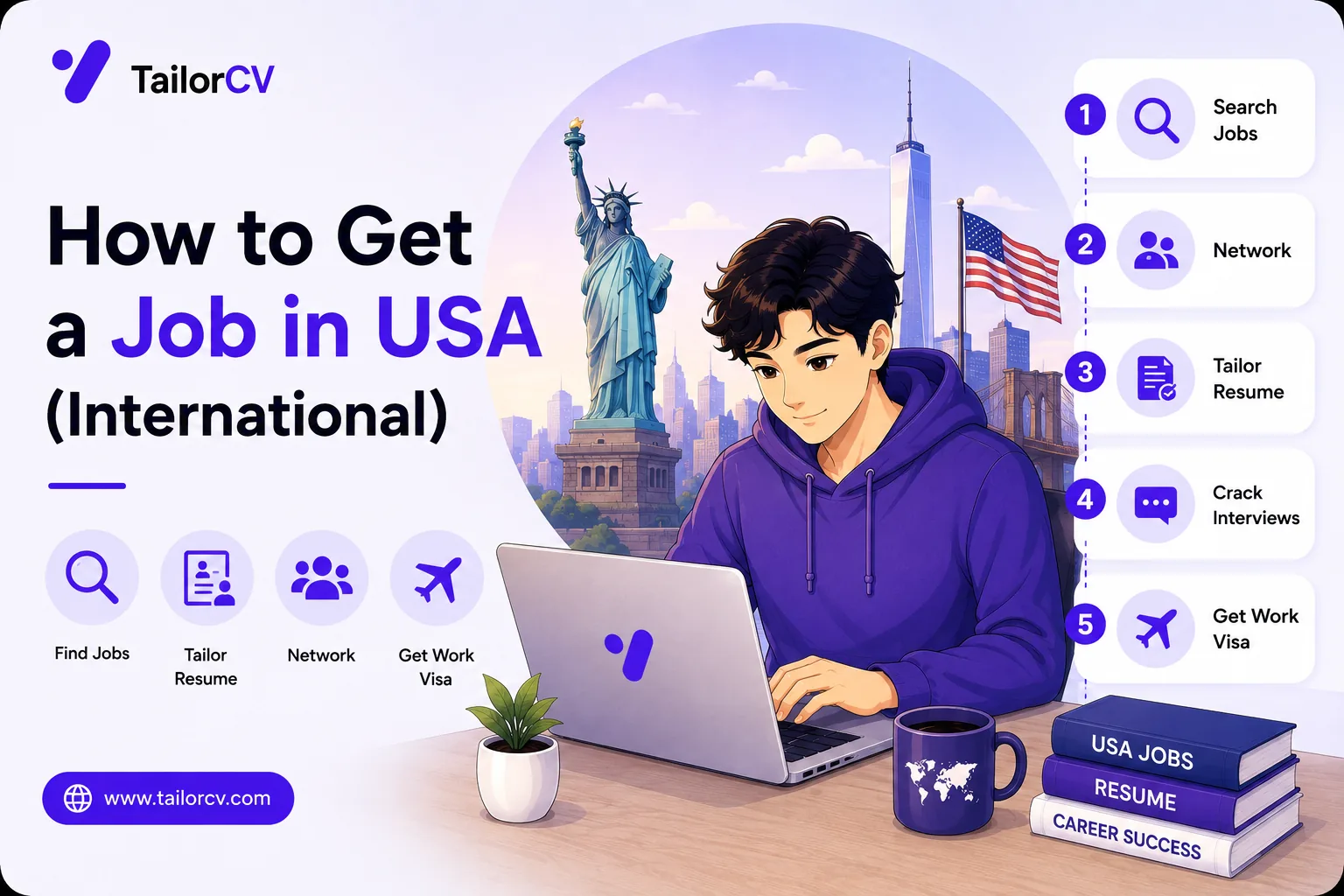
The US job market is the largest in the world and among the hardest for international candidates to enter, and those two facts are related. Employers have a deep domestic talent pool, so sponsoring a foreign worker means added cost, legal process, and uncertainty they can often avoid.
That is the honest starting point. It is not a reason to give up - hundreds of thousands of people work in the US on employment visas - but it is a reason to be strategic rather than hopeful. The candidates who succeed do three things: they target employers who already sponsor, they build a profile that justifies the effort, and they understand the visa mechanics well enough to explain their own situation clearly.
This guide covers the routes, the targeting, and the presentation.
Start with the document everything depends on - run your resume through the free ATS score checker.
Understand Your Route First
Your visa situation determines your entire strategy, so be precise about which of these you are.
You are studying in the US (F-1)
The strongest position available to an international candidate.
CPT (Curricular Practical Training) lets you work during your programme where the work is part of your curriculum - usually internships.
OPT (Optional Practical Training) gives you a period of work authorisation after graduating, typically 12 months.
STEM OPT extension adds a further period for eligible STEM degrees, giving you substantially longer - which matters because it means more chances in the H-1B lottery.
Why this matters so much: during OPT you can work for employers who do not sponsor. You build US experience, prove yourself internally, and then ask an employer who already knows your work to sponsor you. That is a far easier request than sponsoring an unknown candidate abroad.
The resume and application specifics for this stage are in the OPT and CPT resume guide.
You are abroad and need sponsorship
The hardest version. You are asking an employer to pay legal fees, navigate a process, and wait months - when they could hire a domestic candidate next week.
It happens, but it requires a profile that domestic candidates cannot easily match: a scarce specialism, senior expertise, or a field with genuine shortage.
You hold a green card, are a citizen, or hold another work-authorised status
You compete on equal terms. Say so clearly on your resume - "Authorized to work in the US without sponsorship" - because recruiters screen on it and will otherwise assume.
The Visa Routes
A brief orientation. Immigration rules change and the details are consequential, so verify current requirements with official sources or an immigration attorney rather than relying on any summary.
H-1B - the main route for specialty occupations requiring a degree. The critical feature is the annual cap and the lottery: registrations typically exceed available visas by a wide margin, so selection is partly chance. Employers file in the spring for an autumn start.
Cap-exempt H-1B - universities, affiliated non-profits, and some research organisations are exempt from the cap, meaning no lottery. This route is consistently underused by candidates and worth investigating seriously if your field has academic or research adjacency.
L-1 - intra-company transfer. If you work for a multinational abroad, transferring to their US office is often the most reliable route in, bypassing the lottery entirely. Many people deliberately join a company's home-country office with this in mind.
O-1 - for individuals with extraordinary ability. A high bar requiring substantial documented evidence, but no lottery.
TN - available to Canadian and Mexican citizens under trade agreement provisions, for specified professions. Considerably simpler where you qualify.
J-1 - exchange visitor programmes, including some training and internship categories.
Green card sponsorship - a longer employment-based process, often begun while on H-1B.
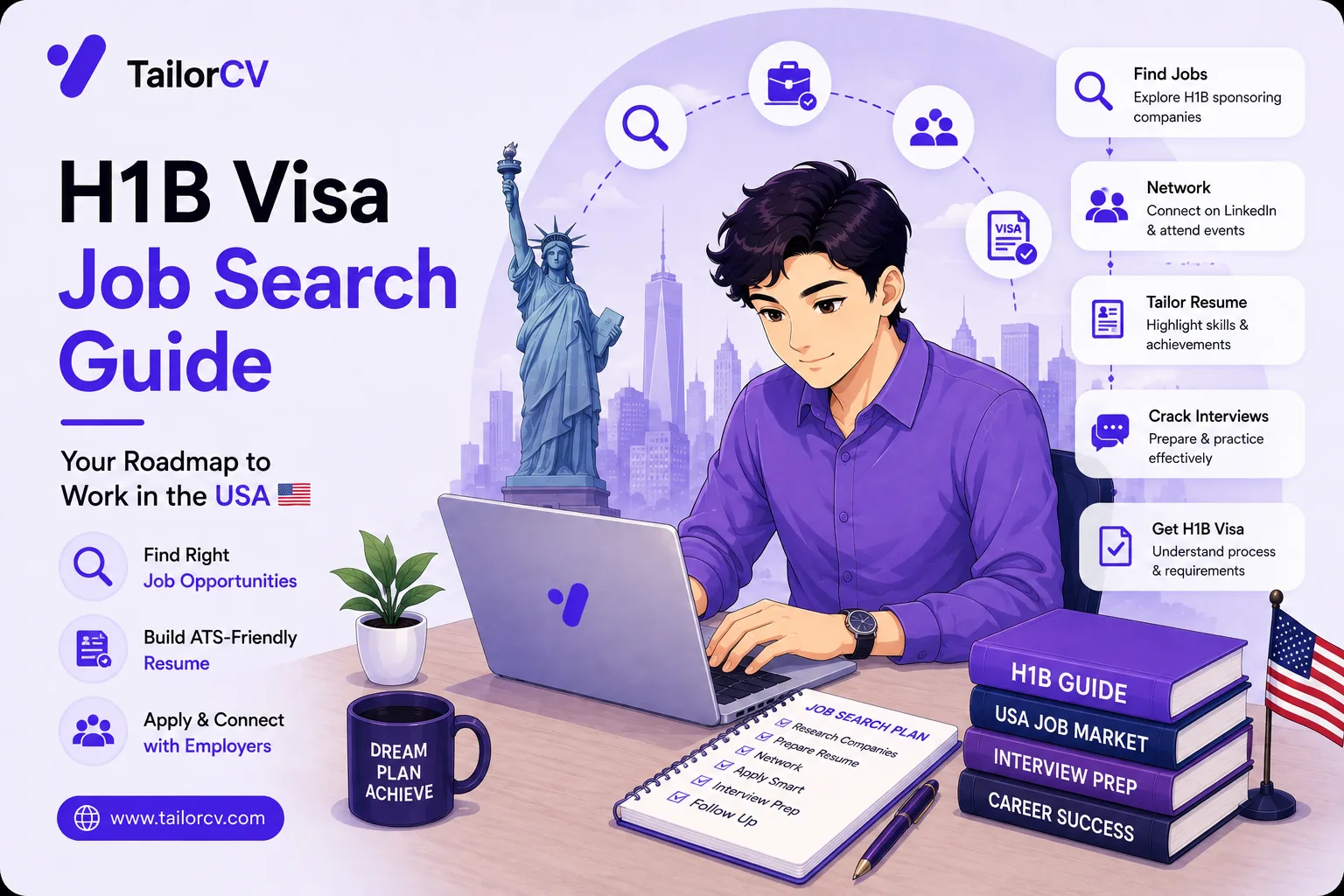
The H-1B specifics and how to run a search around the lottery are covered in the H-1B visa job search guide.
Target Employers Who Already Sponsor
This is the single highest-value filter in an international job search.
Use public disclosure data. US employers filing for H-1B and permanent labour certification submit data that becomes public. Several free tools aggregate it into searchable databases by employer, job title, year, and location. This tells you which companies have actually sponsored, how many, and for what roles - which is far better information than guessing.
Read job postings carefully. Many state their position explicitly: "We are unable to sponsor employment visas for this position", or "Visa sponsorship available". Take these at their word.
Sectors that sponsor more often: technology, engineering, healthcare, academia and research, finance and quantitative roles, and consulting.
Sectors that rarely sponsor: retail, hospitality, most small businesses, government roles requiring citizenship, and anything involving security clearance.
Company size matters. Large employers usually have established immigration processes and in-house counsel. A twelve-person startup may never have sponsored anyone and may not want to learn how. There are exceptions - some startups sponsor readily - but as a default, larger is easier.
Where to find these roles is covered in the best job sites in the USA.
Build a US Resume
International candidates lose applications on format before content is assessed. American conventions are specific:
One page for early career, up to two with substantial experience. This is stricter than most other markets.
No photo, no date of birth, no marital status, no nationality. These are actively avoided in the US for discrimination-law reasons, and including them marks the resume as foreign.
Heavy quantification. American resume culture expects numbers on nearly every bullet - percentages, dollar amounts, headcounts, timeframes. This is more pronounced than in most markets and it is what distinguishes strong US resumes.
Achievement framing, not duties. "Responsible for managing the reporting process" becomes "Cut monthly close from nine days to four by automating reconciliation across three business units."
US spelling and formats. Organize, analyze, optimize. Dates as month/year. Phone numbers in US format if you have a US number.
Work authorization stated. One line, and it saves everyone time. Either "Authorized to work in the US without sponsorship", "F-1 student, eligible for OPT from May 2027", or "Will require H-1B sponsorship".
Translate your credentials. A recruiter in Ohio may not know your university or your grading system. Add a line of context and, if you have one, a credential evaluation for regulated fields.
The formatting details are in the US resume format guide, keyword strategy in the best resume keywords for the USA, and the international-specific angle in resume for international candidates in the USA.
Should You Disclose Sponsorship Needs?
A genuine dilemma, and the honest answer is that hiding it does not work.
Nearly every US application form asks two questions directly: "Are you legally authorized to work in the United States?" and "Will you now or in the future require sponsorship?" You must answer honestly - misrepresentation on employment paperwork has consequences far worse than a rejection.
The practical approach: be upfront, and pair it with a reason to proceed. "Will require H-1B sponsorship" alone gives a recruiter nothing but a cost. "Currently on F-1 with STEM OPT eligibility through 2029; will require H-1B sponsorship thereafter" gives them a runway of several years before anything is needed, which changes the calculation considerably.
Being explicit also saves you from processes that were never going to result in an offer.
Competing Against Domestic Candidates
You need something that offsets the added friction. Vague enthusiasm does not.
Specialise narrowly. A generalist profile competes against a large domestic pool. A specific one - "ML engineer specialising in recommendation systems at scale", "structural engineer with seismic design experience" - competes against a handful.
Emphasise scarce skills. If your expertise is genuinely hard to hire domestically, say so plainly and demonstrate it.
Use international experience as an asset. Multi-market experience, language ability, and knowledge of a region the employer sells into are real differentiators that domestic candidates lack.
Quantify relentlessly. US recruiters read numbers, and quantified achievements survive translation between markets better than descriptions do - see how to quantify achievements on your resume.
Get referrals. Referred candidates convert far better than cold applicants in the US market specifically, where application volumes are enormous. See networking messages for referrals and how to write a cold email to a recruiter.
Build a public profile. For technical roles, a substantial GitHub presence is evidence a recruiter can verify without an interview - see how to optimise your GitHub profile.
The Interview Process
US interviews differ from many markets in structure and register.
More rounds. Four to six is normal, sometimes including a full onsite loop of several back-to-back sessions.
Behavioral questions using STAR, asked systematically at most large employers.
Technical depth, including algorithmic interviews at technology companies - see the US tech interview process guide.
Confident self-presentation is expected. American interview culture rewards clear ownership of your achievements. Candidates from cultures where modesty is the norm - much of Asia and Northern Europe - routinely undersell themselves. Saying "I led that project and it delivered X" is not arrogance in this context; it is the expected register.
Salary comes up openly, and negotiation is normal and expected - see US salary negotiation.
Common Mistakes
Applying broadly without checking sponsorship. The largest source of wasted effort.
Sending a two-page CV with a photo. Marks the application as foreign immediately.
Not stating work authorization. Recruiters screen on it and ambiguity goes against you.
Ignoring cap-exempt employers. Universities and affiliated non-profits avoid the lottery entirely.
Underselling in interviews. Modesty reads as weak candidacy in US interview culture.
Relying only on job boards. Referrals convert far better in a market with this much application volume.
Missing OPT deadlines. The timelines are strict and unforgiving - see the OPT and CPT resume guide.
Planning entirely around the H-1B lottery. It is partly chance, so a plan with no alternative is fragile.
Frequently Asked Questions
Can I get a US job without a visa already?
Yes, but it is the hardest route. You need an employer willing to sponsor, which is a small subset of the market and usually requires a specialism domestic candidates cannot easily match. Studying in the US first, or transferring internally via L-1, are generally more reliable paths.
Which companies sponsor H-1B visas?
Public disclosure data makes this searchable - several free databases let you look up employers by name, role, and year. Technology, healthcare, engineering, academia, finance, and consulting sponsor most frequently.
Should I say I need sponsorship on my application?
Yes. Application forms ask directly and you must answer honestly. Pair it with your timeline - noting STEM OPT eligibility, for example, shows an employer they have years before sponsorship is needed.
What is the H-1B lottery?
Registrations typically exceed the annual cap by a wide margin, so selection is made by random lottery. This means sponsorship is not purely merit-based at the final step, which is why cap-exempt employers and alternative routes are worth understanding.
Is OPT the best route in?
For those who study in the US, generally yes - it provides work authorisation without sponsorship, lets you build US experience, and makes an eventual sponsorship request far easier because the employer already knows your work.
Do I need my degree evaluated?
For regulated professions and some employers, yes - a credential evaluation translates your qualification into US equivalents. For most technology roles it is not required, though adding context about your institution helps.
How long does the whole process take?
Highly variable. The job search itself is usually the longest part. H-1B has a fixed annual cycle with spring registration for autumn starts, so timing matters considerably and missing a cycle can cost a year.
Make sure your resume reads as American before you send it anywhere. Check your ATS score free.
Make This Practical
Filter before you apply. Use public H-1B disclosure data to build a list of employers who have actually sponsored people in your field, and add cap-exempt organisations - universities, affiliated non-profits, research institutions - which avoid the lottery entirely and which most candidates never consider.
Then rebuild the resume to US convention: one page, no photo or personal details, US spelling, achievement bullets with numbers on nearly every line, and one clear statement of your work authorisation and timeline. The specifics are in the US resume format guide.
Finally, compete on something domestic candidates cannot match. Narrow your positioning to a specific specialism, quantify every achievement using how to quantify achievements on your resume, pursue referrals rather than relying on applications, and prepare for a US-register interview where owning your achievements clearly is expected rather than immodest. Verify the file parses with the free ATS score checker.
Find out where a fresher resume stands
Score yours against a real posting - no account, no cost.
Drop your resume here or choose a file
PDF only. Max 2 MB.
We never share your data or use it to train AI models.

Was this guide useful?
Be the first to rate it.