 SS
SS

Key Takeaways
- Australian graduate programs run on a fixed annual cycle: applications open around February–March for roles starting the following February, meaning you apply roughly a year ahead.
- The market is dominated by a recognisable set of employers — the Big Four banks, the Big 4 professional services firms, the Australian Public Service, and the large miners and telcos.
- Video interviews and psychometric testing are near-universal early stages, and both are trainable.
- Many programs require Australian citizenship or permanent residency, particularly in government and defence — check before investing time.
- Vacation (summer) clerkships in your penultimate year are the strongest conversion route, exactly as internships are elsewhere.
The calendar, which is the whole game
If you take one thing from this page, take the dates.
| When | What happens |
|---|---|
| Feb – Mar | Graduate program applications open for the following year's intake |
| Mar – May | Online tests, video interviews, assessment centres |
| May – Jul | Offers issued for many large programs |
| Jun – Aug | Vacation clerkship applications open (penultimate-year students) |
| Nov – Feb | Summer vacation clerkships run |
| Feb (next year) | Graduate programs actually commence |
The consequence: a student graduating in November 2027 is applying in early 2027, well over a year before starting. Australian universities' academic year runs February to November, which is why the whole cycle sits where it does — and why students from northern-hemisphere systems consistently arrive at it late.
Missing the window does not mean waiting for nothing. Off-cycle and direct-entry hiring runs year-round at mid-sized employers, and some programs have a mid-year intake. But the main structured route is a once-a-year event.
Who actually runs graduate programs
The Big Four banks — Commonwealth Bank, Westpac, NAB and ANZ — run large, structured programs across technology, risk, retail banking, institutional banking and data.
The Big 4 professional services firms — Deloitte, PwC, EY and KPMG — hire at scale into audit, tax, consulting and technology, and run the clerkship-to-graduate pipeline most visibly.
The Australian Public Service (APS) runs graduate programs across departments, plus specialist streams. Most require Australian citizenship.
Resources and energy — BHP, Rio Tinto, Woodside and Fortescue — hire engineers, geologists and technical graduates, frequently with fly-in fly-out (FIFO) rosters for site-based roles.
Telecommunications and utilities — Telstra and the major energy retailers — run technology-heavy programs.
Health, education and state government run their own separate graduate intakes, often with their own calendars.
The selection process
- Online application — CV, academic transcript, and usually short written responses.
- Psychometric testing — numerical, verbal and abstract reasoning. Trainable, and the stage that filters the most people.
- Video interview — recorded answers to set questions, no interviewer present. Rehearse to time, on camera.
- Assessment centre — group exercise, case study, and individual interviews, either in person or virtual.
- Final interview — with the business area you would join.
- Offer — frequently with a fast acceptance deadline.
The video interview is where international candidates most often underperform, not because of ability but because talking to a camera with no feedback is genuinely unnatural. It is entirely fixable with practice, and almost nobody practises.
Citizenship and visa requirements
This is the gate worth checking before anything else.
- Australian Public Service and defence-related roles generally require Australian citizenship, without exception.
- Some private graduate programs require citizenship or permanent residency, particularly where security clearance or regulated licensing is involved.
- Many private employers accept candidates on a Temporary Graduate visa (subclass 485), but not all will sponsor beyond it.
Read the eligibility line on the advert before you write anything. Australian graduate adverts state this clearly, and applying to a citizenship-restricted program on a student visa wastes an application you cannot get back.
Where the programs actually are, city by city
Australia's graduate market concentrates heavily, and knowing where your sector sits saves a great deal of wasted applying.
| City | What concentrates there |
|---|---|
| Sydney | Banking and financial services, insurance, technology, professional services — the largest single market |
| Melbourne | Professional services, health and biomedical research, technology, education |
| Canberra | The Australian Public Service, defence, and policy — a market almost entirely its own |
| Brisbane | Resources head offices, infrastructure, growing technology |
| Perth | Mining, oil and gas, engineering — the resources capital |
| Adelaide | Defence industry, space, advanced manufacturing |
Canberra is the case people miss. If you want policy, regulation, intelligence or public administration, essentially the entire market is there, and it recruits on its own APS calendar rather than the private-sector one.
Perth and the resources sector work differently again. Many technical roles are FIFO — fly-in fly-out — where you work a roster on site and fly home between swings. It pays well and it is a genuine lifestyle decision rather than a detail.
Salary and what actually varies
Australian graduate salaries are relatively compressed across employers within a sector, and the meaningful variation is between sectors and between structured programs and direct hires.
Structured graduate programs publish a cohort rate. Everyone in the intake is paid the same, and it is not individually negotiable. This is not a sign of weak negotiating — it is how the programs are designed, and pushing on it rarely works.
Superannuation sits on top. Australian employers pay a compulsory percentage of your salary into a retirement fund, separate from your gross pay. When comparing two offers, check whether each is quoted as base salary or as a "package" including super, because the same number can mean two different things — covered in more detail in the tax and super guide.
Sydney pays more and costs considerably more. Sydney and Melbourne housing costs are among the highest in the world relative to income, and a Brisbane or Adelaide offer at a lower headline figure frequently leaves more disposable income. Run the comparison on actual rental listings for a specific suburb.
If you are an international student
Two structural facts shape the whole search.
Work rights during study. Student visa holders have a cap on working hours during teaching periods, with more allowance during breaks. Employers know this and it is normal — state your position plainly rather than leaving it ambiguous.
The 485 visa is the bridge. The Temporary Graduate visa lets you work full time after graduating, and its duration depends on your qualification level and in some cases where you studied. Regional study can attract additional time. It is the window in which you convert a graduate role into a longer-term position, so understand the points system before you pick your first job rather than afterwards.
Say your work rights in one line on the application. "Full working rights under a Temporary Graduate visa (485) until [date]" removes the largest unspoken question an employer has, and vagueness here costs more applications than any formatting choice.
Preparing for the assessment centre
The assessment centre is where offers are actually decided, and it rewards preparation more than raw ability.
The group exercise is the part candidates misread most often. A group of applicants is given a scenario and a time limit, and assessors watch how you work rather than whether your group reaches the right answer. Dominating the discussion scores badly. So does saying nothing. What scores is building on other people's points, bringing in someone who has not spoken, and keeping the group moving toward a decision when time is running short.
The case study is usually an individual written or presented analysis of a business problem. Structure beats brilliance: state your recommendation, give two or three reasons, acknowledge the main risk, and stop. Assessors are marking whether you can reach a defensible position under time pressure.
The behavioural interview runs on the same competencies the advert named. Prepare one specific example per competency, structured as situation, action, result. Generic teamwork stories are the most common weak answer in the entire process.
Ask real questions at the end. Three, at least one about the actual day-to-day work. Having none reads as indifference and it is noticed.
Mini checklist
- unchecked: Application window dates noted for every target employer
- unchecked: Eligibility line checked for citizenship or PR requirements
- unchecked: Psychometric practice tests completed
- unchecked: Video interview rehearsed on camera, to time
- unchecked: Academic transcript obtained and ready to upload
- unchecked: Resume in Australian format
- unchecked: Vacation clerkship applied for, if in penultimate year
- unchecked: A few mid-sized employers added alongside the household names
- unchecked: Visa position understood and stated plainly
Scenarios
Scenario 1: You are in your penultimate year
Apply for vacation clerkships now. They run over the summer, they convert to graduate offers at a high rate, and they are the single most effective route into the Big 4 and the banks.
Scenario 2: You graduated last year and missed the cycle
You are not out of the market. Target off-cycle and direct-entry hiring at mid-sized employers, mid-year intakes where they exist, and apply into the next cycle in February.
Scenario 3: You are an international student on a student visa
Filter for programs that do not require citizenship or PR before applying. Then plan the 485 visa as your bridge, and raise your work rights early rather than at offer stage.
Tip: Practise the video interview properly — record yourself answering three standard questions, watch it back, and do it again. It is the stage with the widest gap between how easy it looks and how people actually perform, and it costs an evening to fix.
Do's and Don'ts
Do
- Diarise the February–March window a year ahead
- Check the citizenship line before applying
- Practise psychometric tests before the real attempt
- Record and review a practice video interview
- Apply to vacation clerkships in your penultimate year
- Include mid-sized employers on your list
Don't
- Assume you apply in your final year
- Skip the eligibility requirements on the advert
- Walk into psychometric testing untrained
- Improvise a recorded video interview
- Apply only to the Big 4 and the banks
- Ignore mid-year and off-cycle intakes
Common Mistakes
- Applying in final year. The cycle opens more than a year before you start; final-year applicants have already missed the main intake.
- Ignoring the citizenship line. APS and defence roles require Australian citizenship, and the advert says so plainly.
- Untrained psychometric tests. This stage filters the most candidates and is entirely trainable.
- Improvising the video interview. Recorded answers with no interviewer feel unnatural, and one evening of practice fixes it.
- Skipping vacation clerkships. The highest-conversion route into the largest programs.
- Applying only to the famous names. Mid-sized employers hire steadily with a fraction of the applicant volume.
Related Guides
Keep building on this with the related guides in this series:
- Resume Format for Australia
- The Skilled Visa Points System for Graduates
- Technology Jobs in Sydney and Melbourne
- Your First Australian Job - Tax and Superannuation
- Comparing Graduate Work Visas Across Countries
You can also check your resume's ATS score for free, generate a tailored cover letter, or build a portfolio website in minutes.
Frequently Asked Questions
When do Australian graduate programs open?
Applications typically open February to March for programs starting in February of the following year — so you apply roughly a year ahead of your start date.
Do I need to be an Australian citizen?
For the Australian Public Service and defence-related roles, generally yes. Many private programs accept candidates on a Temporary Graduate visa, but the advert states the requirement — read it before applying.
What is a vacation clerkship?
A summer internship, usually taken in your penultimate year, running roughly November to February. It converts to a graduate offer at a high rate and is the main pipeline into the Big 4 and the banks.
What are the assessment stages?
Typically an online application, psychometric testing, a recorded video interview, an assessment centre with group and case exercises, then a final interview with the business area.
What if I missed the application window?
Target off-cycle and direct-entry roles at mid-sized employers, look for mid-year intakes, and apply into the next February cycle. The structured route is annual but the wider market is not.
Are psychometric tests worth practising?
Yes — it is the stage that filters the most candidates, the format is consistent, and practice reliably improves scores.
Which city should I target?
It depends entirely on sector — Sydney for banking and finance, Canberra for public service and policy, Perth for resources, Melbourne for professional services and health. Match the city to your field rather than to size.
Is my graduate salary negotiable?
At a structured program with a published cohort rate, generally not. The rate is set for the whole intake by design. Direct-entry roles at smaller employers have more room.
What is FIFO work?
Fly-in fly-out — common in the resources sector, where you work a roster on a remote site and fly home between swings. It pays well and is a genuine lifestyle decision rather than a detail.
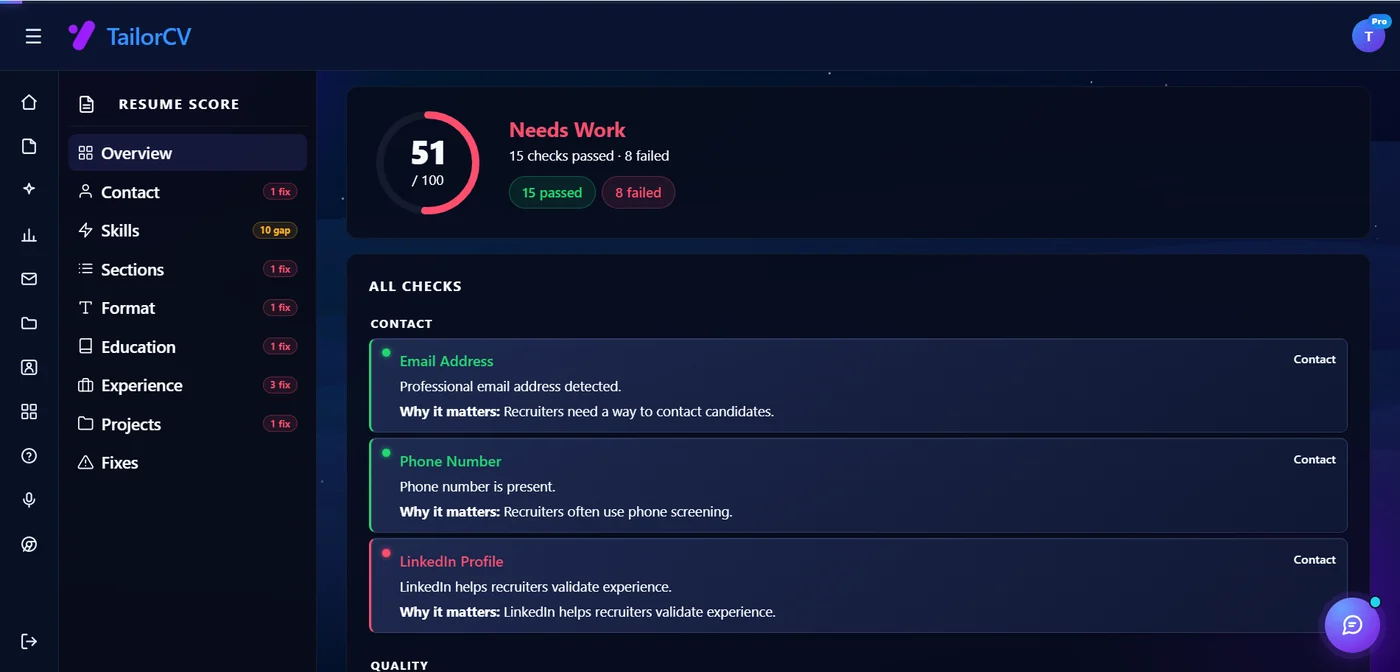
What is your resume scoring right now?
Scan it against a job description and get your ATS match score in about a minute.
Drop your resume here or choose a file
PDF only. Max 2 MB.
We never share your data or use it to train AI models.
Was this guide useful?
Be the first to rate it.