 SS
SS
Key Takeaways
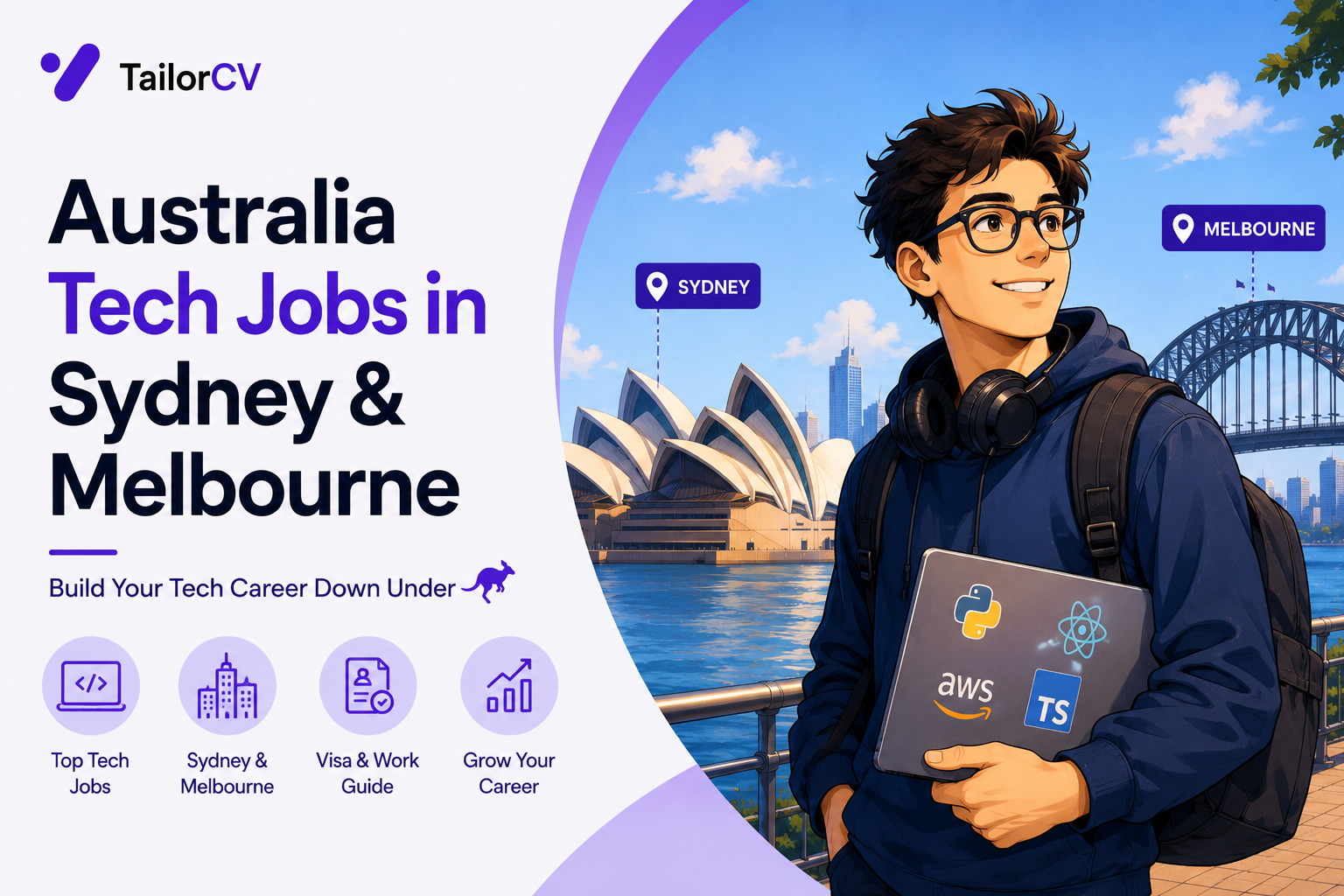
- Sydney is the larger tech market, weighted toward fintech, banking technology, enterprise software and the Australian offices of global firms.
- Melbourne carries a strong product, health-tech and design culture, and generally costs somewhat less to live in than Sydney.
- Australia's own success stories — Atlassian, Canva, Afterpay, Airwallex, SafetyCulture — hire graduates directly and are worth targeting by name.
- Brisbane, Perth, Adelaide and Canberra have real technical employment with far less competition, particularly in defence, resources technology and government.
- Technical interviews follow international convention, so standard preparation transfers almost entirely.
Sydney: scale, fintech, enterprise
Sydney is Australia's largest technology market by a clear margin, and its character follows from what else is in the city.
The banks are technology employers. Commonwealth Bank, Westpac, NAB and ANZ run very large engineering organisations — payments infrastructure, trading systems, digital banking, risk platforms. This is genuine software work at scale, and it is consistently underrated by graduates who filter for "tech companies" and skip anything with a bank's name on it.
Global firms run Sydney offices. Amazon, Google, Microsoft, Canva and Atlassian all have substantial Sydney engineering presences rather than sales-only outposts.
Fintech concentrates here. Afterpay, Airwallex and a long tail of payments and lending companies grew out of the city's proximity to financial services.
The cost. Sydney has among the least affordable housing in the developed world relative to income. A Sydney offer needs comparing after rent for a specific suburb, not against a national average.
Melbourne: product, health tech, design
Melbourne's technology scene has a genuinely different flavour.
Product and design culture is stronger. REA Group, SEEK, MYOB and Zendesk's local operations sit here, alongside a dense startup community.
Health and biomedical technology is a real Melbourne specialism, tied to the city's hospital and research infrastructure — the Parkville precinct in particular.
Cost of living is meaningfully lower than Sydney while remaining expensive by any other standard. For many graduates the real disposable outcome favours Melbourne.
Side by side
| Sydney | Melbourne | |
|---|---|---|
| Market size | Largest | Second, and substantial |
| Sector weight | Fintech, banking tech, enterprise, global offices | Product, health tech, design, marketplaces |
| Salary | Highest on average | Slightly below Sydney |
| Cost of living | Highest in Australia | High, but below Sydney |
| Best for | Payments, financial systems, large-scale platforms | Product engineering, health tech, design-led work |
The cities nobody applies to
Concentrating on two cities means competing with everyone who read the same advice.
- Brisbane — growing quickly, with lower costs and a genuine startup scene.
- Canberra — government technology, cyber security and defence. Frequently requires Australian citizenship and security clearance, which dramatically narrows the applicant pool if you qualify.
- Perth — resources technology, automation, remote operations centres running mine sites.
- Adelaide — defence, space and advanced manufacturing, with the lowest living costs of the mainland capitals.
For a graduate, applicant-to-seat ratio matters more than absolute market size, and these cities are structurally less contested.
What the hiring process looks like
- Application, usually through the company's own careers portal or SEEK.
- Recruiter screen — background, motivation, work rights, salary expectations.
- Technical screen — a coding exercise, take-home task, or live session.
- Technical interviews — algorithms and data structures, plus a deep discussion of your own projects.
- System design, at more senior levels or for larger platforms.
- Behavioural round, genuinely weighted rather than a formality.
- Offer, with your visa position becoming relevant here if you need sponsorship.
Preparation transfers. The standard technical interview preparation used for US or UK processes works here, because the question banks and formats are broadly international.
What Australian tech pay actually looks like
Australian technology salaries sit below US levels, roughly in line with or slightly above the UK, and they are structured in a way that trips up candidates comparing internationally.
Equity is uncommon outside a narrow band of companies. Atlassian, Canva and venture-backed startups offer meaningful equity; almost nobody else does. A bank, an insurer or an established product company will offer base salary plus a bonus, and the base is therefore the whole conversation.
Super sits on top, or inside, depending on how it is quoted. A compulsory employer superannuation contribution is paid as a percentage of your salary. Whether a quoted figure includes it changes what the offer is worth, and the two conventions are both in common use - which is why the tax and super guide is worth reading before you compare anything.
Graduate program rates are published and fixed. Structured intakes pay a cohort rate that is the same for everyone and is not individually negotiable. Direct-entry roles at smaller companies have far more room, and that is where negotiation is worth your energy.
Sydney pays more and costs more than the gap. Run any Sydney-versus-elsewhere comparison against real rental listings for a specific suburb and a real commute, not against a state average. The headline difference between a Sydney and a Brisbane offer routinely disappears once you do.
Sponsorship, and how to ask about it
If you need sponsorship, the question is not whether a company can sponsor - it is whether they already do.
An employer with an existing sponsorship process is a completely different proposition from one that has never done it. The first has the accreditation, the templates and someone who understands the timeline. The second has a hiring manager who has to persuade a finance team to start.
Ask early and ask plainly. "Does this role offer visa sponsorship?" in the recruiter screen costs nothing and saves weeks. Recruiters answer it directly, and a vague answer is itself an answer.
Large employers sponsor more readily than small ones. The banks, the global firms' Australian offices, the consultancies and the larger product companies all sponsor routinely. A twelve-person startup usually cannot, regardless of how much they like you.
State your current position in one line on the application. "Full working rights under a Temporary Graduate visa (485) until [date]" answers the largest unspoken question in the room, and it puts you ahead of every candidate whose status the recruiter has to guess at.
Where the roles are actually advertised
Australia has a distinctive job-search landscape, and using the wrong channel wastes weeks.
SEEK is the dominant board, in a way that has no exact equivalent in the US. It carries a genuine majority of advertised roles across every sector, and for many employers it is the only place a role is posted publicly.
LinkedIn is strong but secondary for volume, and stronger for the recruiter-outreach half of the process.
Company career portals matter for the big programs. Graduate intakes at the banks, the consultancies and the large product companies are run through their own systems on their own calendar, and they are frequently not on SEEK at all.
GradConnection and Prosple aggregate structured graduate programs specifically, which makes them the right starting point if a formal intake is what you want.
Specialist recruiters are unusually active in Australian tech - firms placing contract and permanent engineering roles who often know about positions before they are advertised. Building a relationship with two or three is worth more than an extra fifty cold applications.
Making your application land
The mechanics are the same as anywhere; what differs is the emphasis.
Show something that runs. One deployed project with a working URL outperforms four repositories a reviewer has to clone. A portfolio site that opens in a browser is doing work while your application sits in a queue.
Tailor to the advert's own language. Australian employers screen with software at scale, and mirroring the specific terminology of the posting - the exact framework name, the exact cloud provider - is the difference between parsing correctly and being filtered. Running the document through an ATS check once removes the whole category of risk.
Behavioural rounds are weighted, not decorative. Australian interviewers ask genuine behavioural questions and listen to the answers. Prepare three or four real situations with a concrete result, and do not treat this round as the easy one.
Be specific about why this company. "I want to work in tech" reads identically to every other application. A sentence about the actual product, or a decision the company made that you have an opinion about, does not.
Mini checklist
- unchecked: City chosen by sector, not by reputation
- unchecked: Australian companies targeted by name, not just global ones
- unchecked: Bank technology divisions on your list
- unchecked: Rent researched for a specific suburb
- unchecked: One deployed project a reviewer can open
- unchecked: Algorithmic interview practice done
- unchecked: Work rights stated plainly on the application
- unchecked: A few applications outside Sydney and Melbourne
Scenarios
Scenario 1: You want the largest number of openings
Sydney, and include the banks' technology divisions rather than filtering them out. They run some of the largest engineering organisations in the country.
Scenario 2: You want product engineering at a company you have heard of
Melbourne and Sydney both, targeting Atlassian, Canva, SEEK and REA Group by name. These hire graduates directly and run structured processes.
Scenario 3: You hold Australian citizenship
Look seriously at Canberra. Defence, cyber and government technology require citizenship and often clearance, which removes the majority of applicants and leaves genuinely interesting work.
Tip: Do not filter out the banks. Commonwealth Bank, Westpac, NAB and ANZ employ enormous engineering teams doing real platform work, and they attract a fraction of the applications that go to the companies with "tech" in their brand.
Do's and Don'ts
Do
- Choose the city by what you want to build
- Target Australian companies by name
- Include bank and insurer technology divisions
- Compare offers after real rent for a suburb
- Prepare for algorithmic interviews properly
- State your work rights in one line
Don't
- Assume Sydney and Melbourne are interchangeable
- Take a Sydney salary at face value against Melbourne
- Skip employers without "tech" in their brand
- Ignore Brisbane, Perth, Adelaide and Canberra
- Underprepare on the assumption the bar is lower here
- Leave sponsorship questions until the offer
Common Mistakes
- Filtering out the banks. They run some of Australia's largest engineering organisations and attract far fewer applicants than the tech-branded employers.
- Comparing headline salaries. Sydney housing costs routinely erase the gap against Melbourne or Brisbane.
- Applying only to the two big cities. Brisbane, Perth, Adelaide and Canberra have real work with much less competition.
- Ignoring Canberra if you are a citizen. Clearance requirements remove most of the field.
- Underpreparing technically. Australian technical interviews follow international convention closely.
- Leaving work rights ambiguous. One clear line removes the largest unspoken question.
Related Guides
Keep building on this with the related guides in this series:
- Australian Graduate Programs - How the Intake Works
- Resume Format for Australia
- The Skilled Visa Points System for Graduates
- Your First Australian Job - Tax and Superannuation
- Technical Interview Preparation for New Graduates
- UK Technology Graduate Jobs - Where They Are and What Is Assessed
You can also check your resume's ATS score for free, generate a tailored cover letter, or build a portfolio website in minutes.
Frequently Asked Questions
Is Sydney or Melbourne better for tech jobs?
Sydney is larger and weighted toward fintech, banking technology and enterprise; Melbourne is stronger in product, health tech and design. Choose by sector rather than size.
Which Australian tech companies hire graduates?
Atlassian, Canva, SEEK, REA Group, Afterpay, Airwallex and SafetyCulture all hire graduates directly, alongside the global firms' Australian engineering offices.
Do the banks count as tech employers?
Very much so. The four major banks run large engineering organisations building payments, trading and digital banking platforms, and they are consistently under-applied.
Are Australian technical interviews different?
Not substantially — algorithmic problems, a project deep dive, and system design at more senior levels. Standard international preparation transfers.
Should I consider cities outside Sydney and Melbourne?
Yes. Brisbane, Perth, Adelaide and Canberra all have genuine technical employment with materially less competition per role.
Do tech employers sponsor visas?
Many do, though not all. Ask early whether they have sponsored before — an employer with an existing process is a very different proposition from one without.
Do Australian tech companies offer equity?
Rarely, outside Atlassian, Canva and venture-backed startups. Most offers are base salary plus a bonus, so the base is the number that matters.
How should I ask about visa sponsorship?
Directly, in the recruiter screen. The real question is whether the employer already sponsors - one with an existing process is a very different proposition from one starting from scratch.
Is my graduate salary negotiable?
At a structured graduate program with a published cohort rate, generally not. Direct-entry roles at smaller companies have considerably more room.
Where are Australian tech jobs advertised?
SEEK carries the majority of advertised roles, LinkedIn is a strong second, and the large graduate programs run through the companies' own portals on their own calendar. GradConnection and Prosple aggregate structured intakes.
Are specialist recruiters worth using?
In Australian tech, yes - they are unusually active and often know about roles before they are advertised. Two or three relationships beat fifty extra cold applications.
What is your resume scoring right now?
Scan it against a job description and get your ATS match score in about a minute.
Drop your resume here or choose a file
PDF only. Max 2 MB.
We never share your data or use it to train AI models.

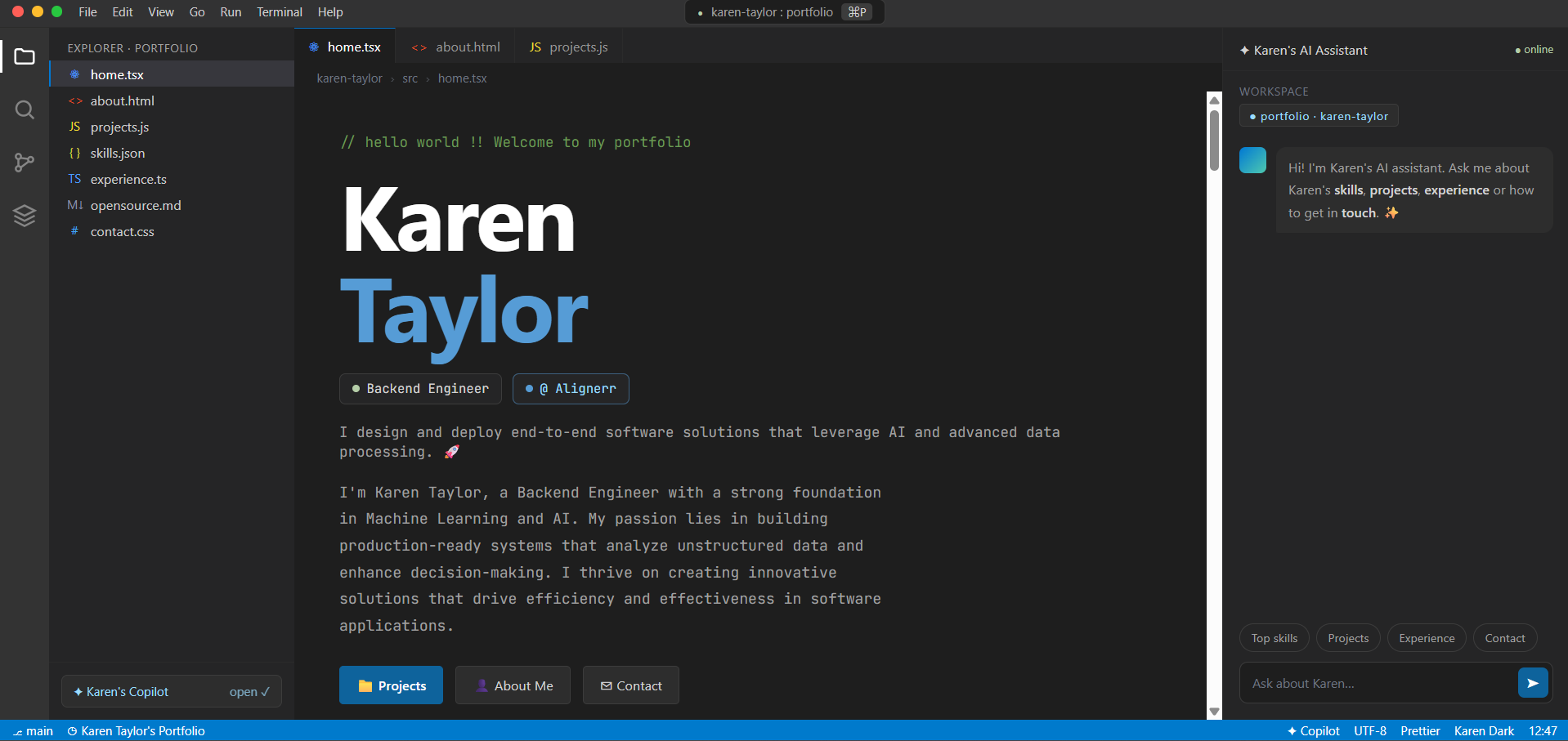
See what your portfolio could look like
This theme is built straight from your resume — pick one and your portfolio is live in minutes.
Was this guide useful?
Be the first to rate it.