 TD
TD

Key Takeaways
- Japanese internships are frequently much shorter than Western equivalents — sometimes days rather than months.
- They function largely as mutual introduction and early screening within the graduate recruiting cycle rather than as substantial work experience.
- Participation matters for the relationship with the company and for the information you gain, more than for the work itself.
- Applications open well in advance, following the conventional recruiting calendar.
- Longer, more substantive internships exist particularly at foreign-affiliated companies, technology firms and startups.
How they differ from Western internships
Duration. Many are extremely short — a single day, a few days, or one to two weeks. Multi-month internships exist and are far less common at traditional Japanese employers than in markets where a summer internship is a standard ten to twelve weeks. The single-day format specifically is common enough to have its own name — "1day intern" (ワンデーインターン) — and it's worth recognizing as, functionally, a structured company information session rather than genuine work experience; go in expecting a presentation, a group exercise, and a chance to be noticed, not a project you'll describe on your resume afterward.
Purpose. They function primarily as an introduction to the company and an early look at candidates, within the conventional graduate recruiting relationship. The work you do is frequently secondary to the mutual assessment happening around it.
Content. Frequently a mixture of company explanation, group work, a project exercise and discussion with employees, rather than being embedded in a team doing production work.
Payment. Short programmes are frequently unpaid, with longer ones more likely to be paid.
Which reframes what you should expect. If you are looking for substantial work experience to put on a resume, a short Japanese internship may not provide it. If you are looking to build a relationship with an employer ahead of the main recruiting round and to learn what the company is actually like, it does exactly that.
Where they sit in the cycle
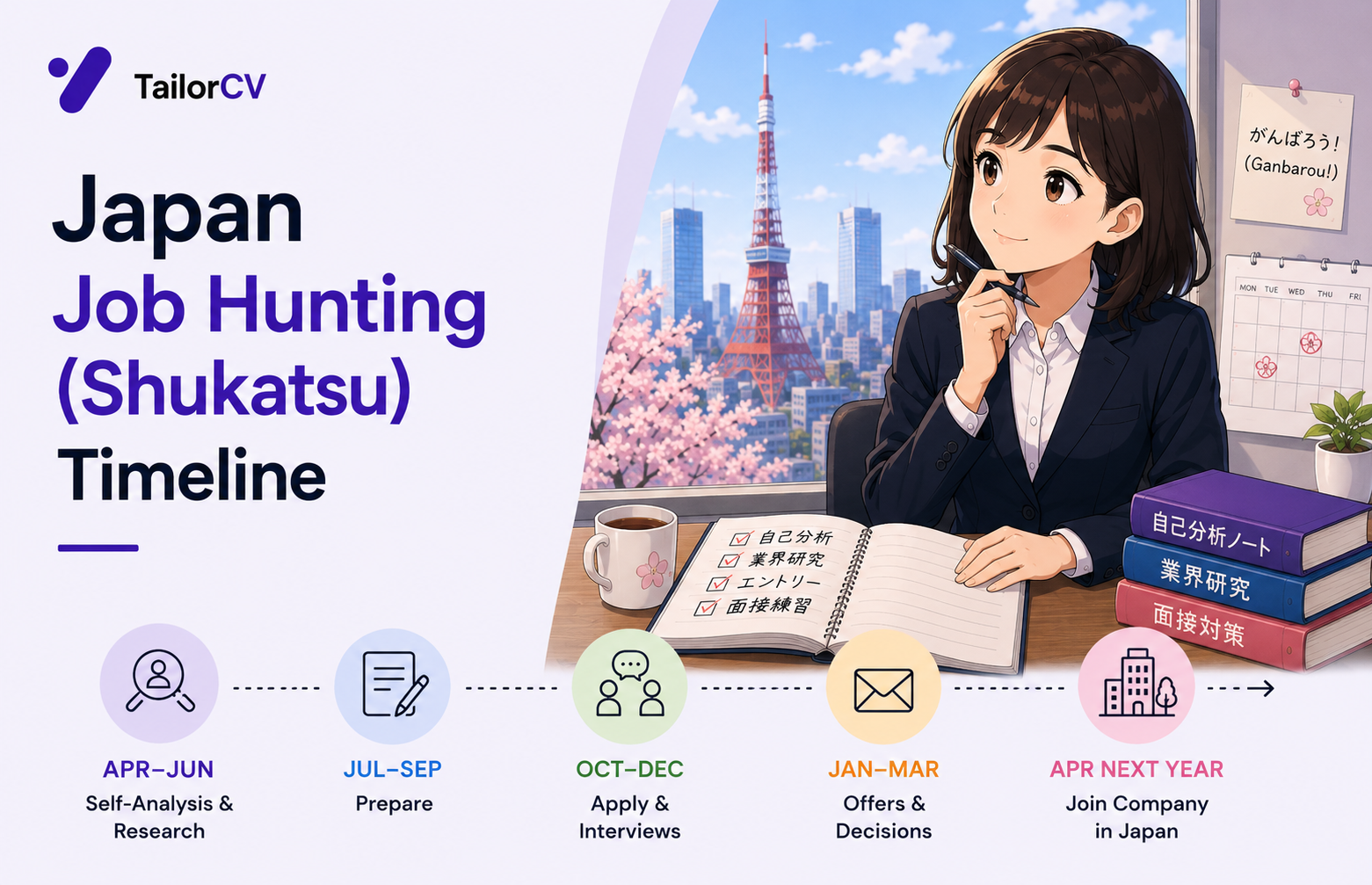
Summer of the penultimate year is the main season, with applications opening in the spring before.
Autumn and winter programmes follow, extending the opportunity into the year.
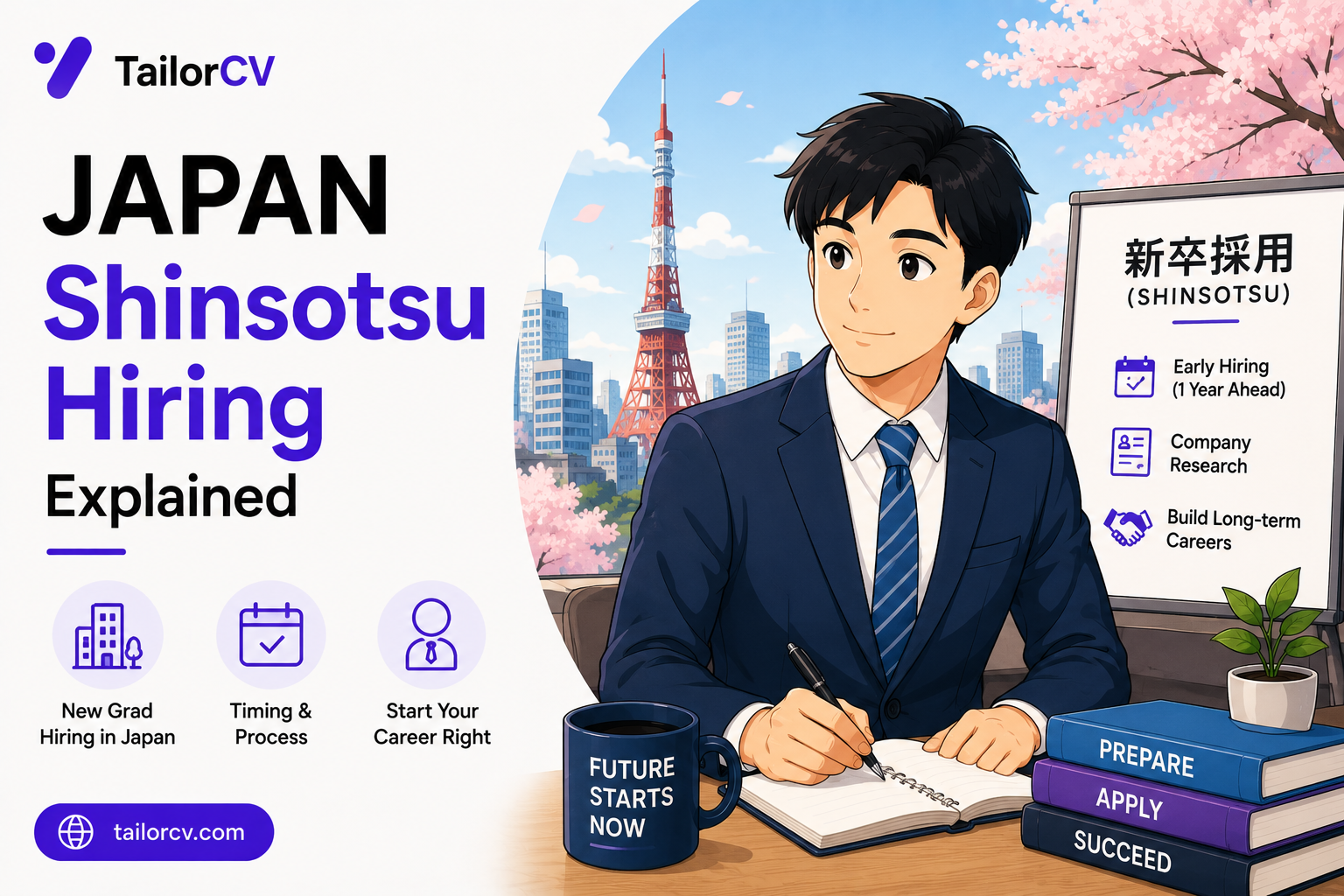
They precede the main selection period, and participation frequently feeds into it — some companies invite internship participants to subsequent stages, and the familiarity itself matters.
Which makes the timing consequential. A student who discovers internships in their final year has missed the stage designed to precede the main round. The timeline guide sets out the full sequence.
Longer and more substantive options
Foreign-affiliated companies frequently run internships closer to Western conventions — longer, paid, embedded in a team, and sometimes with a conversion pathway.
Technology companies and startups frequently offer substantive engineering internships where you do real work, following the year-round hiring pattern rather than the conventional cycle.
How to tell the two types apart before applying. The posting's own language is usually the clearest signal — a listing describing "work experience," specific deliverables, or a defined project scope is signaling the substantive kind; a listing built around "company understanding" (会社理解), a single date, and no mention of actual tasks is signaling the information-session kind. Neither is a bad use of time, but knowing which one you're applying to changes what you should say in your application and what you should walk in expecting.
Research internships at universities and institutes, particularly for graduate students.
Government and international organisation programmes, which exist and are competitive.
These are the routes to look at if what you actually want is substantial experience rather than early relationship-building.
For international students
If you are studying in Japan, you have access to the campus channels and the conventional cycle, and the main constraint is language for many programmes.
If you are studying overseas, this is harder. Some programmes accept overseas applicants and some specifically target international students, and the practical obstacles — travel, accommodation, timing against a different academic calendar — are real.
Check the status requirement. Students in Japan on a student status generally need permission to engage in activities outside the scope of their status for paid work, and unpaid short programmes may sit differently. Confirm with your institution rather than assuming, since this is exactly the kind of detail where guessing is unsafe.
Applying from overseas for a paid internship may require a specific status arrangement, which the host organisation would need to support.
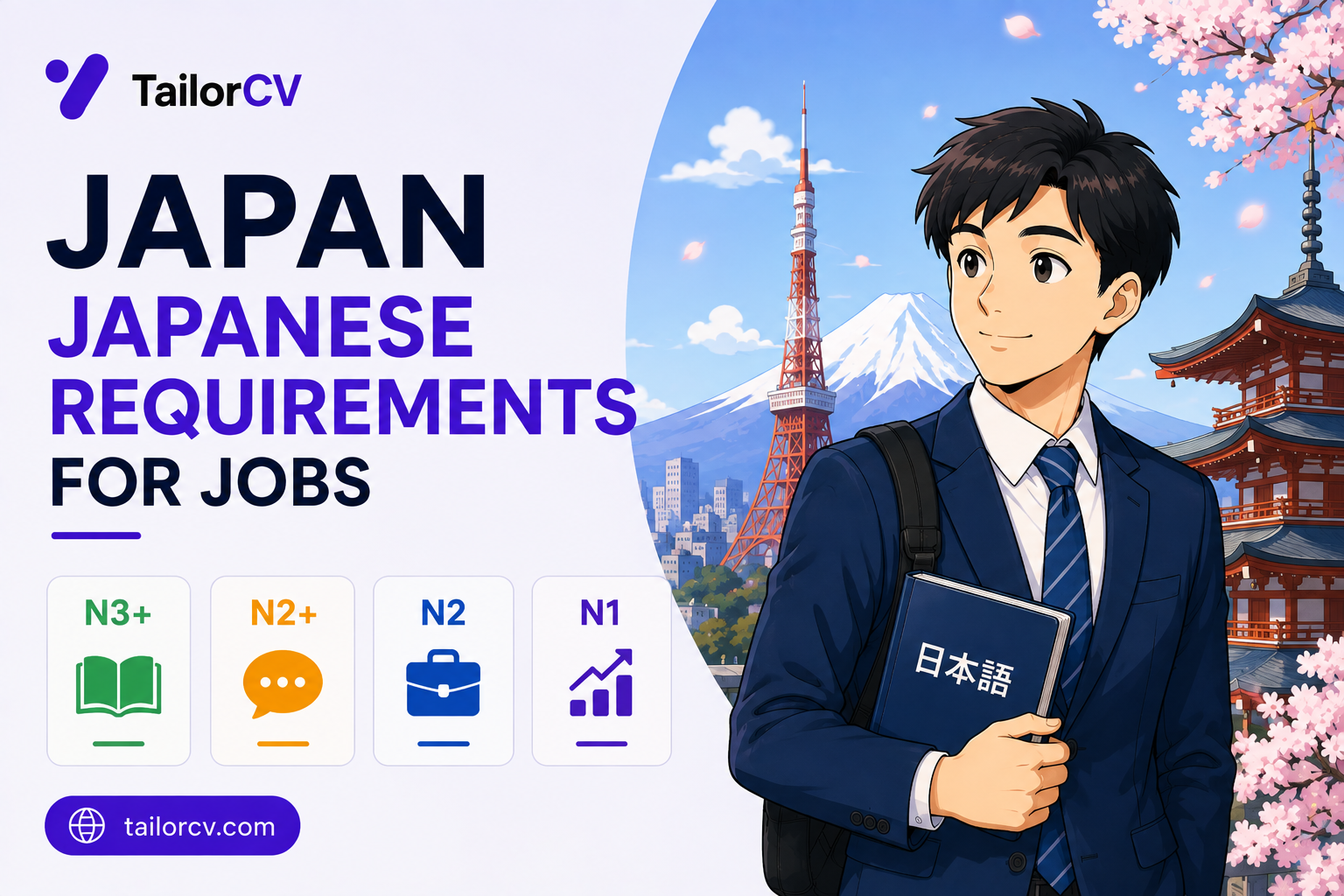
Language expectations vary as they do everywhere — traditional companies generally conduct these in Japanese, while English-operating employers do not.
Making it count
Treat the short programmes as research. You are there to find out what the company is actually like, which is genuinely valuable information you cannot get from a brochure.
Ask real questions. What does a normal week look like, what surprised you in your first year, what is difficult about this work. People answer honestly and it is what you came for.
Be present and engaged. Assessment is happening informally throughout, and the impression you leave carries into the main round.
Follow up afterwards with the people you met, referencing something specific. The outreach approach applies, and in a system built on relationship-building it matters more than usual.
Record what you learned while it is fresh, because you will be answering "why this company" months later and the specific detail from a visit is exactly what makes that answer credible.
Why an internship matters so much here specifically
An internship resolves two genuine doubts an employer has about an unfamiliar foreign candidate, whether you can genuinely do the work, and whether the practical logistics of employing you, including the work visa process, are manageable, exactly the same two doubts an internship resolves for international students in any market.
Some internship programmes at large employers are genuinely connected to the broader shinsotsu hiring pipeline, worth understanding whether a specific internship programme feeds into eventual graduate hiring, since this materially affects how strategically important a specific application is.
Short-term internship programmes, sometimes just a few days, are common alongside longer summer placements, this differs somewhat from the longer internship convention in some other countries, worth understanding the specific format and expectations of any programme you apply to.
Applying as an international student specifically
Language ability genuinely affects which internship programmes are realistically accessible, exactly the same consideration that applies to full-time roles, worth being honest about your current level when selecting which programmes to target.
Your university's international office or career centre may maintain specific relationships with employers seeking international student interns, worth checking directly, this can be a genuinely useful and less contested channel than a fully open application.
Making the most of a short-format internship
Where a programme is genuinely brief, a few days rather than a full summer, prepare thoroughly in advance so you can contribute meaningfully within the limited time available, research the specific company beforehand rather than arriving to learn about it from scratch during the programme itself.
Follow up genuinely afterward with anyone you connected with during the programme, exactly the same follow-up discipline that converts a good conversation into a lasting professional relationship anywhere, a brief internship can still produce a genuinely useful ongoing contact if handled well afterward.
Following up properly after the programme ends
Send a genuine, specific thank-you message to your supervisor and any colleagues who were particularly helpful shortly after the programme concludes, referencing something specific from your time there rather than a generic message, this is well received and helps the relationship genuinely continue beyond the internship itself.
Ask directly whether staying in touch would be welcome, and whether there might be future opportunities, even where immediate conversion is not available, this keeps a door open that a silent departure would close.
Tip: Read the posting to tell which kind of internship it is. A single date and language about 会社理解 (company understanding) means an information session; specific deliverables and a project scope mean real work experience.
Common Mistakes
- Expecting Western-length internships. Many are days rather than months.
- Dismissing short programmes as pointless. They are the relationship-building stage of the system.
- Applying too late. Applications open well before the summer, following the conventional calendar.
- Not checking status permissions. Paid work on a student status generally requires permission.
- Treating it as work experience only. Treating it as work experience only the information and the relationship are the actual value.
- Not following up afterwards. Not following up afterwards the step that converts a visit into a relationship.
Related Guides
Keep building on this with the related guides in this series:
- English-Speaking Jobs in Japan - Where They Actually Are
- Group Discussions and Aptitude Tests in Japanese Recruiting
- Japanese Language Requirements for Jobs in Japan
- Teaching in Japan - The JET Programme and the Alternatives
- JLPT N2 and N1 - What They Actually Mean for Employment in Japan
- Shūkatsu - The Japanese Job Hunting Timeline
You can also check your resume's ATS score for free, generate a tailored cover letter, or build a portfolio website in minutes.
Frequently Asked Questions
Do internships in Japan lead to full-time offers?
At some employers, particularly where the programme is genuinely connected to the broader graduate hiring pipeline, yes, worth understanding this connection for any specific programme you apply to.
Are internships in Japan the same length as in other countries?
Not always, short-term programmes of just a few days are common alongside longer summer placements, worth understanding the specific format before applying.
Do I need strong Japanese to intern in Japan?
Depends on the specific employer and programme, some are more accessible to international students with limited Japanese, worth researching specific programmes directly.
Where should I look for internship opportunities?
Your university's international office or career centre, which may maintain specific employer relationships, alongside direct research of target companies' own internship programmes.
How long are Japanese internships?
Frequently very short — a day to two weeks is common at traditional employers. Longer programmes exist at foreign-affiliated companies, technology firms and startups.
Are they paid?
Short programmes frequently are not; longer and more substantive ones more often are.
Do they lead to job offers?
They frequently feed into the main recruiting process rather than converting directly, and participation and the relationship built matter within the conventional cycle.
Can I do one from overseas?
Some programmes accept overseas applicants, and the practical obstacles of travel, accommodation and academic calendar mismatch are real.
Do I need Japanese?
For programmes at traditional Japanese companies, generally yes. English-operating employers and some technology companies run them in English.
What if I missed the internship stage entirely?
You can still apply in the main round, and technology and year-round employers are much less affected by having missed it.
Find out where a fresher resume stands
Score yours against a real posting - no account, no cost.
Drop your resume here or choose a file
PDF only. Max 2 MB.
We never share your data or use it to train AI models.

Was this guide useful?
Be the first to rate it.