
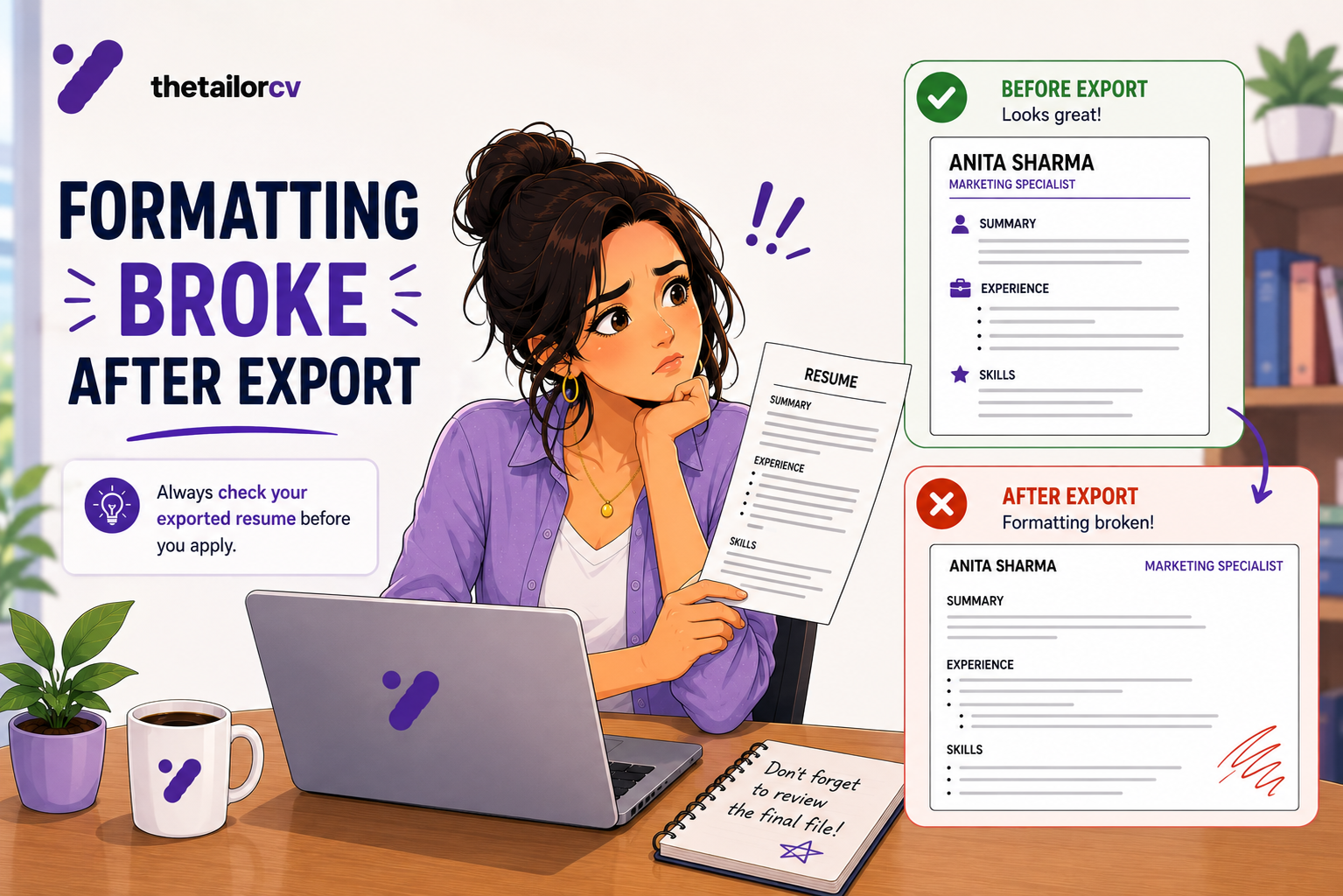
Your Resume Looked Fine Until You Exported It. Here's What Broke
Bullets turning into dashes, fonts substituting, spacing collapsing, links dying - why export breaks resumes and how to check the file you actually send.
Actionable guides to improve ATS score, resume quality, and job search outcomes.
Bullets turning into dashes, fonts substituting, spacing collapsing, links dying - why export breaks resumes and how to check the file you actually send.
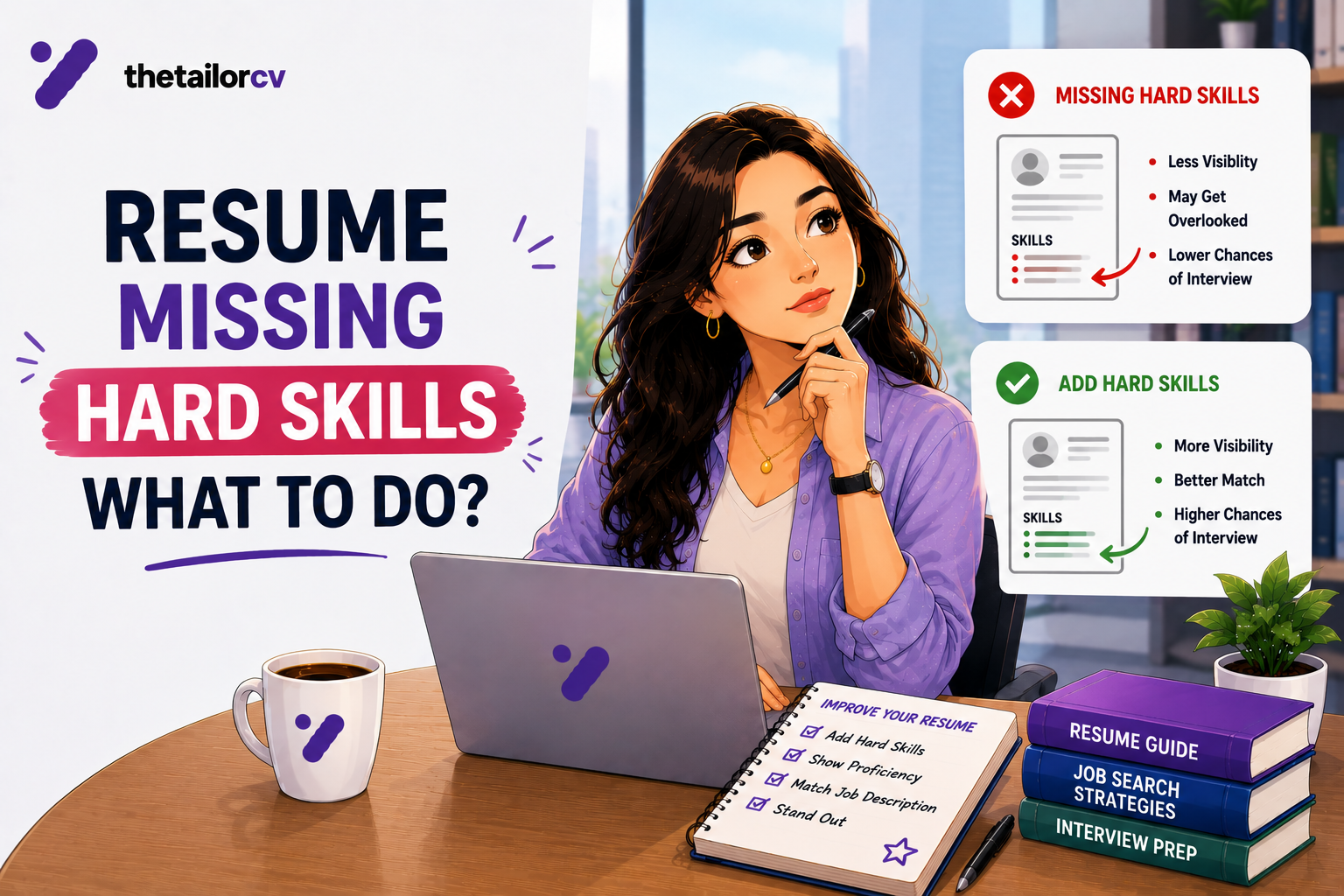
A missing hard skill on a scan means one of two things - you have it and didn't say so, or you genuinely don't. Here is how to tell which, and what to do for each.
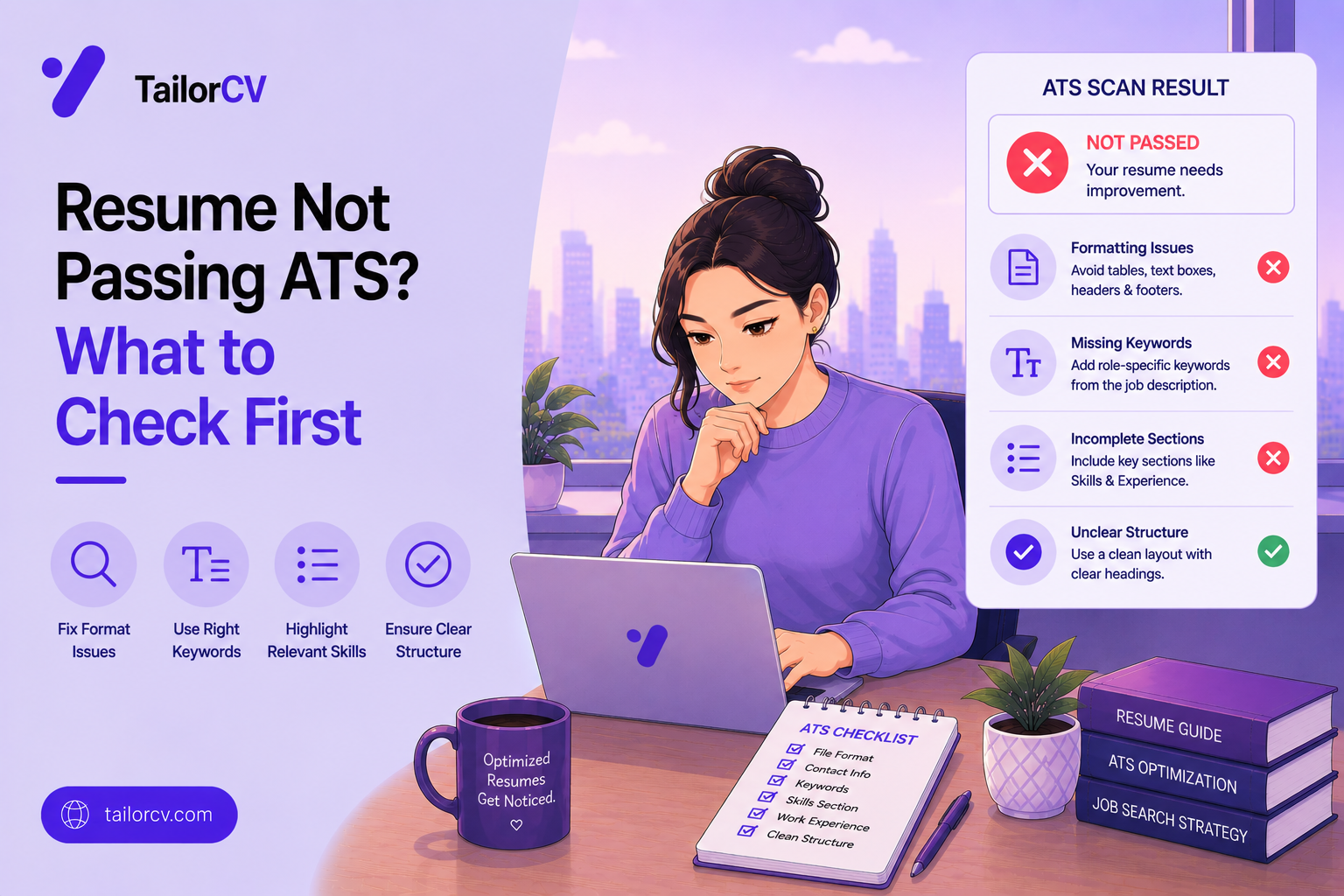
A diagnostic order for a resume that keeps getting filtered - what to check first, what almost never matters, and how to confirm each fix actually worked.
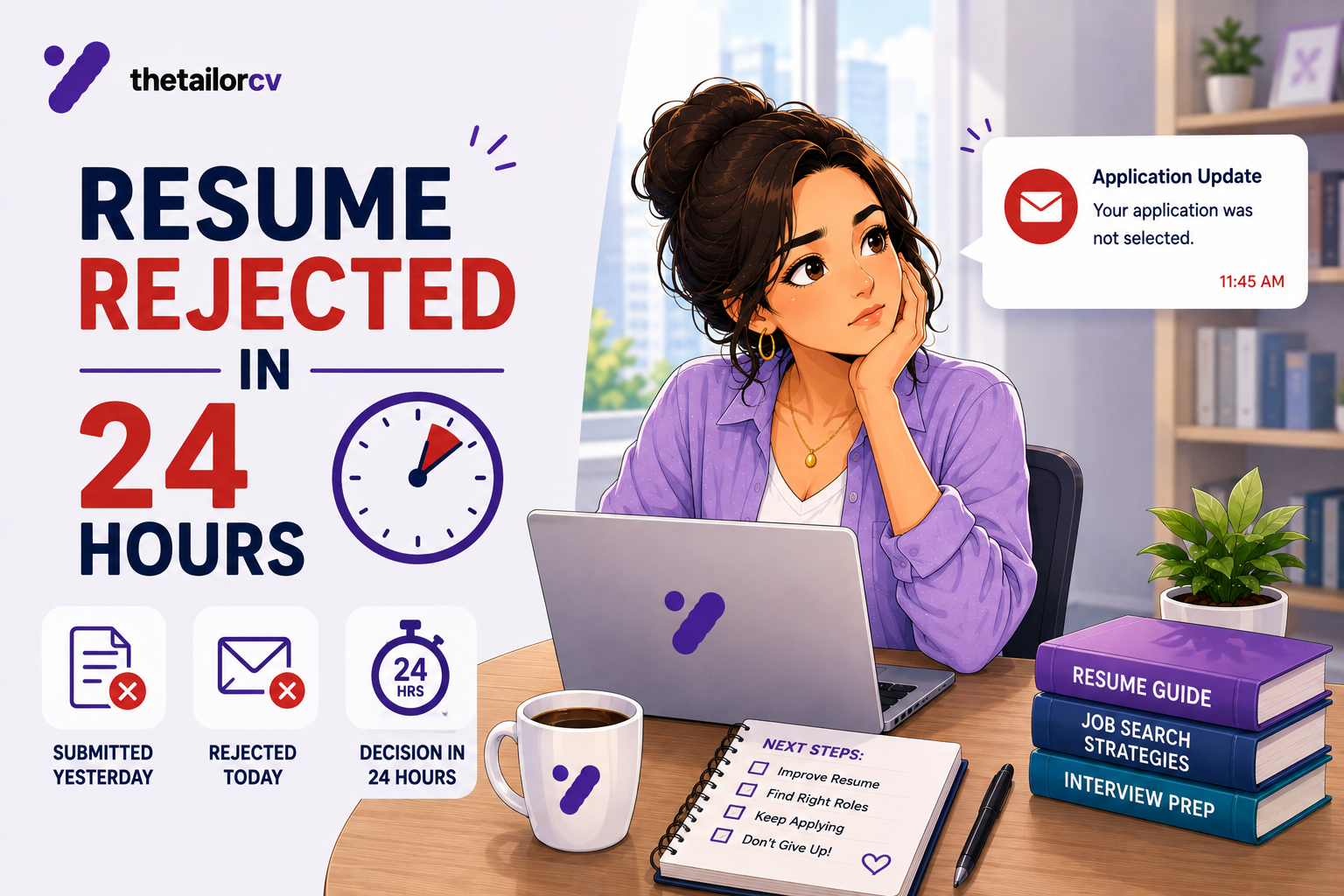
A rejection that arrives the same day usually means an automated filter, not a human decision. Here is how to tell which one you hit and what to change.
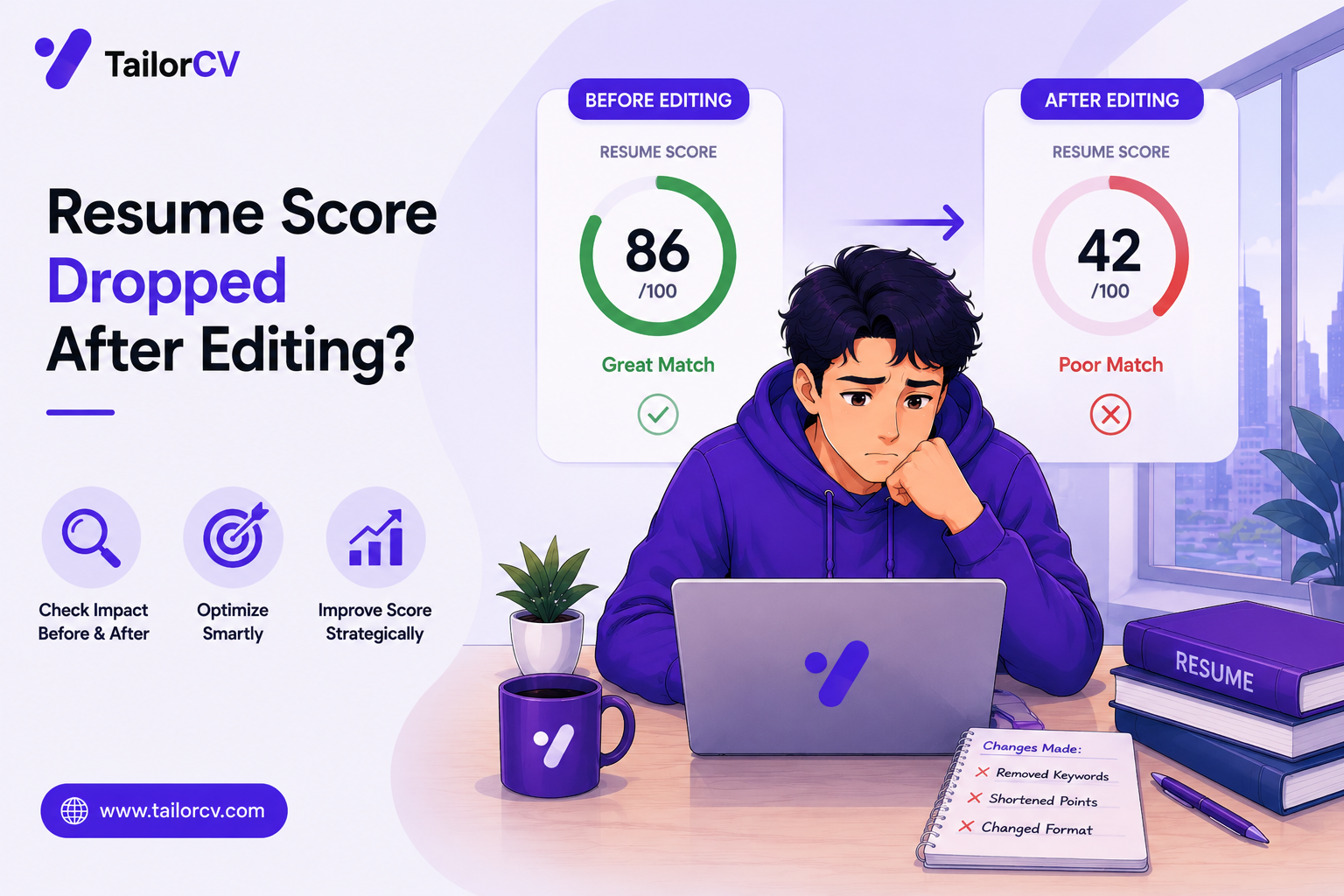
A falling score after an edit is not random. Here are the specific changes that lower a match score and how to find which one you made.
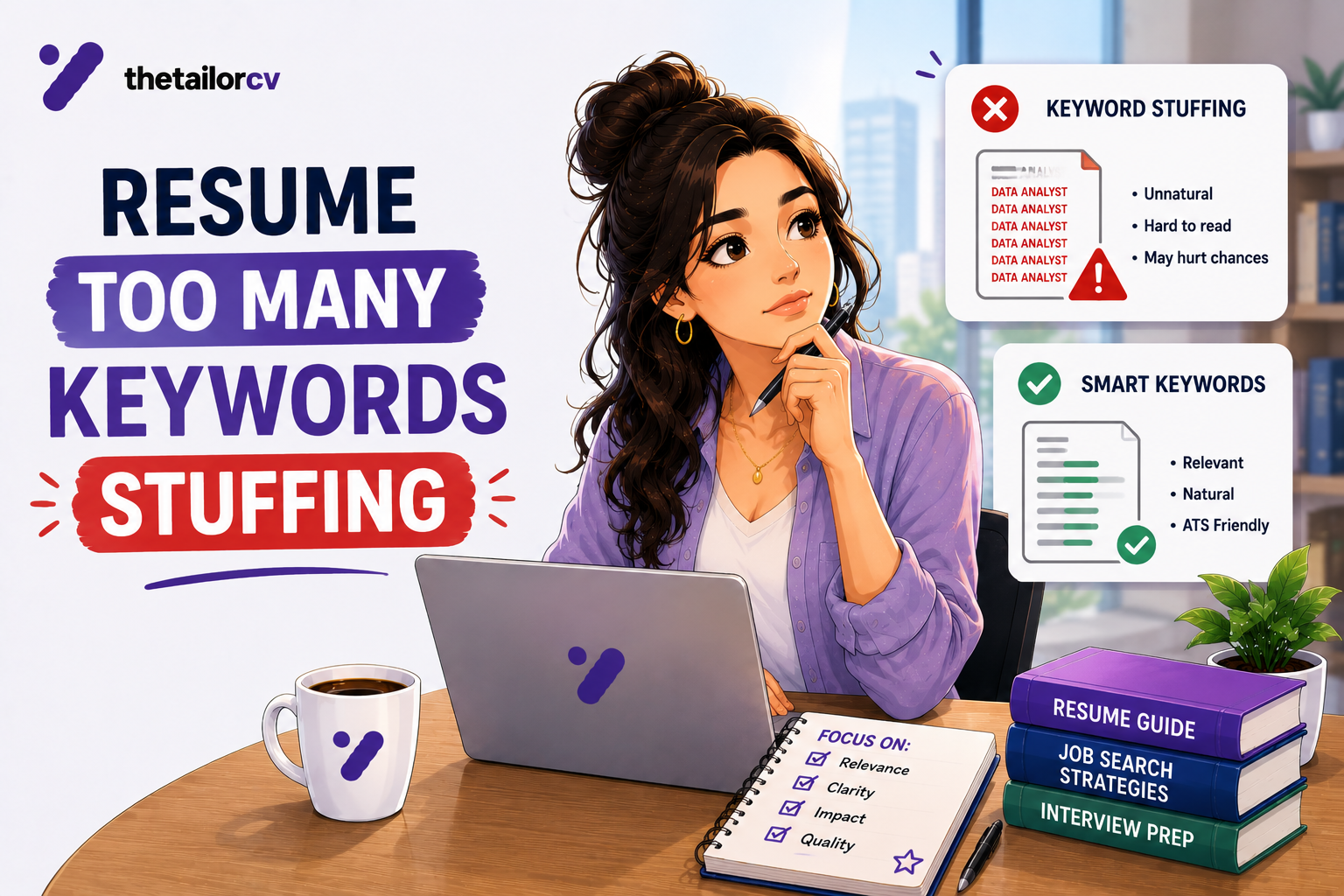
The line between good keyword matching and stuffing that hurts you - what stuffing actually looks like, why it backfires, and how to fix a resume that has crossed it.
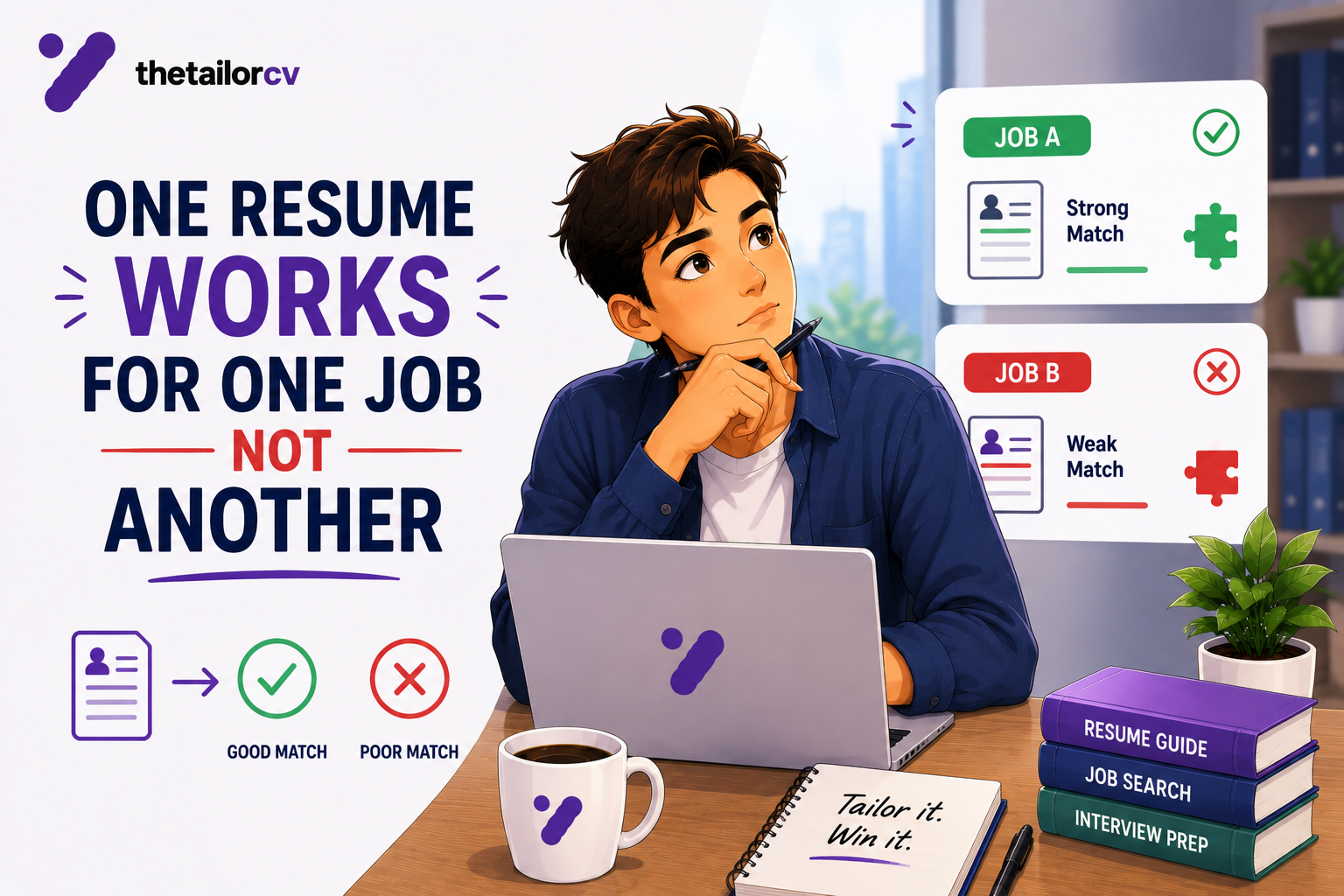
Two postings for a similar-sounding role can score wildly differently against the same resume. Here is what actually causes the gap and when it means something.
One resume sent everywhere matches every posting partially and none of them well. Here is what that costs, and the fastest way to fix it without rewriting from scratch.

A 70% match is the most common score and the most ambiguous. Here is the three-question test that tells you whether to apply now, fix first, or skip the role.

A 70% match means something different in software engineering than in healthcare or skilled trades. Here is how requirement density varies by field and how to calibrate your expectations.
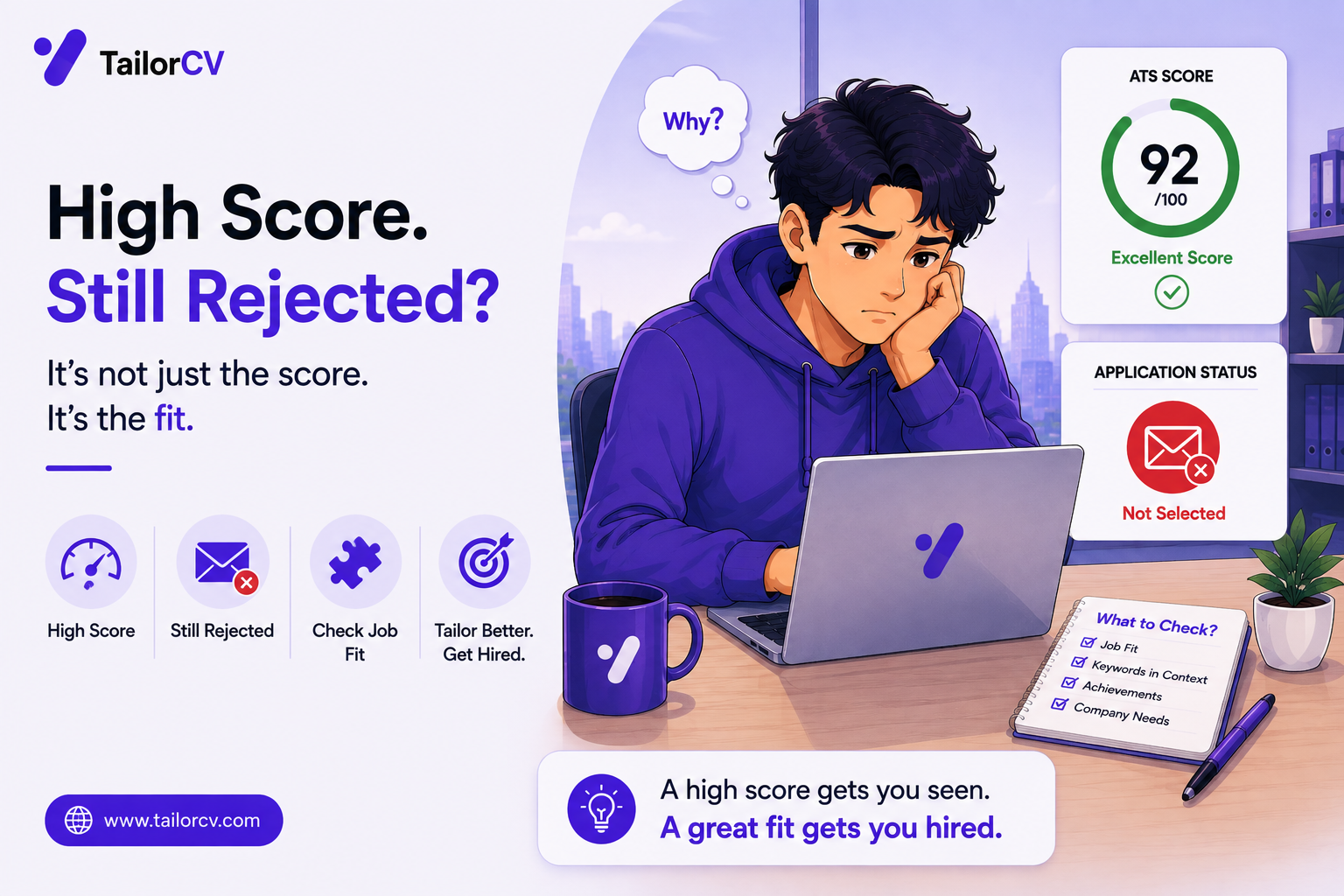
A strong ATS match gets you past the first filter, not into the interview. Here is what happens after the score, and what to fix when the number is good but the outcome is not.
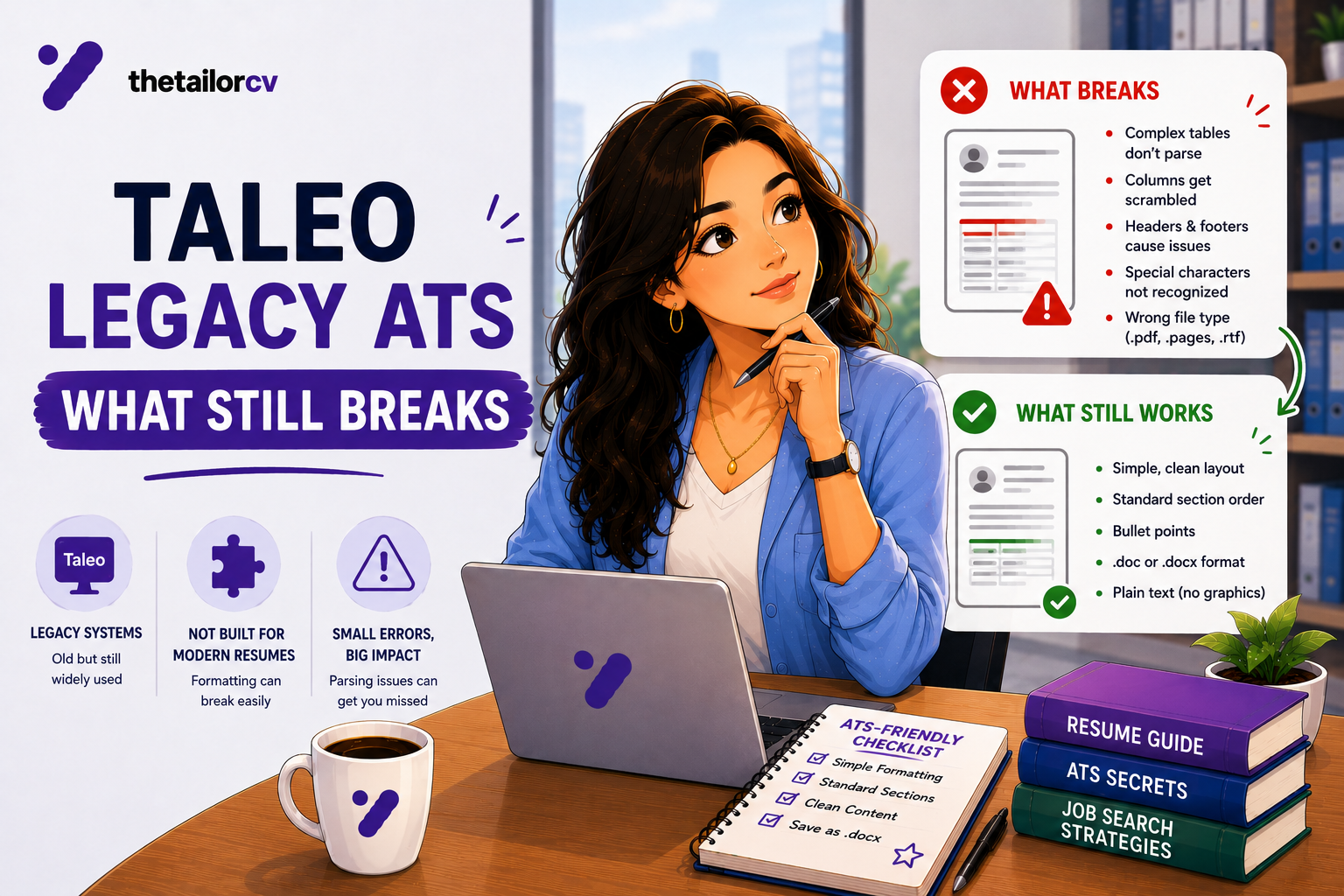
Taleo is one of the oldest applicant tracking systems still in wide use, with parsing logic that predates modern resume design trends. Here is what specifically breaks on it.

Two postings with an identical job title can require genuinely different resumes. Here is how to decide when one version is enough and when maintaining two is worth the effort.

What a match score actually measures, what counts as good, why the number alone can mislead, and how to decide whether to apply or fix your resume first.

A scan showing 12 missing skills does not mean 12 problems. Here is how to rank them, which ones to fix today, and which to ignore entirely.

Run the same resume through two scanners and get two different numbers. Here is why that happens, which differences matter, and how to actually use a score.
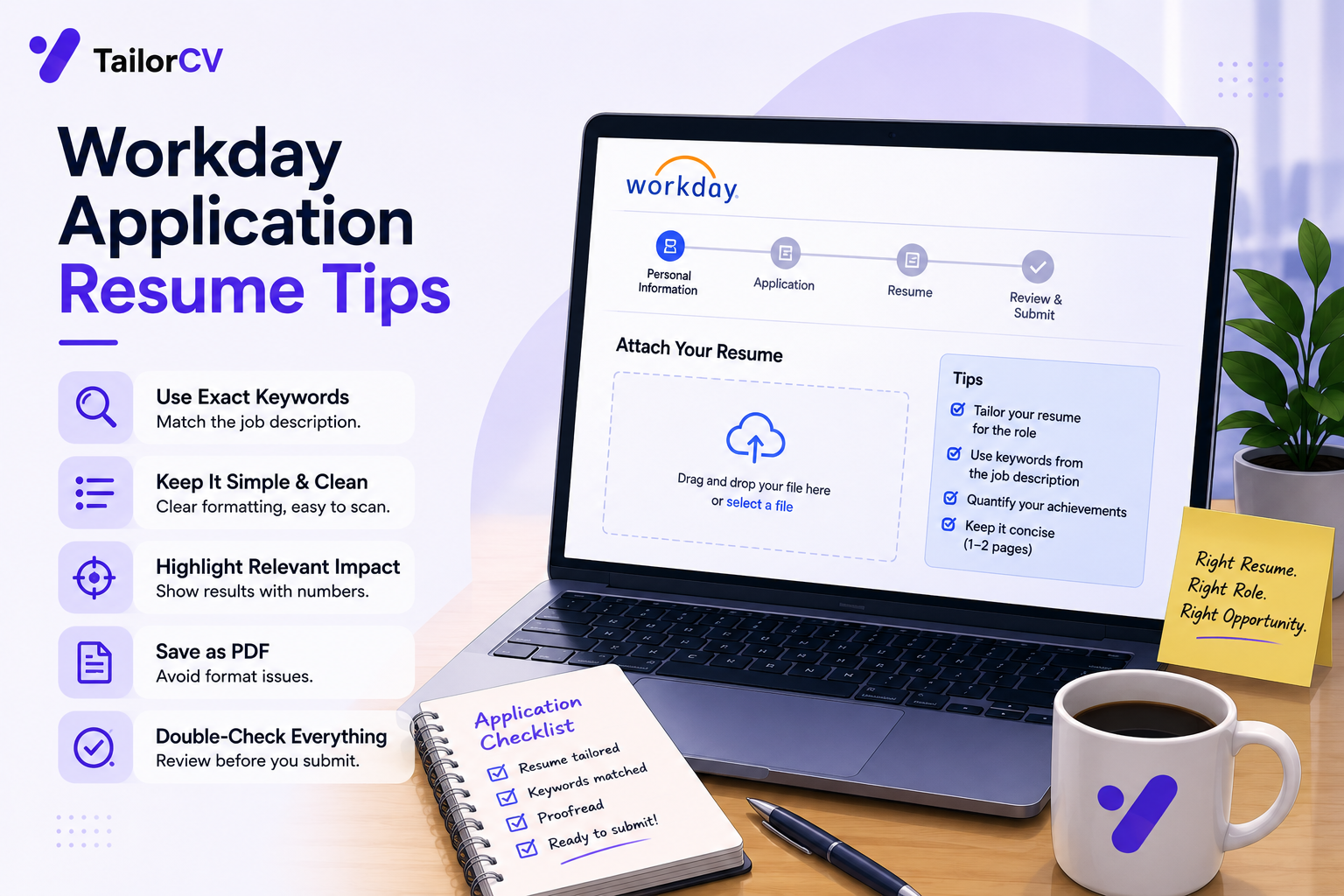
Workday parses resumes differently from most other ATS platforms, and its own field-by-field autofill can silently overwrite good data. Here is what to check before submitting.
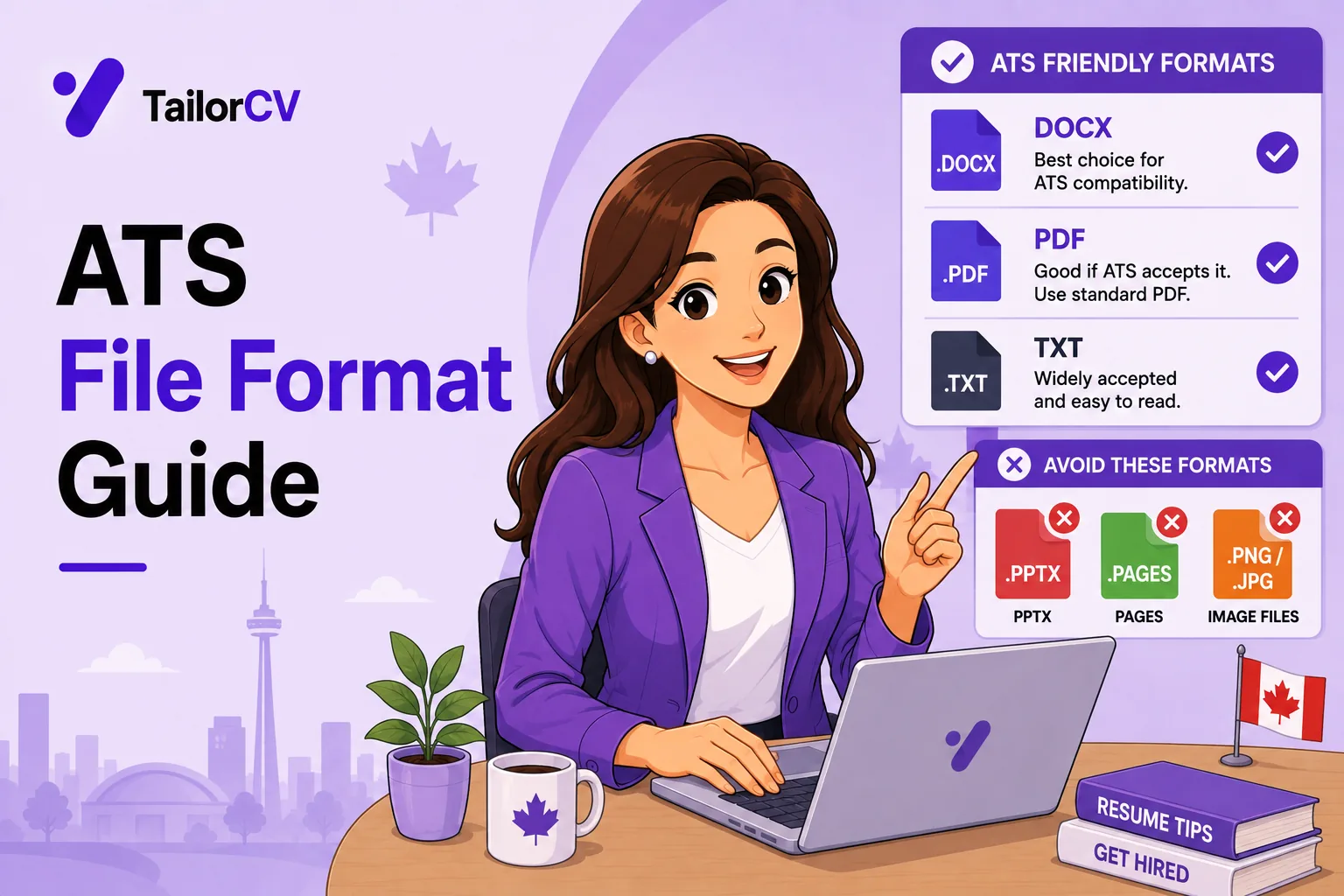
Which file format to submit, why image-based PDFs fail completely, when agencies want Word, and the one test that tells you whether your resume is readable at all.
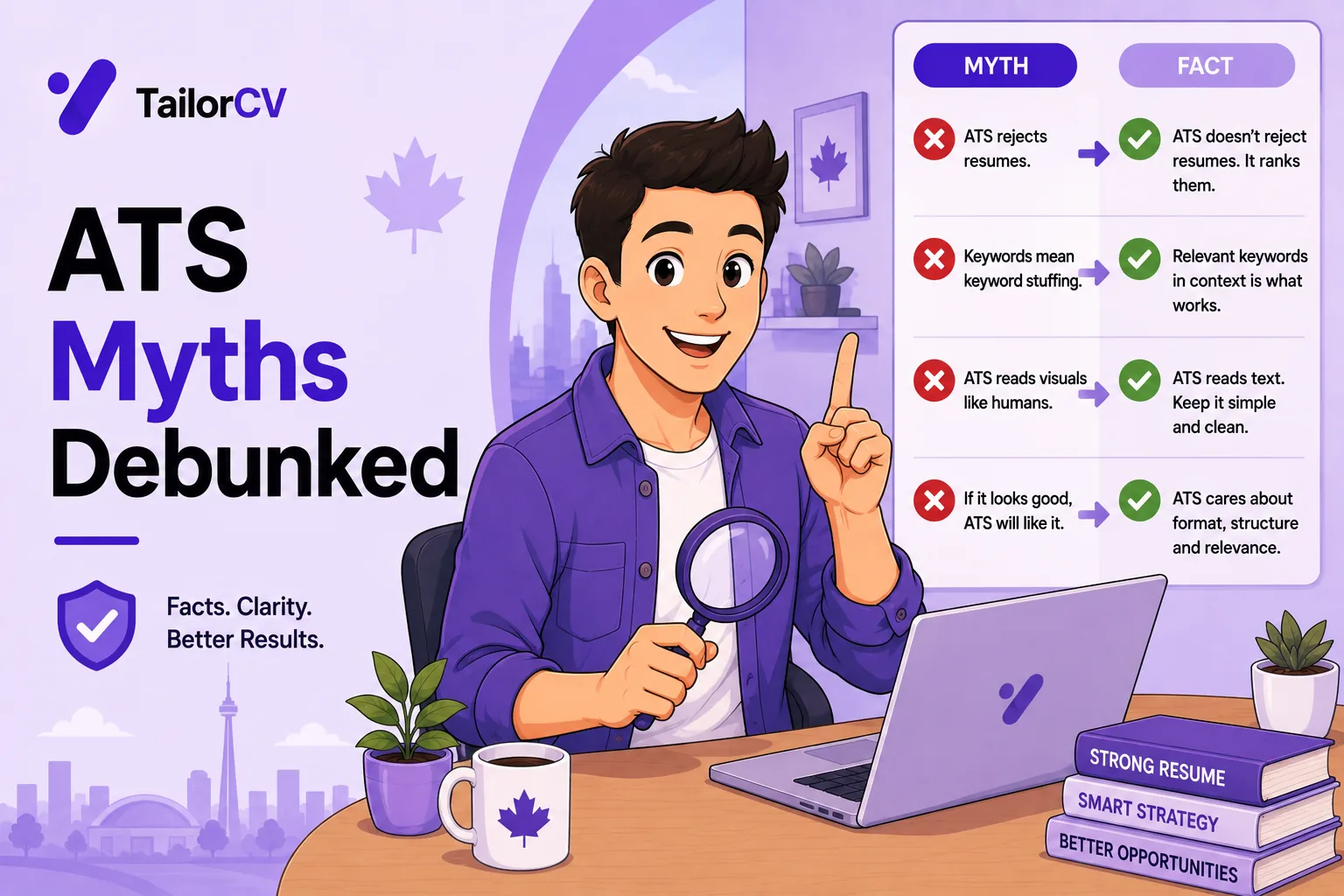
Most ATS advice online is wrong or a decade out of date. What these systems really do, which "tricks" are actively harmful, and what genuinely affects whether your resume is read.
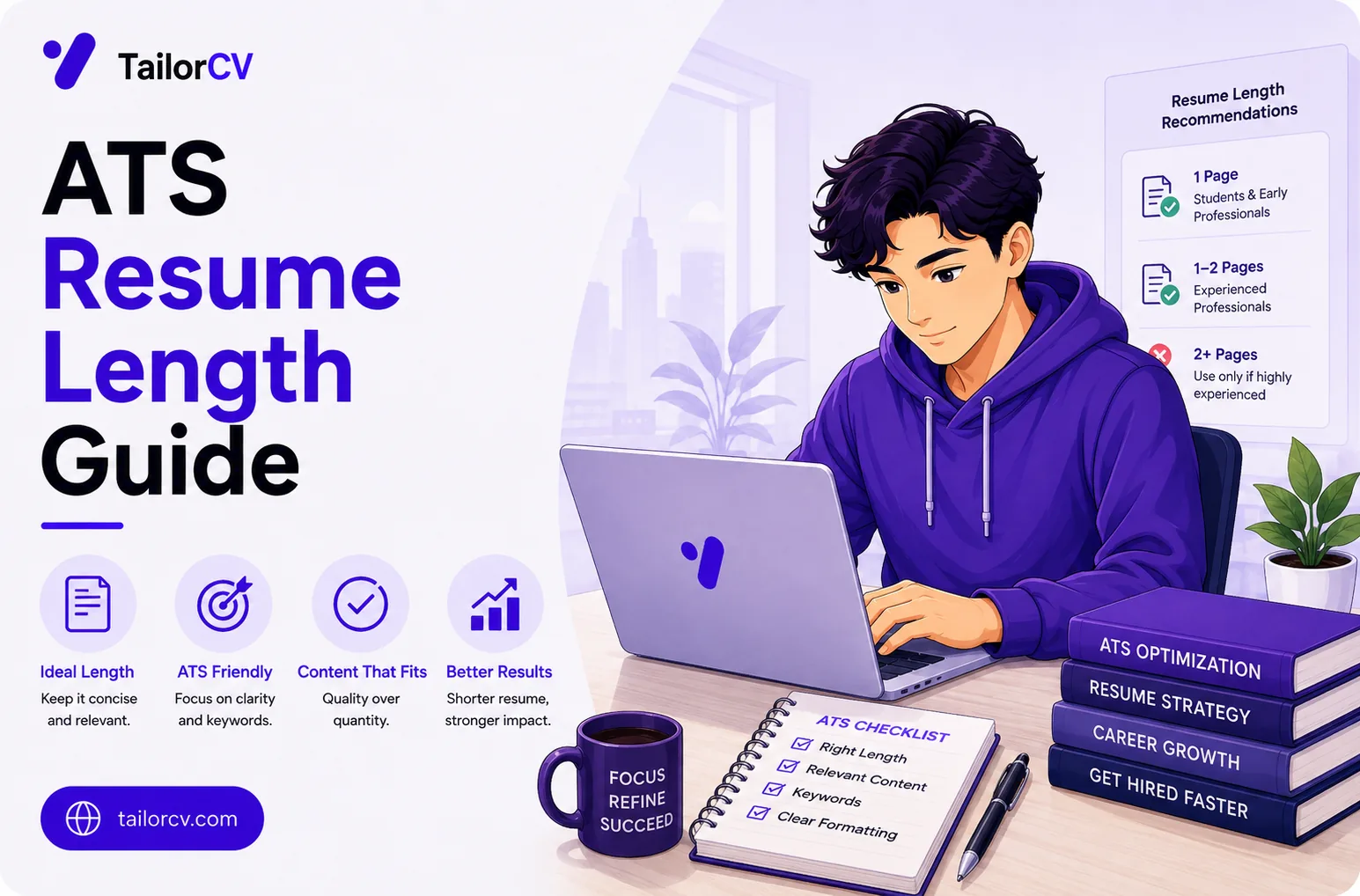
The one-page rule is American convention, not an ATS requirement. What length parsers handle, what different markets expect, and how to cut without losing evidence.