SS
SS

Key Takeaways
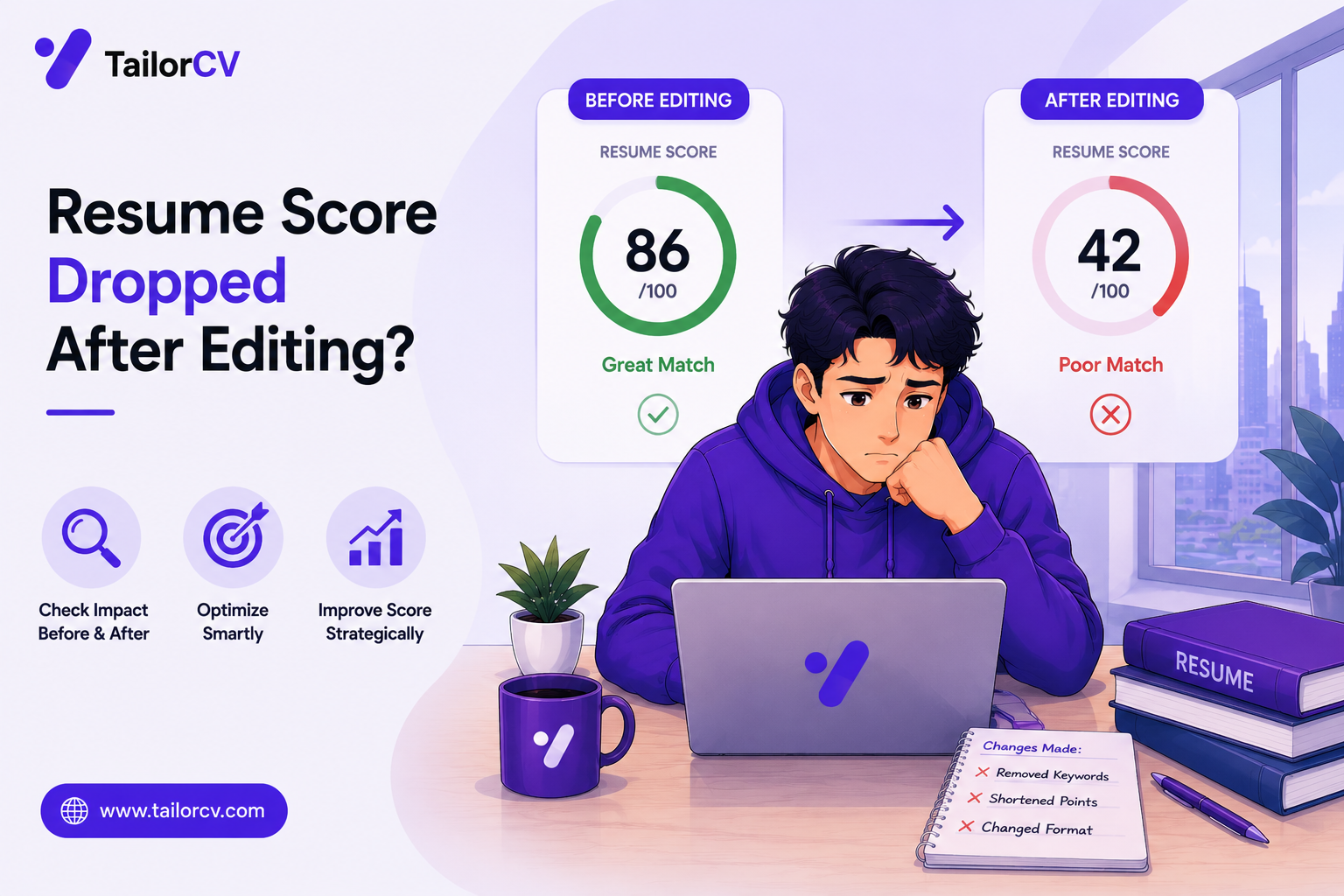
- 75%+ is a strong match. 60-75% is worth applying with a quick fix. Below 50% usually means the wrong role, not a bad resume.
- The number matters less than which requirements are missing. Two 65% scores can mean completely different things.
- A perfect score is not the goal and is often a warning sign that you have stuffed keywords.
- Scores are relative to one posting. The same resume will score differently on the next job, and that is correct behaviour.
- Missing a required item at 80% is worse than missing three preferred items at 60%.
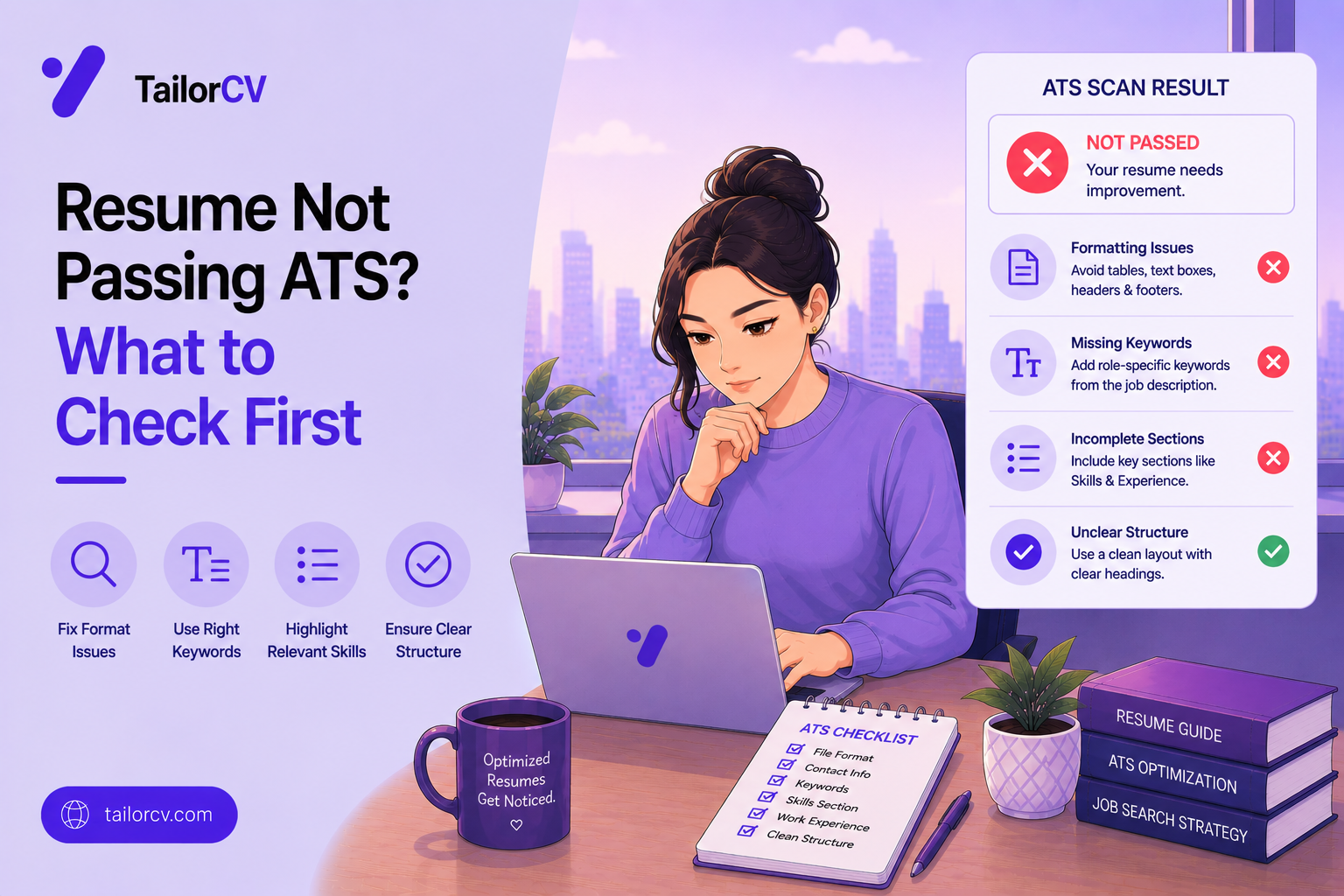
If you have just run a scan and are looking at a percentage, the useful question is not "is this good" but "what is this number made of." Here is how to read it.
What the Score Actually Measures
A match score answers one narrow question: how much of what this posting asked for can be evidenced in your resume?
It is not a measure of whether your resume is well-written, whether you are a strong candidate, or whether you would do the job well. It is a coverage measurement against one specific requisition. Our ATS score vs resume score explainer covers why those are different numbers and why they disagree.
That framing matters, because it tells you what a low score does and does not mean.
The Practical Bands
85-100% — Very strong. Apply. If you are consistently scoring this high, check you are not stuffing keywords, because genuine 90%+ matches are uncommon.
75-85% — Strong. Apply. You evidence the core requirements. Spend ten minutes on any missing required item, then send it.
60-75% — Worth fixing first. This is the most common band and the most improvable. Usually a handful of requirements you have but did not state in the posting's language. Twenty minutes of tailoring often moves this to 80%+.
50-60% — Check the role fit. Sometimes fixable, sometimes a signal that the posting wants a different profile. Read the missing list before deciding.
Below 50% — Usually the wrong role. Not always, but at this level the gap is typically substantive: wrong seniority, wrong specialisation, wrong industry. Rewording will not close it.
These are guidance, not thresholds employers use. Different systems score differently, and no employer publishes their cutoff.
Why the Number Alone Misleads
Two candidates both score 65% on the same posting.
Candidate A is missing: Tableau, stakeholder reporting, and "experience in retail." They have done all three — their resume just describes them differently. Twenty minutes of rewording takes them to 85%.
Candidate B is missing: a required professional licence, five years of experience they do not have, and a programming language they have never used. No amount of editing changes that.
Same score, completely different situations. Always read the missing list, not just the number. The list is the actionable part; the percentage is a summary.
Required vs Preferred Changes Everything
Most postings mix hard requirements with wish-list items, and scoring often treats them more evenly than employers do.
Missing one required item at 80% is frequently worse than missing four preferred items at 62%. A required licence, a required degree, a required years-of-experience threshold — these are filters. "Familiarity with Figma a plus" is not.
Our guide to required vs preferred qualifications covers how to tell them apart in real postings, which is a genuinely useful reading skill.
Why Your Score Changes Between Jobs
This surprises people. The same resume scores 82% on one posting and 54% on the next.
That is correct behaviour, not a bug. The score is measured against each posting's specific requirements, and postings differ — even for identical job titles. It is exactly the mechanism described in why one resume cannot serve every application.
If your score swings widely across similar roles, that is evidence you should be tailoring rather than sending one version everywhere.
Do Not Chase 100%
A perfect score is usually a sign of one of two things:
- The posting is unusually vague, so there is little to miss.
- You have stuffed the resume with the posting's language beyond what your experience supports.
The second is actively harmful. It reads badly to the human who eventually sees it, and it produces interview questions you cannot answer. The honest ceiling for most people on most postings is 80-90%, and that is fine.
The rule that matters: never add a skill you could not discuss for two minutes in an interview. That constraint is built into our tailoring, which rewrites bullets only where your experience supports the claim.
Should You Apply at 65%?
Usually yes — after checking two things.
One: are any of the missing items required? If yes and you genuinely lack them, your odds are poor regardless of the score.
Two: are the missing items things you actually have? If yes, fix them first. It is twenty minutes and it materially changes your ranking.
Beyond that, applying at 65% with a real but imperfect match is reasonable. Job requirements are frequently written aspirationally, and candidates who meet every listed item are rare. What you should not do is apply at 65% repeatedly without ever reading why — that is the pattern behind 100 applications and no interviews.
How to Move a Score, in Order
- Fix parsing first. If extraction is broken, the score is meaningless. See ATS formatting mistakes.
- Add what you have but did not say. Usually the largest and fastest gain.
- Rewrite the summary to name the target role and its two or three central requirements.
- Reorder the skills section so the posting's required items appear first.
- Re-scan. Confirm the specific item cleared, not just that the number moved.
Steps 2 and 3 typically account for most of the improvement. How to tailor a resume in 5 minutes covers the mechanics.
Frequently Asked Questions
What score do employers actually require? Employers do not publish cutoffs and most do not use a single hard threshold. Treat scores as relative guidance, not a pass mark.
Why do two tools give me different scores? Different scoring models, different weightings, different keyword extraction. Compare a tool against itself over time rather than across tools.
Does a high score guarantee an interview? No. It improves ranking in the first pass. Everything after that is human judgement and competition.
Is 100% possible? Sometimes, on vague postings. It is not a target worth pursuing and often indicates stuffing.
Should I re-scan after every edit? Yes, if the edit was meant to address a specific requirement. It is the only way to know whether it worked.
Check What Your Score Is Made Of
If you are looking at a number and unsure what to do with it, the answer is in the missing-requirements list rather than the percentage.
Run your resume against the posting and sort the missing items into "I have this but did not say it" and "I genuinely lack this." The first pile is your next twenty minutes. The second pile tells you whether this is the right role.
Free, about a minute. See also why is my ATS score low and our ATS score guide.
What is your resume scoring right now?
Scan it against a job description and get your ATS match score in about a minute.
Drop your resume here or choose a file
PDF only. Max 2 MB.
We never share your data or use it to train AI models.

Templates that keep this structure intact
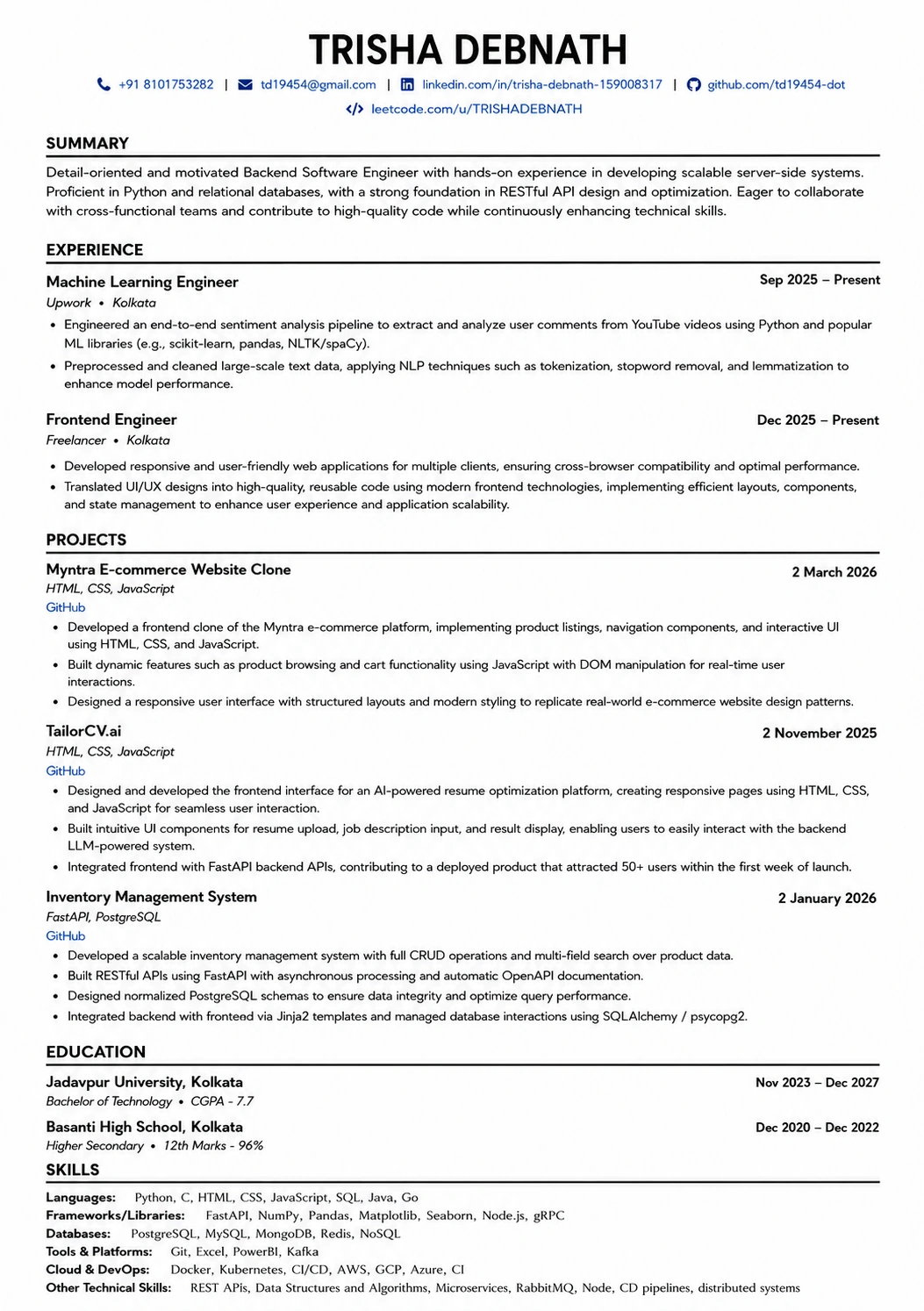
This template is ATS-tested — start from it and the formatting rules in this guide are already handled.
Was this guide useful?
Be the first to rate it.