 SS
SS
Key Takeaways
- Two postings with the same title routinely ask for genuinely different things. The score is reflecting reality, not malfunctioning.
- Compare the actual requirement lists side by side before assuming your resume is inconsistent.
- The gap tells you which posting to prioritise and which to skip, rather than pointing at a resume flaw.
- If the gap is large and the roles are genuinely similar, check for a parsing or formatting difference between the two applications.
- One resume optimised for the average of many postings will always underperform a version aimed at each one specifically.
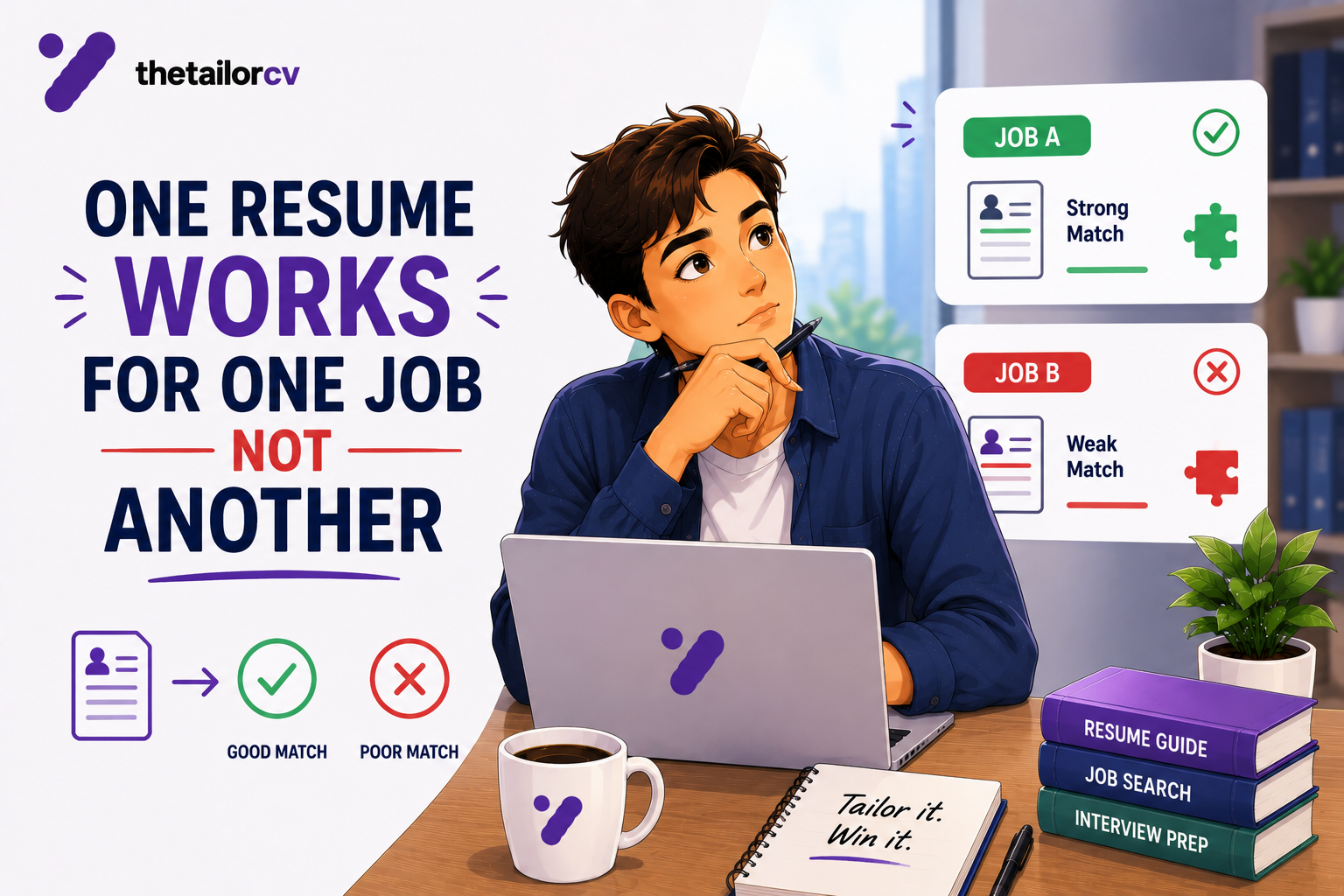
You applied to two jobs both titled "Product Manager." One scores 85%. The other scores 40%. Same resume, same you — so which score is right?
Both are right. Here is why they differ and what to do about it.
Job Titles Are Not the Job
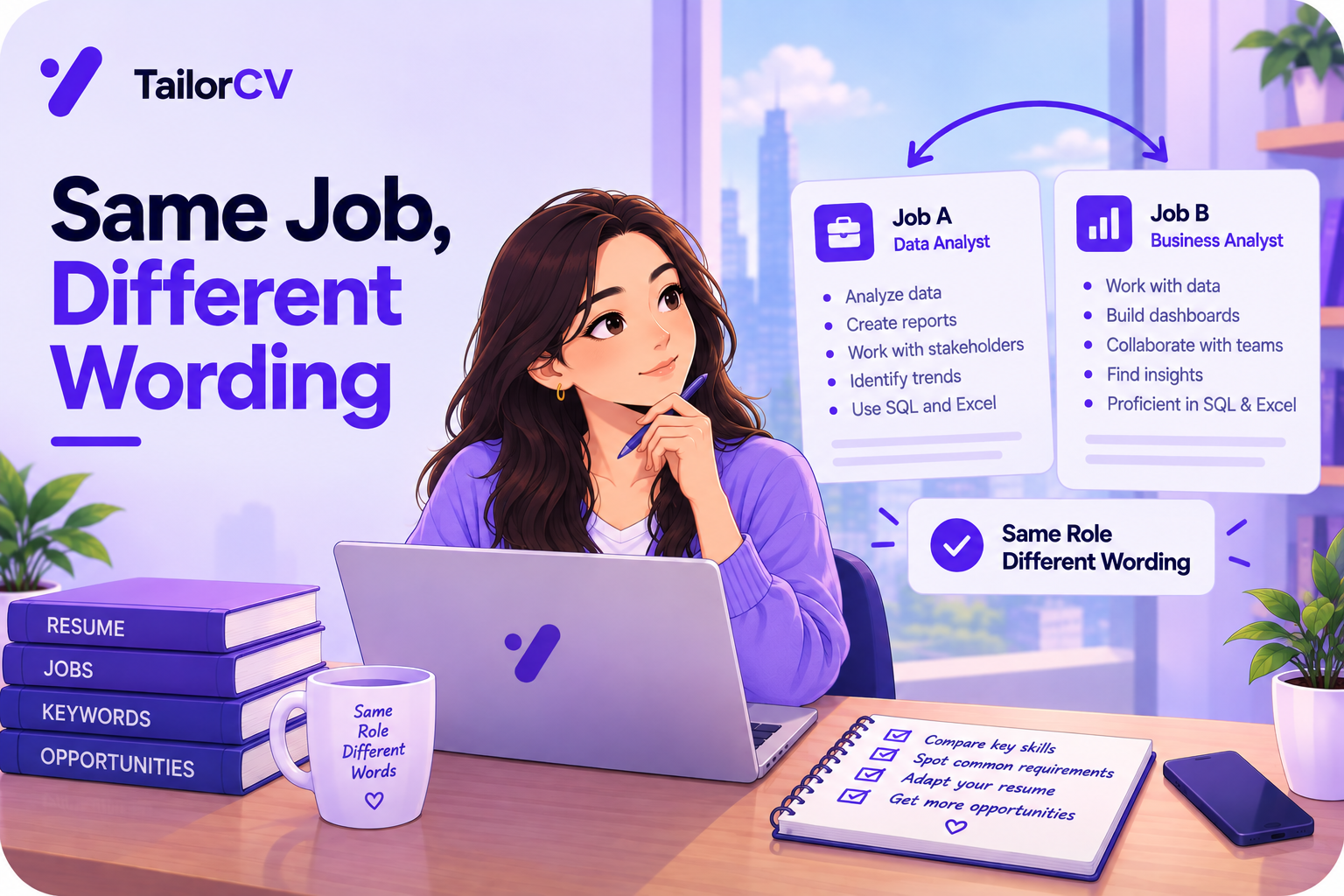
This is the core fact the gap is usually telling you. "Product Manager" at a 12-person startup and "Product Manager" at a 5,000-person enterprise are frequently different jobs wearing the same title — different scope, different stakeholders, different day-to-day work.
Read the two postings side by side, not just the titles:
Posting A might ask for: roadmap ownership, close founder collaboration, comfort with ambiguity, 0-to-1 product experience.
Posting B might ask for: cross-functional alignment across six teams, quarterly OKR processes, experience with enterprise procurement cycles, stakeholder management at scale.
A resume built around fast-moving startup experience matches A well and B poorly — correctly. The 40% is not a defect in your resume. It is an accurate reflection that your experience is not what Posting B is asking for.
Check the Actual Requirement Lists
Before concluding anything about the gap, pull up both scan results and compare what each posting listed as missing.
If the missing items on the low-scoring posting are things you genuinely do not have — a specific enterprise tool, a scale of team you have not managed, years of experience you have not accumulated — the score is doing its job correctly. This is useful information: it is telling you which of the two roles is the better use of your time.
If the missing items are things you do have but described differently, then you have found a real tailoring gap, not a role mismatch — and it is fixable in the same twenty minutes as any other. See which missing skills actually matter.
When It Is a Real Mismatch, Act on It
This is the useful outcome, even though it does not feel like one. A wide, genuine gap between two similar-titled roles is telling you something about where your experience actually fits.
Rather than trying to force both applications through with the same resume, it is more productive to:
- Prioritise the higher-matching posting. Spend your limited time there.
- Decide honestly about the lower one. If the gap reflects real, substantial missing experience, that application was always a long shot regardless of resume polish.
- Notice the pattern across future postings. If you consistently score lower on enterprise-scoped roles versus startup-scoped ones (or vice versa), that tells you which type of posting to prioritise searching for.
When It Should Not Be This Wide — Check Formatting
Occasionally a large gap between genuinely similar roles points at something mechanical rather than a real mismatch.
Check that both applications used the same file. It sounds obvious, but sending an older export to one application is a common, invisible cause — see resume formatting that broke after export.
Check the extraction on both. Run the resume through a scanner for each posting and look at what was actually extracted before looking at the score. If one extraction is clean and the other is garbled, you have found a parsing issue specific to how that file interacted with that scan, not a genuine skills gap.
If both extractions look identical and the roles genuinely differ in their requirements, trust the gap — it is real.
A Resume Optimised for the Average Underperforms Both
This is the broader lesson the gap points toward. If you try to write one resume that scores reasonably on both postings, you typically end up with something that scores worse on each than a version tailored to each individually would.
This is the same mechanism as why one resume cannot serve every application — a resume aimed at the average of many postings matches none of them as well as a resume aimed at one.
The practical answer is not to write a compromise resume. It is to keep two lightly different versions — one leaning startup/ambiguity language, one leaning enterprise/scale language — and send the one that matches the actual posting. My Resumes is built for keeping versions like this, and tailoring for two similar roles covers the workflow in more depth.
What Not to Conclude From a Score Gap
Do not conclude your resume is bad. A low score on one specific posting is not a verdict on your resume generally — it is specific to that posting's requirements.
Do not conclude the tool is unreliable. Scores that differ across genuinely different postings are the tool working correctly, not inconsistently.
Do not force a rewrite to chase parity. Trying to make both scores equal by adding language from Posting B into a resume aimed at Posting A usually just weakens the match on A without meaningfully helping B.
Frequently Asked Questions
Should both scores be similar if the job titles match? Not necessarily. Titles are a loose signal; the actual requirement lists are what matters, and they frequently diverge under an identical title.
Is a big gap a sign something is broken? Usually not — check the requirement lists first. It is broken only if the extraction itself looks wrong on one side.
Which score should I trust? Both, for what they measure: coverage of that specific posting's stated requirements. Neither is more "correct" than the other in general.
Should I make one resume that scores decently on both? Generally no — a compromise resume tends to underperform two targeted versions. Keep both and send the right one.
How do I know if the mismatch is fixable or real? Read the missing list. Things you have but did not state are fixable. Things you genuinely lack are the real answer, and worth respecting rather than fighting.
Compare the Two Postings Directly
The gap between two scores is information, not noise — but only once you have looked at what each posting actually asked for.
Scan your resume against both postings separately and read the missing-requirements list for each. Where the lists overlap, you have found things worth fixing once. Where they diverge sharply, you have found which role is the better fit for the experience you actually have.
Free, about a minute per scan. See also tailoring for two similar roles and what is a good ATS match score.
What is your resume scoring right now?
Scan it against a job description and get your ATS match score in about a minute.
Drop your resume here or choose a file
PDF only. Max 2 MB.
We never share your data or use it to train AI models.

Templates that keep this structure intact
This template is ATS-tested — start from it and the formatting rules in this guide are already handled.
Was this guide useful?
Be the first to rate it.