TD
TD
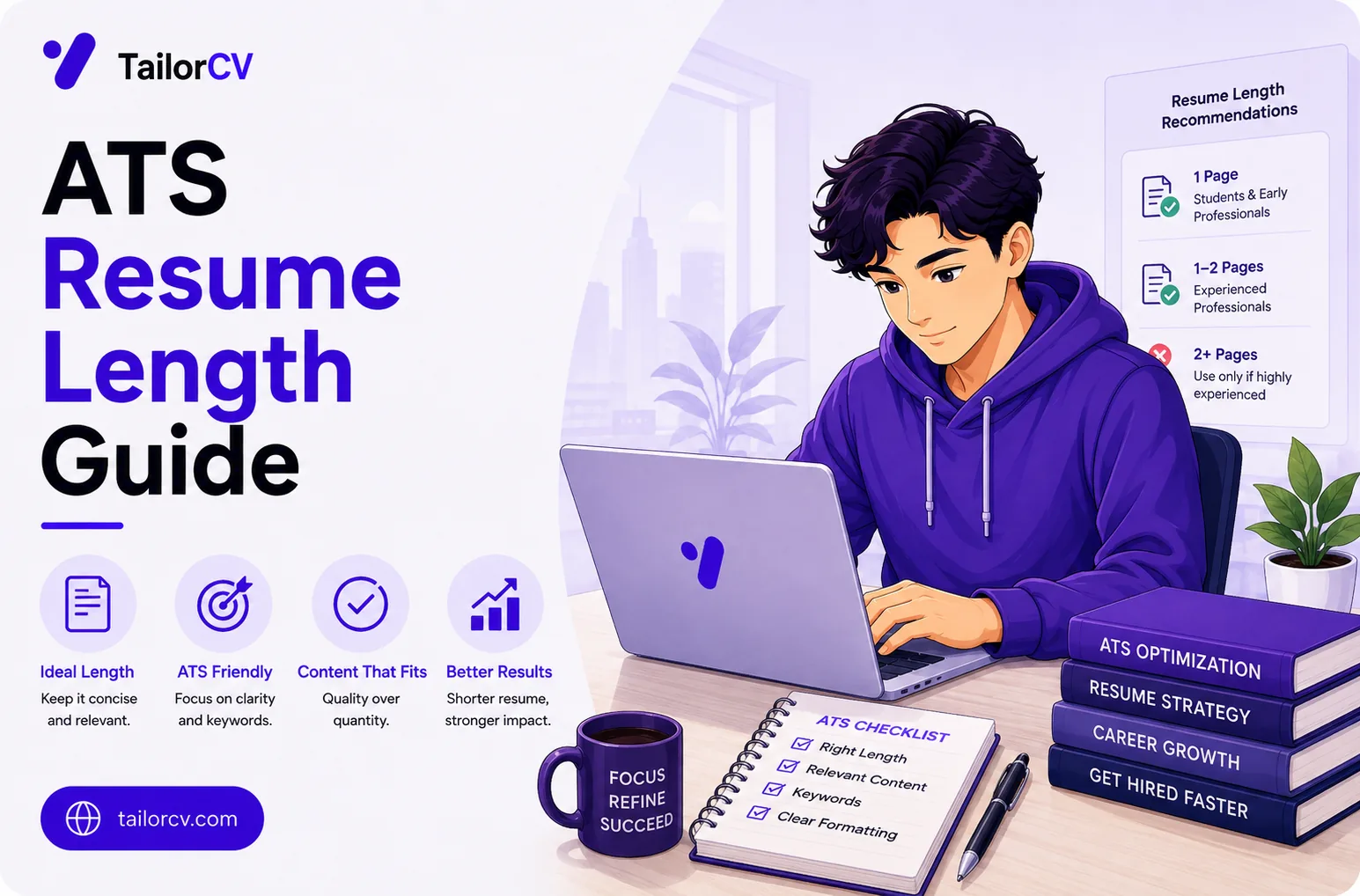
Key Takeaways
- Applicant tracking systems do not penalise length — the one-page rule is a human convention, not a technical one.
- Length expectations differ sharply by country: one page in the US, two in the UK, three to five for US federal roles.
- Two strong pages beat one page achieved by shrinking the font to 8pt.
- Cut old and irrelevant content before cutting the evidence that proves your claims.
- What matters far more than page count is whether the first third earns the rest being read.
Resume length generates more confident, contradictory advice than almost anything else in job searching. Much of it presents a local convention as a universal rule, and some of it invents a technical constraint that does not exist.
Parsers do not care how long your resume is. Humans do, and what they expect depends on where they are and what you are applying for.
This guide covers what is actually true.
Check how your resume parses at whatever length it is — the free ATS score checker.
Length by market, at a glance
| Market | Expected length | Notes |
|---|---|---|
| US, early career | 1 page | The strictest convention anywhere |
| US, 8+ years | 1–2 pages | Two is normal and unremarkable |
| US federal / USAJOBS | 3–5+ pages | Brevity gets you rated ineligible |
| UK, most roles | 2 pages | One page reads as thin from an experienced candidate |
| UK, graduate | 1–2 pages | Two is acceptable with placements and projects |
| Canada | 1–2 pages | Close to US convention |
| Japan (rirekisho) | Fixed form | Standard template, length not your choice |
| Japan (shokumu keirekisho) | 2–4 pages | Detail is expected |
| India, campus placement | 1 page | Two signals padding |
| India, experienced | 2 pages | Three is common but rarely helps |
| Germany / Netherlands | 2 pages | Often with a structured cover sheet |
| Academic CV | Unlimited | Full publication and grant lists |
| Consulting / banking | 1 page, strictly | Enforced convention regardless of seniority |
The single most common error in this whole area is not choosing the wrong number within a convention. It is applying one market's convention to another market's application.
The ATS does not care
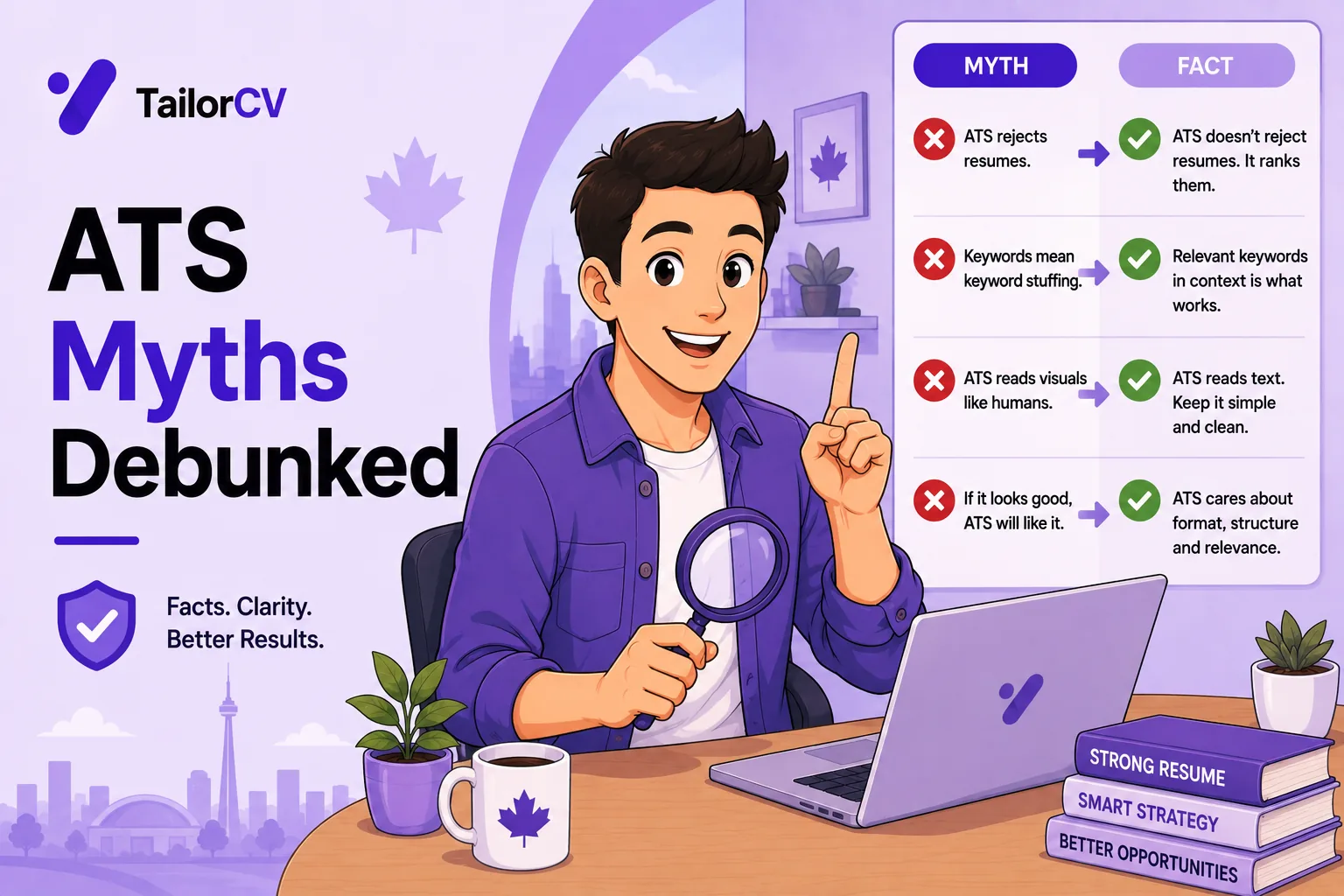
No mainstream applicant tracking system rejects or downranks a resume for being two pages. It parses the text it is given.
The length constraints that exist are human ones — a recruiter scanning quickly, or a hiring manager with forty applications.
So the question is not "what will the system accept" but "what will the reader expect, and what do I need to prove my claims".
The broader misconceptions are covered in ATS myths debunked.
Where the myth came from: early parsing systems did sometimes truncate long documents, and the advice hardened into a rule that outlived the technology. What persists is the human preference, which is real but market-specific.
What each market expects
United States. One page early career, up to two with substantial experience. The convention is stricter here than anywhere else, and a two-page resume from a candidate with three years of experience is genuinely noticed.
US federal roles. Three to five pages, sometimes more. Detail is required to evidence qualifying experience, and brevity gets you rated ineligible — see the US federal jobs and USAJOBS guide.
United Kingdom. Two pages is standard for most roles. A one-page CV from an experienced candidate reads as thin — see the UK CV format guide.
Canada. One to two pages, closer to US convention.
Japan. The shokumu keirekisho runs two to four pages by design, alongside a separate rirekisho — see the shokumu keirekisho guide.
India, campus placements. One page for freshers. Two signals padding — see how to get shortlisted for campus placement.
Academic CVs. As long as required, with full publication lists.
The practical rule: match the market you are applying into, not the market you read advice from.
Length by experience, within a convention
Once you know your market, seniority sets the number.
| Your situation | US | UK |
|---|---|---|
| Student, no internships | 1 page | 1 page |
| Graduate with placements | 1 page | 1–2 pages |
| 2–5 years | 1 page | 2 pages |
| 5–10 years | 1–2 pages | 2 pages |
| 10–20 years | 2 pages | 2 pages |
| 20+ years | 2 pages | 2–3 pages |
| Executive | 2 pages | 2–3 pages |
| Contractor, many short engagements | 2 pages, grouped | 2 pages, grouped |
The contractor row deserves a note. Fifteen six-month engagements do not need fifteen full entries. Group them under one heading with the client names and a combined set of achievements, and the page count solves itself.
Very long careers do not need proportional length. After twenty years, the first ten are context, not evidence. One line each is enough.
Two pages done properly beats one page squeezed
The most common self-inflicted damage in this area.
What people do to force one page: shrink to 8pt, remove all white space, narrow the margins to nothing, delete achievements to fit.
The result is dense, unreadable, and worse in every respect than a comfortable two pages — and the reader notices the compression immediately.
If your content genuinely needs two pages, use two. If it does not, one is better.
Never sacrifice readability for page count. Nobody has ever been rejected for using two well-spaced pages; plenty of people have been skipped over for an unreadable one.
The formatting floor
Below these values, compression becomes visible:
| Setting | Comfortable | Acceptable floor | Visibly squeezed |
|---|---|---|---|
| Body font size | 11pt | 10pt | 9pt or below |
| Margins | 2cm / 0.8in | 1.5cm / 0.6in | Under 1.25cm / 0.5in |
| Line spacing | 1.15 | 1.0 | Below 1.0 |
| Space between roles | 10–12pt | 6pt | 0pt |
| Bullet length | 1–2 lines | 2 lines | 3+ lines |
If hitting one page requires breaking two or more of these floors, you have a two-page resume and should use two pages.
Cutting properly
When you do need to cut, there is an order.
Cut first:
- Roles older than roughly ten to fifteen years, or compress to one line each
- An objective statement, unless it is specific
- "References available on request" — assumed, and a wasted line
- Full lists of coursework, which your degree already implies
- Hobbies, unless genuinely relevant or unusual
- Every technology you have touched once
- Personal details not required in your market — photo, date of birth, marital status
- Declaration blocks, common on Indian templates and read by nobody
Cut last:
- Quantified achievements, which are what convince anyone
- Recent relevant experience
- Skills the posting actually names
The principle: cut what does not earn its space, not the evidence that proves your claims. The campus placement resume mistakes guide covers the legacy sections that consume the most room for the least benefit.
How much space each cut actually buys
| Cut | Typical space recovered | Cost to you |
|---|---|---|
| Declaration block and signature | 3–4 lines | None |
| "References available on request" | 1–2 lines | None |
| Generic objective statement | 3–4 lines | None |
| Full coursework list | 4–6 lines | Almost none |
| Photo and personal details | 5–8 lines | None outside markets that expect them |
| Hobbies | 2–3 lines | Minor, unless genuinely distinctive |
| Roles older than 15 years, compressed | 8–15 lines | Low — they are context, not evidence |
| Trimming bullets from 5 to 3 per role | 6–10 lines | Moderate — keep the strongest |
| Deleting a quantified achievement | 1–2 lines | High — never do this first |
Work down that table and stop when you fit. In most cases the first five rows alone recover most of a page without removing anything a reader would have valued.
What matters more than length
The first third of page one. This is what decides whether the rest is read at all. Contact details, a summary that says something specific, and your strongest, most relevant evidence.
Relevance over completeness. A resume is not a career archive. Tailor per role — see how to tailor your resume for every job.
Scannability. Clear headings, short bullets, adequate white space. A reader scanning for ten seconds should find your current role, your key skills and one impressive number.
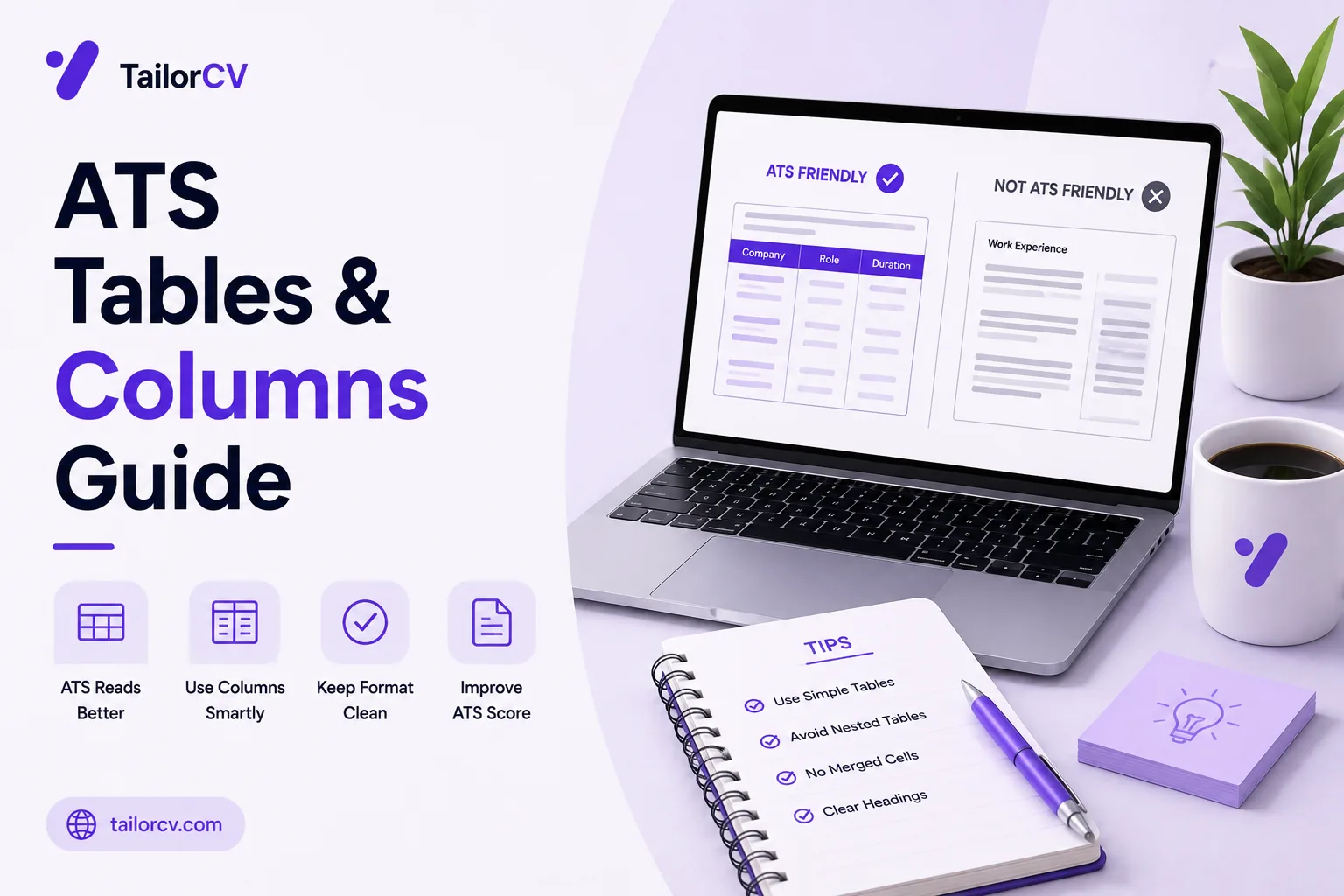
Whether it parses. A perfectly-lengthed resume that extracts as scrambled text is worth nothing — see the ATS tables and columns guide.
What does not belong in that top third: a photo, a mission statement, a skills matrix with rating bars, or anything else that costs vertical space without carrying evidence.
Common Mistakes
Believing the ATS penalises length. No mainstream system does; the constraint is entirely human.
Applying US one-page convention to a UK or federal application. In the UK it reads as thin, and for federal roles brevity gets you rated ineligible.
Shrinking to 8pt to force one page. The compression is immediately visible and worse than a comfortable second page.
Cutting achievements to save space. Quantified results are what convince a reader; cut old roles and filler instead.
Keeping a generic objective statement. It is the most-skipped line on any resume and pure wasted space.
Keeping "references available on request". Assumed everywhere, and a wasted line.
Listing every technology ever touched. It dilutes the ones that matter and each is an interview question.
Treating the resume as a complete career archive. Relevance beats completeness, and tailoring is what earns space back.
Giving every contract engagement a full entry. Group short engagements under one heading and the page count solves itself.
Spending the top third on a photo or a mission statement. That space decides whether anything below it is read.
Length usually comes down to how many years you detail - how far back your experience should go sets the right window for your level and field.
Frequently Asked Questions
Does an ATS reject long resumes?
No. Mainstream systems parse whatever length they receive. Length conventions are human expectations, not technical constraints.
Should my resume be one page or two?
Depends on the market and your experience. One page for US early career and Indian campus placements, two for the UK and experienced US candidates, three to five for US federal roles.
Is a two-page resume acceptable in the US?
With substantial experience, yes. For a candidate with two or three years, one page is the expectation and two is noticed.
Can I shrink the font to fit one page?
Do not. Compression is immediately visible and produces a worse document than a comfortable two pages.
What is the smallest font I can reasonably use?
10pt is the practical floor for body text. At 9pt and below the compression is obvious and the document becomes tiring to read.
What should I cut first?
Old roles, generic objective statements, "references available on request", coursework lists, hobbies, and personal details not required in your market.
What should I never cut?
Quantified achievements, recent relevant experience, and the skills the job posting actually names.
How do I handle twenty years of experience?
Give the last ten to fifteen years full treatment and compress everything older to one line each. Early roles are context rather than evidence.
What if I have many short contract engagements?
Group them under a single heading with client names and combined achievements rather than giving each one a full entry.
What matters more than length?
The first third of page one, relevance to the specific role, scannability, and whether the file parses cleanly at all.
Check how your resume parses at whatever length it is. Check your ATS score free.
Make This Practical
Match the market rather than the advice you happened to read. One page for US early career and Indian campus placements, two for the UK, three to five for US federal roles — applying the wrong convention is a more common error than getting the count wrong within a convention.
Then stop compressing. If your content needs a second page, take it — an 8pt resume with no margins is visibly squeezed and reads worse than a comfortable two pages ever would.
Finally, cut in the right order when you must. Remove old roles, objective statements, coursework lists, "references available on request" and unrequired personal details before touching a single quantified achievement — because the achievements are the only part actually doing the persuading.
What is your resume scoring right now?
Scan it against a job description and get your ATS match score in about a minute.
Drop your resume here or choose a file
PDF only. Max 2 MB.
We never share your data or use it to train AI models.

Templates that keep this structure intact
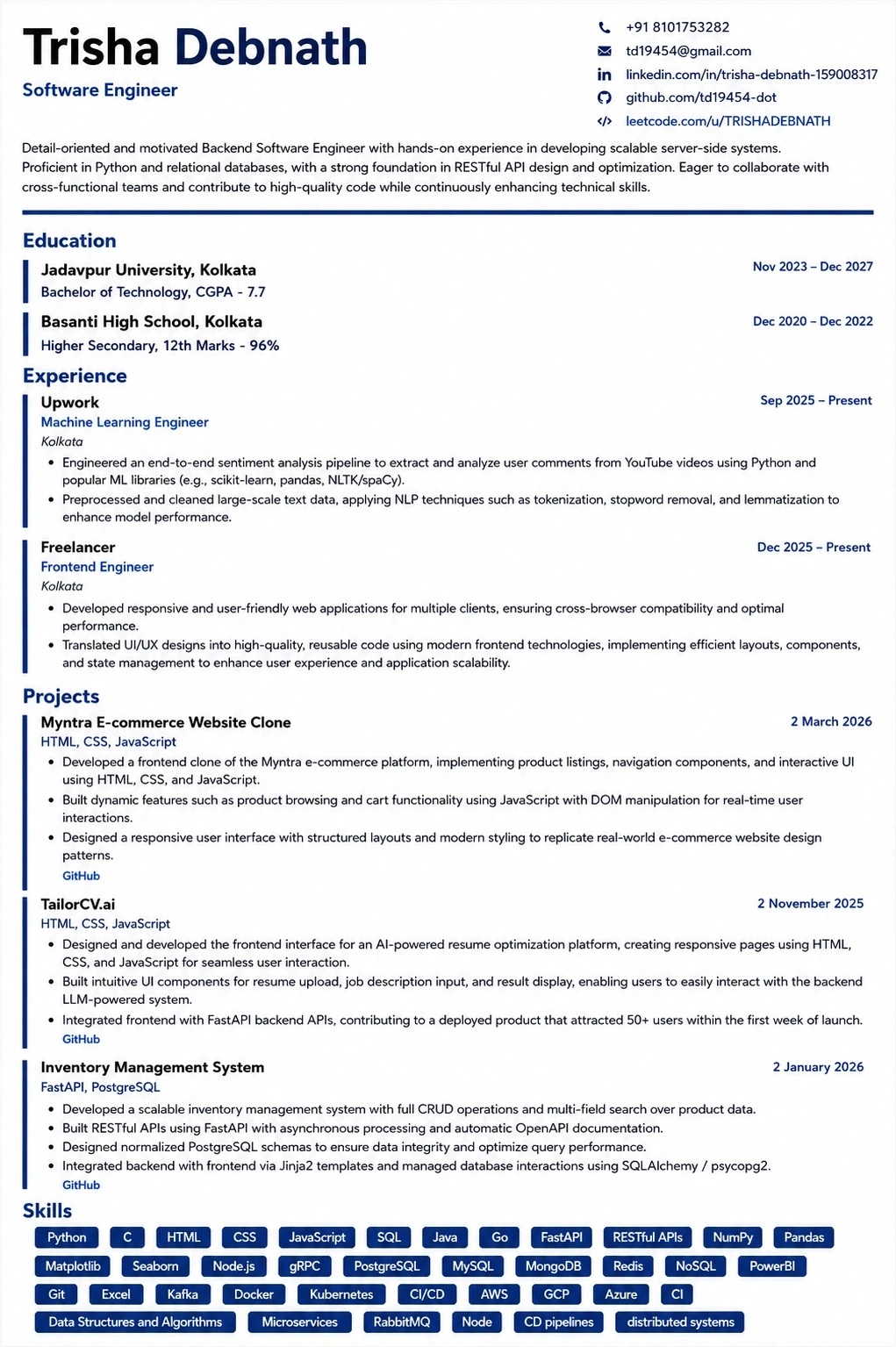
This template is ATS-tested — start from it and the formatting rules in this guide are already handled.
Was this guide useful?
Be the first to rate it.