 SS
SS
Key Takeaways
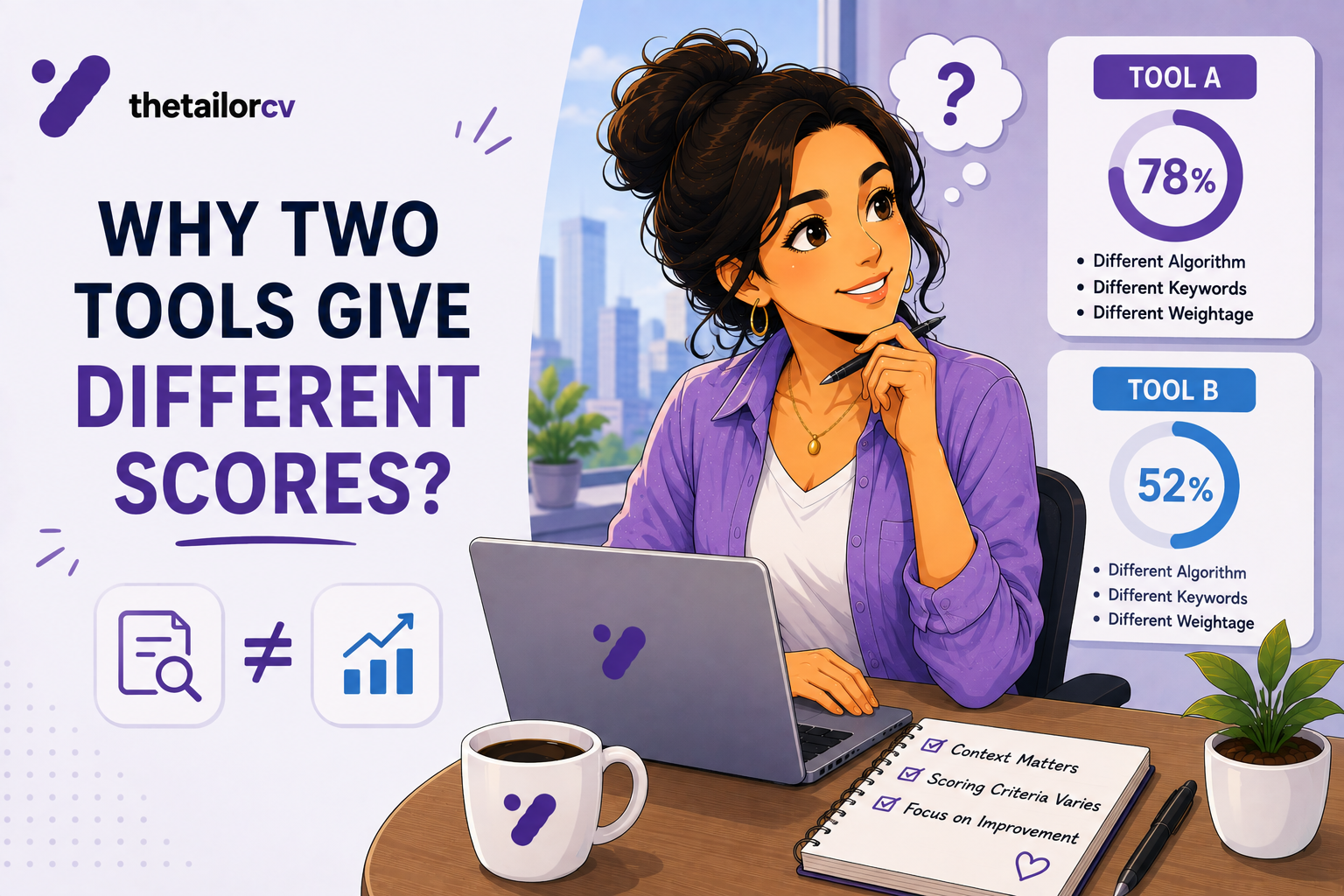
- There is no single standardised "ATS score" — every tool implements its own scoring model.
- Different tools weight requirements, keywords, and formatting differently, which produces genuinely different numbers from identical input.
- No real employer's ATS exposes a public score at all — every checker tool is an approximation, not a readout of the actual system.
- The useful comparison is a tool against itself over time, tracking whether your edits move the number in the right direction.
- Chasing agreement between two different tools' scores is not a productive use of time.
Running the same resume through two different ATS scanners and getting a 62% from one and an 81% from the other is confusing and common. Here is why it happens and what to actually do about it.
There Is No Universal "ATS Score"
This is the fact that resolves most of the confusion. "ATS score" is not a standardised metric with an agreed-upon calculation, the way a credit score or a GPA has a defined formula. Every scanning tool — including ours — builds its own model for estimating match quality, and different models weight different signals.
Real employer ATS software, meanwhile, generally does not expose a score to candidates at all. What every public-facing "ATS score checker" actually does is approximate what a real system might find important, using its own internal method. Two honest, well-built approximations of the same underlying question can reasonably disagree.
What Actually Differs Between Tools
Keyword extraction method. Different tools use different approaches to identify which terms in a job posting are meaningful requirements versus incidental language, and different approaches to matching those terms against your resume's content.
Weighting of requirements vs preferences. Some tools weight everything roughly equally; others attempt to distinguish required from preferred language and weight accordingly. This alone can produce meaningfully different scores from identical input.
Formatting and structure scoring. Some tools incorporate resume structure and parseability into the overall score; others focus purely on content matching and evaluate formatting separately.
Semantic matching depth. Some tools match only exact or near-exact phrases; others attempt broader semantic matching that recognises related terms as connected even without exact wording overlap. A tool with deeper semantic matching may find a match a stricter tool misses entirely.
Scale and calibration. Even among tools measuring genuinely similar things, the numeric scale each uses to express "good enough" may differ — one tool's 70% and another's 70% are not guaranteed to represent the same underlying level of fit.
Which Difference Matters More: Direction or Magnitude
Rather than fixating on the exact number from any single tool, the more useful question is whether a tool consistently moves in the expected direction as you make genuine improvements. If you fix a real gap — adding a skill you have but had not stated — and a tool's score rises, that tool is functioning usefully for you, regardless of whether its absolute number matches a different tool's absolute number.
This is why comparing a tool against itself over time is more actionable than comparing two different tools' outputs against each other at a single point in time.
A Practical Approach
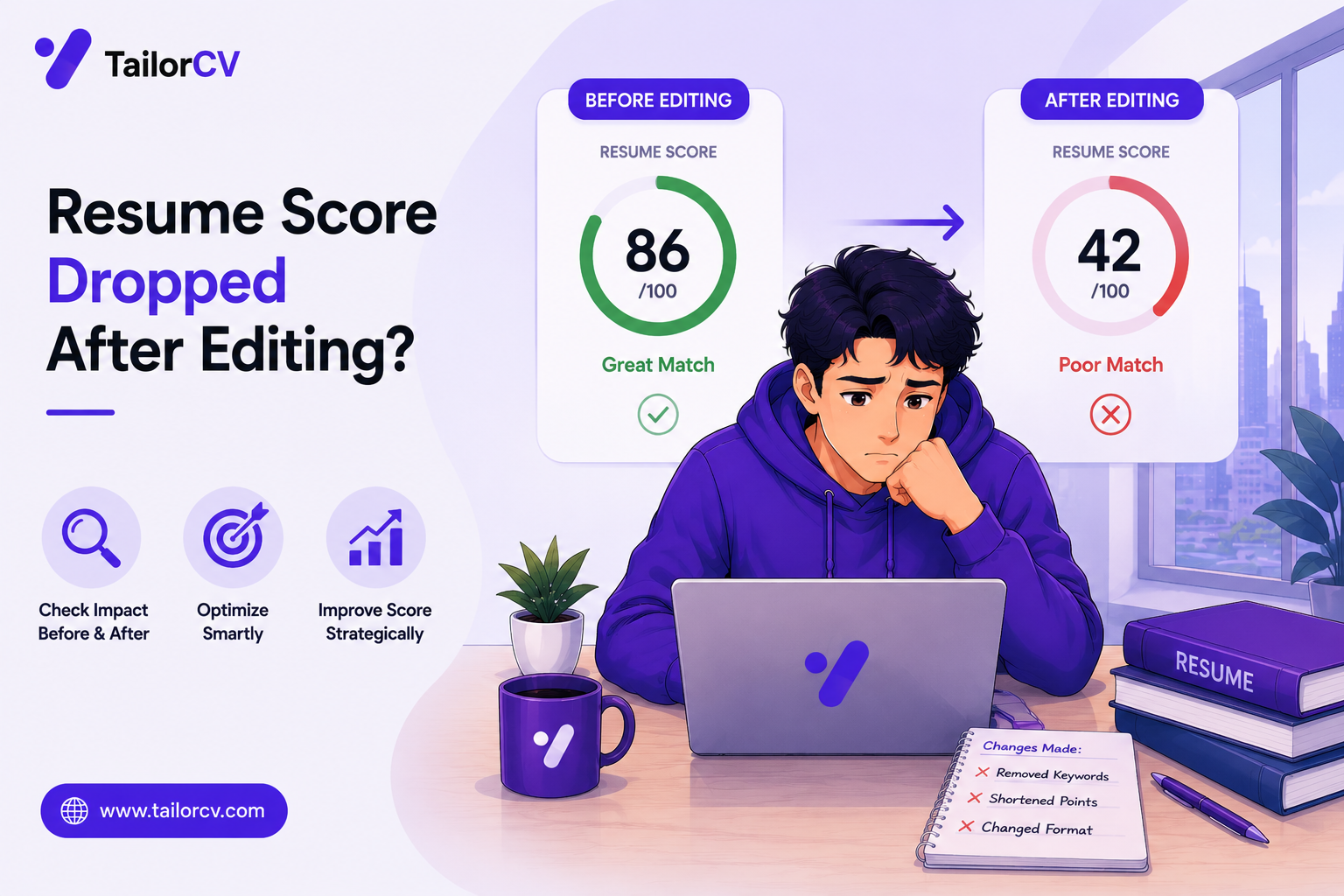
Pick one tool and use it consistently for a given application. Track how your edits move that tool's score across your editing session — see what to expect when you re-scan. This gives you a coherent, internally consistent signal to work from.
Do not average or reconcile scores across different tools. There is no principled way to combine a 62% from one model and an 81% from another into a single meaningful number — they are not measuring on the same scale in the first place.
Read the missing-requirements list, not just the percentage, from whichever tool you use. The specific items flagged as missing are more actionable and more directly comparable across tools than the headline number — if two tools both flag that you are missing "SQL," that agreement is more informative than either tool's overall score.
Treat any score as directional guidance, not a precise measurement. No score checker — from any provider — is telling you with certainty what a specific employer's specific system will conclude. It is estimating, and the estimate is useful for finding gaps, not for predicting outcomes precisely.
Why This Isn't a Reason to Distrust Scoring Tools Generally
The existence of disagreement between tools does not mean scoring is meaningless — it means the score is an estimate rather than a ground truth, which is true of most useful diagnostic tools. A blood pressure reading varies slightly by device and by moment; that variability does not make blood pressure monitoring useless, it means you read the trend and the rough range rather than treating any single reading as exact. The same logic applies here.
What Actually Predicts Outcomes Better Than the Score
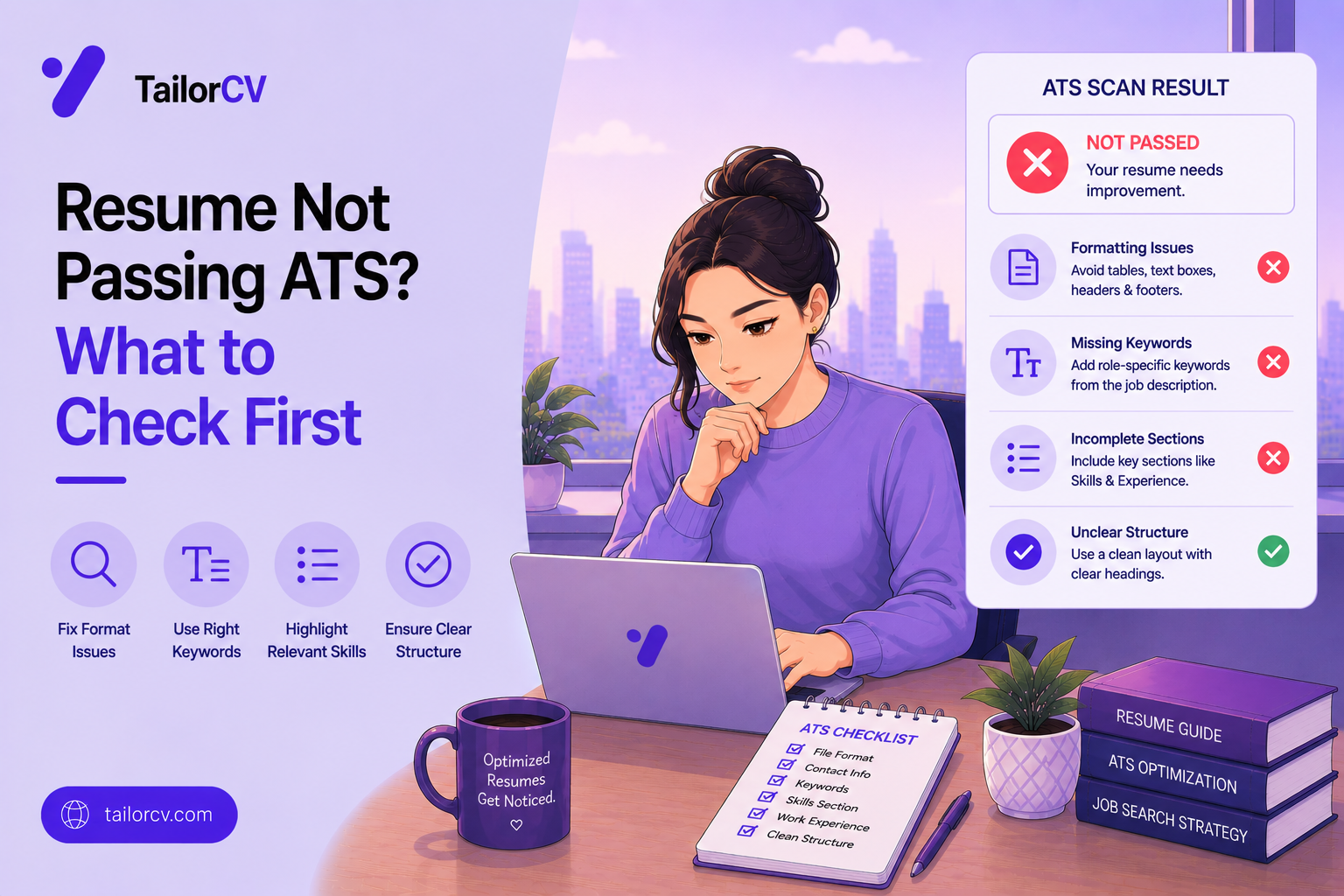
Regardless of which specific number a tool returns, the underlying things that predict real-world outcomes are consistent across tools: whether your resume genuinely evidences the posting's stated requirements, whether it parses cleanly, and whether the specific, technical, required items are covered. See resume not passing the ATS: what to check first for the underlying checks that matter regardless of which scoring tool you use to verify them.
Frequently Asked Questions
Which ATS score checker is the most accurate? There is no single correct answer, since none of them have access to any specific employer's actual proprietary system. Pick one, use it consistently, and focus on the missing-requirements list it provides rather than chasing precision in the number itself.
Should I average scores from multiple tools? Not recommended — the tools are not measuring on comparable scales, so an average does not represent anything meaningful.
Does a big difference between two tools mean one of them is broken? Not necessarily — it more often reflects genuinely different scoring methodologies rather than an error in either tool.
How much should I trust any single score? As directional guidance for finding and fixing gaps, useful. As a precise prediction of a specific employer's outcome, not reliable — no public tool has that level of insight into any specific company's actual system.
Is it worth paying for a "more accurate" ATS checker? Accuracy claims are difficult to verify independently, since no tool has visibility into real employer systems to validate against. Focus on whether a tool's missing-requirements list is specific and actionable, which matters more than a precise headline number.
Use the Missing List, Not Just the Number
Regardless of which score a tool returns, the specific requirements it flags as missing are the more directly useful output.
Scan your resume against a posting and focus on the missing-requirements list — this tells you concretely what to fix, in a way that is more comparable across different tools and more actionable than any single percentage.
Free, about a minute. See also what is a good ATS match score and what to expect when you re-scan.
What is your resume scoring right now?
Scan it against a job description and get your ATS match score in about a minute.
Drop your resume here or choose a file
PDF only. Max 2 MB.
We never share your data or use it to train AI models.

Templates that keep this structure intact
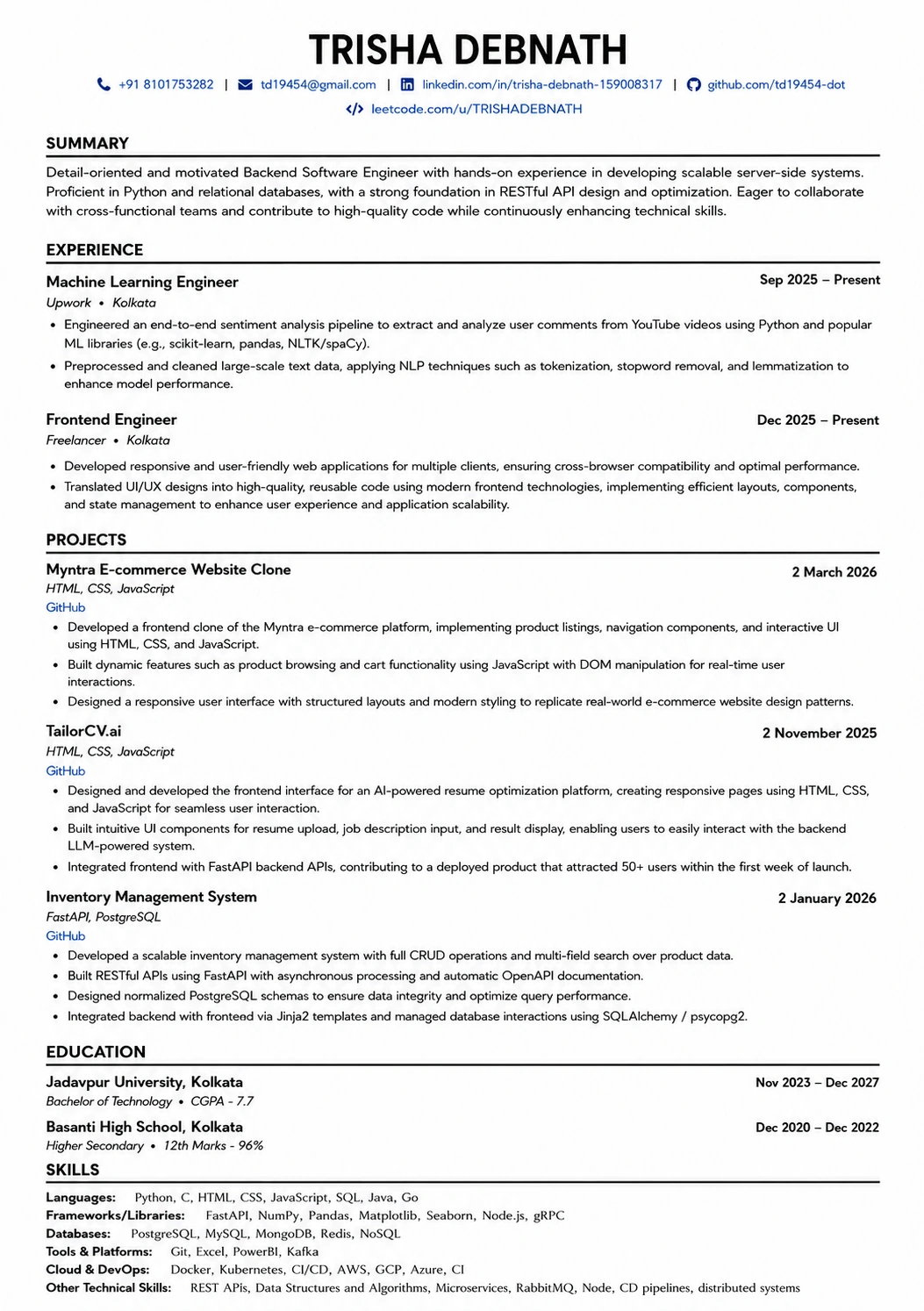
This template is ATS-tested — start from it and the formatting rules in this guide are already handled.
Was this guide useful?
Be the first to rate it.