 TD
TD
Key Takeaways
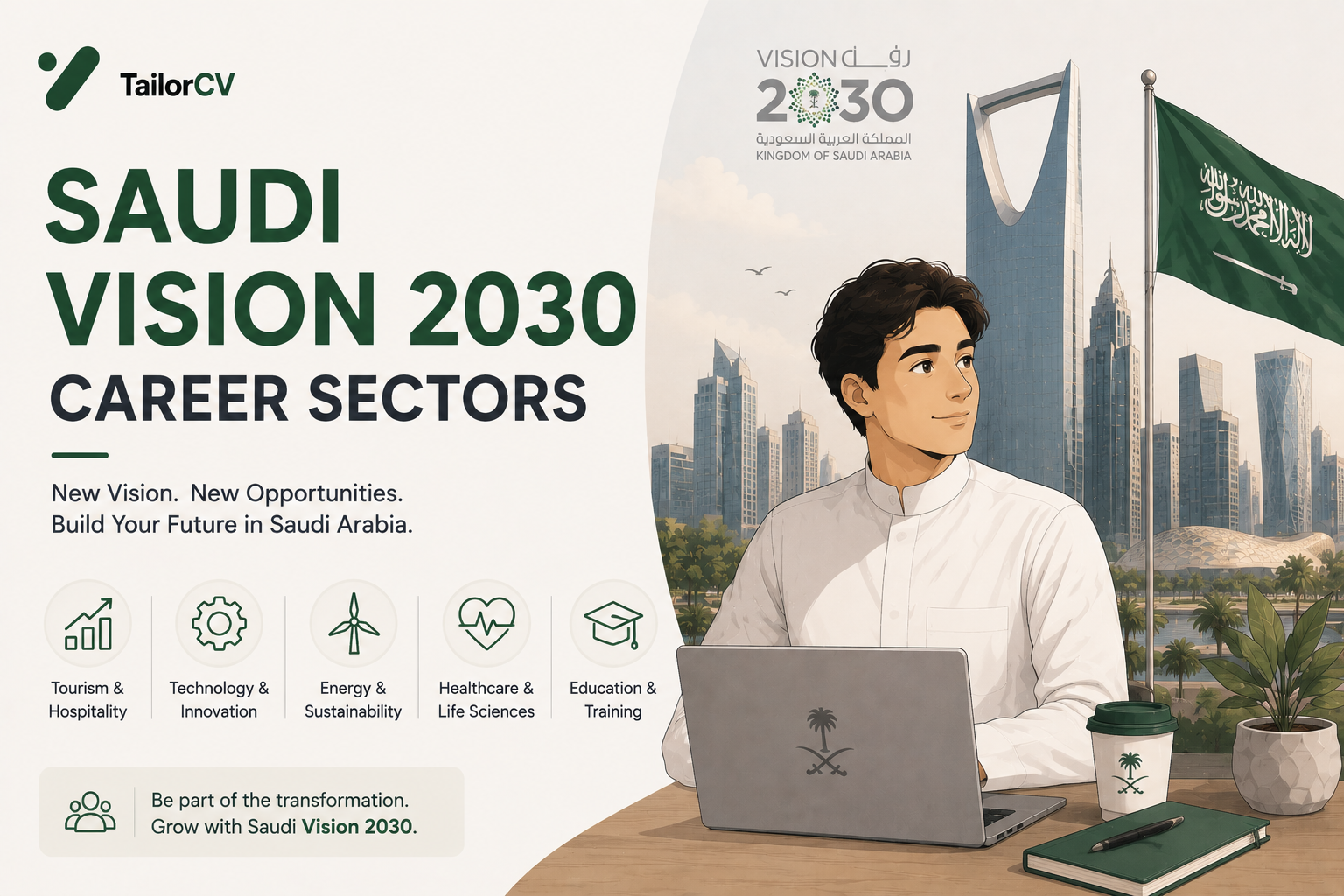
- Construction, engineering and project management are the largest international recruitment areas by volume.
- Tourism, entertainment and sport are being built from a low base, creating genuinely new professional roles.
- Mining and minerals is a deliberate strategic priority and an under-noticed opportunity.
- Healthcare, education and technology all recruit internationally at scale as the population and services expand.
- Treat individual project timelines with caution — the aggregate investment is real, specific schedules are less certain.
The built environment
The largest employer of international professionals by a wide margin.
Giga-project delivery. NEOM, Qiddiya, the Red Sea Project, Diriyah, Roshn and Amaala together represent an extraordinary volume of design and construction work, employing architects, engineers of every discipline, planners, cost consultants, project managers and construction professionals.
The consultancies are the entry point. The international engineering and project management firms — the ones delivering these programmes under contract — recruit internationally and are frequently a more accessible employer than the project entities themselves.
Infrastructure beyond the projects. Transport, utilities, water and urban development programmes across the kingdom.
Real estate and development as a broader sector, with the PIF-backed developers building at volume.
A realistic note: construction employment is project-cyclical, and some programmes have been rescoped. The sector remains very large and specific roles can be less permanent than they appear, which is worth factoring into a decision to move.
Energy, industry and mining
The traditional strength and a deliberate new one.
Saudi Aramco remains the anchor — upstream, downstream, refining, petrochemicals and a substantial technology and research organisation.
SABIC and the petrochemical sector, with world-scale plants and genuine process engineering.
Renewables. Very large solar and wind programmes are under development, drawing on both energy expertise and new capability.
Hydrogen, as a stated strategic priority with substantial planned investment.
Mining and minerals is the under-noticed one. Saudi Arabia has identified mining as a third pillar of its economy alongside oil and petrochemicals, with substantial mineral resources and a deliberate programme to develop them. Ma'aden is the national mining company. For geologists, mining engineers, metallurgists and processing specialists this is a genuine and under-applied opportunity.
Industrial manufacturing and localisation, driven by a policy of building domestic capability across defence, automotive and industrial goods.
The new service economy
Sectors being built from near-zero, which creates unusual openings.
Tourism. Saudi Arabia opened to leisure tourism relatively recently and is building hotels, attractions and the surrounding infrastructure. Hospitality management, destination development and tourism operations are all recruiting.
Entertainment. Cinema, live events, theme parks and cultural venues, largely from a standing start, creating roles in venue management, production and programming.
Sport. Substantial investment in football, motorsport, golf, boxing and events, with the professional infrastructure that implies.
Culture and heritage. AlUla and the heritage development programmes employ archaeologists, conservators, curators and cultural tourism specialists — a genuinely unusual set of roles for the region.
Healthcare. Expanding rapidly, recruiting clinicians, allied health professionals and healthcare managers internationally, with licensing through the Saudi Commission for Health Specialties.
Education. Universities including KAUST, plus school and vocational expansion.
Technology and digital. Government digital transformation, fintech under the regulatory sandbox, and the technology functions of the large employers.
How to time an application
Sector timing matters more here than in a steady-state economy.
Follow project sanctioning. Large programmes staff up when they reach investment decision and construction phase, and following which specific projects have been approved tells you where hiring is about to happen.
Consultancy hiring precedes project hiring. The engineering and project management firms staff up first, which makes them both an earlier opportunity and a more stable one.
Giga-project rescoping is real. Some announced programmes have been reduced or delayed, and a role tied to a single project carries that risk in a way a consultancy role spanning several does not.
The energy sector is steadier than the construction cycle, with Aramco and the petrochemical companies hiring continuously rather than in waves.
Healthcare and education hire continuously as services expand with the population.
The new service sectors — tourism, entertainment, sport — are still building, which means genuinely new roles and less established career structures.
And apply when a programme's engineering phase is beginning rather than when it is concluding, which is a matter of reading industry news rather than job boards.
What working on these programmes is like
An honest account, because the scale is unusual.
The projects are genuinely enormous, and the professional experience of delivering at that scale is difficult to obtain elsewhere.
Timelines compress. Programmes move fast when they move, and the pace is demanding.
Teams are highly international, drawn from across the global construction and engineering industry.
Site conditions vary enormously between city offices and remote project locations, and rotation arrangements are common on the latter.
Scope changes happen. Requirements evolve and programmes are rescoped, which is normal at this scale and frustrating if you expect stability.
The technical challenges are real — building at this scale in this climate involves genuine engineering problems rather than routine delivery.
And the CV value is substantial. Having delivered on a Saudi giga-project is a recognised credential in the international construction and engineering industry.
The consultancy route in detail
Why this deserves its own treatment.
International engineering and project management firms deliver much of the programme. Companies like AECOM, Jacobs, Parsons, WSP, Mott MacDonald, Arup and their peers hold major contracts across the giga-projects and infrastructure programmes.
They hire internationally and continuously, through their global careers pages rather than only through Saudi channels.
They carry you across projects. If one programme is rescoped, a consultancy employee moves to another; a project-entity employee may not.
They handle mobilisation professionally. Visa processing, relocation and accommodation are routine for firms that have moved thousands of people.
Career structures are recognisable and transferable, with progression frameworks that mean something outside Saudi Arabia.
And they offer an exit. Consultancy experience in Saudi Arabia leads naturally to the same firm's projects elsewhere, which is a considerably more flexible position than a project-specific role.
The practical advice: if you are a built-environment professional considering Saudi Arabia, apply to the consultancies first and the project entities second.
Healthcare and education in detail
Two sectors recruiting at genuine scale and frequently overlooked.
Healthcare. Hospitals and health systems across the kingdom recruit doctors, nurses, allied health professionals and healthcare managers internationally. Licensing runs through the Saudi Commission for Health Specialties with primary source verification, which takes real time and is the main gating factor.
Compensation for healthcare professionals is generally strong, frequently with accommodation and transport provided.
Education. International schools, universities including KAUST, and the vocational training expansion all recruit internationally. Teaching qualifications and experience are the currency, with accreditation requirements varying by institution type.
Research. KAUST in particular operates as an international research university with faculty and postdoctoral recruitment worldwide.
Both sectors offer more stability than the construction cycle, since they expand with the population rather than with project sanctioning.
And both have clear licensing paths that, while slow, are predictable — which is more than can be said for several other routes.
Reading the programme honestly
How to assess claims about Saudi opportunity.
Distinguish announcement from sanction. A project announced is not a project funded, and a project funded is not a project in its engineering phase. Hiring follows the third, not the first.
Watch the sovereign fund's actual allocations rather than the headline figures, which cover long time horizons.
Note the rescoping. Several flagship programmes have been reduced in scope or extended in timeline, which is normal at this scale and worth factoring into a decision to relocate.
And note what has genuinely been delivered. Entertainment, tourism infrastructure, sporting events and substantial construction have all materialised, so scepticism should be calibrated rather than total.
Talk to people currently working there. In a fast-moving environment this is worth more than any published analysis, and the professional community is accessible on LinkedIn.
Read the industry press rather than general media, since construction and engineering publications track project phases specifically.
Technology and digital
An area growing quickly and less visible than construction.
Government digital transformation is substantial, with national platforms handling identity, payments, health and public services.
Fintech operates under a regulatory sandbox with a growing sector in payments, lending and digital banking.
The technology functions of the large employers — Aramco, SABIC, the banks, the telecoms operators — run genuine engineering organisations.
Data and AI feature prominently in national strategy with associated investment.
Cyber security is a stated priority with institutional backing.
And the giga-projects have technology components — smart city infrastructure, operational systems and digital platforms — that employ software and systems people alongside the built-environment professionals.
The honest note: the technology sector is smaller and less mature than the construction and energy sectors, and it is growing from a lower base. It is a real opportunity and not yet a deep market.
Mini checklist
- unchecked: Sector matched to your genuine specialism
- unchecked: Consultancies considered alongside project entities
- unchecked: Mining and minerals considered if your background fits
- unchecked: Professional licensing checked for regulated fields
- unchecked: Project permanence assessed realistically
- unchecked: Package breakdown requested
- unchecked: Attestation started
- unchecked: Site versus city posting understood
- unchecked: Contract length and renewal terms read
Scenarios
Scenario 1: You are a construction or engineering professional
This is the largest opportunity in the region right now. Target the international consultancies delivering the programmes as well as the project entities themselves — the consultancies frequently hire more readily.
Scenario 2: You are a geologist or mining engineer
Look at Saudi mining seriously. It is a stated strategic priority with substantial investment and almost no international awareness, which makes the applicant-to-role ratio unusually favourable.
Scenario 3: You work in hospitality, events or culture
These sectors are being built from a low base, which means genuinely new roles and unusual scope for someone early in a career. Tourism, entertainment and the heritage programmes all recruit internationally.
Tip: Apply to the international consultancies delivering Saudi programmes, not only to the project entities. They recruit more readily, they carry you across multiple projects if one is rescoped, and they are a considerably more stable way into the same work.
Do's and Don'ts
Do
- Target consultancies as well as project owners
- Consider mining if your background fits
- Look at the new service sectors for unusual scope
- Check licensing early for regulated professions
- Assess project permanence realistically
- Match your specialism precisely
Don't
- Take individual project timelines at face value
- Ignore the mining sector
- Assume construction roles are permanent
- Overlook the consultancy route
- Apply as a generalist
- Underestimate licensing timelines in healthcare
Common Mistakes
- Only applying to project entities. Consultancies hire more readily and offer more stability.
- Ignoring mining. A stated strategic pillar with almost no international awareness.
- Treating announcements as schedules. Aggregate investment is real; specific timelines less so.
- Missing the new service sectors. Tourism, entertainment and culture offer unusual early scope.
- Late licensing. Healthcare credentialing through SCFHS takes real time.
- Generalist applications. Saudisation makes specificity essential.
Related Guides
Keep building on this with the related guides in this series:
- Working in Saudi Arabia as an International Graduate
- Saudi Arabian Work Visas Explained
- Working in Qatar as an International Graduate
- Graduate Jobs in the UAE
- The UAE Golden Visa Explained
You can also check your resume's ATS score for free, generate a tailored cover letter, or build a portfolio website in minutes.
Frequently Asked Questions
Which Saudi sectors hire the most internationally?
Construction, engineering and project management by volume, followed by energy and petrochemicals, healthcare, education, and the growing tourism, entertainment and sport sectors.
Is Saudi mining a real opportunity?
Yes, and an under-noticed one. Mining is a stated third pillar of the economy with substantial investment and very little international awareness among job seekers.
Are the giga-projects a safe career bet?
The aggregate investment is real and large. Individual projects have been rescoped or delayed, so consultancy employment that spans several programmes is generally more stable than a single project role.
What is KAUST?
The King Abdullah University of Science and Technology, an international research university that recruits academics and researchers globally.
Do healthcare professionals need licensing?
Yes, through the Saudi Commission for Health Specialties, with primary source verification of credentials. Start it early because it takes real time.
Is tourism really a growing sector?
Yes. Saudi Arabia opened to leisure tourism relatively recently and is building the hotels, attractions and infrastructure from a low base, creating genuinely new professional roles.
When should I apply for Saudi giga-project roles?
When a programme reaches investment decision and its engineering phase begins, rather than when it is concluding. Consultancy hiring precedes project hiring and spans several programmes, which makes it both earlier and more stable.
What is it like working on a Saudi giga-project?
Enormous scale, compressed timelines, highly international teams, genuine technical challenges in a demanding climate, and frequent scope changes. The experience is a recognised credential internationally.
Should I apply to consultancies or project entities in Saudi Arabia?
Consultancies first. They hire internationally and continuously, carry you across programmes if one is rescoped, handle mobilisation professionally, and offer transferable career structures and an exit to their projects elsewhere.
Is Saudi healthcare recruitment worth considering?
Yes, and at scale. Compensation is strong with accommodation frequently provided, and the sector expands with the population rather than with the construction cycle. Licensing through SCFHS is the main gating factor.
How should I assess claims about Saudi opportunity?
Distinguish announcement from funding from engineering phase, since hiring follows the last. Note rescoping and delays, but also note what has genuinely been delivered, and talk to people currently working there.
Is there a technology sector in Saudi Arabia?
Growing quickly from a lower base — government digital transformation, fintech under a regulatory sandbox, the technology functions of large employers, and technology components within the giga-projects.
What is your resume scoring right now?
Scan it against a job description and get your ATS match score in about a minute.
Drop your resume here or choose a file
PDF only. Max 2 MB.
We never share your data or use it to train AI models.

Was this guide useful?
Be the first to rate it.