 SS
SS
Key Takeaways
- Saudi Arabia is the largest Gulf economy and is investing at extraordinary scale under its diversification programme.
- Riyadh is becoming the regional headquarters city, with a policy requiring companies to base regional HQs there to win government contracts.
- Saudisation (Nitaqat) sets quotas for Saudi nationals in private-sector employment, which shapes which roles are open to foreigners.
- The country is changing very quickly — social, labour and immigration rules have all shifted substantially, and outdated accounts are common.
- Packages are strong and, as across the Gulf, structured as basic plus allowances with no personal income tax.
The economy and the diversification programme
Understanding the scale is the starting point.
Oil remains the foundation. Saudi Aramco is the world's largest energy company and a substantial technical employer.
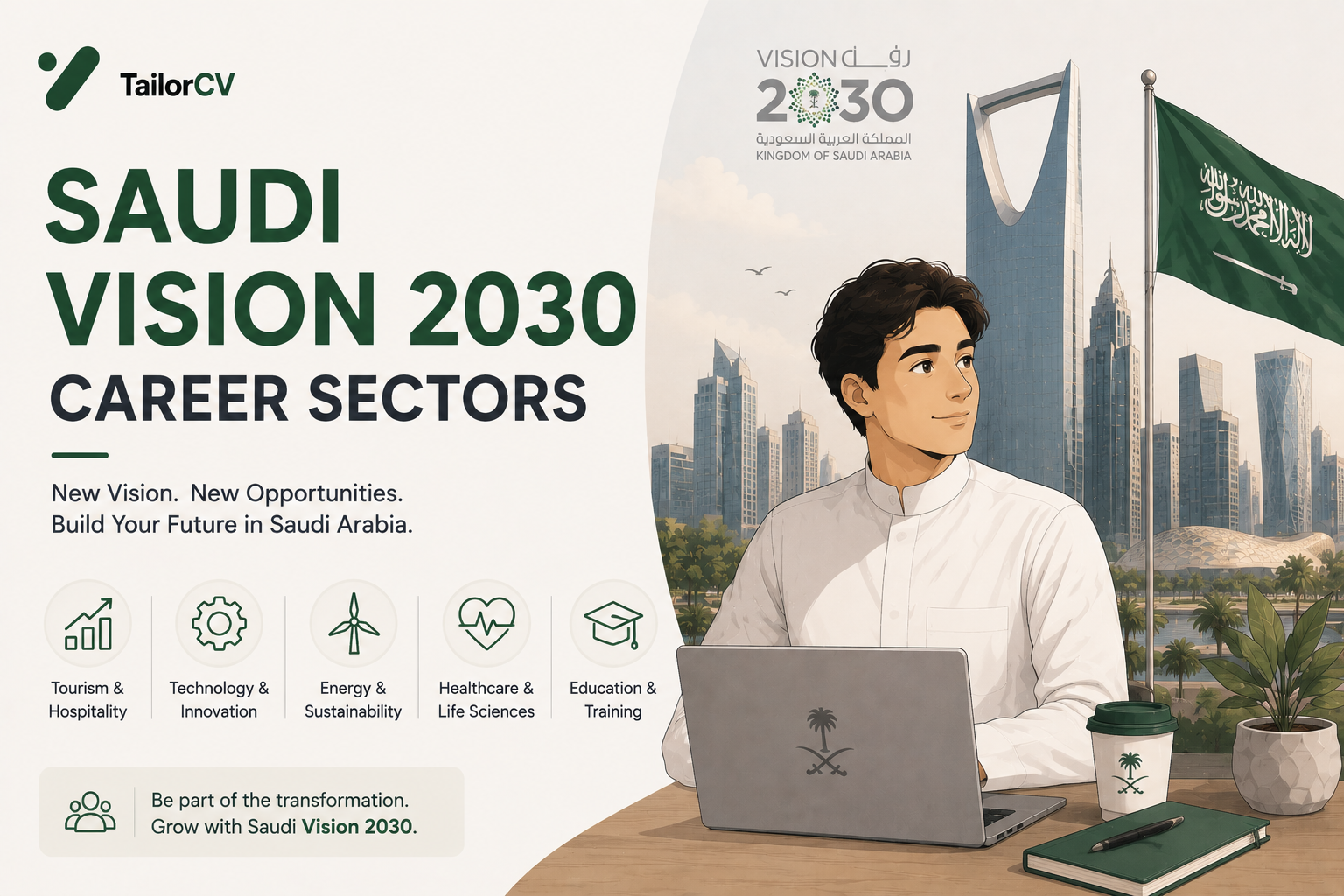
The diversification programme is genuinely enormous. A national strategy to reduce oil dependence has produced very large investment in tourism, entertainment, sport, mining, logistics, technology and manufacturing.
The giga-projects — NEOM, Qiddiya, the Red Sea Project, Diriyah, Roshn and others — are construction and development programmes at a scale with few precedents. They employ architects, engineers, planners, project managers and specialists across every built-environment discipline.
The Public Investment Fund is one of the world's largest sovereign wealth funds and drives much of this, with its own substantial professional employment.
Regional headquarters. A policy requiring international companies to locate their regional headquarters in Riyadh to be eligible for government contracts has moved a considerable number of corporate functions into the kingdom.
Financial services in the King Abdullah Financial District and the wider Riyadh market.
Healthcare and education are expanding rapidly and recruit internationally at scale.
The honest note: some announced projects have been rescoped or delayed. The overall investment is real and very large, and specific project timelines are less certain than the announcements suggest.
Saudisation and what it means for you
The structural factor that shapes which roles are available.
Nitaqat is the Saudisation programme, setting quotas for Saudi national employment in private-sector companies by sector and size, with companies rated by their compliance.
Certain roles have been reserved for Saudi nationals across various sectors over time, and the list has expanded.
What it means practically: some functions — particularly customer-facing, HR and certain administrative roles — are increasingly closed to expatriates, while technical, specialist and senior roles remain open where the skills are genuinely scarce locally.
This is not a barrier to a specialist, and it is a real constraint on a generalist. The kingdom wants expertise it does not have and is actively building the capability it does.
The implication for your application: be a specialist. Demonstrate scarce, specific, technical or professional capability rather than general competence, because that is precisely what the policy is designed to admit.
Cities and where the work is
| City | What concentrates there |
|---|---|
| Riyadh | Government, finance, regional headquarters, PIF and giga-project offices, technology |
| Jeddah | Trade, logistics, the Red Sea corridor, commerce |
| Dhahran / Eastern Province | Saudi Aramco, energy, petrochemicals, industrial engineering |
| NEOM and project sites | Construction, engineering, planning, at remote locations |
| Mecca and Medina | Hospitality, infrastructure and services around religious tourism, with access restrictions for non-Muslims |
| King Abdullah Economic City | Logistics, industry, and a planned urban development |
Riyadh is where the professional market is consolidating, and the regional headquarters policy has accelerated that considerably.
The Eastern Province is the energy heartland and the natural destination for petroleum, chemical and process engineers.
Project sites are their own proposition — frequently remote, often on rotation, well compensated, and a genuine lifestyle decision.
Working culture and daily life
Worth calibrating carefully, because the country is genuinely different from its neighbours and genuinely changing.
The working week is Sunday to Thursday, with Friday and Saturday as the weekend.
Hierarchies are pronounced and relationships are central. Business moves through personal trust more than through process.
English is the working language in the international private sector, the giga-projects and Aramco. Arabic is essential for government-facing work and valuable everywhere.
Ramadan substantially changes the working rhythm for a month.
Social liberalisation has been rapid. Entertainment, cinema, concerts and mixed public spaces have expanded considerably, and restrictions on women driving and on guardianship requirements for many activities have been lifted. The country is meaningfully different from accounts written a decade ago.
It remains conservative by regional standards, particularly outside Riyadh and the compounds, and dress and public conduct expectations reflect that.
Alcohol is prohibited, which is a genuine difference from Qatar and the UAE and is worth knowing rather than discovering.
Compound living is common for expatriate families, offering facilities and a more international environment.
And the summer is severe, with outdoor life largely suspended for months.
How hiring runs
The process and its timelines.
- Application, through company portals, agencies or referral.
- Recruiter screen — specialism, availability, salary expectations, and confirmation you have thought about living in the kingdom.
- Technical interview, frequently by video and often genuinely rigorous in energy and engineering.
- Panel or senior interview.
- Offer with the package breakdown.
- Attestation and visa processing — the long pole.
- Medical, arrival and Iqama issue.
Timelines are long. Months rather than weeks between offer and start is normal, driven mainly by attestation and visa processing.
Referrals matter substantially, as across the region.
Agencies are very active in engineering, construction and healthcare.
The giga-project entities and PIF companies recruit through their own portals and through executive search for senior roles.
Aramco runs its own extensive process with a strong graduate and professional intake.
Be prepared for the process to pause. Gulf recruitment stalls and resumes for reasons unrelated to you, and persistence is normal.
Money and the financial picture
The compensation reality and what to plan around.
No personal income tax on employment income, so the package is effectively net.
Packages are basic plus allowances, with housing, transport and — at family status — education allowance.
End-of-service gratuity accrues per year of service on basic salary, as across the Gulf.
Dependent Iqama fees are a recurring cost per family member and should be in your calculation from the start.
International school fees are substantial in Riyadh and Jeddah, and the education allowance is the largest single variable in a family package.
Housing is frequently provided, particularly on compounds, or allowanced. Compound living carries a premium and provides facilities and an international environment.
Site postings pay more, often with rotation, and involve remote locations with limited facilities.
No expatriate pension accrues. As across the region, retirement saving is your own responsibility and gratuity is not a pension.
And savings potential is genuinely high for someone disciplined, which is why people come — but only if the target is set deliberately rather than assumed.
Where roles are advertised
The channels that carry the Saudi market.
LinkedIn is dominant for professional international roles and is where most of the giga-project and corporate recruitment happens.
Bayt, GulfTalent and Naukrigulf carry regional volume.
Company career portals — Aramco, SABIC, Ma'aden, the PIF companies and the giga-project entities all recruit through their own systems.
International consultancies delivering Saudi programmes recruit through their global careers pages, frequently for Saudi-based roles.
Executive search dominates senior appointments.
Recruitment agencies are very active in engineering, construction and healthcare.
Referrals matter substantially. The professional expatriate community is large and connected, and an internal recommendation moves an application significantly.
And be visible on LinkedIn. Saudi recruiters search it heavily, and a profile that names your specialism and states your availability generates inbound approaches in a way it does not in most markets.
Is Saudi Arabia right for you?
The honest framing, since this is a specific kind of decision.
It is a defined period for almost everyone. There is no general path to citizenship and residency is employer-linked outside Premium Residency, so most people arrive with a horizon in mind.
It suits specialists exceptionally well. The kingdom is buying expertise it does not have, at scale, and paying accordingly.
It suits people who can work within a conservative social framework and who have thought honestly about that rather than assuming they will adapt.
It suits savers. No income tax, frequently provided housing and high pay for scarce skills produce savings rates that few other markets match.
It suits people who like scale. The projects are genuinely enormous and the professional experience of working on them is hard to replicate elsewhere.
It is less suited to someone wanting a permanent home, to a generalist, or to someone for whom the social environment would be a persistent strain.
And it rewards research. The country has changed rapidly, accounts differ wildly in accuracy, and talking to someone currently there is worth more than any amount of reading.
Mini checklist
- unchecked: Specialist capability identified and led with
- unchecked: Saudisation implications understood for your function
- unchecked: City matched to sector
- unchecked: Package breakdown requested in writing
- unchecked: Family status and education allowance clarified
- unchecked: Degree attestation started early
- unchecked: Professional licensing checked if regulated
- unchecked: Home-country tax position checked
- unchecked: Contract terms read carefully
Scenarios
Scenario 1: You are an engineer in energy, chemicals or construction
Saudi Arabia is among the strongest markets in the world for you right now, with Aramco, the petrochemical sector and the giga-projects all recruiting internationally at scale.
Scenario 2: You work in a generalist commercial or administrative function
Saudisation makes this considerably harder. Either specialise into something scarce or look at the UAE, where the labour market composition is different.
Scenario 3: You are considering a project site posting
Understand the rotation, the location and the accommodation before accepting. Remote site work is well compensated and it is a genuine lifestyle decision rather than a detail of the offer.
Tip: Lead with a specialism, not general competence. Saudisation is explicitly designed to reserve generalist roles for Saudi nationals and admit scarce expertise, so the more specific and technical your capability, the more open the market is to you.
Do's and Don'ts
Do
- Lead with scarce, specific expertise
- Understand Saudisation's effect on your function
- Request the written package breakdown
- Clarify family status and education allowance
- Start attestation early
- Read project timelines with some scepticism
Don't
- Apply as a generalist
- Rely on outdated accounts of the country
- Compare packages on total alone
- Assume all announced projects proceed as stated
- Underestimate the summer climate
- Ignore professional licensing requirements
Common Mistakes
- Applying as a generalist. Saudisation is designed to reserve those roles for nationals.
- Using outdated information. Social, labour and immigration rules have changed substantially and quickly.
- Taking project announcements at face value. Some have been rescoped or delayed.
- Comparing package totals. Gratuity depends on basic salary as elsewhere in the Gulf.
- Late attestation. The most common cause of delayed starts across the region.
- Ignoring the site posting question. Remote rotation is a lifestyle decision.
Related Guides
Keep building on this with the related guides in this series:
- Vision 2030 and the Sectors That Are Hiring
- Saudi Arabian Work Visas Explained
- Working in Qatar as an International Graduate
- Graduate Jobs in the UAE
- Tax-Free Salaries in the UAE
You can also check your resume's ATS score for free, generate a tailored cover letter, or build a portfolio website in minutes.
Frequently Asked Questions
What is Saudisation?
The Nitaqat programme setting quotas for Saudi national employment in private-sector companies, with certain roles reserved for nationals. It shapes which functions are open to expatriates.
Is Saudi Arabia hiring internationally?
Extensively, for scarce technical and specialist capability. Energy, construction, engineering, healthcare, finance and the giga-projects all recruit internationally at scale.
Is there income tax in Saudi Arabia?
No personal income tax on employment income. Packages are structured as basic salary plus allowances, as across the Gulf.
Are the giga-projects real?
The investment is real and very large. Some individual projects have been rescoped or delayed, so treat specific timelines with more caution than the headline announcements.
Which city should I target?
Riyadh for corporate, finance and headquarters roles; the Eastern Province for energy and petrochemicals; Jeddah for trade and logistics; project sites for construction and engineering.
How much has the country changed?
Substantially and quickly, across social, labour and immigration rules. Accounts more than a few years old frequently do not describe the current position accurately.
What is the working week in Saudi Arabia?
Sunday to Thursday, with Friday and Saturday as the weekend. Ramadan changes the rhythm substantially for a month.
How much has Saudi society changed?
Considerably and quickly — entertainment, cinema, mixed public spaces and rules on women driving and guardianship have all changed. It remains conservative by regional standards, and alcohol is prohibited.
How long does Saudi hiring take?
Months rather than weeks between offer and start, driven mainly by qualification attestation and visa processing. The process also stalls and resumes routinely for reasons unrelated to you.
How much can I save working in Saudi Arabia?
Potentially a great deal, given no income tax and frequently provided housing — but only with a deliberate target set before arriving. Dependent Iqama fees and school fees are the main erosions for a family.
Where should I look for jobs in Saudi Arabia?
LinkedIn dominates professional international recruitment, alongside Bayt and GulfTalent for regional volume, and the company portals of Aramco, SABIC, Ma'aden, PIF companies and the giga-project entities.
Is Saudi Arabia a permanent move?
For almost everyone, no. Residency is employer-linked outside Premium Residency and there is no general citizenship path, so most people arrive with a defined horizon and a savings target.
Find out where a fresher resume stands
Score yours against a real posting - no account, no cost.
Drop your resume here or choose a file
PDF only. Max 2 MB.
We never share your data or use it to train AI models.

Was this guide useful?
Be the first to rate it.