TD
TD
Key Takeaways
- Malaysian resumes usually run one to two pages, list personal details more openly than Western resumes, and prioritise clear, keyword-rich content.
- A photo, nationality, and expected salary are commonly included in Malaysia, unlike in many Western markets.
- Tailoring your resume to each job description is the single biggest lever for getting interviews — generic resumes underperform badly.
- Most mid-to-large Malaysian employers screen resumes with an ATS, so standard formatting and the right keywords are essential.
- A strong skills section (technical + language proficiency in BM, English, and often Mandarin) makes your resume far more competitive.
Writing a resume for the Malaysian job market is different from writing one for the US, UK, or Europe. Malaysian employers expect a specific mix of personal details, a clean single- or two-page layout, and clear evidence that you can do the job from day one. Get the format wrong and your application can be filtered out before a hiring manager ever sees it — either by an Applicant Tracking System (ATS) or by a recruiter skimming dozens of CVs a day.
This guide walks you through exactly how to write a resume for Malaysia jobs in 2026: what to include, what to leave out, how to structure each section, how to beat the ATS, and the mistakes that quietly cost Malaysian job seekers interviews. Whether you are a fresh graduate in Kuala Lumpur or an experienced professional switching industries, you will finish with a clear template you can adapt to any role.
What Malaysian Employers Actually Look For
Before you write a single line, understand what a Malaysian recruiter is scanning for in the first 6–8 seconds:
- Can this person do the job? Relevant experience, skills, and results tied to the role.
- Do they fit the local context? Work authorisation, language ability, and location.
- Are they easy to shortlist? A clean layout, no formatting mess, and contact details that work.
Malaysian hiring is relationship- and credential-conscious, but the resume itself is still a filtering document. Its job is to earn you the interview, not to tell your whole life story. Everything you include should push toward that single goal.
If you want a shortcut, you can build a clean, correctly-structured Malaysian resume in minutes with the TailorCV resume builder, which handles layout and formatting so you can focus on content.
Malaysian Resume Format: The Rules That Differ
Here is where Malaysia diverges from Western norms. Follow these conventions and your resume will feel familiar and professional to local recruiters.
Your resume after optimization
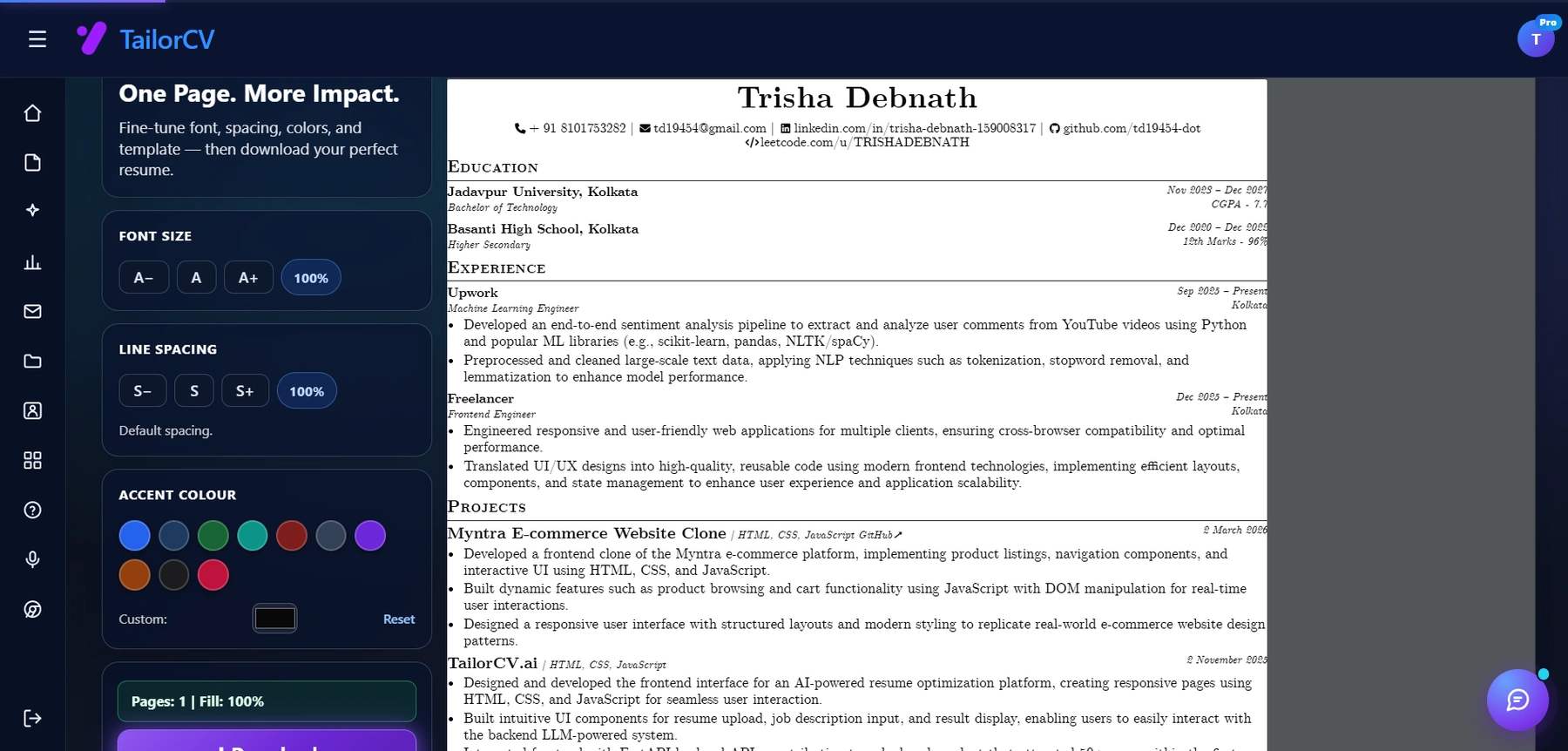
This is the resume after tailoring - the content is already matched, and these controls are how you fit it onto one page.
Length
One page is ideal for fresh graduates and those with under three years of experience. Two pages are perfectly acceptable for experienced professionals — as long as every line earns its place. Three pages or more is almost always too long unless you are in academia or a highly technical senior role.
Personal Details
Unlike US resumes, Malaysian resumes commonly include more personal information at the top:
- Full name (as per IC/passport).
- Contact number and a professional email address.
- Location (city/state — e.g. Petaling Jaya, Selangor).
- Nationality and work authorisation status (important for both locals and expats).
- A professional photo — still widely expected in Malaysia, though optional for tech and MNC roles.
- Expected salary — sometimes requested in the application or included at the bottom.
You do not need to include your IC number, religion, race, or marital status on the resume itself, even though older templates sometimes did. Leave sensitive personal identifiers off unless a specific employer or government form asks for them.
Language
Write in English for the private sector and MNCs. For government-linked companies (GLCs) and some local SMEs, Bahasa Malaysia may be preferred or expected — check the job posting. Always list your language proficiencies (Bahasa Malaysia, English, Mandarin, Tamil, etc.) because multilingual ability is a genuine advantage in the Malaysian market.
The Anatomy of a Winning Malaysian Resume
Let's build the resume section by section.
1. Header
Your name should be the largest text on the page. Beneath it, add a one-line professional title (e.g. "Digital Marketing Executive" or "Fresh Graduate — Mechanical Engineering") followed by your contact details. Keep it clean and scannable.
2. Professional Summary
Two to four sentences at the top that summarise who you are, your strongest skills, and what you bring. This is prime real estate — recruiters read it first. Make it specific:
Detail-oriented Accounts Executive with 4 years' experience in a KL-based manufacturing firm. Reduced month-end close time by 30% and managed AP/AR for RM12M in annual transactions. Proficient in SQL Accounting and Bahasa Malaysia, English, and Mandarin.
Avoid vague filler like "hardworking team player seeking a challenging role." Numbers and specifics win.
3. Work Experience
List roles in reverse-chronological order (most recent first). For each role include the company, your title, location, and dates. Then use bullet points that follow this formula:
Action verb + what you did + measurable result.
- Managed a team of 5 sales staff and grew regional revenue by 22% year-on-year.
- Implemented a new CRM workflow that cut lead response time from 48 hours to 4.
Quantify wherever possible — RM figures, percentages, headcounts, timeframes. Malaysian recruiters, like everyone else, trust numbers more than adjectives.
4. Education
Include your degree, institution, graduation year, and CGPA if it is 3.0 or above. Fresh graduates should place education near the top; experienced professionals move it below work experience. Add relevant certifications (ACCA, CIMA, professional licences, Google/Microsoft certificates) here or in a dedicated section.
5. Skills
A dedicated skills section is crucial for both recruiters and the ATS. Split it into:
- Technical/hard skills: software, tools, methodologies specific to your field.
- Languages: with honest proficiency levels.
- Soft skills: only the genuinely relevant ones, ideally evidenced elsewhere in the resume.
For guidance on which exact terms to use, see our guide to the best resume keywords for Malaysian jobs.
6. Additional Sections
Depending on your field, add: projects, publications, volunteer work, professional memberships, or achievements. Fresh graduates should lean on projects, internships, and co-curricular leadership to compensate for limited work history — more on that in our guide to getting a job in Malaysia as a fresh graduate.
Beating the ATS in Malaysia
Most mid-sized and large Malaysian employers — banks, MNCs, GLCs, and recruitment agencies — use an ATS to sort resumes before a human reads them. If your resume is not ATS-friendly, it may never be seen.
To pass the ATS:
- Use standard section headings (Work Experience, Education, Skills) — not creative labels.
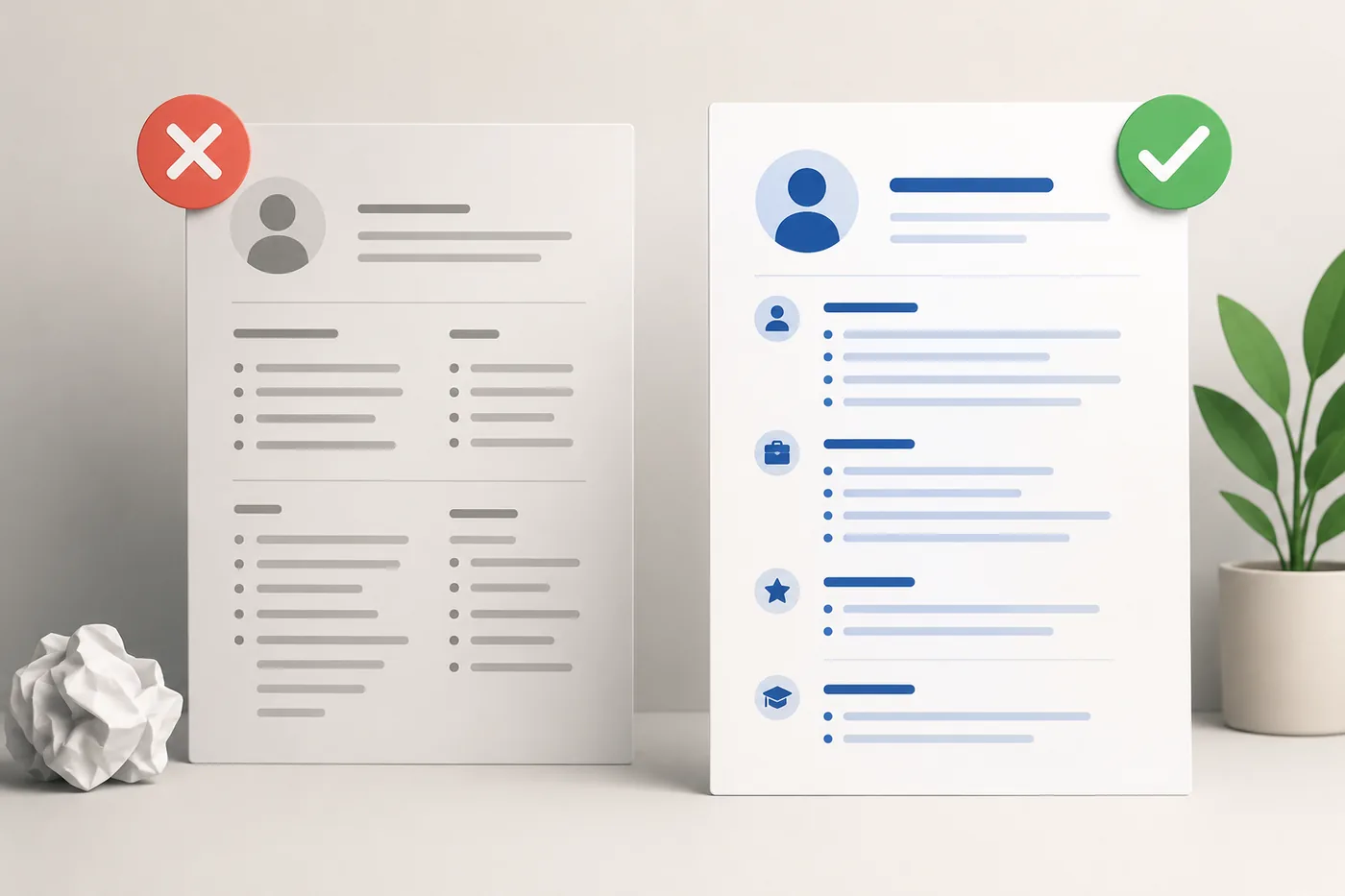
- Avoid tables, text boxes, headers/footers, and multi-column layouts that confuse parsers.
- Save and submit as a PDF unless the posting specifically requests Word.
- Mirror the language of the job description. If the posting says "stakeholder management," use that exact phrase (if it is true of you).
The most reliable way to know whether your resume will pass is to test it. Our free ATS score checker compares your resume against a specific job description and shows you exactly which keywords and requirements you are missing. We cover the mechanics in depth in how ATS works in Malaysia.
Tailoring: Why One Resume Is Never Enough
The biggest mistake Malaysian job seekers make is sending the same resume to every job. Each posting emphasises different skills and keywords, and both the ATS and the recruiter are looking for a match to that role.
Tailoring means:
- Read the job description and highlight the required skills, tools, and responsibilities.
- Rewrite your summary and top bullet points to reflect those priorities (truthfully).
- Adjust your skills section so the most relevant terms appear.
Doing this manually for every application is slow. You can automate it with the TailorCV resume optimizer, which rewrites your resume to match a specific job description while keeping it ATS-safe. Pair it with a tailored cover letter using our cover letter guide for Malaysia jobs.
CV vs Resume in Malaysia
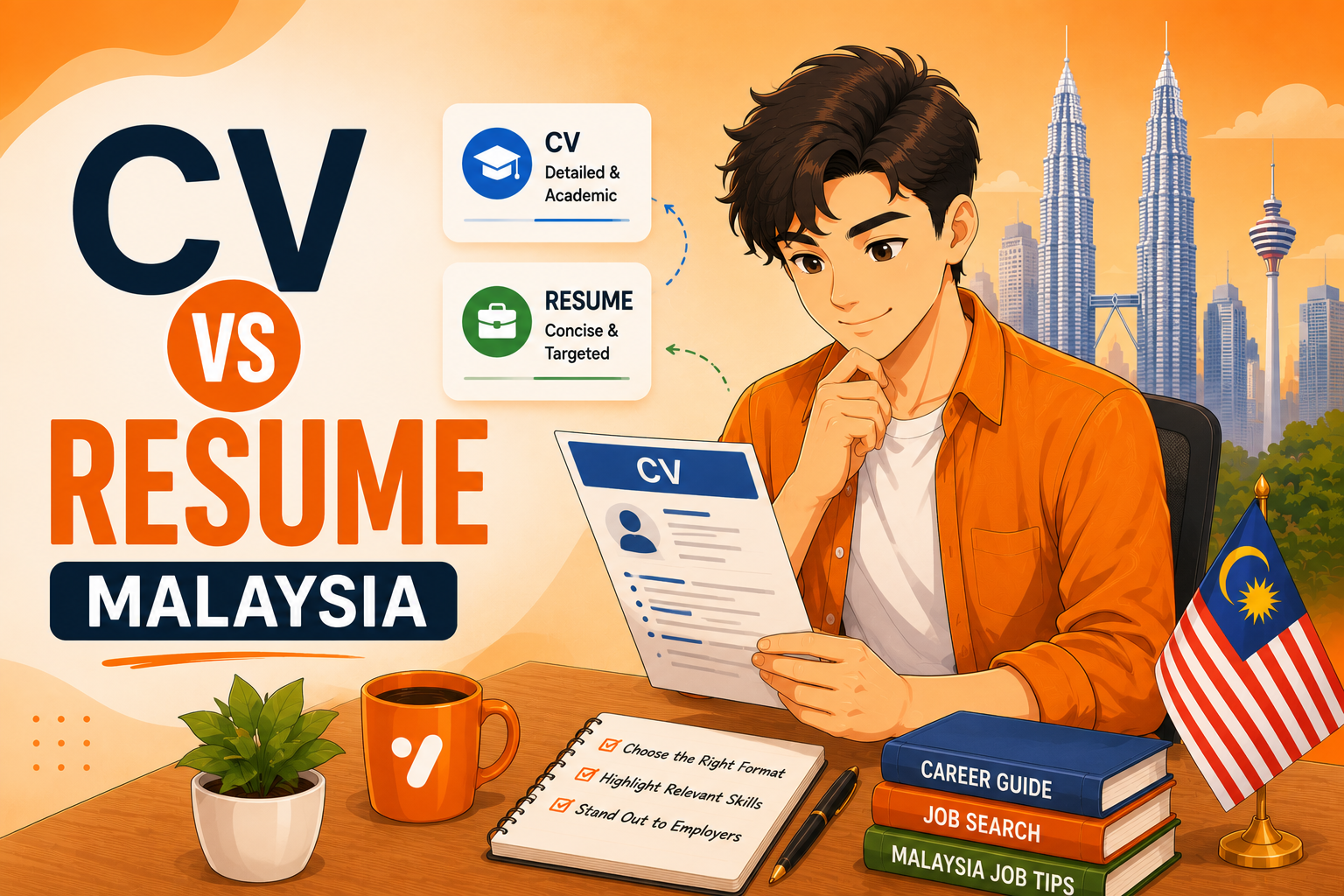
In Malaysia, the words "CV" and "resume" are often used interchangeably, and most private-sector roles simply want a concise 1–2 page document. However, academic, research, and some government roles may expect a longer, detailed CV. If you are unsure which format a role wants, read our breakdown of CV vs resume in Malaysia before you apply.
Common Malaysian Resume Mistakes to Avoid
- Too generic. Not tailoring to the job is the number-one reason strong candidates get filtered out.
- Outdated personal info. Listing IC number, religion, or marital status is unnecessary and dated.
- Unprofessional email. Use a firstname.lastname@ format, not a nickname from school.
- No numbers. Bullet points with no measurable impact read as duties, not achievements.
- Typos and inconsistent formatting. In a competitive market, small errors are easy reasons to reject.
- A photo that is too casual. If you include one, use a clean, professional headshot.
- Wrong file format. A scanned or image-based PDF cannot be parsed by an ATS.
A Simple Malaysian Resume Template
Use this structure as your starting point:
[Full Name]
[Professional Title]
[Phone] | [Professional Email] | [City, State] | [LinkedIn URL]
Nationality: [ ] | Work Authorisation: [ ]

PROFESSIONAL SUMMARY
2–4 sentences: who you are, top skills, biggest results.

WORK EXPERIENCE
[Job Title] — [Company], [Location]        [Start–End]
- Action verb + task + measurable result
- Action verb + task + measurable result

EDUCATION
[Degree], [Institution], [Year] — CGPA [if 3.0+]

SKILLS
Technical: [ ]
Languages: Bahasa Malaysia (native), English (fluent), [others]

CERTIFICATIONS / PROJECTS / ACHIEVEMENTS
[As relevant]
You can produce a polished version of this in minutes with the resume builder, then run it through the ATS checker before you apply.
After the Resume: The Rest of Your Application
A great resume gets you the interview, but it is one piece of the puzzle. To give yourself the best shot at Malaysian roles:
- Write a targeted cover letter — see how to write a cover letter for Malaysia jobs.
- Optimise your LinkedIn so recruiters find you — see LinkedIn optimization for Malaysian job seekers.
- Prepare for local interview norms with our Malaysia interview tips, and practise with a realistic AI mock interview.
- If you are targeting the capital specifically, read how to find a job in Kuala Lumpur.
- Relocating to Malaysia? Start with our guide to getting a job in Malaysia as a foreigner.
Frequently Asked Questions
Should I include a photo on my Malaysian resume? It is still common and generally expected for many local roles, though optional for tech companies and MNCs. If you include one, use a professional headshot. When in doubt, a clean photo rarely hurts in the Malaysian market.
How long should a Malaysian resume be? One page for fresh graduates and early-career professionals; up to two pages for experienced candidates. Keep every line relevant.
Do I need to state my expected salary? Only if the application specifically asks for it. If required, provide a researched range rather than a single fixed figure.
Should I write my resume in English or Bahasa Malaysia? English for most private-sector and MNC roles. Consider Bahasa Malaysia for GLCs and some local SMEs, and always list your language proficiencies.
How do I know if my resume will pass the ATS? Run it through a free ATS score checker against the specific job description to see your match score and missing keywords before you apply.
Where Malaysian Employers Post Jobs (and How Your Resume Reaches Them)
Understanding where your resume ends up helps you format it correctly. The main channels in Malaysia are:
| Reason | What it gets you |
|---|---|
| JobStreet by SEEK | the dominant job portal in Malaysia. Its system parses your uploaded resume and your profile, so both need to be complete and keyword-aligned |
| increasingly important for professional, MNC, and tech roles. Many recruiters source candidates directly here, which is why a strong profile matters; see LinkedIn optimization for Malaysian job seekers | |
| Hiredly (formerly WOBB) | popular with younger professionals and startups |
| Maukerja and Ricebowl | strong for non-executive, retail, F&B, and Bahasa-Malaysia-first roles |
| Indeed Malaysia | aggregates listings across the market |
| Company career pages and GLC portals | banks, Petronas, Khazanah-linked companies, and MNCs often run their own ATS-driven portals |
On every one of these, an ATS or a matching algorithm reads your resume first. That is why the formatting and keyword advice above is not optional — it is the difference between being surfaced and being buried. Run your resume through the ATS checker before uploading it anywhere.
Industry-Specific Resume Tips for Malaysia
Different sectors weight different things. Adjust your emphasis accordingly.
Finance and Accounting
Malaysian finance employers value professional qualifications heavily. Lead with ACCA, CIMA, CPA, or MIA membership if you have them. Quantify everything — transaction volumes in RM, audit sizes, cost savings, close cycles. Name the accounting software you know (SQL Accounting, AutoCount, SAP, Oracle). Precision and compliance signals matter more here than personality.
Technology and Engineering
Tech and engineering roles in Malaysia (especially in the Klang Valley, Penang, and Cyberjaya) are often the most ATS-heavy and the most photo-optional. Front-load a technical skills section: languages, frameworks, tools, cloud platforms, and certifications. For engineers, list your board/professional status (e.g. BEM/IEM) and standards you have worked with. A linked GitHub or portfolio is a strong plus — and you can turn your resume into a live portfolio with the TailorCV portfolio builder.
Sales, Marketing, and Business Development
Results are the whole story. Every bullet should carry a number: revenue grown, targets exceeded (as a percentage), accounts closed, campaigns run, ROI delivered. Malaysian sales recruiters scan for track record fast, so put your best result in the summary line.
Hospitality, Retail, and F&B
For service and operational roles, emphasise reliability, languages (multilingual candidates are highly valued for customer-facing roles), and specific operational wins — covers served, upsell rates, inventory accuracy, shift leadership. Bahasa Malaysia and Mandarin ability can be genuine differentiators.
Fresh Graduates Across All Sectors
With limited work history, your projects, internships, final-year project, and leadership in clubs or societies do the heavy lifting. Treat each as a mini work-experience entry with an action-result bullet structure. Our full playbook is in how to get a job in Malaysia as a fresh graduate.
Worked Example: Experienced Professional
Here is how the principles come together for a mid-career candidate.
NURUL AISYAH BINTI RAHMAN
Digital Marketing Manager
+60 12-345 6789 | nurul.aisyah@email.com | Petaling Jaya, Selangor | linkedin.com/in/nurulaisyah
Nationality: Malaysian | Work Authorisation: Malaysian Citizen

PROFESSIONAL SUMMARY
Digital Marketing Manager with 6 years' experience scaling e-commerce brands in
the Malaysian and SEA markets. Grew online revenue from RM4M to RM11M in two years
and cut cost-per-acquisition by 34%. Fluent in Bahasa Malaysia, English, and Mandarin.

WORK EXPERIENCE
Digital Marketing Manager — RetailCo Sdn Bhd, Kuala Lumpur      Jan 2023 – Present
- Grew e-commerce revenue 175% (RM4M to RM11M) across Shopee, Lazada, and own site.
- Reduced blended CPA by 34% by restructuring paid social and Google Ads funnels.
- Led a team of 6 across content, performance, and CRM.

Digital Marketing Executive — BrandHub Sdn Bhd, Petaling Jaya   Jun 2020 – Dec 2022
- Managed RM1.2M annual ad budget with a consistent 4.2x ROAS.
- Launched a loyalty programme that lifted repeat purchase rate by 28%.

EDUCATION
Bachelor of Business (Marketing), Universiti Malaya, 2020 — CGPA 3.6

SKILLS
Technical: Google Ads, Meta Ads, GA4, Shopee/Lazada Seller Centre, HubSpot, SQL basics
Languages: Bahasa Malaysia (native), English (fluent), Mandarin (conversational)

CERTIFICATIONS
Google Ads Search & Measurement | Meta Certified Media Buying Professional
Notice how every experience bullet pairs an action with a measurable outcome, the summary leads with the strongest number, and the skills mirror what a Malaysian digital marketing job description would ask for. That is exactly the pattern the resume optimizer reinforces automatically when you tailor to a specific posting.
How Long Should Each Section Be?
A rough allocation for a two-page experienced resume:
- Header + summary: top eighth of page one.
- Work experience: roughly 60% of the total — this is what recruiters read most.
- Skills: a compact block, easy to scan.
- Education + certifications: brief unless you are a fresh graduate.
- Extras (projects, awards): only what strengthens your case for this role.
If a section is not helping you get this interview, cut it. A tight, relevant resume always beats a long, generic one.
Keeping Your Resume Current and Organised
A resume is not a write-once document. The candidates who move fastest keep a master resume — a complete record of every role, achievement, and skill — and then create tailored, trimmed versions from it for each application. This saves enormous time: instead of rewriting from scratch, you select and reorder the most relevant material for each posting.
A few habits that pay off:
- Update it quarterly, not just when you're job-hunting. Add wins while they're fresh and quantified — you'll forget the exact numbers later.
- Keep dated versions so you can see what you sent where, and reuse strong tailored versions for similar roles.
- Name files professionally — "NurulAisyah_Resume_DigitalMarketing.pdf" — so a recruiter's download folder makes sense at a glance.
- Re-run the ATS check whenever you target a meaningfully different role, since the right keywords change with the job.
Maintaining your resume in the TailorCV resume builder makes this painless — your master content stays in one place, and each tailored version is a few clicks away.
Resume Red Flags Malaysian Recruiters Notice
Beyond formatting, experienced recruiters in Malaysia scan for subtle signals that quietly move a resume to the "no" pile. Avoid these:
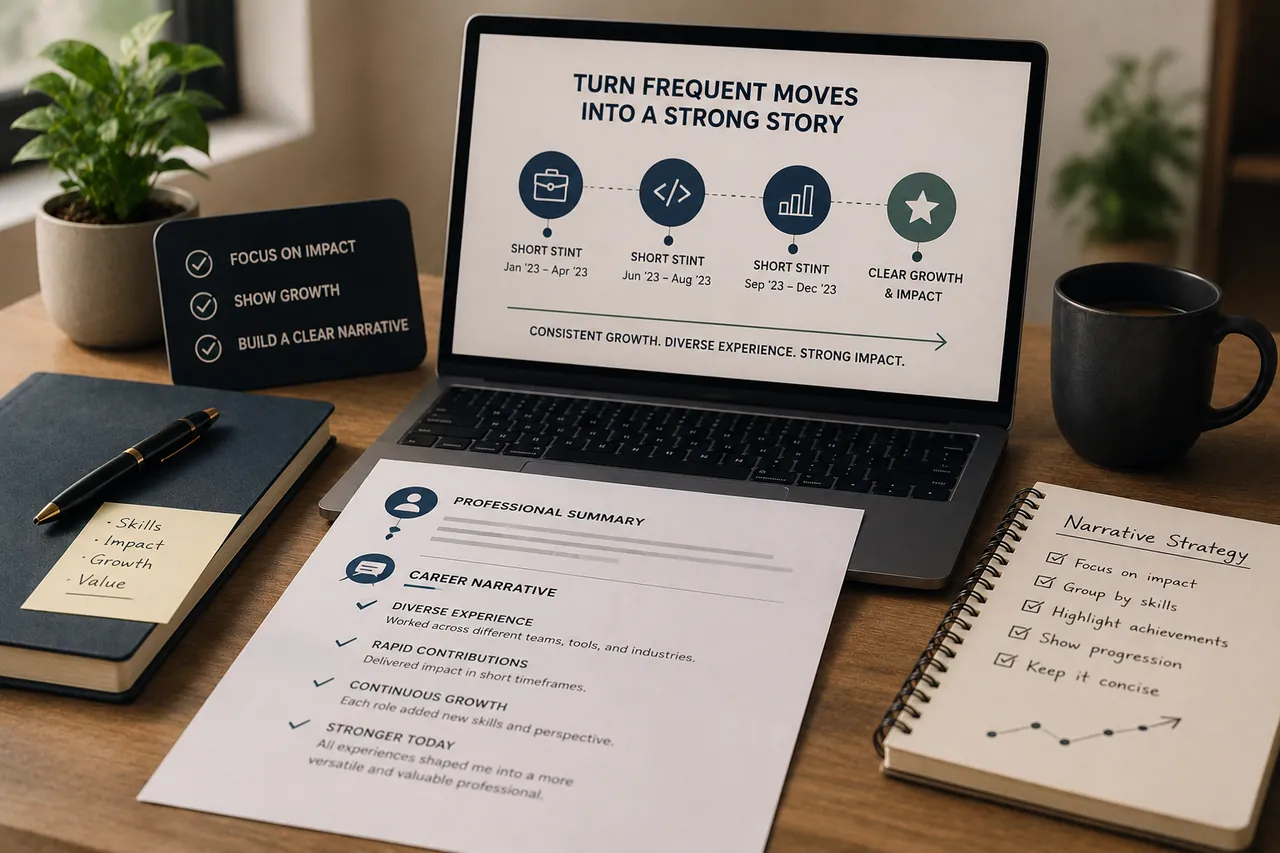
- Unexplained gaps or very short stints without context. If you have them, address them briefly (in the resume or, better, the cover letter) rather than leaving the reader to assume the worst.
- Duties instead of achievements. A list of "responsible for…" reads as passive; results with numbers read as impact.
- Inconsistent dates or formatting. Misaligned months, mismatched fonts, and shifting bullet styles suggest carelessness.
- An objective that's all about you. "Seeking a challenging role to grow my career" wastes your best space; lead with what you offer the employer.
- Overused buzzwords with no evidence. "Dynamic, results-driven, passionate" mean nothing unless a bullet proves them.
- A generic document. The clearest red flag of all — a resume that could have been sent to any company signals low interest in this one.
Fixing these is often the difference between a resume that's technically fine and one that actually earns interviews.
Final Thoughts
A strong Malaysian resume is clear, tailored, and easy for both software and humans to read. Follow the local conventions, quantify your achievements, mirror the language of each job description, and keep the formatting clean. Do that consistently and you will move from "application sent" to "interview scheduled" far more often.
When you are ready, build your resume with the TailorCV resume builder, tailor it to each role with the resume optimizer, and walk into every interview prepared. Your next Malaysian role is a well-written resume away.
What is your resume scoring right now?
Scan it against a job description and get your ATS match score in about a minute.
Drop your resume here or choose a file
PDF only. Max 2 MB.
We never share your data or use it to train AI models.

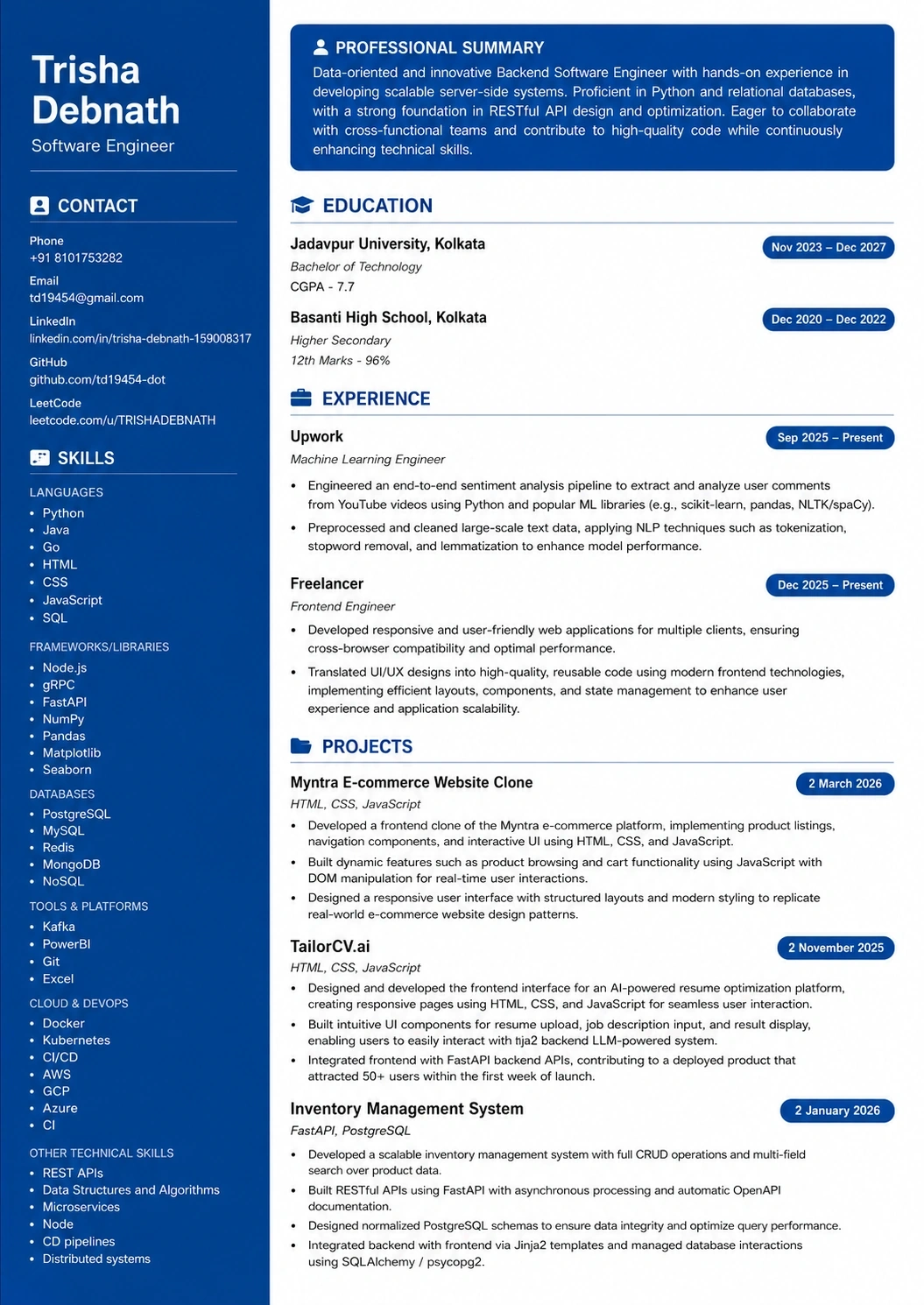
Templates that keep this structure intact
This template is ATS-tested — start from it and the formatting rules in this guide are already handled.
Was this guide useful?
Be the first to rate it.