TD
TD
Key Takeaways
- Canadian resumes typically accept a two-page format, focusing on skills and qualifications rather than personal details.
- Include clear contact information, a tailored professional summary, and list work experience in reverse chronological order with quantifiable achievements.
- Highlight both hard and soft skills relevant to the job, adapting this section to match the job description for better ATS compatibility.
- Avoid vague descriptions and excessive details in the work experience section; instead, focus on specific accomplishments and relevant experiences.
Landing your first job in Canada can be a daunting task, especially for newcomers and international students unfamiliar with local hiring practices. A well-crafted resume is your key to making a strong first impression. In Canada, resumes have specific norms and expectations that differ from those in other countries. This article will guide you through the essentials of creating a standout resume that aligns with Canadian standards, enhances your chances of passing Applicant Tracking Systems (ATS), and ultimately helps you secure that all-important first job.
Understanding Canadian Resume Norms
Before diving into the specifics of resume writing, it’s crucial to understand the fundamental differences in Canadian resume expectations compared to other regions. Here are some key points to consider:
| Rule | What it means |
|---|---|
| Length | While some countries expect concise one-page resumes, Canadian employers typically accept two-page resumes, especially for those with extensive experience |
| Personal Information | In Canada, it is standard to exclude personal details such as your photo, age, marital status, or nationality. Employers are focused on your skills and qualifications |
| Format | Use a clean, professional format. Avoid excessive graphics or colors that may distract from your content. A simple, clear layout enhances readability |
| References | It’s common to include a line stating “References available upon request” rather than listing them on your resume |
Crafting Your Resume
Creating a resume that stands out while adhering to Canadian norms involves several key components:
1. Contact Information
Your contact information should be clear and professional. Include:
- Name: Use a bold, larger font.
- Phone Number: Format: (123) 456-7890.
- Email Address: Use a professional email address.
- LinkedIn Profile: Include a link if it’s up-to-date.
- Location: City and province (no full address required).
2. Professional Summary
A well-written professional summary can set the tone for your resume. This section should be 2-4 sentences summarizing your qualifications, experience, and what you bring to the table. Tailor it to the job you're applying for, using keywords from the job description to enhance your ATS score. For further insights, check out our resume matching with job description guide.
3. Work Experience
List your work experience in reverse chronological order. For each position, include:
- Job Title
- Company Name & Location
- Dates of Employment (Month/Year format)
- Bullet Points: Use bullet points to describe your key responsibilities and achievements. Begin each bullet with an action verb and quantify your accomplishments when possible (e.g., “Increased sales by 20%”).
Common Mistakes in Work Experience Section
- Vague Descriptions: Avoid generic phrases like “responsible for” without elaboration. Instead, focus on specific achievements.
- Ignoring Gaps: If you have employment gaps, consider including volunteer work or professional development to bridge those periods.
- Overloading with Details: Keep it concise. Focus on the most relevant experiences.
4. Education
Include your educational background, listing your most recent qualifications first. Provide:
- Degree
- Institution Name
- Location
- Graduation Date (Month/Year)
If you have relevant certifications or courses, list them in this section as well.
Example of a Strong Education Section
Bachelor of Commerce
University of Toronto, Toronto, ON
Graduated: June 2023
Relevant Coursework: Marketing Strategies, Business Analytics
5. Skills
In this section, list both hard and soft skills relevant to the position. Hard skills might include technical abilities, while soft skills may encompass communication and teamwork. Tailor this section to the job description to improve your chances of passing ATS filters. For tips on optimizing your resume for ATS, refer to our how to make a resume ATS-friendly guide.
Skills Checklist
- Hard Skills: Software proficiency, technical skills, certifications.
- Soft Skills: Leadership, teamwork, problem-solving.
6. Additional Sections
Depending on your background, you may want to include additional sections such as:
- Volunteer Experience: Especially relevant for newcomers to demonstrate community involvement.
- Languages: Highlight any additional languages you speak, which can be an asset in a multicultural workplace.
- Professional Development: Include workshops, webinars, or training relevant to your field.
Real-Life Examples of Additional Sections
- Volunteer Experience: “Volunteer Coordinator, Community Food Bank, Toronto, ON (January 2022 - Present) - Organized food drives and coordinated volunteers for events.”
- Languages: “Fluent in French and Spanish, conversational in Mandarin.”
Optimizing for ATS
Most Canadian employers use ATS to screen resumes. To ensure your resume passes through these systems, consider the following:
Your resume after optimization
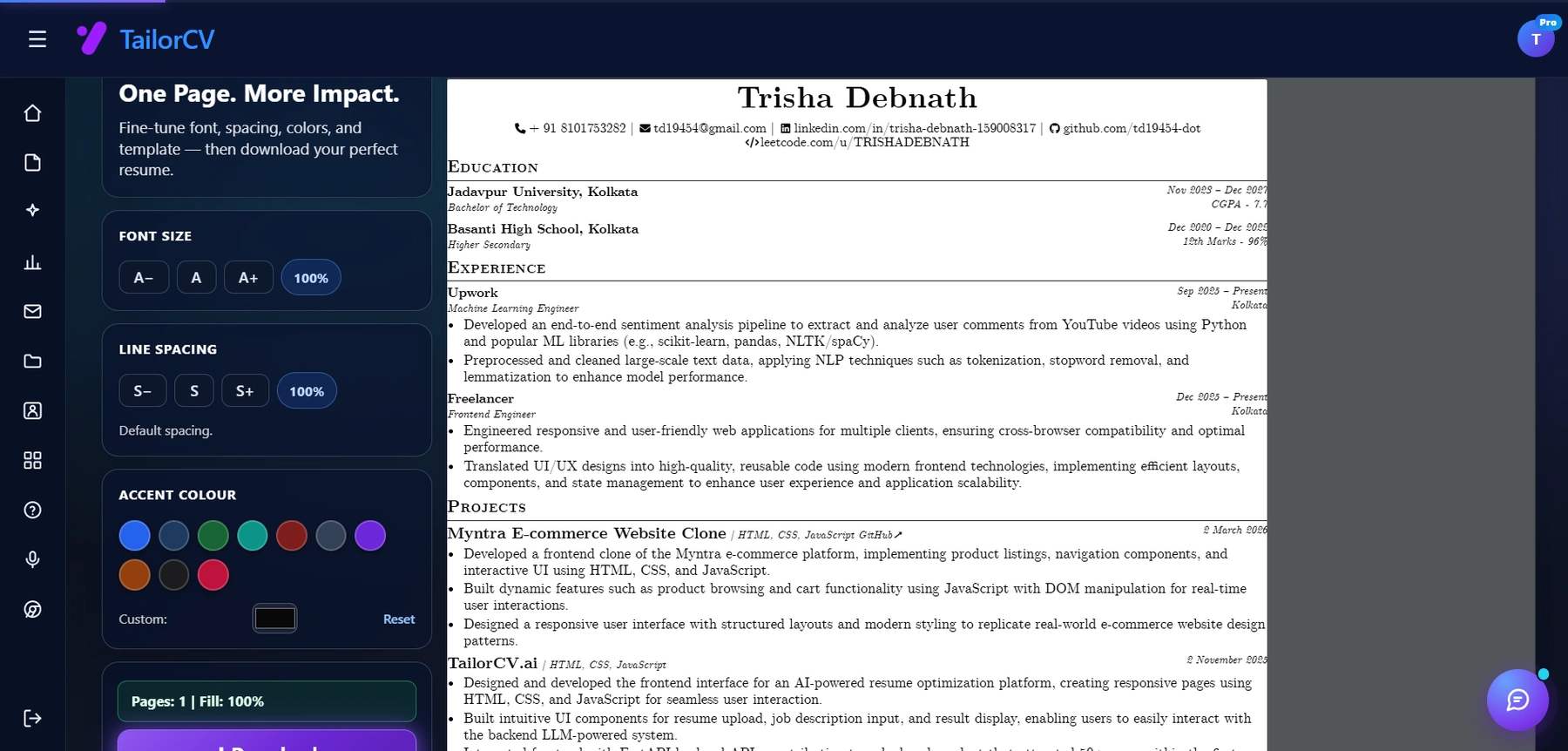
This is the resume after tailoring - the content is already matched, and these controls are how you fit it onto one page.
- Keywords: Incorporate keywords from the job description naturally throughout your resume.
- Standard Formatting: Avoid using tables or text boxes, as these can confuse ATS.
- File Format: Save your resume as a PDF or Word document, as these formats are typically ATS-friendly. For further guidance, check our resume file format guide.
Steps to Optimize for ATS
- Identify Keywords: Read the job description carefully and highlight key skills and qualifications.
- Match Your Language: Use the same terminology as the job description to describe your experience and skills.
- Use Standard Headings: Stick to common section titles like “Work Experience,” “Education,” and “Skills.”
Tailoring Your Resume
Customizing your resume for each job application is essential. Use the job description as a blueprint to highlight relevant experiences and skills. This increases the likelihood of your resume being noticed by hiring managers and ATS. For a detailed understanding of how to tailor your resume, refer to our resume optimization guide.
Tailoring Checklist
- Review the Job Description: Identify key qualifications and responsibilities.
- Adjust Your Professional Summary: Reflect the specific skills and experiences that align with the job.
- Select Relevant Experience: Highlight job roles and achievements that directly relate to the position.
Leveraging LinkedIn
In today’s job market, a strong LinkedIn profile can complement your resume and help you network effectively. Ensure your LinkedIn profile is complete and matches your resume. For tips on using LinkedIn for job searching, check our LinkedIn for job search guide.
Steps to Optimize Your LinkedIn Profile
- Complete Your Profile: Ensure all sections are filled out, including a professional photo.
- Use Keywords: Incorporate industry-specific keywords in your profile summary and experience sections.
- Engage with Content: Share articles and insights related to your field to demonstrate your knowledge and engagement.
Preparing for Interviews
Once your resume has landed you an interview, preparation is key to success. Consider practicing with our AI mock interview tool to build confidence and refine your responses.
Interview Preparation Tips
- Research the Company: Understand their mission, values, and culture.
- Practice Common Questions: Prepare answers to common interview questions and practice delivering them.
- Prepare Your Questions: Have a list of thoughtful questions to ask the interviewer about the role and company.
Portfolio and Additional Resources
If your field requires a portfolio (e.g., graphic design, writing), consider creating one using our portfolio website builder to showcase your work effectively.
Portfolio Tips
- Select Your Best Work: Curate your portfolio to include only your most impressive pieces.
- Showcase Variety: Include different types of work to demonstrate your range of skills.
- Keep It Organized: Use clear categories or sections to make navigation easy for viewers.
Common Job Search Pitfalls
Navigating the job market can be challenging, especially for newcomers. Here are some common pitfalls to avoid:
- Applying Blindly: Don’t submit the same resume for every job. Tailor each application to the specific role.
- Neglecting Networking: Many jobs are filled through referrals. Use LinkedIn to connect with professionals in your field.
- Ignoring Job Scams: Be vigilant about potential job scams. Familiarize yourself with how to spot a job scam.
Data Points to Consider
- Application Volume: Studies show that applying to 10-15 jobs per week can yield better results. For insights on this, check out our article on how many jobs should you apply to per day.
- Recruitment Feedback: Many candidates experience recruiter ghosting after interviews. Understanding this phenomenon can help you manage expectations. Learn more in our guide on recruiter ghosting you after an interview.
By following these guidelines and utilizing the resources provided, you can create a compelling resume tailored for the Canadian job market. Remember, persistence is key, and with the right preparation, you can land that first Canadian job.
Related Guides
Keep building your Canadian job search with these related TailorCV guides:
- How ATS Works in Canada: Beating Applicant Tracking Systems for Canadian Jobs
- Canadian Resume Format Guide (2026): How to Write a Resume for Canada
- How to Write a Cover Letter for Canadian Jobs (With Structure)
- How to Get a Job in Canada in 2026: A Step-by-Step Guide
- Recruiter Ghosting You After an Interview? What It Means and What to Do Next
- AI Job Search Agent 2026 - How to Use AI Without Losing Your Voice
- Follow-Up Email After Job Application - Templates That Sound Professional
- Job Application Tracker Template - What to Track After Every Application
You can also check your resume's ATS score for free, generate a tailored cover letter, or build a portfolio website in minutes.
Frequently Asked Questions
1. What is the best resume format for Canadian jobs?
The best format is typically a reverse chronological format, highlighting your work experience and education. For more details, check our Canadian resume format guide.
2. How long should my resume be?
In Canada, a two-page resume is generally acceptable, especially for those with extensive experience. For tips on content, refer to our how to write a resume from scratch.
3. Do I need to include references on my resume?
It’s common to state “References available upon request” instead of listing them. This keeps your resume concise and focused.
4. What should I do if I lack Canadian work experience?
Focus on transferable skills and relevant volunteer work. Highlight any international experience that aligns with the job description. For more insights, review our how international students can get jobs in Canada guide.
5. How can I improve my ATS score?
Use keywords from the job description, maintain standard formatting, and avoid graphics. For a deeper understanding of ATS, read our guide on how ATS works in Canada.
What is your resume scoring right now?
Scan it against a job description and get your ATS match score in about a minute.
Drop your resume here or choose a file
PDF only. Max 2 MB.
We never share your data or use it to train AI models.

Templates that keep this structure intact
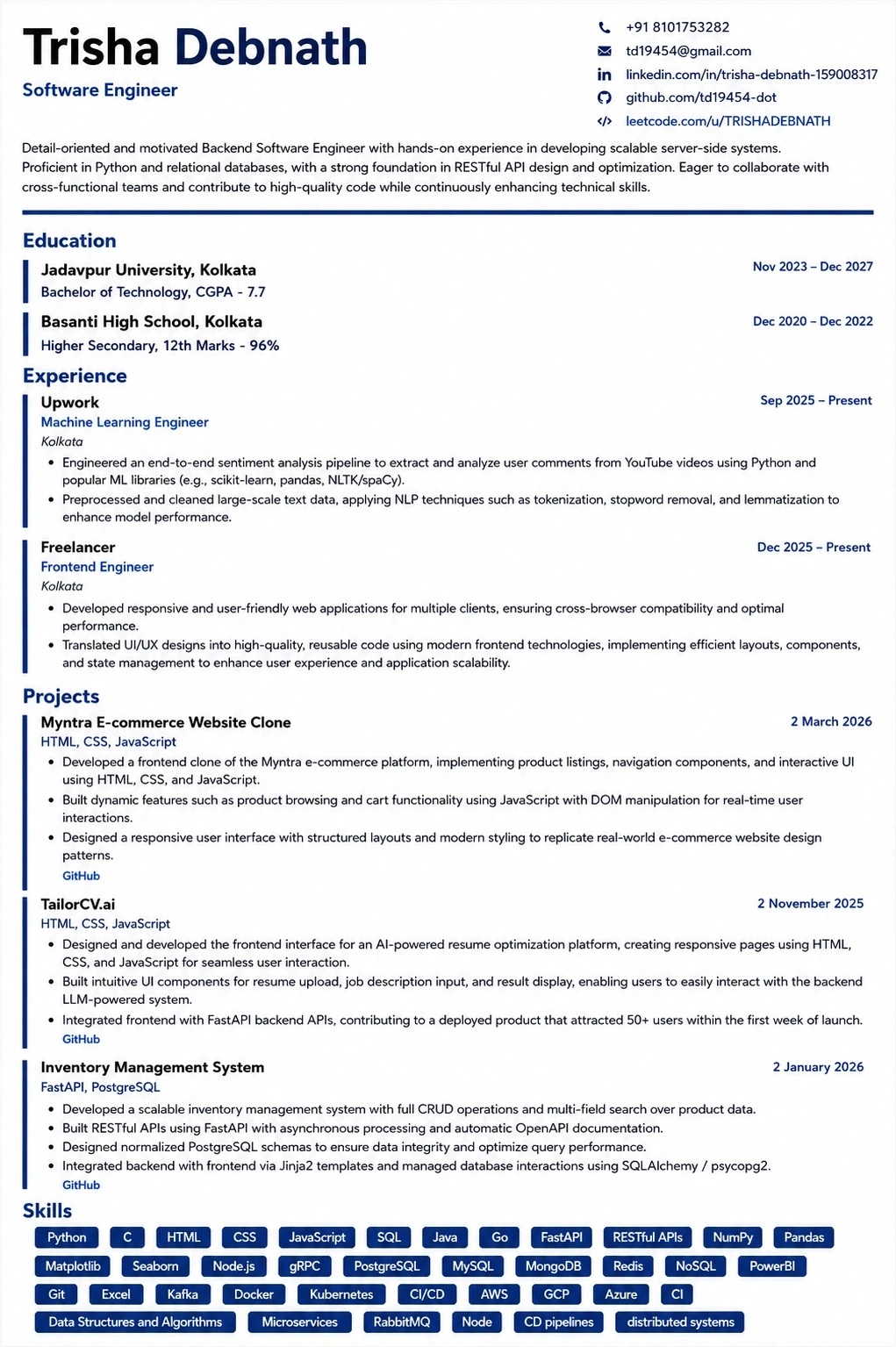
This template is ATS-tested — start from it and the formatting rules in this guide are already handled.
Was this guide useful?
Be the first to rate it.