 SS
SS
Key Takeaways
- Malaysia's strongest hiring is in tech, finance, shared services, engineering, sales, and healthcare — concentrated in the Klang Valley, Penang, and Johor.
- Tailoring every application to the specific job description is the single biggest factor separating candidates who get interviews from those who don't.
- Fresh graduates win by translating internships, projects, and co-curricular leadership into evidence of real, job-ready skills.
- Networking and referrals quietly fill a large share of roles — do not rely on job portals alone.
- Preparation for the interview (and, increasingly, online assessments) is what turns a shortlist into an offer.
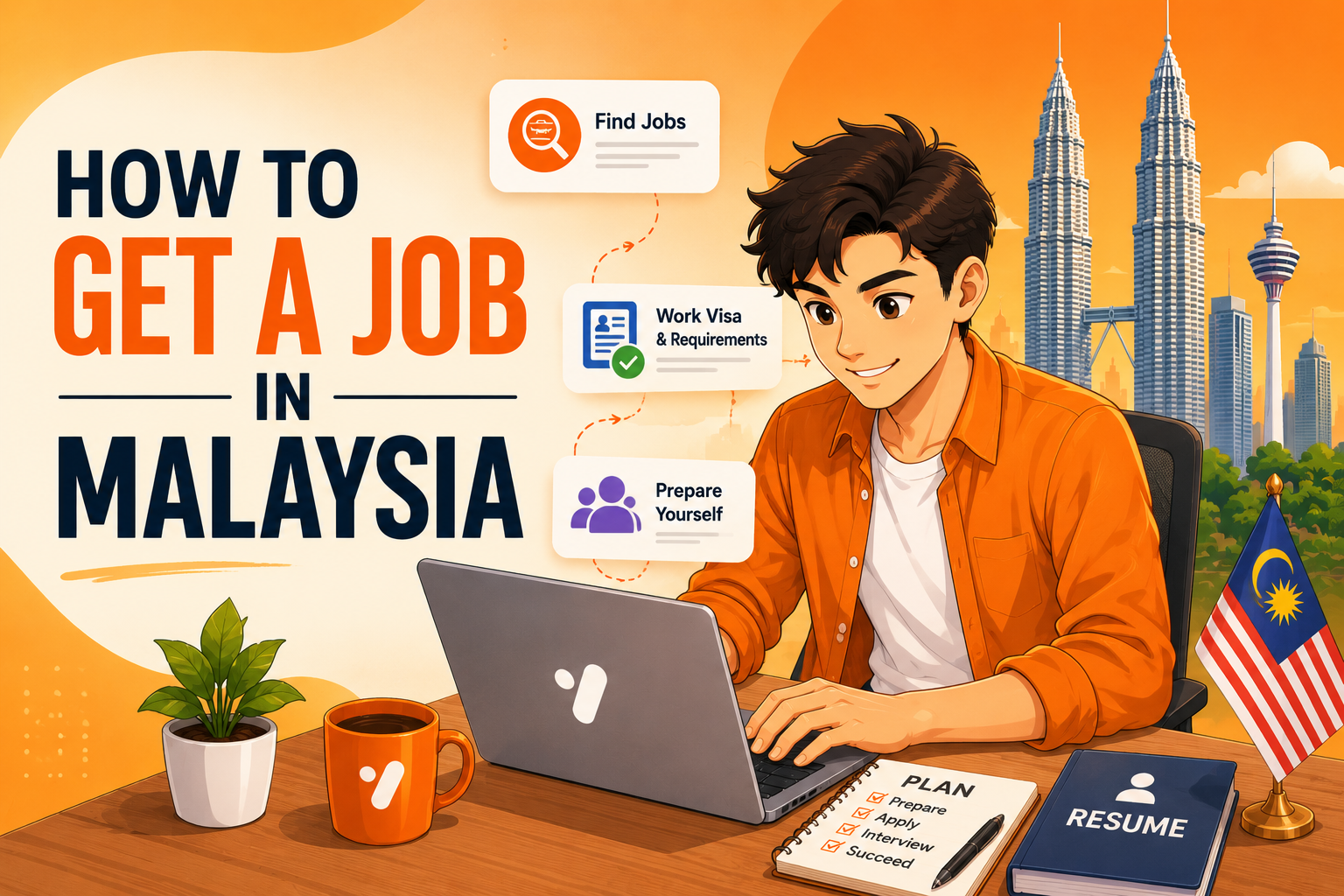
Landing a job in Malaysia in 2026 is competitive but very achievable if you approach it strategically. Between a growing digital economy, a strong presence of multinational companies, and government-linked employers, there are real opportunities across Kuala Lumpur, Selangor, Penang, and Johor. The challenge is that many roles attract hundreds of applicants, so the people who get hired are rarely the "most qualified" on paper — they are the ones who apply smartly, present themselves clearly, and prepare properly.
This guide walks you through the entire process: understanding the Malaysian job market, finding the right openings, building an application that gets shortlisted, and converting interviews into offers. It is written for fresh graduates and early-career job seekers, but the principles apply to anyone job-hunting in Malaysia.
Understanding the Malaysian Job Market
Before you apply anywhere, understand where the opportunities actually are.
Where the Jobs Are
- Technology & digital: software, data, cybersecurity, product, and digital marketing roles cluster in Cyberjaya, KL Sentral, and Bangsar South. Demand is strong and often the most open to fresh talent.
- Finance & shared services: banks, insurers, and global business-services centres (GBS) in KL and Penang hire large graduate intakes in finance, operations, and analytics.
- Engineering & manufacturing: Penang and Johor's electronics and semiconductor sectors recruit engineers continuously.
- Sales, marketing & business development: every growing company needs revenue talent, making these among the most accessible entry points.
- Healthcare, hospitality & education: steady, people-facing demand across the country.
What Employers Value
Malaysian employers look for candidates who are job-ready, communicate well (often across Bahasa Malaysia, English, and sometimes Mandarin), and show genuine interest in the role. A relevant qualification opens the door; demonstrated skills and the right attitude get you through it.
Step 1: Get Your Resume Right First
Nothing else matters if your resume does not get you shortlisted. In Malaysia, most mid-to-large employers screen applications with an Applicant Tracking System (ATS) before a human sees them, so your resume must be both machine-readable and genuinely persuasive.
What optimizing actually does to your resume
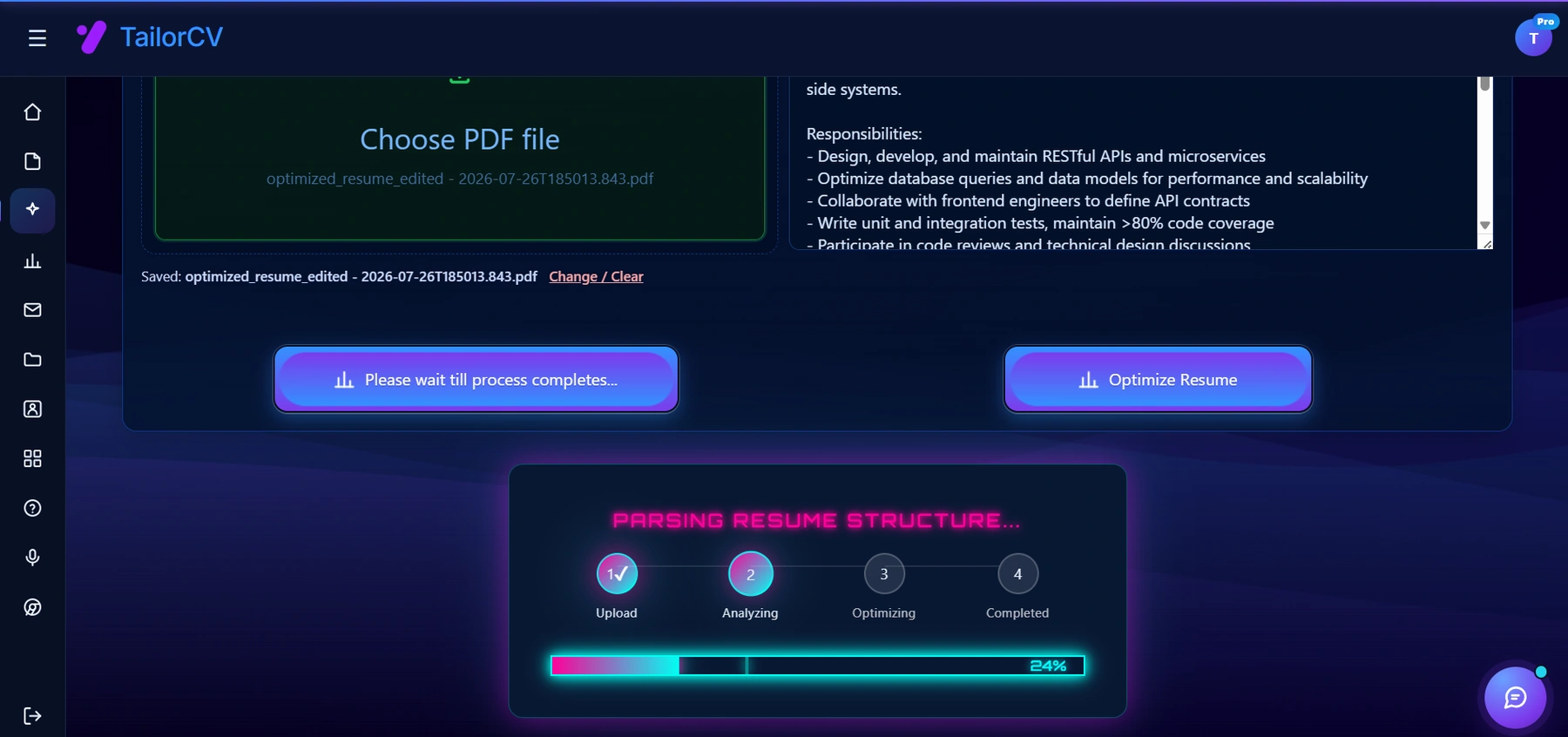
Optimising runs against the specific job description you paste in, not in the abstract.
Before you apply to a single role:
- Build a clean, one-to-two-page resume following local conventions — our complete guide to writing a resume for Malaysia jobs covers exactly what to include.
- Make sure it passes the ATS. Learn the mechanics in how ATS works in Malaysia, and test your resume against each posting with the free ATS score checker.
- If you are unsure whether to submit a "CV" or a "resume," read CV vs resume in Malaysia.
A polished resume built with the TailorCV resume builder and tailored to each job with the resume optimizer will consistently out-perform a generic one.
Step 2: Search in the Right Places
Spread your search across several channels rather than relying on one.
Job Portals
- JobStreet by SEEK — the dominant Malaysian portal; complete your profile fully so its matching surfaces you.
- LinkedIn — essential for professional, MNC, and tech roles, and where many recruiters source directly.
- Hiredly — popular with startups and younger professionals.
- Maukerja / Ricebowl — strong for non-executive, retail, and Bahasa-first roles.
- Indeed Malaysia and company career pages / GLC portals — apply directly where you can.
Beyond the Portals
A large share of roles are filled through referrals before they are ever advertised. Tap your university alumni network, lecturers, former internship colleagues, and industry events. A warm referral dramatically increases your odds — which is why building your professional presence matters; see LinkedIn optimization for Malaysian job seekers.
If you are targeting the capital specifically, our guide to finding a job in Kuala Lumpur breaks down the KL market in detail. Relocating from abroad? Start with getting a job in Malaysia as a foreigner.
Step 3: Tailor Every Application
The most common mistake is blasting the same resume to every job. Both the ATS and the recruiter are matching you against that role's requirements. Tailoring means:
Tailoring without leaving LinkedIn
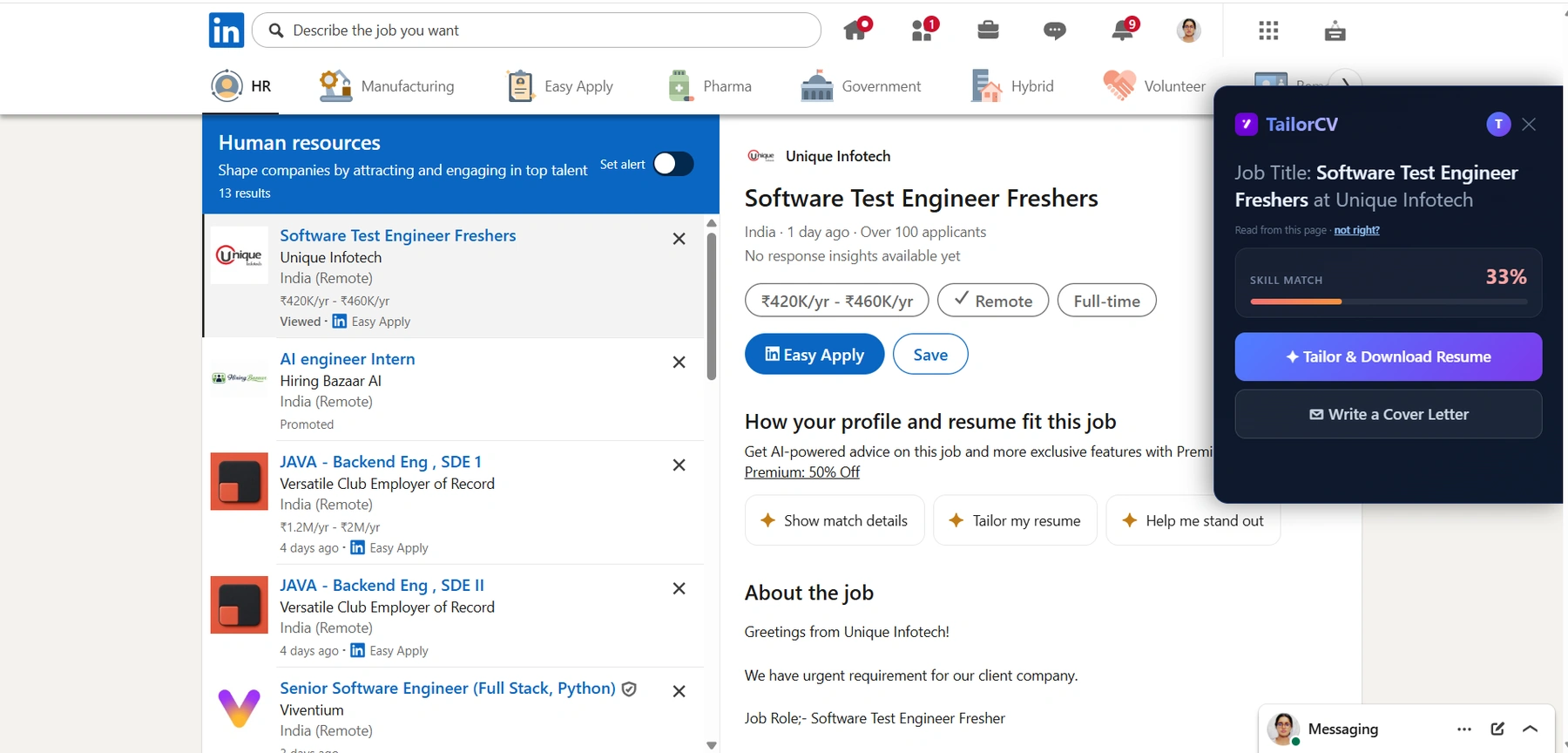
The panel reads the description straight off the listing you are already on and scores your resume against that role, so tailoring per application is a click rather than a detour.
- Read the job description and highlight the required skills, tools, and responsibilities.
- Adjust your summary and top bullet points to reflect those priorities — truthfully.
- Mirror the keywords the posting uses. For a field-by-field list, see the best resume keywords for Malaysian jobs.
Add a short, targeted cover letter using our Malaysia cover letter guide. It signals genuine interest and gives context a resume can't.
Step 4: Win as a Fresh Graduate
If you have little formal experience, you are competing on potential and evidence of job-ready skills. Here is how to stand out.
Turn Everything Into Experience
Treat each of these like a mini job, described with an action-and-result bullet:
- Internships: what you did and what changed because of it.
- Final-year projects: the problem, your approach, the outcome.
- Part-time and freelance work: reliability, customer handling, sales — all valued.
- Co-curricular leadership: running a society, an event, or a team demonstrates initiative and organisation.
Close Skill Gaps Fast
A short, relevant certification (Google, Microsoft, AWS, or an HRDF-funded course) gives you real keywords and genuine capability. For tech and creative roles, a portfolio is powerful — you can turn your resume into a live portfolio site with the TailorCV portfolio builder.
Apply Early and Widely
Graduate intakes and management-trainee programmes at banks, MNCs, and GLCs open on cycles. Apply early, apply to many, and keep a tracker so you follow up properly.
Step 5: Ace the Assessment and Interview
Increasingly, Malaysian employers add an online assessment (aptitude, personality, or a technical test) before or alongside the interview. Take these seriously and practise beforehand.
For the interview itself:
- Research the company, the role, and recent news.
- Prepare stories that show impact, using a clear structure (situation → what you did → result).
- Anticipate the common questions and rehearse out loud.
Our Malaysia interview tips cover local expectations in detail, and you can rehearse realistically with our AI mock interview, which asks questions based on your resume and gives feedback. Generate likely questions in advance with interview prep.
Step 6: Follow Up and Negotiate
- Send a short thank-you after interviews — it is still uncommon in Malaysia and quietly sets you apart.
- Track your applications so nothing slips; note dates and follow up politely after a week or two of silence.
- Research salary ranges before you get an offer so you can negotiate from an informed position. Fresh-graduate salaries vary widely by sector and location, so know your market.
Salary Expectations in Malaysia (2026)
Salaries depend heavily on industry, employer type, and location. As a rough orientation for fresh graduates:
- Tech and engineering roles in the Klang Valley and Penang typically pay above the general graduate average.
- Finance and shared services offer competitive graduate packages, especially at MNCs and GBS centres.
- Sales roles often have lower base pay but meaningful commission upside.
- KL and Selangor generally pay more than smaller states, reflecting living costs.
Always research the specific range for your role and industry, and remember that the first job's title, learning, and trajectory often matter more than a small pay difference.
A Realistic Job-Search Timeline
- Weeks 1–2: finalise your ATS-ready resume, LinkedIn, and a base cover letter.
- Weeks 2–6: apply consistently (tailored each time), network actively, and track everything.
- Ongoing: prepare for and attend assessments and interviews; refine your materials based on what gets responses.
Job hunting is a numbers-and-quality game: enough well-targeted applications, plus genuine preparation, reliably produces offers.
Use Your University's Career Services and Alumni
If you are a recent graduate, one of your most underused assets is your own university. Career services offices exist precisely to help you get hired — and most of what they offer is free and included in what you already paid. Take advantage of resume reviews, mock interviews, on-campus career fairs, employer talks, and exclusive job boards that list roles specifically targeting your institution's graduates. Many Malaysian employers build direct pipelines with universities for their graduate intakes, so a role posted through your career centre often has far less competition than the same job on a public portal.
Your alumni network is just as powerful. Graduates who came before you are now working at the companies you want to join, and most are genuinely willing to help someone from their alma mater. A short, respectful message asking for fifteen minutes of advice about their career path — not a job — often leads to insight, encouragement, and sometimes a referral. Building these relationships is far easier when your professional presence is strong; see LinkedIn optimization for Malaysian job seekers.
The Skills Malaysian Employers Want in 2026
Beyond role-specific qualifications, Malaysian employers consistently prize a set of transferable skills that make you effective from day one. Weave evidence of these into your resume and interview answers:
- Communication across languages. The ability to work in Bahasa Malaysia and English — and often Mandarin — is a real asset in Malaysia's multicultural, regionally connected economy.
- Digital fluency. Comfort with data, common software, and digital tools is expected in almost every field now, not just tech roles.
- Adaptability and learning agility. Employers value people who pick things up quickly and stay calm through change.
- Problem-solving and initiative. Showing you can identify an issue and act on it — rather than waiting to be told — sets you apart from equally qualified peers.
- Teamwork and emotional intelligence. Most work happens in teams; the ability to collaborate, handle disagreement gracefully, and read a room matters enormously.
Don't just claim these — prove them with short, specific examples. "Led a five-person final-year project team to deliver on deadline despite a mid-semester scope change" says more than "good team player" ever could.
Graduate Programmes and Management Trainee Schemes
If you are a fresh graduate, some of the best-structured entry points into Malaysian corporate life are formal graduate and management-trainee programmes. Banks (Maybank, CIMB, Public Bank), telcos, consumer-goods multinationals, the Big Four professional-services firms, and many GLCs run annual intakes that rotate you through departments, pair you with mentors, and fast-track you toward leadership. These programmes are competitive — often thousands of applicants for a few dozen seats — but they reward preparation rather than pedigree.
To give yourself the best shot:
- Apply the moment intakes open. Most run on a fixed cycle (frequently opening in the last quarter of the year for the following intake). Track the career pages of your target employers and set reminders.
- Treat the online assessment as a real stage. These programmes lean heavily on aptitude tests, personality profiling, gamified assessments, and sometimes a video interview. Practise numerical, verbal, and logical-reasoning tests until they feel routine.
- Prepare for assessment centres. Later rounds often involve group exercises, case studies, and presentations. Assessors watch how you collaborate, structure a problem, and communicate — not just whether you "win" the debate. Contribute clearly, bring others in, and stay composed.
- Know why this employer. A generic "I want to learn and grow" answer is forgettable. Research the company's strategy, recent news, and values, and connect them to your own goals.
Beyond corporate schemes, the government's SL1M-style and Protégé-Ready-to-Work initiatives and various GLC-linked programmes are designed specifically to help Malaysian graduates gain structured experience — worth investigating if you want a supported first step.
Mastering Online Assessments
Online assessments have quietly become a make-or-break stage in Malaysian hiring, especially for graduate roles and larger employers. Being brilliant on paper won't save you if you stumble here. There are three broad types:
- Aptitude tests (numerical, verbal, logical/abstract reasoning): timed, multiple-choice, and designed to be finished under pressure. Free practice tests are widely available — do enough that the format holds no surprises. Speed and accuracy both matter, so learn to move on from questions that stall you.
- Personality and situational-judgement tests: answer honestly but thoughtfully. There are no "correct" answers, but employers screen for consistency and fit. Read each scenario as the professional you intend to be.
- Technical or role-specific tasks: coding challenges, Excel case studies, writing samples, or short assignments. Treat these like a real work sample — clean, correct, and on time.
Set up properly before you start: a quiet room, a stable internet connection, a charged laptop, and no distractions. Read the instructions fully, watch the timer, and don't refresh the page. If a test allows a calculator or scratch paper, have them ready.
Working With Recruitment Agencies
Recruitment agencies and headhunters place a significant share of professional roles in Malaysia, and registering with a few reputable ones widens your reach — often to jobs never posted publicly. Agencies specialise (tech, finance, engineering, executive search), so target ones that match your field.
To get value from agencies:
- Be clear and honest about your skills, salary expectations, and what you want. A recruiter can only match you well if they understand you.
- Keep your resume sharp and current — build and update it with the TailorCV resume builder, because agencies forward your resume directly to employers.
- Stay responsive and professional. Recruiters remember candidates who reply quickly and show up prepared, and they bring those people the best opportunities.
- Don't rely on them exclusively. Agencies are one channel among several — keep applying directly and networking too.
Searching While Employed vs. Unemployed
Your strategy shifts depending on your situation. If you are currently employed and looking to move, discretion and pacing matter: keep your LinkedIn "Open to Work" setting recruiter-only, schedule interviews thoughtfully, and never job-hunt on company time or equipment. Leverage the fact that you have current, relevant experience — it is your strongest selling point.
If you are unemployed or a fresh graduate, your advantage is time and availability. Treat the search itself as a full-time job: set daily application targets, dedicate blocks to networking and skill-building, and keep a routine. Use any gap productively — a certification, a freelance project, or volunteer work all become resume material and talking points that turn "unemployed" into "actively building skills."
Handling Rejection and Staying Motivated
Almost everyone who lands a good job in Malaysia collected rejections (and silence) first. That is normal, not a verdict on your worth. What separates people who eventually succeed is that they keep refining rather than giving up:
- Ask for feedback where you can, and act on any patterns you notice.
- Review what's working. If applications aren't converting to interviews, the problem is usually the resume or targeting — revisit how ATS works in Malaysia and retest with the ATS score checker. If interviews aren't converting to offers, focus on interview preparation.
- Protect your momentum. Keep a steady, sustainable pace rather than bursts of frantic applying followed by burnout.
- Celebrate progress, not just offers — a first interview, a recruiter reply, or a stronger resume are all real steps forward.
Your 30-Day Job-Search Action Plan
A concrete plan turns anxiety into progress. Here is a simple month-long structure:
- Days 1–5: Build your ATS-ready resume with the TailorCV resume builder, optimise your LinkedIn profile, and draft a base cover letter. Make a target list of 20–30 employers and roles.
- Days 6–20: Apply consistently — five to ten well-tailored applications per week, each mirroring the job description. Reach out to two or three people in your network weekly. Log every application in a simple tracker.
- Days 21–30: Prepare intensively for assessments and interviews, rehearse with the AI mock interview, follow up on earlier applications, and refine your materials based on what is (and isn't) getting responses.
Repeat and adjust monthly. Consistency plus tailoring reliably produces interviews, and interviews — with preparation — produce offers.
Common Mistakes That Cost Malaysian Job Seekers Offers
- Generic applications. Not tailoring is the top reason strong candidates get filtered out.
- Ignoring the ATS. A beautiful resume that can't be parsed never gets read.
- Relying only on portals. Skipping networking leaves a big share of roles untapped.
- Weak interview prep. Turning up unprepared wastes a hard-won shortlist.
- No follow-up. Silence after an interview is a missed, easy advantage.
Frequently Asked Questions
How long does it take to get a job in Malaysia? For fresh graduates, one to three months of consistent, tailored applying is typical. Tech and in-demand fields can move faster; niche roles can take longer.
Do I need to speak Mandarin to get a job in Malaysia? Not for most roles, but multilingual ability (Bahasa Malaysia, English, and often Mandarin) is a genuine advantage, especially for customer-facing and regional roles.
What's the best job site in Malaysia? JobStreet has the widest reach; LinkedIn is essential for professional and MNC roles. Use several channels plus networking rather than relying on one.
How can I stand out as a fresh graduate with no experience? Translate internships, projects, and leadership into evidence of skills, add a relevant certification, build a portfolio, and tailor every application. Preparation beats raw credentials.
Are online assessments common in Malaysia? Increasingly, yes — especially for graduate programmes and larger employers. Expect aptitude tests, personality/situational-judgement tests, and sometimes technical tasks or video interviews. Practise the formats in advance so they hold no surprises.
Should I use recruitment agencies in Malaysia? They're a valuable additional channel, particularly for professional and specialised roles, and can surface jobs never advertised publicly. Register with a few reputable agencies in your field, keep your resume current, and stay responsive — but don't rely on them alone.
How do I stay motivated through rejections? Expect them — almost everyone collects rejections first. Ask for feedback, diagnose whether the gap is at the resume/targeting stage or the interview stage, keep a steady pace, and celebrate progress like first interviews and recruiter replies, not just offers.
Final Thoughts
Getting a job in Malaysia comes down to a repeatable system: an ATS-ready, tailored resume; a search that combines portals with networking; genuine interview preparation; and consistent follow-up. Do those things well and offers follow.
Start by building your resume with the TailorCV resume builder, tailoring it to each role with the ATS optimizer, and rehearsing with the AI mock interview. Your first — or next — Malaysian role is closer than it feels.
What is your resume scoring right now?
Scan it against a job description and get your ATS match score in about a minute.
Drop your resume here or choose a file
PDF only. Max 2 MB.
We never share your data or use it to train AI models.

Was this guide useful?
Be the first to rate it.