SS
SS
Key Takeaways
- Most large Malaysian employers and portals like JobStreet screen resumes with an ATS before a recruiter sees them.
- ATS software parses your resume into data and ranks it against the job description by keyword and criteria matching.
- Complex formatting — tables, columns, text boxes, images, headers/footers — is the leading cause of parsing failure.
- Keyword alignment with each job description is the single most important factor in your ATS score.
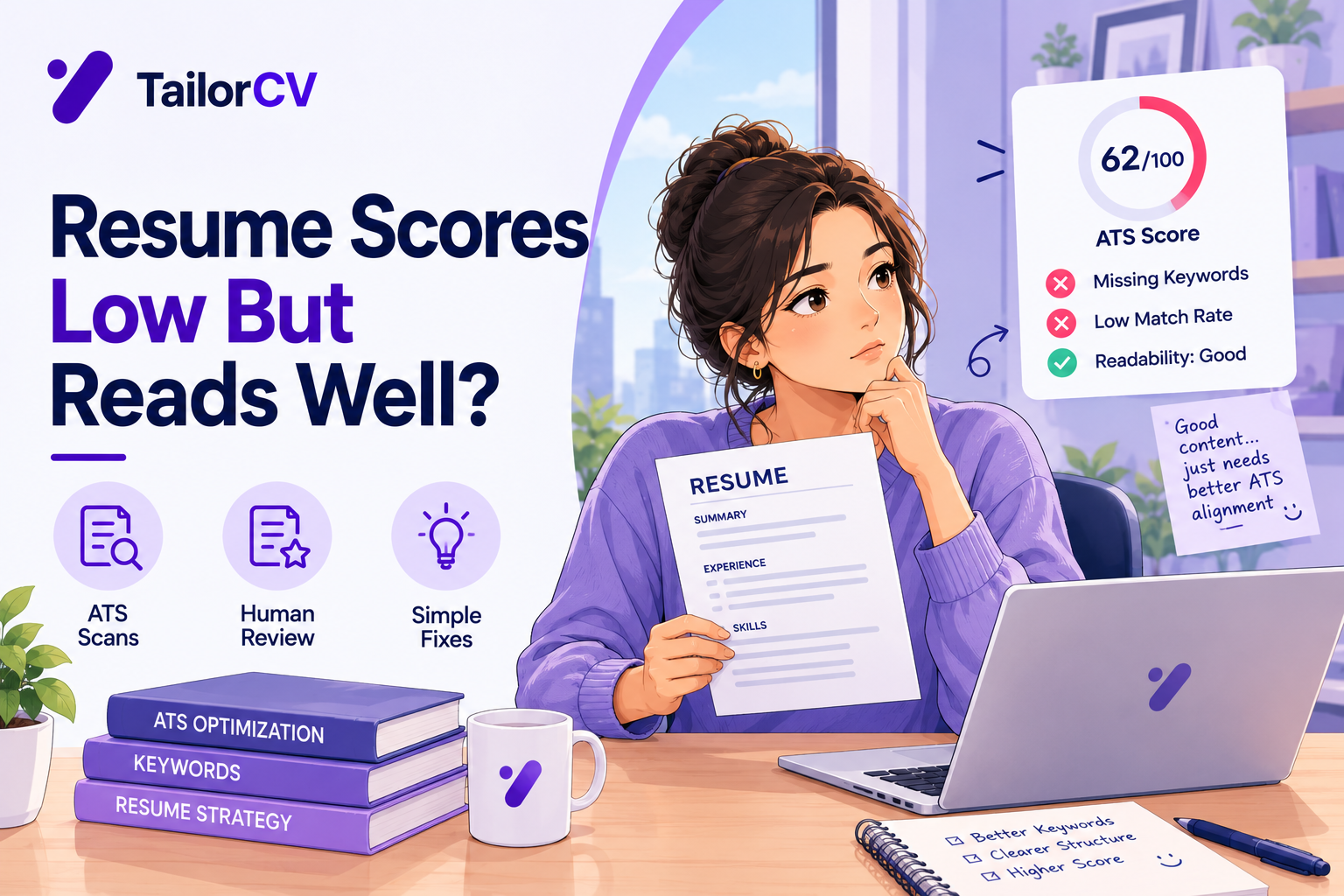
- You can test your resume against any posting for free with an ATS score checker to see your match and missing keywords.
If you have applied to dozens of jobs in Malaysia and heard nothing back, the problem may not be your qualifications — it may be that a machine rejected your resume before any human read it. That machine is the Applicant Tracking System (ATS), and it is used by the majority of mid-sized and large Malaysian employers, from banks and GLCs to MNCs and the country's biggest job portals.
The good news: once you understand how the ATS works, you can format and write your resume to sail through it. This guide explains exactly what an ATS does in the Malaysian context, why good candidates get filtered out, and the concrete steps to make your resume ATS-friendly in 2026.
What Is an ATS and Why Do Malaysian Employers Use It?
An Applicant Tracking System is software that collects, stores, sorts, and ranks job applications. When you upload a resume to JobStreet, Hiredly, a bank's careers portal, or an MNC's application form, an ATS typically ingests it first.
Malaysian employers use ATS software for a simple reason: volume. A single popular role in Kuala Lumpur can attract hundreds of applicants. No hiring team can read every resume line by line, so the ATS does the first pass — extracting information, checking for required qualifications, and surfacing the closest matches to the top of the recruiter's queue.
This means your resume has two audiences, in this order: the software, then the human. If it fails the software stage, the human never sees it, no matter how qualified you are.
How the ATS Actually Processes Your Resume
Understanding the pipeline helps you optimise each stage.
What optimizing actually does to your resume
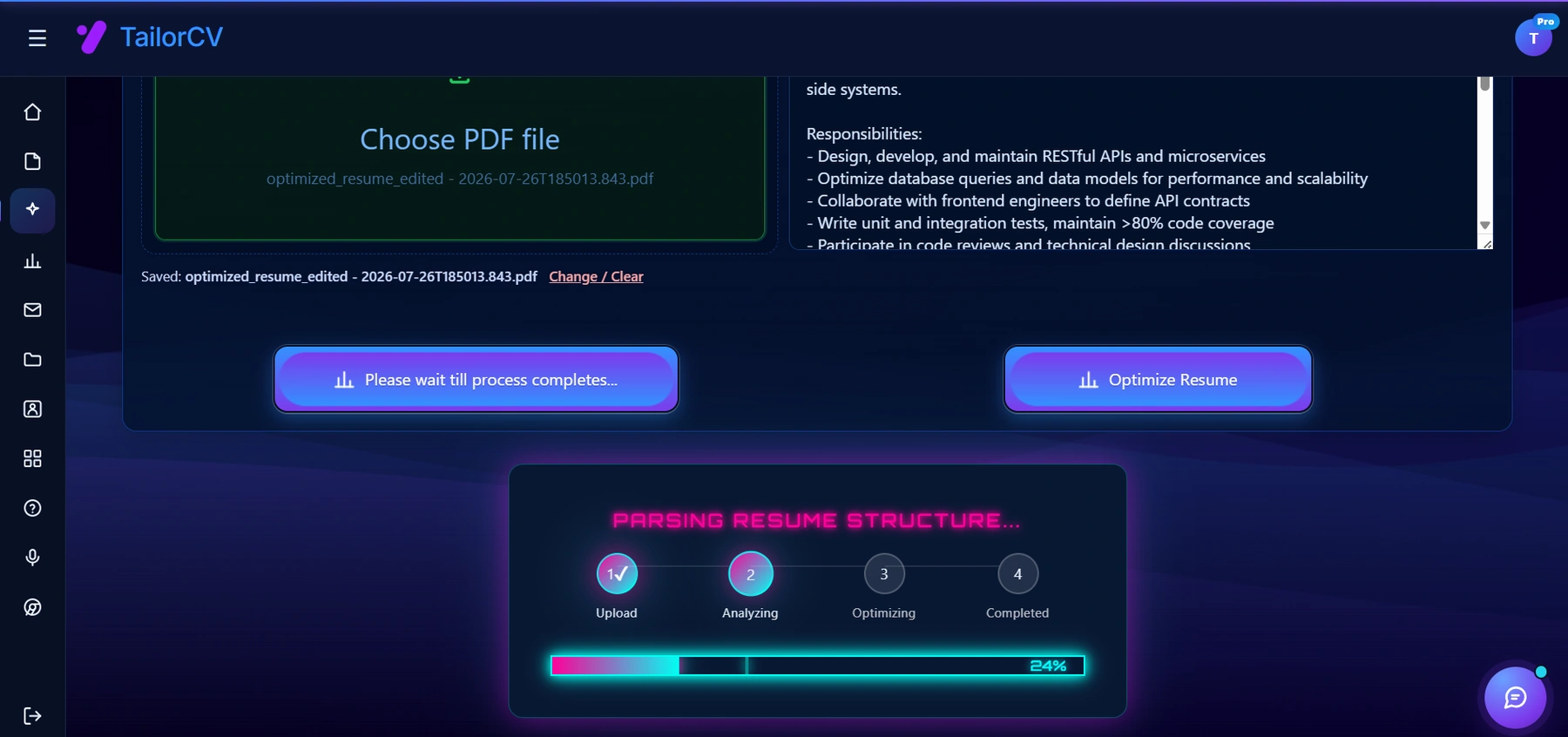
The tool parses your resume the way an ATS would before it changes anything, which is why the suggestions are grounded in the posting.
Step 1: Parsing
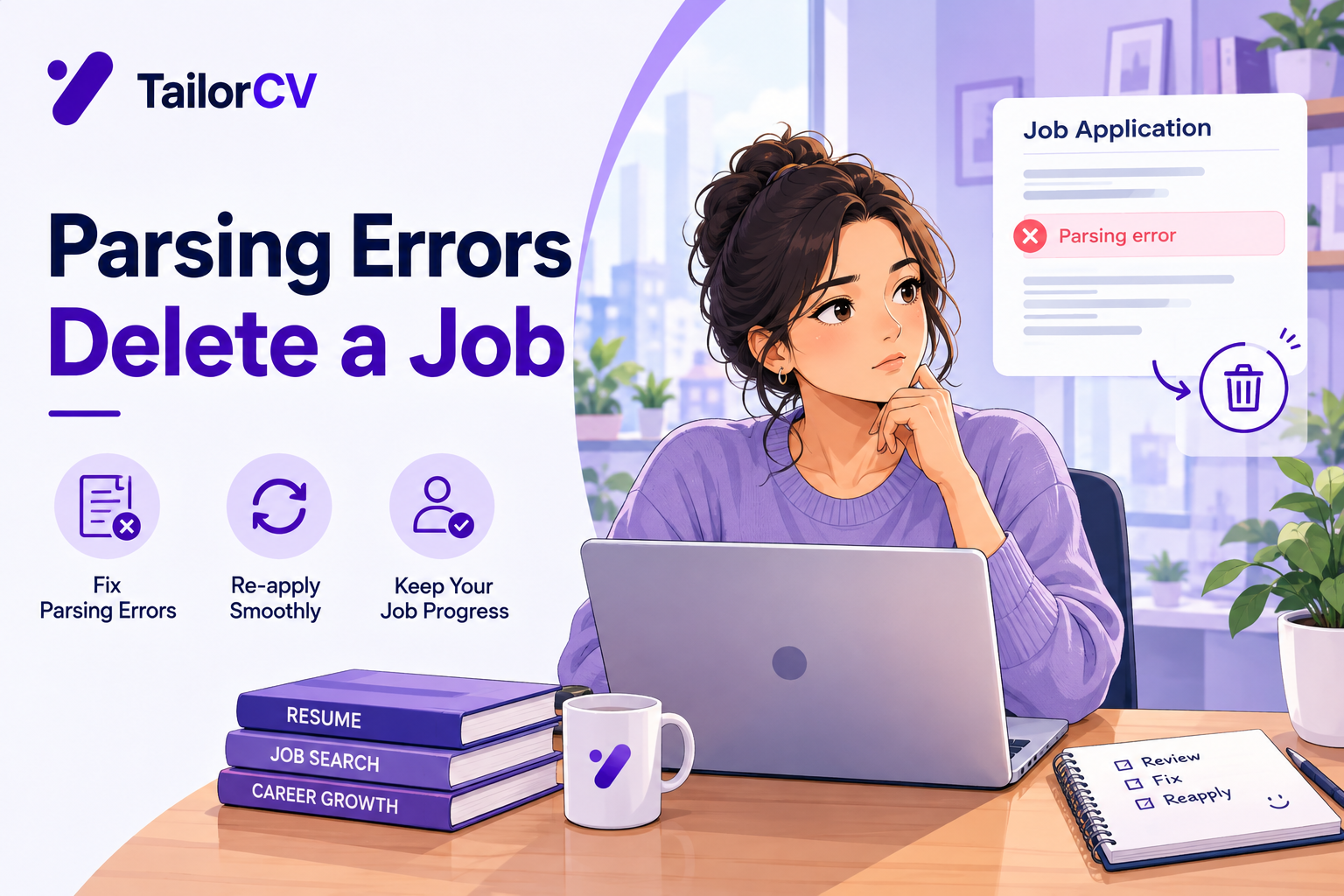
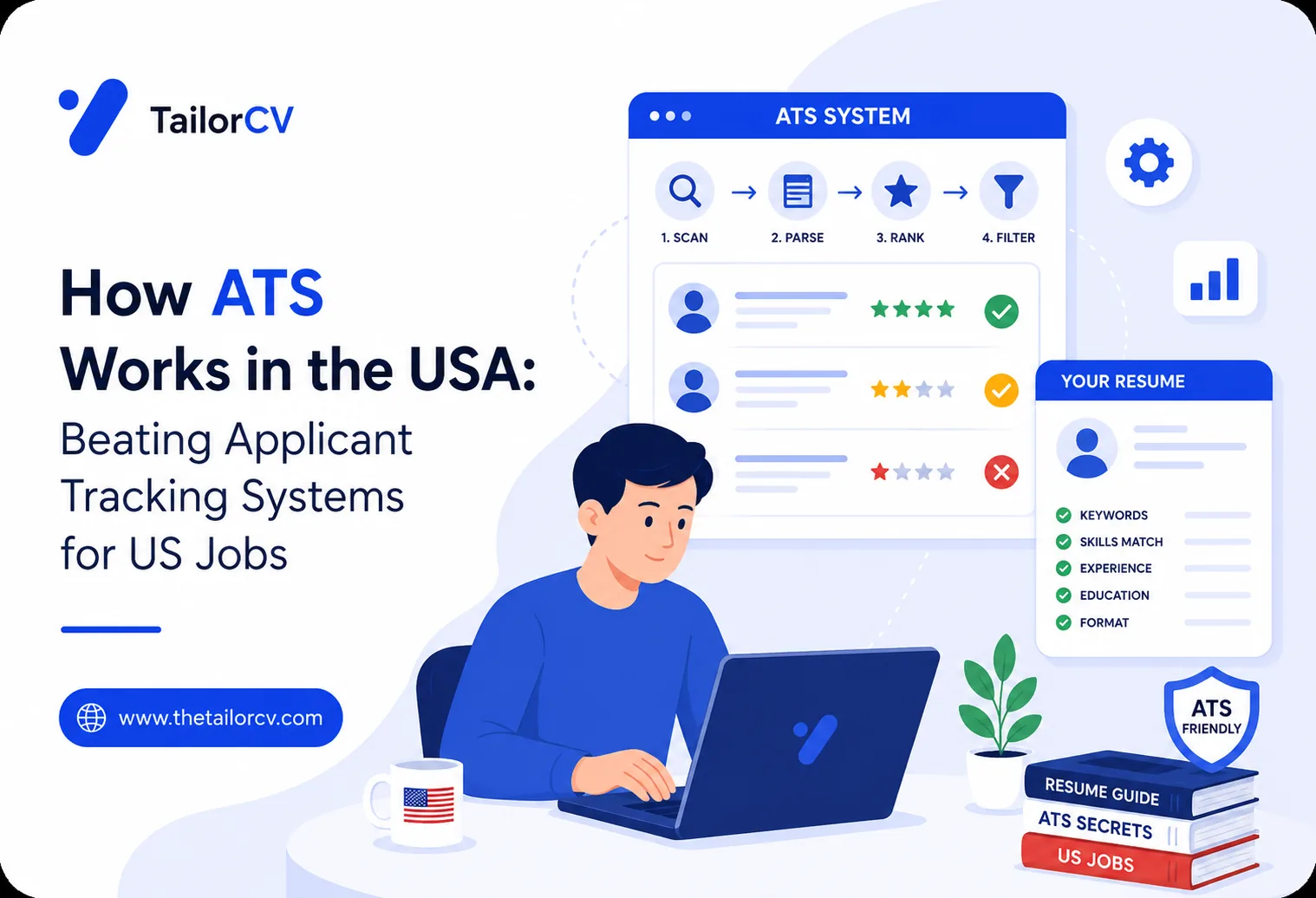
The ATS reads your resume file and tries to break it into structured fields: name, contact details, work history (company, title, dates), education, and skills. This is where formatting matters enormously. If your job titles are inside a table, your dates are in a text box, or your name is in the header, the parser can misread or drop them entirely.
Step 2: Keyword and Criteria Matching
The system compares the parsed content against the job description and any filters the recruiter set (required degree, years of experience, specific skills, location, work authorisation). It looks for the presence and frequency of relevant keywords — job titles, tools, certifications, and phrases that match the role.
Step 3: Ranking and Filtering
Based on the match, the ATS assigns a relevance score and ranks candidates. Recruiters often review only the top-scoring resumes. Some systems auto-filter out applications that miss hard requirements (for example, "must have ACCA" or "minimum 5 years' experience").
The takeaway: a technically strong candidate with a poorly formatted, generic resume can score lower than an average candidate whose resume is clean and tailored. Format and keywords decide who gets read.
Why Good Malaysian Candidates Get Filtered Out
Here are the most common reasons qualified applicants never reach a recruiter in Malaysia:
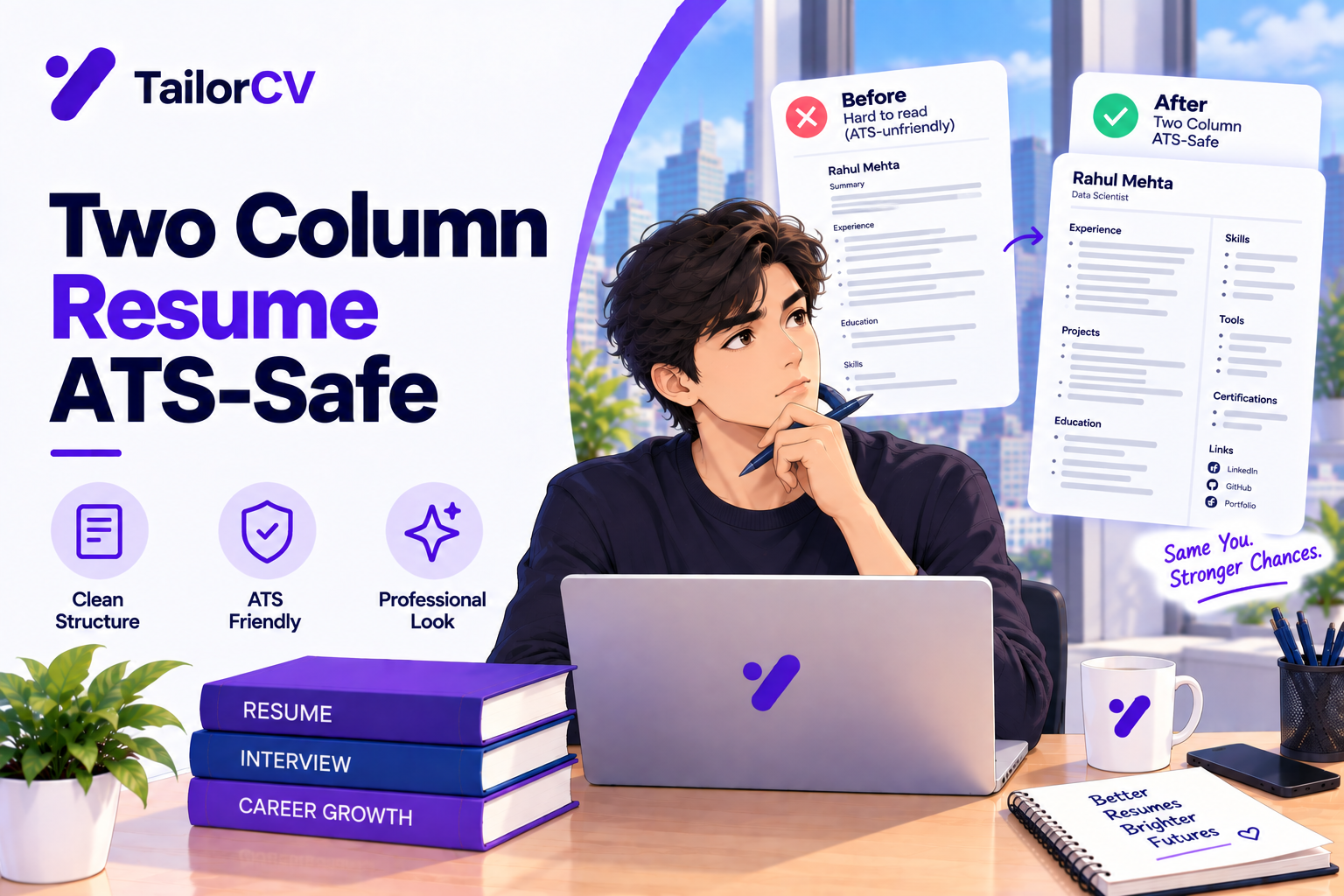
- Fancy templates. Multi-column "designer" resumes, infographics, and CVs built in Canva or Photoshop often parse into garbled text.
- Information in the wrong place. Contact details in the header/footer, or key facts inside tables and text boxes.
- Image-based PDFs. A scanned resume or one exported as an image cannot be read at all — the ATS sees a blank page.
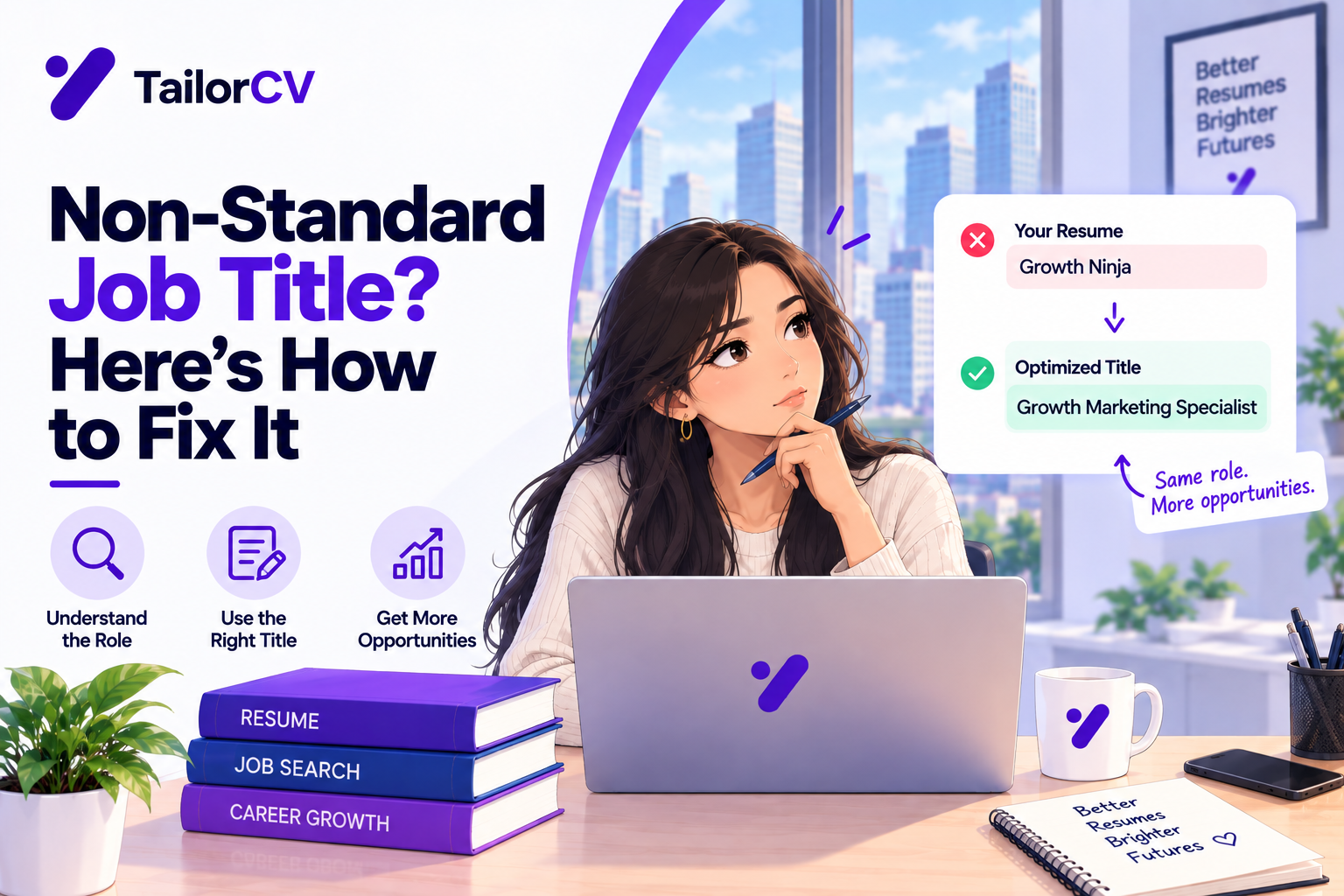
- Missing keywords. Using synonyms the job description does not use (e.g. writing "people management" when the posting says "stakeholder management").
- Generic, untailored content. One resume blasted to every job rarely matches any single posting well.
- Non-standard section headings. Creative labels like "My Journey" instead of "Work Experience" confuse the parser.
If any of these sound familiar, your resume may be silently failing the first filter. Our companion guide, how to write a resume for Malaysia jobs, covers the correct structure in full.
How to Make Your Malaysian Resume ATS-Friendly
Follow these rules and your resume will parse cleanly and rank well.
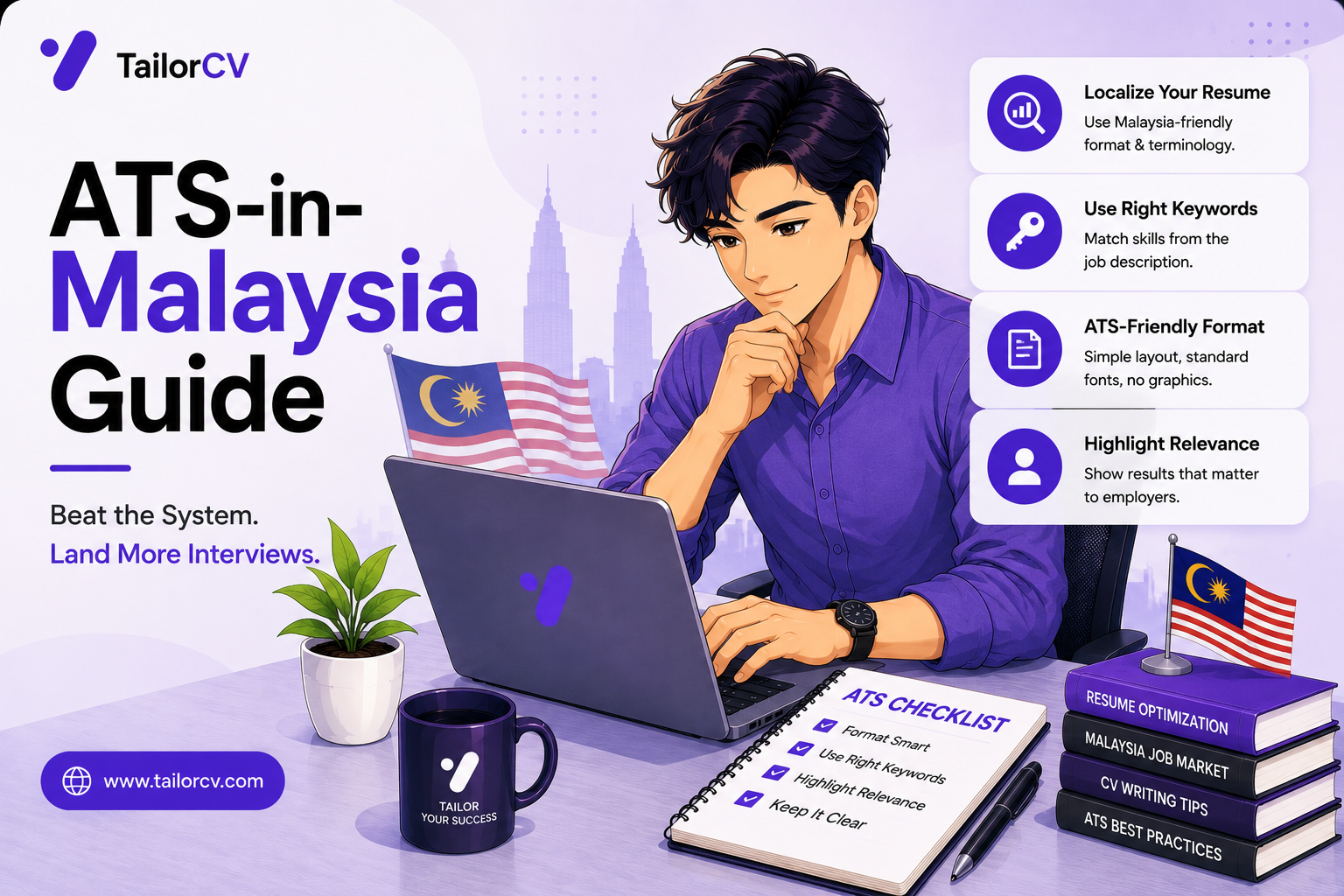
1. Use a Simple, Single-Column Layout
Stick to one column. Avoid tables, text boxes, sidebars, columns, images, icons, and graphics for anything the ATS needs to read. A clean layout is not boring — it is professional and, crucially, machine-readable. The TailorCV resume builder produces ATS-safe layouts by default.
2. Use Standard Section Headings
Label your sections with the terms the ATS expects: Professional Summary, Work Experience, Education, Skills, Certifications. Predictable headings let the parser file your information correctly.
3. Put Contact Details in the Body
Never rely on the document header or footer for your name, phone, or email — many parsers ignore those regions. Put your contact details in the main body at the top of page one.
4. Save as a Text-Based PDF
Submit a PDF exported directly from a word processor (so the text is selectable), not a scan or an image. If a posting specifically asks for Word (.docx), provide that. Test by trying to highlight and copy the text — if you can, so can the ATS.
5. Mirror the Job Description's Language
This is the highest-leverage move. Read the posting, note the exact skills, tools, and phrases it uses, and — where they are genuinely true of you — use those exact terms in your resume. If the role asks for "financial reporting," "SQL Accounting," and "IFRS," those phrases should appear naturally in your experience and skills. For a field-by-field list, see the best resume keywords for Malaysian jobs.
6. Include a Dedicated Skills Section
List hard skills, software, and languages explicitly. This gives the ATS clean, unambiguous keywords to match and reassures the recruiter at a glance.
7. Spell Out Acronyms Once
Write "Association of Chartered Certified Accountants (ACCA)" the first time so the resume matches whether the ATS searches for the acronym or the full term.
Testing Your Resume Before You Apply
You do not have to guess whether your resume will pass. The most reliable approach is to test it against the specific job you are targeting.
Paste the job description and upload your resume into the free ATS score checker. It shows your match score, the keywords you are missing, and where you can improve — before you hit "apply." If your score is low, the resume optimizer can rewrite your resume to match the posting while keeping it ATS-safe.
This test-and-fix loop, done for each application, is what separates candidates who get consistent interviews from those who send hundreds of applications into the void.
ATS Myths That Cost Malaysian Job Seekers Interviews
- "Keyword stuffing beats the ATS." Modern systems and recruiters detect and penalise unnatural repetition. Use keywords truthfully and in context.
- "A creative resume stands out." It stands out to the parser as unreadable. Save the creativity for your portfolio; keep the resume clean.
- "The ATS makes the final decision." It filters and ranks; a human still decides. Your resume must satisfy both — machine-readable and genuinely persuasive.
- "Once I have one good resume, I'm done." Each job needs its own tailored version, because each ATS is matching against a different job description.
How ATS Use Varies Across Malaysian Employers
- Banks and financial institutions (Maybank, CIMB, Public Bank) run structured, filter-heavy ATS processes with strict qualification checks.
- GLCs (Petronas, TNB, Telekom) use formal application portals with detailed criteria matching.
- MNCs and tech companies (in Cyberjaya, Bayan Lepas, KL Sentral) tend to have the most keyword-driven, automated pipelines.
- SMEs and startups may use lighter tools or portals like Hiredly, but many still parse resumes automatically.
- Recruitment agencies rely on ATS databases to search their candidate pool — so your resume's keywords determine whether you even appear in their searches later.
In every case, the same principles apply: clean formatting, standard headings, and job-specific keywords.
A Note on Design Tools Like Canva
Beautifully designed resumes from tools like Canva, Photoshop, or InDesign are a common trap in Malaysia. They look impressive to the human eye but frequently parse into garbled, out-of-order text — or nothing at all — because they rely on text boxes, columns, graphics, and embedded fonts that ATS parsers can't reliably read. If you love a designed look, keep a polished visual version for networking, career fairs, or emailing a contact directly, but always submit a clean, single-column, text-based version through any online application or portal. When in doubt, simpler is safer: a plain, well-structured resume that parses perfectly beats a stunning one the software can't read.
A Quick ATS-Readiness Checklist
Before submitting any Malaysian application, confirm:
- unchecked: Single-column, no tables/text boxes/images for key content
- unchecked: Standard section headings
- unchecked: Contact details in the body, not the header/footer
- unchecked: Text-based PDF (you can highlight the text)
- unchecked: Keywords mirrored from the job description
- unchecked: Acronyms spelled out once
- unchecked: Dedicated skills section with tools and languages
- unchecked: Tested against the posting with an ATS checker
Keyword Optimisation in Practice: Before and After
Abstract advice about keywords is easy to nod along to and hard to apply. Here is what it actually looks like on the page.
Suppose a Kuala Lumpur job posting for an Accounts Executive asks for: "month-end closing, accounts payable and receivable, IFRS, SQL Accounting, and stakeholder reporting." Compare two versions of the same bullet point.
Before (weak for the ATS):
Handled the company's daily accounts and helped close the books each month.
After (optimised for the same job):
Managed accounts payable and receivable and led month-end closing for a RM12M portfolio, producing IFRS-compliant stakeholder reports in SQL Accounting.
The second version is truthful, more specific, and contains five of the exact phrases the posting screens for. To the ATS, it is a far stronger match; to the recruiter, it reads as competence. That is the entire game — say what you genuinely did, using the language the job description uses. The resume optimizer performs this rewrite automatically against any posting you give it.
How ATS-Intensive Is Your Industry?
The degree to which the ATS controls your fate varies by sector in Malaysia:
- Very high: banking, insurance, oil and gas, large MNCs, and shared-services centres. Structured portals, strict filters, heavy keyword matching.
- High: technology, engineering, professional services, and consulting. Keyword-driven and often automated end to end.
- Moderate: mid-sized local companies and established SMEs, many of which use portals like JobStreet or Hiredly that parse resumes.
- Lower: small businesses, family-run firms, and some F&B/retail roles, where a person may read your resume directly — though even here, applying through a portal usually means parsing.
The safe assumption for any Malaysian application is that software will read your resume first. Optimise as if it will, and you lose nothing when a human reads it instead.
The Tailoring Workflow That Wins Interviews
Here is a repeatable process to apply to every serious application:
- Read the job description twice. Highlight required skills, tools, certifications, and repeated phrases.
- Map them to your experience. For each requirement you genuinely meet, find or write a bullet that demonstrates it using the posting's language.
- Update your summary and skills. Lead with the most relevant strengths for this role.
- Run the ATS check. Paste the job description and your resume into the ATS score checker and note the missing keywords.
- Fix the gaps. Add any legitimate missing terms, then re-test until your match score is strong.
- Submit as a text-based PDF.
This loop takes minutes once you are used to it, and it is dramatically more effective than sending an identical resume everywhere. Candidates who tailor consistently report far higher interview rates than those who apply in bulk.
What About Fresh Graduates and Career Switchers?
If you have little direct experience or are changing fields, the ATS can feel unfair — you may not have the exact keywords yet. Two strategies help:
- Translate transferable experience into the target role's language. Internships, final-year projects, part-time work, and co-curricular leadership can all be described using the keywords of the job you want. Our fresh graduate job guide shows how.
- Add legitimate skills fast. A short, relevant certification (Google, Microsoft, HRDF-funded courses) gives you real keywords to include and genuinely strengthens your candidacy.
Career switchers should foreground a skills-based summary and a strong skills section so the ATS and recruiter both see the relevant capabilities immediately, even if your job titles are from another field.
Do Cover Letters Go Through the ATS Too?
Many Malaysian applications include a cover letter field or attachment, and yes — the ATS often parses these as well, and recruiters read them at the shortlist stage. This means your cover letter should echo the role's key language too, reinforcing the same keywords as your resume without simply repeating your bullet points. Keep it clean and text-based (avoid images or fancy layouts), and mirror a few of the posting's core terms naturally. For the full approach, see the Malaysia cover letter guide. Together, a keyword-aligned resume and cover letter give you coverage across everything the software and the recruiter will read.
Track Your Applications to Improve Your Hit Rate
Optimising for the ATS is a process, and the candidates who improve fastest treat it like one. Keep a simple tracker — a spreadsheet is enough — logging each role, the date you applied, the tailored keywords you used, your ATS match score, and the outcome. Over a few weeks, patterns emerge: which types of roles respond, which keywords correlate with callbacks, and where applications stall. If you're applying steadily but not getting interviews, the tracker usually reveals that the problem is at the resume/keyword stage — which you can fix by re-testing with the ATS score checker and tightening your tailoring. Data beats guessing, and small adjustments compound into a much higher interview rate.
Beyond the ATS: Winning the Human Stage
Passing the ATS gets you into the recruiter's shortlist. Now your resume has to persuade a person. That means quantified achievements, a sharp summary, and clear relevance to the role — everything covered in our Malaysian resume guide. Pair it with a targeted cover letter using the Malaysia cover letter guide, and once you land the interview, prepare with our Malaysia interview tips and a realistic AI mock interview.
Formatting Details That Quietly Break Parsers
Even resumes that look clean to a human can trip up an ATS on small details. Watch for these easily-missed issues:
- Special characters and fancy bullets. Decorative symbols, arrows, or unusual glyphs as bullets can render as garbage. Stick to standard round or square bullets.
- Text inside shapes or graphics. A skills "wheel," a rating-bar for languages, or a logo with embedded text is invisible to the parser.
- Columns that read across. A two-column layout can cause the parser to read straight across the page, merging unrelated content into nonsense.
- Non-standard date formats. Be consistent (e.g. "Jan 2023 – Present"); erratic date styles can confuse the timeline extraction.
- Uncommon fonts. Rare or decorative fonts can fail to embed or map correctly; use standard, readable ones.
- Tables for layout. Even "invisible" tables used to align content can scramble reading order.
The safest test remains simple: open your PDF, select all the text, and copy it into a plain text document. If the result is clean and in the right order, the ATS can read it. If it's jumbled, so is what the parser sees.
The Future of ATS: AI-Powered Screening
Applicant tracking is evolving, and Malaysian employers — especially large MNCs and banks — are increasingly layering AI on top of traditional keyword matching. Newer systems attempt to understand meaning, not just exact strings: recognising that "managed a team" and "led five direct reports" describe similar things, or inferring seniority and domain from context. Some pipelines now include AI-assisted ranking, video-interview analysis, and skills inference.
What does this mean for you as a candidate?
- Context matters more than ever. A keyword shown in a real, quantified achievement reads as genuine competence to both old and new systems — another reason to evidence skills rather than list them.
- Honesty is increasingly important. As screening gets smarter (and as human recruiters still verify in interviews), inflated or stuffed resumes are more likely to be caught.
- The fundamentals still win. Clean formatting, standard structure, and truthful keyword alignment work for both classic ATS and AI-enhanced systems. You don't need to chase every technology change — you need a resume that is genuinely relevant and machine-readable.
In other words, the tools are getting more sophisticated, but the winning strategy is the same one this guide describes: say clearly and specifically what you did, in the language of the role, in a format software can parse.
Frequently Asked Questions
Do all Malaysian companies use an ATS? Not all, but most mid-sized and large employers do, and the major job portals parse resumes automatically. Assume your resume will be read by software first and format accordingly.
Does JobStreet use an ATS? JobStreet parses your uploaded resume and profile and uses matching algorithms to surface candidates to employers, so the same optimisation principles apply.
Is a PDF or Word file better for the ATS? A text-based PDF is safe for most modern systems and preserves your formatting. Use Word only if the posting specifically requests it. Never submit an image or scanned file.
How many keywords should I include? There is no magic number. Include the genuinely relevant skills and phrases from the job description, used naturally in context. Quality and relevance beat quantity.
How do I know my exact ATS score? Run your resume and the job description through a free ATS score checker to see your match percentage and the specific keywords you are missing.
Final Thoughts
The ATS is not your enemy — it is a filter you can pass with the right preparation. Keep your formatting clean and single-column, use standard headings, put your contact details in the body, submit a text-based PDF, and, above all, tailor your keywords to each Malaysian job description. Then test before you apply.
Do this consistently and you will stop losing interviews to a formatting quirk or a missing keyword. Build an ATS-safe resume with the TailorCV resume builder, tailor and test it with the ATS checker and optimizer, and give every Malaysian application its best possible chance of reaching a human.
What is your resume scoring right now?
Scan it against a job description and get your ATS match score in about a minute.
Drop your resume here or choose a file
PDF only. Max 2 MB.
We never share your data or use it to train AI models.

Templates that keep this structure intact
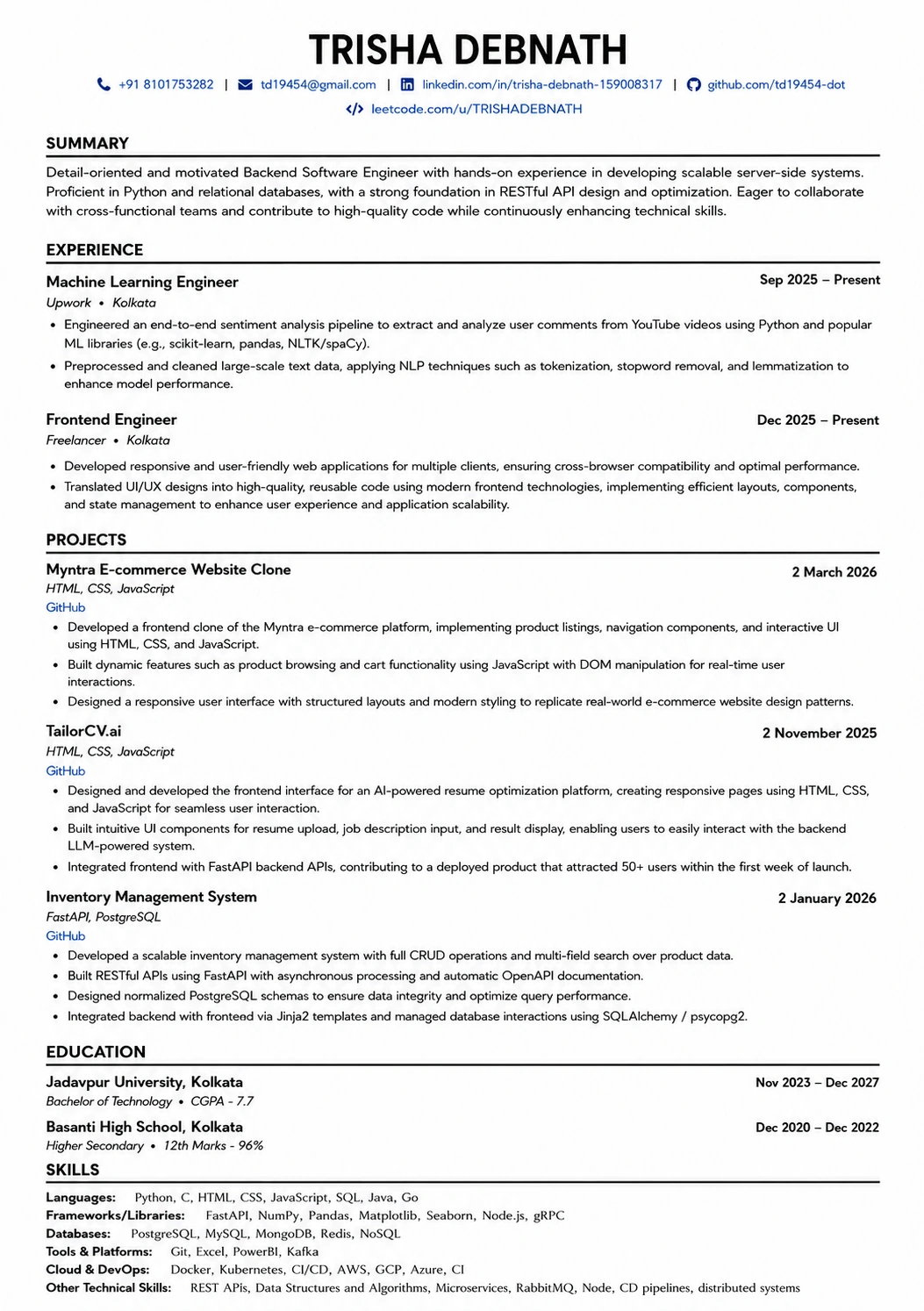
This template is ATS-tested — start from it and the formatting rules in this guide are already handled.
Was this guide useful?
Be the first to rate it.