SS
SS

Key Takeaways
- The Post Study Work Visa lets graduates of New Zealand institutions stay and work for any employer, with no sponsorship required.
- Duration depends on your qualification level and, for some qualifications, what you studied — postgraduate awards get longer, and some non-degree qualifications only qualify if they lead to a Green List occupation.
- The usual next step is the Accredited Employer Work Visa (AEWV), which requires an accredited employer, a job check, and a qualifying role.
- The Green List provides straight to residence and work to residence pathways for occupations in genuine shortage.
- Studying outside Auckland has at times carried additional advantages; check the current settings with Immigration New Zealand rather than assuming.
What the visa gives you
The Post Study Work Visa is New Zealand's post-graduation route, and its defining feature is the same as Ireland's and the Netherlands': it is not tied to an employer.
You can work for anyone. Full time, part time, contract, self-employed. No employer has to apply for anything, pay anything, or wait for anything.
You do not need a job offer to get it. You apply on the basis of having completed a qualifying New Zealand qualification.
It is the window in which everything else has to happen — the work experience, the accredited employer relationship, and the move toward residence.
Duration is tiered. Longer for postgraduate qualifications, shorter for bachelor's-level and below, and for some lower-level qualifications the visa is only available where the study relates to a Green List occupation. The current durations and the conditions attached are published by Immigration New Zealand, and they have changed more than once — check the source, not a summary.
Eligibility
A qualifying New Zealand qualification at an eligible level, completed at an approved institution.
Study undertaken in New Zealand, with rules on how much of the qualification must have been completed in the country.
Applied for within the required period after your studies end — this is a deadline and it is missed regularly.
Health and character requirements, as with any New Zealand visa.
For some qualifications, a Green List connection. Certain non-degree qualifications only lead to a post-study work visa where the study relates to an occupation on the Green List, which is why the list matters when you are choosing what to study, not only when you are looking for work.
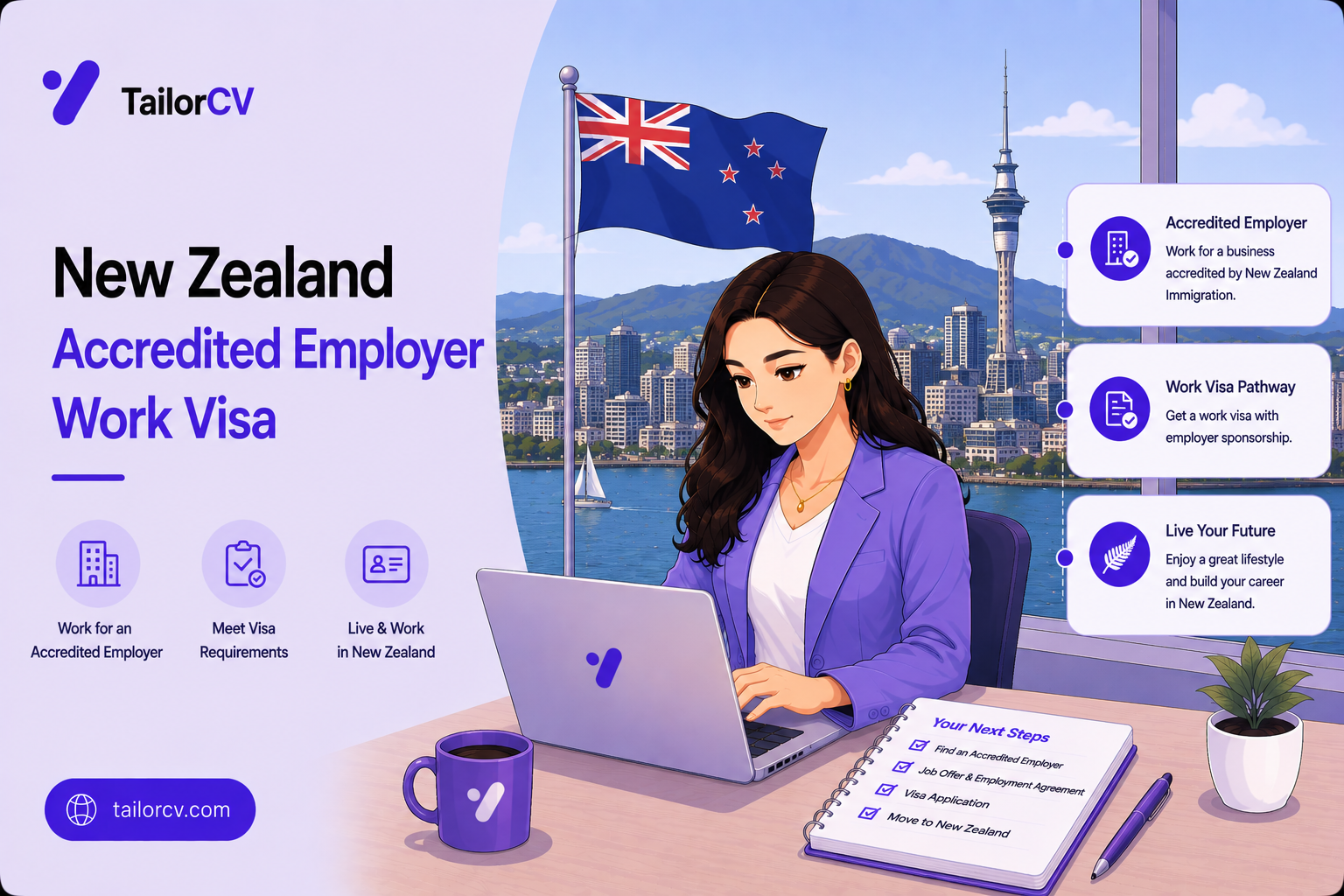
The Accredited Employer Work Visa
The route after the post-study visa, and it introduces a constraint worth understanding early.
Three checks. The employer must be accredited; the job must pass a job check, confirming the role and terms meet requirements; and you must meet the migrant check for the specific role.
Accreditation is the important one for your search. Only accredited employers can hire on this visa, which means — exactly as with the Dutch sponsor register — you can identify in advance which employers are worth approaching if you will need this route.
Median wage thresholds have applied to various parts of the system and have been adjusted repeatedly. Check the current settings.
Time limits apply to how long you can hold the visa before moving toward residence or leaving, depending on the role and pay level.
The Green List, and how residence works
This is where a study-to-residence plan actually lands.
Tier 1 — Straight to Residence. Certain occupations allow you to apply for residence directly, with a job or job offer in that occupation from an accredited employer. This is the fastest route available and it is why the list is worth consulting before you choose a specialism.
Tier 2 — Work to Residence. Other occupations require a qualifying period of employment in New Zealand in that occupation first, after which you can apply.
Sector agreements exist for some industries with their own arrangements.
The Skilled Migrant Category is the general points-based residence route, revised into a simpler six-point system based on qualifications, income and occupational registration.
The list changes. Occupations move on and off it as shortages shift. Consulting Immigration New Zealand directly is not pedantry here; it is the difference between a plan that works and one that does not.
Using the window well
The visa is a countdown and the sequence inside it decides the outcome.
First, get into the right occupation. If your Green List pathway is Tier 2 work-to-residence, the qualifying period only runs while you are employed in that occupation. A general graduate job that pays the rent but sits outside your occupation is a month that does not count.
Second, get to an accredited employer. Even a good role at a non-accredited employer cannot convert into an AEWV. Check accreditation before you accept, not after.
Third, document everything. Employment agreements, payslips, position descriptions and evidence that your role matches the occupation you are claiming. Residence applications are evidence-based and reconstructing two years of employment from memory is unpleasant.
Fourth, watch the wage thresholds. Various parts of the system have been tied to median wage figures that are adjusted periodically. A role that qualifies today may sit below a revised threshold later.
Fifth, start the residence application early. Processing takes time and the post-study visa does not extend to accommodate it.
Practical setup in New Zealand
The administrative sequence, briefly.
Get an IRD number. New Zealand's tax identifier — without one you are taxed at a no-declaration rate that is considerably higher.
Choose a tax code on starting work, which tells your employer how much PAYE to deduct. Getting this wrong is a common and easily fixed problem.
Open a New Zealand bank account. Most employers pay into a local account, and several other things depend on it.
Enrol in KiwiSaver unless you have a specific reason not to — the employer contribution and the government contribution are money you do not get by opting out.
Understand your ACC cover. The Accident Compensation Corporation provides universal no-fault injury cover funded partly by a levy on your earnings, and it applies from the day you arrive.
Check your healthcare eligibility. Publicly funded healthcare depends on your visa type and duration, and post-study work visa holders should confirm their position rather than assume it.
Common misreadings of the New Zealand system
Four beliefs that cost people a year.
"Any New Zealand qualification gets me a work visa." Not any more. Level and, for some qualifications, a Green List connection both matter, and the rules were tightened deliberately.
"I can apply whenever." There is a deadline after your study ends. It is a hard deadline, and there is no general discretion to extend it because you were job hunting.
"Any employer can hire me afterwards." Only accredited employers can hire on the AEWV. This is the single most common expensive mistake — a great job at a non-accredited employer is a dead end for your visa.
"Residence follows automatically from working." It does not. Tier 1 needs a qualifying job offer, Tier 2 needs a qualifying period in the right occupation, and the Skilled Migrant Category needs points. Each is an application you have to make.
Bringing family, and the practicalities
Worth knowing before you plan around it.
Partner work rights depend on your visa and its conditions. Post-study work visa holders and AEWV holders have different partner provisions, and they have been adjusted.
Dependent children's education. Children of some work visa holders are treated as domestic students for school fees; others are not. This is a substantial financial difference and it depends on your specific visa and pay level.
Residence changes everything for a family, which is why the residence timeline matters more with dependants than without.
Check with Immigration New Zealand for your exact combination. Partner and child provisions are the part of the system that has changed most often, and generic advice ages badly here.
Mini checklist
- unchecked: Qualification level checked against visa duration
- unchecked: Green List connection confirmed if your qualification requires one
- unchecked: Application submitted inside the deadline after study ends
- unchecked: Accredited employer list used to target your search
- unchecked: Your occupation checked against Green List Tier 1 and Tier 2
- unchecked: Skilled Migrant Category points estimated
- unchecked: Current settings verified with Immigration New Zealand
- unchecked: IRD number obtained for tax
- unchecked: Residence plan started well before the visa expires
Scenarios
Scenario 1: You are choosing what to study in New Zealand
Check the Green List first. Some qualifications only lead to a post-study work visa where they relate to a listed occupation, and some occupations offer straight-to-residence afterwards. This decision is worth making with the list open.
Scenario 2: You hold a post-study work visa and want to stay
Restrict your search to accredited employers. Only they can hire you onto the AEWV afterwards, and applying anywhere else means your good work has nowhere to go when the visa ends.
Scenario 3: Your occupation is Tier 2 work-to-residence
Take a role in that occupation early. The qualifying period runs from when you start the right kind of work, not from when you arrive, and every month in an unrelated job is a month that does not count.
Tip: Check the Green List before you choose your course, not after you graduate. It determines whether some qualifications lead to a work visa at all, and whether your occupation offers straight-to-residence or a longer route.
Do's and Don'ts
Do
- Consult Immigration New Zealand for current settings
- Check the Green List before choosing a specialism
- Apply within the deadline after study ends
- Target accredited employers specifically
- Start the residence plan early
- Take Green List occupation work as soon as possible
Don't
- Assume all qualifications lead to a post-study visa
- Rely on durations quoted secondhand
- Apply to non-accredited employers if you need the AEWV
- Leave the residence application to the final months
- Treat the Green List as static
- Miss the post-study application deadline
Common Mistakes
- Assuming every qualification qualifies. Some lower-level ones only count where they relate to a Green List occupation.
- Ignoring accreditation. Only accredited employers can hire on the AEWV.
- Missing the application deadline. It runs from the end of study and it is missed regularly.
- Choosing a specialism without the Green List. It changes the entire residence pathway.
- Delaying Green List occupation work. Work-to-residence periods only count once you are in the right occupation.
- Using outdated figures. New Zealand has revised these settings repeatedly.
Related Guides
Keep building on this with the related guides in this series:
- Graduate Jobs in New Zealand
- The Skilled Visa Points System for Graduates
- The Third Level Graduate Scheme Explained
- The Dutch Orientation Year Visa Explained
- Comparing Graduate Work Visas Across Countries
You can also check your resume's ATS score for free, generate a tailored cover letter, or build a portfolio website in minutes.
Frequently Asked Questions
Do I need a job offer for the Post Study Work Visa?
No. You apply on the basis of a qualifying New Zealand qualification, and the visa lets you work for any employer without sponsorship.
How long is the visa valid?
It depends on your qualification level, with postgraduate awards receiving longer. Some lower-level qualifications only qualify where the study relates to a Green List occupation.
What is an accredited employer?
An employer approved to hire migrants under the Accredited Employer Work Visa. Only accredited employers can hire you onto that visa, so they should shape your job search.
What is the Green List?
A list of occupations in genuine shortage, with Tier 1 straight-to-residence and Tier 2 work-to-residence pathways attached. It is revised as shortages change.
When do I have to apply?
Within a defined period after your studies end. This deadline is missed regularly, so diarise it as soon as you know your completion date.
Does studying outside Auckland help?
It has carried additional advantages at various times. The settings have changed more than once, so check the current position with Immigration New Zealand.
What should I do first when I start work in New Zealand?
Get an IRD number and choose the correct tax code — without an IRD number you are taxed at a much higher no-declaration rate. Then a bank account and KiwiSaver enrolment.
Does time in any job count toward work-to-residence?
No. For a Tier 2 Green List pathway, the qualifying period only runs while you are employed in that specific occupation, which is why getting into the right role early matters.
Am I covered by public healthcare on a post-study work visa?
It depends on your visa type and duration. Confirm your specific eligibility rather than assuming — ACC injury cover is universal, but general healthcare entitlement is not.
Can any employer hire me after my post-study visa?
No — only accredited employers can hire on the Accredited Employer Work Visa. This is the most common and most expensive misunderstanding.
Can my partner work if they join me?
It depends on your visa and its conditions, and the provisions have been adjusted more than once. Check your exact combination with Immigration New Zealand.
What is your resume scoring right now?
Scan it against a job description and get your ATS match score in about a minute.
Drop your resume here or choose a file
PDF only. Max 2 MB.
We never share your data or use it to train AI models.

Was this guide useful?
Be the first to rate it.