 TD
TD
Key Takeaways
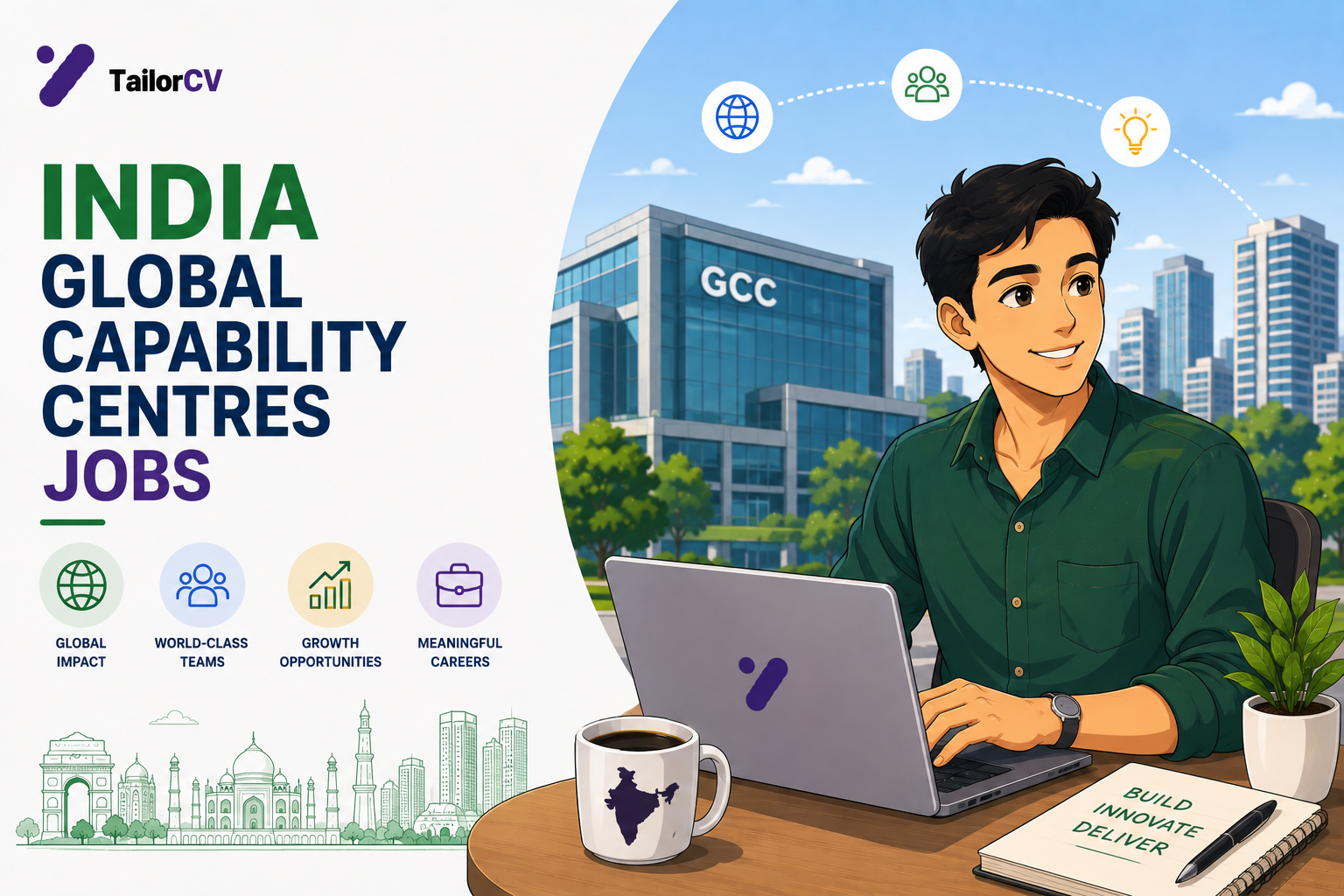
- A Global Capability Centre (GCC) is the India-based centre of an international company, doing engineering, analytics, finance or operations work for the global business.
- There are hundreds of them, employing well over a million people, and the number keeps growing.
- They pay substantially above IT services rates and generally below top-tier product companies.
- The work has moved up the value chain — many GCCs now own products end to end rather than providing support.
- They hire off-campus extensively and weight capability over college tier, which makes them accessible.
What a GCC actually is
The terminology confuses people, so it is worth being precise.
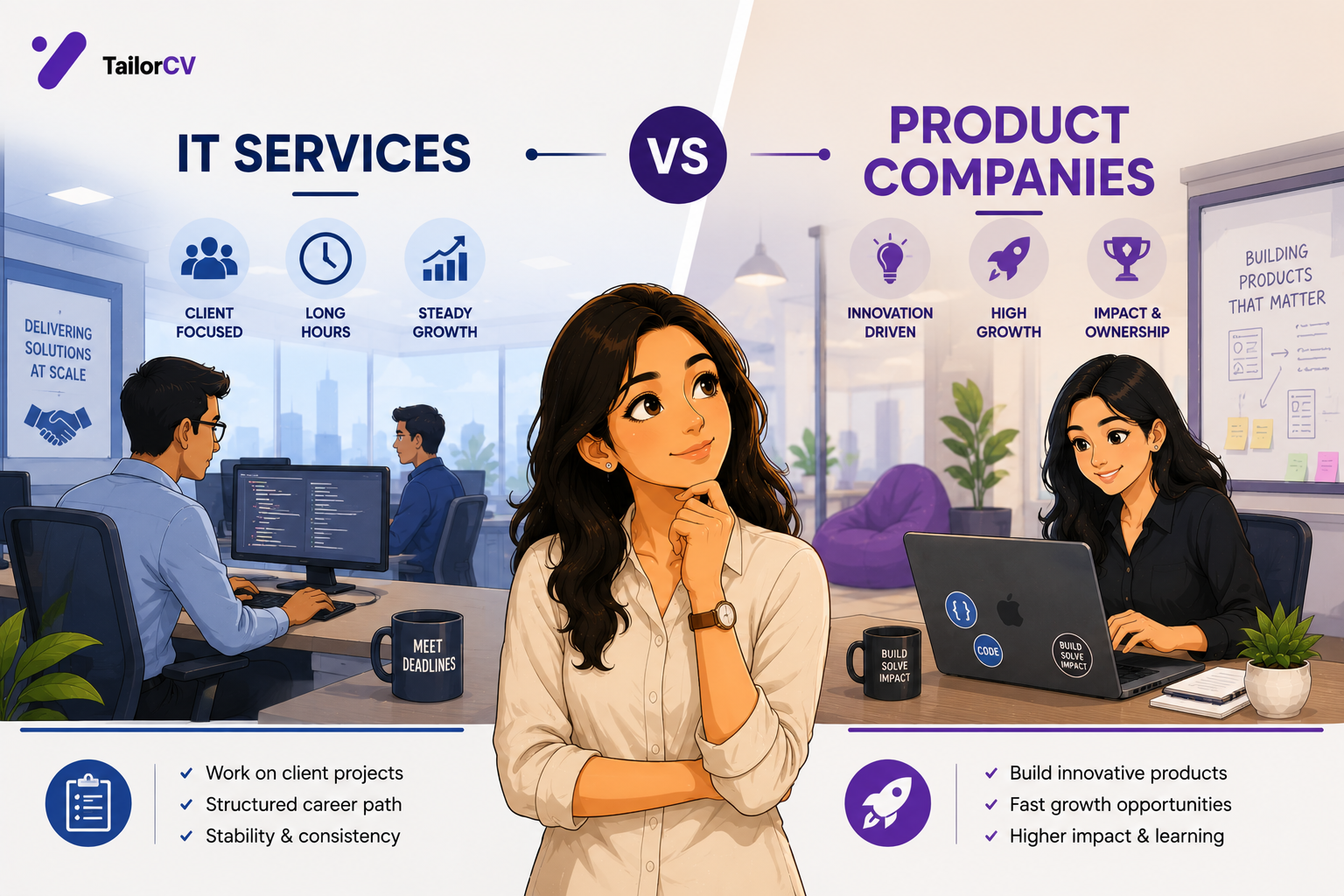
A GCC is not an outsourcing vendor. When TCS or Infosys does work for a client, that is IT services — a vendor relationship. A GCC is the client's own office, staffed by their own employees, located in India.
It is sometimes called a captive centre, a global in-house centre, or a global delivery centre. Same thing.
The work is for the parent company, not for external clients. You are an employee of the international company, on their systems, in their organisational structure.
Which is why the pay and the work differ. A services employee's cost is a line item a client negotiates down. A GCC employee's cost is the parent company's own investment in capability.
Examples span every sector. Technology companies, banks, insurers, retailers, airlines, pharmaceutical companies, automotive manufacturers and industrial firms all run Indian centres.
And the scale is genuinely large. Several international companies employ more people in India than in any other country including their home market.
Why they are under-targeted
The gap between how good these employers are and how many students apply to them is the point of this guide.
They do not do mass campus recruitment. Services companies visit hundreds of colleges and hire in bulk, so they are visible. GCCs recruit selectively, often off-campus, so students never encounter them.
They are not household names as employers. A student knows Amazon and Google. They may not realise that a large European bank, a US retailer or a German industrial firm runs a two-thousand-person engineering centre in Pune or Hyderabad.
Their branding is corporate, not campus-facing. They are not marketing to students, so students do not find them.
And nobody makes the list. The single highest-return exercise for an Indian graduate is to sit down and build a list of fifty GCCs in their target city. Almost nobody does it.
What they hire for
The functions are broader than technology.
Software engineering. Product development, platform work, infrastructure, data engineering — increasingly core rather than support.
Data and analytics, which has grown enormously and is one of the largest GCC functions.
Finance and accounting. Controllership, FP&A, treasury and reporting for the global business.
Risk, compliance and audit, particularly at banking and insurance GCCs.
Procurement and supply chain.
Human resources operations.
Research and development at engineering and pharmaceutical GCCs — genuine product R&D, not support.
And customer and technical support, which is the older GCC model and still exists alongside the higher-value work.
Which means non-engineering graduates have real options here, particularly in finance, analytics and risk — a fact that is even less well known than the engineering side.
How GCC hiring actually runs
The process, which varies more than people expect.
Application through the parent company's India careers portal, which is where most GCC hiring originates.
Recruiter screen, covering background, notice period and expectations.
Technical assessment, which varies enormously — some GCCs run their parent company's global process with algorithmic interviews, others use a more conventional technical discussion of your experience.
Multiple technical rounds, frequently including people from the global team who join by video.
Behavioural or values round, taken seriously at most international parents.
Offer, with a package that typically includes base, variable pay, benefits and sometimes stock in the parent company.
Which means preparation should be company-specific. A GCC of a global technology company will interview like that company; a GCC of a European bank will interview like a bank. Researching the parent's process is more useful than generic preparation.
Notice periods matter. Indian notice periods are frequently long, and GCCs plan around them — be accurate about yours.
Compensation and progression
What to expect.
Base salaries are well above IT services at equivalent experience and generally below the top Indian product companies and the global technology firms.
Variable pay and bonuses are common and tied to the parent company's global performance.
Stock in the parent company is offered at some GCCs, particularly technology parents, and is genuinely valuable.
Benefits are usually strong — insurance, parental leave and learning budgets reflecting the parent's global policies.
Progression is real and increasingly leads into global roles rather than capping at the India centre, which is a meaningful change from the older captive-centre model.
International mobility exists at many GCCs, with transfers to the parent's other offices a genuine possibility over a career.
And stability is a feature. GCCs are the parent's own capability rather than a cost line in a client contract, which makes them less exposed to the project-cycle volatility of services work.
Finding GCCs systematically
The practical exercise, since building the list is the whole point.
Start from sectors, not from companies. Global banks, insurers, retailers, airlines, automotive manufacturers, pharmaceutical companies, industrial firms, consultancies and technology companies all run Indian centres.
Search LinkedIn by location and company size. Filter for companies with large employee counts in Bengaluru, Hyderabad, Pune, Chennai or Gurugram, and look at which are international parents.
Use industry association material. NASSCOM and similar bodies publish research on the GCC sector, including counts by city and sector.
Look at office parks. The tenant lists of major technology parks in Bengaluru, Hyderabad and Pune are effectively directories of GCCs.
Check where your seniors went. Alumni on LinkedIn are the fastest route to discovering companies you had not heard of.
Then go to each company's careers site and filter by India. GCC roles are posted there rather than on campus channels.
And save the list. It is reusable across your whole search and for every future move.
Working at a GCC, honestly
The trade-offs.
The work quality varies by centre. Some GCCs own products end to end; others still do support and maintenance for the global business. Ask directly in interviews what the India team actually owns.
Time zone overlap matters. Working with a US or European parent means some early or late hours, and how much depends on the team.
Career ceilings have risen but can still exist at centres where senior decisions remain at headquarters. Ask how many India-based people are in senior roles.
Stability is generally good, though GCCs are not immune to global restructuring at the parent.
And the culture is the parent's culture, adapted. A GCC of a Scandinavian company feels different from one of a US bank, and that is worth knowing before you join.
Preparing for GCC interviews
What actually gets tested.
Fundamentals, properly. Data structures, algorithms and core computer science for engineering roles — the bar is real even where it is not identical to a top product company's.
Domain knowledge where the parent is in a specific industry. A banking GCC will expect some understanding of what a bank does.
English communication, assessed genuinely because the role involves working with international colleagues. This is frequently the differentiator between two technically similar candidates.
Behavioural questions mapped to the parent's competency framework, which is usually published on their careers site and worth reading.
Questions about working across time zones, since it is a real feature of the job.
And your own questions. Asking what the India team owns, how it interacts with the global organisation and where senior roles sit signals that you understand the model — and very few candidates ask.
GCCs beyond the metros
Where the sector is expanding.
Tier-2 cities are growing fast. Coimbatore, Kochi, Indore, Jaipur, Chandigarh, Bhubaneswar and Visakhapatnam all now host GCC operations, frequently as satellite centres of larger Bengaluru or Hyderabad offices.
The economics drive it. Lower costs, less attrition and an under-tapped talent pool make tier-2 expansion attractive to parent companies.
For a graduate this matters because competition is dramatically lower and the work is frequently the same as at the metro centre.
Living costs are a fraction of Bengaluru's, which changes what the same salary buys substantially.
Pune and Chennai sit between — large established centres with lower costs than Bengaluru.
Ahmedabad and Gurugram both have growing GCC presences.
And remote or hybrid GCC roles have become more common, which opens metro-quality employers to people living elsewhere.
Mini checklist
- unchecked: List of fifty GCCs in your target city built
- unchecked: Each company's India career portal identified
- unchecked: Function matched to your background, not just engineering
- unchecked: LinkedIn used to find people at target GCCs
- unchecked: Referral requests made before applying
- unchecked: Interview style researched per company
- unchecked: English communication prepared for properly
- unchecked: Resume tailored per application
- unchecked: Salary expectations calibrated above services rates
Scenarios
Scenario 1: You are a technology graduate from a non-tier-1 college
GCCs are among your best options. They hire off-campus, they weight demonstrated capability over college tier, and they pay well above services rates. Build the list and apply directly.
Scenario 2: You are a commerce or finance graduate
Do not assume GCCs are only for engineers. Finance, accounting, risk, compliance and analytics functions at banking and corporate GCCs recruit commerce graduates in substantial numbers.
Scenario 3: You are already in IT services and want to move
This is the single most common GCC hiring pool. Two or three years of services experience plus demonstrated skill is a well-worn route into a GCC at a meaningful pay increase.
Tip: Spend one evening building a list of fifty GCCs in your target city. It is the highest-return hour an Indian graduate can spend on their job search, and almost nobody does it — which is precisely why these employers are under-applied.
Do's and Don'ts
Do
- Build a named list of target GCCs
- Apply through their own India career portals
- Consider non-engineering functions
- Use LinkedIn for referrals
- Prepare English communication seriously
- Target them from IT services after two years
Don't
- Assume GCCs only hire engineers
- Wait for them to visit your campus
- Confuse a GCC with an outsourcing vendor
- Assume they are less selective than product companies
- Ignore the banking and industrial GCCs
- Apply generically without tailoring
Common Mistakes
- Never making the list. The single biggest missed opportunity in Indian graduate hiring.
- Assuming they are engineering-only. Finance, risk and analytics functions are large.
- Confusing GCCs with services companies. Different employer, different pay, different work.
- Waiting for campus visits. Most GCC hiring is off-campus.
- Underestimating selectivity. They hire on capability and the bar is real.
- Overlooking non-technology parents. Banks, retailers and industrial firms run large centres.
Related Guides
Keep building on this with the related guides in this series:
- Graduate Jobs in India - How the Market Works
- IT Services versus Product Companies
- Technology Jobs in Bangalore and Hyderabad
- Resume Format for India
- Salary Negotiation for Indian Freshers
You can also check your resume's ATS score for free, generate a tailored cover letter, or build a portfolio website in minutes.
Frequently Asked Questions
What is a Global Capability Centre?
The India-based centre of an international company, staffed by that company's own employees doing engineering, analytics, finance or operations work for the global business — not an outsourcing vendor.
How is a GCC different from IT services?
A services company works for external clients under a negotiated contract. A GCC is the company's own office, which is why the pay, the work and the career structure differ substantially.
Do GCCs hire freshers?
Yes, extensively, mostly off-campus through their own portals. They weight demonstrated capability over college tier, which makes them accessible.
Do GCCs only hire engineers?
No. Finance, accounting, risk, compliance, analytics, procurement and HR functions all recruit substantially, particularly at banking and corporate GCCs.
How much do GCCs pay?
Substantially above IT services rates and generally below top-tier product companies, with strong benefits and structured progression.
How do I find GCCs?
Build a list yourself. Identify international companies with Indian centres in your target city and go to their India career pages directly — they rarely appear through campus channels.
How do GCC interviews work?
They vary by parent company — a technology parent's GCC will interview like that company with algorithmic rounds, while a bank's GCC interviews like a bank. Research the parent's process rather than preparing generically.
Do GCCs offer stock and international transfers?
Many do. Stock in the parent company is common at technology GCCs, and international mobility to the parent's other offices is a genuine possibility over a career.
How do I find GCCs to apply to?
Start from sectors rather than company names, filter LinkedIn by location and employer size, look at technology park tenant lists, check where alumni went, then go to each company's India careers page directly.
What should I ask in a GCC interview?
What the India team actually owns end to end, how much time zone overlap the role requires, and how many senior roles are held by India-based people.
Are there GCCs outside the main metros?
Increasingly. Coimbatore, Kochi, Indore, Jaipur, Chandigarh and others host satellite centres, with dramatically lower competition and living costs than Bengaluru for frequently the same work.
What is your resume scoring right now?
Scan it against a job description and get your ATS match score in about a minute.
Drop your resume here or choose a file
PDF only. Max 2 MB.
We never share your data or use it to train AI models.

Was this guide useful?
Be the first to rate it.