TD
TD
Key Takeaways
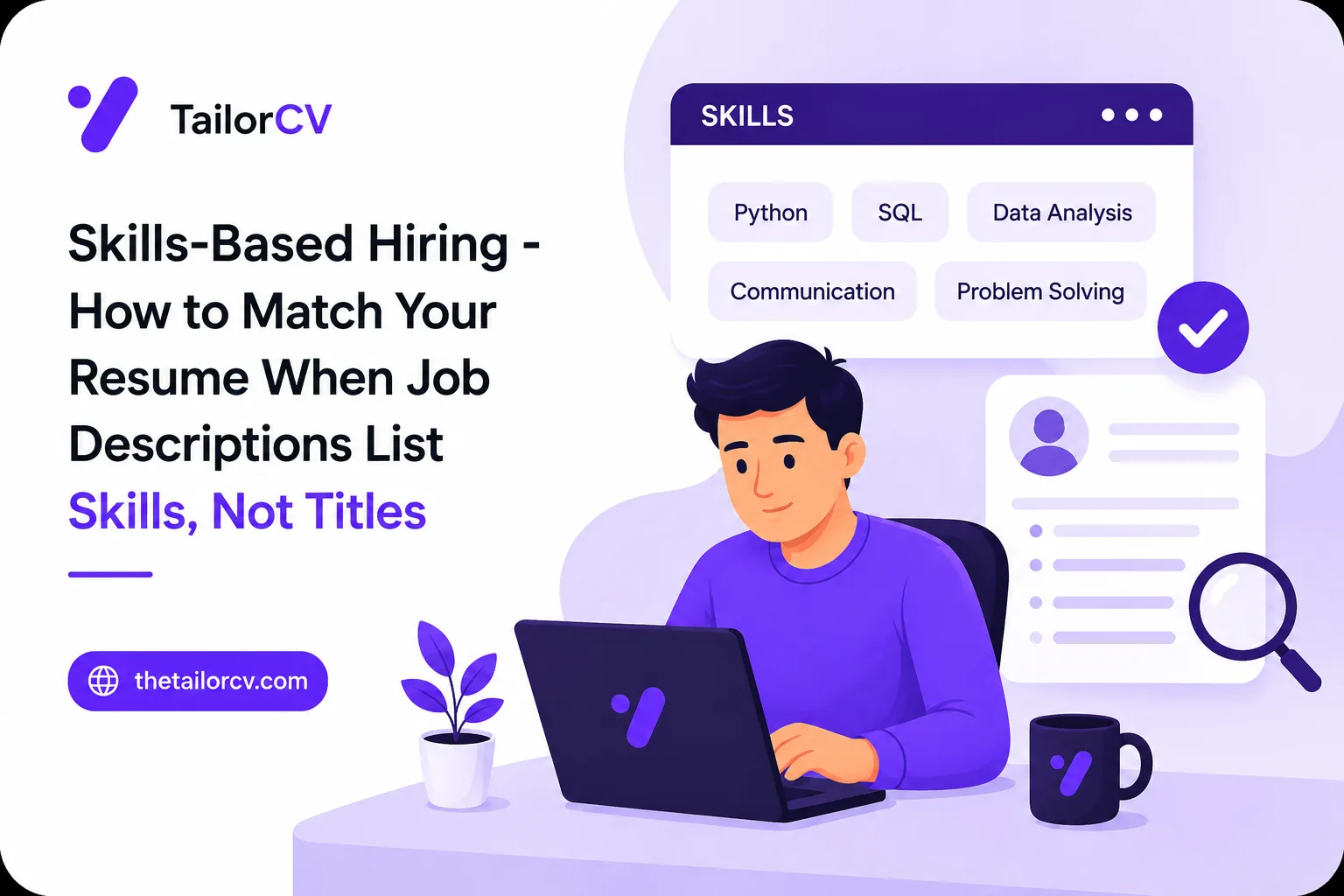
- Skills-based hiring focuses on competencies rather than job titles or degrees, allowing for a broader evaluation of candidates.
- Job descriptions in this model prioritize specific skills and may omit degree requirements, making them more inclusive for non-traditional candidates.
- To match your resume to skills-based postings, extract specific skills, provide concrete evidence of those skills, and structure your resume to highlight them prominently.
- Include relevant projects and non-traditional experiences that showcase your abilities, rather than relying solely on formal job history.
- Use tools to assess how well your resume aligns with the skills listed in job descriptions, ensuring a strong match.
A growing number of companies have dropped degree requirements and rigid title-matching in favor of skills-based hiring, evaluating candidates on what they can actually do rather than the credentials or job titles on their resume. This shift changes how job descriptions are written, and it changes how you should match your resume to them.
Skills-based postings reward candidates who can clearly demonstrate specific competencies, regardless of where or how they were gained. That is good news if your background does not follow a traditional path, but it also means you cannot rely on a job title alone to signal fit.
Paste any skills-based job description into the TailorCV resume optimizer to see how well your resume demonstrates the specific competencies the role requires.
How Skills-Based Job Descriptions Are Structured Differently
Traditional job descriptions often lead with a target job title and years-of-experience requirement, then list skills as supporting detail. Skills-based postings flip this:
- They frequently list specific, granular competencies instead of, or in addition to, a target title ("proficiency in SQL and data visualization" instead of "must have worked as a Data Analyst")
- They de-emphasize or omit degree requirements entirely, sometimes stating "no degree required" explicitly
- They may list skills without specifying how they should have been gained (work experience, projects, self-taught, bootcamp, certification)
- They often include practical assessment steps (skills tests, work samples, project-based interviews) as part of the hiring process itself
Recognizing this structure early changes how you should approach job description analysis for these roles.
Why This Is an Opportunity for Non-Traditional Candidates
Skills-based hiring benefits several groups that traditional title- and degree-matching often filters out unfairly:
- Career changers whose skills transferred but whose job titles did not, covered further in resume matching for career changers
- Self-taught professionals without a formal degree in the field
- Candidates with project-based or freelance experience instead of a traditional employment history
- Bootcamp or certificate-program graduates whose skills are current but whose credentials are non-traditional
Read highest paying jobs without a degree for context on where this trend is having the biggest impact.
How to Match Your Resume to a Skills-Based Job Description
Step 1: Extract the Specific Skills, Not Just the Title
List every named skill or competency in the posting individually, rather than assuming the job title alone tells the full story.
Step 2: Map Each Skill to Concrete Evidence
For every skill listed, identify one specific example that demonstrates it, whether from a job, a project, a certification, or self-directed work. Skills-based hiring rewards proof over pedigree.
Step 3: Build a Skills-First Resume Structure
Consider leading with a strong skills section near the top of your resume, directly under your summary, rather than relying solely on a chronological work history to imply your skills. Read chronological vs functional resume for structural guidance.
Step 4: Include Projects and Non-Traditional Experience Prominently
If your strongest evidence for a required skill comes from a personal project, freelance work, or coursework rather than a formal job, include it clearly rather than omitting it for looking "less official." Read projects in resume for how to present this effectively.
Step 5: Check Your Match Score
Use the TailorCV ATS score checker to confirm your resume demonstrates the specific skills the posting lists, not just an adjacent job title.
Common Mistakes When Matching Skills-Based Job Descriptions
Relying on Job Title Alone to Signal Fit
If your most recent title does not exactly match the target role, but your skills genuinely do, do not assume the title will carry the match. Make the skills explicit and well-evidenced instead.
Omitting Non-Traditional Experience
Freelance work, personal projects, and self-taught skills are increasingly valued in skills-based hiring. Leaving them off because they feel informal can cost you a genuine match.
Listing Skills Without Any Supporting Evidence
A long skills list with no context behind it is easy to ignore. Back your strongest, most relevant skills with a specific example wherever possible.
Assuming a Missing Degree Disqualifies You
If a posting does not explicitly require a degree, or states one is not required, do not self-select out. Focus your resume on proving the listed skills instead.
How TailorCV Helps With Skills-Based Applications
TailorCV's resume optimizer identifies the specific skills a job description requires, whether or not it centers on a traditional job title, and helps you surface your strongest supporting evidence, including projects and non-traditional experience, so your resume proves competency clearly.
Worked Examples of Skills-Based Resume Matching
When applying for a skills-based job description, it can be beneficial to see how a resume can be effectively tailored. Here’s a breakdown of a hypothetical scenario:
Job Description Excerpt
- Skills Required: Data Analysis, Project Management, Communication
- Responsibilities: Analyze datasets to inform business decisions, manage project timelines, and effectively communicate findings to stakeholders.
Matching Resume Example
-
Profile Summary: - Instead of a general statement, the candidate writes: "Data Analyst with 5+ years of experience in interpreting data to drive successful business strategies. Proven ability to manage cross-functional projects and communicate complex data insights to diverse audiences."
-
Skills Section: - Directly list the requested skills:
- Data Analysis
- Project Management
- Effective Communication
-
Experience Section: - Previous Role: Senior Data Analyst, Company ABC
- "Conducted data analysis using SQL and Python, resulting in a 20% increase in operational efficiency."
- "Led a project team of five to develop a new reporting system, improving stakeholder communication and project delivery by 30%."
By mirroring the job description's language and structure, the candidate clearly demonstrates their fit for the role.
Step-by-Step Guide to Crafting Your Skills-Based Resume
To ensure your resume aligns with a skills-based job description, follow this step-by-step process:
Your resume after optimization
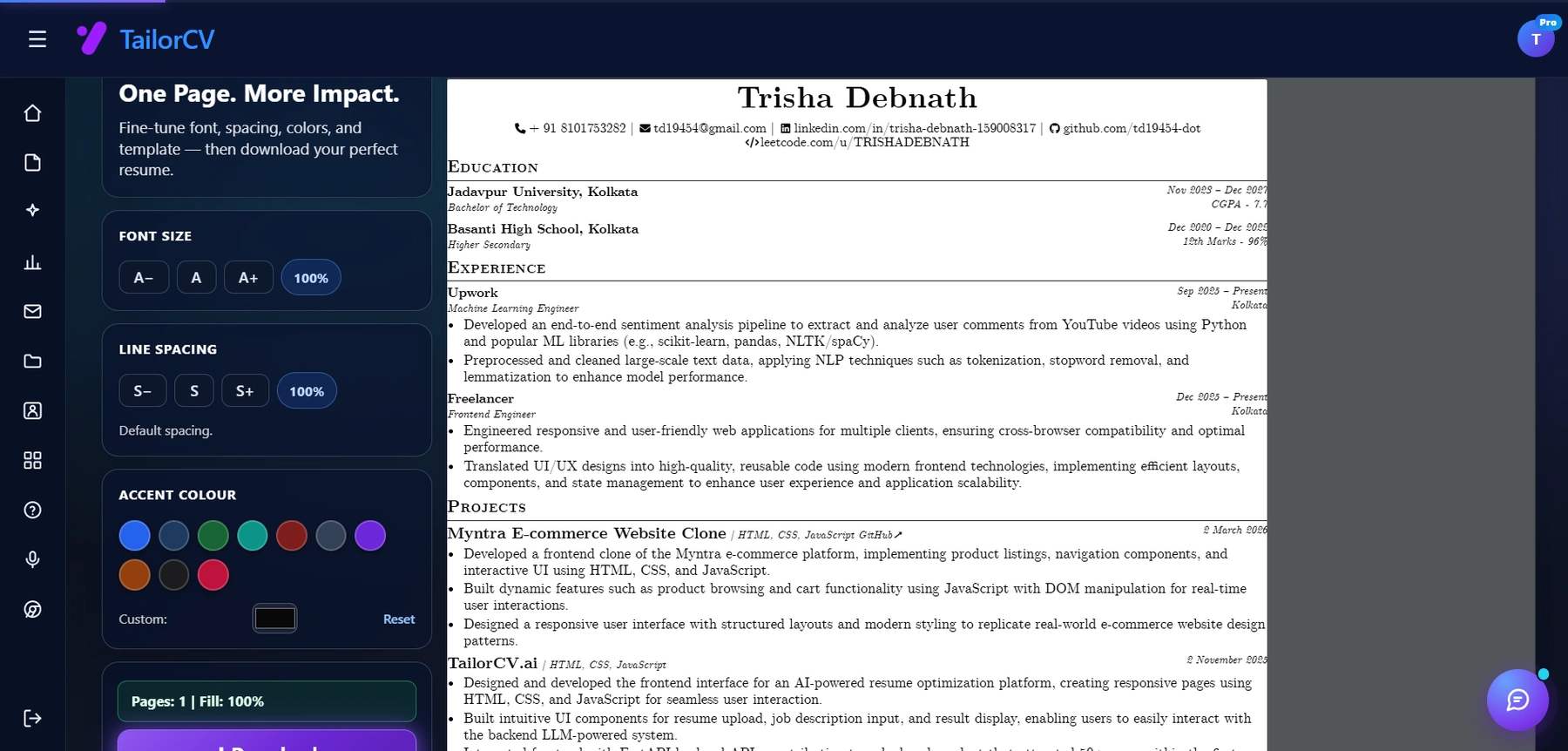
This is the resume after tailoring - the content is already matched, and these controls are how you fit it onto one page.
-
Thoroughly Analyze the Job Description: - Highlight all skills and responsibilities that stand out. Use the Job Description Analysis Checklist Before You Apply for a structured approach.
-
Create a Keyword Map: - List the skills and keywords from the job description. Use the Resume Keyword Map Template - Match Your Resume to Any Job Description to visually organize these.
-
Revise Your Profile Summary: - Craft a summary that reflects the skills mentioned in the job description. Use specific metrics and achievements to substantiate your claims.
-
Customize the Skills Section: - Ensure that the skills you list align directly with those in the job description. Prioritize them based on relevance.
-
Detail Relevant Work Experience: - Use bullet points to showcase how your previous roles involved the skills listed in the job description. Be specific about your contributions and results.
-
Review and Optimize: - Utilize tools like the ATS checker to ensure your resume passes through Applicant Tracking Systems effectively.
Common Mistakes to Avoid
When tailoring your resume for a skills-based job description, be mindful of these common pitfalls:
-
Using Generic Language: - Avoid vague terms like "hardworking" or "team player." Instead, use precise skills and achievements that directly relate to the job.
-
Ignoring the Job Description: - Failing to address the specific skills listed in the job description can lead to your resume being overlooked. Always align your skills with those mentioned.
-
Overloading with Irrelevant Skills: - While diverse skills are valuable, cluttering your resume with unrelated skills can detract from your focus. Stick to those that match the job description.
-
Neglecting to Quantify Achievements: - Employers prefer measurable outcomes. Always back up your skills with specific results or metrics to provide context.
Do's and Don'ts for Skills-Based Resume Matching
Do's:
- Do Use Action Verbs: Start bullet points with strong action verbs to convey your accomplishments effectively.
- Do Tailor Each Application: Customize your resume for every job application to reflect the specific skills required.
- Do Seek Feedback: Have a friend or mentor review your resume to provide an outside perspective.
Don'ts:
- Don't Use One-Size-Fits-All Resumes: A generic resume will not resonate with hiring managers looking for specific skills.
- Don't Rely Solely on Job Titles: Focus more on the skills and experiences rather than just your job titles.
- Don't Forget to Proofread: Typos and grammatical errors can undermine your professionalism, so always proofread your resume.
Mini Checklist for Skills-Based Resume Tailoring
- unchecked: Analyze the job description thoroughly.
- unchecked: Highlight required skills and responsibilities.
- unchecked: Create a keyword map.
- unchecked: Revise your profile summary to reflect job requirements.
- unchecked: List relevant skills in a dedicated section.
- unchecked: Detail work experience with quantifiable achievements.
- unchecked: Use an ATS checker to optimize your resume.
- unchecked: Proofread for errors and clarity.
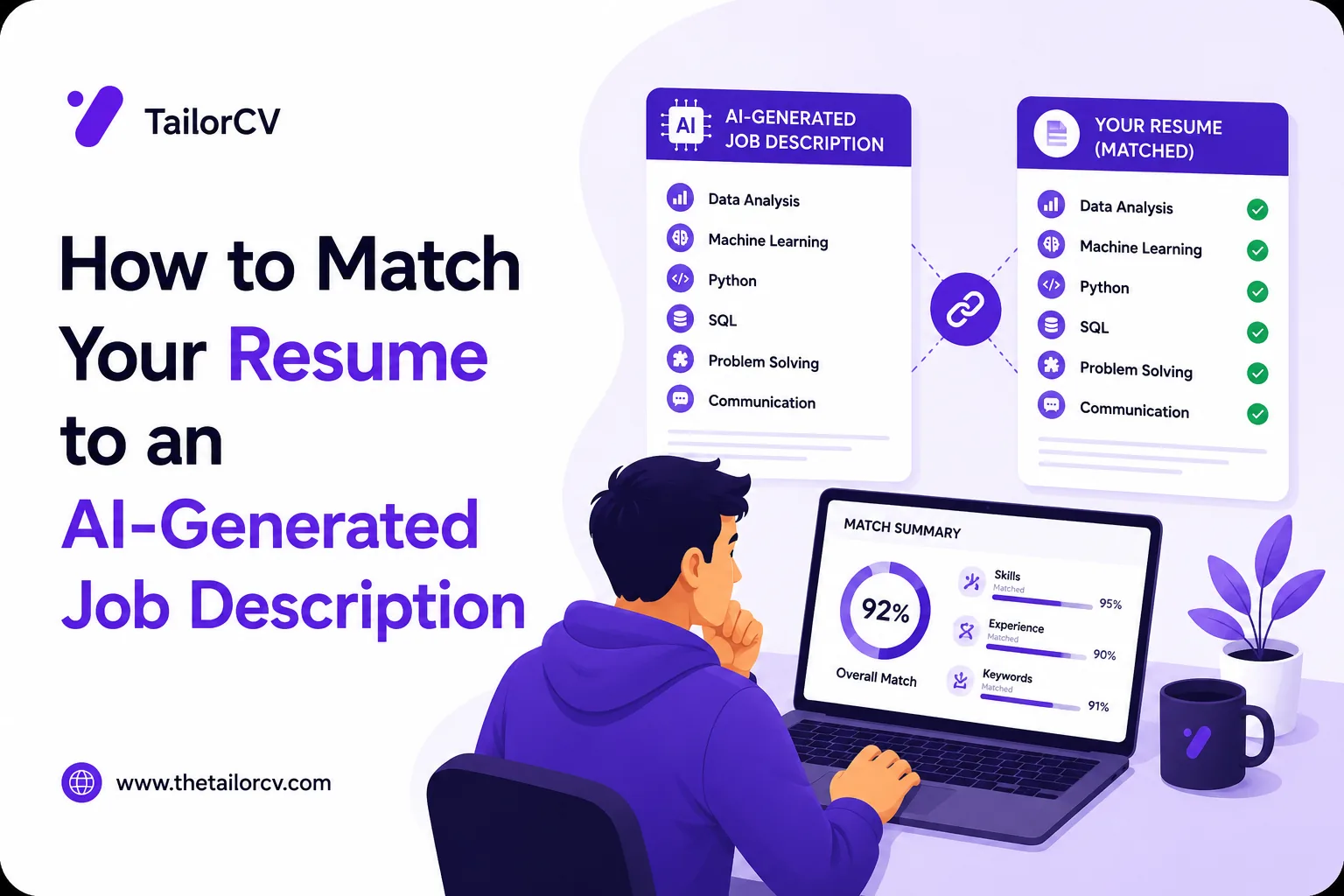
By following this checklist, you can ensure that your resume is well-aligned with the skills-based job description, enhancing your chances of landing an interview. For more guidance, check out our article on How to Match Your Resume to an AI-Generated Job Description.
Frequently Asked Questions
What is skills-based hiring?
Skills-based hiring evaluates candidates primarily on demonstrated competencies rather than job titles, degrees, or years of experience in a specific role, often incorporating skills assessments into the hiring process.
Does skills-based hiring mean job titles don't matter at all?
Job titles still provide useful context, but they carry less weight than in traditional hiring. The specific skills listed in the posting matter more than whether your title exactly matches.
Should I still include my job titles if a posting is skills-based?
Yes, job titles still provide context for your experience. Just make sure the skills themselves are clearly evidenced, not implied solely through your title.
Can personal projects really substitute for formal work experience in skills-based hiring?
Often yes, especially for technical and creative roles where the work itself demonstrates the skill clearly. Present projects with the same level of detail and results-orientation as formal work experience.
How do I check whether my resume matches a skills-based job description well?
Use the TailorCV ATS score checker to see how well your resume demonstrates the specific skills and competencies the posting lists. You can also refer to how to match your resume for further guidance.
Related Guides
- Resume Matching with Job Description - Complete Guide
- Resume Matching for Career Changers
- How to Match Your Resume to an AI-Generated Job Description
- Highest Paying Jobs Without a Degree 2026
- Chronological vs Functional Resume
- Projects in Resume
- Job Description Analysis Checklist
- Skills to Add to Resume 2026
- ATS Score Guide 2026
- Developer Portfolio Project Ideas
Conclusion
Skills-based hiring rewards proof over pedigree. Extract the specific competencies a posting lists, back each one with concrete evidence, and do not let a non-traditional background or a slightly mismatched job title hold your resume back.
Check how well your resume demonstrates a job's required skills with TailorCV before you apply.
Match My Resume to This Job - Free
What is your resume scoring right now?
Scan it against a job description and get your ATS match score in about a minute.
Drop your resume here or choose a file
PDF only. Max 2 MB.
We never share your data or use it to train AI models.

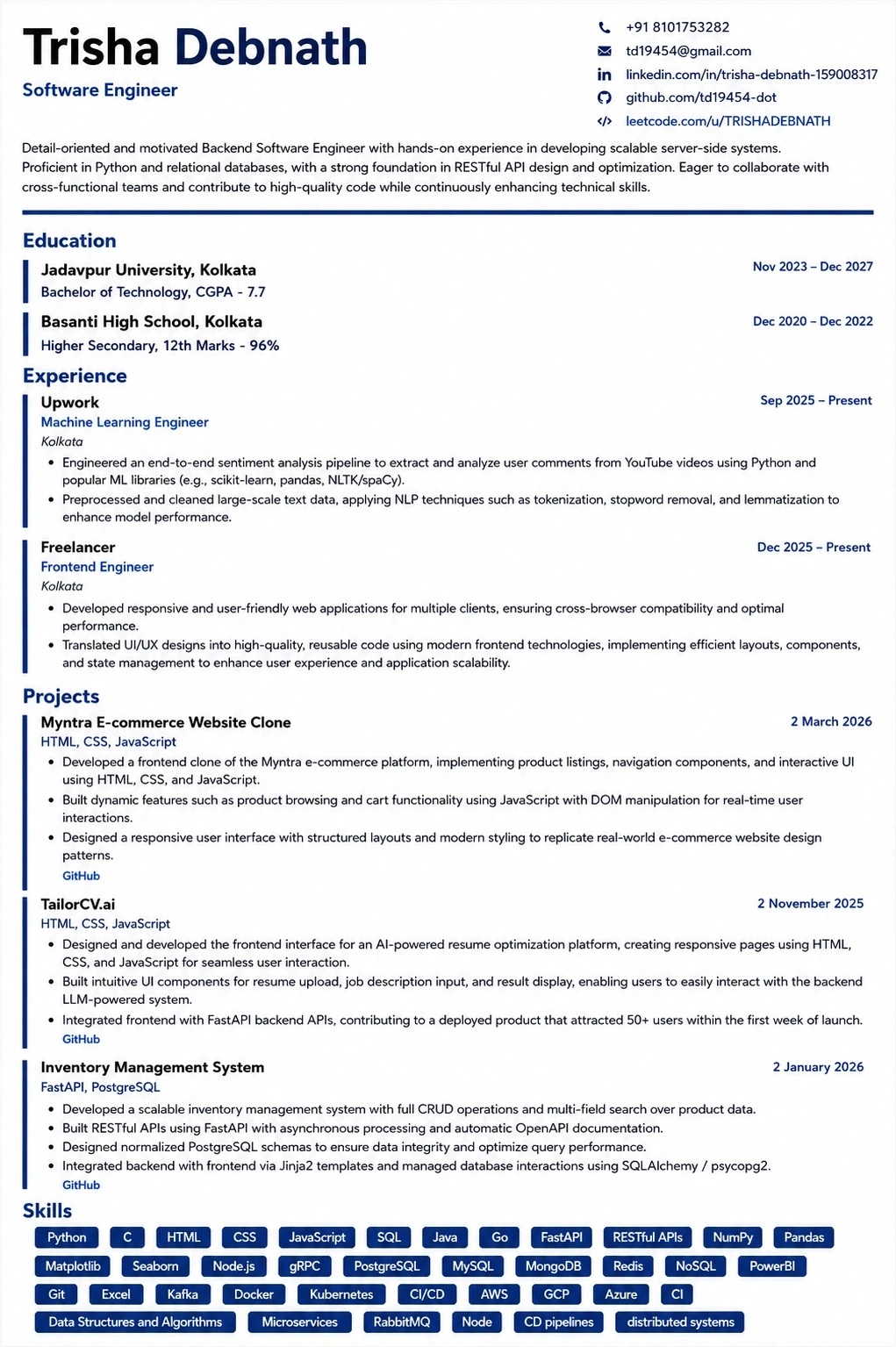
Templates that keep this structure intact
This template is ATS-tested — start from it and the formatting rules in this guide are already handled.
Was this guide useful?
Be the first to rate it.