 TD
TD
Key Takeaways
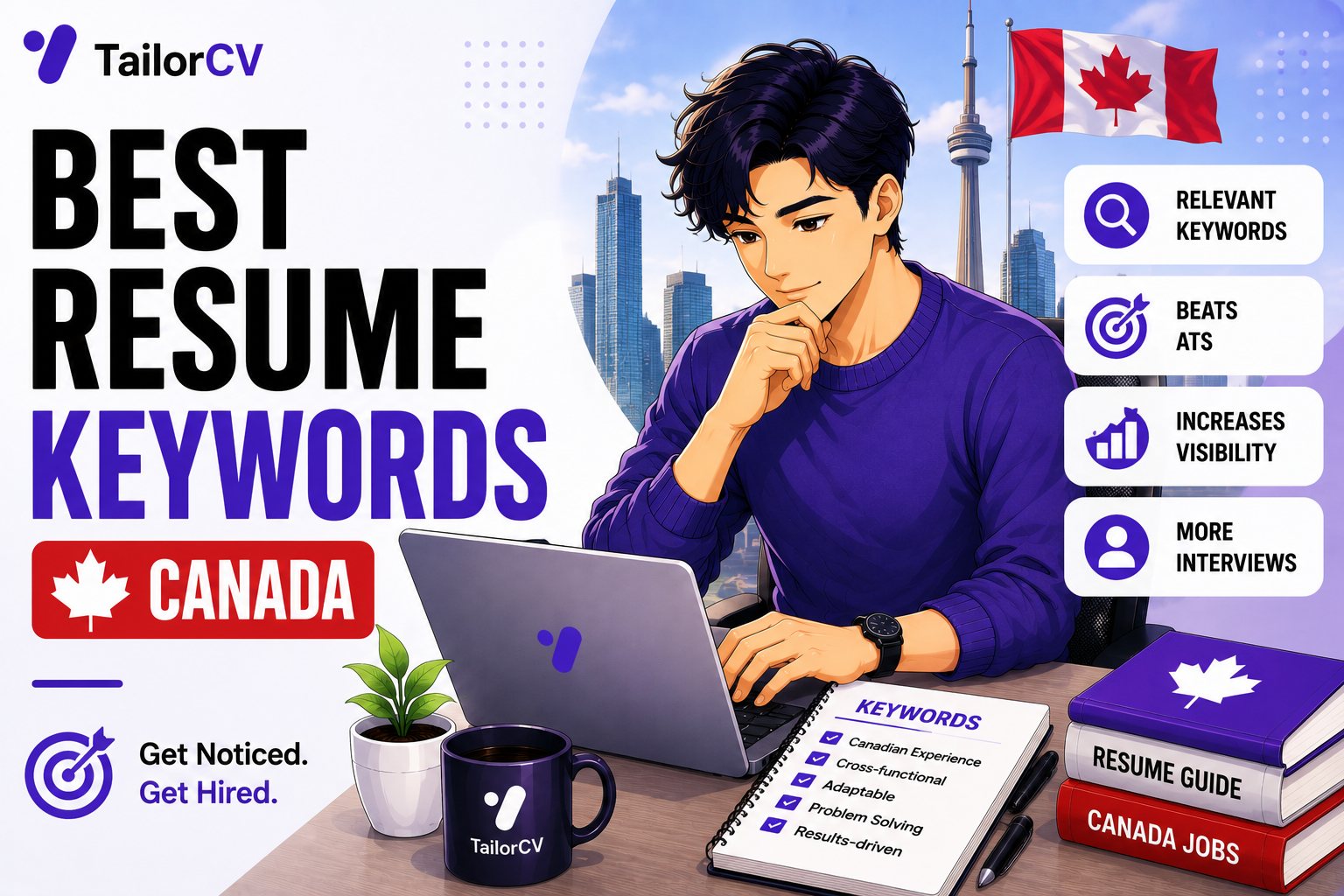
- Resume keywords are the specific skills, tools, and phrases a job posting uses — and the ATS scans for.
- The best keywords are the ones in the specific posting you're applying to; this list is your starting palette.
- Use keywords truthfully and in context — stuffing is detected and penalised.
- Include a dedicated skills section plus keywords woven into your experience.
- Test your resume against each posting with an ATS score checker to find missing keywords.
Keywords decide whether your resume gets seen in Canada. Most Canadian employers — banks, tech firms, government, healthcare, and large companies — screen applications with an Applicant Tracking System (ATS) that scans for specific skills and phrases before a recruiter ever reads your resume. Match the right keywords to the job, and you rise to the top of the shortlist. Miss them, and even a strong candidate gets filtered out.
This guide gives you the best resume keywords for Canadian jobs in 2026, organised by industry and role, plus the part that matters most: how to use them naturally so you pass both the software and the human.
How Keywords Work in the Canadian ATS
When you apply to a Canadian role, the ATS parses your resume and compares it against the job description, looking for relevant terms: titles, hard skills, tools, certifications, and industry phrases. The closer the match, the higher you rank. We explain the full mechanics in how ATS works in Canada.
Your goal isn't to include every keyword below — it's to include the ones in the specific posting, used naturally.
How the ATS Scores Your Keywords
Understanding how keywords are scored helps you use them well. Most systems consider more than mere presence:
- Relevance: does the keyword match a requirement in the posting? A match on an irrelevant skill counts for little.
- Placement: a keyword in your skills section and evidenced in your experience carries more weight than one buried elsewhere.
- Context: modern parsers increasingly read meaning, so a keyword shown "in action" with a result reads as genuine competence.
- Frequency (in moderation): a critical skill appearing naturally two or three times signals it's central; the same word crammed ten times signals stuffing and can hurt you.
- Recency: a keyword tied to your current or recent role generally counts more than the same skill from a decade ago.
Aim for the right keywords, placed where they belong, backed by evidence — not the most keywords. To see how your resume scores against a posting, use the ATS score checker.
Make Sure the ATS Can Actually Read Your Keywords
Even perfect keywords are wasted if the parser can't extract them:
- Avoid text inside images, logos, or graphics — parsers can't read them.
- Skip tables, text boxes, and multi-column layouts for critical content; they scramble reading order.
- Keep keywords out of headers and footers, which some systems ignore.
- Use standard section headings ("Work Experience," "Skills," "Education").
- Save as a clean, text-based PDF unless the posting specifies otherwise.
For the full formatting rules, see the Canadian resume guide. A resume built with the TailorCV resume builder is parser-safe by design.
The Golden Rule: Mirror the Job Description
For every application:
- Read the posting and highlight each required skill, tool, and repeated phrase.
- For each one genuinely true of you, make sure it appears in your resume — in your skills section and, ideally, evidenced in a bullet.
- Match the exact wording; the ATS may not connect synonyms.
The TailorCV resume optimizer does this automatically, rewriting your resume to match a specific Canadian job while keeping it ATS-safe.
Why Keywords Matter So Much in Canada
It's worth understanding just how decisive keywords are in the Canadian market. Because employers here — from the big banks and government departments to tech firms and hospitals — receive high volumes of applications, they lean heavily on ATS software to filter and rank before a human reads anything. That software doesn't judge your potential or your personality; it matches text. If the exact skills and terms the role calls for aren't present in your resume, you can be ranked low or filtered out regardless of how well-qualified you actually are. Recruiters then search the resume database (and LinkedIn) using specific keywords to find candidates, so the same principle applies even to roles you didn't directly apply for. In short, keywords are the gatekeepers: get them right, honestly, and you reach the human stage; miss them, and your application may never be seen. That's why this is one of the highest-return things you can get right in a Canadian job search.
Universal Keywords (Useful Across Roles)
- Project management, stakeholder management, cross-functional collaboration
- Problem solving, analytical skills, attention to detail
- Communication, presentation, leadership, team management
- Time management, prioritization, results-driven
- Process improvement, cost reduction, efficiency
- Bilingual / English and French (a genuine asset in much of Canada)
Use only those you can back up, and prefer the specific over the generic.
Keywords by Industry and Role
Technology & Software
- Languages: Python, Java, JavaScript, TypeScript, C#, Go, SQL
- Frameworks/tools: React, Node.js, .NET, Angular, Docker, Kubernetes
- Cloud: AWS, Azure, Google Cloud
- Practices: Agile, Scrum, CI/CD, DevOps, REST APIs, microservices
- Data: data analysis, SQL, Power BI, Tableau, machine learning
For tech and creative roles, a portfolio adds proof — build one from your resume with the TailorCV portfolio builder.
Finance & Accounting
- Financial analysis, financial reporting, forecasting, budgeting
- Accounts payable, accounts receivable, reconciliation, GAAP, IFRS
- Excel (advanced), SQL, Power BI, SAP, QuickBooks
- CPA designation, audit, taxation, variance analysis, compliance
Healthcare
- Patient care, clinical documentation, electronic medical records (EMR)
- Registered nurse (RN), licensing/registration, infection control
- Care planning, patient safety, interdisciplinary collaboration
- Provincial regulatory registration (e.g. CNO, CPSO where relevant)
Sales, Marketing & Business Development
- Revenue growth, sales targets, business development, account management
- CRM (Salesforce, HubSpot), lead generation, pipeline management
- Digital marketing, SEO, SEM, Google Ads, content marketing, ROI
- B2B, B2C, negotiation, client relationship management
Skilled Trades & Engineering
- Red Seal certification, journeyperson, apprenticeship
- AutoCAD, SolidWorks, project estimation, quality control
- Health and safety, WHMIS, blueprint reading, preventive maintenance
- P.Eng designation (engineering), Six Sigma, Lean
Administration & Customer Service
- Customer service, client support, complaint resolution, SLA
- Office administration, scheduling, data entry, MS Office
- CRM systems, ticketing, KPI achievement, bilingual support
Data & Analytics
- Data analysis, data visualization, business intelligence, dashboards
- SQL, Python, R, Excel (advanced), Power BI, Tableau
- ETL, data warehousing, statistical analysis, forecasting
- A/B testing, predictive modelling, machine learning
- KPI reporting, data-driven decision making
Human Resources
- Talent acquisition, recruitment, onboarding, employee engagement
- HRIS, payroll, compensation and benefits, labour relations
- Performance management, training and development, HR policy
- Employment standards, workplace health and safety, DEI
Skilled Trades & Construction
- Red Seal certification, journeyperson, apprentice, ticketed
- WHMIS, health and safety, blueprint reading, quality control
- Project estimation, preventive maintenance, equipment operation
- Provincial trade certification, site supervision
Education & Non-Profit
- Curriculum development, lesson planning, classroom management
- Program coordination, grant writing, fundraising, community outreach
- Volunteer management, stakeholder engagement, reporting
- Teaching certification, provincial college of teachers registration
Hospitality, Retail & Customer-Facing
- Guest service, food and beverage, front-of-house, reservations
- Sales, upselling, inventory management, POS systems
- Customer satisfaction, complaint resolution, scheduling
- Bilingual (English/French) service
Canada-Specific Terms Worth Knowing
Some keywords signal that you understand the Canadian context — include the ones that apply to you:
- Credentials and designations: CPA, P.Eng, Red Seal, RN, PMP, CFA, and provincial regulatory registrations (e.g. CNO for Ontario nurses).
- Credential recognition: WES / ECA-assessed equivalency (valuable for internationally trained candidates).
- Language: bilingual, English and French — a genuine asset, and sometimes required for federal and Quebec roles.
- Work-integrated learning: co-op, internship, practicum — relevant for students and new graduates.
- Compliance and safety: WHMIS, employment standards, provincial regulations.
Using these where they genuinely apply helps both the ATS and a Canadian recruiter recognise you as a fit.
Pair Keywords With Strong Action Verbs
A keyword lands harder attached to a strong verb and a result. Instead of "responsible for sales," lead with verbs that convey ownership:
- Achievement: achieved, delivered, exceeded, generated, increased, reduced, improved
- Leadership: led, managed, directed, coordinated, mentored, spearheaded
- Building: built, developed, designed, launched, implemented, established
- Analysis: analyzed, evaluated, forecasted, streamlined, optimized
The formula that consistently works: action verb + task/keyword + quantified result. For example, "Streamlined the reporting process using Power BI, cutting month-end close by three days" carries a keyword, a skill, and proof — exactly what both the parser and the recruiter reward.
Keywords for Remote and Hybrid Roles
Remote and hybrid work is common in Canada, especially in tech and professional services. Where genuinely true of you, signal you can thrive independently:
- Remote collaboration, distributed teams, asynchronous communication
- Self-management, time management, accountability
- Collaboration tools: Slack, Microsoft Teams, Zoom, Asana, Jira, Notion
- Documentation, written communication, virtual facilitation
Pair these with a result: "Coordinated a distributed team across three time zones to deliver on schedule."
Keywords for Newcomers, Students, and Career Changers
If your history doesn't yet contain the target role's exact terms, surface relevant keywords honestly:
- Newcomers: frame international experience in Canadian terms, note WES/ECA assessment, and mirror the posting's language.
- Students: pull keywords from coursework, co-op placements, internships, projects, and certifications.
- Career changers: identify transferable keywords (project management, analysis, communication), foreground new skills from certifications or courses, and lead with a skills-based summary.
The goal is always the same: match the language of the role truthfully. For fuller guidance, see how to get a job in Canada as a newcomer and getting a job in Canada as an international student.
Using Keywords Naturally, Not Mechanically
The goal is always natural, honest usage — keywords woven into real achievements, not a wall of terms. A keyword shown in action ("Built forecasting models in Excel and SQL that improved budget accuracy by 20%") reads as genuine competence to both the ATS and the recruiter, while a bare list of the same words is far less convincing. Include a dedicated skills section for clean, scannable keywords, but make sure your most important terms also appear evidenced within your experience. Spell out acronyms once with their full form, use the posting's exact wording rather than only synonyms, and only ever claim skills you genuinely have — you'll be tested on them in the interview. Relevance and honesty beat volume every time: a resume that speaks the role's language truthfully will always outperform one stuffed with terms.
How to Place Keywords on Your Resume
Distribute keywords across three areas:
What an ATS score report actually shows you

The score matters less than the breakdown beside it - each check names what passed, what failed and why, which is the list you actually work through.
- Professional summary: weave in your two or three strongest, most relevant terms.
- Skills section: list hard skills, tools, and certifications explicitly — clean keywords for the parser.
- Experience bullets: demonstrate the keyword with a result. "Built forecasting models in Excel and SQL that improved budget accuracy by 20%" beats simply listing "Excel, SQL."
Spell out acronyms once — "Chartered Professional Accountant (CPA)" — so you match either form. For the full resume structure, see the Canadian resume guide.
Certifications as High-Value Keywords
Certifications are among the most powerful keywords you can add, because they're concrete, verifiable, and often listed as requirements — especially valuable for newcomers, career changers, and students demonstrating current, in-demand skills. Include the relevant ones, spelled out with their acronym:
- Tech: AWS, Azure, Google Cloud certifications; CompTIA; Cisco; scrum/Agile certifications.
- Data: Google Data Analytics, Microsoft Power BI, Tableau certifications.
- Finance/accounting: CPA, CFA, and relevant designations.
- Project management: PMP, PRINCE2, CAPM.
- Trades: Red Seal, provincial trade certification, journeyperson status.
- Marketing: Google Ads, Google Analytics (GA4), HubSpot, Meta certifications.
- Engineering: P.Eng designation, EIT.
- Healthcare: RN and provincial regulatory registration.
Place the most relevant certifications prominently — a recent, relevant one can be the keyword that lifts you over the shortlist line.
Universal vs. Role-Specific: Getting the Balance Right
A strong Canadian resume blends two kinds of keywords. Role-specific hard skills and tools (the software, methodologies, and technical competencies in the posting) are what the ATS weights most heavily and what prove you can do the job. Universal professional keywords (communication, leadership, stakeholder management, problem-solving) round out the picture and matter more as you become senior. Early-career candidates should lead with hard skills and tools; mid-career candidates add project ownership and specialisation; senior candidates lead with strategy, leadership, and business outcomes while keeping enough hard-skill keywords to show they remain hands-on. Revisit and rebalance your keyword mix each time you target a more senior role — and always re-check against the specific posting, which remains your single best source of the exact terms to use.
How Keyword Needs Differ Across Canadian Sectors
The keyword game plays out a little differently by sector:
- Technology: the most keyword-intensive and automated. Precise tool, language, and framework matches matter enormously.
- Finance and accounting: designations (CPA, CFA), standards (GAAP, IFRS), and specific software are heavily scanned.
- Government and public sector: applications often map directly to stated "essential qualifications," so mirror that exact language.
- Healthcare and regulated professions: licensing and provincial registration terms are effectively mandatory keywords.
- Skilled trades: certification terms (Red Seal, ticketed, journeyperson) and safety credentials (WHMIS) are key.
Whatever your sector, the discipline is the same: read the posting closely, mirror its exact language where it's true of you, and evidence your most important keywords with quantified results.
Keyword Mistakes to Avoid
- Keyword stuffing. Detected and penalised — use terms naturally.
- Synonyms only. Include the posting's exact phrasing.
- Listing skills you can't back up. You'll be exposed in the interview.
- No skills section. Fewer clean keywords for the ATS.
- Not tailoring per job. The biggest miss.
A Word on Job Titles
One keyword worth special attention is your job title, since recruiters and the ATS both search by it heavily. Where your actual title is unusual, internal, or unclear (a common issue for newcomers whose foreign titles don't map neatly, or for people at companies with quirky naming), consider adding a clear, standard equivalent in brackets or nearby — for example, "Growth Ninja (Marketing Specialist)." Never fabricate a title you didn't hold, but making your real role legible in standard terms helps you surface for the searches that matter. Match your titles to the conventional language of your field wherever you truthfully can.
Beyond the Resume
Keywords matter across your application:
- Your cover letter should echo the role's language — see the Canadian cover letter guide.
- Your LinkedIn is keyword-searched by recruiters — optimise it with LinkedIn optimization for Canadian job seekers.
Keywords Recruiters Search on LinkedIn
The keyword game extends beyond your resume — Canadian recruiters search LinkedIn using the same terms. To appear in their results, mirror your resume keywords across your LinkedIn headline, About, and Experience. If a recruiter searches "financial analyst Toronto Power BI," your profile needs those terms to surface. A keyword-aligned resume and LinkedIn profile work as a pair — see LinkedIn optimization for Canadian job seekers. The principle is identical to beating the ATS: use the language of the roles you want, honestly, everywhere a recruiter or algorithm might look.
A Simple Keyword Workflow to Apply Every Time
Bringing it together, here's the repeatable routine for every Canadian application:
- Read the job description twice and highlight every skill, tool, certification, and repeated phrase.
- Match honestly — for each term genuinely true of you, ensure it appears in your resume.
- Place strategically — in your summary, your skills section, and evidenced in an experience bullet with a result.
- Spell out acronyms once, and use the posting's exact wording.
- Test the match with the ATS score checker and add any legitimate missing terms.
- Mirror on LinkedIn and your cover letter so you're covered everywhere a recruiter looks.
Done consistently, this takes only a few minutes per application and dramatically improves how often you're shortlisted. Keywords aren't about gaming a system — they're about clearly, honestly speaking the language of the role you want.
Frequently Asked Questions
How many keywords should I include? No magic number. Include the genuinely relevant skills and phrases from the specific posting, used naturally. Relevance beats quantity.
Is French a useful resume keyword in Canada? Yes — bilingualism (English and French) is a genuine asset for many roles, especially federal government and Quebec-based positions. List it if you have it.
Where do I find the right keywords? In the job description — highlight the required skills, tools, and repeated phrases and mirror them.
How do I know which keywords I'm missing? Run your resume and the posting through a free ATS score checker to see your match and missing terms.
Should I spell out acronyms or use the short form? Do both at least once — for example, "Chartered Professional Accountant (CPA)." That way you match whether the ATS searches for the abbreviation or the full phrase.
Do keywords matter if I have no Canadian experience yet? Yes. Frame international experience in Canadian terms, note credential assessment (WES/ECA), and pull keywords from coursework, co-op, projects, and certifications. Match the role's language truthfully — a keyword backed by a result still counts.
Can the same resume work for every job? No — that's the biggest keyword mistake. Different postings emphasise different skills, so the keywords you feature should change with each role. Tailor every time.
A Worked Example — how does tailoring look in practice? Suppose a posting asks for "financial modelling, forecasting, GAAP, and stakeholder reporting." A generic bullet like "handled the company's finances" becomes "Built forecasting models and GAAP-compliant stakeholder reports that improved budget accuracy by 20%" — truthful, specific, and containing four of the exact phrases the role screens for.
Keywords Are a Tool, Not a Trick
It's worth ending on the right mindset. Keyword optimisation sometimes gets a bad reputation, as though it's about gaming a system or padding your resume with buzzwords. Done properly, it's the opposite: it's about communicating clearly and honestly, in the language your target role actually uses, so that both the software and the human reader can quickly see that you're a genuine fit. The best-optimised resume isn't the one with the most keywords — it's the one that truthfully mirrors what a specific posting asks for, with each important skill backed by real evidence. Approached this way, keywords aren't a trick at all; they're simply good communication. Speak the role's language honestly, evidence your claims with results, keep the formatting clean, and test against each posting — and you'll consistently turn more Canadian applications into interviews without ever compromising your integrity.
Final Thoughts
The best resume keywords for Canadian jobs are the ones the specific posting uses — matched truthfully across your summary, skills, and experience. Use this list as a starting palette, but always tailor to the role in front of you.
Build a clean, keyword-ready resume with the TailorCV resume builder, then tailor and test it against each job with the ATS optimizer. Match the language of the role, and you'll turn far more Canadian applications into interviews.
See which keywords you are missing
Scan your resume against the posting and get the exact terms it did not find.
Drop your resume here or choose a file
PDF only. Max 2 MB.
We never share your data or use it to train AI models.
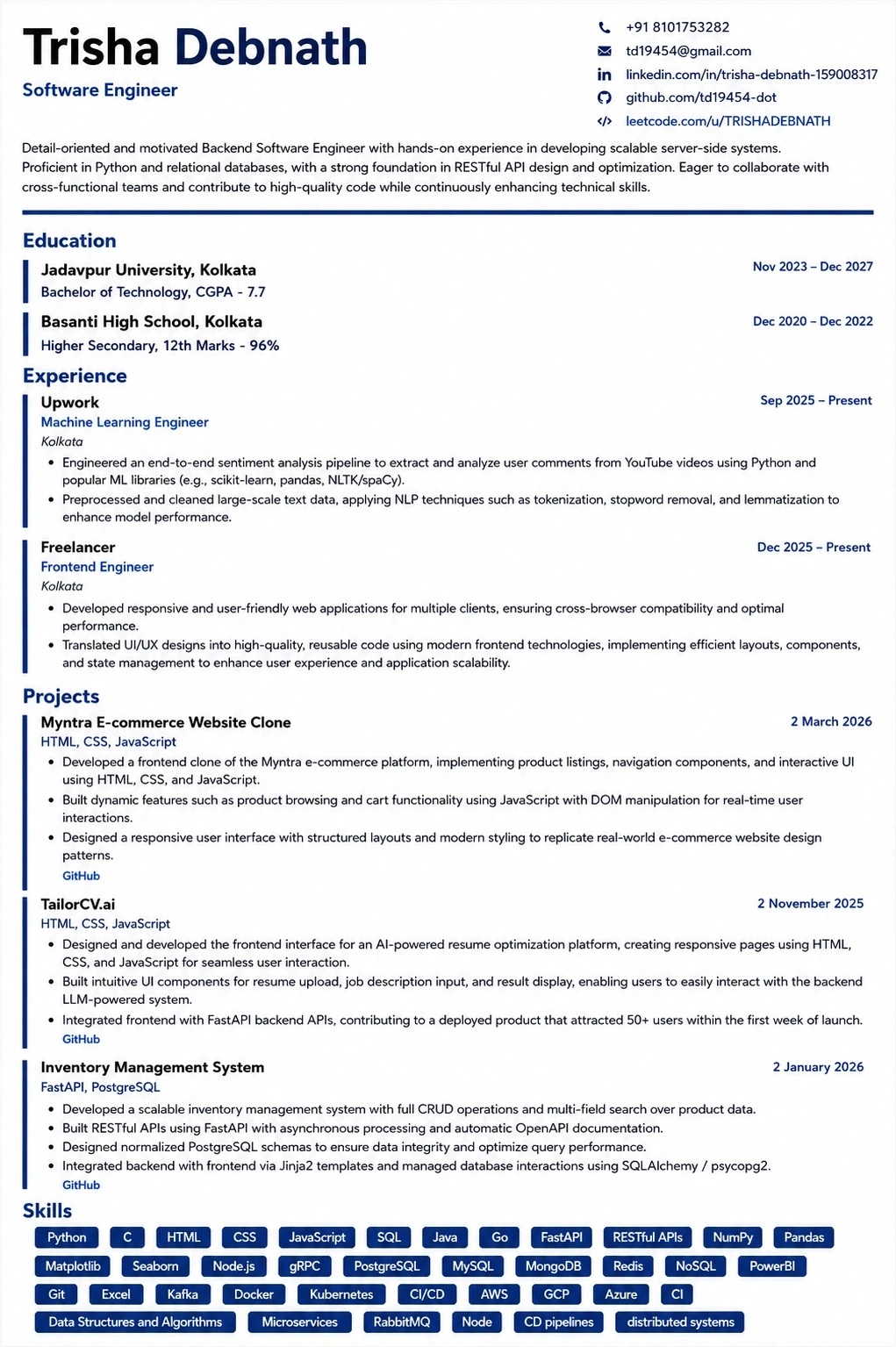
Where those keywords actually go
A layout with a real skills section gives the parser somewhere clean to find every term you just added.
Was this guide useful?
Be the first to rate it.