 SS
SS

Key Takeaways
- UK technology employers span far more than the well-known graduate schemes, and most of the market hires year-round.
- Assessment is skills-based — coding tests and technical interviews rather than competency frameworks alone.
- A project that exists and runs is the strongest credential and the most commonly missing one.
- Technology roles are the most geographically distributed of any UK graduate sector, which matters for cost of living.
- For international graduates, checking the sponsor register before applying is the highest-value filter.
Where the jobs actually are
Large technology companies' UK offices. Structured graduate schemes, autumn applications, standardised technical assessment. Highly contested and the most visible.
Financial services technology. Banks, insurers and asset managers employ very large engineering organisations building trading, payments, risk and customer systems. Consistently overlooked by students focused on product companies, and consistently substantial — the same pattern seen in Singapore.
Mid-sized software and product companies. The largest segment by volume, hiring year-round on need rather than on a calendar, and dramatically less contested than the named schemes.
Startups and scale-ups. Concentrated in a few cities, with the usual trade-offs around structure, learning and risk.
Public sector and government digital. Substantial digital organisations building services used at national scale, with structured entry routes and — relevant for international candidates — reliable sponsor licences.
Consultancies and IT services. Large graduate intakes, client-facing work, and broad early exposure.
Universities and research institutions. Research software, infrastructure and data roles, frequently overlooked and generally holding sponsor licences.
What is assessed
Coding tests. Online assessments early in the process, typically algorithmic and timed. Speed under pressure is the binding constraint rather than difficulty — practise with a clock running.
Technical interviews. Data structures, algorithms, and reasoning aloud while solving. The preparation transfers almost entirely, since question banks are effectively international.
Project discussion. Frequently the most important round for a graduate. What you built, why you made the choices you did, what broke, what you would change. This is where a real project pays off and where coursework alone cannot.
Behavioural and competency questions, particularly at larger and more traditional employers, drawing on the same evidence bank as any UK application.
System design, lightly. Rarely a serious round for graduates, and frequently a conversation about how your own project would handle more load.
What makes a graduate competitive
One substantial project that runs. Deployed, reachable, with a README that leads with what it does and what was hard. This outweighs a longer list of modules by a wide margin — the project standard applies directly.
Evidence someone else has used it. Even ten users. Adoption is what turns a project into a credential.
Open-source contributions, which demonstrate working to someone else's standard.
An internship or placement year. The placement route is a genuine advantage and converts at high rates.
A CV that parses and matches the posting. Every employer of size screens with software first.
Geography
Technology is the most distributed UK graduate sector. London dominates by volume, and Manchester, Edinburgh, Bristol, Cambridge, Leeds, Glasgow, Birmingham and Newcastle all have genuine technology employment.
Which matters financially. A salary difference between London and a regional city is frequently smaller in real terms than it appears once housing is counted — the regional argument covers the arithmetic, and the general cost-of-living principle applies identically.
Remote and hybrid roles widen this further, though fully remote graduate roles are less common than mid-career ones because of the mentoring involved.
For international graduates
Check the sponsor register first. Public, searchable, and it determines whether an employer could keep you after the Graduate route expires. Filtering on it before applying is the single highest-value step.
Larger employers, financial services, government digital and universities are more likely to hold licences than small startups.
Ask directly whether they sponsor for this role, since holding a licence and using it are different.
Target roles that clear the skill and salary thresholds, since a role below them will not convert regardless of performance.
Preparing your own portfolio properly
Deploy your strongest project somewhere reachable with a live URL, and write documentation that leads with what it does and why, rather than opening with installation instructions, exactly the standard that separates a convincing project from a forgotten repository anywhere technical hiring happens.
Be ready to discuss specific trade-offs and decisions within your own project in real depth, this is what the technical interview genuinely probes, a project you can only describe superficially, however impressive it looks on the surface, performs worse under real questioning than a simpler project you genuinely understand end to end.
Where UK tech hiring actually happens
London dominates by volume, but several other cities host genuine clusters with materially less competition.
| City | What is there |
|---|---|
| London | The largest concentration — fintech, scale-ups, every major firm's UK office |
| Cambridge | Deep tech, semiconductors, life sciences computing |
| Manchester | A large and growing tech sector, plus major employers' northern hubs |
| Edinburgh | Fintech, data science, a strong university pipeline |
| Bristol | Semiconductors, aerospace software, robotics |
Technical interviews in the UK follow international convention closely — algorithmic problems, a system discussion for some roles, and a behavioural round — so standard preparation transfers almost entirely.
Do's and Don'ts
Do
- Apply beyond London to the regional clusters
- Build one deployed project you can discuss in depth
- Prepare for algorithmic interviews as you would anywhere
- Check whether an employer holds a sponsor licence, if you need one
- Apply early in the autumn scheme window
Don't
- Assume London is the only real market
- List coursework where a real project would go
- Underprepare assuming UK interviews are softer
- Leave sponsorship questions until offer stage
- Miss the autumn window and wait a year
Scenarios: where to apply
Scenario 1: You want the highest volume of openings
London, and apply early in the autumn window. Volume is real but so is the competition.
Scenario 2: You want less competition for similar work
Manchester, Edinburgh, Bristol or Cambridge. Each has a genuine cluster and a materially smaller applicant pool per role.
Scenario 3: You need visa sponsorship
Filter for employers on the sponsor register first. It removes most of the wasted applications before you write any of them.
Tip: Look beyond London to Manchester, Edinburgh, Bristol and Cambridge. Each has a genuine tech cluster with materially lower competition and cost of living than the capital.
Common Mistakes
- Applying only to named graduate schemes. Applying only to named graduate schemes the largest segment hires year-round and is far less contested.
- No project evidence. No project evidence the strongest credential and the most commonly missing.
- Practising coding untimed. Speed under pressure is what is actually tested.
- Ignoring financial services and government technology. Substantial, technically real, and overlooked.
- Not checking the sponsor register. Not checking the sponsor register for international candidates, the filter that determines everything else.
- Assuming London is the only market. Technology is the most distributed sector in UK graduate hiring.
Weighing a placement year against direct graduate recruitment
A placement year taken during your degree, where available, is one of the strongest possible credentials for graduate technology hiring, worth genuinely considering this route if your degree structure permits it, since it converts at meaningfully higher rates than direct graduate applications with no prior industry experience.
If a placement year is not available or you have already completed your degree without one, a strong self-built project and any shorter internship experience can substitute effectively, the underlying evidence an employer is looking for, can you actually build things and reason about trade-offs, matters more than the specific credential that demonstrates it.
Related Guides
Keep building on this with the related guides in this series:
- UK Accountancy Graduate Routes - Qualifications and Employers
- The UK Civil Service Fast Stream - What the Process Involves
- UK Cover Letters for Graduates - When They Matter and What to Write
- The UK CV Format for Students and Graduates
- Degree Classification and UK Employers - How Much It Actually Matters
- Understanding Your First UK Payslip and Tax
You can also check your resume's ATS score for free, generate a tailored cover letter, or build a portfolio website in minutes.
Frequently Asked Questions
Do I need a computer science degree?
It helps and it is not required. Converts from mathematics, physics and engineering are common, and the project evidence carries proportionally more weight without the degree.
When do applications open?
Named graduate schemes follow the autumn milkround. Most of the market hires year-round, which makes missing the autumn far less costly than in law or banking.
How do UK technical interviews compare internationally?
Broadly similar in format and content, so preparation transfers. The behavioural rounds follow UK competency conventions.
Is a placement year worth it?
Yes — it converts at high rates and is one of the strongest credentials available to a UK student.
What about salary?
London pays more and costs more. Compare real income rather than headline figures — the salary guide covers the picture.
Do startups sponsor visas?
Frequently not, since obtaining a licence takes effort many small companies have not undertaken. Check the register before investing time.
What is your resume scoring right now?
Scan it against a job description and get your ATS match score in about a minute.
Drop your resume here or choose a file
PDF only. Max 2 MB.
We never share your data or use it to train AI models.

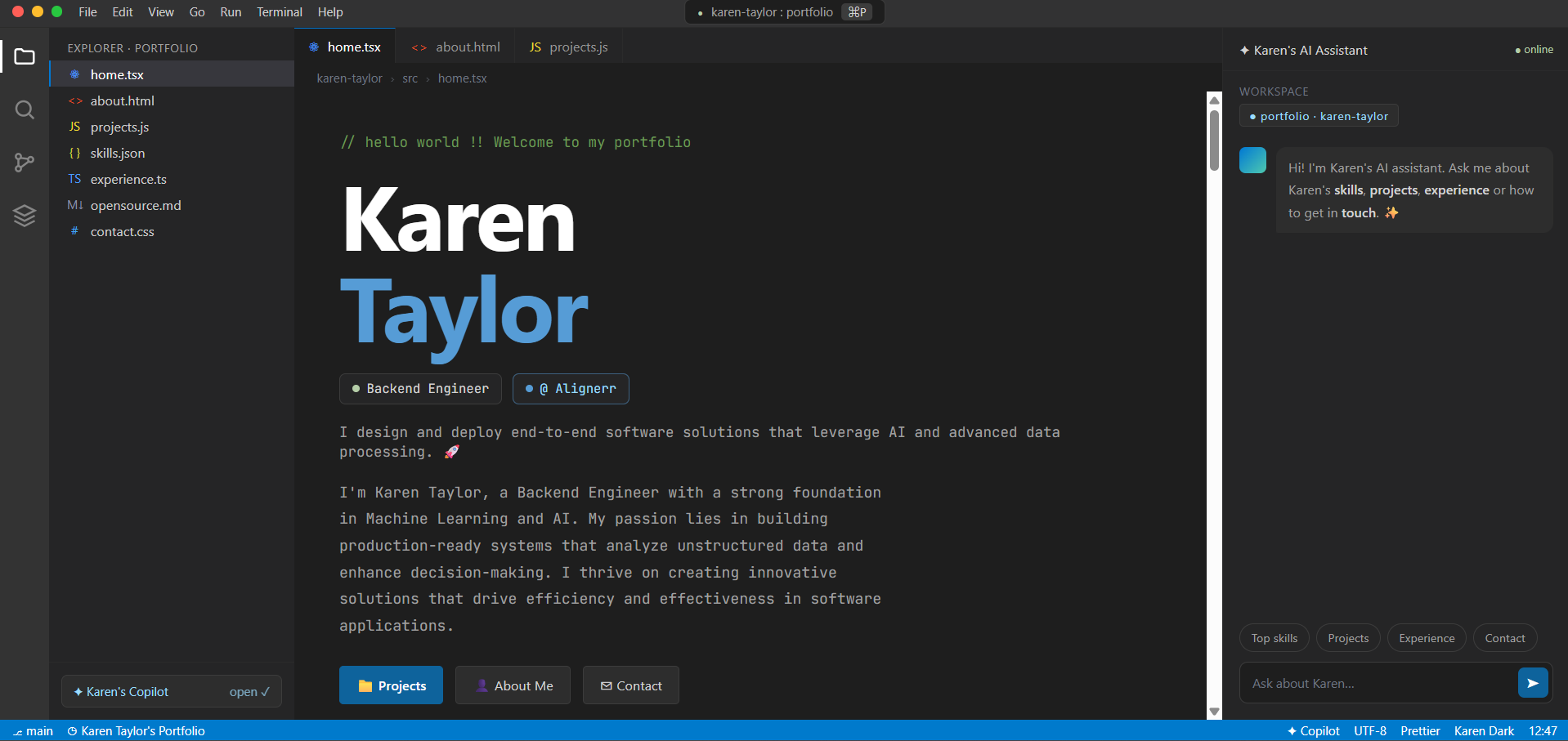
See what your portfolio could look like
This theme is built straight from your resume — pick one and your portfolio is live in minutes.
Was this guide useful?
Be the first to rate it.