 TD
TD
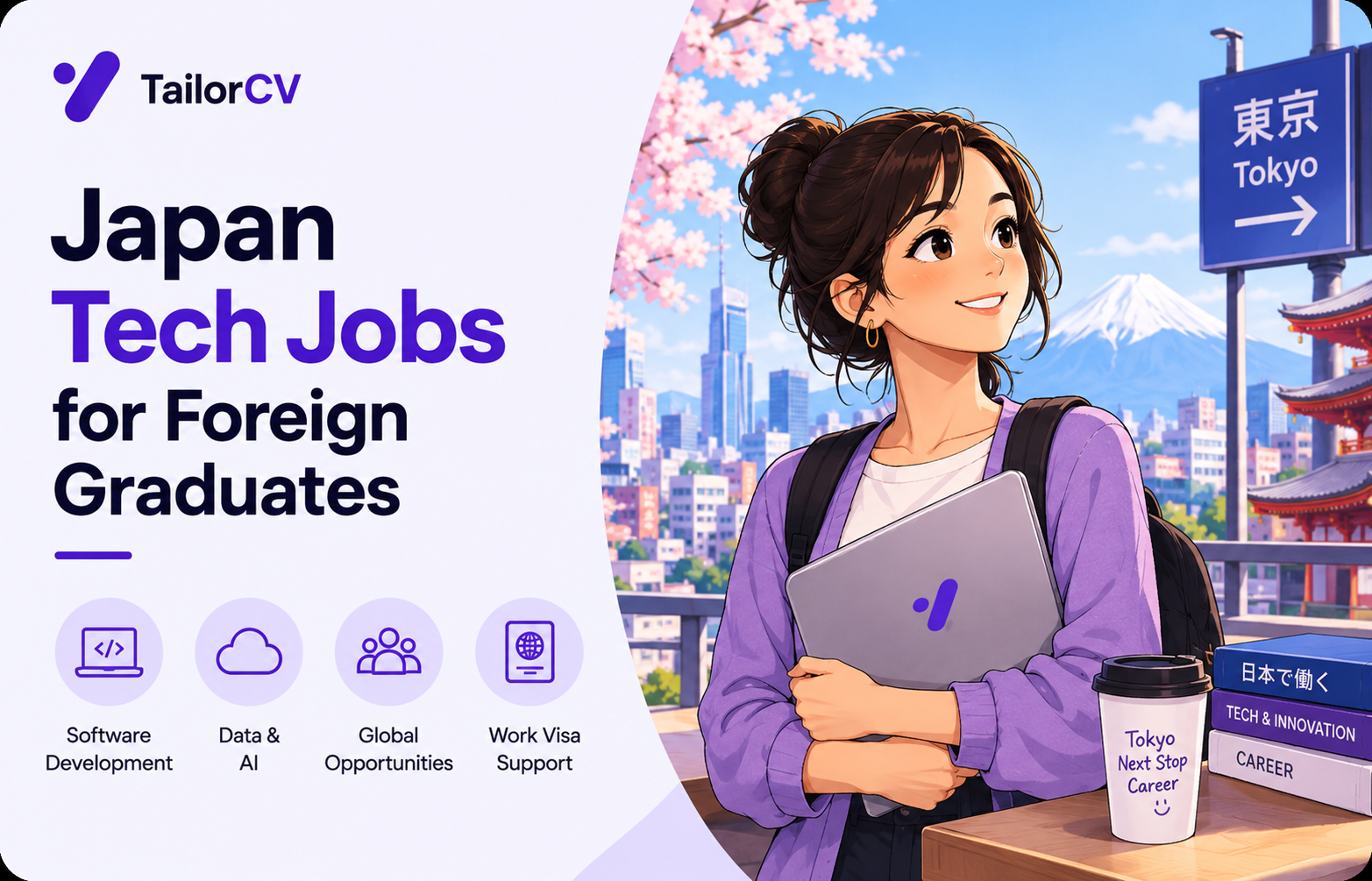
Key Takeaways
- Technology hiring in Japan departs from the conventional graduate system more than any other sector.
- Year-round recruiting, role-specific hiring and skills-based assessment are common, rather than the synchronised generalist cycle.
- English-operating engineering teams exist at a meaningful number of employers, which removes the language constraint that closes other routes.
- Demonstrable technical evidence carries more weight here than credentials or cycle timing.
- The employer groups differ substantially, and knowing which you are applying to changes both the process and the language expectation.
Why technology is different
The conventional graduate system recruits generalists for potential, on a synchronised annual cycle, in Japanese, and assigns roles after joining. Technology hiring frequently does none of those things.
Role-specific hiring. You apply for a defined engineering position rather than a general track, and you know what you would be doing.
Year-round recruiting. Many technology employers hire when they have a vacancy rather than on the annual cycle, which means missing the shūkatsu window matters far less here.
Skills-based assessment. Technical interviews, coding exercises and portfolio review, which are objective in a way that generalist aptitude assessment is not.
English-operating teams. A meaningful number of employers run engineering in English, which is the single largest practical difference for a foreign graduate.
Which makes it the most accessible professional route into Japan for someone without business-level Japanese, and the one where your actual capability does the most work.
The employer groups
Japanese technology companies with international teams. A growing number operate engineering in English or bilingually, hire internationally as routine, and have established processes for foreign staff. Frequently the best combination of scale, stability and accessibility. Rakuten is the most concrete example of this — the company famously mandated "Englishnization," making English the official in-house working language across the company starting in 2010, a policy still frequently cited as the reason its engineering org is unusually accessible to non-Japanese-speaking hires. Mercari, LINE, and SmartNews are other well-known names worth researching directly for their specific current language policy and international hiring track record, rather than assuming every large Japanese tech brand operates the same way.
Foreign technology companies with Japan offices. Operating in English by default, following their home market's hiring conventions and timelines, and generally straightforward for a foreign candidate. Covered further in the English-speaking jobs guide.
Traditional Japanese companies' technology divisions. Large enterprises, financial institutions and manufacturers employ substantial engineering teams. These typically follow the conventional system more closely, expect stronger Japanese, and offer stability and scale.
Startups. Extremely variable, and a segment where some are deliberately English-operating and internationally staffed. Faster, less structured, and with the same trade-offs startups carry anywhere.
IT services and consulting firms. Large employers, frequently more traditional in structure, with client-facing work that raises the language requirement.
The practical instruction: identify which group an employer belongs to before applying, because the process, the language expectation and the timeline all follow from it.
What the process looks like
- Applications year-round at many employers, through their own career pages rather than through the graduate recruiting platforms.
- Technical screening, frequently a coding assessment or take-home exercise.
- Technical interviews covering algorithms, systems and your own past work. The preparation transfers substantially from international technical interviewing, since the question types are broadly similar.
- A discussion of your projects in depth. Frequently the most important round for a graduate, because it is where demonstrated capability becomes visible.
- Cultural and team fit conversations, which at Japanese employers carry real weight and assess whether you will work well within the team over time.
- Offer and visa sponsorship, applied for by the employer once you accept.
What actually makes a graduate competitive
Something you built that runs. The strongest single credential, and the one that translates across language barriers most effectively. A deployed project a reviewer can open beats a longer list of coursework — the project standard applies directly.
Public technical evidence. Open-source contributions, a technical blog, competition results. These are legible regardless of whether the reviewer knows your university.
Internship experience, particularly in Japan, which resolves both the capability question and the practical question of whether you can work in the environment.
Clear communication about your work. Being able to explain what you built, why you made the choices you did, and what you would change is what separates candidates in the project round.
Honest language positioning. State your Japanese level plainly. Overstating it wastes everyone's time; understating it closes doors unnecessarily.
A specific reason for Japan. Asked of every foreign candidate, and a vague answer reads poorly. A genuine reason — the industry, the language, family ties, an intention to build a career there — is entirely sufficient.
Where the accessible roles genuinely are
International technology companies with a genuine Japan presence frequently offer roles more accessible to candidates without advanced Japanese ability, particularly on teams operating primarily in English, worth researching the specific team's actual working language directly rather than assuming based on the company's general international profile, exactly the same caution that applies to assessing language requirements at any international company.
Domestic Japanese technology companies vary considerably, some larger ones with genuine international operations have specific teams or divisions more accessible to non-Japanese speakers, though the default assumption for most domestic technology employers remains that meaningful Japanese ability is genuinely required.
Startups with international founders or investors sometimes operate with English as a working language, worth researching specific companies directly.
What the technical interview process looks like
Algorithmic coding assessment and technical interviews at internationally-oriented companies closely follow international convention, the standard technical interview preparation transfers substantially, since underlying question formats are broadly international.
Domestic companies may incorporate elements of the broader shinsotsu hiring process, including aptitude testing and multiple structured interview rounds, alongside technical assessment, worth understanding which type of process a specific employer runs before preparing.
Building a portfolio that works here
A real, deployed project remains the strongest single credential a technical graduate can bring, regardless of country, exactly the same principle that holds in every major technology market, something you built and can discuss in depth outweighs a longer list of completed coursework considerably.
For roles at internationally-oriented companies, presenting this work in English with clear, specific documentation is generally the safer default, for roles at domestic companies where Japanese ability is genuinely expected, consider whether a Japanese-language version of your portfolio materials strengthens your application.
Building a network within the local tech community
Attend technology meetups and community events, both those conducted in English and, as your ability develops, those conducted in Japanese, this is a genuinely useful way to learn about specific companies' actual working environments beyond what any official recruiting material presents.
Connect with other foreign engineers already working in Japan, their direct, first-hand experience navigating this specific job market is considerably more useful than general secondhand advice, and most are genuinely willing to share what they learned going through the same process themselves.
Tip: Identify which of the five employer groups a company belongs to before applying. The process, the language expectation and the timeline all follow from that single fact, and applying without knowing it wastes applications.
Common Mistakes
- Assuming the conventional cycle applies. Much of technology hires year-round.
- Assuming Japanese is always required. English-operating teams exist in meaningful numbers.
- Applying without technical evidence. Applying without technical evidence the most legible credential in this sector and the one most often missing.
- Not identifying the employer type. Process, language and timeline all follow from it.
- Overstating language ability. It surfaces immediately in interview.
- Having no answer to why Japan. Asked universally and easy to prepare.
Related Guides
Keep building on this with the related guides in this series:
- English-Speaking Jobs in Japan - Where They Actually Are
- Group Discussions and Aptitude Tests in Japanese Recruiting
- Internships in Japan for International Students
- Japanese Language Requirements for Jobs in Japan
- Teaching in Japan - The JET Programme and the Alternatives
- JLPT N2 and N1 - What They Actually Mean for Employment in Japan
You can also check your resume's ATS score for free, generate a tailored cover letter, or build a portfolio website in minutes.
Frequently Asked Questions
Do I need advanced Japanese to work in tech in Japan?
Depends genuinely on the specific employer and team, some roles at international companies remain accessible with limited Japanese, most domestic technology employers generally expect meaningful ability, research the specific team's actual working language directly.
Are technical interviews similar to those in other countries?
At internationally-oriented companies, largely yes, standard algorithmic interview preparation transfers substantially, domestic companies may incorporate additional elements from the broader local hiring process.
Is Tokyo the only city with real tech opportunity?
The largest concentration is generally in Tokyo, though opportunity exists elsewhere, worth researching your specific target sector's actual footprint rather than assuming a single city holds all opportunity.
Should I target international or domestic tech companies?
Depends on your language ability and career goals, international companies are generally more accessible without advanced Japanese, domestic companies offer a different, often longer-term career path within Japan's traditional employment structure.
Can I get a technology job in Japan without Japanese?
At English-operating employers, yes — foreign technology companies, some Japanese technology companies with international teams, and certain startups. It closes traditional enterprises and client-facing IT services.
Do I need to follow the shūkatsu timeline?
For much of technology, no. Year-round hiring is common, which makes this the most forgiving sector for anyone outside the conventional cycle.
How do the technical interviews compare internationally?
Broadly similar in question type, which means standard preparation transfers well. The fit rounds are where local conventions matter more.
Is compensation competitive?
Generally below the highest-paying US technology markets and reasonable relative to local costs, with variation by employer type — foreign companies and some startups paying differently from traditional enterprises.
What visa applies?
The main working status covering engineering and specialist work, applied for by your employer — see the visa guide.
Should I learn Japanese anyway?
Yes if you intend to stay long term. It widens your options considerably, affects the points assessment for highly skilled status, and makes daily life substantially easier.
What is your resume scoring right now?
Scan it against a job description and get your ATS match score in about a minute.
Drop your resume here or choose a file
PDF only. Max 2 MB.
We never share your data or use it to train AI models.

See what your portfolio could look like
This theme is built straight from your resume — pick one and your portfolio is live in minutes.

Was this guide useful?
Be the first to rate it.