SS
SS
Key Takeaways
- Japanese hiring typically uses two documents: the rirekisho (standardised personal-history form) and the shokumu-keirekisho (detailed work history).
- The rirekisho follows strict conventions — a formal photo, specific date formats, and a fixed structure.
- The shokumu-keirekisho is where you detail your experience and achievements, more like a Western resume.
- Foreign-facing and global companies in Japan may accept an English (or Western-style) resume — see ATS and English resumes for Japan.
- Neatness, accuracy, and cultural fit matter as much as content.
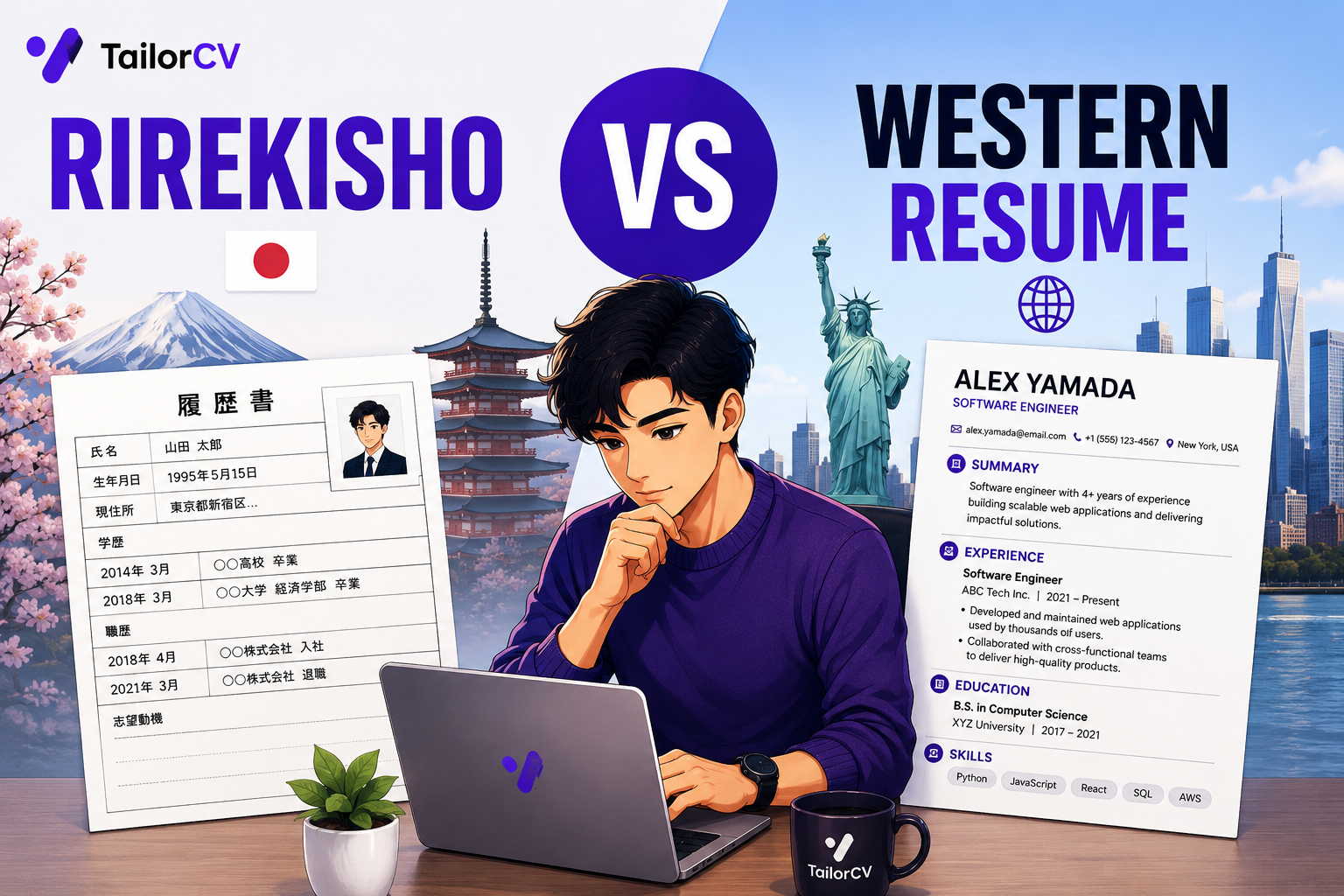
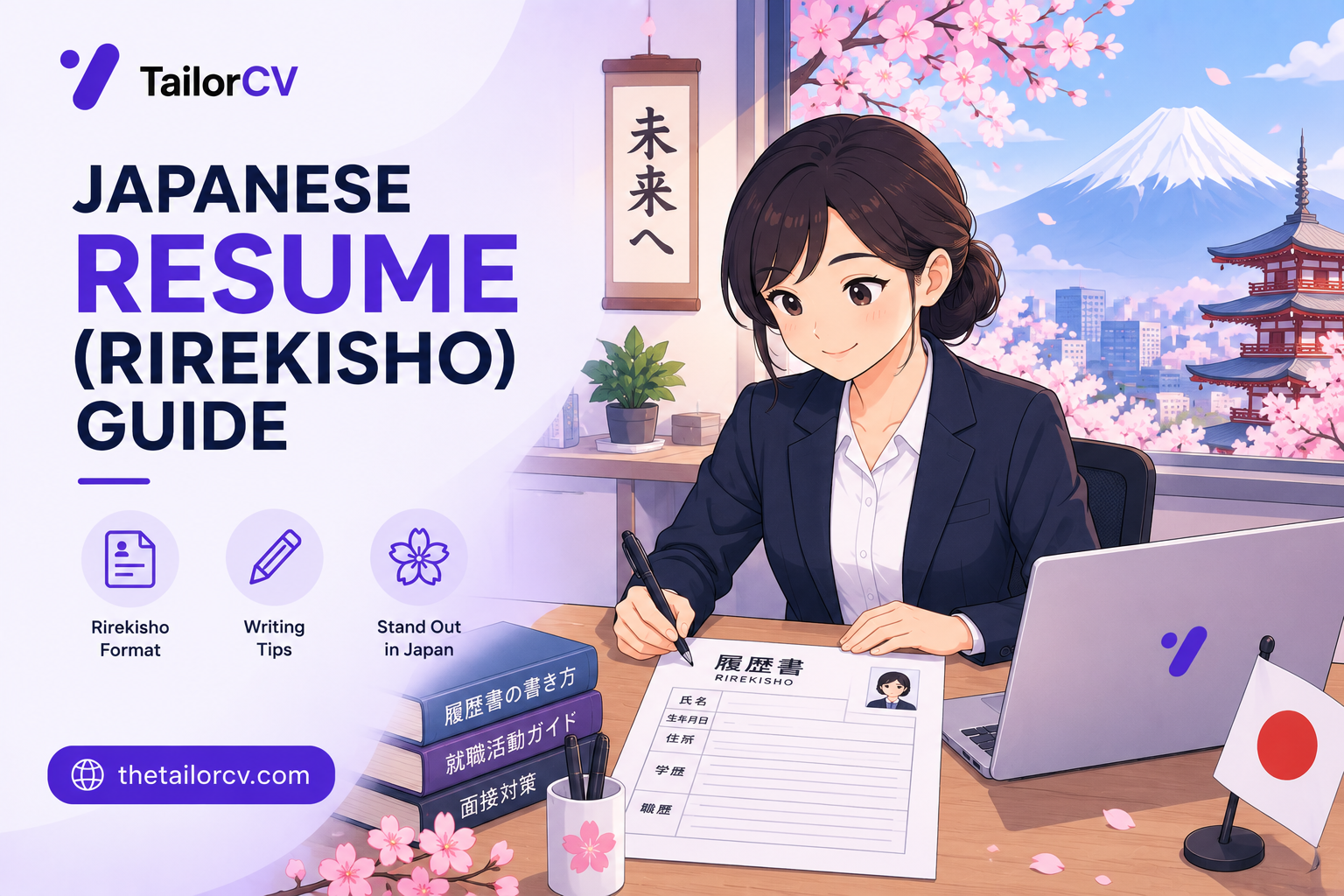
Applying for a job in Japan means learning a resume system unlike almost anywhere else. Japanese hiring traditionally uses two documents: the rirekisho (履歴書), a standardised personal-history form, and the shokumu-keirekisho (職務経歴書), a more detailed work-history document. The rirekisho is highly formatted with specific conventions — down to how you write dates and attach your photo — and getting these details right signals respect for Japanese business culture.
This guide explains how to write a Japanese resume in 2026: what the rirekisho and shokumu-keirekisho are, how they differ, the formatting rules that matter, and how foreigners can navigate the system (including when a Western-style resume is acceptable).
The Two Documents: Rirekisho and Shokumu-keirekisho
Rirekisho (履歴書) — The Standard Form
The rirekisho is a standardised form (available as templates and increasingly filled digitally) that captures your personal and educational history in a fixed layout. It typically includes:
- Personal details: name (with furigana reading), date of birth, address, contact, and a formal photo.
- Education and work history: listed chronologically in a prescribed format.
- Qualifications and licences: certifications, language tests (e.g. JLPT for Japanese, TOEIC for English), driving licence.
- Personal section: motivation for applying, commuting time, and sometimes personal requests.
Because it's standardised, the rirekisho is less about standing out and more about completeness, neatness, and correctness.
Shokumu-keirekisho (職務経歴書) — The Work-History Document
The shokumu-keirekisho complements the rirekisho with a fuller account of your career: your roles, responsibilities, achievements, and skills. This is closer to a Western resume and is where you can demonstrate your value with specifics — projects delivered, results achieved, and expertise gained. It's especially important for mid-career and professional roles.
Rirekisho Formatting Rules That Matter
Japanese employers notice details. Key conventions:
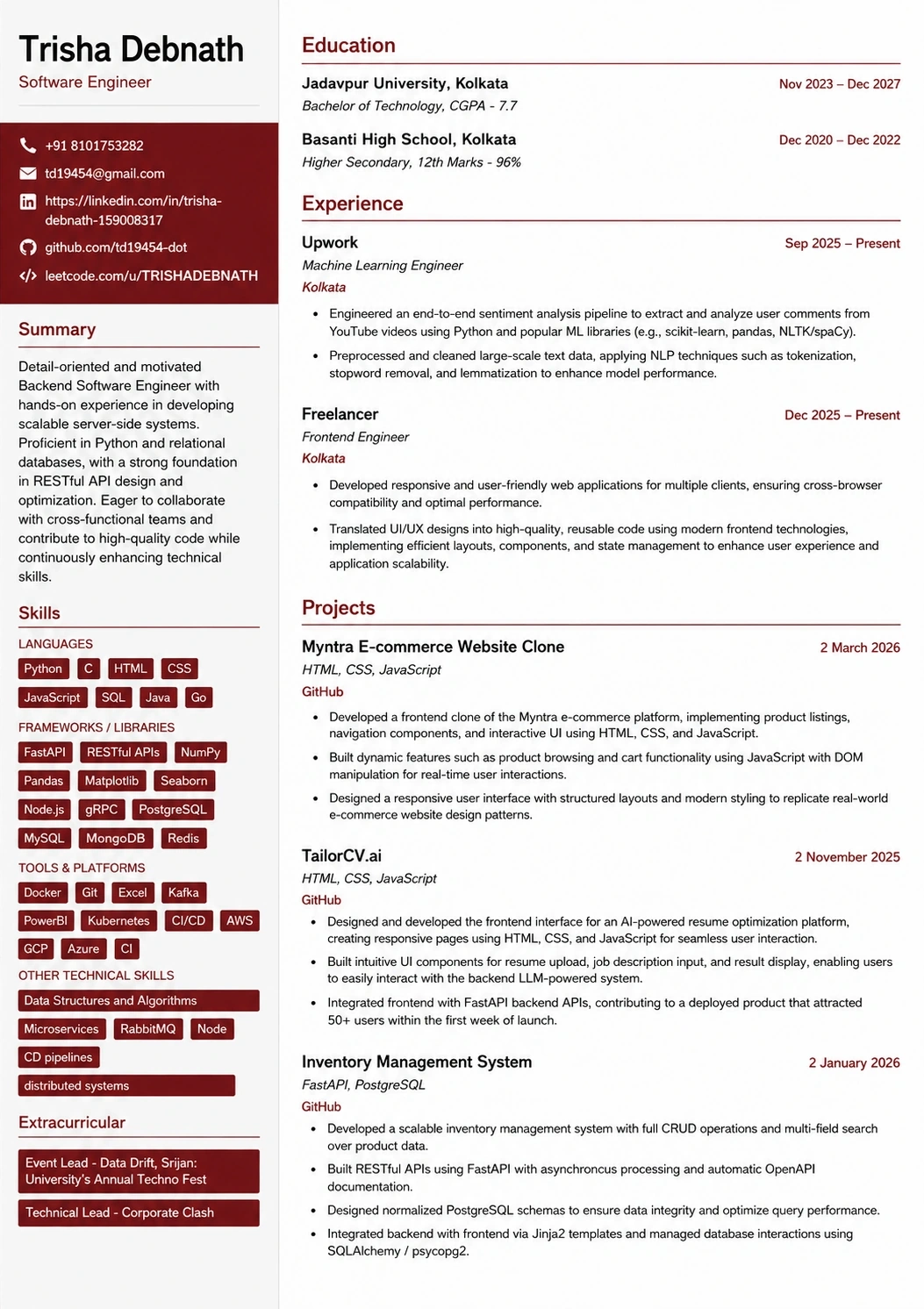
Your resume after optimization
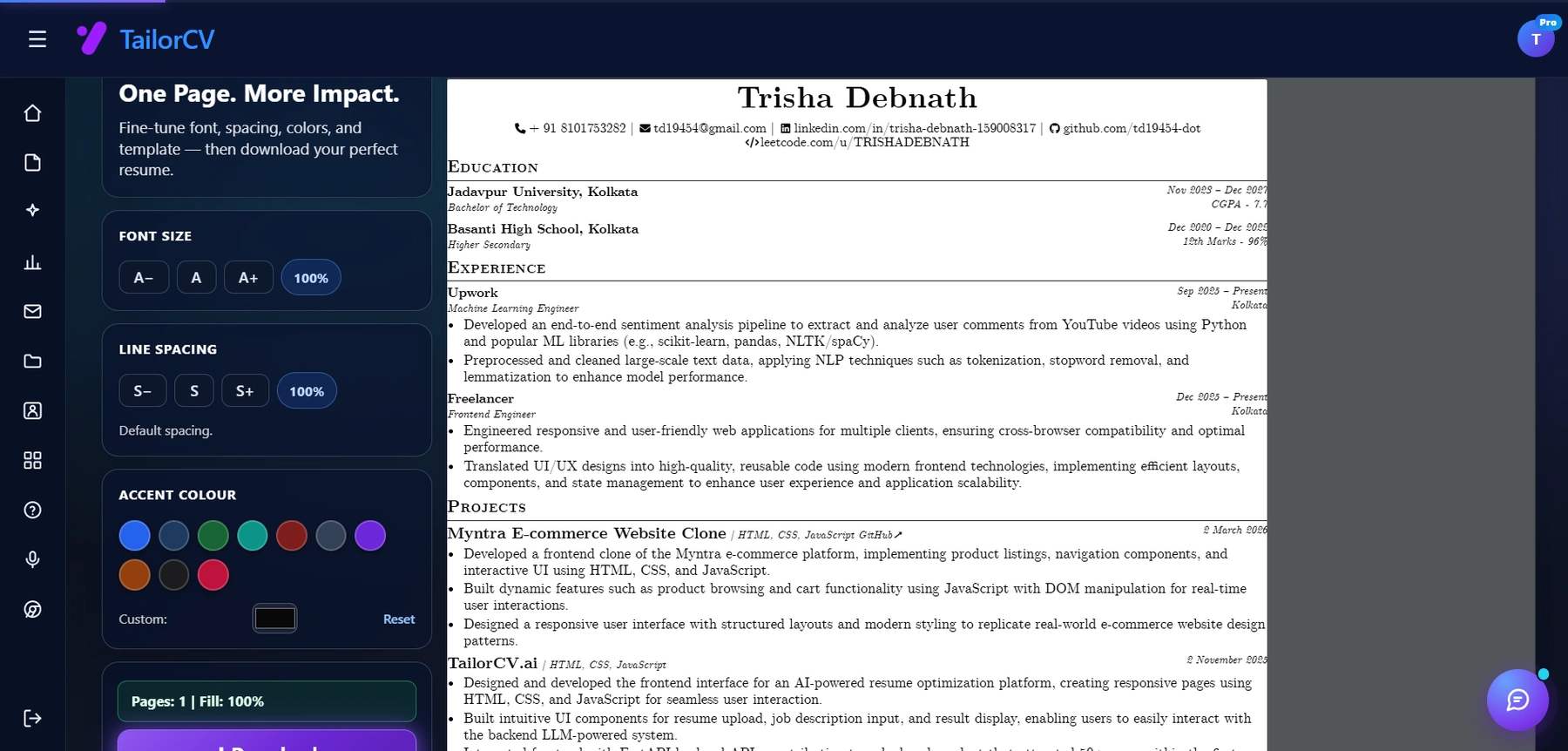
Font size, spacing, accent colour and template are all adjustable, with a live page counter.
- The photo: a formal, recent headshot in business attire against a plain background, attached in the designated spot. Neat and professional is essential.
- Dates: Japan often uses the Japanese era calendar (e.g. Reiwa) alongside or instead of the Western calendar — be consistent throughout the document.
- Handwriting vs typed: historically handwritten rirekisho were common (and neat handwriting was valued); today typed/digital versions are widely accepted, especially at global companies. Follow the employer's preference.
- No errors or corrections: on a handwritten form, mistakes mean starting over — accuracy and neatness signal diligence.
- Formal language: polite, professional Japanese where the document is in Japanese.
The Personal/Motivation Section
The rirekisho includes a section for your motivation for applying (shibō dōki) and self-promotion. Here you briefly explain why you want to work for this company and what you bring. Keep it sincere, specific to the employer, and aligned with Japanese business values — teamwork, diligence, and long-term commitment are well-received.
For Foreigners: Which Resume Do You Need?
Your approach depends on the employer:
- Traditional Japanese companies: usually expect a rirekisho (in Japanese) plus a shokumu-keirekisho. Japanese-language ability is often required.
- Global companies and foreign-facing roles in Japan: frequently accept an English resume in Western format, particularly in tech, finance, and international business.
- Recruitment agencies: many that place foreigners will advise which format each employer wants, and some help you prepare both.
If you're targeting global or English-language roles, a strong Western-style resume is your main tool — build one with the TailorCV resume builder and see our guide to ATS and English resumes for Japan. For a detailed comparison, read rirekisho vs Western resume.
What Japanese Employers Value
Beyond format, Japanese employers look for:
- Reliability and commitment: a history that shows stability and dedication.
- Fit with company culture: teamwork, humility, and respect.
- Relevant skills and qualifications: including language tests (JLPT, TOEIC) that certify your ability.
- Sincere motivation: genuine interest in the specific company.
Present yourself as diligent, respectful, and genuinely interested, and you align with what the market rewards.
Language Qualifications to Highlight
- JLPT (Japanese Language Proficiency Test): N1–N5 levels; higher levels (N2, N1) strongly boost your prospects at Japanese companies.
- TOEIC: widely used to certify English ability, valued at many Japanese firms.
- List these clearly — they're concrete, trusted credentials in the Japanese market.
Building Your Application
- For global/English roles, focus on a strong Western-style resume and tailor it to each posting with the resume optimizer; many international employers in Japan use applicant tracking systems — see ATS and English resumes for Japan.
- Add a cover letter where expected — see the Japanese cover letter guide.
- Prepare for Japan's distinctive interview etiquette — see Japan interview etiquette and rehearse with the AI mock interview.
For the bigger picture, see how to get a job in Japan as a foreigner.
Common Japanese Resume Mistakes
- Skipping the shokumu-keirekisho. For professional roles, the detailed work history matters.
- A casual or missing photo. The rirekisho photo must be formal and neat.
- Inconsistent dates. Mixing calendars carelessly looks sloppy.
- Errors on a handwritten form. Accuracy and neatness are read as diligence.
- Generic motivation. Tailor the shibō dōki to the specific company.
- Assuming one format fits all. Confirm whether the employer wants Japanese or English documents.
Frequently Asked Questions
What is a rirekisho? A standardised Japanese personal-history form covering your details, education, work history, and qualifications, usually with a formal photo. It's paired with the shokumu-keirekisho for a full application.
What's the difference between rirekisho and shokumu-keirekisho? The rirekisho is a fixed-format personal-history form; the shokumu-keirekisho is a detailed work-history document (closer to a Western resume) where you show achievements and skills.
Can I use an English resume in Japan? Often, yes — at global companies and foreign-facing roles, especially in tech and finance. Traditional Japanese companies usually expect Japanese-language rirekisho and shokumu-keirekisho.
Do I need a photo on a Japanese resume? On the rirekisho, yes — a formal, recent business headshot is standard. Western-style resumes for global roles do not require a photo.
Final Thoughts
Writing a Japanese resume means respecting a system built on precision and cultural fit: the standardised rirekisho paired with the detailed shokumu-keirekisho, prepared neatly and accurately. For global and English-language roles, a strong Western-style resume is often enough — but always confirm which format the employer expects.
If you're targeting international roles in Japan, build a polished Western-style resume with the TailorCV resume builder, tailor it to each posting with the resume optimizer, and prepare for Japan's interview culture with the AI mock interview. Attention to detail — in your documents and your manners — is what opens doors in Japan.
What is your resume scoring right now?
Scan it against a job description and get your ATS match score in about a minute.
Drop your resume here or choose a file
PDF only. Max 2 MB.
We never share your data or use it to train AI models.

Templates that keep this structure intact
This template is ATS-tested — start from it and the formatting rules in this guide are already handled.
Was this guide useful?
Be the first to rate it.