SS
SS
Key Takeaways
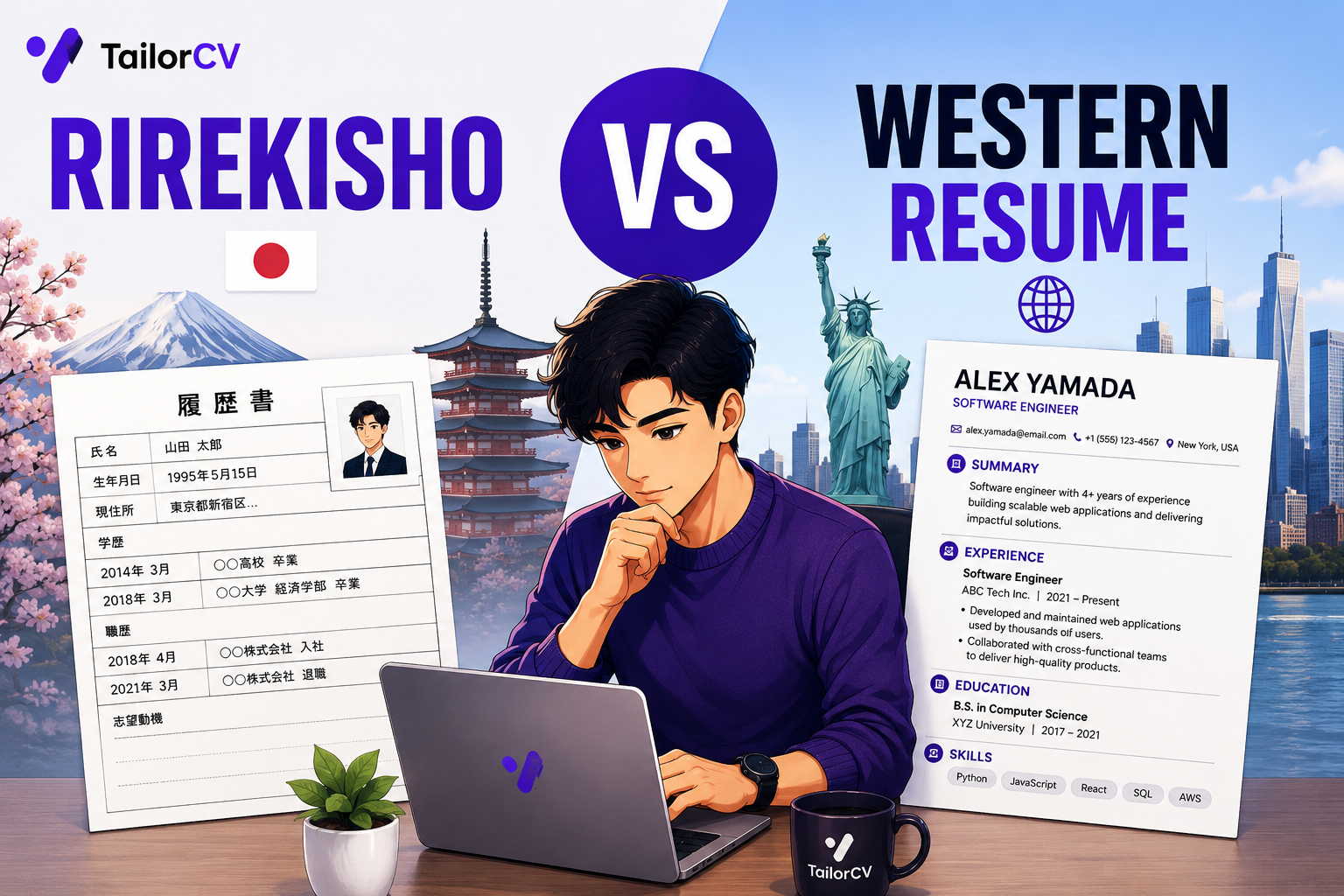
- The rirekisho is a standardised Japanese form emphasising completeness, neatness, and conformity (with a photo and fixed layout).
- The Western resume is a flexible, achievement-focused marketing document that emphasises standing out.
- Traditional Japanese companies expect a rirekisho (plus a shokumu-keirekisho); global/English-language roles usually accept a Western resume.
- Know which type of employer you're applying to, and match your document accordingly.
- For global roles, an ATS-friendly Western resume is your main tool.
One of the first questions foreigners face when applying for jobs in Japan is: do I need a Japanese rirekisho, or will my regular resume do? The two documents come from very different hiring philosophies. The rirekisho is a standardised, formal Japanese personal-history form built around completeness and conformity; the Western resume is a flexible marketing document built around standing out with achievements. Choosing the right one — and knowing when each is expected — can make or break your application in Japan.
This guide compares the rirekisho and the Western resume in 2026: their key differences, when to use each, and how foreigners should decide.
The Two Philosophies
The difference isn't just formatting — it's philosophy:
- The rirekisho reflects a hiring culture that values conformity, completeness, diligence, and fit. It's a standardised form where everyone provides the same information in the same way; you demonstrate suitability by filling it out correctly, neatly, and completely.
- The Western resume reflects a hiring culture that values differentiation. It's a flexible marketing document where you choose what to highlight to stand out — leading with achievements and impact.
Understanding this explains every specific difference below.
Side-by-Side: Key Differences
Format and Structure
- Rirekisho: a standardised, fixed-layout form (template-based). Everyone's looks structurally similar.
- Western resume: flexible layout you design to present yourself best (within professional norms).
Photo and Personal Details
- Rirekisho: includes a formal photo, date of birth, and other personal details in designated fields.
- Western resume: no photo, no age, no personal details — the focus is on skills and experience (and in many countries these are omitted to avoid bias).
Content Emphasis
- Rirekisho: completeness — personal history, education, work history in prescribed format, qualifications, and a motivation section.
- Western resume: achievements — quantified accomplishments, impact, and skills tailored to the role.
Work History Detail
- Rirekisho: a concise chronological listing; detailed accomplishments go in the separate shokumu-keirekisho (work-history document).
- Western resume: the resume itself carries detailed achievement bullets.
Tone and Differentiation
- Rirekisho: conformity and correctness; you fit the mould.
- Western resume: differentiation; you stand out.
Screening
- Rirekisho: reviewed by people in a traditional process.
- Western resume: at global firms, often first screened by an ATS — see ATS and English resumes for Japan.
When to Use the Rirekisho
Use a rirekisho (with a shokumu-keirekisho) when applying to:
- Traditional Japanese companies.
- Roles conducted in Japanese, where Japanese-language documents are expected.
- Any employer that specifically requests these documents.
Get the details right — the photo, date format, neatness, and motivation section all matter. See the full Japanese resume (rirekisho) guide.
When to Use a Western Resume
Use a Western-style resume when applying to:
- Global companies, multinationals, and their regional offices in Japan.
- Tech firms, startups, and international teams that hire in English.
- English-language roles generally.
These employers value a clear, achievement-focused, ATS-friendly resume. This is the route many foreigners take — see working in Japan without Japanese and how to find a job in Tokyo.
How Foreigners Should Decide
- Identify the employer type. Traditional Japanese firm → rirekisho. Global/English-language role → Western resume. When unsure, check the posting or ask.
- Check the application instructions. Many postings specify the format and language.
- Ask your recruiter. Agencies that place foreigners will tell you exactly what each employer wants — and some help prepare both.
- Consider language. Japanese-language roles expect Japanese documents; English roles accept English resumes.
Many foreigners primarily use a strong Western resume (for global/English roles) and prepare a rirekisho only when a traditional employer requires it.
Building Each Document
- Western resume: build a clean, ATS-friendly resume with the TailorCV resume builder, tailor it to each role with the resume optimizer, and use the right terms — see best resume keywords for Japan.
- Rirekisho: follow the conventions in the Japanese resume guide — formal photo, correct dates, neatness, and a specific shibō dōki (motivation).
Your resume after optimization
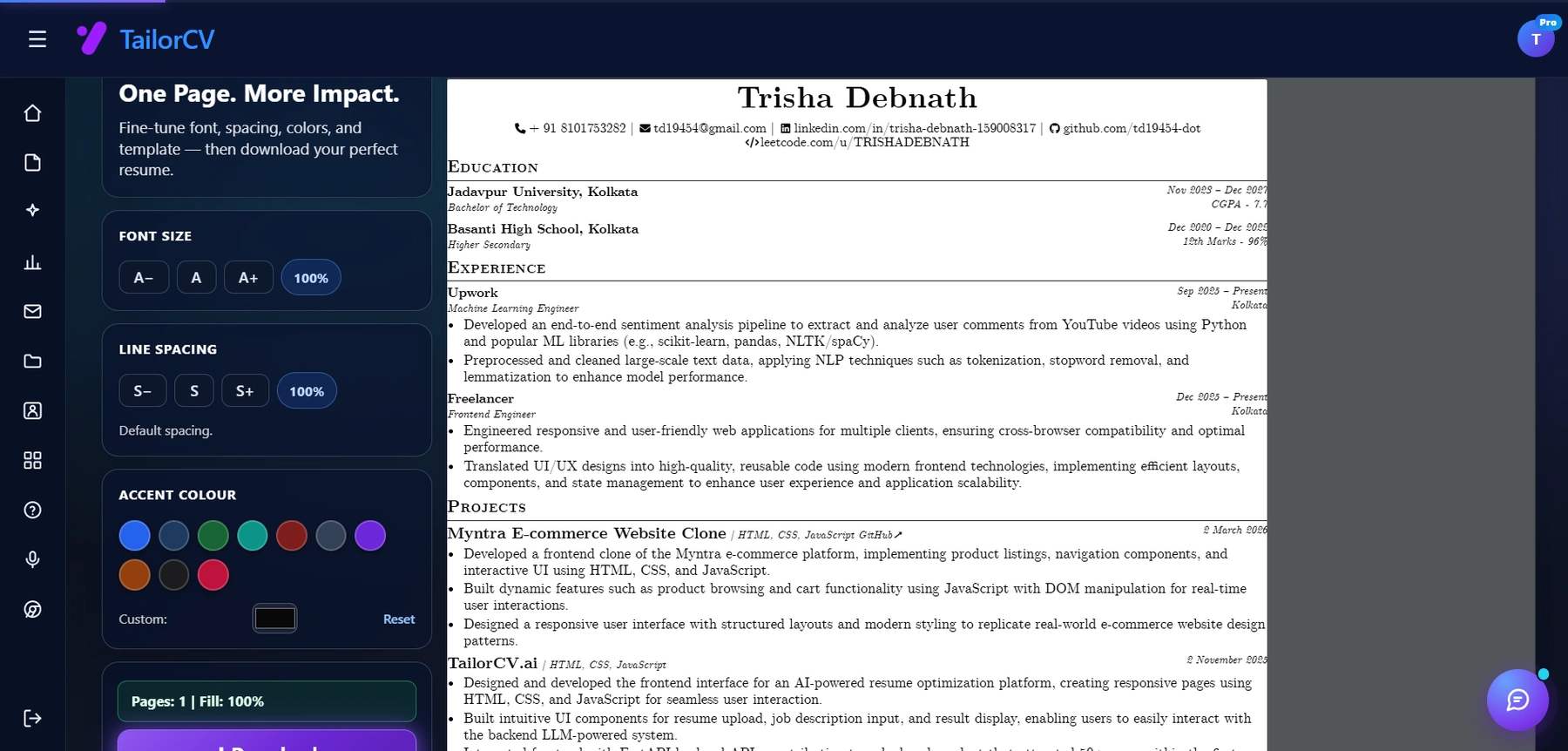
Font size, spacing, accent colour and template are all adjustable, with a live page counter.
Whichever you use, add a cover letter where expected (see the Japanese cover letter guide) and prepare for Japan's interview etiquette (see Japan interview etiquette) — rehearse with the AI mock interview.
Common Mistakes
- Sending a Western resume to a traditional firm that expects a rirekisho (or vice versa).
- Adding a photo to a Western resume — standard on a rirekisho, but not on a Western/ATS resume.
- A sloppy rirekisho — neatness, correct dates, and a formal photo matter.
- A generic Western resume — tailor achievements and keywords to each role.
- Not confirming the expected format before applying.
Frequently Asked Questions
What's the difference between a rirekisho and a Western resume? The rirekisho is a standardised Japanese form emphasising completeness, conformity, and a photo; the Western resume is a flexible, achievement-focused marketing document with no photo. They reflect different hiring philosophies.
Which one do I need for jobs in Japan? It depends on the employer. Traditional Japanese companies expect a rirekisho (plus a shokumu-keirekisho); global companies and English-language roles usually accept a Western resume.
Can I use my Western resume for jobs in Japan? Yes — at global companies, tech firms, startups, and international roles. For traditional Japanese firms, prepare a rirekisho instead.
Does a Western resume for Japan need a photo? No — unlike the rirekisho, a Western/ATS resume should not include a photo, age, or personal details.
Final Thoughts
The rirekisho and the Western resume aren't better or worse — they're built for different hiring cultures. The rirekisho rewards completeness and conformity for traditional Japanese employers; the Western resume rewards differentiation and achievement for global and English-language roles. Your job is to identify the employer type and match your document to it.
For the global and English-friendly roles many foreigners target, build an ATS-friendly Western resume with the TailorCV resume builder, tailor it with the resume optimizer, and prepare for interviews with the AI mock interview. Choose the right document for the right employer, and you'll present yourself exactly as Japan expects.
What is your resume scoring right now?
Scan it against a job description and get your ATS match score in about a minute.
Drop your resume here or choose a file
PDF only. Max 2 MB.
We never share your data or use it to train AI models.

Templates that keep this structure intact
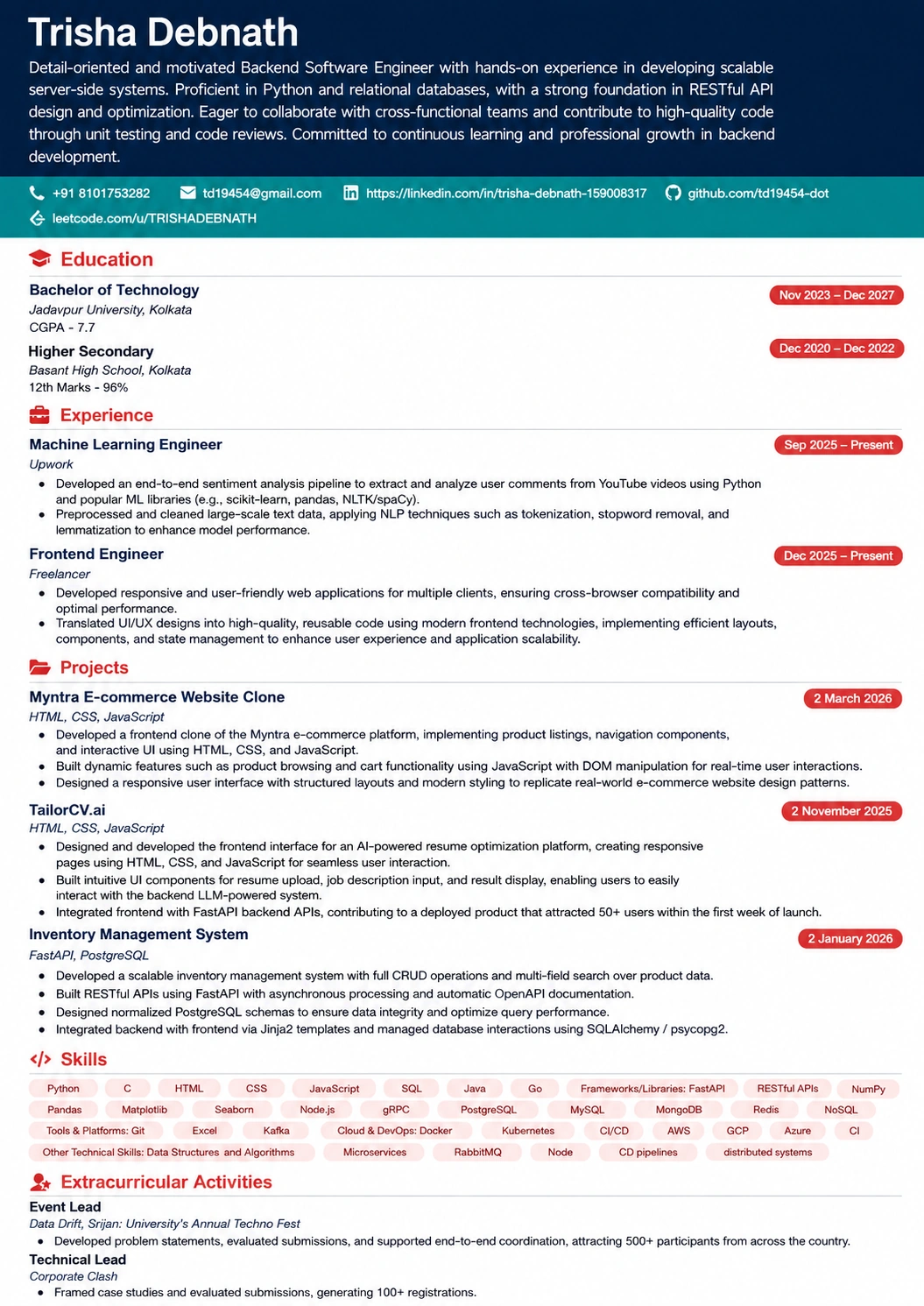
This template is ATS-tested — start from it and the formatting rules in this guide are already handled.
Was this guide useful?
Average 5.00 / 5.00 · 2 ratings