 TD
TD
Key Takeaways
- AI mock interview practice generates questions based on your actual resume, making it more relevant than generic interview questions.
- The process involves parsing your resume to create tailored questions that probe specific claims, tools, and metrics.
- Resume-based practice focuses on the details of your experiences, preparing you for questions interviewers are likely to ask.
- This targeted approach enhances your confidence, as you become familiar with defending your specific achievements.
- Practicing with resume-derived questions helps you articulate your experiences effectively during real interviews.
AI mock interview practice from your resume is more useful than generic interview questions because it asks about your actual projects, skills, and experience. That makes the practice closer to a real interview, and it surfaces the exact spots where your own story falls apart under questioning. A generic question bank cannot do that, because it has never seen your resume.
Try the AI mock interview tool and read the AI Mock Interview Complete Guide for the full practice workflow. This post focuses specifically on how resume-driven question generation works and how to use it well.
How Resume-Derived Interview Questions Actually Work
Generic interview prep tools pull from a fixed list: "Tell me about a time you failed," "What's your biggest weakness," and so on. Resume-based mock interview tools work differently. They read your actual bullets, job titles, tools, and metrics, then generate questions that only make sense because of what you wrote.
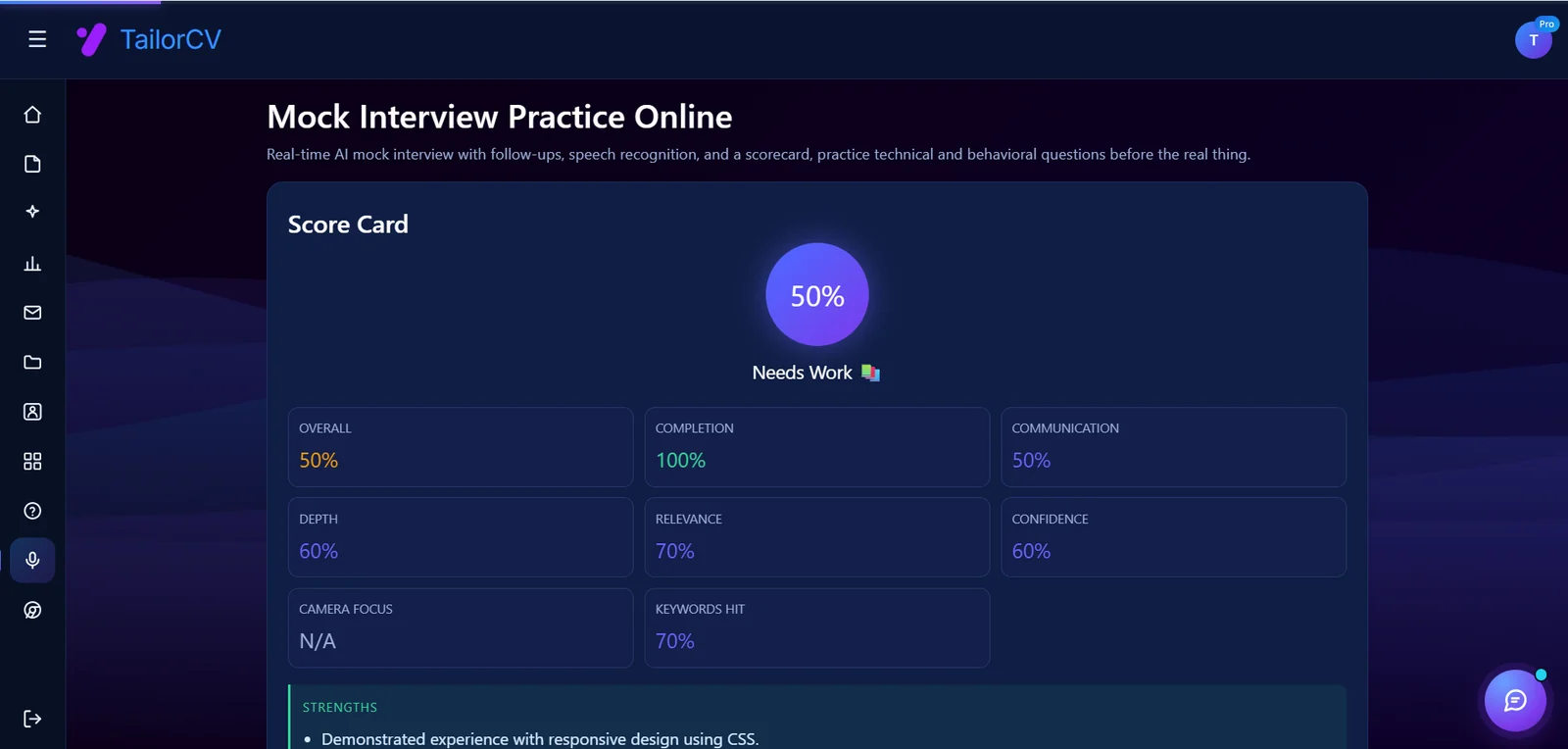
See it in action: a resume-based mock interview
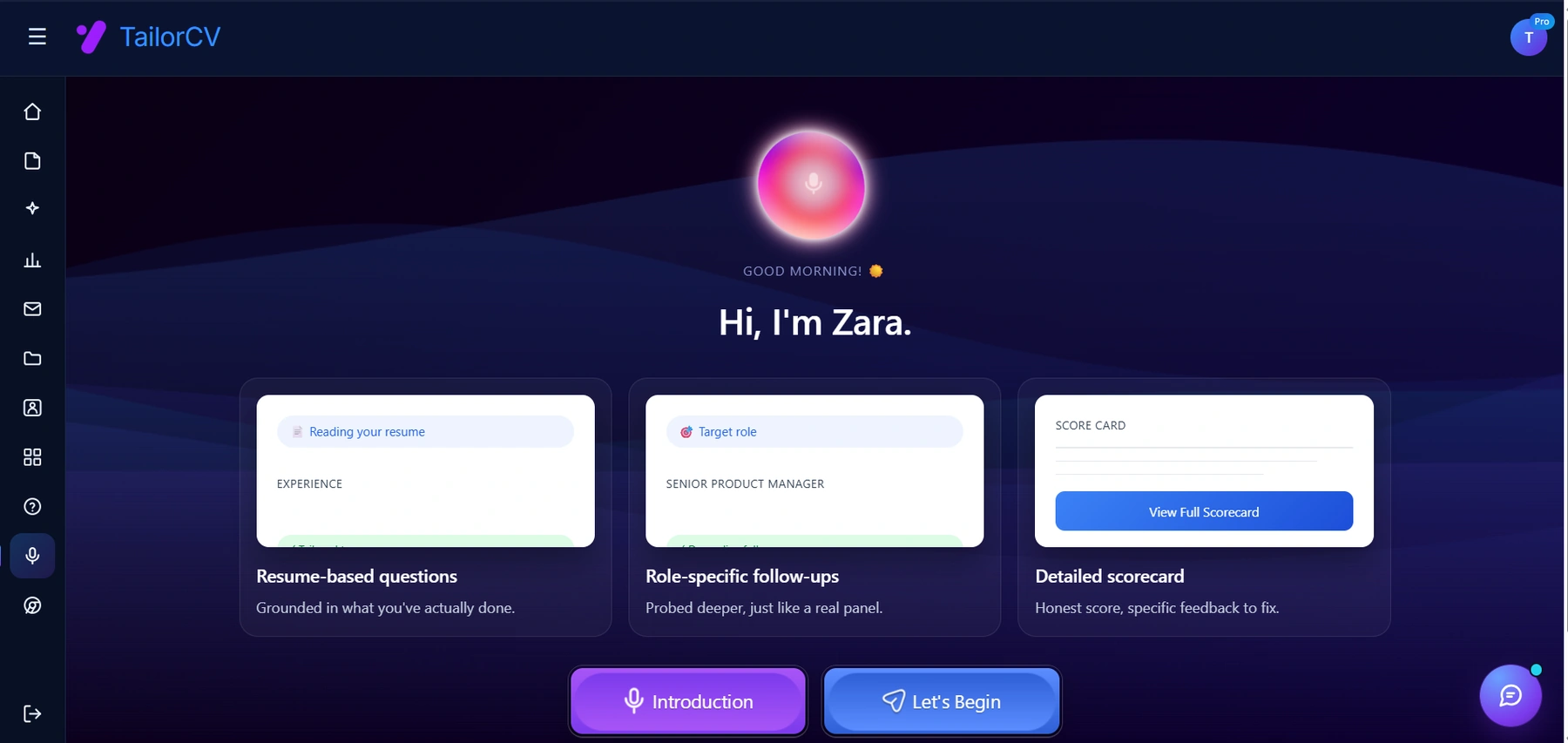
Rather than a fixed question list, the session is built from your own resume and target role, and ends with a scorecard naming the specific things to fix.
The process usually looks like this:
- The AI parses your resume into structured pieces: roles, dates, bullet points, tools mentioned, and numbers claimed.
- It identifies bullets that make a specific claim, especially ones with a metric, an outcome, or an unusual tool or technique.
- It converts each claim into a question that asks you to defend, explain, or expand on it.
- It adds natural follow-ups based on how a real interviewer would probe a vague or interesting answer.
So instead of a generic "describe a challenging project," you get something tied to a line you actually wrote. If your resume says you "reduced onboarding time by automating manual steps," the AI doesn't ask about onboarding in the abstract. It asks about that specific claim, and it expects a specific answer.
Resume bullet: "Automated the customer onboarding workflow, cutting manual processing time from 3 days to same-day."
Generated question: "Walk me through the automation you built for onboarding. What was manual before, what tools did you use, and how did you verify the time actually dropped?"
This is the core difference from generic practice: the question already assumes you did the thing you claimed, and it is testing whether you can back it up.
Why Resume-Based Practice Works
Interviewers almost always work from your resume in front of them. They usually ask about:
- Projects listed on your resume, in the order they appear
- Tools and technologies you claim to know
- The impact numbers in your bullets
- Career decisions, gaps, or transitions visible on the page
- Challenges, tradeoffs, and things that didn't go as planned
If your practice questions are generic, you can still freeze when asked about your own work, because generic practice trains a different skill. It trains you to answer interview questions in general. Resume-based practice trains you to answer questions about the specific things you put your name to. Those are not the same skill, and only one of them gets tested in the actual interview.
There's also a confidence effect. When you've already been asked "how exactly did you measure that 40% improvement" in practice, hearing the same question live doesn't rattle you. You've already built the answer once.
A Worked Example: From Resume Bullet to Interview Question
Take a single line from a marketing resume:
"Grew organic traffic 3x in six months by rebuilding the content strategy and fixing technical SEO issues."
A resume-driven mock interview tool can reasonably generate several distinct questions from this one bullet:
- The mechanism question: "What specifically did you change in the content strategy, and which change had the biggest effect?"
- The measurement question: "How did you measure the 3x growth? What tool, what baseline period, and did anything else change at the same time that could explain part of the increase?"
- The ownership question: "Was this a solo project or a team effort? What did you personally decide versus execute on someone else's plan?"
- The tradeoff question: "Technical SEO fixes and content strategy are different skill sets. Which did you find harder, and what would you do differently next time?"
A strong answer to the measurement question might be outlined like this:
Baseline: organic sessions were roughly 8,000/month before the project. What I did: audited 40 existing pages, rewrote 15 for search intent, fixed canonical tag issues affecting ~200 URLs, and published a new pillar-page cluster. Attribution: I isolated the SEO changes from paid campaigns by checking channel breakdown in analytics, and traffic from other channels stayed flat during the same period. Result: organic sessions reached about 24,000/month by month six, confirmed in the same analytics platform.
Notice that this answer doesn't just repeat the resume line. It adds the numbers, the method, and the reasoning that the resume bullet compressed into one sentence. That's exactly what resume-based practice trains you to produce on demand.
The Gaps Generic Question Banks Miss
A generic question bank cannot catch resume-specific problems, because it never looks at your resume in the first place. Resume-driven practice catches a specific set of failure modes:
- Being unable to defend your own claim. You wrote a strong metric, but when asked how you calculated it, you can't reconstruct the logic.
- Forgetting details of an old project. A bullet from three roles ago sounds great on paper, but you no longer remember the tools, the team size, or the actual sequence of events.
- Inconsistent numbers between resume and spoken answer. Your resume says "reduced costs by 25%," but out loud you say "around 30%" or can't reproduce the number at all. Interviewers notice this instantly.
- Vague ownership. The resume implies you led something, but under questioning it becomes clear you were one of several contributors, and you haven't prepared language for that nuance.
- Tools listed but not really used. A skill sits in your tools list, but you can't answer a basic follow-up question about it.
None of these show up in a generic mock interview, because generic questions don't reference your resume at all. They only show up when the questions are generated from the exact words you wrote, which is the entire point of resume-based practice.
Build Your Story Bank Before You Start
Before starting a resume-based mock interview session, review your resume and mark:
- Your 3 strongest achievements
- 2 difficult projects worth deep explanation
- 1 failure or setback you can discuss honestly
- 1 leadership example, even if informal
- 1 teamwork or conflict example
These become your story bank. For each one, jot down the numbers, tools, and timeline before the session starts, so the AI's questions test your ability to explain the story, not your memory of basic facts. For a deeper guide on organizing these stories into reusable answers, see the Interview Story Bank guide.
Step-by-Step: Running a Resume-Based Mock Interview Session
A resume-driven practice session generally follows five steps:
- Upload your resume. The tool needs the actual document, not a summary, so it can pull real bullets and numbers rather than generic categories.
- Generate questions. The AI produces a mix of technical, behavioral, and role-specific questions tied directly to your bullets, plus a few broader questions any interviewer would ask.
- Answer out loud or in writing. Say the answer the way you would in a real interview, ideally recording yourself so you can hear filler words and rambling.
- Get feedback. Review feedback on clarity, structure, and specificity. Look for places where your answer was vaguer than your resume bullet, since that's the gap an interviewer will exploit.
- Iterate. Redo the weakest answers, and rerun questions on the projects where you struggled, until the explanation is tight and consistent with what's written on the page.
Repeat this cycle across multiple sessions rather than doing it once. The value compounds: the second and third pass through a tough project usually produces a noticeably sharper answer than the first attempt.
Practice Explaining Every Project on Your Resume
For each project on your resume, prepare a short explanation covering:
- What problem you were solving
- Why it mattered to the team or business
- What you specifically built or changed
- What tools or methods you used
- What tradeoffs you made and why
- What you would improve if you did it again
Run each project through resume-based practice separately rather than trying to cover everything in one long answer. Interviewers rarely ask about your whole resume at once, they usually pick one or two projects and go deep. Your practice should mirror that.
For technical roles, pair this project-level practice with the roadmap in the Technical Interview Preparation Guide, and treat architecture or design follow-ups as a natural extension of "what did you build," covered in the System Design Interview Guide.
Use STAR for Behavioral Answers
Behavioral questions generated from your resume still benefit from a clear structure. STAR means:
- Situation: the context the interviewer needs to follow the story
- Task: what you specifically were responsible for
- Action: what you actually did, step by step
- Result: the outcome, ideally with a number
Example, built from a resume line about reporting automation:
Situation: Our dashboard was missing weekly revenue updates, and the finance team was manually compiling numbers every Friday. Task: I had to automate the reporting so the numbers updated without manual work. Action: I built a SQL and Power BI workflow that pulled directly from the production database on a schedule. Result: Reporting time dropped from 5 hours to 45 minutes per week, and the finance team stopped finding errors from manual entry.
Resume-based practice is a good fit for STAR because the "situation" and "result" often already exist in your bullet, and the AI's job is to push you to fill in the "action" in enough detail. For a full walkthrough of the framework, see the STAR Method Interview Answers Guide and the general Behavioral Interview Questions and Answers post.
Combine Resume Practice With Job-Description-Specific Prep
Your resume tells the AI what you've done. The job description tells it what the interviewer actually cares about. Combining both produces sharper practice than either alone.
When you add a job description alongside your resume:
- The AI can weight questions toward the bullets that overlap most with the role's requirements.
- It can generate questions about gaps, like a required skill on the job post that's missing or thin on your resume, so you have an answer ready instead of getting caught off guard.
- It can simulate role-specific framing, asking a "tell me about your automation project" question the way a data engineering interviewer would ask it versus how a marketing interviewer would.
This matters because the same resume bullet gets asked about differently depending on the role. A backend engineering interviewer probing your automation project wants technical depth: architecture, failure handling, scale. A product manager interviewing you about the same project wants prioritization and stakeholder reasoning. Practicing against the actual job description, not just your resume in isolation, prepares you for the right version of the question.
When the Interview Exposes a Resume Problem
Sometimes a resume-based mock interview reveals a problem with the resume itself, not just your interview delivery. Watch for these patterns:
- You struggle to explain a bullet because it was written vaguely. If you can't turn "improved team efficiency" into a concrete story in practice, an interviewer won't be able to either, and that bullet needs rewriting.
- You can't quantify something the resume implies was measurable. If there's no real number behind an "improved" or "increased" claim, either find the number or rephrase the bullet honestly.
- Ownership is unclear. If you keep saying "we" in practice for a bullet phrased as "I," decide which is accurate and make the resume and the spoken answer match.
Treat this as a loop, not a one-way process: mock interview practice exposes a weak bullet, you fix the bullet, and future practice sessions get easier because the resume itself is now more defensible. If you're not sure whether your bullets are specific enough to survive this kind of questioning, run your resume through the ATS score checker first, and review how to quantify resume achievements before your next practice session. For a checklist to run after each mock session, see the Mock Interview Feedback Checklist.
Make This Practical
Use this as an active practice loop, not reading material. Start a resume-based session with the AI mock interview tool, prepare your opening with How to Answer Tell Me About Yourself, and structure evidence-heavy answers with the STAR Method Interview Answers Guide.
Before the interview, make sure the resume generating your questions is actually the one you'll be judged against. Check it with the free ATS score checker, review Common Interview Mistakes to Avoid, and use How to Follow Up After an Interview once the conversation is over. If you're just starting and want a low-pressure entry point, Mock Interview Practice Online Free AI explains how to begin without waiting for a real interview invite.
FAQ
How is resume-based mock interview practice different from generic mock interviews?
Generic mock interviews pull from a fixed list of common questions that could apply to anyone. Resume-based practice reads your actual bullets, tools, and metrics and generates questions that only make sense because of what you specifically wrote, which tests whether you can defend your own claims rather than answer questions in the abstract.
What if my resume bullets are too short for the AI to generate good questions?
Short, vague bullets produce shallow questions, and that's actually useful feedback. If the AI can only ask generic follow-ups from a bullet, an interviewer will have the same problem, which usually means the bullet needs more specificity or a real metric added.
Should I use my actual resume or a cleaned-up version for practice?
Use the exact resume you're submitting to employers. The goal is to rehearse defending the claims that will actually be in front of the interviewer, so practicing against a different or idealized version defeats the purpose.
Can AI mock interviews help with technical interviews?
Yes, especially for project discussion and system design basics tied to what's on your resume. For live coding rounds, combine resume-based practice with dedicated coding preparation, such as the Coding Interview Preparation Guide.
How many times should I run practice on the same resume?
More than once. The first pass usually reveals which bullets you can't yet explain well, and later passes let you test the improved version of that answer. Treat weak answers as a signal to redo that specific project, not the whole session.
Should I update my resume based on what comes up in practice?
Yes. If you consistently struggle to explain or quantify a bullet during practice, that's a sign the bullet is either inaccurate or underspecified, and it should be rewritten before you send the resume out again, not just before the next interview.
Is AI mock interview practice enough on its own?
It's excellent practice, but pair it with speaking answers out loud and, ideally, recording yourself. Reading a strong answer silently feels very different from producing it under time pressure in a live conversation.
Should I practice before every interview, even similar roles?
Yes. Even 20 minutes of role-specific practice tied to the actual job description can sharpen which details you lead with, since the same resume bullet deserves a different emphasis depending on who's asking. For more tips, check out our First Job Interview Tips for Freshers and How to Practice Job Interviews at Home.
Next Step
Upload your resume to the AI mock interview tool and start answering questions generated from your real experience, not a generic question list.
Was this guide useful?
Be the first to rate it.