

Canadian Cover Letters - When They Matter and How to Write One
Cover letter expectations in Canada vary by employer and sector, and the paragraph explaining why this specific employer decides whether a letter helps or reads as filler.
Actionable guides to improve ATS score, resume quality, and job search outcomes.
Cover letter expectations in Canada vary by employer and sector, and the paragraph explaining why this specific employer decides whether a letter helps or reads as filler.

Government employment in Canada runs structured student and graduate entry pathways, offers genuine stability, and is consistently underexplored relative to its actual scale as an employer.

Canadian healthcare hiring runs on provincial licensure timelines that differ from the general campus recruiting calendar, and the non-clinical side employs graduates from any discipline in roles most students never consider.

Canadian resumes sit close to US convention with a handful of concrete differences — spelling, the meaning of "college," and a completely different federal hiring process — that a US template won't get right by default.

Canada's technology sector is genuinely substantial and less London-or-Silicon-Valley-centric than its reputation suggests, with real hubs across several cities and a hiring process that closely mirrors the US.
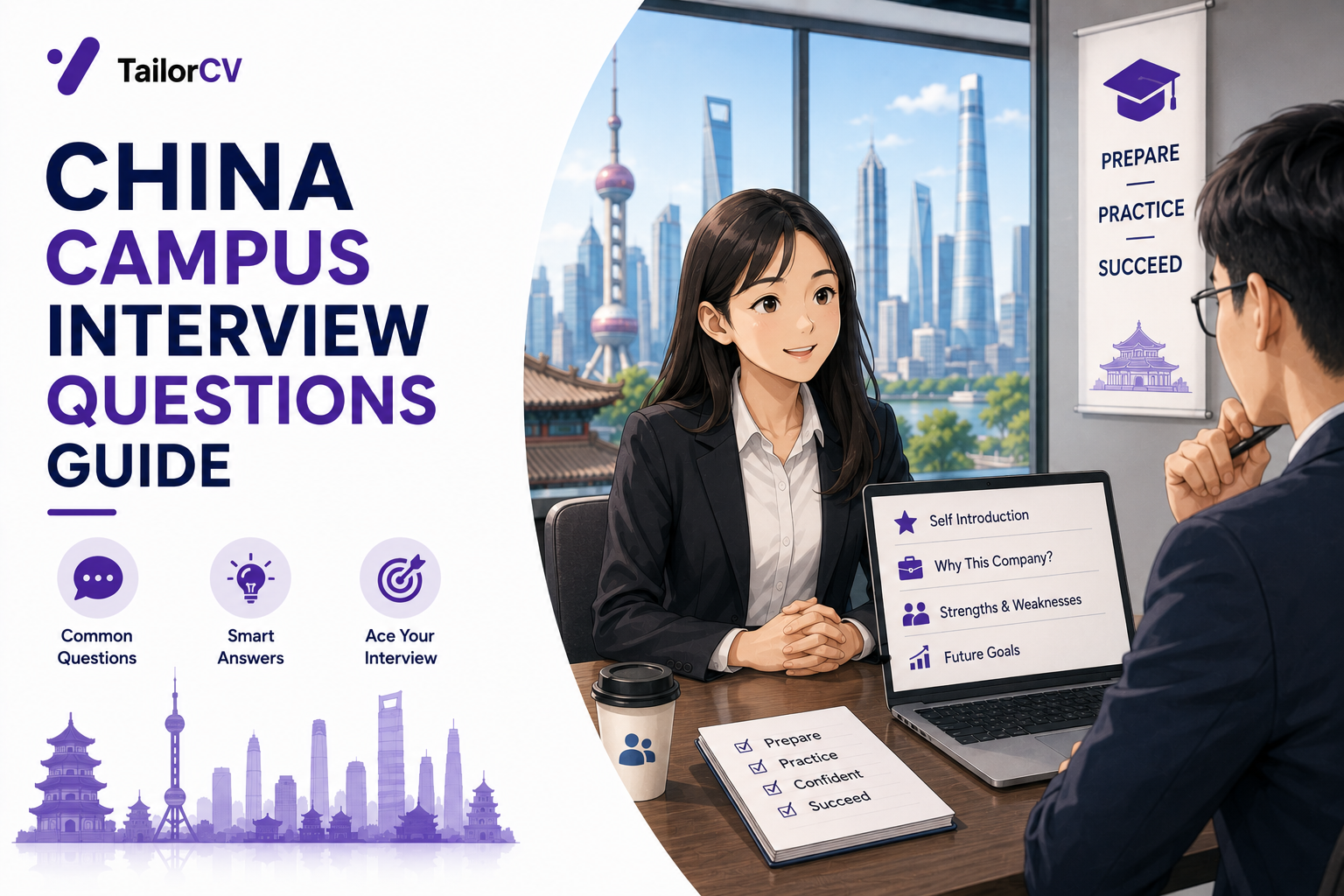
Chinese campus interviews mix competency-style questions with group formats and, at many employers, direct questions about long-term commitment and career planning that catch international candidates off guard.
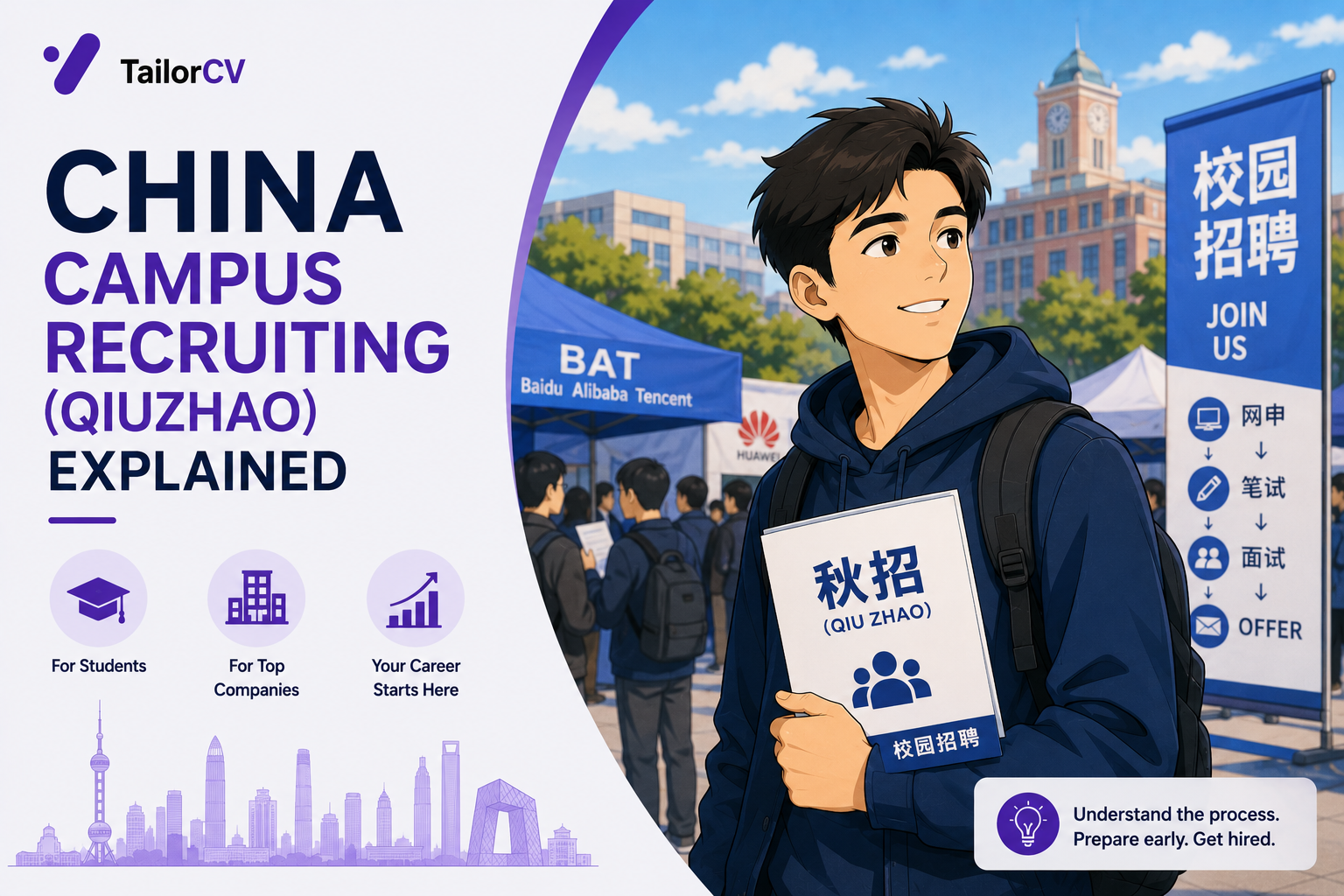
Chinese graduate hiring runs two structured seasons a year, autumn and spring, each with its own applicant pool and its own pace. Understanding which one you are entering changes your whole strategy.
An internship at a major domestic or multinational employer materially strengthens a China job search, and the authorisation, application timing and language considerations differ from full-time hiring in ways worth understanding early.
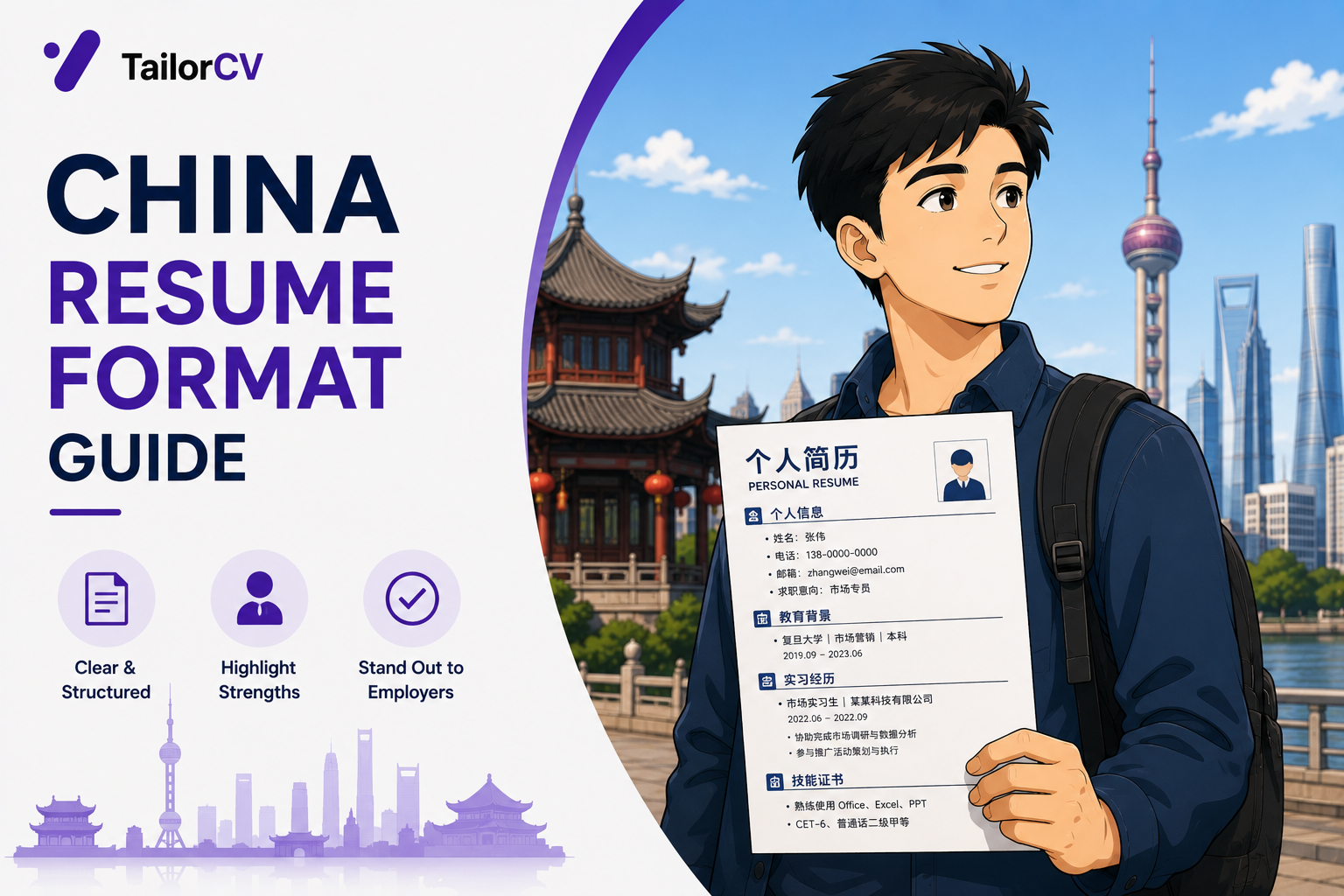
A resume for the Chinese market differs from Western convention in length, personal details and structure, and the differences matter more here because most large employers screen with software first.
State-owned enterprises employ graduates at massive scale across banking, energy, telecommunications and infrastructure, offering stability and structure that differs meaningfully from private-sector employment.
China's technology sector hires graduates at scale through structured processes that mirror international technical interviewing closely, alongside domestic-specific conventions worth understanding.
A real English-conducted professional market exists in Japan, concentrated in specific employer types and functions. Knowing where it is prevents both false optimism and unnecessary pessimism.
Teaching is the most accessible route into Japan for foreign graduates, and the options differ enormously in structure, pay and what they lead to afterwards.
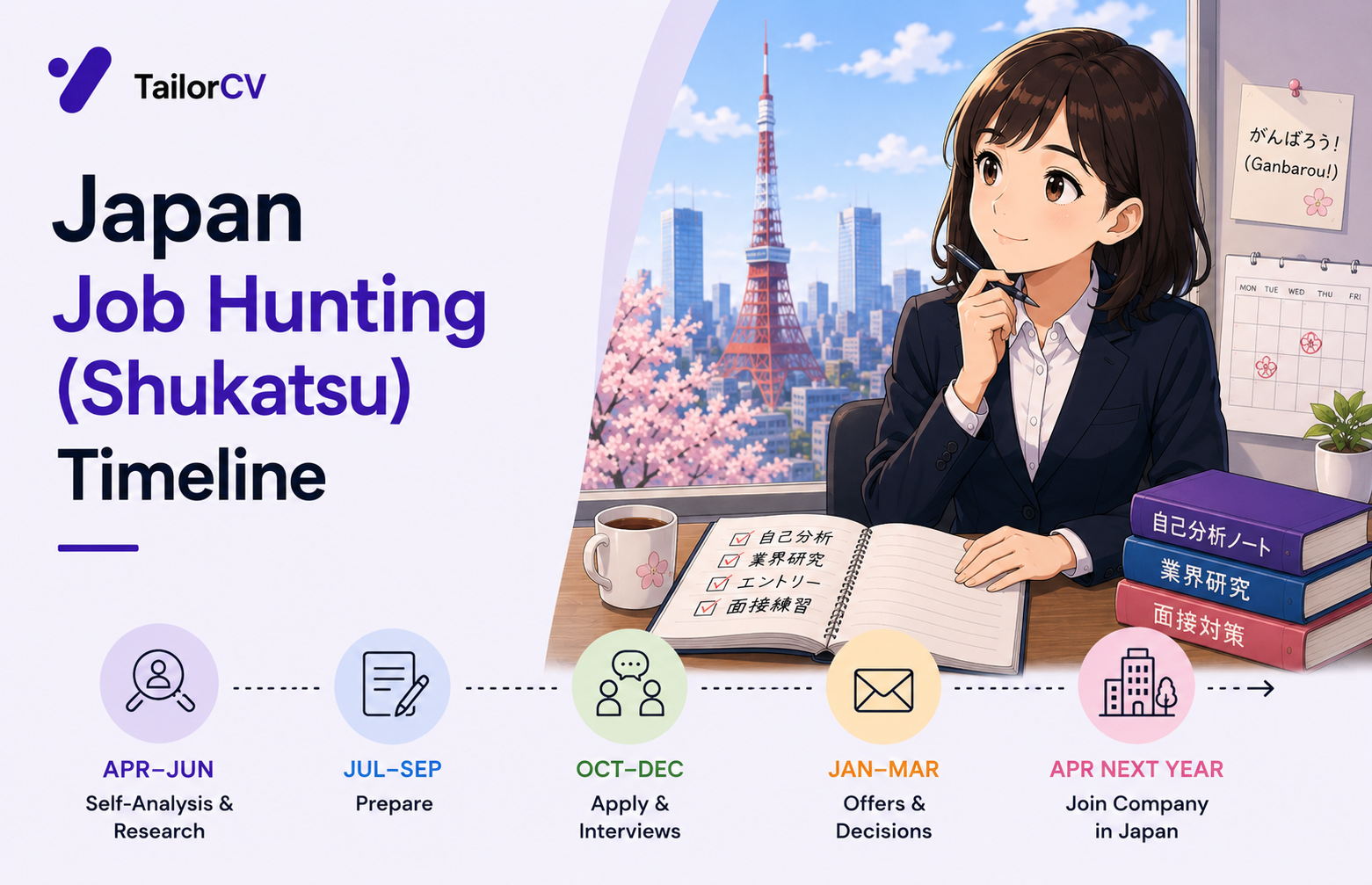
Japanese graduate job hunting runs on a long, synchronised annual cycle with conventional stages. Knowing the sequence is what separates students who are prepared from students who are perpetually late.
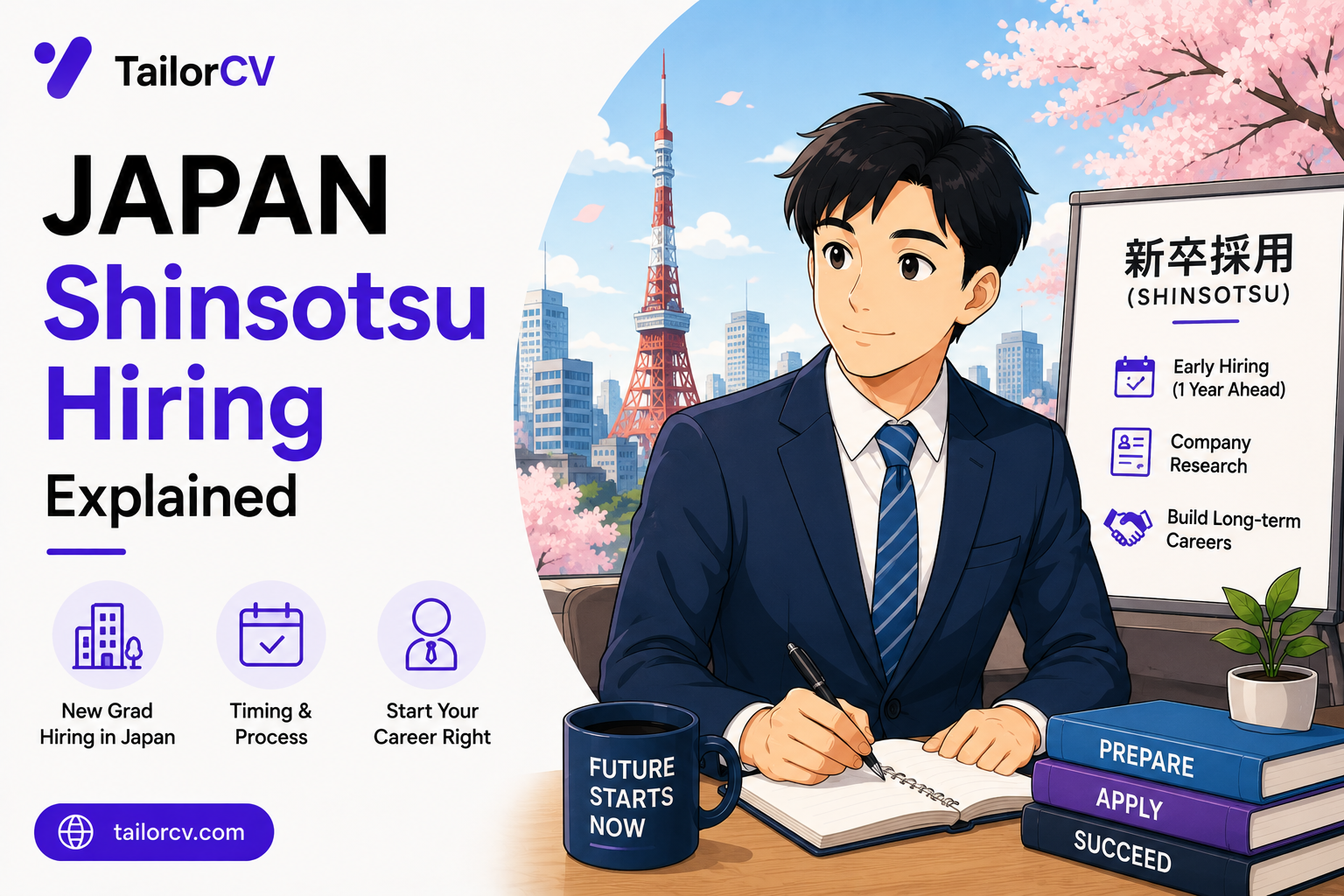
Japan hires new graduates through a distinct annual system with its own vocabulary, calendar and logic. Understanding shinsotsu recruiting is the prerequisite for everything else about working in Japan.
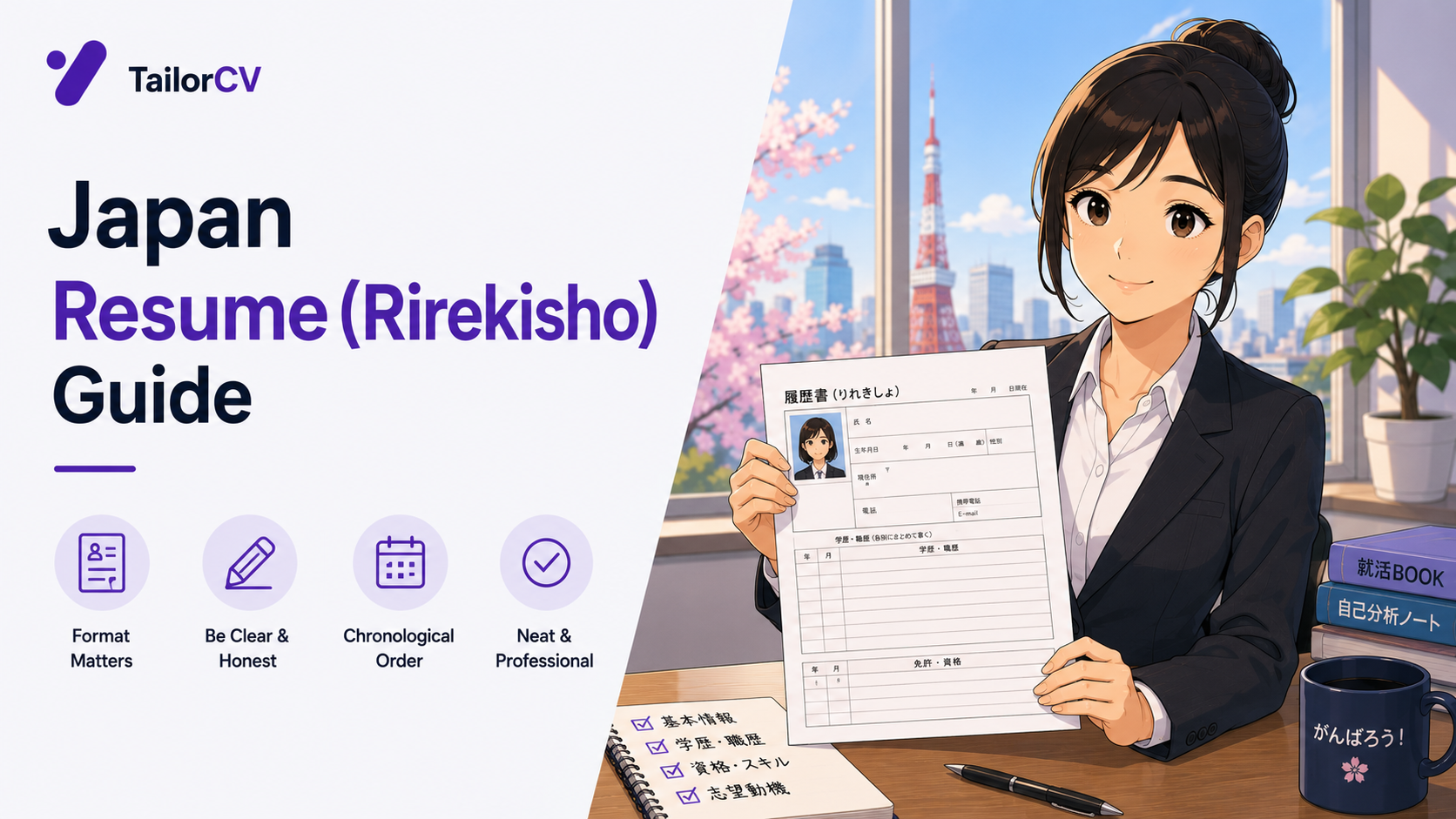
Japan uses a standardised personal history form rather than a freely designed resume. The format is fixed, the conventions are strict, and getting them wrong signals unfamiliarity immediately.
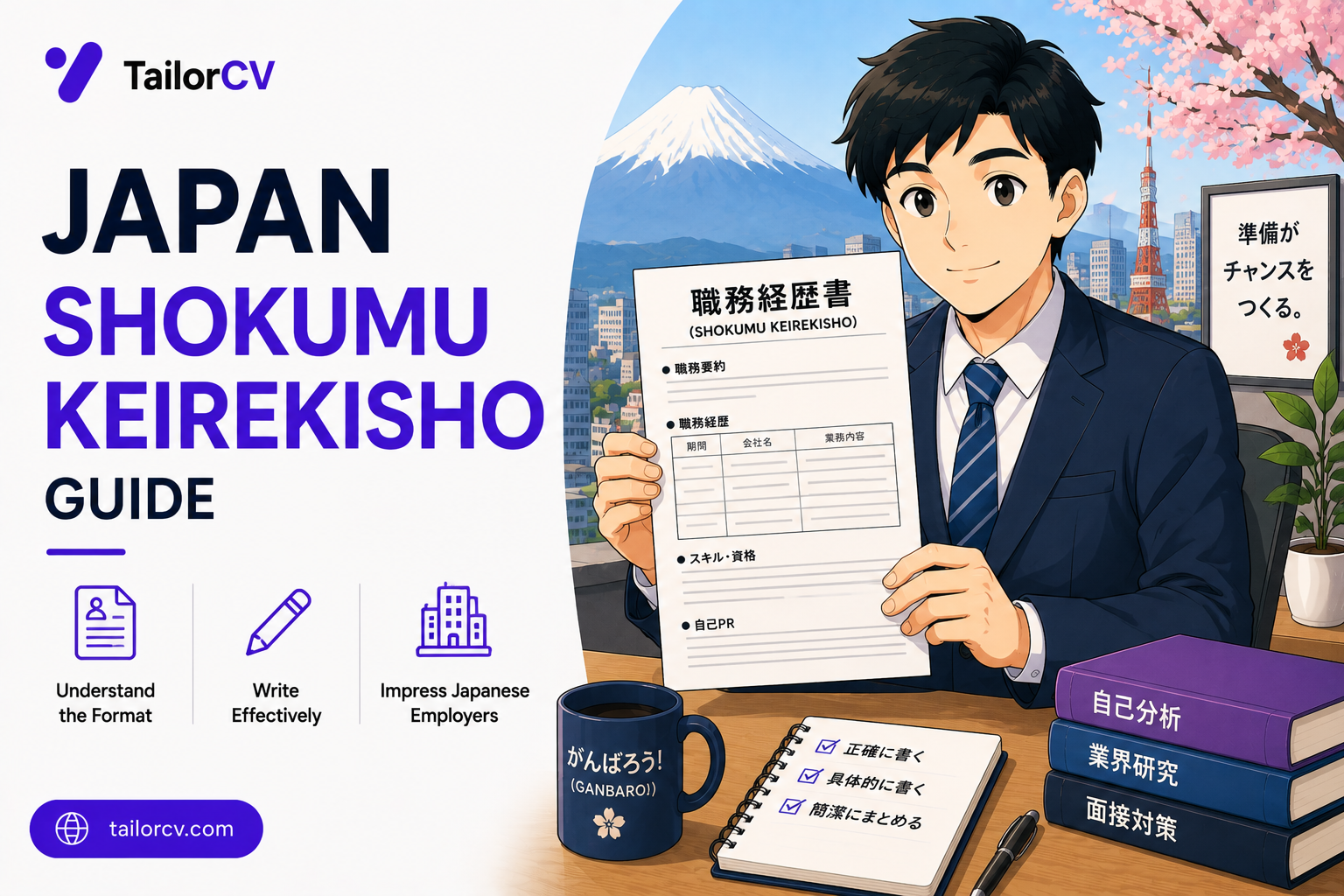
Where the rirekisho is a fixed form, the work history document is where you actually describe what you have done. It is the closest thing Japan has to a Western resume, and it is where applications are won.

Japan's startup ecosystem is smaller than the US or China but growing, and it offers foreign graduates something the conventional system does not — role-specific hiring, flexible timing and frequently English.
Technology is where Japan's hiring conventions bend most. Year-round recruiting, English-operating teams and skills-based assessment make it the most accessible professional route for foreign graduates.
Japan's general trading companies are among the most sought-after graduate employers in the country, offering global scope and a genuinely unusual business model. They are also among the hardest to enter.