 SS
SS
Key Takeaways
- The shokumu keirekisho describes your actual work in detail, unlike the standardised rirekisho form it accompanies.
- Its format is more flexible, which makes it the document where you can genuinely differentiate.
- Concrete outcomes, numbers and specifics outperform general descriptions of responsibility.
- New graduates with limited work history use it for internships, research, projects and substantial activities.
- Both documents are typically submitted together, and treating either as a formality weakens the application.
What it is for
Detail, where the rirekisho gives structure. The rirekisho records that you worked somewhere between two dates. The shokumu keirekisho explains what you actually did there — the projects, your role, the results, the skills you used.
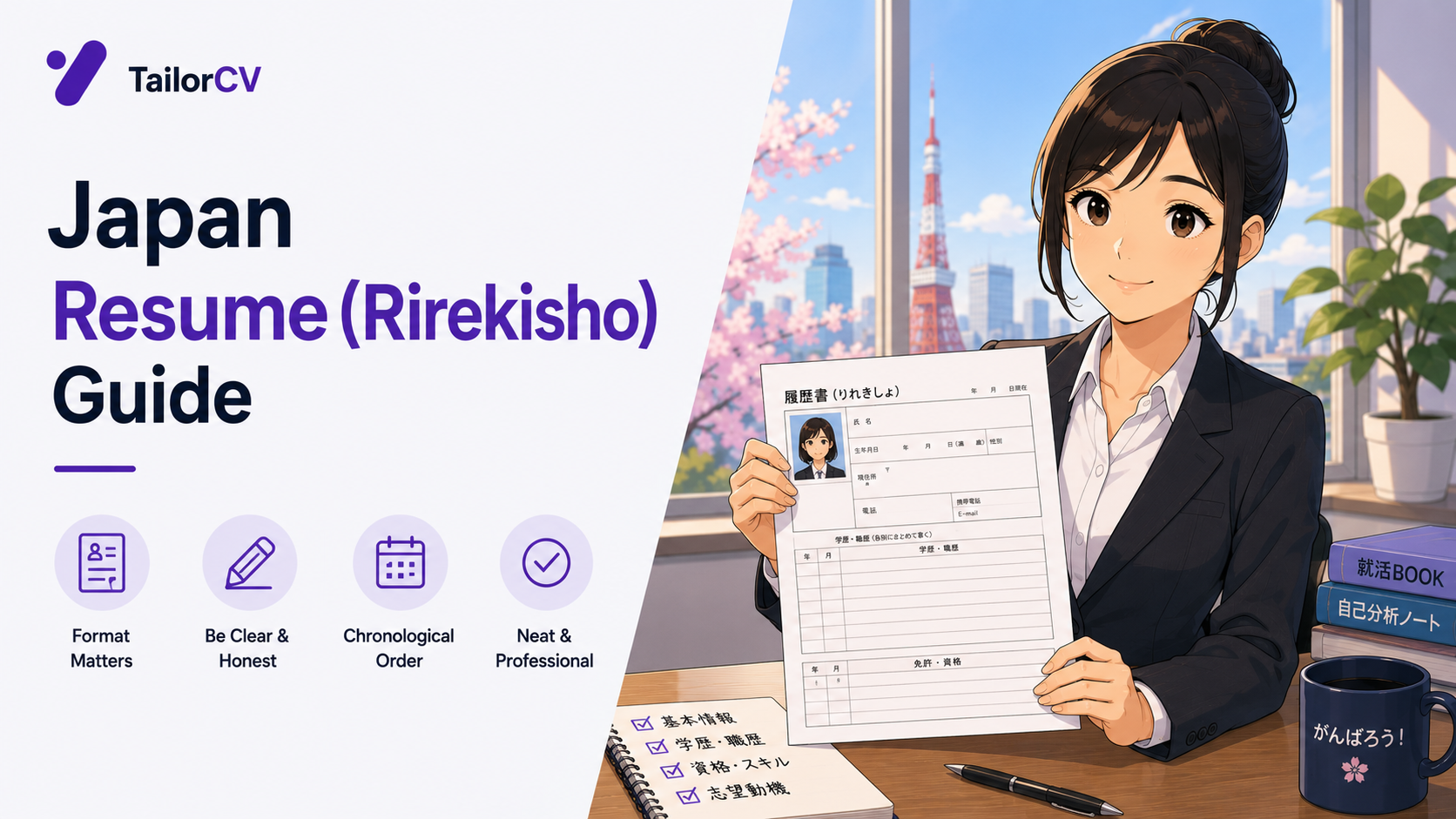
More flexible in format. Common conventions exist and you have real latitude in how you organise and present the content. This is where the differentiation the standardised form does not permit actually happens.
Traditionally a mid-career document, since it presumes work history. New graduates increasingly submit one anyway, populated with internships, research, projects and substantial extracurricular work.
Where you'll actually submit it. Most new graduates encounter this document through Japan's dominant graduate recruiting platforms — Rikunabi and Mynavi are the two largest, each running their own application flow where a shokumu keirekisho (or a platform-native equivalent field) gets uploaded alongside the rirekisho. Some platforms provide their own template with defined fields rather than a free-form document; check whether your target employer's application flow expects the standard free-form format or the platform's own structured version before you start writing, since the two aren't identical.
Read carefully. For roles where specific capability matters — technology, engineering, specialist positions — this document frequently carries more weight than the form.
How to structure it
A summary at the top. A few lines stating who you are professionally and what you do well. The reader's first impression, and worth writing last.
Work history in reverse chronological order for experienced candidates, or a projects-and-experience section for new graduates.
For each entry: the organisation, the period, your role, what the team or project was, what you specifically did, and what resulted.
A skills section. Technical skills, tools, languages, and your Japanese level stated plainly.
Qualifications and certifications.
Self-promotion section. A conventional closing section where you make the case for yourself, connecting your experience to what this employer needs.
Writing it well
Concrete over general. "Responsible for improving the reporting process" says nothing. "Automated two manual steps in the weekly reconciliation, reducing it from roughly three hours to twenty minutes" says everything. This principle is universal across markets and it applies here directly.
Numbers wherever honest. Scale, duration, team size, volume processed, percentage change. Round honestly and say you are rounding.
Your contribution, distinguished from the team's. Describe what the group did as context, then what you personally did. Failing to locate yourself in the work is the most common weakness in these documents.
Name the tools and methods. Specific technologies, frameworks, instruments and techniques.
Structure it for scanning. Clear headings, consistent formatting, generous white space. A reader working through many applications should be able to find what matters quickly.
Length. Typically one to two pages for a new graduate; longer for experienced candidates with more to describe.
Paper size and format, if submitting a printed or PDF version. A4 is the standard, not US Letter — a document formatted for Letter size will show awkward margins or get cropped when printed on Japanese office equipment, which defaults to A4 throughout. If you built your master resume for a US application and are adapting it for a Japanese one, checking and fixing the page size is a small, easy-to-miss step worth doing deliberately rather than assuming your existing template already accounts for it.
Tailor the self-promotion section per company. The factual sections stay stable; the argument for why you suit this employer should be written fresh.
For new graduates with little work history
Internships, described properly with what you actually did rather than what the programme was.
Research and thesis work. Particularly valuable for technical roles — describe the problem, your approach, the methods and the outcome.
Projects. Anything you built, ran or organised. Something with real users, however few, outperforms coursework — the project standard applies here as anywhere.
Part-time work, described in terms of responsibility, reliability and what you learned rather than as filler.
Substantial extracurricular activity. Club leadership, event organisation, competitions — treated seriously in Japanese hiring as evidence of character and commitment.
Study abroad or language achievement, especially where relevant to an international role.
Writing content that actually stands out
Quantify your accomplishments specifically wherever genuinely possible, exactly the same outcomes-over-duties principle that improves any application document, applied within this document's own conventions, a specific number or concrete result is considerably stronger than a general description of responsibilities.
Organise by relevant experience, not necessarily strict chronology, this document generally allows more flexibility in structure than the companion rirekisho document, worth using this flexibility to genuinely highlight your most relevant experience for each specific application rather than defaulting to a rigid chronological list regardless of relevance.
Tailor the specific content and emphasis to each individual application, a document reused identically across many applications is a missed opportunity, exactly the same tailoring principle that improves the interview rate anywhere, worth applying deliberately here.
For a new graduate with limited formal work history, internships, substantial projects, and relevant coursework can genuinely fill this document meaningfully, worth including these with the same specificity and genuine detail you would give to formal employment.
Keeping the document useful across a job search
Maintain a comprehensive master version privately covering everything you have done, then generate a tailored, more selective version for each specific application, exactly the same master-document approach that works efficiently for any international job search involving several distinct applications, this saves considerable time across a job search involving many companies without sacrificing the specificity that makes each individual submission genuinely effective.
Update the master version as you gain new relevant experience, rather than reconstructing your history from memory each time you need to apply somewhere new, this is a small habit that pays off considerably over a multi-month job search.
Handling employment gaps or unconventional paths honestly
If your background includes a gap, a change of field, or an unconventional path, address this honestly and briefly rather than attempting to obscure it, a short, factual explanation is generally received far better than an omission that later becomes an awkward discovery during the interview process.
Frame any transition or gap in terms of what you did with the time and what you learned, rather than simply noting an absence, this converts a potential concern into a genuine point of interest for an employer reading the document.
Your resume after optimization
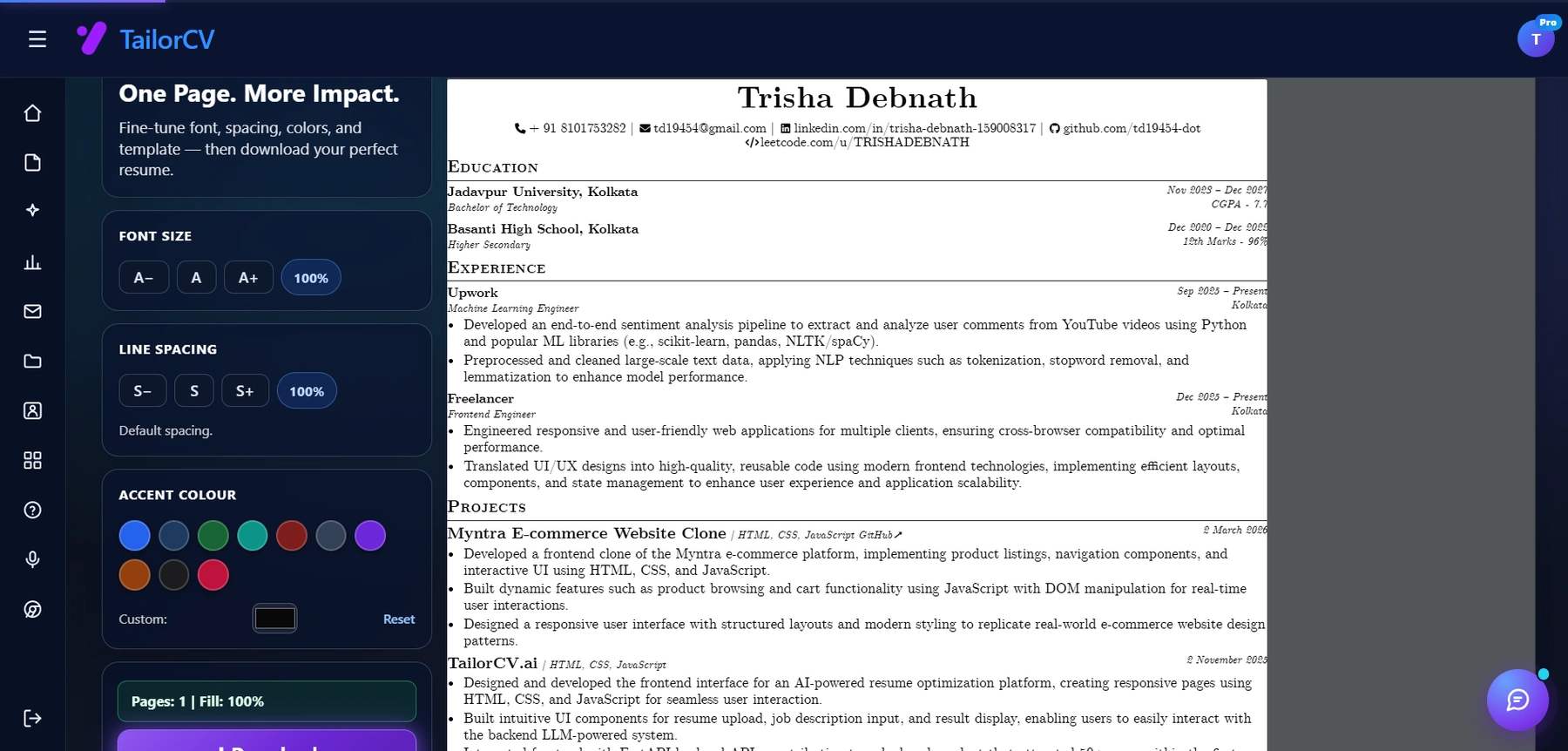
The work history document is where you have real formatting latitude, unlike the rirekisho — spacing and length are yours to control.
Tip: Keep one comprehensive master version privately and generate a shorter, tailored version per application. Rebuilding this document from memory each time is where most of the wasted effort in a Japanese job search goes.
Common Mistakes
- Describing responsibilities rather than results. Describing responsibilities rather than results the most common weakness and the easiest to fix.
- Never distinguishing your contribution from the team's. Leaves the reader unable to assess you.
- Submitting only a rirekisho. Submitting only a rirekisho for many roles the work history document carries the substance.
- Reusing the self-promotion section unchanged. It is the one part that should be written per company.
- Writing it as a narrative. Structured and scannable beats prose.
- Assuming new graduates cannot write one. Internships, research, projects and activities all populate it.
Related Guides
Keep building on this with the related guides in this series:
- English-Speaking Jobs in Japan - Where They Actually Are
- Group Discussions and Aptitude Tests in Japanese Recruiting
- Internships in Japan for International Students
- Japanese Language Requirements for Jobs in Japan
- Teaching in Japan - The JET Programme and the Alternatives
- JLPT N2 and N1 - What They Actually Mean for Employment in Japan
You can also check your resume's ATS score for free, generate a tailored cover letter, or build a portfolio website in minutes.
Frequently Asked Questions
Do I need this document if I have little formal work experience as a new graduate?
Yes, worth completing it thoughtfully using internships, substantial projects and relevant coursework, described with genuine specificity, rather than assuming this document is only relevant for experienced candidates.
How is this different from the rirekisho?
The rirekisho follows a more rigid, standardised personal-details format, this document generally allows more flexibility to genuinely highlight and organise relevant experience, the two are often submitted together as complementary parts of an application.
Should I use the same version for every application?
No, tailoring the specific content and emphasis to each individual employer and role meaningfully improves the outcome, exactly as with any application document.
How long should this document be?
Generally kept reasonably concise and focused on genuinely relevant content, rather than an exhaustive account of everything you have ever done.
Do new graduates need one?
Increasingly yes, and even where not strictly required it is frequently welcomed, particularly for technical and specialist roles where the standardised form conveys almost nothing about your capability.
How long should it be?
One to two pages for a new graduate. Experienced candidates write more, driven by what they actually have to describe.
Can I write it in English?
For foreign-affiliated companies and English-conducted roles, frequently yes. For Japanese companies applying through Japanese channels, Japanese is generally expected.
Is the format fixed like the rirekisho?
No, and that is the point. Conventions exist and you have real latitude, which is why this is where differentiation happens.
Should I include projects that are not work?
Yes, particularly as a new graduate. Research, personal projects and substantial activities all belong here when described concretely.
Do I submit both documents together?
Typically yes. They serve different purposes — one records the facts, the other explains the substance — and submitting only the form leaves the reader without the information that actually distinguishes you.
What is your resume scoring right now?
Scan it against a job description and get your ATS match score in about a minute.
Drop your resume here or choose a file
PDF only. Max 2 MB.
We never share your data or use it to train AI models.

Templates that keep this structure intact
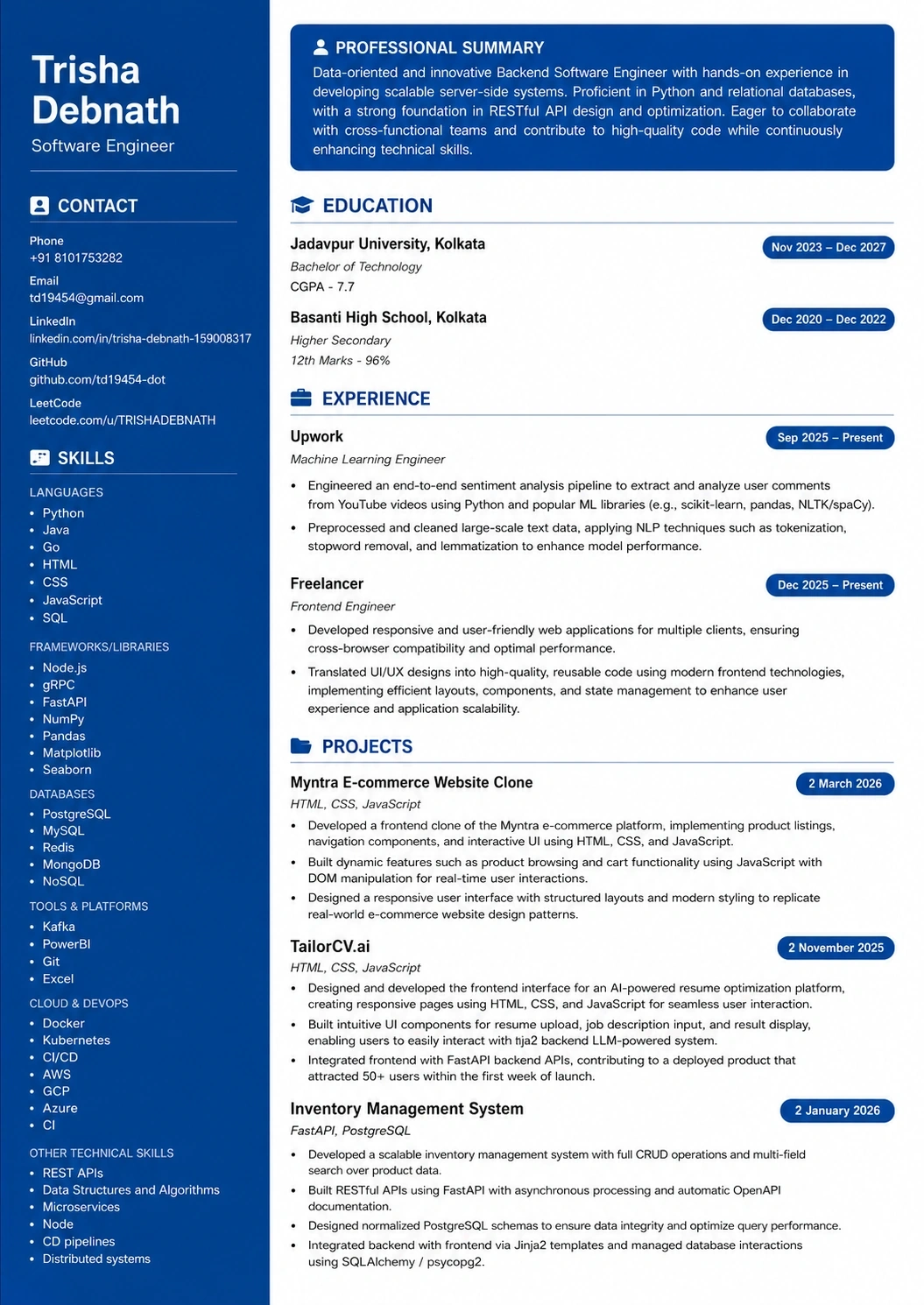
This template is ATS-tested — start from it and the formatting rules in this guide are already handled.
Was this guide useful?
Be the first to rate it.