 TD
TD
Key Takeaways
- General trading companies operate across an unusually wide range of industries, combining trade, investment and business development.
- They are consistently among the most contested graduate employers in Japan, with high compensation and strong prestige.
- Overseas assignment is a core part of the career, which is a genuine differentiator for anyone wanting international work.
- Recruiting follows the conventional graduate system closely, with high language and communication expectations.
- Foreign graduates are hired, and the bar is high and the language requirement is generally substantial.
What they actually do
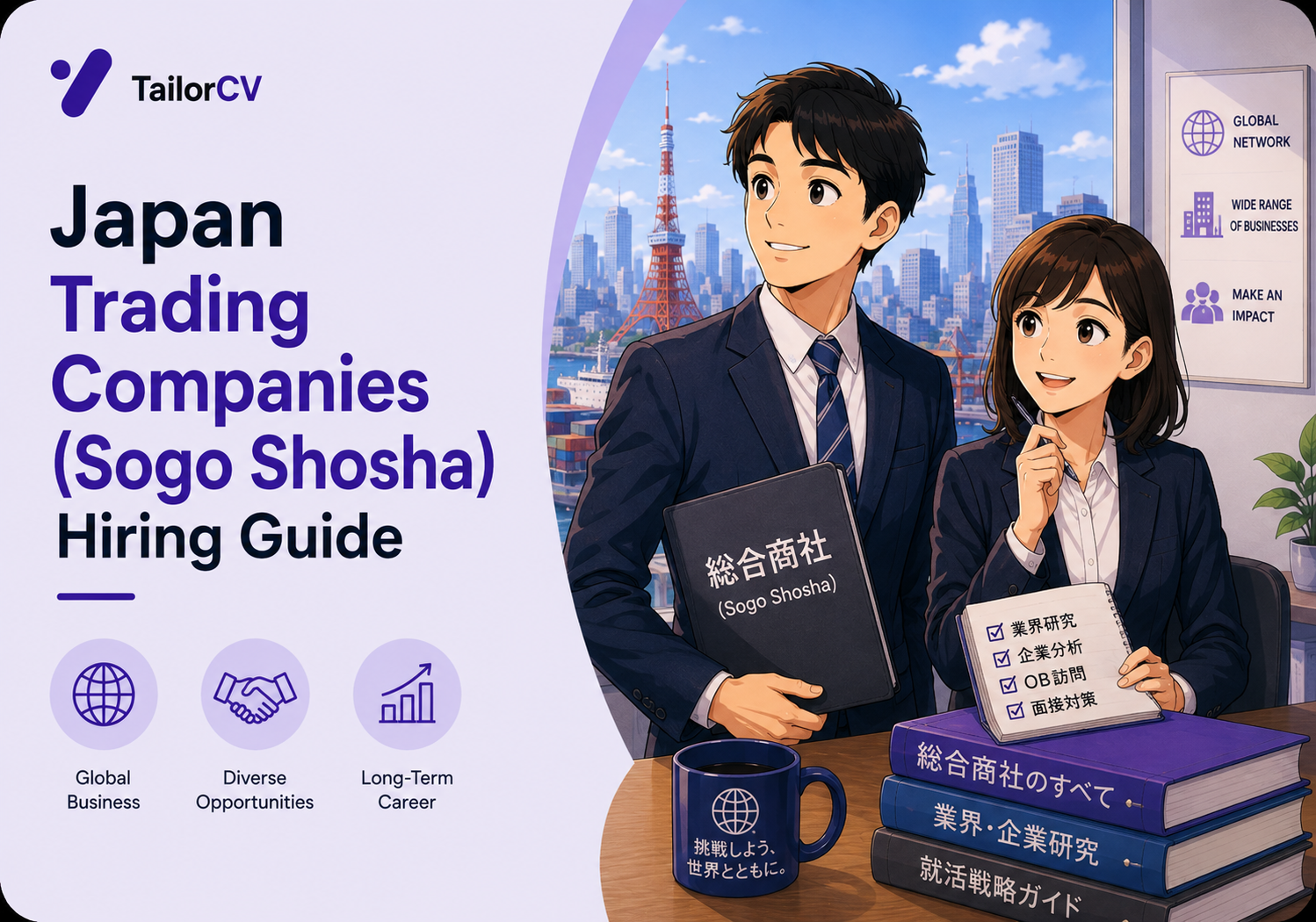
A business model with few international equivalents. General trading companies began in trade intermediation and have evolved into diversified conglomerates that trade goods, invest in and operate businesses, develop infrastructure and natural resource projects, and build supply chains across sectors.
The "Big Five" — Mitsubishi Corporation, Mitsui & Co., Itochu, Sumitomo Corporation, and Marubeni — dominate graduate recruiting conversations specifically, each with a distinct character worth researching individually rather than treating the category as interchangeable: Mitsubishi and Mitsui carry the deepest resource and energy portfolios historically, Itochu has built particular strength in consumer and retail (notably textiles and food), Sumitomo and Marubeni round out the group with their own sector concentrations. A sixth, Sojitz, and various smaller specialized trading houses are also worth knowing by name rather than defaulting only to the most famous handful.
The range is genuinely wide. A single company may be involved in energy, metals, chemicals, machinery, food, textiles, logistics, real estate, healthcare and technology simultaneously.
Which makes the work varied and hard to describe. A graduate might work on commodity trading, on structuring an investment in an overseas business, on developing a supply relationship, or on managing an operating subsidiary. The common thread is connecting parties, capital and capability across borders.
Why this matters for a graduate. The breadth means genuine variety and it means you frequently do not choose your area — you are assigned, which is characteristic of the conventional graduate system and particularly pronounced here.
Why they are so contested
Prestige. Consistently among the most desired employers for Japanese graduates.
Compensation. Among the highest graduate packages in Japan, with the bonus structure contributing substantially.
Global scope. Overseas assignment is a standard part of the career path rather than an occasional possibility, which is a genuine attraction for anyone wanting international work built into the job. Be aware of the concept of tanshin funin — a posting taken without relocating one's family, historically common in Japanese corporate culture for assignments seen as short-term or in locations considered unsuitable for dependents — worth asking directly during recruiting how a specific company's overseas rotations typically handle this, rather than assuming every posting comes with full family relocation support.
Breadth of experience. Exposure across industries and functions that few employers can match.
The consequence: application volumes are very high, selection is long and rigorous, and the bar on communication and character assessment is set accordingly.
The recruiting process
- It follows the conventional system closely. The shūkatsu timeline applies, with summer internships in the penultimate year functioning as an important early stage.
- Written applications matter. Entry sheets with substantial free-response sections, read carefully, and where generic answers fail visibly.
- Aptitude testing is standard — the test formats apply.
- Group discussions feature prominently, and given that the job is fundamentally about working with and between people, collaborative behaviour is weighted heavily.
- OB/OG visits (informal meetings with current employees who are alumni of your university) matter more here than at many other employer types. Reaching out to alumni working at a specific trading company, through your university's career center or alumni network, and asking genuine, informed questions is a standard, expected part of researching these employers seriously — and the specific, first-hand details you gather this way are exactly what separates a convincing "why this company" answer from a generic one.
- Multiple interview rounds, progressing to senior management, assessing character, motivation and fit at length. The standard question set applies, with particular attention to why this industry and why this company.
- Commercial curiosity is assessed. Being able to discuss business, trade and international developments with genuine interest separates candidates.
For foreign graduates
They do hire foreign graduates, particularly those educated in Japan, and the bar is high.
Language expectations are generally substantial. The work is relationship-driven and conducted largely in Japanese, which means business-level ability is typically expected — see the language requirements guide.
Your international background can be a genuine asset, particularly language ability in a market the company operates in, cultural knowledge of a region, or experience that maps to their business.
Be specific about which business area interests you and why, drawing on their actual operations rather than the general idea of trading.
Expect overseas assignment to be discussed, and be honest about your willingness. Being posted abroad is part of the deal rather than a perk you opt into.
Visa sponsorship is routine at this scale — the work visa is applied for by the employer.
What these companies actually do
These are large, diversified trading and investment companies engaging in an extremely broad range of business activities, spanning commodities, energy, infrastructure, retail and many other sectors, often operating genuinely globally, this breadth is a distinctive and genuinely interesting feature of a career here, offering exposure to a wide range of industries and international markets over the course of a career.
These are among the most prestigious and competitive employers within the traditional Japanese employment system, reflecting both the genuine breadth of opportunity and the substantial compensation and career prospects on offer.
What makes hiring here distinctive
The selection process generally follows the broader shinsotsu system, though with particularly intense competition given the sector's prestige, worth preparing especially thoroughly if this is a genuine target.
Genuine, deep commercial curiosity and a real interest in global business and international affairs are heavily assessed, worth demonstrating specific, substantive knowledge rather than general enthusiasm.
International assignment is a genuine and common feature of a career at these companies, worth being honestly prepared for and interested in genuine international relocation as part of a longer career trajectory.
Preparing specifically for this sector's process
Follow global business and economic news specifically relevant to the sectors and regions these companies actually operate in, forming genuine, considered views rather than general awareness alone, exactly the same deliberate commercial awareness building that improves outcomes in any competitive, prestige-heavy hiring process.
Research the specific business lines and recent activities of each individual company you are targeting, since these companies, while sharing a broad category, differ meaningfully in their specific strengths and strategic focus.
Building the specific evidence these employers look for
Seek out any opportunity to demonstrate genuine international experience or cross-cultural competence before applying, study abroad, international internships, or substantial engagement with international communities all provide concrete material for the specific questions this sector's selection process tends to emphasise.
Read the specific company's own published materials on their strategic priorities and recent major initiatives, rather than relying on general reputation, being able to discuss a specific recent development demonstrates the genuine, active interest these highly competitive employers are looking for.
Tip: Do OB/OG visits before you write a single entry sheet. At sōgō shōsha these conversations are expected, and the specific detail you gather is exactly what makes a "why this company" answer credible.
Common Mistakes
- Applying without understanding the business model. It is genuinely unusual and a vague answer is immediately visible.
- Not having a specific area of interest. "Anything" reads as no research.
- Underestimating the language requirement. Underestimating the language requirement the work is relationship-driven and conducted in Japanese.
- Treating overseas assignment as optional. It is a core part of the career path.
- Missing the internship stage. It functions as early relationship-building in this system.
- No commercial awareness. Assessed directly and frequently thin in candidates.
Related Guides
Keep building on this with the related guides in this series:
- Japan's New Graduate Hiring System Explained
- English-Speaking Jobs in Japan - Where They Actually Are
- Group Discussions and Aptitude Tests in Japanese Recruiting
- Internships in Japan for International Students
- Japanese Language Requirements for Jobs in Japan
- Teaching in Japan - The JET Programme and the Alternatives
You can also check your resume's ATS score for free, generate a tailored cover letter, or build a portfolio website in minutes.
Frequently Asked Questions
What kind of work do these companies actually involve?
An extremely broad range of business activities spanning many industries and often global markets, offering genuine breadth and international exposure over a career.
How competitive is hiring at these companies?
Among the most competitive within the traditional employment system, reflecting the sector's genuine prestige and the substantial compensation and career prospects on offer.
Will I be sent to work internationally?
International assignment is a genuine and common feature of a career here, worth being honestly prepared for and interested in this as part of your longer-term trajectory.
What should I demonstrate in the application and interview process?
Genuine, substantive commercial curiosity and real interest in global business and international affairs, rather than general enthusiasm alone.
What does a general trading company actually do?
Trades goods, invests in and operates businesses, develops projects and builds supply chains across a very wide range of industries. The model has few direct international equivalents.
Do they hire foreign graduates?
Yes, particularly graduates of Japanese universities, with a high bar and generally substantial Japanese language expectations.
Do I choose my business area?
Usually not initially. Assignment after joining is characteristic of the conventional system and particularly pronounced at these companies.
Is overseas assignment guaranteed?
It is a standard part of the career path at most of these companies rather than an occasional possibility, though timing and location are the company's decision.
How does compensation compare?
Among the highest graduate packages in Japan, with the bonus structure contributing substantially — see the salary structure guide.
What if my Japanese is not business level?
These are generally not the right target at that level. Technology and English-conducted employers are the more realistic routes while you build the language.
What is your resume scoring right now?
Scan it against a job description and get your ATS match score in about a minute.
Drop your resume here or choose a file
PDF only. Max 2 MB.
We never share your data or use it to train AI models.

Was this guide useful?
Be the first to rate it.